
How Much Should You Spend on Wedding Decor? Cost Guide
For many U.S. weddings, a practical wedding decor budget is about $1,500 to $5,000; a simple setup can cost less, while a full room design may reach $10,000 or more. Your guest count, venue, flowers, rentals, and labor all affect the final bill, so use those figures as a starting range and build your budget from your venue’s needs. Set a spending limit before you collect quotes, then make a list of the details you want guests to notice.

To keep decor spending in line with your other wedding costs, give it a place in your full wedding budget allocation. Then ask your venue what tables, linens, lighting, and other items are already included.
Typical Budget Ranges by Wedding Style
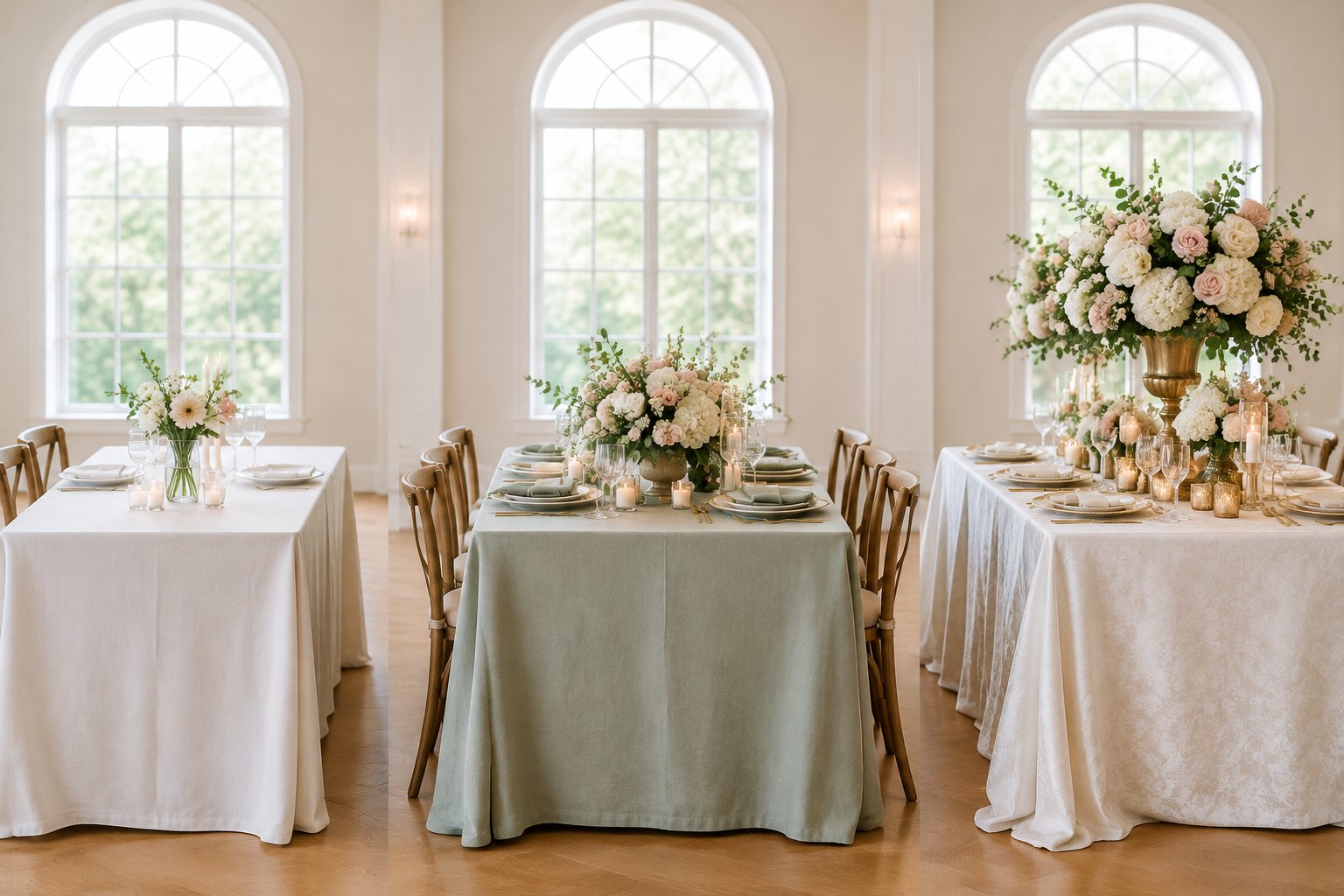
Your style gives you a useful first estimate: simpler decor needs fewer pieces and less labor, while a full-room design adds more flowers, rentals, and setup. Use the ranges below as planning estimates, then compare them with itemized local quotes.
Simple, Moderate, and Full-Style Budgets
A simple setup may fall around $500 to $2,000 when your venue already has character and your plan uses a few key details. You might focus on table linens, candles, basic signage, or a small number of floral arrangements.
A moderate design often lands around $2,000 to $5,000. This range could cover ceremony decor, reception table details, flowers, and selected rentals, with some professional setup. The guest count and number of tables will shape the total.
A full-style design can reach $5,000 to $10,000 or more when you add large floral installations, specialty furniture, upgraded linens, lighting, or extensive styling. A blank venue may also need more pieces to create a finished look.
Treat these figures as broad estimates, not fixed package prices. Check whether each quote includes flowers, rental items, delivery, setup, and breakdown before comparing totals.
Why Published Averages Differ
Published averages measure different things, so they can give you very different estimates. The Knot reported an average of $1,900 for wedding decor and lighting in its 2023 Real Weddings Study. Another commonly reported figure for event rentals was $2,000, a separate category that may overlap with decor budgets depending on how a couple tracks costs.
The average wedding decor cost also shifts with location, date, and what a venue provides. A venue with tables, chairs, and built-in lighting calls for fewer purchases than a bare room. For a clearer starting point, compare your plans with a realistic wedding budget and price your own decor list item by item.
What Drives the Final Decor Bill?
Your final decor bill reflects how many items you need, how much design work they require, and how much labor it takes to install them. Guest count, venue features, seasonal flowers, and the level of professional help can each shift your wedding decor budget.
Guest Count, Venue, and Existing Features
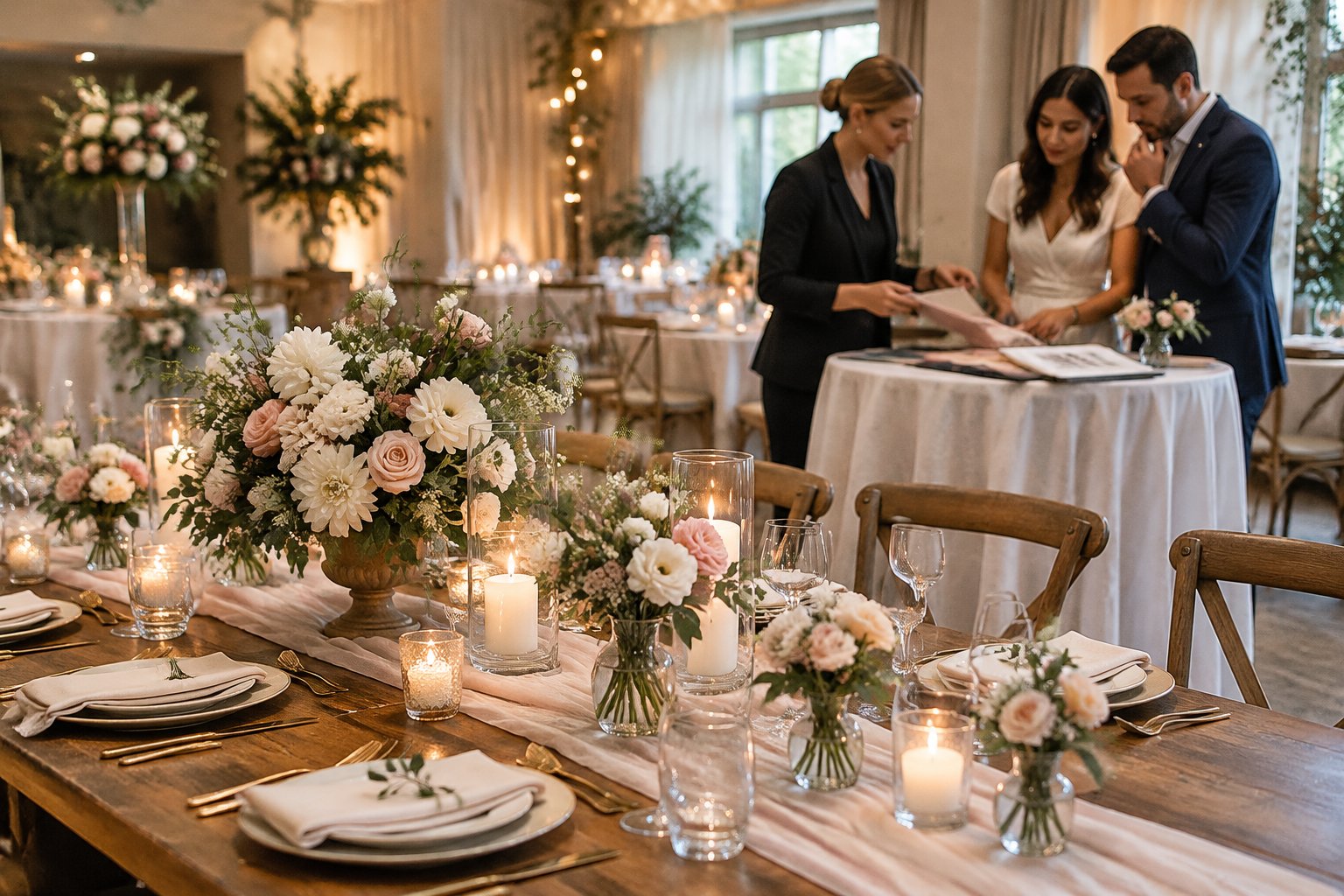
More guests usually mean more tables, which increases the number of centerpieces, linens, and place settings you need. Before you price anything, confirm the venue’s inventory and note what is included in your rental or catering package.
Your venue’s built-in features also shape the decor plan. Gardens, historic buildings, and rooms with distinctive lighting or architectural details need fewer added pieces to feel complete. A blank hall may call for draping, furniture, or added lighting.
Design Complexity, Season, and Location
Large installations, layered tablescapes, custom signs, and specialty lighting take more materials and setup time than a pared-back design. Each extra element adds a cost, especially when it needs a crew to install or remove it.
Seasonal flowers can help you match your palette while working with blooms available at that time of year. Your location also affects labor and rental prices, and a remote venue may involve extra travel or delivery fees. For floral planning, set a separate amount with a wedding flower budget and ask your florist about seasonal substitutions.
DIY, Professional Services, and a Wedding Planner
DIY decor works best when you have time, storage space, and a clear person responsible for setup. Include the cost of supplies, transport, assembly, and cleanup when you compare a DIY plan with a professional quote.
A decorator or wedding planner can coordinate the design and installation, with fees based on the services you request. Ask who places each item and who removes it after the event. Keep the couple out of the setup crew by assigning those jobs to a vendor, venue team, or trusted helper.
Which Areas Deserve the Biggest Share?
Give the largest share to the spaces guests use, see, and photograph most, such as the ceremony focal point and reception tables. A few well-chosen wedding decorations can establish the mood without filling every corner.
Ceremony Focal Points
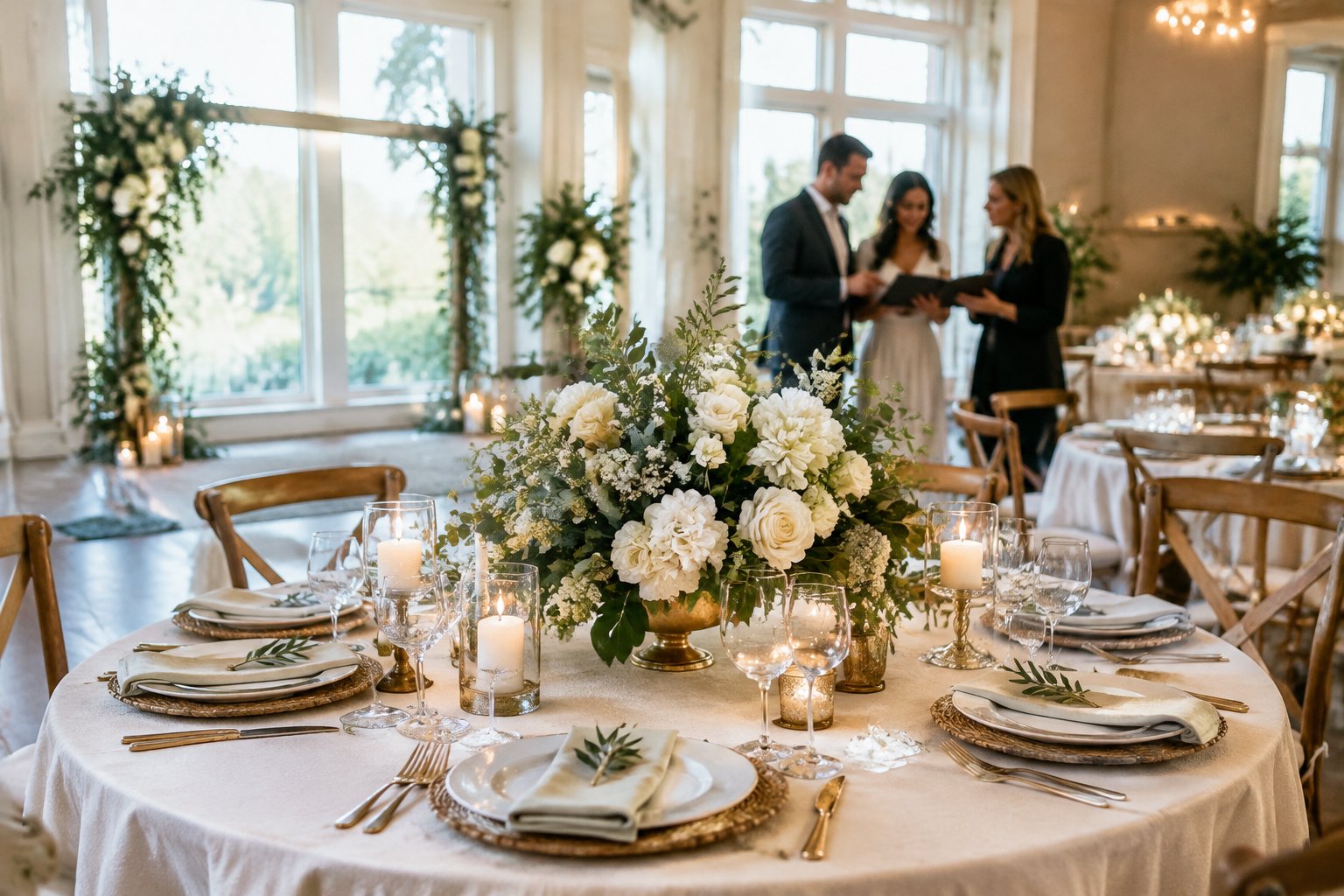
Ceremony decor frames the vows and appears in many of your photos. Decide what guests will see behind you, then price an arch, backdrop, or floral feature to suit that space. If the venue already has a strong focal point, a few aisle markers or small arrangements may be enough.
Reception Tables and Table Settings
Guests spend much of the reception seated at tables, so table settings can shape the room’s look. Price linens, napkins, candles, table numbers, and centerpieces together. Keep enough clear space for plates and conversation, especially when your floral arrangements have height or width.
Flowers, Lighting, and Photo-Worthy Details
Flowers can take a large share of your decor funds, especially when you add installations or arrangements across many tables. Ask your florist to price the ceremony and reception separately so you can choose where floral decor has the strongest effect.
Lighting helps guests see the room after dark and gives simple decor a warmer feel. Add a few photo-worthy details, such as a welcome display or decorated head table, when they fit your plan. For a smaller celebration, budget-friendly small wedding ideas can help you focus spending on the details your guests will notice.
What Costs Are Easy to Overlook?
Your decor estimate should include the services and logistics that move items into the venue, set them up, and clear them away. Those charges can add a meaningful amount to the price of wedding rentals and decor.
Wedding Rentals, Delivery, and Setup
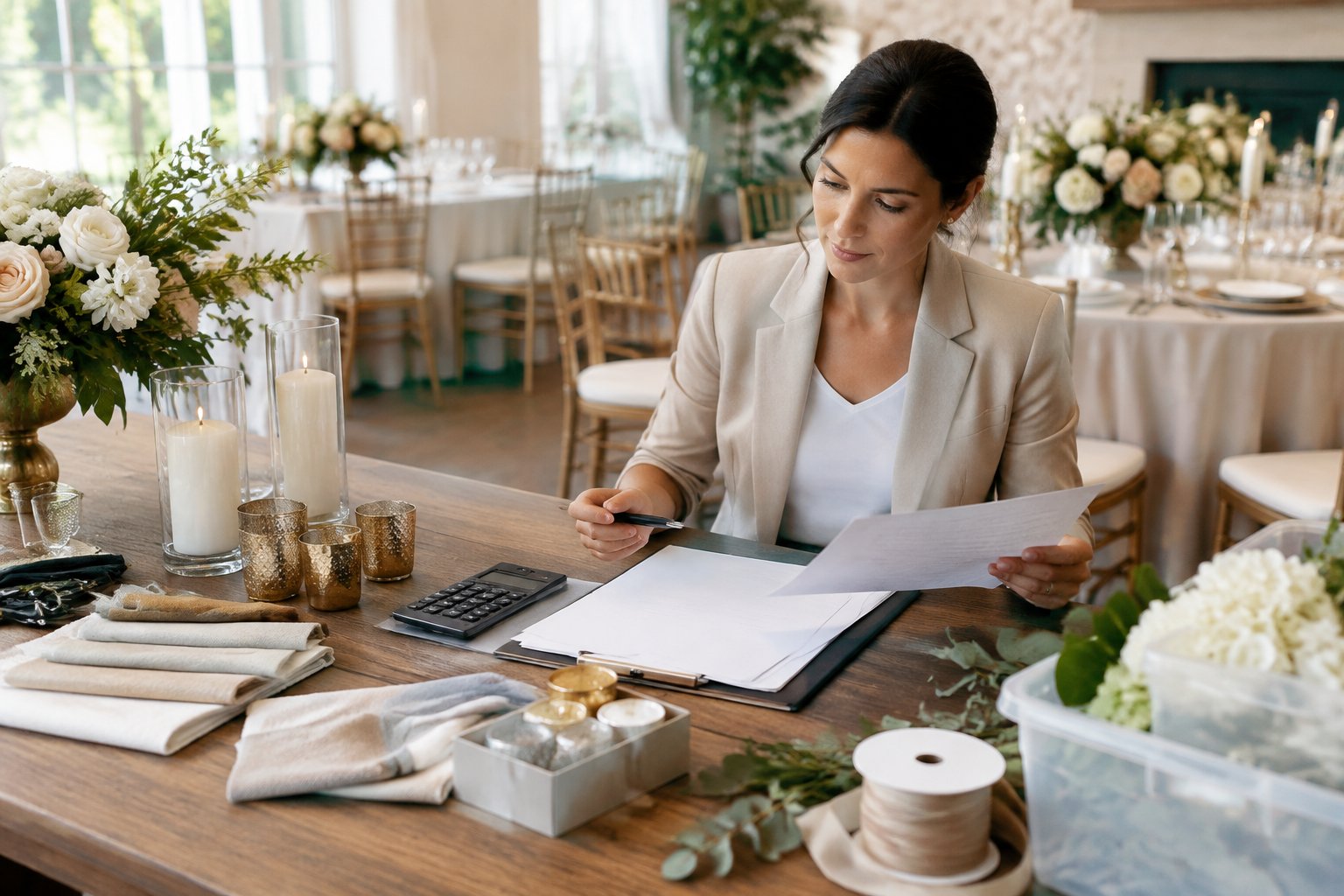
Wedding rentals may include linens, chairs, arches, candle holders, lounge furniture, or other pieces your venue does not provide. Ask for the price per item and the delivery fee, then confirm whether the crew places everything or leaves it at a designated drop-off point.
Setup can be a separate charge. Check whether your florist, rental company, venue staff, or planner will place each item, and record that responsibility in your plan. This prevents gaps between vendors when the room is being prepared.
Breakdown, Taxes, and Venue Requirements
Breakdown and pickup may have separate fees, especially when crews need to return late at night. Include taxes, damage deposits, and any required cleaning or removal costs in your estimate.
Ask about venue rules for candles, hanging decor, electrical equipment, and setup times. Those details can change the materials or labor your design needs. Before booking, request the full price in writing, including the time window for setup and breakdown.
How Can You Make the Budget Go Further?
You can stretch your decor budget by choosing a few high-impact details, reusing items during the day, and comparing quotes for the same design. A clear list helps you spend with purpose and spot fees before you book.
Prioritize High-Impact Details
Choose the details that shape the guest experience first, such as the ceremony backdrop, reception tables, or lighting. Put your top priorities in writing, then reduce optional pieces if the first quotes exceed your limit.
If your venue has an attractive setting or built-in decor, let those features carry more of the design. Use your budget for the areas that need attention, such as a dark reception room or a plain ceremony wall.
Reuse Decor and Choose Seasonal Blooms
Plan to move ceremony arrangements to the reception if the timing and layout allow it. Confirm who will move them and whether the florist charges a relocation fee. Reusing candles, signs, or table pieces also helps you get more use from each rental or purchase.
Ask about seasonal flowers and flexible substitutions that suit your colors. For table decor, greenery, candles, or a small number of blooms can create a cohesive look without requiring a large arrangement at every table.
Compare Itemized Quotes Before Booking
Send each vendor the same item list and floor plan so you can compare matching services. Ask for separate prices for materials, labor, delivery, setup, and breakdown, then check which items the venue already provides.
If a quote comes in high, ask which changes would lower the price while keeping your key design features. Confirm the revised details in writing before you pay a deposit.