
How to Low-Budget a Wedding: Save on Key Costs
You can plan a low-budget wedding by setting a firm spending limit, keeping your guest list small, choosing an affordable date and venue, and putting money toward the details you value most. Your wedding can feel personal and joyful without matching someone else’s idea of a perfect day.

Start by agreeing with your partner on what you can spend, then use that limit to guide every choice. A clear plan can help you enjoy wedding planning while keeping expenses manageable.
Set a Realistic Wedding Budget

Your wedding budget should reflect what you can pay without taking on debt or straining your finances. Set the limit first, choose your top priorities, then track each wedding cost from the first deposit onward.
How Much Can You Comfortably Spend?
Add up your savings, any firm contributions from family, and the amount you can set aside before the wedding. Keep money for regular bills and emergency needs out of the wedding fund. Agree on a maximum before you contact vendors, and treat that number as a firm limit.
Your budget is personal. A smaller celebration can be a meaningful choice, and a larger one can fit when the funds are available. For help setting a spending limit, use these steps to make a realistic wedding budget.
What Belongs in a Wedding Budget Breakdown?
List every expected expense, including the venue, food, drinks, attire, flowers, photography, music, transportation, invitations, and marriage license. Add taxes, service charges, tips, alterations, and rental fees where they apply. These costs can be easy to miss when you focus only on a vendor’s starting price.
Next, rank your priorities as a couple. Give more of your budget to the parts of the day that matter most to you, then set practical limits for the rest. A wedding budget allocation plan can help you assign a spending cap to each category.
How Can You Track Wedding Expenses and Avoid Surprises?
Use a spreadsheet or budgeting app with columns for the estimated cost, final quote, deposit paid, balance due, and payment date. Update it after every purchase, and save contracts and receipts in one folder. Add a cushion for unexpected wedding expenses, and check your remaining balance before signing a new contract.
Trim the Guest List and Keep the Day Intimate

A smaller guest list is one of the most direct ways to lower wedding costs while creating an intimate wedding. Each guest affects food, drinks, seating, rentals, and sometimes the size of the venue you need.
How Does a Smaller Guest List Lower Costs?
Start with the people you and your partner most want beside you on the day. Then review extended family, acquaintances, and work contacts together. Setting shared rules for plus-ones and children can help you make decisions consistently.
Fewer guests also give you more options for an affordable wedding venue, such as a private dining room or a small garden space. If choosing names feels difficult, these ideas for creating a guest list for a small wedding can help you set clear priorities.
Which Traditions Can You Skip or Simplify?
Keep the traditions that feel meaningful to you and simplify the rest. You might hold a short ceremony, skip a receiving line, or choose a playlist over live entertainment. A budget wedding can include personal touches without paying for every custom.
Tell guests what to expect on the invitation or wedding website. Clear details about the event time, meal, and dress code help everyone feel prepared, especially when your celebration has a relaxed format.
Choose a Venue and Date That Cost Less
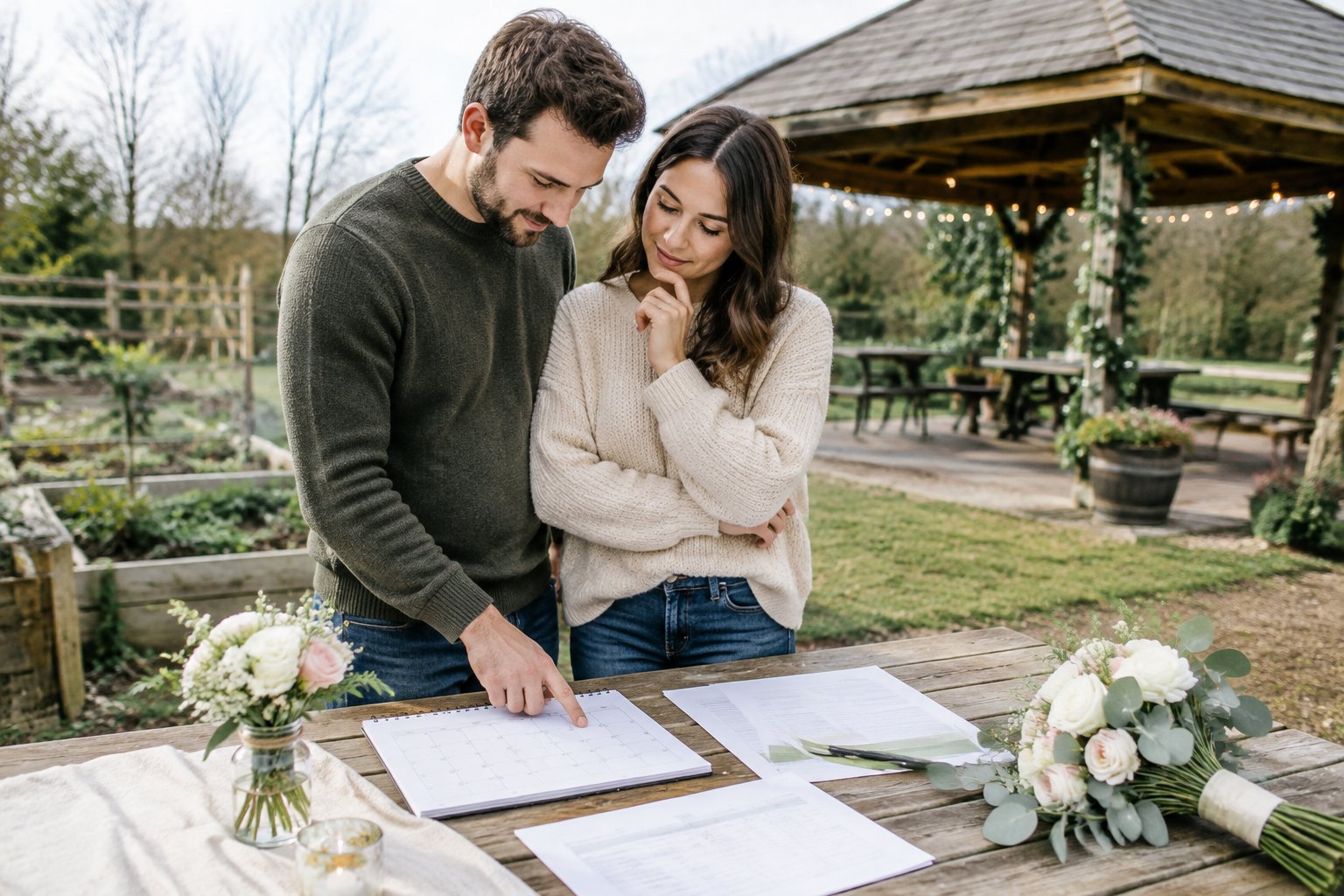
You can reduce venue costs by comparing the full price of each space and choosing a date with lower demand. Check what the rental includes, since tables, chairs, linens, and staff can change the final cost.
Where Can You Find an Affordable Wedding Venue?
Look at community centers, public gardens, county facilities, restaurants, and spaces owned by local organizations. Ask about permits, parking, restrooms, setup time, cleanup, and required vendors before you book. A backyard can work for a small group, though tent, lighting, furniture, and restroom rentals can add up.
Compare each wedding venue by its complete cost, not just its rental fee. An all-inclusive package may offer better value when it includes catering or rentals. Browse affordable wedding venue ideas as you compare spaces.
How Can an Off-Peak Date Reduce Venue Costs?
Ask venues for rates on Fridays, Sundays, weekdays, and dates outside their busiest season. A morning or brunch event can also come with a lower rental rate at some locations. Before choosing a date, check that it works for the guests you most want there.
Contact venues with a few date options and ask what each one costs. Comparing a Saturday quote with weekday pricing makes the savings easier to judge. These details can help you decide whether a weekday wedding costs less.
When Is Hiring a Wedding Planner Worth It?
A wedding planner can be worth the fee when you need help comparing vendor quotes, managing a complex schedule, or coordinating setup and cleanup. Ask about partial planning or day-of coordination if full-service planning exceeds your budget. Review the services and fee in writing so you know what support you are paying for.
Cut Reception Costs Without Making Guests Feel Shortchanged
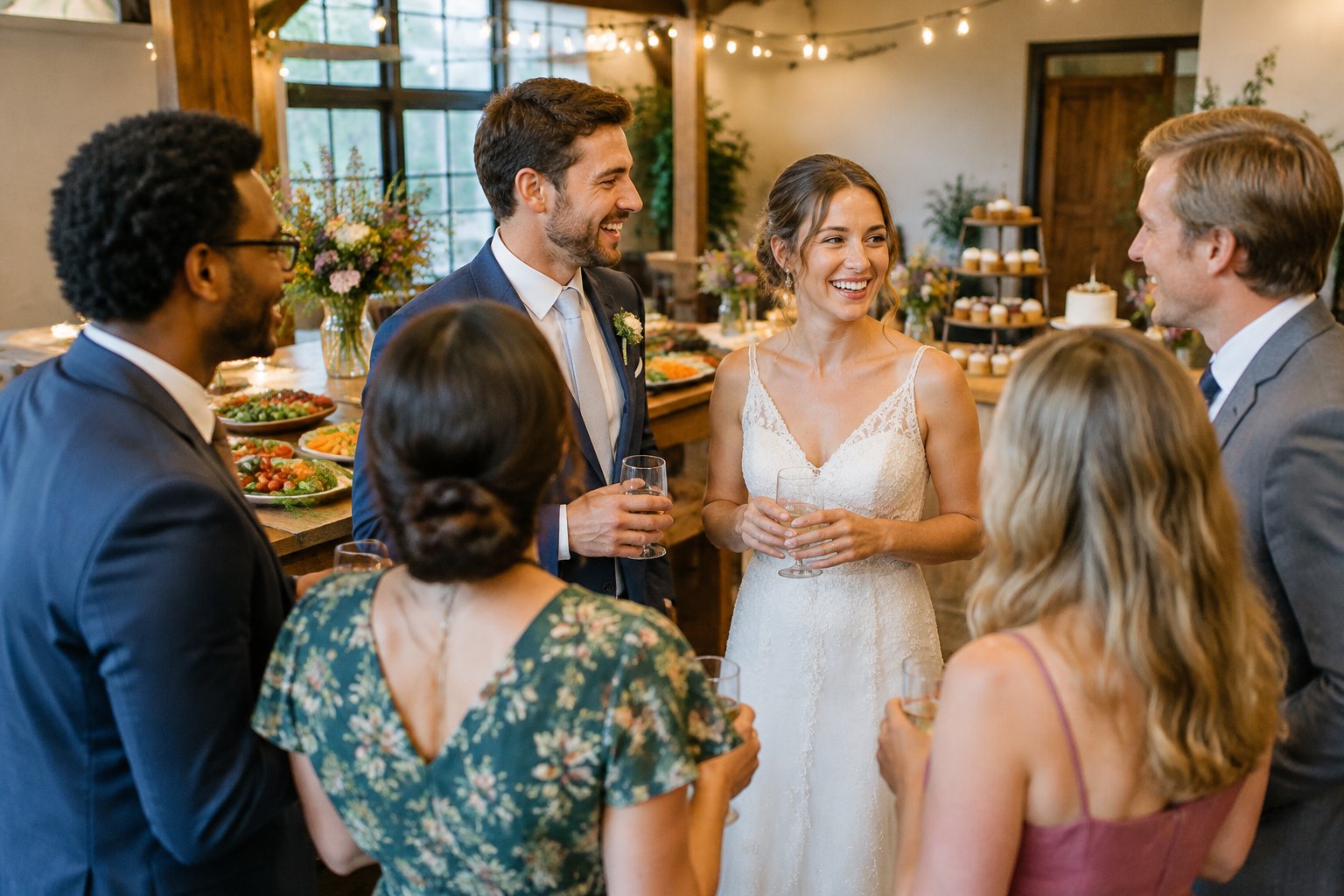
You can keep the reception welcoming by serving a satisfying meal, limiting drink choices, and focusing your spending on guest comfort. A shorter event and a simple setup can trim costs while leaving room for conversation and celebration.
How Can You Save on Food and Drinks?
Choose a menu that fits your event time and guest count. A buffet, family-style meal, brunch, or food truck can suit a casual reception; ask caterers for complete per-person quotes, including staffing and rentals. Compare menu options that use familiar ingredients and seasonal produce.
Offer beer and wine, or add one signature cocktail to a limited bar. Ask the venue about its alcohol rules and service fees before you decide. For practical menu ideas, explore ways to keep wedding food costs down.
Which Reception Details Can You Simplify?
Choose a few details that set the mood, such as music, lighting, or table arrangements, and keep other items simple. Digital invitations can reduce printing and postage costs. A playlist and speaker setup can work for a small gathering when someone you trust can manage the music.
Check what your venue provides before renting extra items. If tables, chairs, linens, or basic lighting are included, build your layout around those features.
Are Wedding Favors Worth the Expense?
Wedding favors are optional, so include them when they fit your budget and feel meaningful to you. A handwritten note, a shared dessert, or a small local treat can offer a personal touch. If favors would stretch your budget, guests can enjoy the celebration without them.
Save on Attire, Flowers, and Décor
You can lower spending on attire, flowers, and décor by shopping beyond traditional bridal stores and choosing flexible designs. Borrowing or renting items also helps you avoid paying full price for pieces you will use once.
How Can You Find an Affordable Wedding Dress?
Set a dress budget that includes alterations, shoes, and accessories before you shop. Look at sample sales, pre-owned dresses, rental options, and simpler styles. Ask about alteration costs before buying, since changes to the fit can add to the final price.
Choose a dress that feels comfortable and suits the event you are planning. A thoughtfully selected wedding dress does not need a designer label to feel special.
Why Choose In-Season Flowers?
In-season flowers are easier for local florists to source, which can help manage floral costs. Share your color palette and preferred look with your florist, then ask which blooms are available near your wedding date. Staying flexible with flower types gives your florist more room to recommend lower-cost options.
Use flowers where guests will notice them, such as your bouquet or ceremony area, and keep other arrangements simple. You can find more ideas for choosing wedding flowers that fit your style and budget.
Which Decorations Can You Borrow, Rent, or Make?
Ask family and friends about décor they already own, then check rental prices for items like linens, arches, and table pieces. Borrowing can work well for special items, while rentals can save you storage and resale effort.
Make a few DIY pieces only when the supply costs and time fit your plan. Use the venue’s existing features as part of your design. A garden, attractive windows, or built-in lighting can provide a finished look with fewer added decorations.
For more ways to style tables affordably, browse these wedding decoration ideas on a budget.