
Industrial Wedding Venues Boston: Costs, Styles & Tips
You’ll find industrial wedding venues in Boston in converted warehouses, historic mills, and former power-station buildings, where exposed brick and steel give your celebration a distinct backdrop. These spaces range from intimate lofts to large event halls, so you can match the setting to your guest count and wedding style.
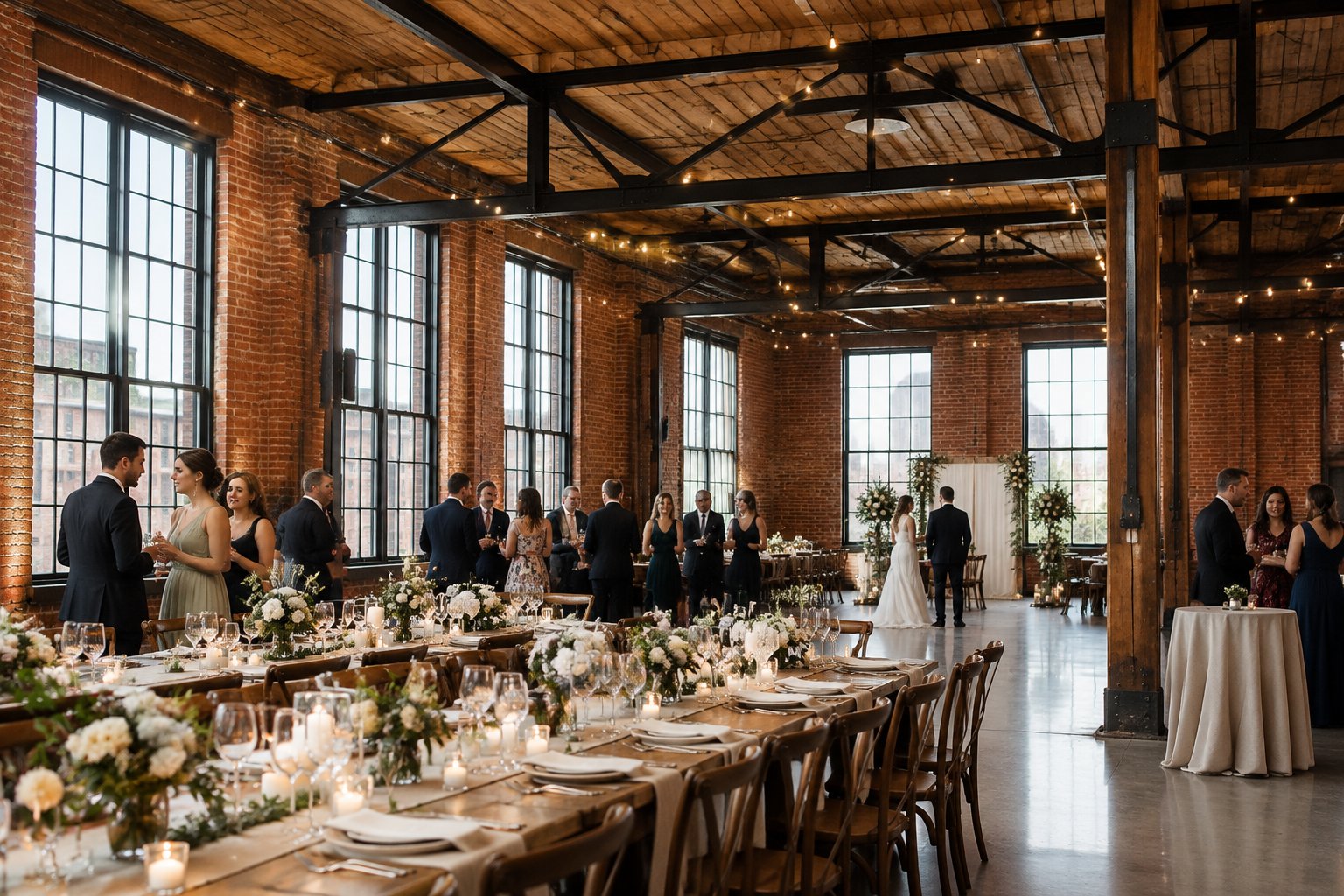
Your venue choice shapes the feel of the day and the amount of planning you take on. Start by saving a few spaces that fit your guest list, then ask about a tour and a current quote.
What Do Industrial Wedding Spaces in Boston Offer?
Industrial wedding venues pair historic building features with room for a celebration you can shape around your plans. You’ll find spaces with original brick, steel beams, tall windows, and open layouts, along with more finished options that include furnishings or event support.
How Do Brick, Steel, and Mill Architecture Shape the Atmosphere?
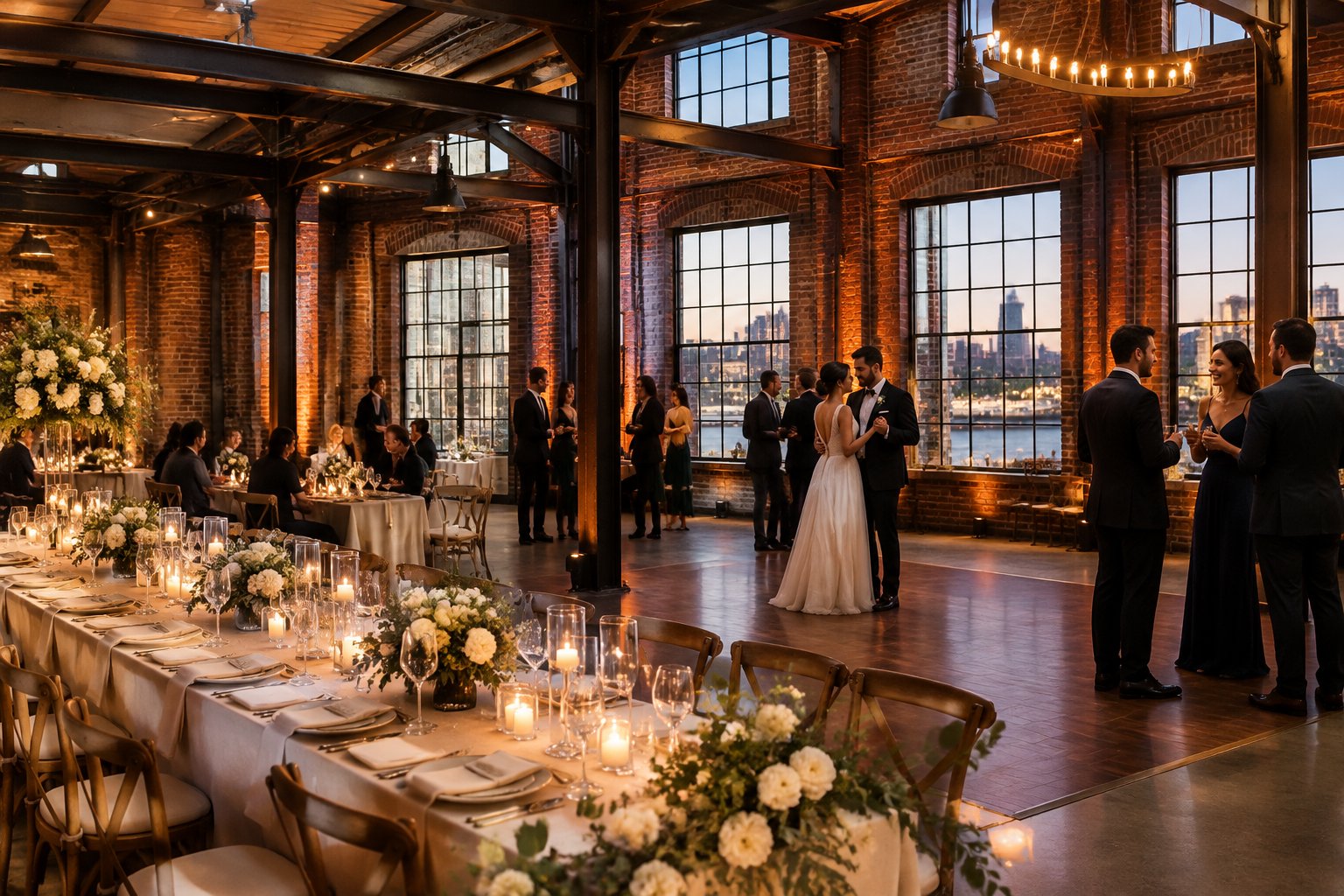
Exposed materials give an industrial wedding venue much of its character before you add décor. Brick walls add warmth and texture; steel columns and beams bring a graphic, modern edge.
Tall factory windows can fill the room with daylight, while high ceilings make a full reception feel open. You can use these details to guide your colors and décor.
For example, soft linens and greenery can temper the hard lines of a former factory, while simple table styling lets the architecture take center stage. If you’re still sorting out your look, thinking through your wedding style can help you choose details that feel cohesive.
Which Space Types Suit Different Wedding Styles?
Choose a converted warehouse or mill if you want an open room with historic details and room for a larger gathering. A loft or smaller event space suits a more intimate reception, while a former power station offers a dramatic scale that can make a large guest list feel at home.
Some industrial venues are blank canvases, giving you control over layout and décor. Others include built-in features such as a bar, tables, or an outdoor courtyard.
Compare wedding venue ideas with your guest count and preferred atmosphere before you book.
Which Boston-Area Venues Are Worth Exploring?
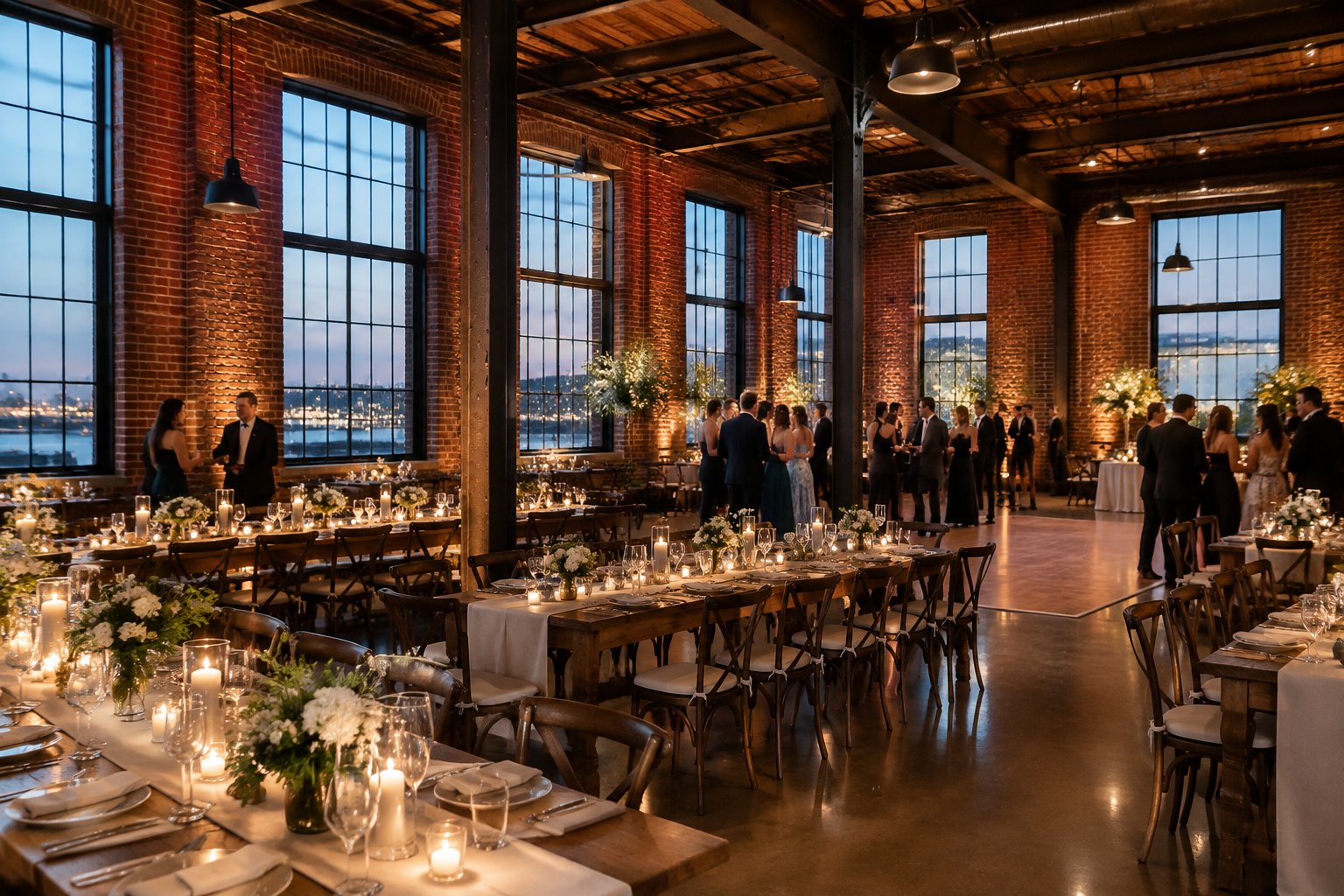
Boston and nearby towns offer industrial wedding venues in several sizes, from flexible warehouse rooms to historic mill spaces. As you compare each wedding venue, look closely at location, capacity, and the features that come with the rental.
Warehouse XI and Garage B
Warehouse XI in Somerville has 3,225 square feet, oversized windows, white-painted brick, and black concrete floors. The venue lists space for up to 150 guests, making it a fit for couples who want a bright, pared-back setting with room to personalize.
Garage B, in Brighton’s Charles River Speedway, is a renovated 1940s garage with 3,300 square feet. Its doors open to a courtyard, giving you an indoor-outdoor option in suitable weather. The space lists capacity for 160 seated guests or 240 standing.
| Venue | Location | Listed capacity | Notable feature |
|---|---|---|---|
| Warehouse XI | Somerville | Up to 150 | Large industrial windows |
| Garage B | Brighton | 160 seated, 240 standing | Doors open to a courtyard |
| SoWa Power Station | Boston | Up to 1,600 seated on main floor | 60-foot vaulted ceilings |
| Mill 1 at Open Square | Holyoke | Up to 250 seated | Historic paper-mill setting |
| Little Bird Events | Norwood | Up to 80 seated indoors | Secret Garden option |
SoWa Power Station and Mill 1 at Open Square
SoWa Power Station in Boston brings together original brick, tile, steel trusses, and tall windows in a restored 1891 building. Its main floor provides a striking scale for a large celebration, while its mezzanine offers a smaller setting for a more contained event.
Ask the venue about current capacity, pricing, and which spaces are available for your date. Mill 1 at Open Square is in Holyoke, outside the immediate Boston area.
Its former paper-mill setting and canal-side location make it a regional option if you’re open to a longer drive. Confirm travel plans and lodging needs alongside the venue details.
Little Bird Events and Other Intimate Spaces
Little Bird Events in Norwood offers an industrial-chic room with polished concrete, white brick, and steel doors. The venue lists space for up to 80 seated guests indoors, with a separate garden area for outdoor gatherings.
If you’re planning a smaller celebration, tips for choosing a venue for a small wedding can help you weigh room size against your guest count. You can also explore historic event spaces such as the Charles River Museum of Industry and Innovation in Waltham.
Its former textile mill setting gives you a sense of local history, with indoor and outdoor areas available for events.
How Much Do Industrial Wedding Venues Cost?
Industrial wedding venue costs depend on the date, room size, rental period, and what the fee includes. Some spaces publish starting site fees; others quote a rental price or food-and-beverage minimum for your specific event.
Boston Rental Fees and Minimum Spends
A venue quote may cover a set rental period, a minimum spend on food and drinks, or both. Ask whether the price changes by season, day of the week, guest count, or event hours.
You can use a guide to what wedding venues cost to put a site fee in context, then compare it with a written quote for your date. Published starting prices offer a point of reference, not a final budget.
For example, the Charles River Museum of Industry and Innovation lists reception site fees starting at $1,400 during off-peak months and $1,800 during peak season. Treat any listed rate as an initial figure and confirm current pricing, taxes, and required services with the venue.
What Can Add to the Venue Budget?
A low rental price can leave more items for you to arrange. Check whether the quote includes tables, chairs, linens, lighting, staff, cleanup, and access for setup.
If those items are separate, request estimates from the venue’s approved vendors or your own suppliers before you sign. Other charges may come from bar service, catering, security, insurance, overtime, or additional rental hours.
A blank event space also gives you more design freedom, while leaving more choices for you to price. Comparing affordable wedding venue options can help you set a realistic starting budget.
How Do All-Inclusive Packages Compare?
An all-inclusive package groups several services into one price, which can make costs easier to track. A venue rental with separate catering and rental costs gives you more control over each selection, though you’ll need to collect and compare more quotes.
Ask for a full itemized estimate either way. Check the guest-count assumptions, service charges, taxes, and any package upgrades so you can compare the total for the same event size.
How Do You Vet Listings and Booking Details?
You can vet an event venue by confirming its details directly with the venue and reviewing every booking term before you pay. Use a listing as a starting point, then verify the address, available date, capacity, included services, and payment process through an official venue contact.

What to Confirm About Capacity, Inclusions, and Availability
Ask whether the listed capacity applies to a seated dinner, a ceremony, or a standing reception. Request a floor plan for your expected guest count, and confirm how much space remains for a dance floor, bar, buffet, and accessible routes.
Get the date and rental hours in writing, including setup and cleanup windows. Have the venue list what comes with the booking and identify any required vendors or extra fees.
Before sending a deposit, confirm the business name and payment details through a contact method found on the venue’s official website.
How to Check Venue and Platform Policies
Read the venue contract and any booking platform terms before you make a payment. Check the cancellation schedule, refund rules, rescheduling options, and process for resolving a dispute.
If a message asks you to send money or sensitive information through an unfamiliar channel, contact the venue directly to confirm the request. Security verification can help protect your account when you browse booking platforms.
Use a unique password and follow the platform’s stated verification steps. A suspicious message or listing deserves a direct check with the venue; malicious bots and impersonators can make online activity harder to trust.
What Should You Check Before Choosing a Space?
Check travel access, food and drink arrangements, room comfort, and the time you’ll have to set up before choosing an event space.
Guest Access, Transit, and Nearby Hotels
Map the trip from likely guest starting points and check transit, parking, rideshare access, and nearby hotels. Ask whether the venue has accessible entrances, restrooms, and paths between ceremony and reception areas.
If guests will travel from out of town, look at hotel distance and late-night transportation options. Choosing a wedding location with travel and lodging in mind can help you narrow down the right neighborhood or nearby town.
Catering, Acoustics, Climate, and Indoor-Outdoor Flow
Confirm whether you can bring your own caterer or must choose from an approved list. Ask about kitchen access, bar service, and food setup so your catering team knows what to expect.
For a room with concrete floors or high ceilings, listen to the space during a tour and ask about sound equipment or limits on amplified music. Check how the venue handles heating and cooling across the seasons.
If garage doors or courtyard access are part of the plan, ask how the indoor layout works when weather changes and guests need to stay inside.
Layout, Setup Time, and Vendor Requirements
Request a sample floor plan and find out how long you can access the space for setup. Confirm when vendors can arrive, whether they need to use a loading area, and who handles breakdown and cleanup.
Ask about restrictions on candles, hanging décor, outside rentals, and event timing. A clear vendor schedule helps you plan the ceremony, meal, and dancing without crowding the room.
Make sure your proposed layout leaves space for guest movement, service staff, and accessibility.
How Can You Personalize an Industrial Wedding?
You can personalize an industrial wedding by choosing décor that works with the building’s strongest features and supports the way you want guests to use the room. Focus your design plan on the architecture, practical setup, and lighting.
Working With Exposed Brick, Beams, and Large Windows
Use the venue’s existing surfaces as part of your design. A brick wall can frame a ceremony or head table, while exposed beams can guide lighting placement.
Large windows give you natural light during the day and a strong backdrop for portraits. Choose a small set of colors and materials that complement the space.
Warm wood and greenery soften concrete and steel, while clean-lined furniture creates a crisp modern look.
Balancing a Blank Canvas With Practical Décor
A blank canvas gives you room to create a personal look, though each added item needs a budget and a setup plan. Start with pieces guests will notice and use, such as table settings, signs, and a ceremony backdrop.
Industrial wedding table decoration ideas can help you connect table details to the room’s brick, steel, or wood features. Check décor rules before you order rentals or flowers.
Confirm what can be attached to walls and beams, where candles are allowed, and when the venue needs items removed.
Planning Lighting and Photos for Dramatic Interiors
Plan lighting around the room’s natural light and the mood you want after sunset. Ask where the venue has power access and whether it provides lighting equipment.
Your photographer can help you plan portraits around window light and identify areas that need extra illumination. If the room has tall ceilings or deep corners, ask your lighting vendor how they’ll reach those areas and what equipment they need.
Share the venue floor plan with your photographer, planner, and lighting team so they can coordinate placement before setup day.