
Industrial Wedding Venues East London: Top Picks & Tips
If you want exposed brick, open floor plans, and a city setting, East London gives you several distinctive industrial wedding venue options. Start your shortlist with MOTEL Studios, Shoreditch Studios, and Trinity Buoy Wharf: their different settings give you clear options to compare for your celebration.
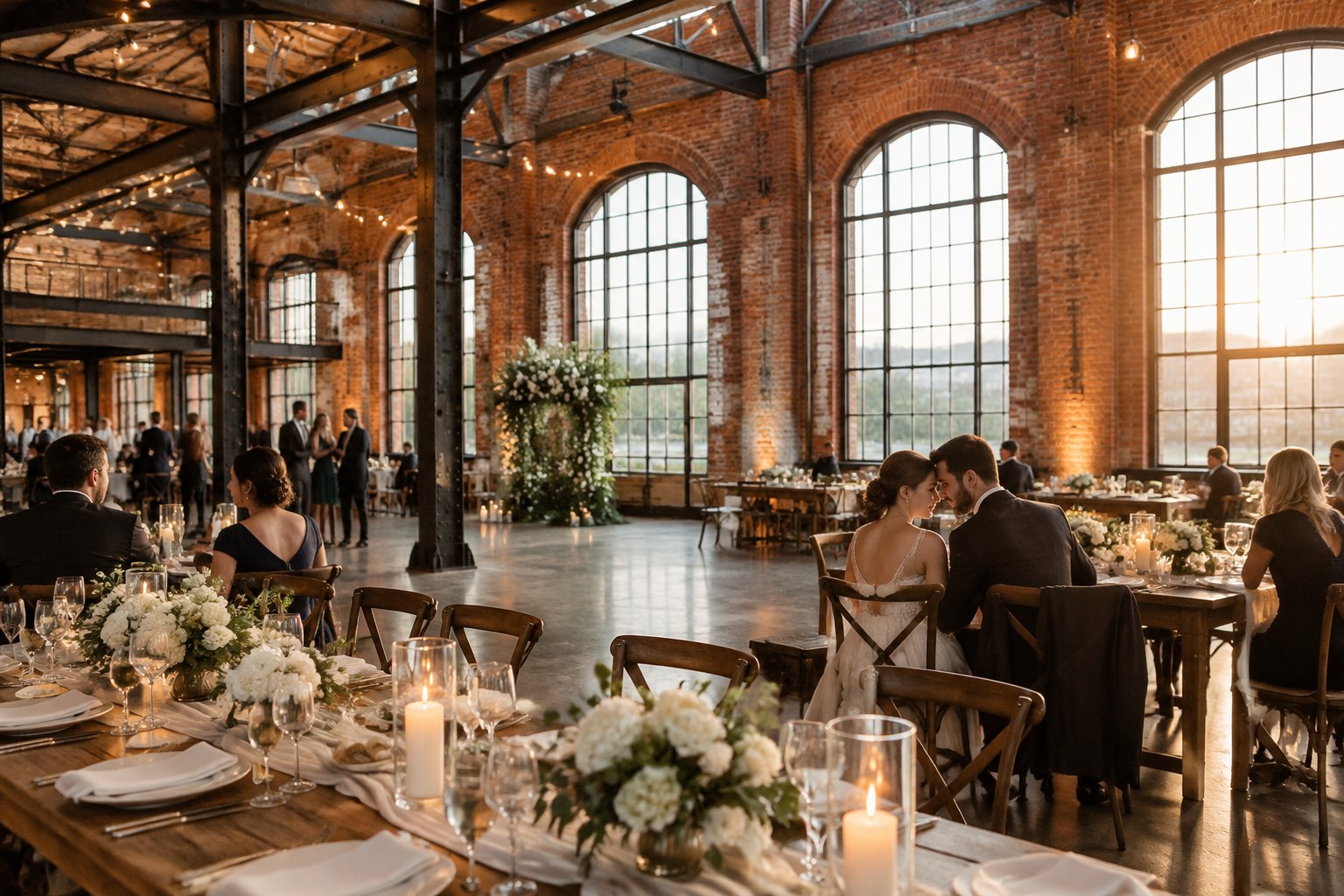
Your venue choice shapes the guest experience as much as the look of your day. Compare each space’s layout, cost, and practical details before you book, then ask the venue team about a tour and a written estimate.
Which East London Spaces Suit Your Wedding?
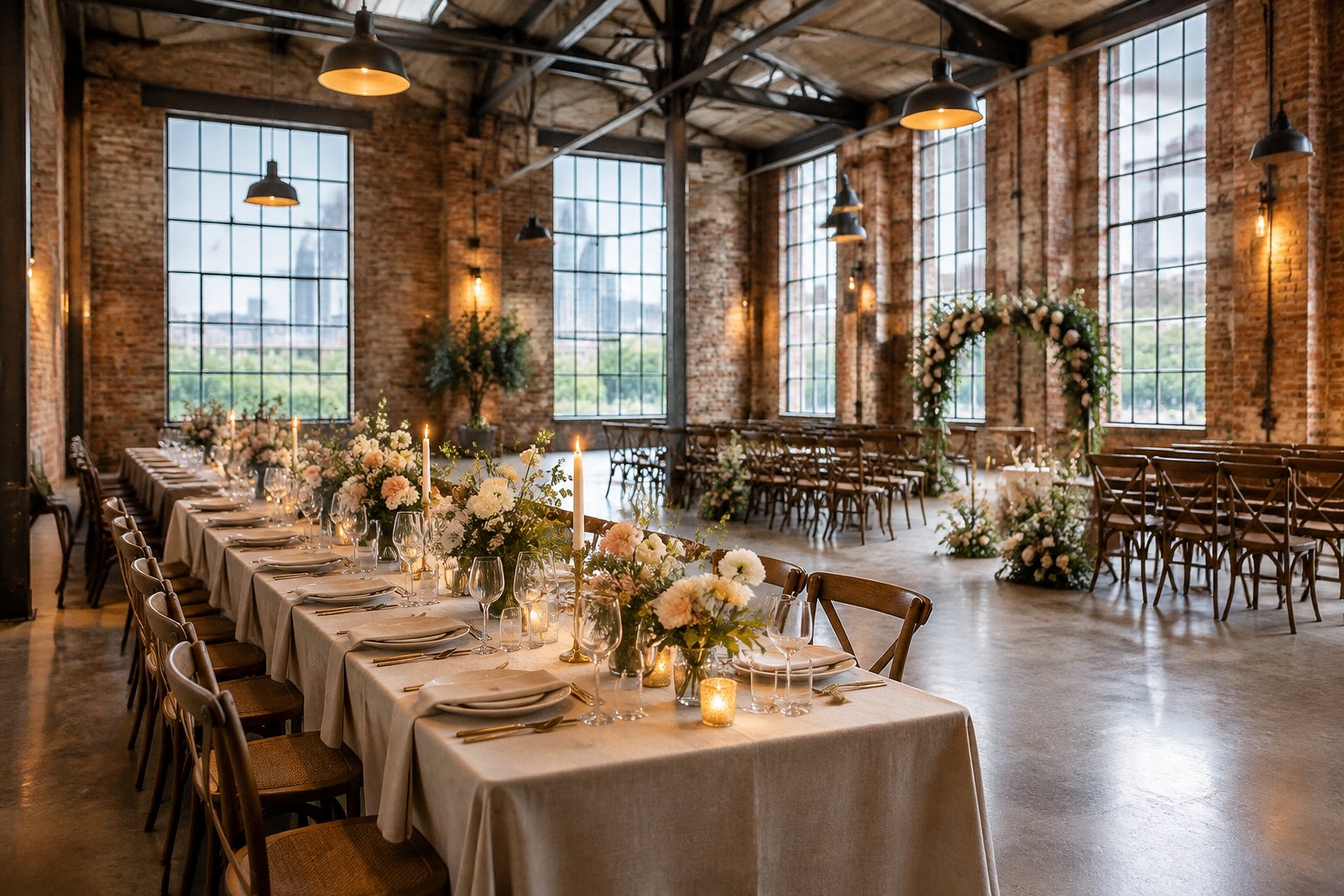
MOTEL Studios, Shoreditch Studios, and Trinity Buoy Wharf are strong starting points for different industrial wedding styles. Compare their settings and layouts with other wedding venues, including warehouse spaces and creative studios. Your guest count and plans for the day will help you narrow the list.
| Venue | Setting to explore | A good fit if you want |
|---|---|---|
| MOTEL Studios | Three Arches | Flexible flow between parts of the day |
| Shoreditch Studios | Creative studio setting | A blank canvas for your design |
| Trinity Buoy Wharf | Riverside location | A larger setting with skyline views |
MOTEL Studios: Three Arches and Flexible Flow
MOTEL Studios is worth a tour if you want to plan distinct moments within one event space. Ask how the Three Arches layout works for your ceremony, drinks reception, and dinner, and whether the venue can accommodate your preferred floor plan. Get clear details on guest capacity for each setup, since a ceremony layout and a seated meal may have different limits.
Shoreditch Studios: A Creative Blank Canvas
Shoreditch Studios suits you if you want room to shape the look of your day around a studio setting. Ask what comes with the hire, which suppliers you can bring in, and how much time you get for setup and breakdown. As you compare spaces, consider how your furniture and styling choices will work with the architecture.
Trinity Buoy Wharf: Riverside Scale and Skyline Views
Trinity Buoy Wharf is a strong option if a riverside setting and skyline views are part of your vision. Check where each part of your day would take place and how guests move between those areas. Ask the venue about access times, indoor arrangements, and the guest limit for your chosen setup.
Other Spaces to Compare
Add West Reservoir Centre, Sunbeam Studios, Tanner Warehouse, and 100 Barrington to your wider search. Each gives you another venue to ask about when comparing location, layout, and hire terms. A guide to choosing a wedding location can help you weigh travel, guest needs, and the feel you want from the day.
What Makes an Industrial Venue Feel Right?
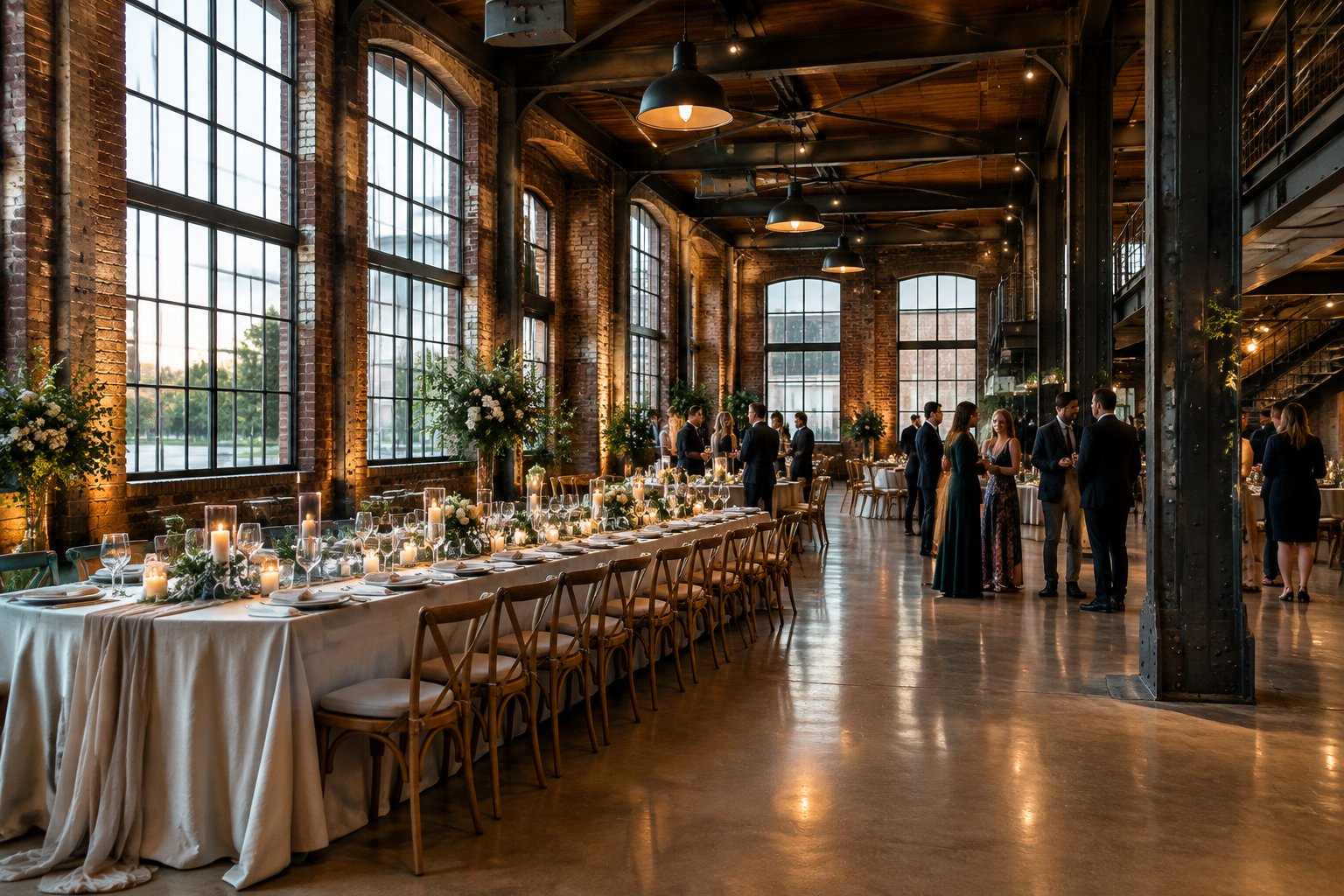
An industrial venue feels right when you build on its structure and give guests a comfortable place to celebrate. Exposed materials add character, while lighting and thoughtful styling help the room feel welcoming. You can use a restrained design or add soft details for a warmer industrial chic wedding.
Exposed Brick, Steelwork, and Converted Warehouses
Look for the details that give converted warehouses and former factories their character: brick, steelwork, tall ceilings, and broad windows. During a tour, notice how natural light moves through the room and where structural features might affect your layout. Ask about power access and restrictions for hanging decorations from beams or other fittings.
The room’s existing features can guide your choices. A brick wall may provide a strong backdrop for your ceremony, while a clear stretch of floor gives you space for dining or dancing. Check sightlines from guest tables so important moments remain easy to see.
Creating an Industrial Chic Wedding Without Over-Styling
Choose a few details that soften the harder surfaces. Warm lighting, greenery, and fabric bring texture into a large room without hiding its original features. If you want a clean, modern look, keep the palette simple and let the building’s materials add visual interest.
Use a layout that feels comfortable at your expected guest count. A seating plan helps you leave room for clear walkways and a dance area. For table styling, industrial wedding table decoration ideas can help you connect metal, wood, and soft details in a considered way.
How Do You Compare Venue Costs and Inclusions?
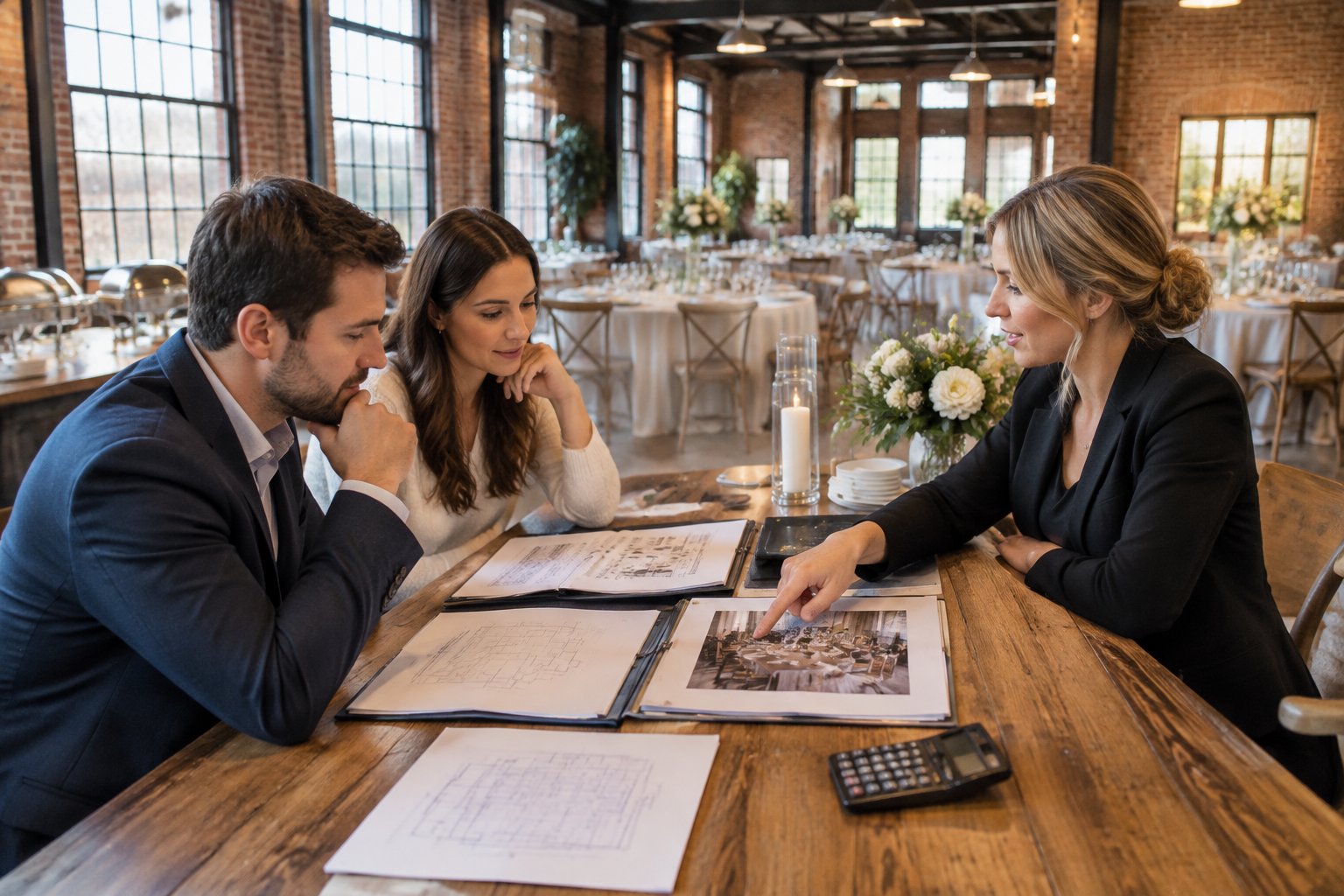
Compare each venue’s full event cost, not only its hire fee. A blank-canvas space gives you room to make your own choices, while a package may include services and equipment that reduce the number of suppliers you need to arrange. Request itemized estimates based on the same guest count and schedule.
Dry Hire Versus Packages
With dry hire, you rent the space and arrange the event elements covered by the agreement yourself. A package may include some combination of furniture, staffing, catering, or bar service. Ask for a written list of inclusions, plus any required suppliers or extra fees.
Build a comparison sheet with the venue fee, rentals, staffing, delivery, setup, and breakdown. Include any costs tied to power, lighting, or climate control if they apply to the space. For a broader budget check, compare your estimates with what wedding venues cost.
Catering, Drinks, Furniture, and Staffing
Ask whether you can choose your own caterer and what facilities are available for food preparation. Confirm who supplies tables, chairs, linens, glassware, and a bar setup, then check whether delivery and collection are included. Get details on staff roles and hours, including who will be on site during setup and the event.
Make sure your estimate covers the service you want, including drinks and any required bar staff. If you’re comparing an inclusive package with a space-only rental, ask both venues to price the same guest count, menu style, and event hours.
Checking Capacity, Licensing, and Access
Confirm the room’s maximum guest count for your planned layout, including the ceremony and seated dinner. Ask about the venue’s licensing for your intended ceremony and bar service, and check whether you need to make separate arrangements. Your written agreement should state access times and any rules for suppliers, deliveries, and late-night events.
Check accessibility and guest facilities during your tour. Ask where guests enter, how they reach the event space, and what arrangements are available for anyone with mobility needs. These details help you judge whether the venue suits your guest list and schedule.
How Can You Plan the Day Around the Space?
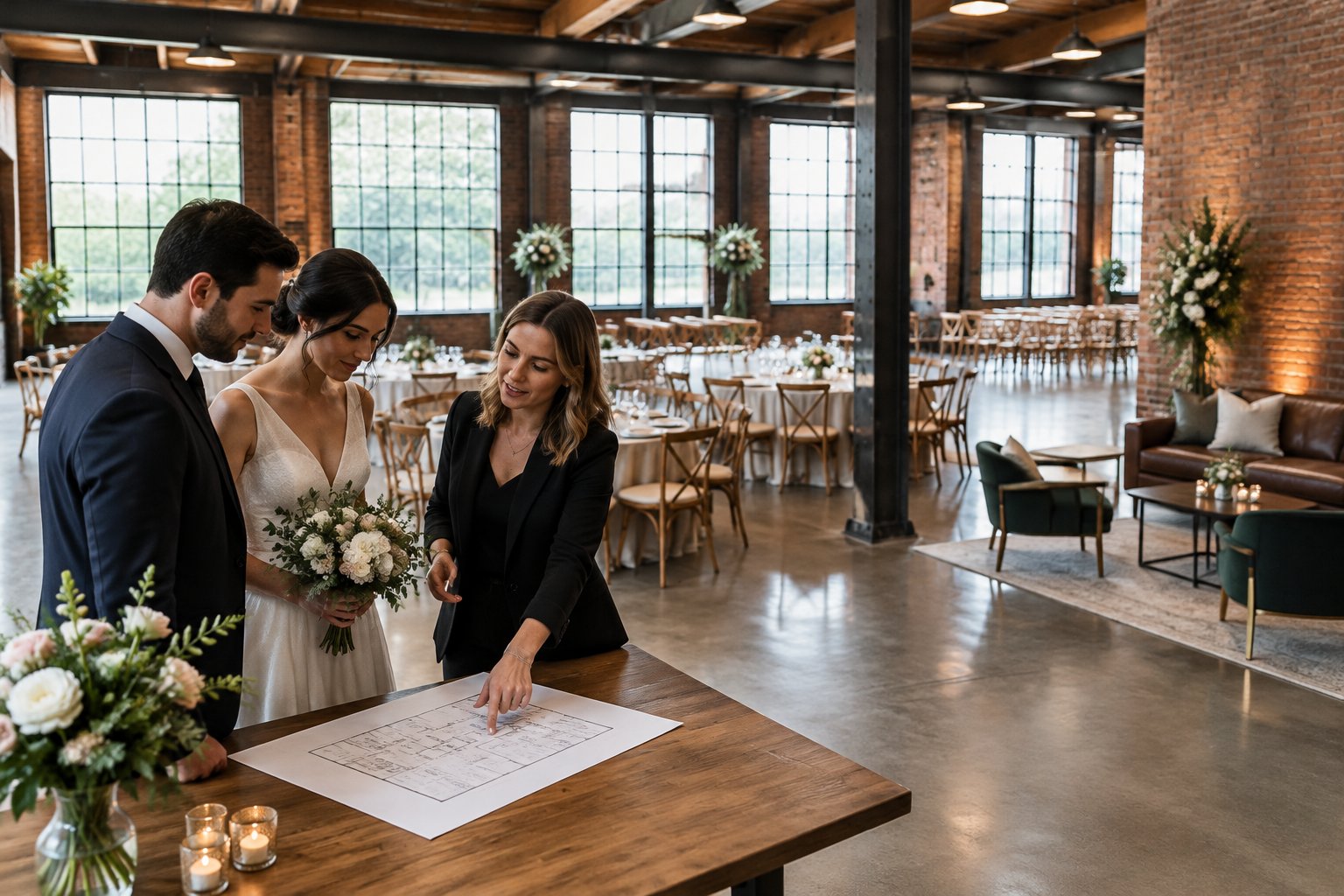
Plan your schedule around the venue’s layout, light, and access rules. A clear floor plan helps you manage transitions between the ceremony and reception, while a lighting plan keeps the space comfortable as daylight fades. Share your draft schedule with the venue team and key suppliers early.
Designing Ceremony-to-Reception Flow
Map out where guests will arrive, gather, and sit at each point in the day. If your ceremony and reception use the same room, ask how long a room reset takes and where guests can wait during the changeover. Keep routes to restrooms and exits clear when you place tables, bars, and decor.
A seating plan should support easy movement as well as conversation. Check how much space your chosen table layout leaves for servers and guests. You can use seating plan tips to organize groups while keeping walkways open.
Lighting and Styling for Day and Night
Visit the venue at the time of day your event will take place. Natural light can make a studio or warehouse feel bright during the afternoon, while evening celebrations need a considered mix of ambient and task lighting. Ask what lighting is included and whether your suppliers need approval to install additional fixtures.
Set the mood with light that works across the day. Brighter areas help guests move around and enjoy dinner, while softer lighting creates a relaxed feel for dancing. Confirm where you can place candles or other decor and whether the venue has rules for installations.
Guest Travel, Nearby Hotels, and Noise Limits
Give guests clear travel details, including transit stops, parking options, and the best entrance to use. If you have out-of-town guests, check nearby hotels and share a few options early. Ask the venue about noise limits, music end times, and any steps you need to take for evening arrivals or departures.
When Are Nearby Alternatives Worth Considering?
Look beyond East London if a nearby venue better suits your budget, guest count, or preferred setting. South London spaces and venues in other parts of the city give you more choices while keeping an industrial style in reach. Compare travel time and event terms alongside the look of each space.
South London Options and 100 Barrington
100 Barrington gives you a South London option to compare with East London studios and warehouses. Add it to your shortlist if you’re open to a different area, then check the same details you gathered for the other venues: guest limits, hire terms, and supplier rules. A consistent checklist makes the comparison easier.
Industrial Venues Beyond East London
Victoria Warehouse and Camp and Furnace are further options if your search can extend beyond East London. Check how each location works for your guests and event schedule before deciding whether the extra travel is practical.
Compare complete quotes, including included services and any supplier costs, then revisit your shortlist with your preferred dates and guest count in hand.