
Industrial Wedding Venues: Key Features, Costs, and Planning Tips
The key features of industrial wedding venues are exposed brick, steel beams, tall windows, and open layouts that give your celebration a distinctive backdrop and flexible design options.
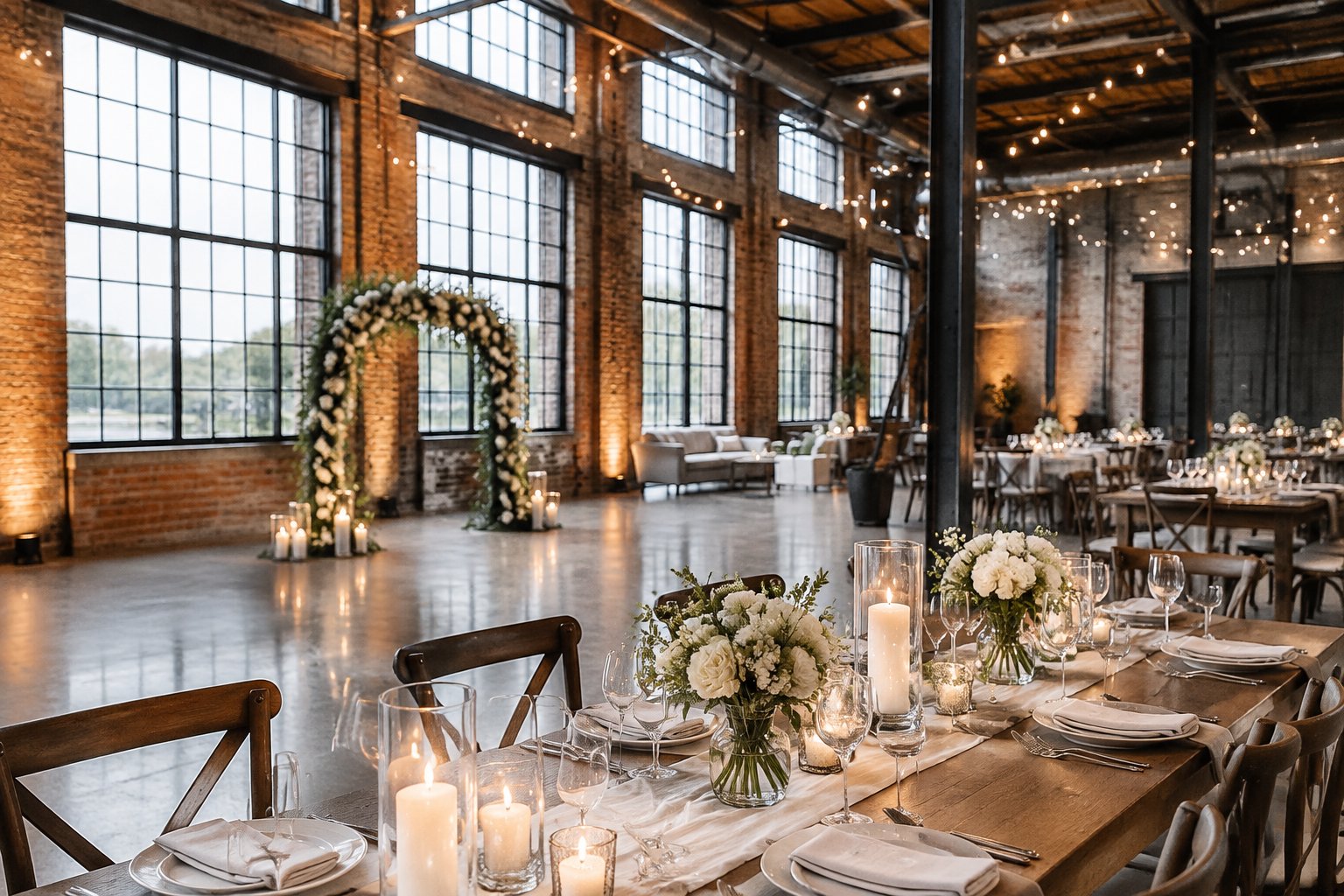
You can find this look in converted warehouses, former factories, and city lofts. Some spaces include tables, lighting, or a coordinator; others give you an open shell to shape from the ground up, so compare the full package before you book.
Start your shortlist with spaces that fit your guest count and vision, then arrange a tour to see how each one feels in person.
What Makes an Industrial Venue Distinctive?
An industrial wedding venue pairs original architectural details with a flexible layout, giving you a setting that feels striking before you add décor. The building’s materials and history can guide your design, while its open floor plan gives you room to create distinct areas for the ceremony, dinner, and dancing.
Which Architectural Features Define the Look?
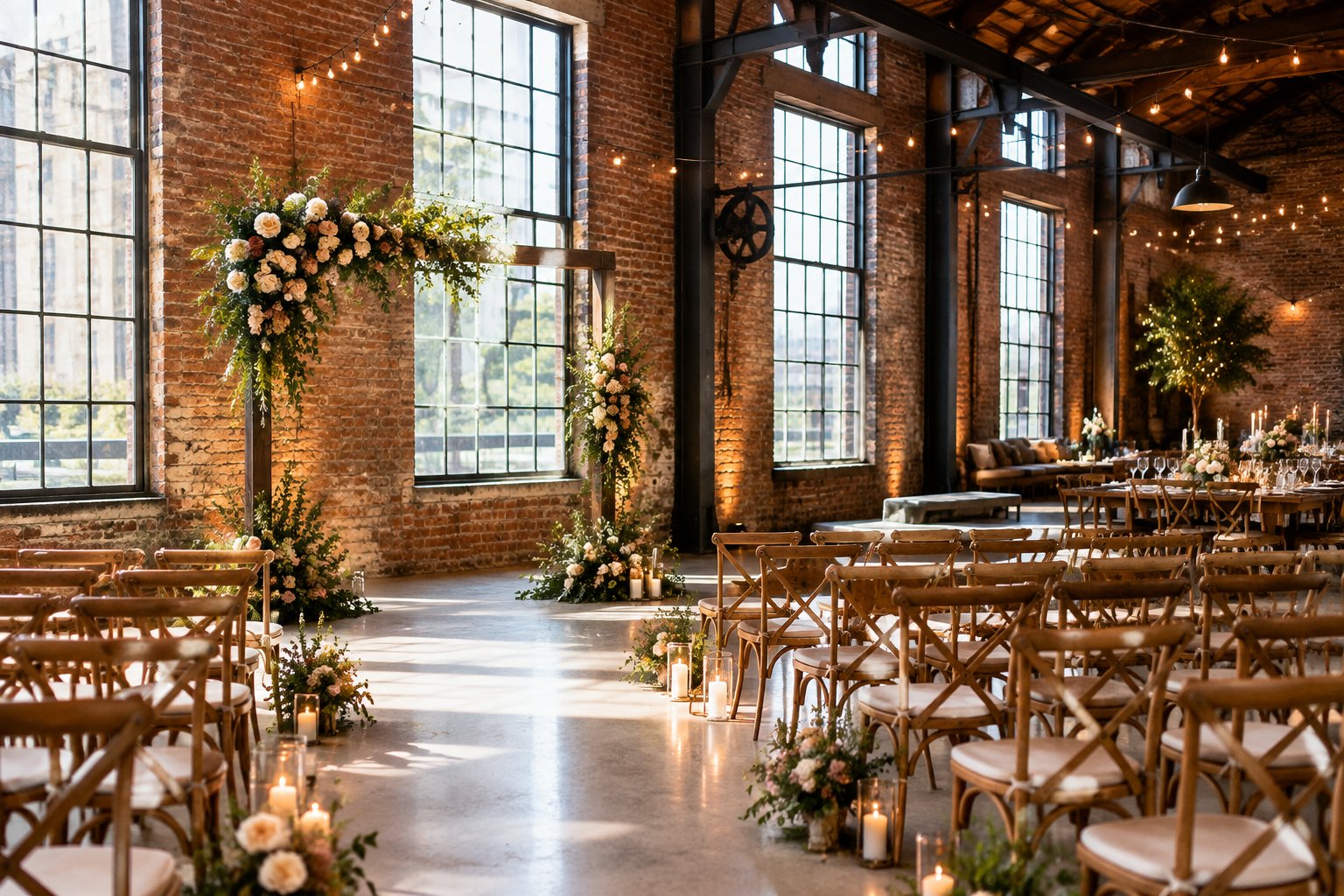
Look for details that add texture and character, such as exposed brick, concrete floors, steel beams, and factory-style windows. Floor-to-ceiling windows bring in daylight, while high ceilings give your ceremony backdrop or hanging décor room to breathe.
A building’s history adds another layer. Converted warehouses and former factories may preserve original beams, floors, or masonry, creating a sense of place that gives your photos depth.
As you tour, notice how the features work together and whether the building’s story connects with your vision.
What Styles Work Well in These Spaces?
Industrial spaces suit a wide range of styles, from modern minimalism to romantic, bohemian, and rustic designs. You can keep the architecture front and center with clean lines, or soften it with fabric, greenery, and warm lighting for an industrial-chic wedding.
Even a formal celebration can feel at home in a raw space when you add polished table settings and thoughtful floral design. To narrow your look, think about the mood you want guests to feel when they enter.
A few clear choices in color, materials, and formality can help you shape a cohesive wedding style that suits the venue.
How Do You Find the Right Venue?
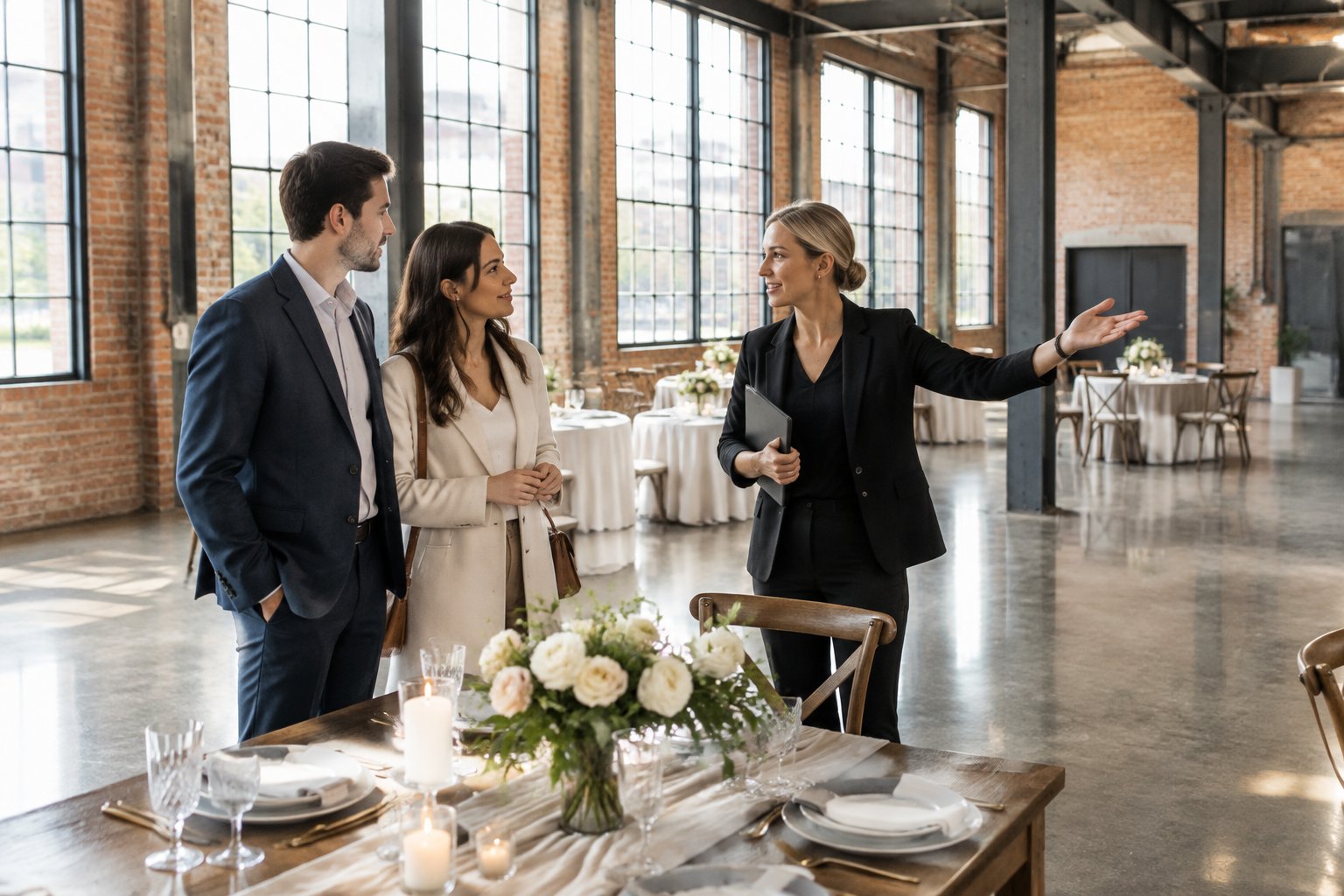
The right industrial venue fits your guest count, event plans, and budget while giving you the architectural character you want. Compare the practical details alongside the look, and visit in person to judge the space, lighting, and flow.
Which Details Matter When Comparing Spaces?
Start with your estimated guest count and ceremony plan. Check seated capacity, dance-floor space, and whether the layout supports separate areas for your ceremony, cocktail hour, and reception.
If your celebration is intimate, a smaller loft wedding venue may feel more welcoming than a large warehouse. Then review location and guest access. Consider parking, public transit, nearby hotels, accessible entrances, and restroom capacity.
Ask when vendors can arrive and how much time you have for setup and cleanup. A helpful venue-selection checklist can keep your priorities clear during tours.
What Are Some Notable Venues to Explore?
You can begin your search with names such as The Foundry, The Loft, Moniker Warehouse, Sodo Park, The Green Building, and Aria. Other spaces to explore include The Century, Mt. Washington Mill Dye House, The Unique Space, Basilica, and Moss.
Treat these as starting points, then check each venue’s current event offerings, location, availability, and policies. The name alone won’t tell you how the room works for your plans, so review floor plans and tour the space if you can.
Browsing a wider range of wedding venue ideas can also help you compare an industrial setting with other styles.
How Much Does an Industrial Venue Cost?
A space-only industrial venue rental can fall around $2,000 to $10,000 in the U.S., with the city, date, and included services shaping the price. Your final budget can rise when you add rentals, catering, lighting, staffing, and other production needs.

Which Rentals and Services May Cost Extra?
Ask what the venue provides before you treat its rental fee as your full space budget. An open warehouse may require you to arrange tables and chairs, linens, dinnerware, bar service, and sound equipment.
You may also need extra lighting, restrooms, security, cleaning, or a generator. Some planning estimates put rentals and vendors at $10,000 to $25,000 or more beyond the venue fee, depending on the guest count and the services you choose.
Use that as an early planning range, then ask vendors for estimates based on your actual plans.
How Can You Compare Total Venue Costs?
Request an itemized estimate for each venue that includes required services, taxes, service fees, setup and cleanup, overtime, and any vendor charges. Compare the complete event cost at your guest count, not just the advertised rental price.
Reviewing what wedding venues cost can give you a broader point of comparison, and exploring affordable wedding venues may help you identify ways to keep spending in check.
How Can You Make an Industrial Space Feel Warm?
You can make an industrial space feel welcoming by pairing its hard surfaces with warm light, soft textures, and personal details. A few focused choices can add comfort while letting the venue’s brick, beams, and windows remain part of the design.
Which Lighting and Décor Choices Soften Raw Materials?
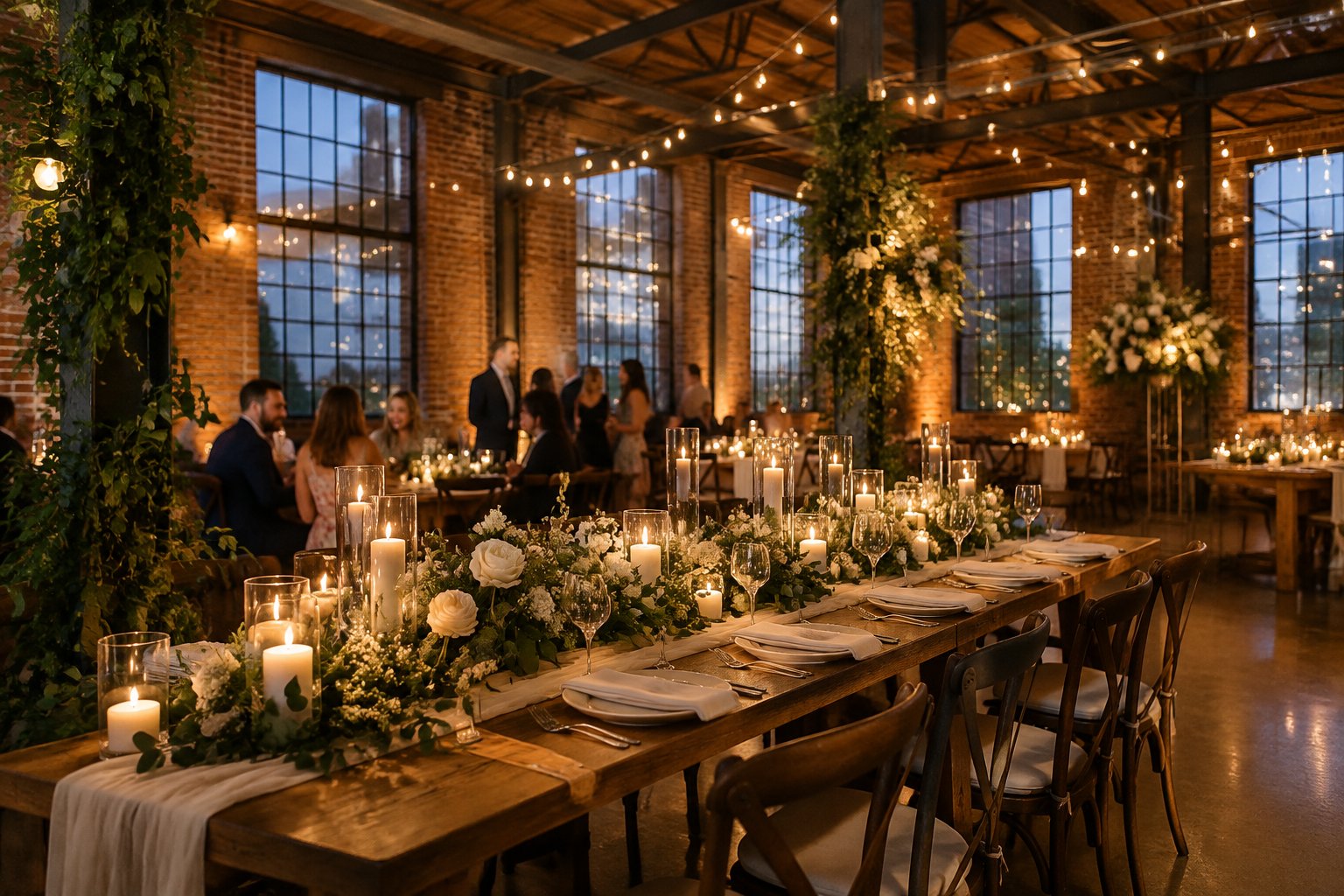
Use warm-toned bulbs, candles, or string lights to soften concrete and brick. Layering light at different heights helps define the room: table candles create an intimate dining area, while carefully placed uplighting draws attention to the building’s structure.
Explore wedding lighting ideas as you plan the room’s look. Textiles and greenery can add softness without hiding the architecture.
Try fabric runners, upholstered seating, draped panels, or leafy arrangements along a beam. For the tables, build a cohesive look with industrial wedding table decorations that balance metal and wood with softer finishes.
How Can You Personalize the Space Without Overdecorating?
Choose a few details that tell your story, such as family photos, meaningful colors, or a ceremony backdrop made with seasonal flowers. Let the venue’s existing features anchor the room, then focus your décor on places where guests gather and where you want attention to land.
If you’re working with a bare space, map out the layout before ordering décor. Mark the ceremony area, dining tables, bar, and dance floor, then identify any empty zones that need a purpose.
These ideas for decorating an empty room for a wedding can help you plan the space with intention.
What Should You Check Before Booking?
Before you book, confirm that the venue can comfortably support your guest count, vendors, and event schedule. A striking room needs reliable systems and clear policies to keep your wedding day running smoothly.
How Do Capacity, Sound, and Climate Control Affect the Event?
Ask for seated and standing capacity figures, then check whether those numbers leave room for your ceremony, dinner, and dance floor. A layout that fits guests at a standing reception may feel crowded once you add tables, a band, and catering stations.
Test how the room sounds during your tour. High ceilings and hard surfaces can create echo, so ask about sound equipment, music limits, and any noise curfew.
Confirm that heating and cooling can keep the space comfortable for your season and guest count. Also check electrical capacity, outlets, restrooms, accessibility, and the plan for severe weather if any part of your event is outdoors.
Which Contract and Vendor Questions Should You Ask?
Get the key terms in writing before you sign. Confirm the rental hours, vendor access times, cleanup deadline, payment schedule, deposit terms, cancellation policy, and charges for overtime or damage.
Ask whether you can bring your own caterer and bar team, or whether the venue requires specific vendors. Review rules for candles, hanging décor, and outside alcohol, along with any insurance requirements.
Ask who handles setup, security, and cleanup, and what happens if a building system fails on your event date. Before you commit, request a written, itemized estimate that includes every required fee and service.