
Industrial Wedding Venues on a Budget: Smart Ways to Save
You can find industrial wedding venues on a budget by choosing a lower-demand date, matching the space to your guest count, and pricing every required service before you book. A modest rental fee can make a warehouse or loft look affordable, while furniture, lighting, staffing, and climate control add to your total.
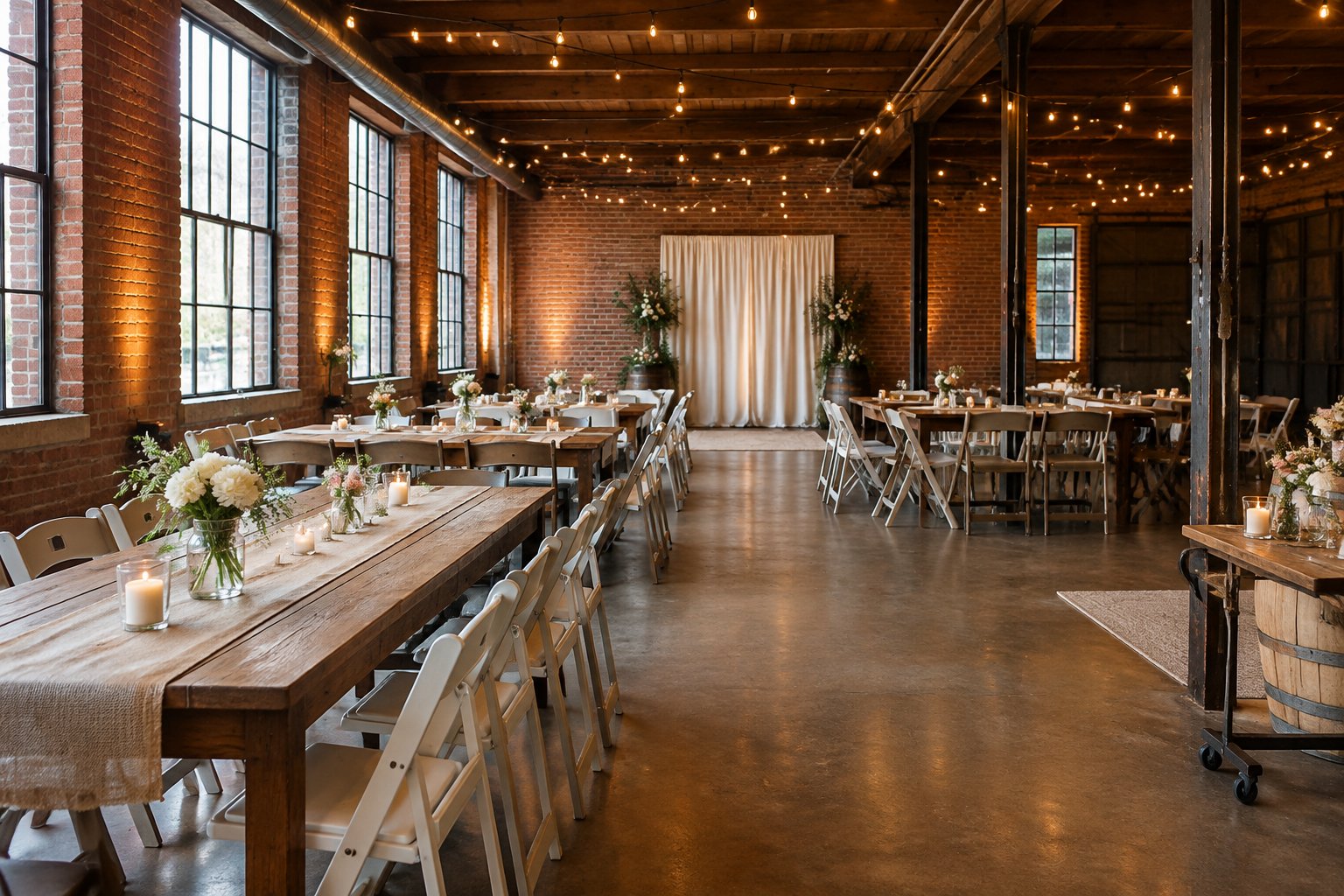
Set a guest-count range and a firm venue budget before you tour. Then ask for a written estimate that covers the full event, so you can compare spaces on the same terms. Start your search with those numbers in hand, and you’ll be ready to spot a good fit.
Which Industrial Spaces Can Cost Less?
Smaller converted warehouses, lofts, and former factories can offer lower rental fees, especially on weekdays or off-season dates. Your best value comes from a space that fits your guest list and already has useful features.
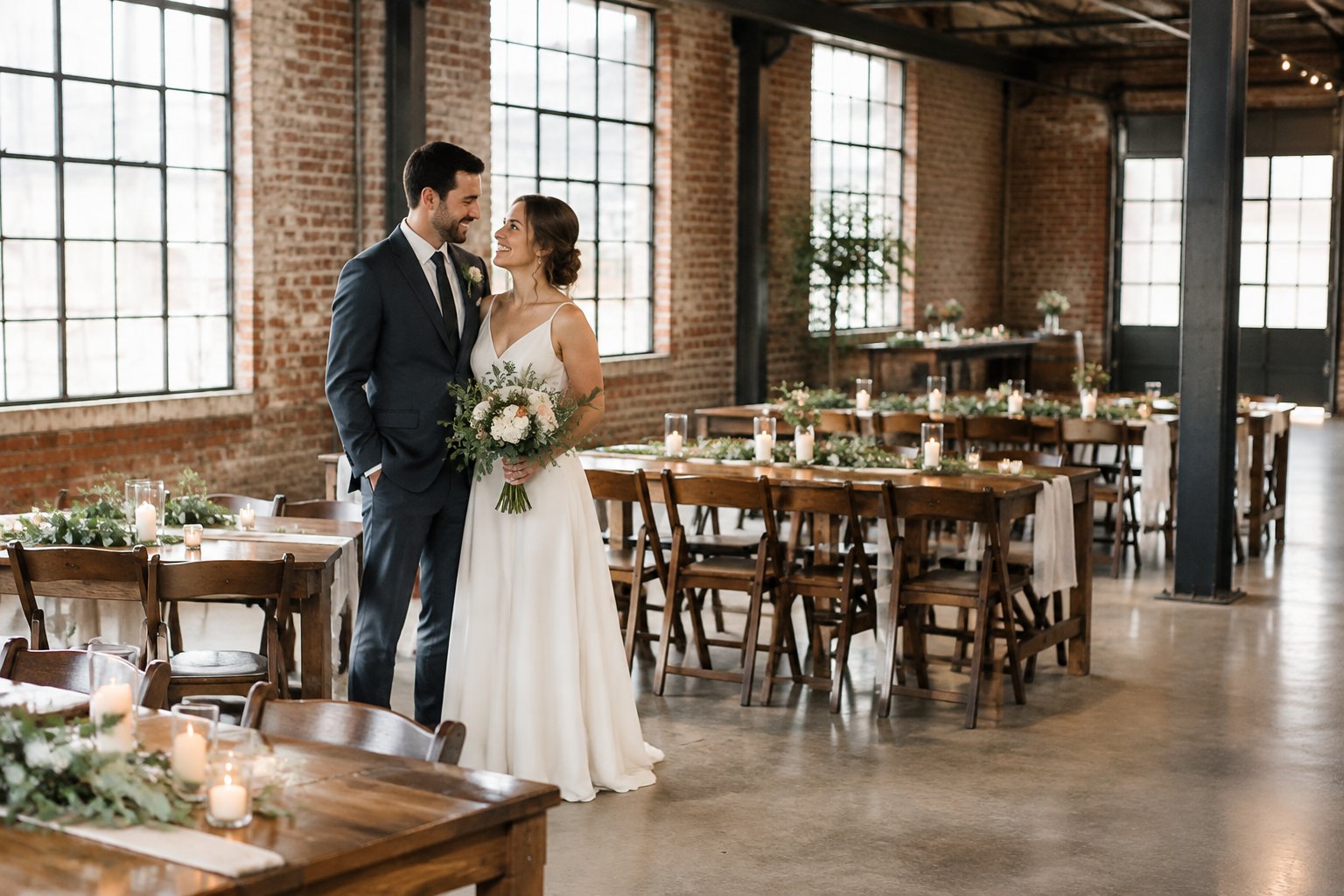
Compare the price of the room with the cost of preparing it for your celebration. As you browse affordable wedding venues, check what each location includes and which services you’ll need to arrange.
When Is a Converted Warehouse a Good Fit?
A converted warehouse can be a strong choice when you want an open layout and a relaxed, urban feel. The large room gives you flexibility to plan a ceremony, dinner, and dancing in one place. That setup can also reduce transportation costs for you and your guests.
Ask how many tables and chairs come with the rental, and whether the venue has restrooms, heating, air conditioning, and usable lighting. Some converted warehouses have event-ready features; others need more rentals and vendor support. Add those costs to the quote before you compare it with other cheap wedding venue ideas.
Could a Loft Work for Your Guest Count?
A loft wedding venue can suit a smaller celebration when its seated capacity leaves enough room for dining, dancing, and guest circulation. Check the floor plan with your expected headcount. A room that fits everyone at a ceremony may feel crowded once you add tables, a bar, and a dance floor.
Loft wedding venues can also offer windows, city views, or existing furniture that adds character without extra decor. Ask about elevator access, load-in rules, and any limits on deliveries. These details help you judge whether the space works for your vendors and your schedule.
What Can Former Factories and Mills Offer?
Former factories and mills can give your warehouse wedding a distinctive setting through features such as tall windows, old brick, and original structural details. Those built-in elements can reduce how much decoration you need.
Tour the rooms you would use throughout the day, including restrooms and any getting-ready areas. Ask whether the building has comfortable temperatures in your wedding season and enough power for your lighting and sound equipment. The answers help you budget for practical needs before you commit.
What Should You Compare Beyond the Rental Fee?
Compare the full event cost, including what the industrial wedding venue provides and what you must rent or hire. An open floor plan, natural light, and high ceilings add value when they support your guest count and design.

Ask each venue for a quote based on the same date, guest count, and event hours. That makes it easier to compare what most wedding venues cost with the full price of a space that needs extra services.
Which Essentials Are Included?
Request an itemized list of included items and services. Confirm whether the rental covers tables, chairs, linens, lighting, a dance floor, setup, cleanup, and staff. Ask about the ceremony space, getting-ready rooms, and access time for vendors.
Modern industrial wedding venues may offer built-in sound or lighting equipment, while some industrial-chic wedding venues provide the room with few extras. Ask what each item costs when added to your package. A clear list helps you avoid paying twice for something you assumed came with the rental.
How Do Capacity and Layout Affect Your Plans?
Your guest count affects the room size you need and the price of rentals, catering, and staffing. Ask for the seated capacity with a dance floor, then review a sample layout with the venue coordinator.
An open floor plan gives you room to create distinct areas for the ceremony, dinner, and dancing. Check how much space those plans leave for guests to move between tables. If you’re considering affordable indoor wedding venues, compare usable space and layout alongside the listed capacity.
What Should You Check for Guest Comfort and Vendor Access?
Check heating and air conditioning, restroom access, parking, and accessibility during your tour. Large industrial rooms can feel chilly or warm depending on the season, so ask how the venue manages temperature for your event size.
Your vendors also need clear access for deliveries and setup. Ask about loading doors, freight elevators, parking for vendor vehicles, power outlets, and the time allowed for setup and breakdown. Confirm any sound limits or end-time rules before you book.
How Can You Keep the Venue Costs Under Control?
You can control your industrial wedding budget by pricing the full event early and choosing a space whose existing features reduce rentals and decor. A lower room fee helps when it stays lower after required charges are added.

A weekday or off-season date can lower the rental quote, while a shorter guest list reduces per-person costs. If you’re flexible about timing, ask venues which dates have the best rates and compare them with your preferred date.
Which Rental and Vendor Charges Are Easy to Miss?
Ask about service charges, taxes, cleaning fees, security, insurance, overtime, and required staffing. Check whether the contract includes setup and breakdown time, or whether those hours come with an added charge.
Vendor rules also affect your total. Ask whether you can choose your caterer, bring your own alcohol, or use vendors outside a preferred list. If the venue charges corkage or outside-vendor fees, include them in your estimate. You can also ask about savings on wedding venue discounts, such as added setup time or waived fees.
How Can You Use the Venue’s Existing Features?
Let the building provide much of the visual interest. Windows, brickwork, beams, and existing fixtures can make your industrial-chic wedding venue feel finished with fewer rentals and smaller floral arrangements.
Ask the venue for photos from past events and a list of items it keeps on site. Reusing its tables, chairs, or lighting can reduce delivery and rental costs. When you compare a blank space with all-inclusive wedding venues on a budget, include both the rental price and the cost of filling the room.
When Is a Blank-Canvas Space Actually a Better Value?
A blank-canvas venue offers value when you have a clear plan, affordable vendors, and enough time to manage setup. You can choose the layout and decor that suit your celebration, while keeping the design focused on a few key areas.
Add quotes for furniture, lighting, restrooms, climate control, and catering equipment before you decide. If those costs rise quickly, a venue with more included services may fit your budget better. Compare the full estimates at your actual headcount.
How Can You Style the Space Without Overspending?
Use the venue’s existing character as your main decor, then add a few warm details to soften the room. Exposed brick, steel beams, and concrete floors already create a strong setting for an industrial-chic wedding.
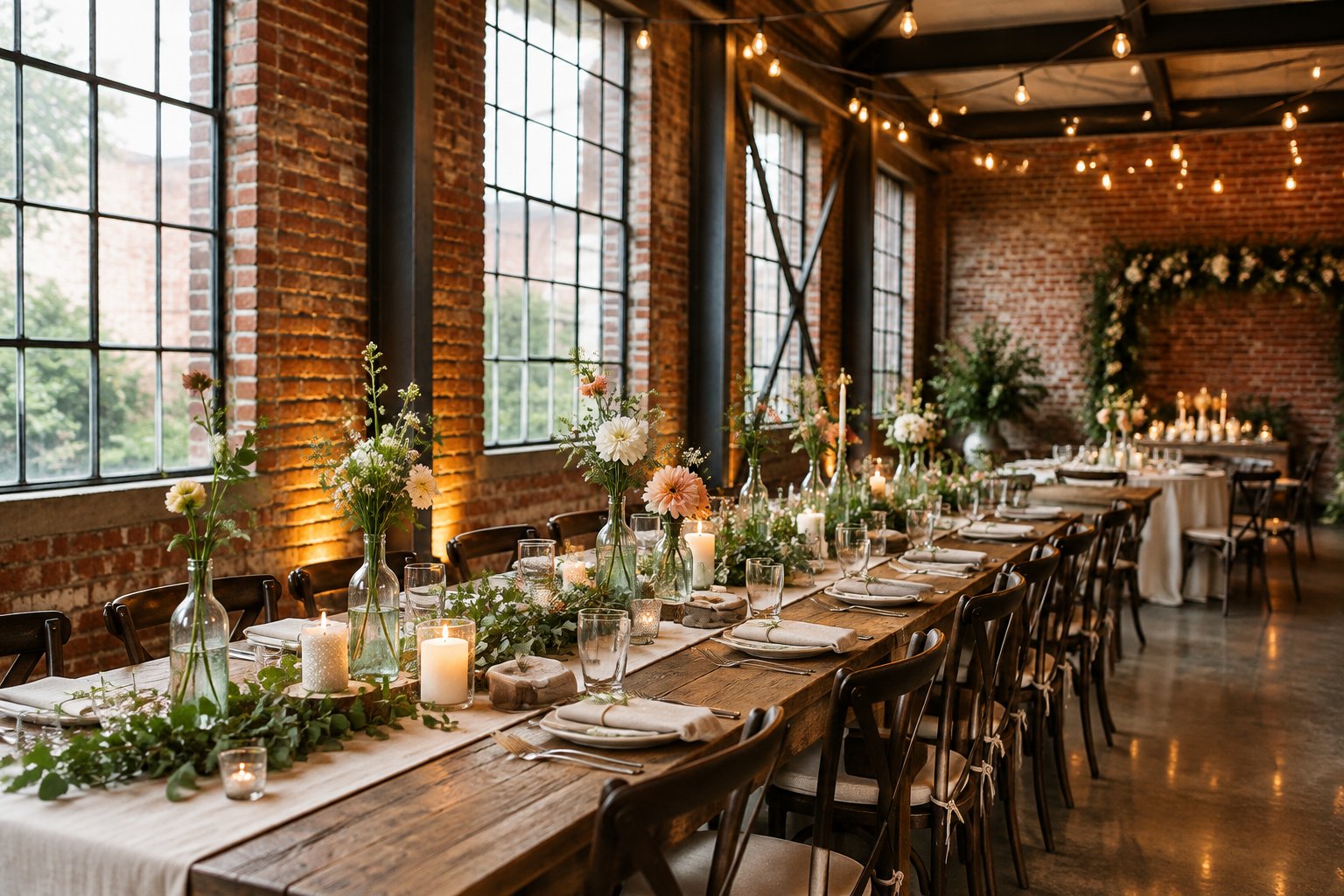
Choose one or two design ideas and repeat them across the room. A simple palette and focused decor plan can help your industrial-themed wedding feel coordinated without requiring decorations on every surface.
Which Lighting Choices Add Warmth for Less?
Warm lighting can make a large room feel more inviting after sunset. Use the venue’s existing fixtures where possible, then ask whether it offers dimmers or basic uplighting. Edison bulbs or string lights can add a soft glow when the venue approves them and provides safe hanging points.
Plan lighting around the areas guests use most, such as dinner tables and the dance floor. Ask for the total price of installation, equipment, and removal. You can find more wedding decoration ideas on a budget by focusing on a few details that make a visible difference.
How Can You Balance Industrial Materials With Softer Details?
Pair hard materials with small touches of fabric, greenery, or flowers. A runner across a table, soft napkins, or a few low floral arrangements can warm the look of exposed brick walls and metal accents without covering the building’s character.
Use color and texture in a consistent way across your tables. Simple industrial wedding table decoration ideas can help you choose pieces that work with the venue’s existing finishes. Rent specialty items only for the tables or areas where guests will notice them.
What Decor Can You Skip When the Architecture Does the Work?
Skip large installations that hide the venue’s best features. If the room has striking brickwork, steel beams, or tall windows, those details can serve as the backdrop for your ceremony and reception.
Walk through the space with your planner or florist and decide which areas need attention. A few well-placed signs, table arrangements, or candles can define the room without filling every corner. Keep a short decor list and check each item against your budget before ordering.
What Should You Ask During a Venue Tour?
Ask for a written total based on your date and guest count, then inspect the building’s practical features in person. Clear answers about price, access, and backup plans help you compare industrial wedding venues with confidence.
How Can You Confirm the Full Price in Writing?
Request an itemized quote that lists the rental fee, taxes, service charges, required staff, and any minimum spend. Ask what the price includes and which costs depend on your final guest count.
Have the venue confirm the event hours, setup window, cleanup time, overtime rate, and payment schedule in writing. Review the cancellation terms and ask whether the quoted rate can change before your wedding date. Keep the estimate with your contract so you can check later charges against it.
Which Practical Details Should You Inspect in Person?
Walk the route guests and vendors will use, from parking and entrances to the event room and restrooms. Check the floor for uneven areas, look at the lighting at the time your event will take place, and listen for noise from nearby streets or businesses.
Ask where vendors can unload and store equipment. Confirm that the venue has enough power for your planned sound and lighting setup, plus the facilities your caterer needs. Take notes during the tour so you can compare details while each space is fresh in your mind.
What Backup Plans and Restrictions Should You Know About?
Ask how the venue handles severe weather, power issues, and other disruptions. If any part of your event is outdoors, confirm the indoor backup space, its capacity, and who makes the switch decision.
Review rules for candles, hanging decor, amplified music, alcohol, and vendor access. Ask whether the venue requires event insurance or permits for your plans. Put approved arrangements and any related fees in the contract before you sign.