
Industrial Wedding Venues Under $5,000: 2026 Budget Picks
You can find industrial wedding venues under $5000 in 2026, especially among smaller event spaces, community halls, and off-peak rentals. The key is to check what the rental fee includes and price the full event before you book.
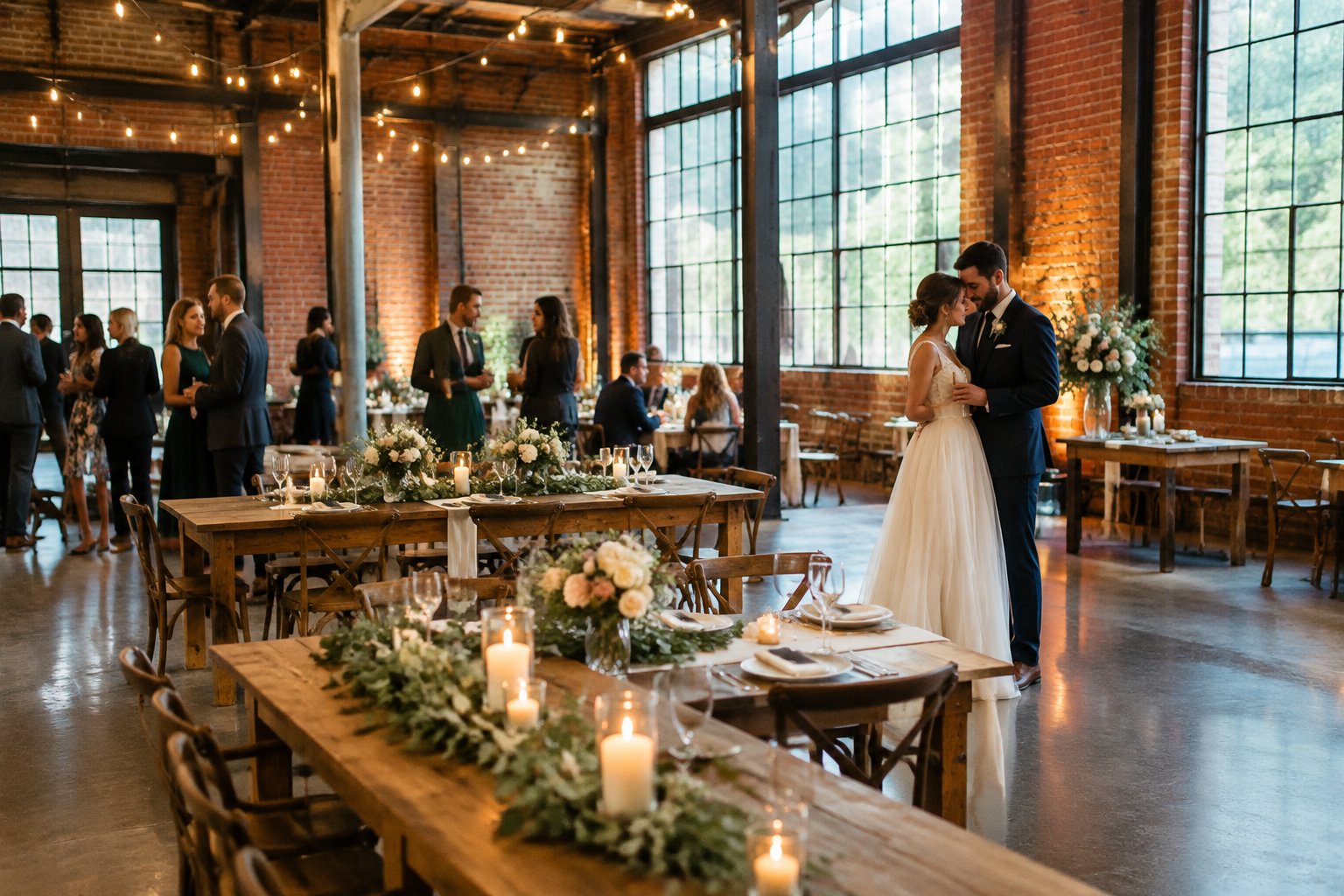
Your $5,000 target may cover venue hire alone, or it may need to stretch across your whole wedding. Set your guest limit and decide which costs the venue budget must cover, then ask nearby spaces for itemized quotes to compare.
What Can $5,000 Realistically Cover?
A $5,000 venue budget can cover the rental of an industrial-style space, with the final cost shaped by guest count, rental hours, and included services. If your $5,000 is the full wedding budget, you’ll need a smaller gathering and careful spending on food, attire, and photography.
Your realistic wedding budget starts with a clear distinction between venue costs and the total event budget.
How Does Venue Hire Differ From the Full Wedding Cost?
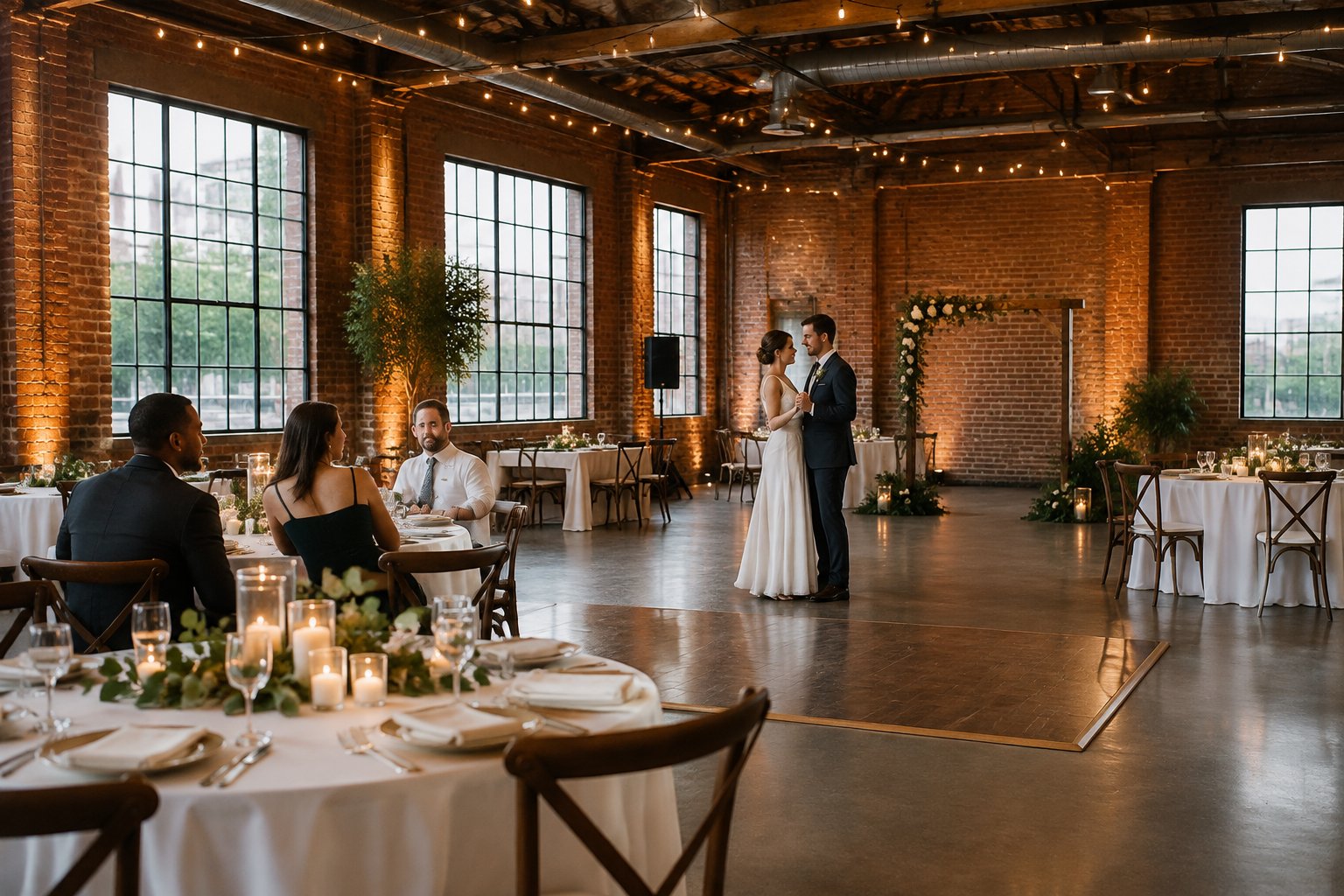
Venue hire is the price to use the space for a set time. It may include essentials such as tables, chairs, setup, or a venue attendant, though you need to confirm each item in writing.
Your full wedding cost also includes expenses such as catering, drinks, rentals, decorations, staffing, and event insurance. An industrial space with a low rental price may require you to arrange these services separately.
Ask for a quote that lists every required cost, then compare the total with your available budget. If you’re aiming to hold the entire celebration for $5,000, review what a wedding on a $5,000 budget can include before you set the venue limit.
How Does Guest Count Affect Your Budget?
A smaller guest list can reduce both the space you need and the cost of food, seating, linens, and service. Ask each venue for its seated capacity and the rental price at your expected headcount.
A large room can still fit a small celebration, though you may need extra decor or furniture to make it feel welcoming. A compact room may cost less and need fewer rentals, as long as guests have enough space to move between the ceremony, meal, and dancing.
Price your event using the guest count you plan to invite, then leave room in your budget for a few late additions.
Which Industrial-Style Spaces Could Fit Your Budget?
Smaller warehouses, lofts, community rooms, and micro wedding venues offer different ways to get an industrial look within your price range. Your best value comes from a space that already has character and provides the essentials you would otherwise need to rent.
Can Converted Warehouses and Lofts Stay Under $5,000?
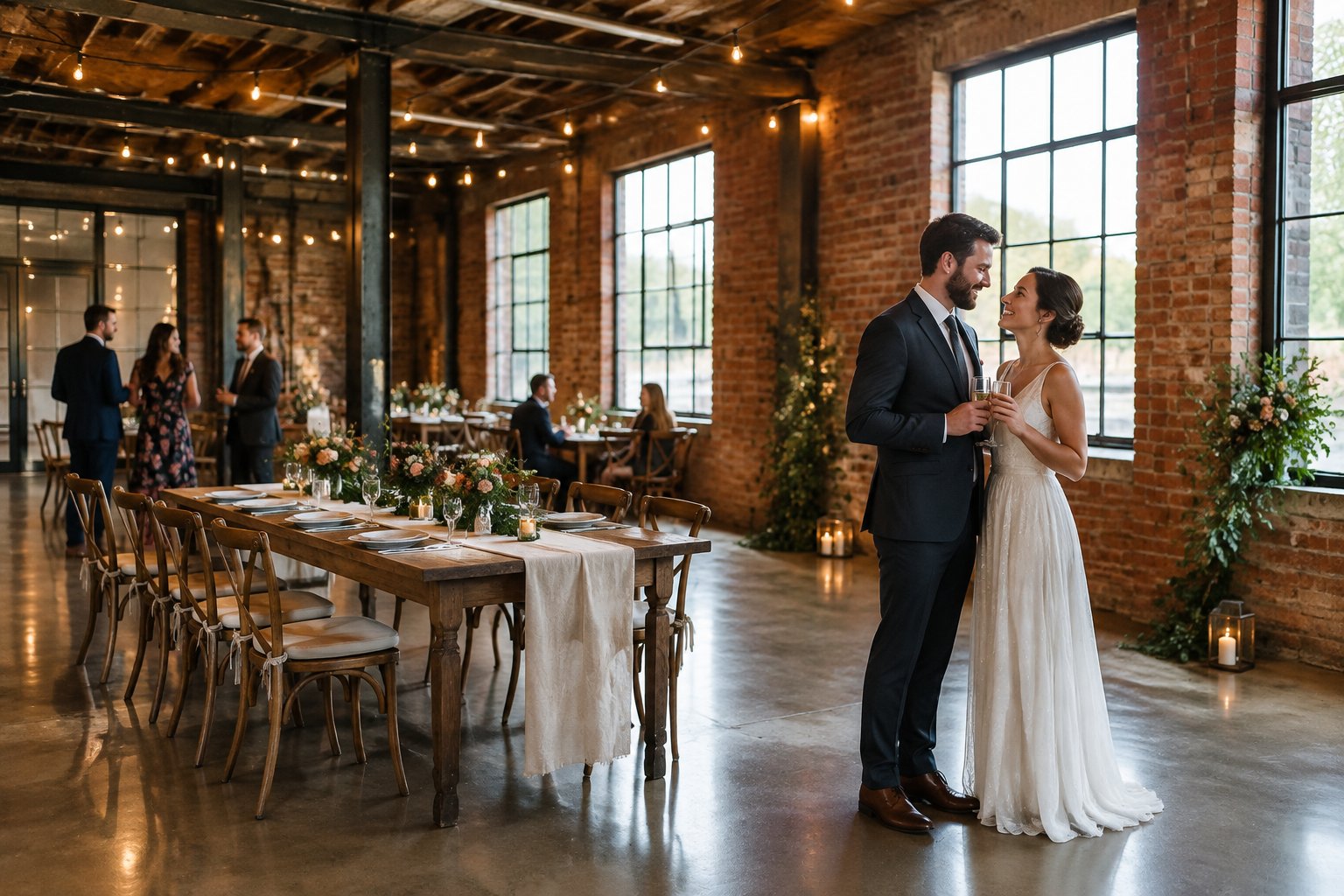
A converted warehouse or loft can fit a $5,000 rental budget when you book a smaller space, choose a less popular date, or keep your rental window short. Exposed brick, steel beams, and large windows provide built-in character, which can help you keep decoration costs modest.
Ask whether the listed rate includes tables, chairs, lighting, setup, and cleanup. Some spaces provide a furnished event area, while others charge separately for equipment and labor.
If you’re comparing affordable wedding venues, include rental costs in your estimate so a low base fee doesn’t hide extra expenses.
Could Community Centers or Municipal Halls Work?
Community centers and municipal halls can offer practical room rentals at lower rates than dedicated wedding venues. Look for a hall with brick walls, high ceilings, exposed beams, or simple metal details to bring an industrial feel into the room.
Ask about public rental rates, resident discounts, required deposits, and rules for food or alcohol. Check whether the hall includes a kitchen, tables, chairs, and cleaning.
A plain room can still suit your plans if it has a flexible layout and you keep decorations focused. For an indoor celebration, compare the room with other affordable indoor wedding venues.
Are Micro Wedding Venues a Better Fit?
A micro wedding venue can be a strong fit if you plan to invite a small group and want an intimate industrial setting. Studios, galleries, and small event rooms may offer hourly rentals, which can suit a short ceremony and reception.
Confirm how much time you get for setup, the event, and cleanup. A low hourly rate can climb when you add extra hours, so request a full schedule and quote.
For a smaller guest list, use these tips for choosing a small wedding venue to compare capacity, layout, and included features.
How Can You Find Affordable Options Nearby?
You can find local industrial-style spaces by searching a mix of venue terms and checking each space’s own pricing details. Your search results become more useful when you include your location, guest count, and preferred date.

What Local Search Terms and Directories Should You Try?
Search “wedding venues near me” alongside specific terms such as “warehouse wedding venue,” “industrial loft rental,” “historic event hall,” and “community hall wedding.” Add your city or neighborhood, plus a guest range, to narrow the results.
Browse venue directories and local event-space listings, then visit the venue’s own site for current details. You can also check parks departments, city facilities, art centers, and community organizations for rental spaces.
If your dates are flexible, ask about weekday or off-season rates and use these ways to ask for a venue discount when you request a quote.
How Can You Verify Published Prices and Availability?
Treat a published rate as a starting point until the venue confirms the date, rental hours, and full price in writing. Pricing pages may list a base fee without required staffing, cleaning, security, or equipment costs.
Send the venue your date, guest count, and event schedule, then ask for a written estimate with required fees separated from optional upgrades. Check that the quoted rate applies to your event type and ask when the price expires.
Before you pay a deposit, make sure the contract shows the total, payment deadlines, cancellation terms, and access times.
Which Extra Fees Can Push You Over Budget?
Extra costs usually come from items and services outside the base rental fee, including equipment, staffing, and added event hours. Ask for a complete estimate so you can compare spaces using the same list of needs.

What Should You Ask About Beyond the Rental Fee?
Ask whether the price includes tables, chairs, linens, lighting, setup, breakdown, cleaning, and trash removal. If catering or drinks are separate, confirm whether the venue has an approved vendor list or a required food and beverage minimum.
Check for added charges such as security, event insurance, parking, a damage deposit, or fees for outside vendors. Ask whether the venue charges tax or a service fee, and clarify what each charge covers.
Get the full list in writing so you can add required costs to your budget before signing.
How Do Date, Residency, and Vendor Rules Change the Price?
Your date can affect the price, since popular weekends may cost more than weekdays or off-season dates. Some public venues also set different rates for residents and nonresidents, so check the rules for the town or facility.
Vendor policies also shape the final bill. Ask whether you can choose your own caterer, bartender, and rentals, and whether outside vendors need approval or pay a fee.
If you have a date range, request quotes for each option and compare the same hours and services.
How Can You Tell If a Space Is Right for Your Wedding?
The right space fits your guest count, event plan, and comfort needs while keeping its full cost within your budget. During a tour, check the included amenities, room flow, light, view, and weather arrangements.
Which Amenities Are Included?
Ask what comes with the rental and what you must supply. Confirm the number of tables and chairs, restroom access, power outlets, lighting controls, kitchen access, parking, and setup support.
Check whether the venue has a sound system or microphones for speeches, and ask about restrictions on candles, decorations, and music. If the space has a loading area or storage room, ask when you can use it and whether access is included in your rental hours.
Each answer helps you estimate the rentals and labor your event may require.
Does the Layout, Natural Light, and View Suit Your Plans?
Walk through the space using your planned setup. Make sure the ceremony area, dining tables, and dance floor fit without blocking entrances or pathways. Check that guests can move between each area comfortably.
Visit during the time of day you expect to hold the ceremony, if possible, to see how natural light fills the room. Note the view from the ceremony and dining areas, along with any nearby buildings or busy streets.
If the space needs decoration, focus on a few details that suit its existing materials, such as industrial wedding table decorations.
What Should You Check for a Rain Plan and Guest Comfort?
For an indoor venue, confirm that your ceremony and reception can both stay inside if the weather changes. If any part of your event is outdoors, ask where guests will gather during rain and whether moving indoors changes the layout or fee.
Check heating and air conditioning, ventilation, restroom location, and seating for guests who need a break from standing. Ask how the room handles music and conversation, since high ceilings and hard surfaces can create echoes. Before you book, review the plan for guest comfort and weather contingencies with the venue contact.