
Industrial Wedding Venues Zola: How to Find Your Fit
For industrial wedding venues Zola gives you a practical place to start: you can search wedding vendors by date, budget, and style, save favorites, and contact venues through its marketplace. That setup suits you if you want to compare possibilities while keeping your venue search organized.
Start with the look and location you have in mind, then browse wedding venue ideas to sharpen your preferences. Open Zola’s vendor marketplace when you’re ready to save a few promising spaces and ask about your date.
How Can You Search Zola for an Industrial Venue?
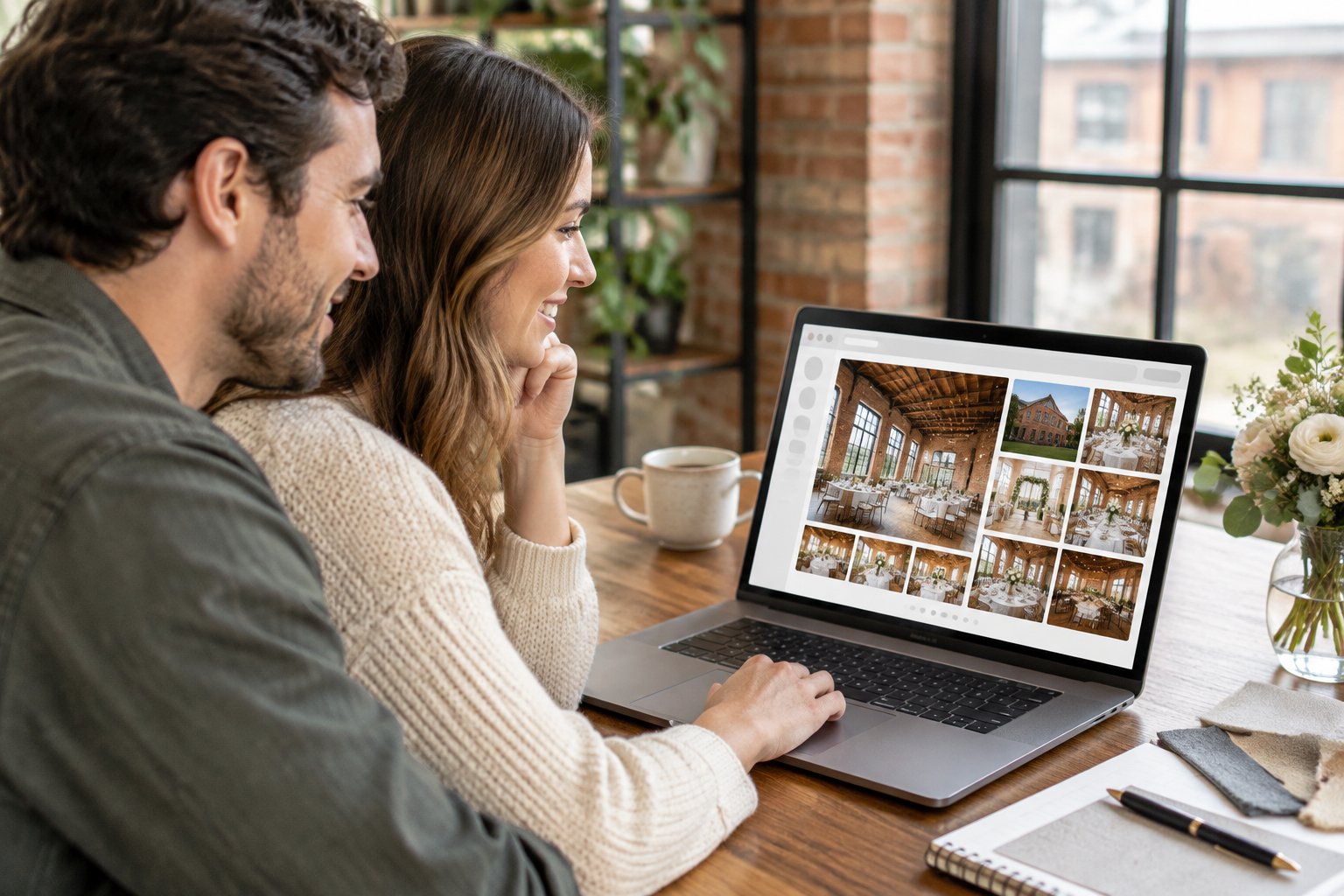
You can use Zola’s vendor marketplace to narrow your wedding venue search by details such as your date, budget, and preferred style. Start with a rough guest count and location, then save listings that match your priorities so you can compare them and send inquiries.
Which Filters and Listing Details Matter Most?
Choose an area first, then set your event date and budget range. Zola’s search also prompts you to consider indoor or outdoor space, food, and style.
For an industrial event venue, look for listing details that speak to your plans, including capacity, amenities, pricing information, photos, and reviews when available. Check whether the photos show the space set for a wedding.
A bare room can look different once it has tables, a dance floor, and guests. Save a few options with distinct layouts and compare how each could support your ceremony and reception. As you narrow the map, choosing a wedding location with guest travel in mind can help you focus your search.
What Should You Ask Before Scheduling a Tour?
Confirm the date and guest capacity before you book a visit. Ask what the rental fee covers, how long you have access to the space, and whether catering or outside vendors are part of the arrangement.
You can also ask about parking, sound limits, and the venue’s weather plan if any part of your event will be outdoors. A listing gives you a starting point; direct answers help you decide whether a tour is worth your time.
Send an inquiry through Zola with your date, estimated guest count, and a few questions about the event spaces.
What Makes a Venue Feel Industrial?
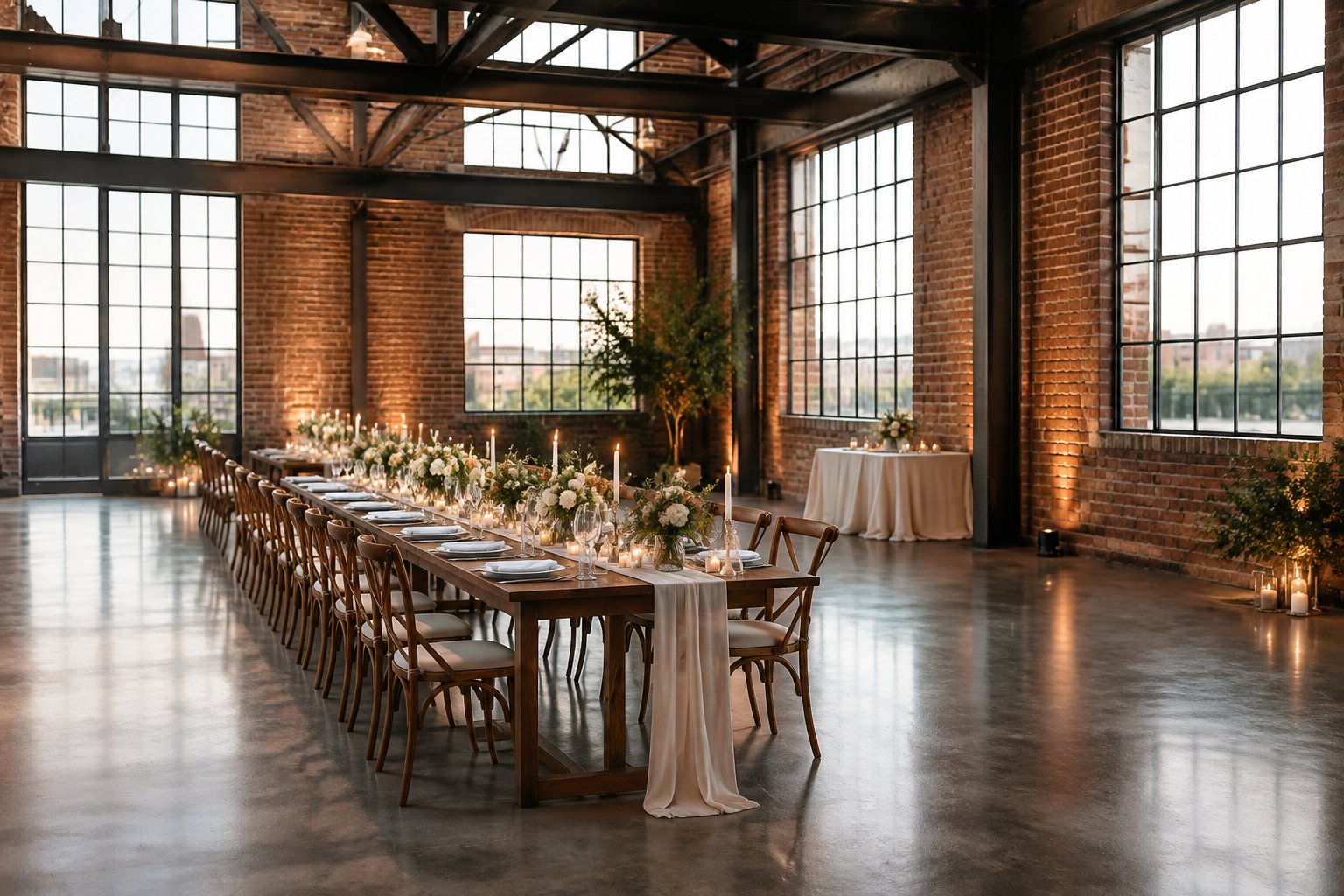
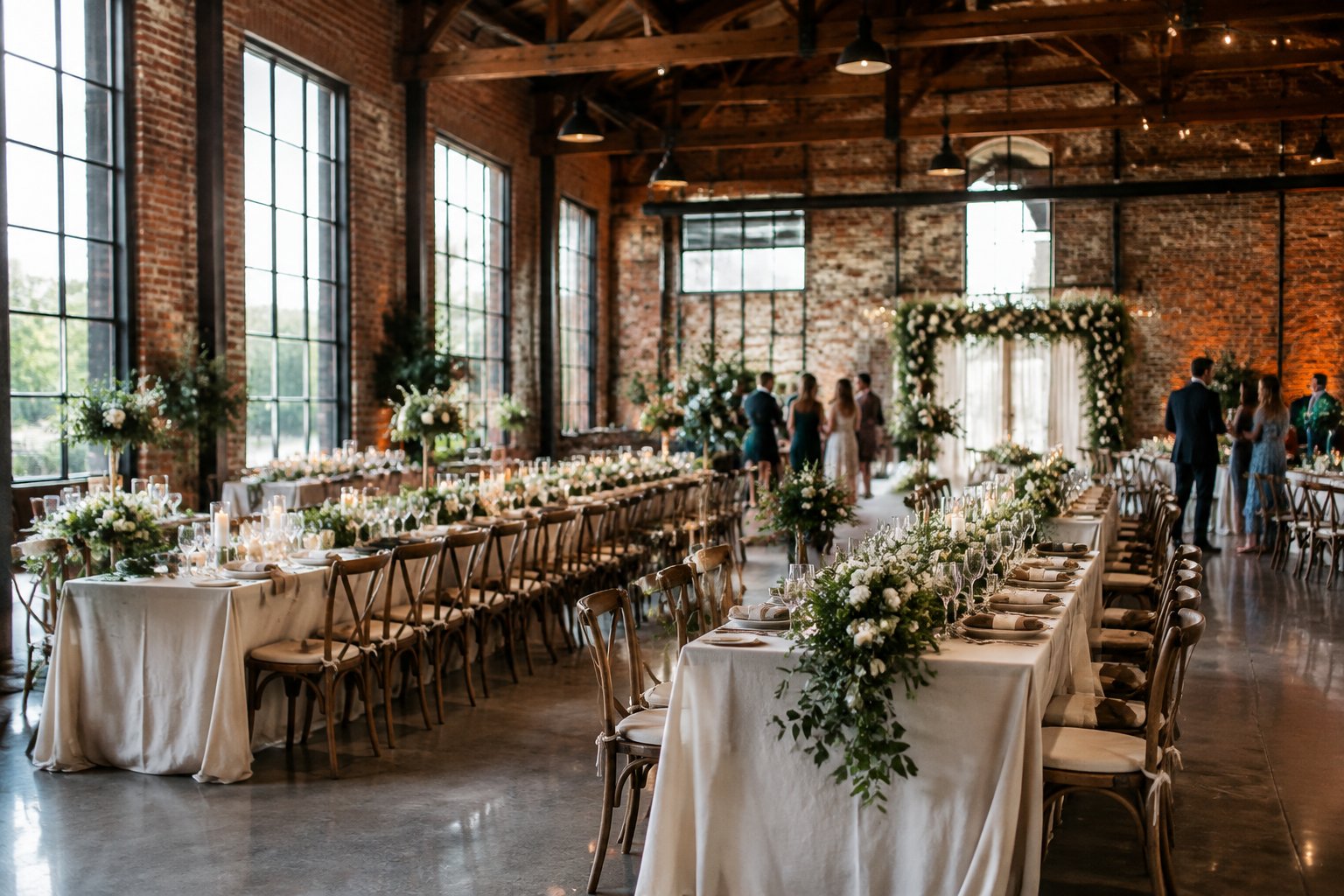
Industrial wedding venues get their character from open architecture, sturdy materials, and details that show the building’s structure. You might find exposed brick, concrete floors, metal beams, or large windows, with modern furnishings softening the room for your celebration.
Which Architectural Features Create the Look?
Look for visible materials and a sense of space. Brick walls, steel or timber beams, tall ceilings, concrete floors, and large windows all contribute to the industrial style.
A few original details, such as old factory windows or a visible structural column, can give the room personality without much extra décor. Then consider how the space will feel during your event.
Large windows bring in daylight, while high ceilings create room for hanging lights or floral installations. A venue with a strong architectural backdrop may need less decoration, though you’ll still want to plan table styling, lighting, and ceremony details. Industrial wedding table decoration ideas can help you choose pieces that suit brick, steel, and wood.
How Do Warehouse, Loft, and Industrial-Chic Spaces Differ?
A warehouse wedding venue usually offers a broad, open room that can fit a larger reception or flexible floor plan. Loft wedding venues often feel more intimate, with an urban setting and a defined interior layout.
Industrial-chic wedding venues may pair raw features with polished finishes, such as refined lighting or contemporary furniture. Modern industrial wedding venues lean toward clean lines and newer design, while a historic factory or warehouse may retain older materials and visible signs of its past.
If you’re considering a mostly open room, plan how you’ll make each area feel purposeful. Decorating an empty room for a wedding can help you think through lighting, layout, and focal points.
How Do You Compare Venue Costs and Inclusions?

Compare each wedding venue by its full event cost, including the space, rentals, food, and fees you’ll need to add. A lower rental rate can come with more separate costs, while a higher rate may bundle items you would otherwise book yourself.
What Can the Rental Fee Include?
A venue rental can cover the room alone or include services and equipment such as tables, chairs, linens, or catering. Ask whether the fee includes setup and cleanup, and confirm the rental hours.
Some event spaces charge separately for ceremony use, staffing, security, or extra time. Write down each item the venue includes, plus any service you’ll need to arrange elsewhere.
Ask about parking charges, taxes, service fees, and weather-related expenses such as a tent. For a broader budget check, what most wedding venues cost is a useful reference as you compare quotes.
How Can You Compare Quotes Fairly?
Use the same guest count and event plan for every venue. Add the rental fee to expected costs for food, bar service, rentals, staffing, and any required vendors.
Then note which items are included, available for an extra fee, or left for you to book. Ask each venue to put the full cost and payment schedule in writing.
Confirm whether you can choose your own caterer and other vendors, and whether outside vendors come with additional fees. If you’re keeping costs tight, affordable wedding venues on Zola can help you consider price alongside location, capacity, and services.
Where Can You Find Notable Industrial Venues?
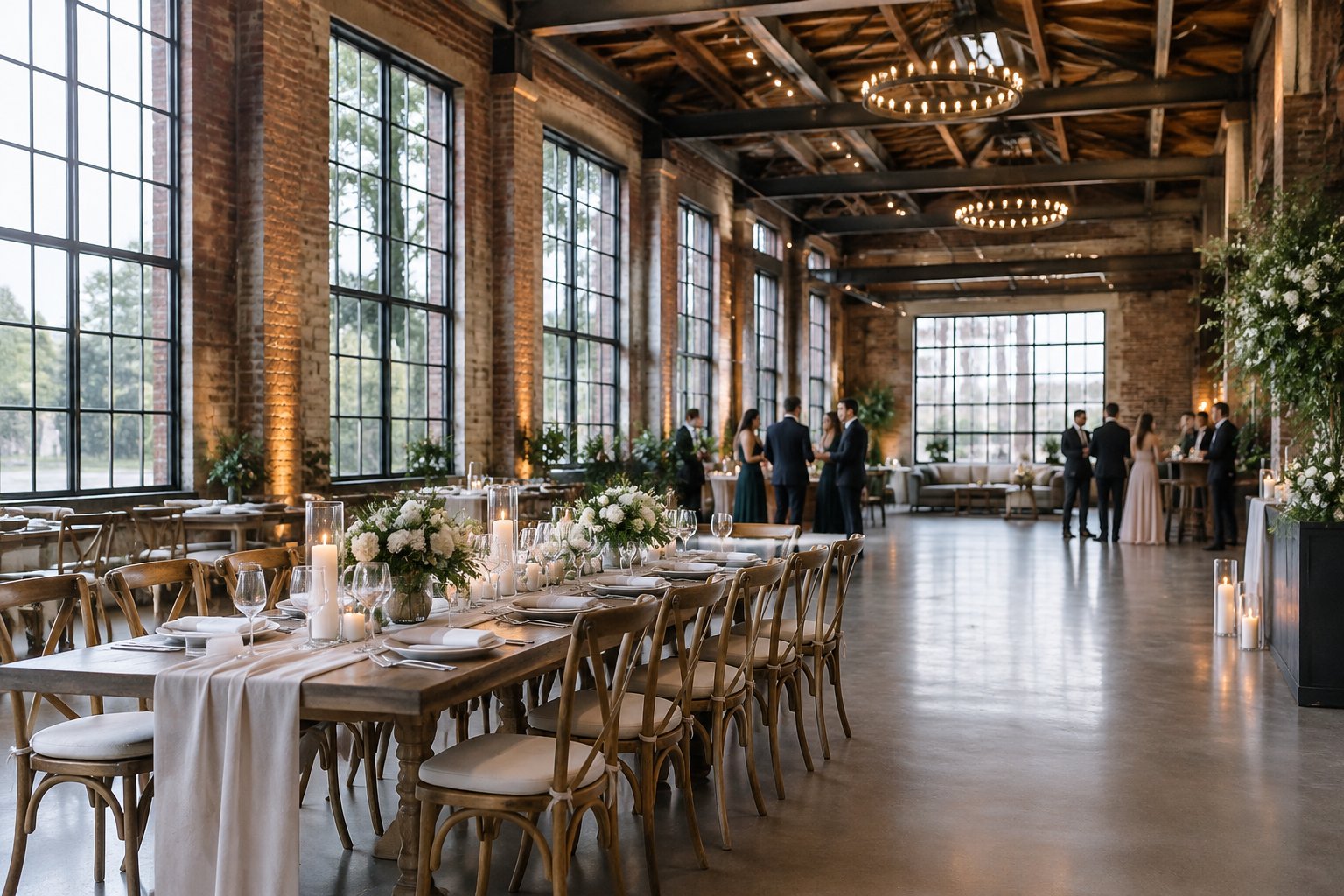
You can find industrial wedding venues in cities across the country, from converted warehouses to historic mills and creative event spaces. Treat venue names as leads for your search, then check current availability, capacity, pricing, and event policies directly with each property.
What Options Are in Atlanta, Baltimore, and Minneapolis?
For industrial wedding venues in Atlanta, search local listings by date and guest count, then compare the architectural features shown in each venue’s photos. In Baltimore, Maryland, add the Mt. Washington Mill Dye House to your list of spaces to investigate.
Minneapolis, Minnesota, has several named options to explore, including The Neu Neu, Aria, and The Loft at Studio J. Check each venue’s current details before making plans, since rental rules and offerings can change.
Which Venues Stand Out in Chicago and New York?
In Chicago, Bridgeport Art Center is a useful name to include in your search for an industrial-style event space. Review the available rooms and ask how the venue handles ceremony and reception layouts.
New York, New York, offers names such as The Foundry and The Green Building. Compare the photos and listing details, then ask about guest capacity, access hours, and what each rental includes.
What Should You Explore in Los Angeles and San Diego?
In Los Angeles, California, The Unique Space is one venue to consider as you search for an urban setting. Ask how the space can be arranged for your guest count and whether its available amenities fit your plans.
For San Diego, California, add Moniker Warehouse to your venue shortlist. Confirm its current event options and policies directly, especially if you’re planning both a ceremony and reception at the same location.
Where Can You Search in Austin, Phoenix, and Seattle?
In Austin, Texas, search for loft-style and warehouse event spaces, then compare their layouts and included services. For Phoenix, Arizona, Tre Bella in Mesa is another name to check.
In Seattle, Washington, Metropolist offers a starting point for your search. If you’re comparing city venues, affordable wedding venues near the city can help you weigh access and budget alongside the style you want.
How Can You Tell If a Space Will Work for Your Wedding?
A space works for your wedding when its capacity, layout, access, and backup plans match the event you’re planning. Use your expected guest count and a rough schedule to assess whether the event venue can support each part of the day.
Does the Capacity Fit Your Guest List and Layout?
Ask for the venue’s seated dinner capacity and its capacity for a standing reception. These figures can differ, and your layout needs room for tables, a dance floor, a ceremony setup, and clear paths between areas.
Ask the venue what guest count feels comfortable for your chosen arrangement. If you’re still adjusting the guest list, compare the space with your likely headcount before you sign.
A smaller celebration may call for a more intimate room, and tips for choosing a venue for a small wedding can help you assess that fit.
Are Setup, Access, and Weather Plans Clear?
Confirm when vendors can enter, when setup must finish, and when cleanup must be complete. Ask who handles room transitions if you’re using one space for the ceremony and another for dinner. Check whether the venue provides storage or a getting-ready area.
For outdoor elements, ask what happens if the weather changes and whether the backup space fits your planned layout. Also confirm accessibility, parking, restrooms, heating or cooling, and any limits on music or event hours. Get the details in writing so you can plan your schedule and vendor arrivals with confidence.