
Is $30,000 Too Much for a Wedding? A Realistic Budget Guide
A $30,000 wedding budget is below the recent U.S. average wedding cost of $34,200, so it is not excessive by national standards if you can afford it without taking on debt or draining your savings.

Whether that amount works for you comes down to your finances, guest count, location, and priorities. Start with money you have confirmed, and protect your emergency savings and regular bills as you set a spending limit.
A good wedding budget gives you room to celebrate while keeping your longer-term plans intact.
What Can a $30,000 Wedding Budget Buy?
A $30,000 wedding budget can cover a full ceremony and reception with professional vendors, as long as you plan around local prices and your guest list.
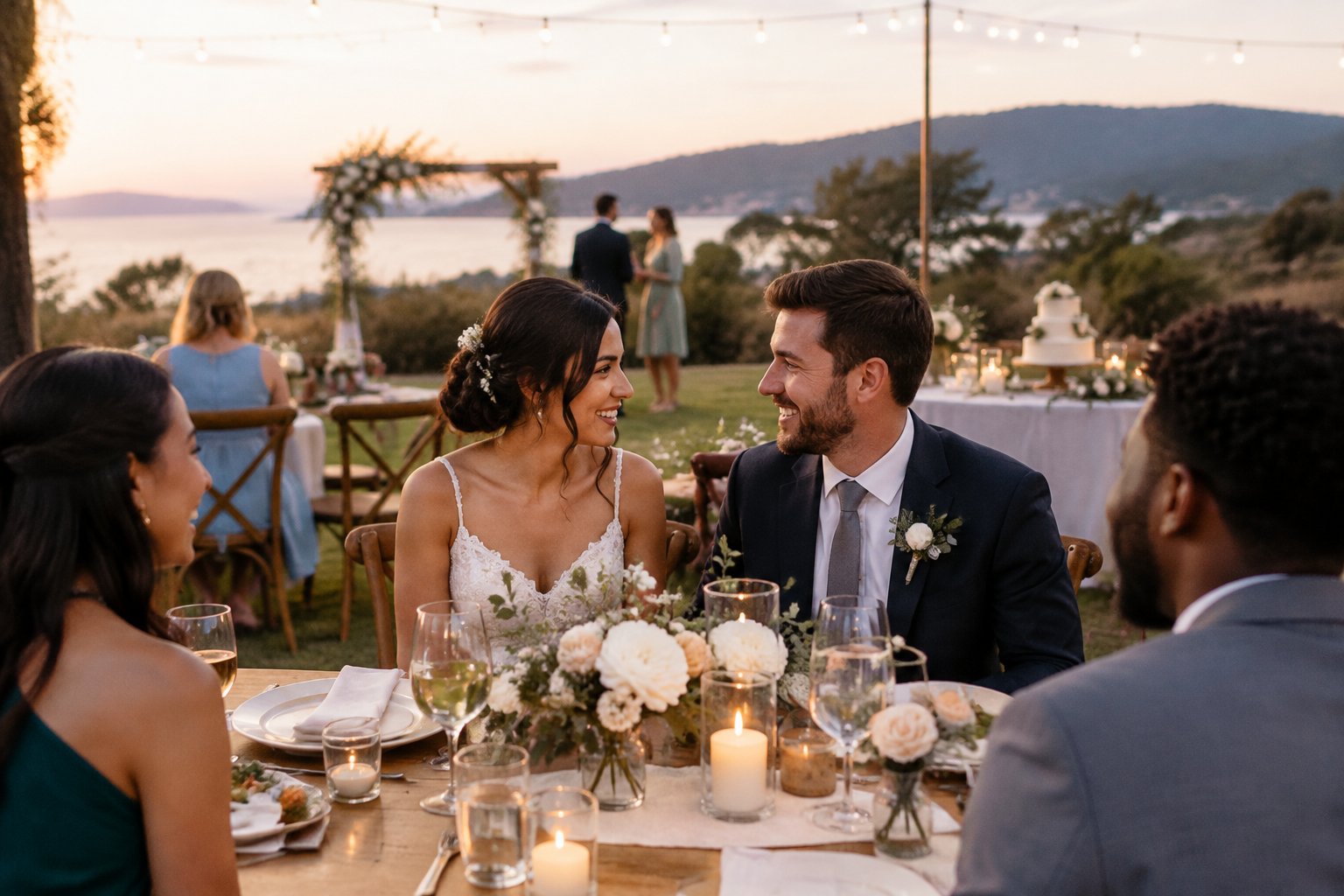
You can create a warm, polished event with a good meal, photography, music, and personal details. The scale of the celebration will depend on how many guests you invite and how much you spend on the venue and food.
How Does It Compare With the Average Cost of a Wedding?
Recent U.S. wedding data puts the average cost at about $34,200, making $30,000 a little below that benchmark. Averages combine many types of weddings and regions, so they work as a reference point, not a spending target.
Your budget can stretch further with a smaller guest list, a weekday date, or a venue that includes tables and chairs. If you choose a high-cost city or a popular Saturday in peak season, the same amount will cover fewer services.
For a realistic wedding budget, start with quotes from venues and caterers near you.
What Kind of Guest Experience Can You Expect?
With $30,000, you can give guests a comfortable reception with a welcoming space, satisfying food, and music for dancing. You can also make room for photography and a few personal touches, such as flowers at the ceremony or a dessert table.
A full open bar, elaborate floral design, live band, and upscale venue can quickly use up the available funds. Choose the parts of the celebration you value most, then match the rest of your plans to what remains.
How Should You Divide $30,000 Across Wedding Costs?
A balanced wedding budget breakdown reserves the largest share for the venue, food, and drinks, while leaving room for vendor fees and surprise costs.

The sample below sets aside $3,000 as a cushion and assigns the remaining $27,000 to planned expenses. Treat these numbers as a starting point, then adjust them to fit your priorities and local quotes.
| Category | Sample amount |
|---|---|
| Venue and rentals | $5,000 |
| Food and drinks | $8,500 |
| Photography and videography | $3,600 |
| Flowers and décor | $2,400 |
| Music and entertainment | $1,800 |
| Attire and rings | $3,000 |
| Planner or coordinator | $1,500 |
| Cake, stationery, beauty, transportation, and officiant | $1,200 |
| Contingency reserve | $3,000 |
| Total | $30,000 |
A wedding budget breakdown can help you decide which categories deserve more of your funds. Keep track of actual quotes as you book, since a planned amount and a signed contract are different numbers.
How Much Should You Set Aside for the Venue, Food, and Drinks?
Plan about $13,500 for the venue, rentals, food, and drinks in this sample budget. That is 45% of the total, and it gives you a clear starting limit when you compare spaces and catering packages.
Ask each venue for the full cost, including service charges, taxes, rental fees, and any food or beverage minimums. A low room fee can come with required catering or rentals that raise the final bill.
If you need to trim this category, consider a smaller guest list, an off-peak date, or a menu with fewer courses.
What Should You Budget for Photography, Attire, and Entertainment?
The sample assigns $3,600 to photography and videography, $3,000 to attire and rings, and $1,800 to music. You can shift those amounts based on what you want to remember most and what your guests will enjoy.
Compare photography packages by hours of coverage, number of photographers, and included prints or albums. For your wedding dress, include alterations, shoes, and accessories in the same line item.
For entertainment, ask whether the DJ’s fee includes ceremony sound and any lighting you want.
How Much Do the Wedding Cake and Other Details Add?
Cake, stationery, beauty services, transportation, and officiant fees can add up even when each quote seems manageable. In the sample, those details share $1,200, so you may need to put some of them in other categories or reduce optional extras.
Check whether your venue charges a cake-cutting fee and whether your catering quote includes dessert. Add postage to your stationery estimate, and include hair and makeup trials with your beauty costs.
If your actual quotes exceed the plan, adjust lower-priority items before spending the contingency reserve.
How Do Guest Count and Location Affect Your Budget?
Your guest count and location shape how far a $30,000 wedding budget will go, especially because food, drinks, and rentals rise with each added guest.

A recent national estimate puts average wedding spending at about $292 per guest, though local prices and the services included can change that figure. Your venue and catering quotes will give you a more useful estimate for your own plans.
How Many Guests Can You Invite?
A $30,000 budget could support roughly 75 to 100 guests in many settings, especially if you keep the reception costs close to the sample breakdown. At $292 per person, $30,000 equals about 103 guest shares, but fixed costs such as photography and attire also use part of your budget.
Build your list around the people you most want to celebrate with, then price the meal and venue for that count. Each added guest can affect food, drinks, seating, favors, and sometimes the venue size.
A guide to how many guests to invite can help you set a realistic count before you request final quotes.
Why Do Local Prices Change What Your Budget Covers?
Prices vary by region, venue type, season, and demand. A $30,000 budget may cover more guests in a small town with lower venue and catering rates than it does in a major metro area.
Get quotes for your preferred date and ask what each price includes. A restaurant or community space may bundle tables, service, and food, while a blank venue may require separate rentals.
Compare the full event cost, including taxes and fees, before you decide which option fits.
How Can You Keep Spending on Track?
You can keep spending on track by setting firm category limits, recording every quote and payment, and updating your plan whenever a cost changes.

Use a shared wedding budget planner so you and your partner can see what is planned, committed, paid, and still due. Review the numbers together before you sign a contract or add a new expense.
How Can a Wedding Budget Calculator Help?
A wedding budget calculator turns your total into category estimates and helps you test changes to your guest count or spending priorities. It can give you a starting point, while local vendor quotes help you replace estimates with real prices.
A spreadsheet also works if you prefer to enter each expense yourself. Add columns for the planned amount, quoted amount, deposit, balance, and due date.
A wedding budget spreadsheet gives you a clear way to keep those details in one place.
When Is a Wedding Planner Worth the Cost?
A wedding planner can be worth the fee when you need help coordinating vendors, managing a complex schedule, or handling a large event. If you are comfortable organizing the details, a month-of or day-of coordinator may fit your needs at a lower cost than full planning.
Ask what the service includes, how many meetings you receive, and whether the planner attends vendor appointments. Check whether your venue provides an on-site coordinator, then confirm which tasks that person handles.
Add the planner’s fee to your budget before you commit to other services.
How Can You Compare Wedding Vendors and Avoid Hidden Fees?
Compare wedding vendors by their complete package price, contract terms, and the services included. Ask for a written quote that lists taxes, service charges, travel costs, overtime rates, and payment deadlines.
Read the cancellation and postponement terms before you pay a deposit. Confirm whether the quoted price includes setup, cleanup, delivery, or equipment.
When you compare vendors, use the same list of needs for each quote so you can see which offer fits your budget.
Which Often-Forgotten Costs Should You Include?
Your wedding budget should include legal fees, vendor charges, tips, and a reserve for changes that come up during planning.
Have You Budgeted for the Marriage License and Officiant?
Include the marriage license and officiant fee as separate budget lines. License fees vary by state and county, and an officiant may charge extra for travel, rehearsal attendance, or a longer ceremony.
Check your local clerk’s office for current license rules, fees, and waiting periods. Ask your officiant for a written fee that includes any travel or ceremony preparation, then note when the license must be obtained.
What Fees, Gratuities, and Contingencies Can Catch You Out?
Service charges, taxes, vendor meals, overtime, delivery fees, and tips can push your final bill above the original quote. Reserve about 10% of your budget, or $3,000, for costs you could not price in advance.
Ask vendors whether gratuity is included and what happens if your event runs late. Check postage costs before ordering invitations, and confirm whether your venue requires event insurance. Track each extra expense as soon as you learn about it, then use the reserve only for necessary costs.