
Is It Rude to Not Have a Wedding Registry? Exploring Etiquette for Couples
You may wonder if it’s rude to not have a wedding registry for your special day. The truth is, it’s perfectly acceptable to choose not to have one. While many couples create registries, it’s not a requirement, and some guests might appreciate the chance to give gifts on their own terms.

Wedding registry etiquette often emphasizes the importance of guiding guests with a list, but if you don’t feel comfortable with that, there are other options.
You could consider a honeymoon fund or simply let guests know that their presence is the greatest gift. Choosing no wedding registry can also lead to thoughtful gifts that match your style.
Understanding Wedding Registry Traditions

Wedding registries have a rich history shaped by changing gift-giving customs. Knowing this evolution helps you understand the choices available today. From traditional household items to modern alternatives, registries play a key role in celebrations.
Evolution of Gift-Giving Customs
In the past, gift-giving at weddings was often about providing essentials for the couple’s new home. Guests usually bought items like dishes, linens, and utensils.
Bridal showers emerged as events where guests could give gifts before the wedding day. People still appreciate these thoughtful gestures. As times changed, the idea of gift registries became popular. Couples could create lists of desired items, making it easier for guests.
Today, a wedding registry can also include non-traditional gifts like a honeymoon fund or charity donations. This shift reflects personal values. You can encourage thoughtful gifts that resonate with you.
Modern Wedding Registry Options
Today, wedding registries offer a wide range of choices. You can still choose classic items like kitchen gadgets and bed linens. However, modern options go much further.
Some couples prefer cash gifts for specific experiences, like a honeymoon or a home down payment. Others opt for unique alternatives like a charity donation registry. This allows guests to contribute to causes close to your heart.
You can also consider registry platforms that allow guests to fund experiences, like cooking classes or travel adventures. This flexibility can make your big day more meaningful, reflecting your journey together.
Etiquette and Considerations for Not Creating a Registry
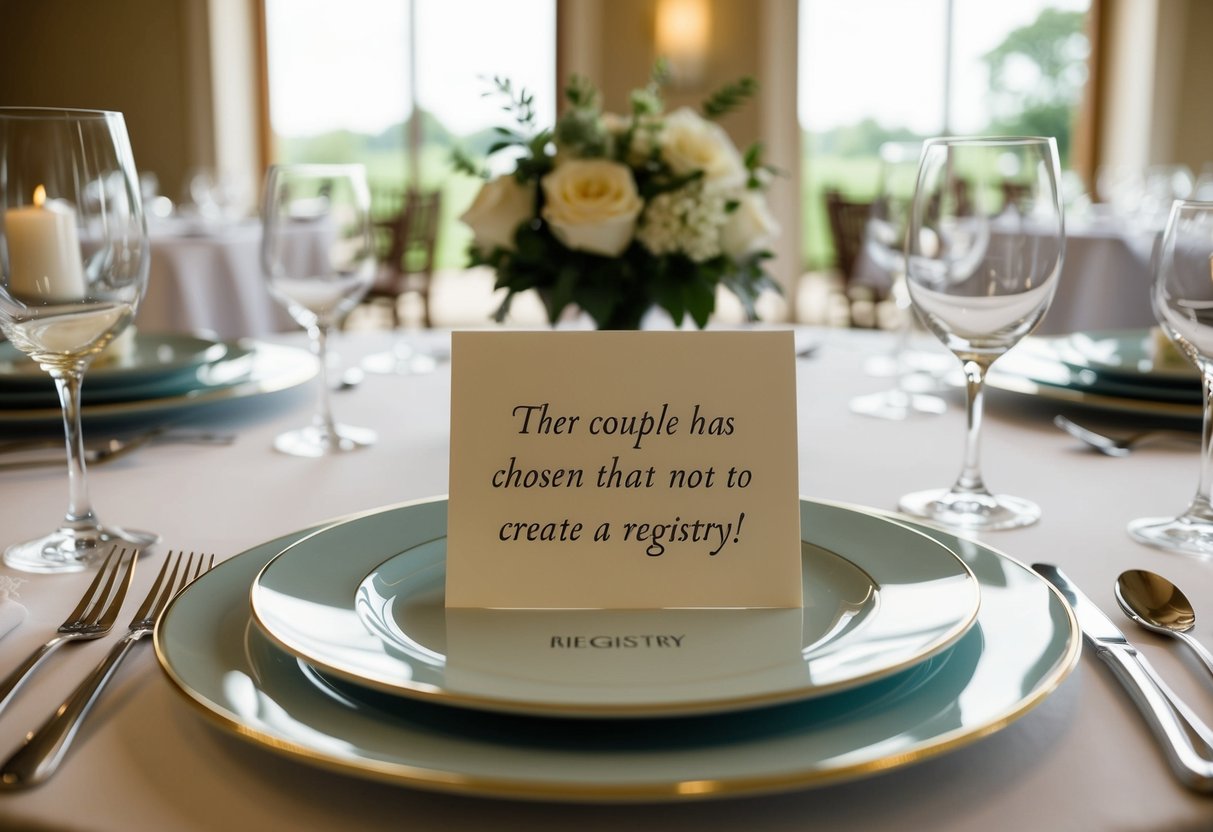
Choosing not to create a wedding registry can feel challenging due to guest expectations and gift-giving norms. It’s important to consider how to navigate these situations with grace and clarity.
Navigating Guest Expectations
When you decide not to have a wedding registry, it’s essential to recognize that some guests may have certain expectations. Many people see registries as an easy way to choose gifts. If you don’t have one, some guests might feel confused or unsure about what to give.
To ease this uncertainty, consider your circle. If close friends and family are accustomed to buying gifts for weddings, they may continue to do so.
You can gently remind them that your focus is on celebrating the day rather than receiving gifts. You can also suggest alternatives, such as experiences or charitable donations, clearly conveying your wishes while respecting their desire to give.
Communicating ‘No Registry’ to Guests
Clear communication is key when you opt out of a wedding registry. Be upfront about your choice to avoid confusion. You may choose to include a note in your wedding invitations or on your wedding website that states your preference for no gifts.
A simple phrase can work wonders. Something like “Your presence is our gift” can express your thoughts well. This helps guests feel comfortable attending without the pressure of bringing a gift. Consult with an etiquette expert if needed, to ensure your message is received positively.
Alternative Ways to Celebrate the Couple

If you choose not to have a wedding registry, there are still many thoughtful ways for guests to celebrate your union. Guests can contribute directly to experiences that matter to you or select gifts that reflect your personal style and preferences.
Cash, Honeymoon, and Charity Options
Many couples appreciate cash gifts, as these can be used for various needs. You might consider setting up a honeymoon fund. This way, guests can contribute toward your dream getaway.
You could also invite guests to give directly in cash. This option allows you to plan for future expenses.
For a more charitable approach, you can suggest donations to a cause that resonates with you. Guests love contributing to meaningful charities in your name.
Gift Ideas Beyond the Registry
If guests prefer to give tangible gifts, provide ideas that suit your taste.
Consider creating a wish list of meaningful gifts or experiences you would enjoy.
Gift cards to your favorite stores or restaurants can also be a great choice. They give you the flexibility to pick what you want later. You may also recommend specific items, like home décor or books, which reflect your new life together.
How to Plan for Gifts as a Wedding Couple

Planning for gifts as a couple involves setting clear preferences for what you would like and how to communicate that to your guests. This can make gift-giving easier and more enjoyable for everyone involved.
Setting Up Gift Preferences
Deciding what you want as gifts can help guide your guests. Consider creating a wedding registry to list items you need or want. This can include home decor, kitchen appliances, or even travel accessories for your honeymoon.
Think about various gift types. A cash registry is a great option if you prefer cash gifts to spend on experiences or larger purchases.
Make sure the registry has a good mix of items at different price points. This allows guests to pick gifts that fit their budget.
Once you have your registry set up, feel free to communicate your gift preferences to your guests. You can do this through your wedding website or invitations. This helps guests feel more comfortable about gift-giving.
Integrating Registry Information on Wedding Website
Your wedding website is the perfect place to include registry information. Make it easy for your guests to find what you want. Clearly list where you have registered and provide links.
Highlight different types of registry options. You can share details if you have a traditional bridal registry, cash registry, or specific brands you like. Adding descriptions can help guests understand your choices better.
Consider categorizing your registry into sections. For example, you can have tabs for home goods, kitchen appliances, and travel items. This approach makes it simple for guests to navigate and choose gifts that truly resonate with you both.