
Itinerary for Wedding Day: Sample Timeline and Template
A useful itinerary for wedding day gives you a clear plan for each event, its location, and the person responsible for keeping it on track. Start with your ceremony time, then build the schedule around vendor needs, travel, photos, and the pace you want for the celebration.

Your wedding itinerary should give vendors and your wedding party the details they need while leaving you room to enjoy the day. Set aside time to draft your schedule, then confirm the timing with the people who will help run it.
What Should Your Wedding Day Schedule Include?
Your wedding day schedule should list each event’s time, location, lead person, and any details needed to make it happen. Start with fixed times and build the rest around them, including setup, travel, and transitions. A clear wedding schedule helps everyone know where to be and when.
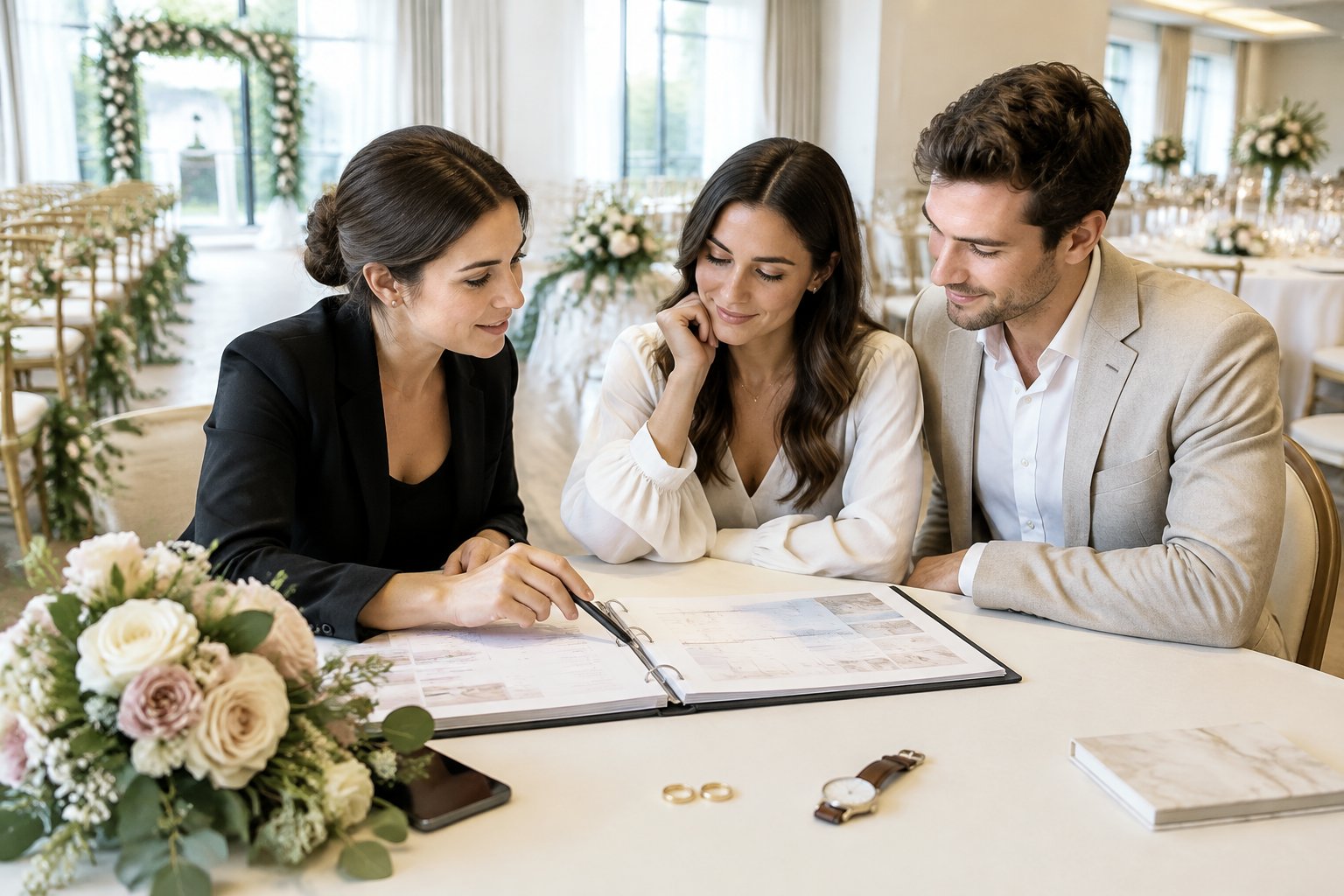
Your wedding timeline should work as a practical plan for the people carrying it out. Give each event a lead, include enough time for movement, and confirm the details with your wedding planner or wedding coordinator.
Set Ceremony and Reception Time Anchors
Choose your wedding ceremony time first, then confirm the venue’s access and end times. These fixed points shape your wedding day timeline, including when vendors can set up and when the reception must wrap.
Work backward from the ceremony to schedule getting ready, photos, and guest arrival. Then plan forward through cocktail hour and reception events. If your ceremony begins at 4 p.m., you can use a 4 p.m. wedding day timeline as a starting point and adjust it to your venue and plans.
Add Realistic Buffers and Assign Owners
Build extra time around services and transitions that can run long, such as hair and makeup, group photos, and travel between venues. Add time for loading, parking, walking to the ceremony space, and gathering people before each event.
Give every task one lead person. For example, your coordinator can cue the processional while your photographer gathers the family for portraits. Include meals and short breaks for you and the wedding party, too.
Coordinate With Your Planner and Vendors
Ask your planner, coordinator, photographer, caterer, and entertainment team to review the timing that affects their work. Your planner can check the full flow, while each vendor can confirm their arrival time, setup needs, and event cues.
Share the latest version with the people who need it, and make sure everyone is working from the same schedule. For more guidance on choosing a wedding timeline, consider your venue, event style, and the amount of travel involved.
What Does a Sample Wedding Day Timeline Look Like?
A sample wedding day timeline gives you a useful framework, with times that you can shift to fit your ceremony and venue. This wedding timeline example assumes a 4 p.m. ceremony, a first look, and a reception at the same venue.
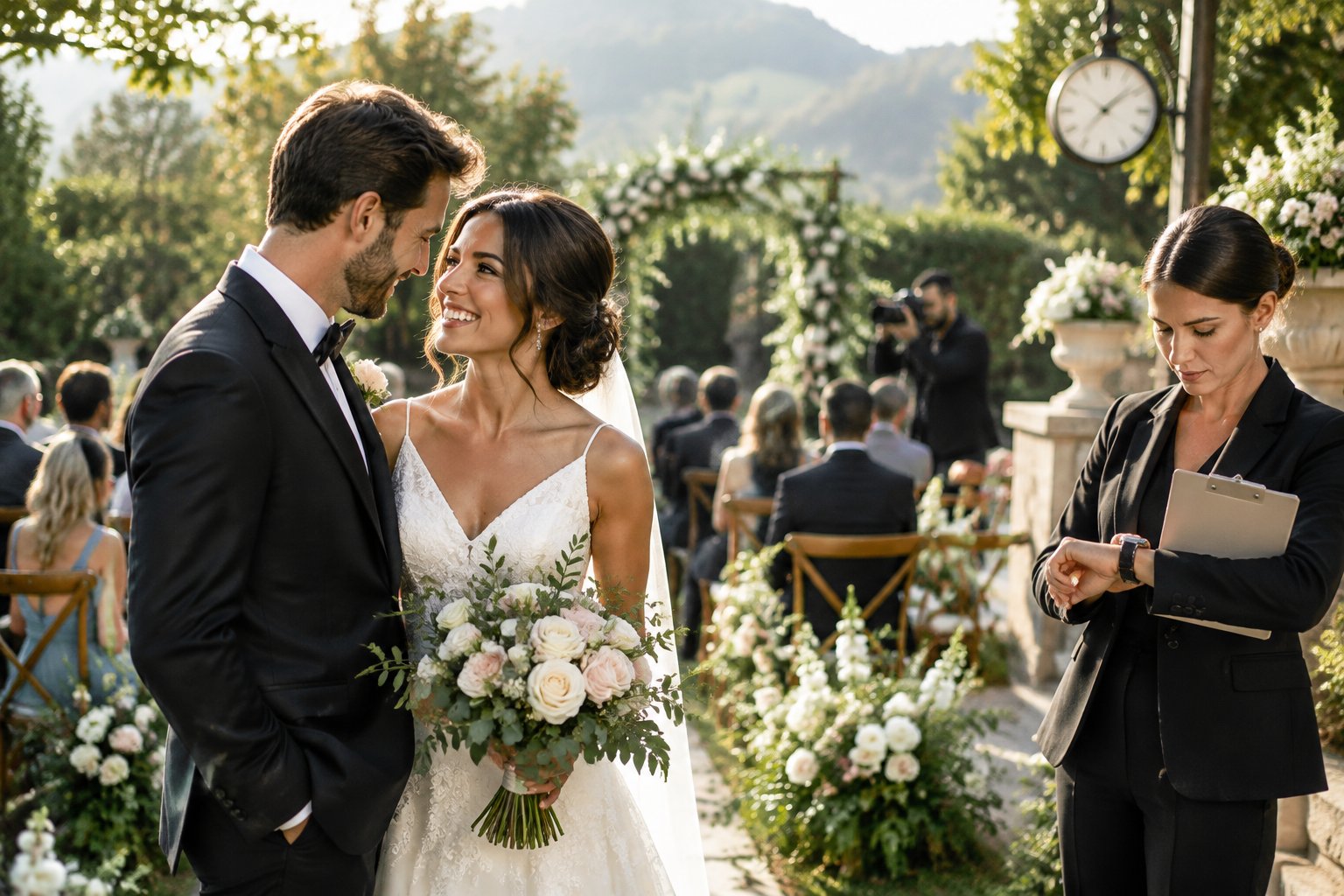
Use this sample wedding timeline to check that each part of the day has enough room. Ask your vendors to confirm the service and photo blocks before you treat the sample wedding day timeline as final.
Getting Ready and Hair and Makeup
Start hair and makeup early enough to allow for each person’s service, touch-ups, and getting dressed. Your beauty team can help set the start time based on the number of people and services.
Build in time to eat and gather personal items before leaving.
First Look Photos and Wedding Party Portraits
A first look gives you time for couple portraits before the ceremony. Wedding party photos can follow while everyone is dressed and together.
Confirm the photo order with your photographer, and identify who will gather the people needed for each group. A wedding day photo checklist can help you organize the family groupings and special moments you want captured.
Wedding Ceremony and Cocktail Hour
Set guest arrival before the ceremony, then allow time for the processional, ceremony, and transition to cocktail hour. The schedule below shows one possible flow.
Adjust the blocks to match your ceremony length and vendor plans.
| Time | Event |
|---|---|
| 9:00 a.m. | Venue access and setup |
| 10:30 a.m. | Hair and makeup begins |
| 12:00 p.m. | Photographer arrives for detail photos |
| 1:30 p.m. | First look and couple portraits |
| 2:20 p.m. | Wedding party portraits |
| 3:30 p.m. | Guests arrive |
| 3:45 p.m. | Wedding party lines up |
| 4:00 p.m. | Wedding ceremony |
| 4:35 p.m. | Cocktail hour |
Wedding Reception and Grand Exit
Plan the wedding reception timeline with your caterer and entertainment team so dinner, toasts, and dances fit the room’s service plan. This wedding reception itinerary leaves room for the key moments while giving guests a clear path from cocktail hour to the dance floor.
| Time | Event |
|---|---|
| 5:30 p.m. | Guests move into the reception space |
| 5:40 p.m. | Grand entrance |
| 5:50 p.m. | First dance |
| 6:10 p.m. | Dinner service |
| 7:10 p.m. | Toasts |
| 7:50 p.m. | Cake cutting |
| 8:00 p.m. | Open dancing |
| 10:15 p.m. | Sparkler send-off or grand exit |
| 11:00 p.m. | Venue clear |
A reception schedule can help you choose the order of dinner, toasts, and dancing. Confirm the final exit time with your venue and arrange transportation and personal-item pickup before the reception begins.
How Do Ceremony Time and Photo Choices Change the Schedule?
Your ceremony time and photo plan determine when you need to start getting ready and how much time you have for portraits. A later ceremony shifts the day’s events, while a first look moves some photos before the ceremony.
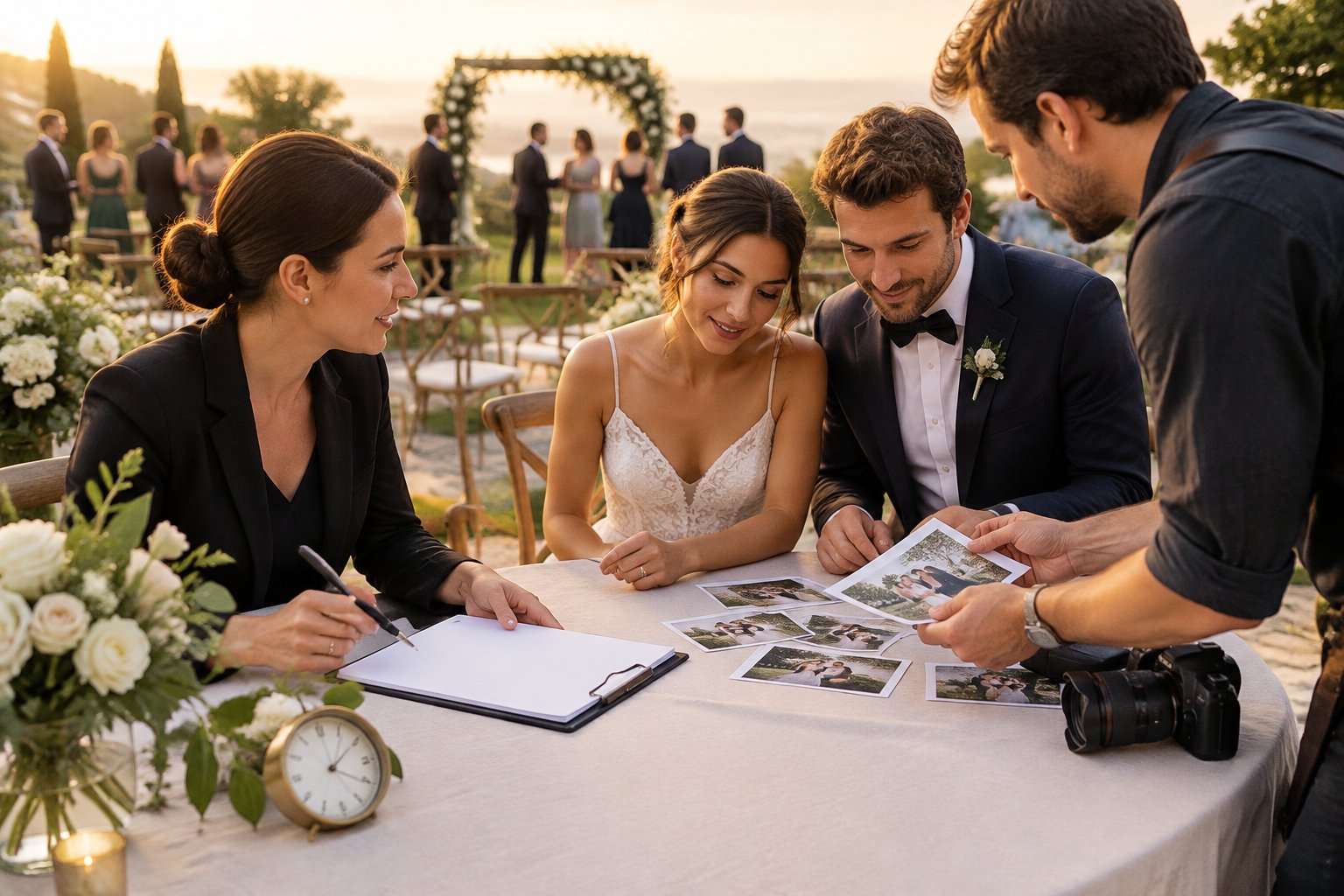
Keep your wedding planning timeline flexible enough to account for your photo choices, group size, and travel. Confirm these details with your photographer and coordinator before setting call times.
Adjust the Timeline for an Earlier or Later Ceremony
For an earlier ceremony, move hair and makeup, portraits, and vendor arrivals earlier as well. A later ceremony gives you a longer morning, though it can also shift dinner and the end of the reception.
Check the venue’s hours and sunset time when choosing your schedule. If you are planning a 3 p.m. ceremony, a 3 p.m. wedding itinerary can help you estimate how the earlier start affects the day. Use the times as a guide, then confirm them with your vendors.
Choose Between a First Look and Aisle Reveal
A first look places couple portraits before the ceremony, which can leave more of cocktail hour free for greeting guests. An aisle reveal keeps your first meeting for the ceremony and moves couple portraits to after the vows.
Talk with your photographer about how each choice changes the photo schedule. If you skip the first look, reserve enough time after the ceremony for couple portraits and wedding party photos before the reception begins.
Allow Time for Travel and Family Photos
For separate ceremony and reception locations, include time to gather people, load vehicles, travel, park, and walk to the next space. Check the route at a similar time of day and ask your transportation provider for a realistic travel estimate.
Give family photos a planned location and a list of names. Ask a family member who knows both sides to help gather relatives, and tell your photographer which groupings matter to you. That keeps the wedding party available for the next cue.
Who Should Receive Each Version of the Itinerary?
Give vendors and the wedding party a detailed schedule, then share a shorter version with guests. Each copy should include the details its readers need to arrive on time and follow the day.
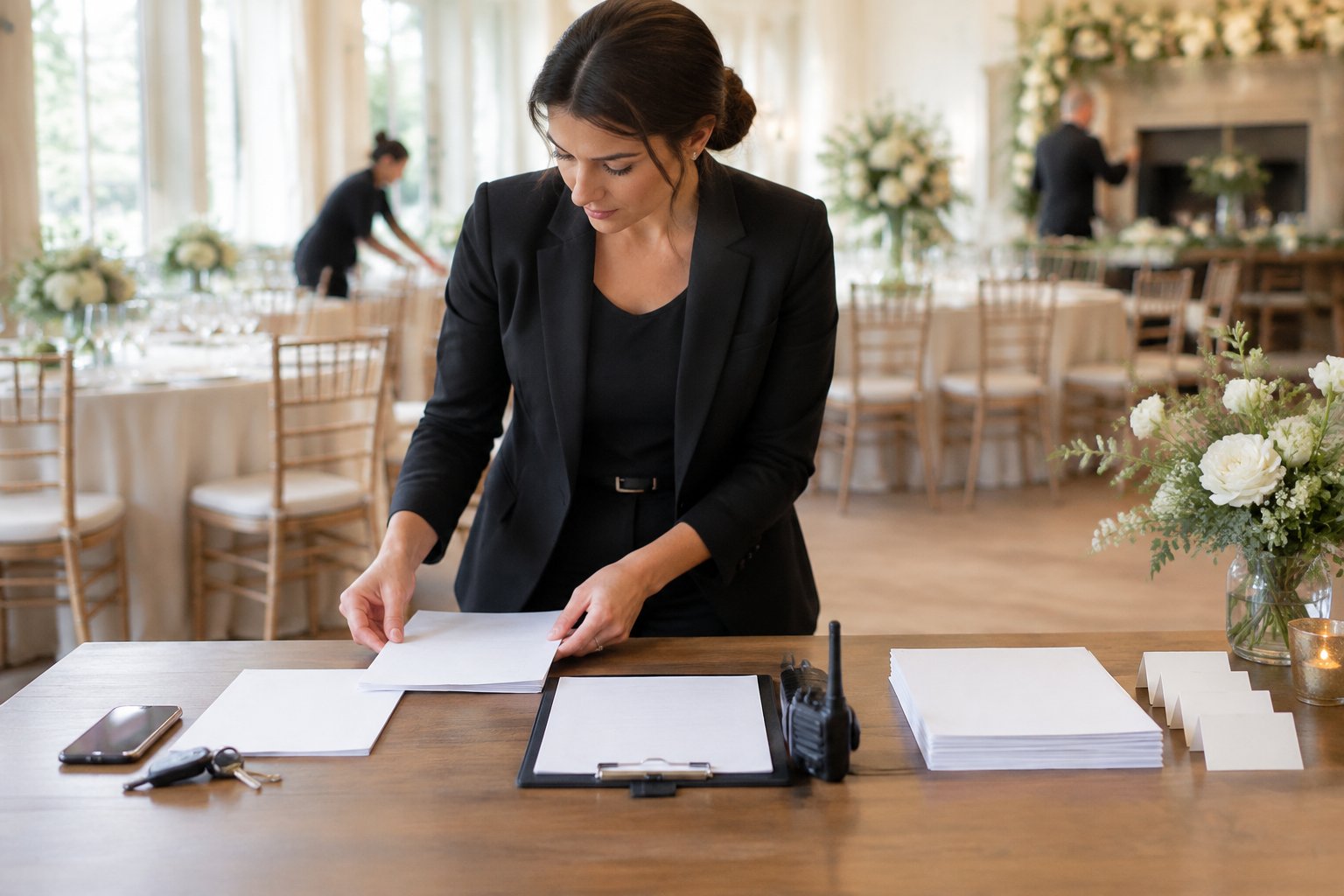
A single master schedule can hold all the details, while separate versions keep each group’s copy clear. Include a date and version label so people can tell they have the latest plan.
Share Day-Of Details With Vendors and the Wedding Party
The vendor copy should include call times, locations, setup details, event cues, and the lead person for each task. Add contact details for the venue and key vendors so the coordinator can reach the right person quickly.
Give the wedding party its own call times, photo locations, and processional order. Include only the duties assigned to them, such as carrying personal items or helping gather family members.
Give Guests a Short Schedule and Helpful Travel Details
Your guest itinerary can focus on guest arrival, the ceremony, cocktail hour, reception, and transportation. Add venue addresses, parking or shuttle details, accessibility notes, and any dress code that guests need to know.
Post the schedule and travel information on your wedding website. Keep private call times, vendor contacts, and behind-the-scenes instructions in the vendor version.
How Can You Customize a Wedding Timeline Template?
Choose a wedding timeline template that you can edit, then tailor it to your venue, event order, and confirmed vendor times. A useful template makes it easy to see the time, location, and lead person for every important cue.
Edit a Free Template for Your Venue and Events
A free wedding day timeline template gives you a place to start. Replace sample times with confirmed details, add your locations, and remove events that do not fit your plans.
Include setup, meal breaks, travel, and venue cleanup if they apply. Use a wedding day schedule template with columns for time, event, location, owner, and notes. A wedding itinerary template can also include a separate field for who needs each cue, which helps you prepare different copies for vendors, the wedding party, and guests.
Make Separate Vendor and Guest Copies
Keep one detailed master schedule for planning and a shorter guest itinerary for sharing. The vendor copy needs operational information, including arrivals and responsibilities.
The guest version should focus on when and where guests need to be. If you find a free wedding day timeline template online, check that you can change the times and add rows before filling it in. Save a printable copy for the day and a digital version for updates.
Confirm the Final Schedule Before the Wedding
Review the final schedule with your planner or coordinator and the vendors whose work depends on its timing. Confirm venue access, setup windows, meal service, transportation, and the end-of-night plan.
Set a date for final approval, then send the same version to everyone who needs it. Keep a printed copy with your coordinator and update your wedding website if guest-facing details change.