
Jewelers Wedding Bands: Choosing the Right Pair
Wedding bands turn a personal promise into a piece of jewelry you can wear every day. The right pair balances your style, daily comfort, and fit with any engagement ring you plan to wear.
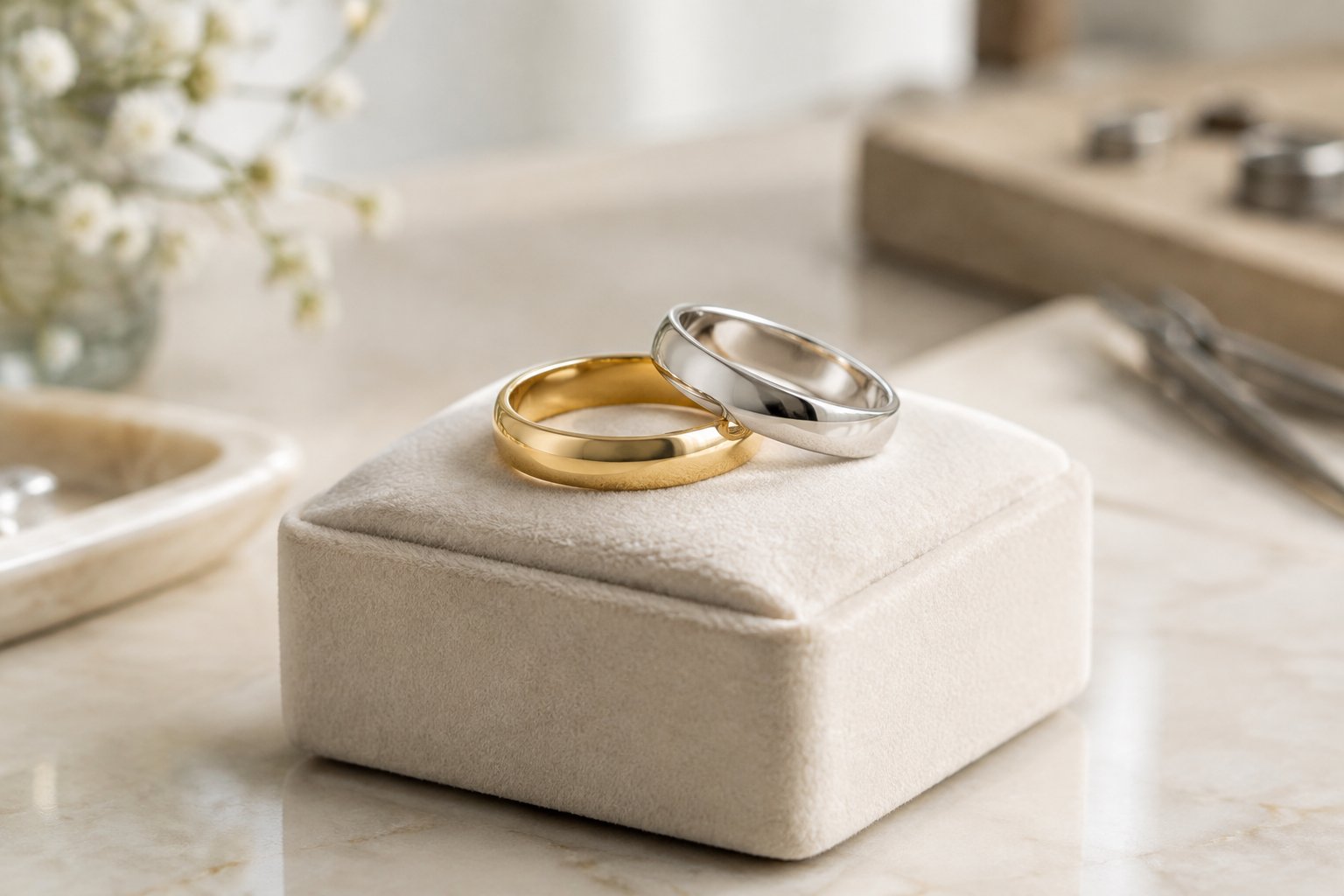
You can choose matching wedding rings or pick designs that reflect each of your tastes. Start by browsing wedding band ring ideas and noting the shapes, finishes, and details that catch your eye. When you’re ready, bring those preferences to a jeweler and try a few styles on together.
What Should You Look for in a Jeweler?
A good jeweler listens to your needs, explains your options clearly, and helps you find a band that suits your budget and everyday life. Look for clear details about materials, sizing, customization, and care so you know what to expect before you buy.
How Can You Compare Selection and Expertise?
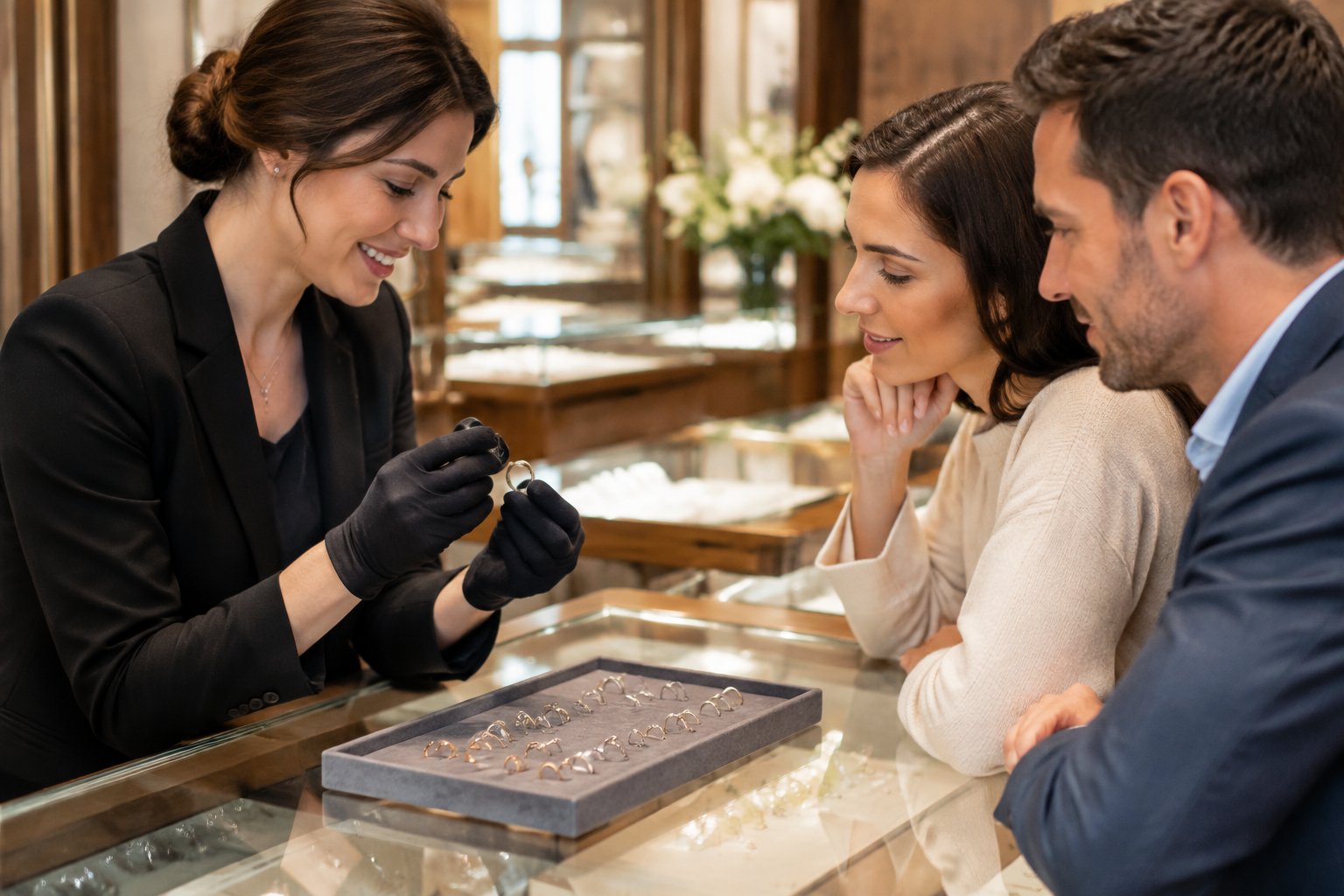
Compare jewelers by the range of styles they carry and the guidance they offer during a fitting. A helpful jeweler will ask about your preferences, show you different widths and profiles, and explain how each band feels on your hand.
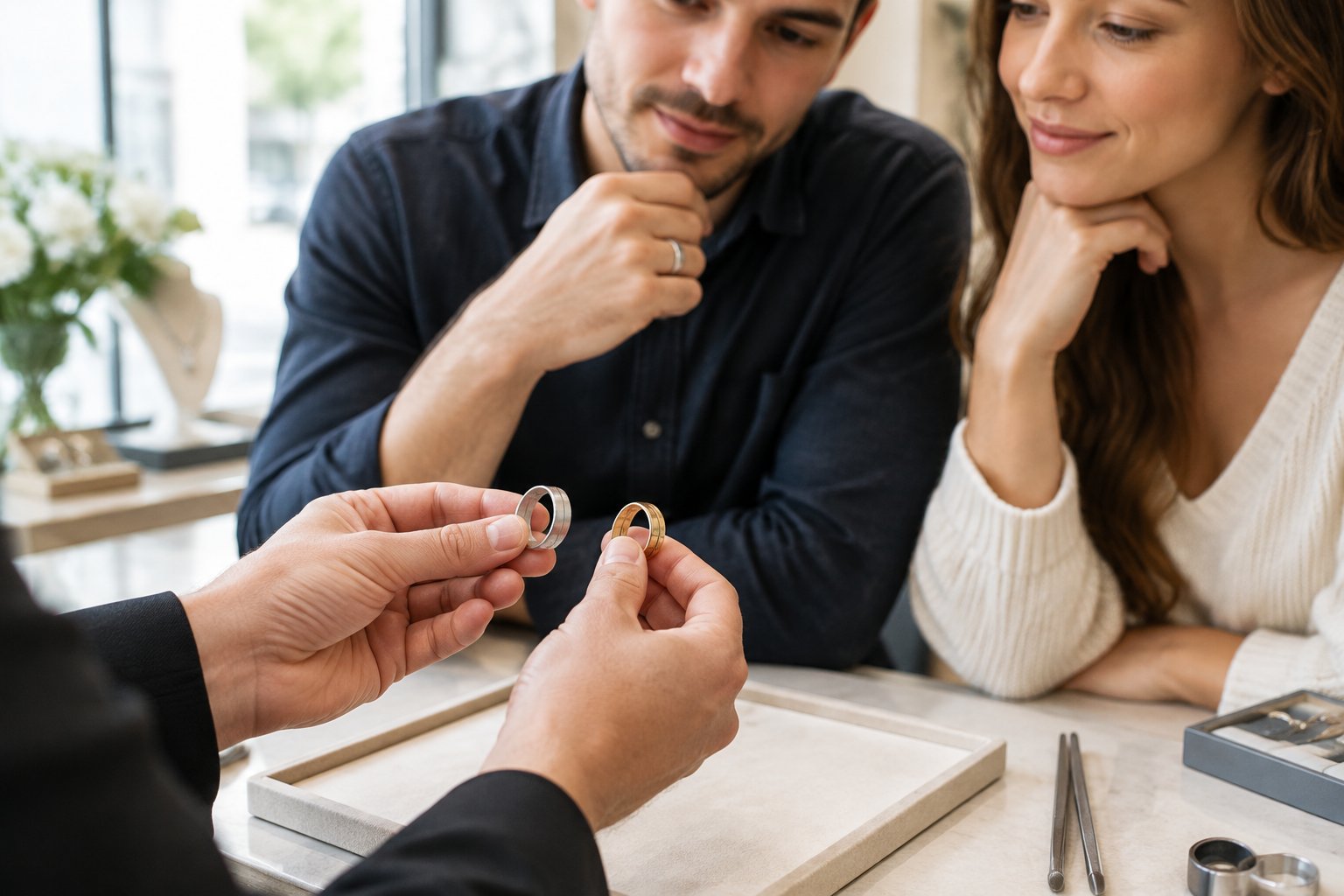
Check whether you can try on a range of pieces, including plain metal bands, diamond designs, and rings with textured finishes. If you have an engagement ring, bring it along so the jeweler can assess how the band pairs with its shape and setting. You can also ask about metal stamps, diamond details, and any available documentation for your purchase.
A comfortable consultation gives you room to ask questions and compare options at your own pace. If you want help choosing a bridal specialist, consider the qualities that make a good bridal consultant, such as patient guidance and clear communication.
What Customization and Aftercare Services Matter?
Ask about sizing, engraving, cleaning, repairs, and the jeweler’s policies for returns or exchanges. These details help you understand the support available after you bring your rings home.
For a custom or made-to-order band, request a timeline and written details about the design, materials, and price. Ask whether the design can be resized later, especially if it has stones set around the full band or detailed engraving. Those features can affect future adjustments.
Find out how the jeweler recommends cleaning your ring and how often it should be checked. If your band has diamonds, ask how the setting is inspected and what to do if a stone feels loose. Starting your search with time for these steps can make planning easier; you can also review when to buy a wedding ring as you set your schedule.
Which Wedding Band Style Suits You?
Choose a wedding band style that feels like you and works for the way you wear jewelry. Classic, modern, and alternative designs offer plenty of ways to express your taste, with or without diamonds.
How Do Classic, Modern, and Alternative Designs Differ?
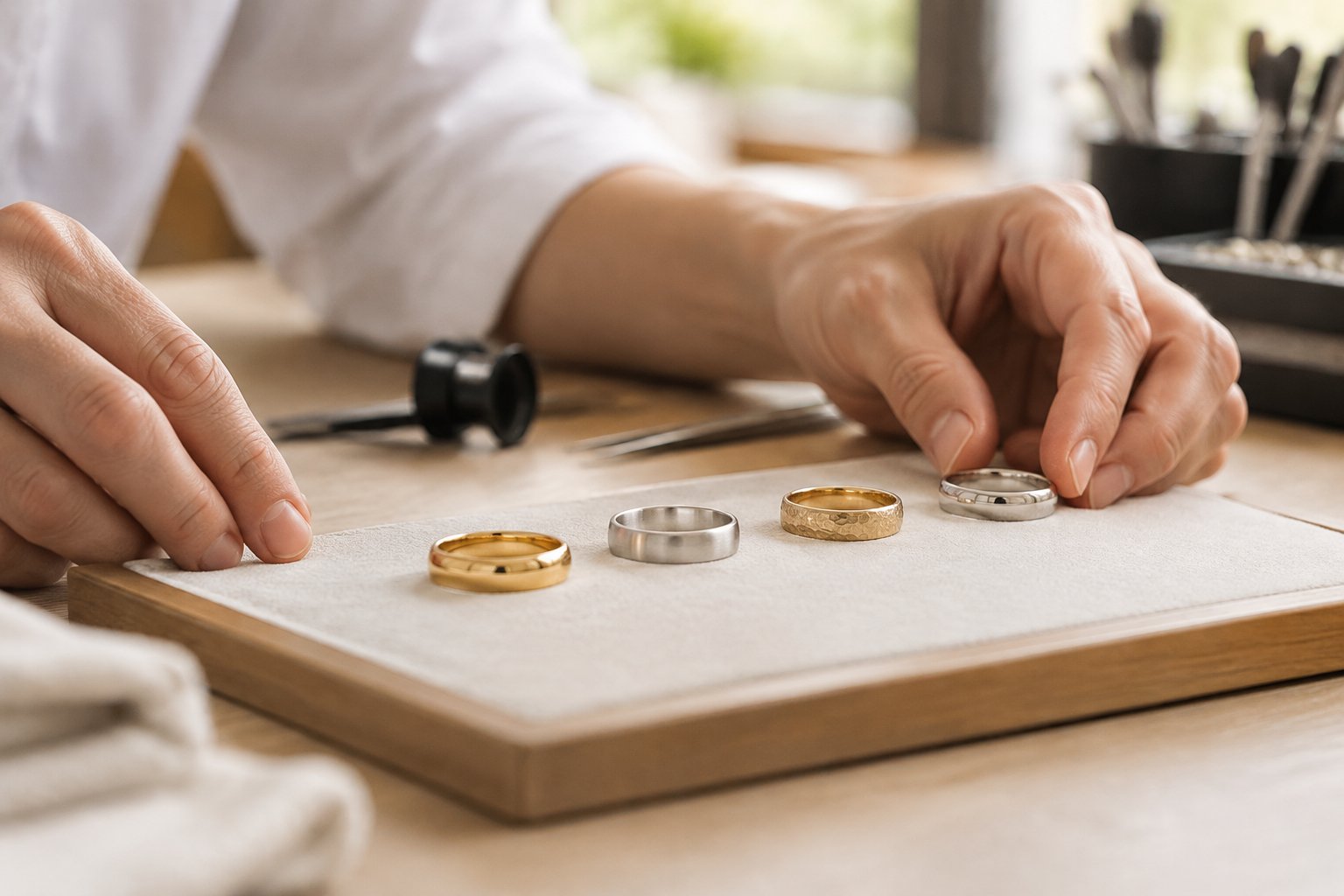
Classic bands often use a simple, polished profile in yellow gold, white gold, or platinum. Their clean shape gives you an easy option for daily wear, and a slim band can pair neatly with many engagement ring settings.
Modern styles bring in details such as mixed metals, geometric edges, brushed finishes, or a wider profile. Alternative designs may feature hammered textures, wood or colored inlays, or an unconventional shape. Browse wedding ring ideas to see how different profiles and finishes can change a band’s look.
Think about the impression you want the ring to make and how it will feel on your hand. A wider band creates a bolder look, while a narrow one feels light and understated. If you’re choosing a band for your partner, styles for men range from simple metal designs to textured or stone-set options; wedding bands for men offer a useful point of comparison.
Are Diamond Wedding Bands Right for You?
A diamond wedding band suits you if you want extra sparkle in your daily jewelry. Choose pavé stones for a line of small diamonds, channel settings for a smooth row of stones, or a single accent diamond for a subtle detail.
Think about the ring’s setting and your daily activities. Low-set stones sit closer to the band, while raised settings can catch on fabric or gloves. Ask the jeweler how to care for the setting and whether the design needs regular checks. You can also compare the band with your engagement ring to see how much sparkle you want across the pair.
How Do You Match a Band With an Engagement Ring?
You can match a wedding band with your engagement ring by checking its shape, height, width, and metal. A well-fitted pair sits comfortably together and looks balanced on your hand.
How Can You Check the Fit and Profile?
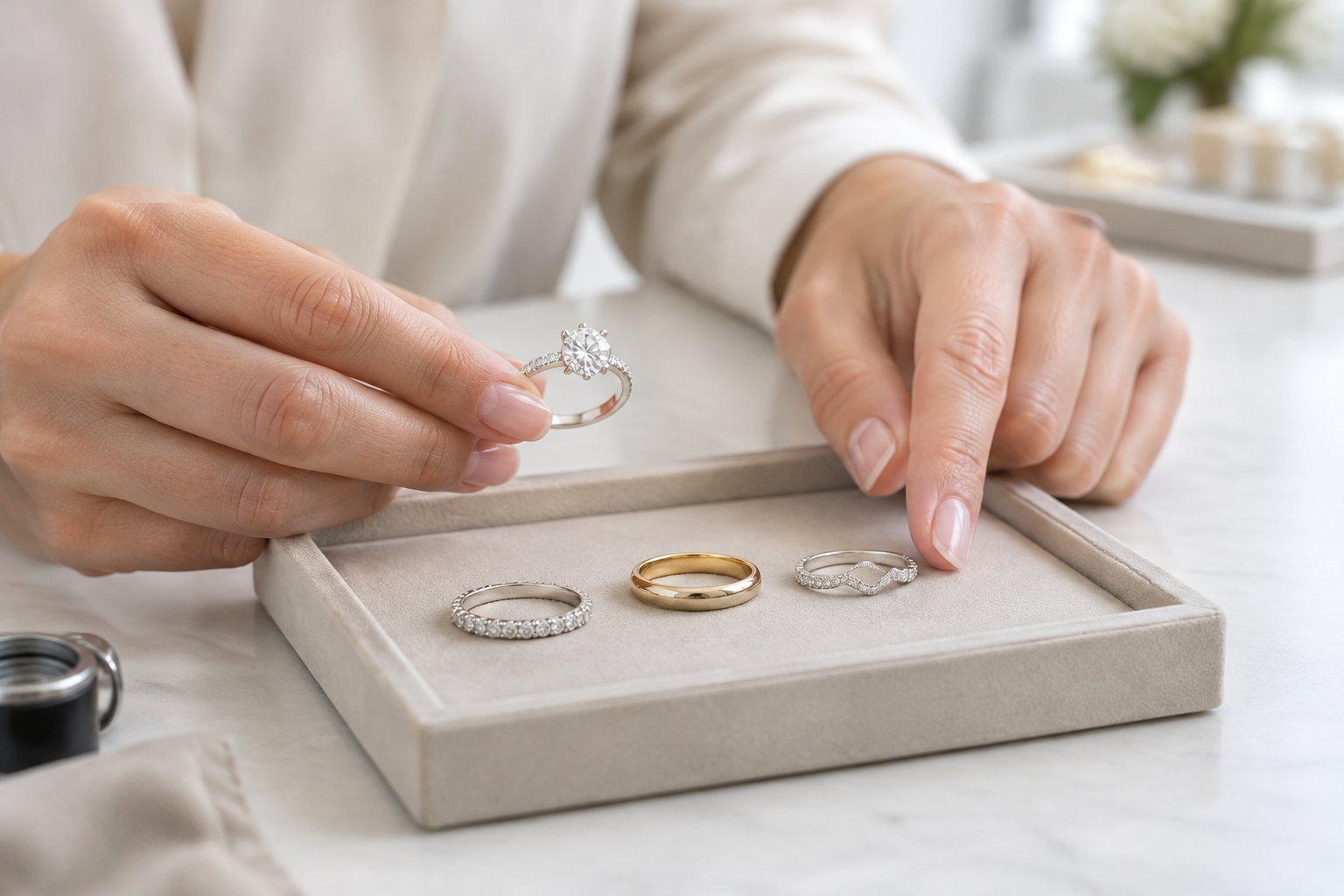
Try the wedding band beside your engagement ring and look at how the two profiles meet. A straight band often fits well beside a raised setting, while a contoured band curves around a setting that sits low or extends beyond the ring’s shank.
Notice whether the rings sit flush, leave a gap, or press against each other. A small gap can be part of the design, while a close fit may feel better if you plan to wear both rings together. Check that the stones and prongs have enough room to avoid rubbing against the band.
Ask the jeweler to check the fit from the side as well as from above. You can also try wearing the engagement ring with the band for a few minutes to see how the combined width feels. If you’re deciding how to wear both pieces, this guide to wearing an engagement ring with a wedding band can help you consider the arrangement.
Should Your Rings Match or Coordinate?
Your rings can match exactly, share a detail, or create a deliberate contrast. Matching metals and finishes give you a coordinated look, while mixed metals let each ring keep its own character.
For a shared detail, choose bands with a similar width, a common finish, or a small design feature that links them. You and your partner can also select different rings that suit your individual tastes. If you’re weighing that choice together, whether wedding bands should match offers ideas for coordinated and individual styles.
Which Metals and Details Fit Your Lifestyle?
Choose a metal and finish that suit your skin, budget, and daily routine. Your choice affects the ring’s color, feel, upkeep, and how it wears over time.
How Do Metal Choices Compare?
Gold and platinum are popular choices for wedding bands, each with a distinct look and care needs. Yellow gold has a warm, classic color. White gold offers a bright, silvery finish and may need periodic rhodium plating to keep its surface bright. Rose gold gets its blush color from copper in the alloy.
Platinum has a naturally white color and a substantial feel. It develops a soft patina with wear, which you can have polished if you prefer a brighter finish. Gold comes in different karats, which affect the balance of gold and alloy metals in the ring.
Compare the color against your engagement ring and other jewelry. If you have sensitive skin, ask what metals are in the alloy and whether a nickel-free option is available. This overview of yellow gold versus white gold for a wedding ring can help you narrow your choice.
What Should You Know About Comfort and Durability?
Comfort starts with a proper fit, a suitable width, and an interior profile that feels smooth against your finger. Try rings on at different widths, since a broad band can feel tighter than a slim one in the same size.
Consider your work and hobbies when choosing details. A plain or low-profile band has a smooth surface for hands-on tasks, while raised stones and deep textures add detail that may need extra care. Brushed and matte finishes soften the look of surface marks, while a polished surface reflects more light.
Ask whether the band can be resized and what care the metal needs. A jeweler can explain how your chosen design responds to everyday wear and which habits help protect its finish and settings.
How Can You Make the Ring Shopping Experience Personal?
You can make ring shopping personal by choosing details with meaning and working with a jeweler who takes time to understand your preferences. Engraving, custom design, and a shared appointment can turn the search into part of your love story.
When Should You Consider Custom Design?
Consider custom design when you have a clear idea that you can’t find in ready-made bands, or when your engagement ring needs a precise fit. You might adjust a band’s width, shape, metal, setting, or finish to create the look you want.
Bring reference images and your engagement ring to the appointment. Explain which details you want to keep and which ones you’re open to changing. Before work begins, ask for a design sketch, a price estimate, and a schedule that includes time for any revisions.
Custom work can take several weeks, so plan your appointment well ahead of the wedding date. Keep the jeweler’s resizing and aftercare terms with your design documents.
How Can a Jeweler Help Tell Your Love Story?
A jeweler can help you choose a detail that connects your rings to a meaningful part of your relationship. You might add an engraving with a date or phrase, choose a gemstone in a significant color, or select a finish that reflects a shared interest.
You and your partner can shop together and compare designs, or each choose a band as a surprise. Talking through your priorities helps the jeweler suggest options that suit both your taste and budget.
If you’re deciding how to shop as a couple, choosing wedding bands together can help you plan the experience. You can also ask about coordinating your bands with other personal jewelry, such as watches, without making every piece identical.