
Lakeside Wedding Venues Hiring: Roles and How to Apply
Lakeside wedding venues hiring for seasonal and year-round roles often need servers, bartenders, setup crews, and event coordinators. You can find openings by checking venue career pages and local job boards, then applying with a resume that highlights customer service, hospitality, or event experience.
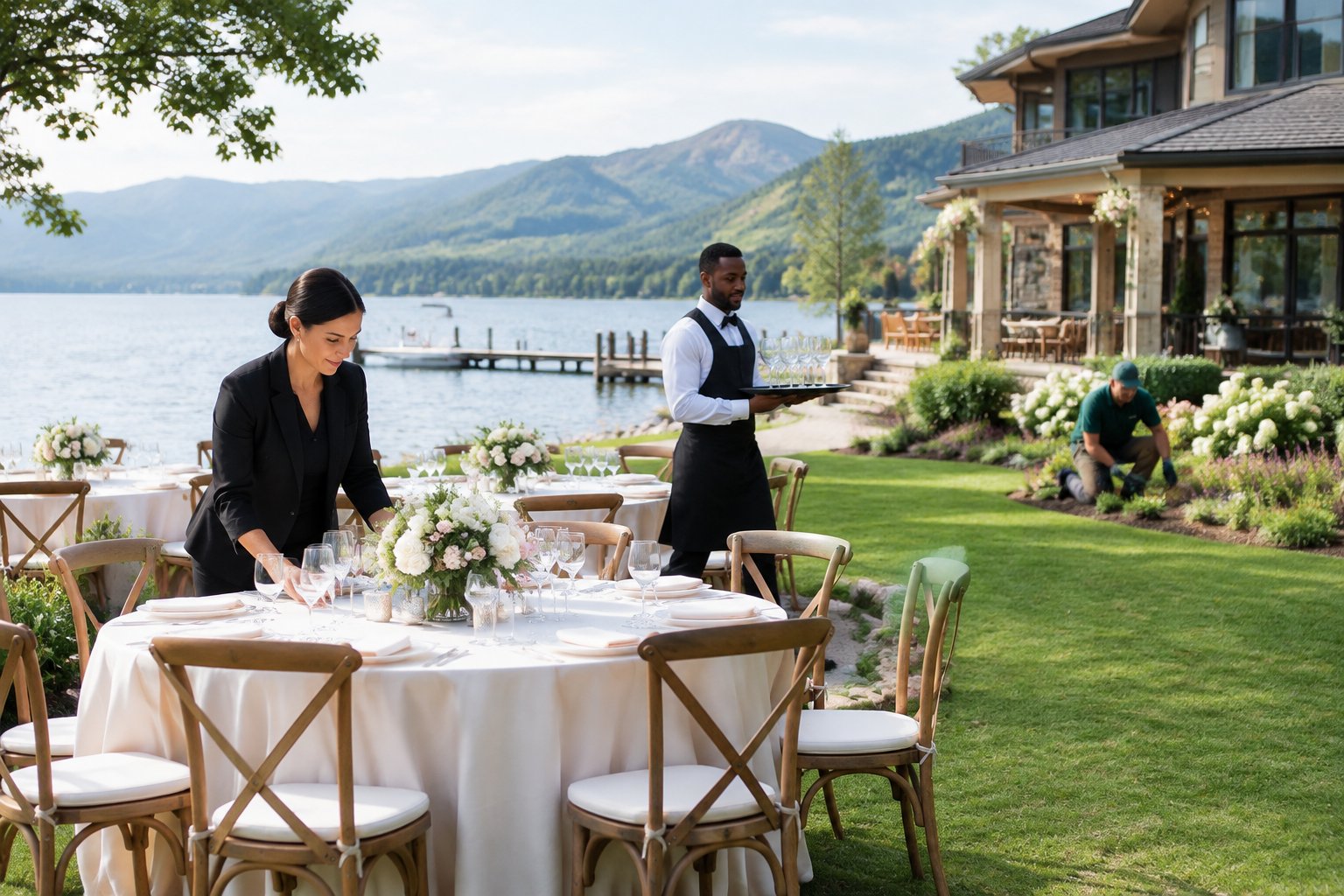
A job at a lakeside venue can put you in a lively setting where weekends, evenings, and busy event days are part of the schedule. If you enjoy helping guests and working as part of a team, check nearby venues’ career pages and contact them about current openings.
Which Roles Do Wedding Venues Hire For?
Wedding venues hire for guest service, food and drink service, event coordination, and behind-the-scenes operations. Your experience and schedule can help you choose a role that suits you, whether you prefer active event shifts or ongoing planning work.

Banquet Servers and Bartenders
As a banquet server, you help prepare the dining area, serve meals, and respond to guest requests during weddings and events. Bartenders prepare and serve drinks, keep the bar organized, and follow the venue’s alcohol service rules. Some venues hire event servers for part-time shifts, with nights and weekends included.
Ask whether the venue hires its own food-service staff or works with an outside caterer. Your duties can change based on that arrangement, the meal format, and the event plan. Learn more about whether wedding caterers provide waiters to help you understand how staffing may be organized.
Setup, Cleaning, and Guest Services
Setup crews arrange tables, chairs, linens, and ceremony spaces before guests arrive. Cleaning staff reset rooms and handle dishes or waste after an event, while guest-service staff may greet visitors, guide them around the property, or help with seating.
A wedding venue manager may oversee daily operations and staff assignments, giving you a clear contact for questions about your shift or work area. You can also ask whether the job includes outdoor setup, since lakeside events may use lawns, patios, or other waterfront spaces.
Coordinators and Event Staff
Coordinators help keep the event schedule on track and communicate with vendors, staff, and guests. Some positions focus on the couple’s plans; others support the venue’s operations or assist the lead coordinator during the event. If you enjoy organizing details and communicating clearly, ask about assistant coordinator or event staff openings.
What Is a Wedding Server’s Job Like?
A wedding server’s job combines guest service, food and drink delivery, and hands-on preparation and cleanup. Your shift may take you from the dining room to the lakeside ceremony area, with instructions from a lead server or event captain guiding the team.

Typical Tasks During a Wedding
Before guests arrive, you may set tables, check place settings, stock service stations, and learn the meal timeline. During the reception, you serve courses or drinks, clear plates, and respond politely to guest requests. Afterward, you help clean and reset the space.
The service plan shapes the pace of the shift. A plated dinner calls for coordinated table service, while a buffet may involve keeping serving areas tidy and helping guests find what they need. Your team may also prepare water or other refreshments for guests near the ceremony area.
The timing of meal service is one part of the event plan, and how long food is served at a wedding can affect the flow of your work.
How Shifts Can Change From Event to Event
Your duties and shift length depend on the guest count, event schedule, and service style. A short reception may need a smaller team, while a full-day wedding with a ceremony, cocktail hour, and dinner requires more preparation and cleanup time.
Some venues ask you to work in several areas, including the ballroom, patio, or bridal suite. Check your start and end times before accepting a shift, and ask whether setup or breakdown is included in your paid hours.
If a caterer supplies the meal, your responsibilities may follow its service plan; learn how wedding caterers work with event teams to know what to ask.
What Qualifications, Hours, and Pay Should You Expect?
You can qualify for many entry-level venue roles with customer-service skills, reliability, and a willingness to learn, while coordinator jobs often call for event experience. Weekend availability is common, and pay depends on the job, location, and employer.

Experience and Age Requirements
For serving or setup work, venues may value a friendly manner, clear communication, and the ability to follow instructions. Previous restaurant, catering, or event experience can strengthen your application, though some employers provide training.
Coordinator roles may ask for planning experience and strong organization skills. If you are interested in planning work, review what qualifications wedding planners may need.
Check each posting for its minimum age and any required permits or certifications. Alcohol-service rules vary by state and location, so confirm the venue’s requirements before applying for bartender work.
Weekend Availability and Seasonal Work
Wedding events often take place on Fridays, Saturdays, and Sundays, with evening shifts and holiday dates also possible. Many venues hire part-time event staff, while some offer year-round work.
Lakeside businesses in seasonal destinations may have busier months, so ask how far ahead the venue posts schedules and how often staff are offered shifts.
Hourly Pay, Tips, and Training
Pay varies by role and region. One New Jersey venue has advertised wedding server work at $18 per hour plus tips, while job listings across the country show a broad range. Treat any online estimate as a starting point and confirm the hourly rate, tip policy, training pay, and overtime rules with the employer.
Ask whether tips are pooled or distributed by shift, and when you receive your first paycheck. If you work guest-facing events, it can also help to understand how tipping wedding staff works, though your employer should explain its own policy.
How Can You Find and Apply for Openings?
You can find openings through venue career pages, job boards, and local hospitality networks. A focused resume and clear availability help employers see how you fit their schedule and staffing needs.

Check Venue Career Pages and Job Boards
Search for terms such as “banquet server,” “event staff,” “wedding coordinator,” and “venue setup.” Include your town or region to narrow the results, and check individual venue websites because some employers accept applications directly. Job boards can help you compare nearby listings and spot roles with different schedules.
You can also contact a venue’s hiring manager or front desk to ask where applications are accepted. Keep a note of the job title, application date, and any follow-up instructions so you can track each opportunity.
Prepare a Resume and Availability
Keep your resume clear and focused on the role. Highlight relevant work in restaurants, hotels, retail, customer service, or event support. Add skills such as handling busy shifts, following safety rules, or communicating with guests.
State your available days and hours, including your weekend schedule. If you have limited experience, include school, volunteer, or community events where you worked with a team or helped guests. Check your application for errors and use a professional email address.
Questions to Ask Before Accepting
Before you accept an offer, ask about paid training, shift length, dress code, transportation, and how the venue shares schedules. Confirm whether your work includes setup and cleanup, and ask who supervises you during an event. Clear answers help you plan for the actual demands of the job.
How Can You Tell if a Venue Job Is a Good Fit?
A good venue job fits your service style, schedule, and ability to get to work reliably. Before you accept, learn how the team communicates and what the employer expects from staff during busy events.
Team Culture and Guest-Service Expectations
Ask how new employees learn their duties and who gives instructions during a wedding. You may want a role with steady guidance from a lead server, or you may prefer work that gives you more responsibility. Find out how the team handles guest requests, schedule changes, and outdoor event plans.
Notice whether the hiring manager explains the role clearly. You should know which tasks belong to your position, how the venue handles breaks, and what support is available when an event runs behind schedule.
Transportation, Scheduling, and Year-Round Commitments
Check the commute before accepting a job, especially if the venue is outside town or your shift ends late. Ask about parking, public transit options, and whether staff travel between separate buildings or outdoor event areas.
Confirm how often you can expect shifts and whether the schedule changes by season. If you want year-round work, ask what duties are available during quieter months. Compare those details with your other commitments before confirming your availability.