
Lakeside Wedding Venues With Overnight Stays: What to Know
Lakeside wedding venues with overnight lodging let you celebrate beside the water while keeping at least some guests on the property. Your event space and sleeping arrangements may share a campus, or the venue may pair its own rooms with nearby hotels and rentals.
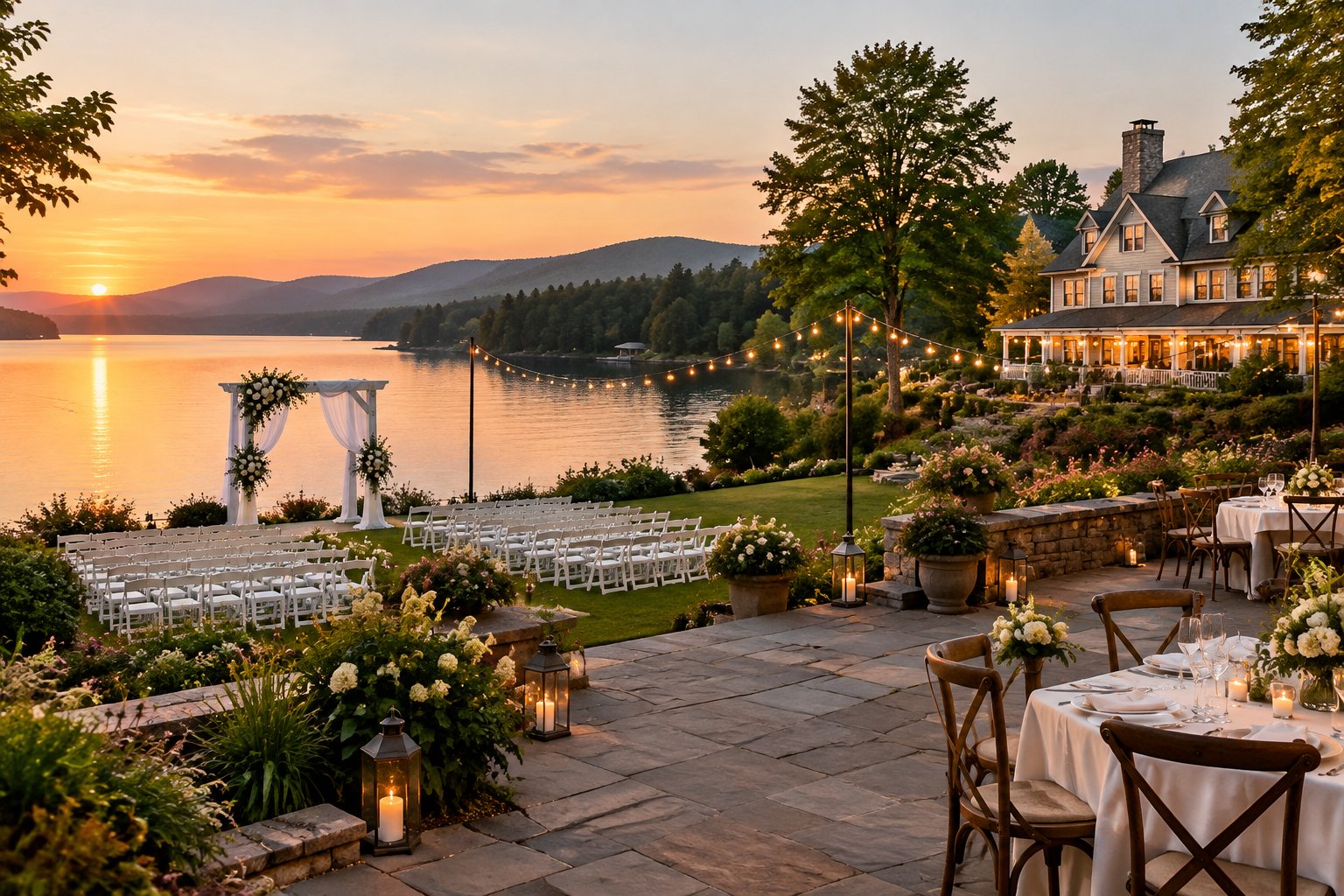
Your first planning task is to separate the number of people invited from the number of people who can sleep on-site. Compare lakeside wedding venues with lodging by event capacity, bed count, guest comfort, and travel between spaces. As you build your shortlist, contact each property for a tour and a written breakdown of its rooms, event areas, and booking terms.
What Does an Overnight Lakeside Wedding Setup Include?
An overnight setup combines a lakeside wedding venue with sleeping spaces on the same property or close by. You’ll want to confirm how the ceremony, reception, and lodging connect, along with which spaces your rental includes.
Which Event Spaces and Guest Accommodations Are On-Site?
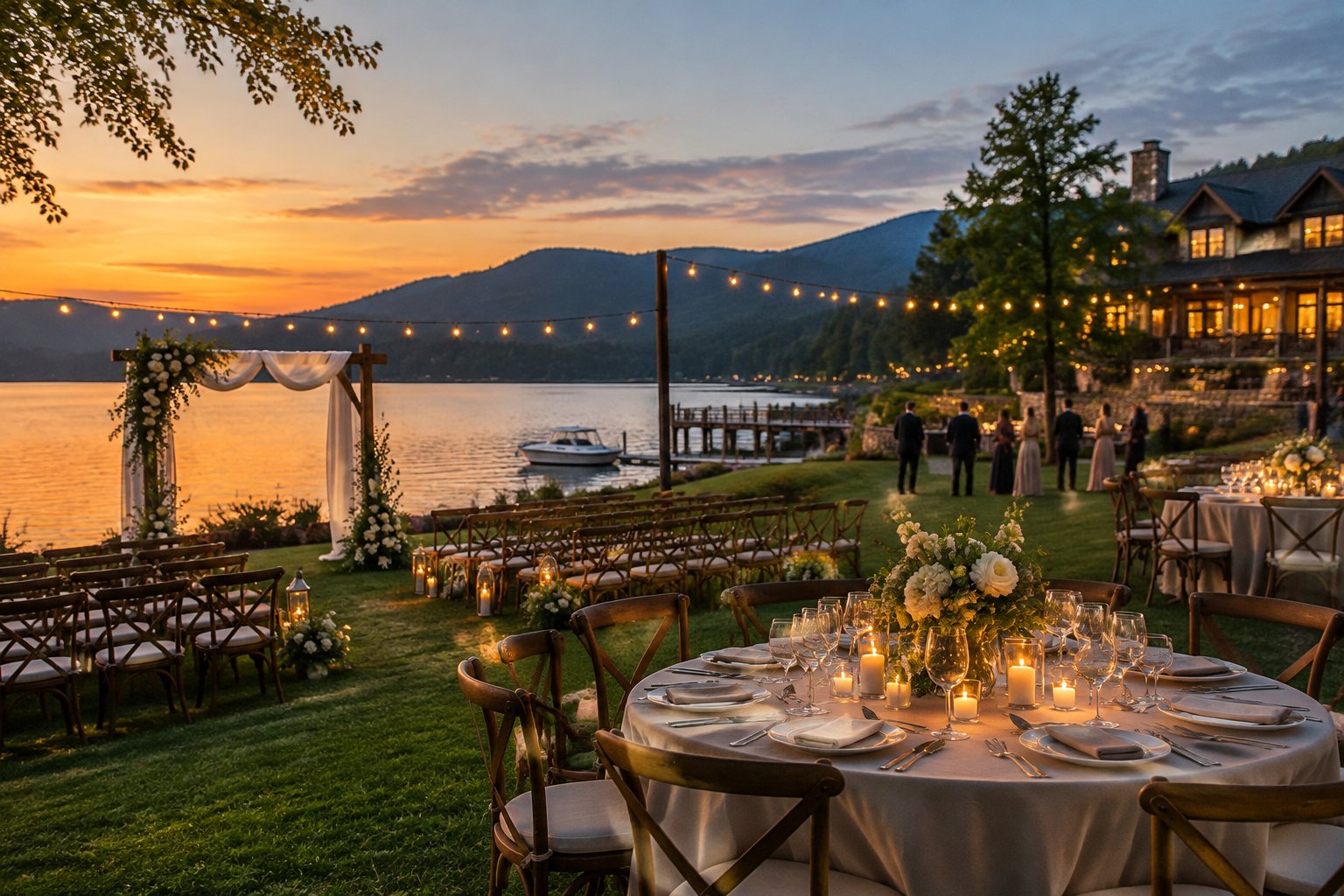
A property may offer a waterfront ceremony area, a lawn or deck for cocktail hour, and a reception room or tent site. Lodging can range from private cottages and cabins to guest rooms in an inn or lodge. Some venues include rooms in a wedding package; others charge for lodging separately.
Ask for a property map and a list of spaces included in your rental. Check where guests will get ready, where vendors can set up, and how the group will move from the ceremony to dinner. If you’re comparing lakeside wedding venues, find out whether guests can use shared areas such as a patio, fire pit, or lounge between scheduled events.
How Many Guests Can Stay at the Property?
The sleeping capacity can be much lower than the event capacity, so check both figures before you book. Ask for the number of rooms, beds, and bathrooms, then confirm whether any beds are shared or reserved for the couple and wedding party.
You can sort your guest list into people who need on-site rooms and people who can stay nearby. Consider relatives who need easier access, guests involved in the ceremony, and travelers arriving from out of town. For a smaller celebration, lakeside wedding venues for small gatherings may offer a better fit between guest count and available beds.
Which Venue Styles Offer Lakeside Scenery and a Place to Stay?
Resorts, inns, camp properties, and private estates each offer a different mix of water views, lodging, and shared space. Choose a style that suits your guest list and the kind of weekend you want to host.
How Do Lakeside Resorts and Inns Handle Guest Rooms?
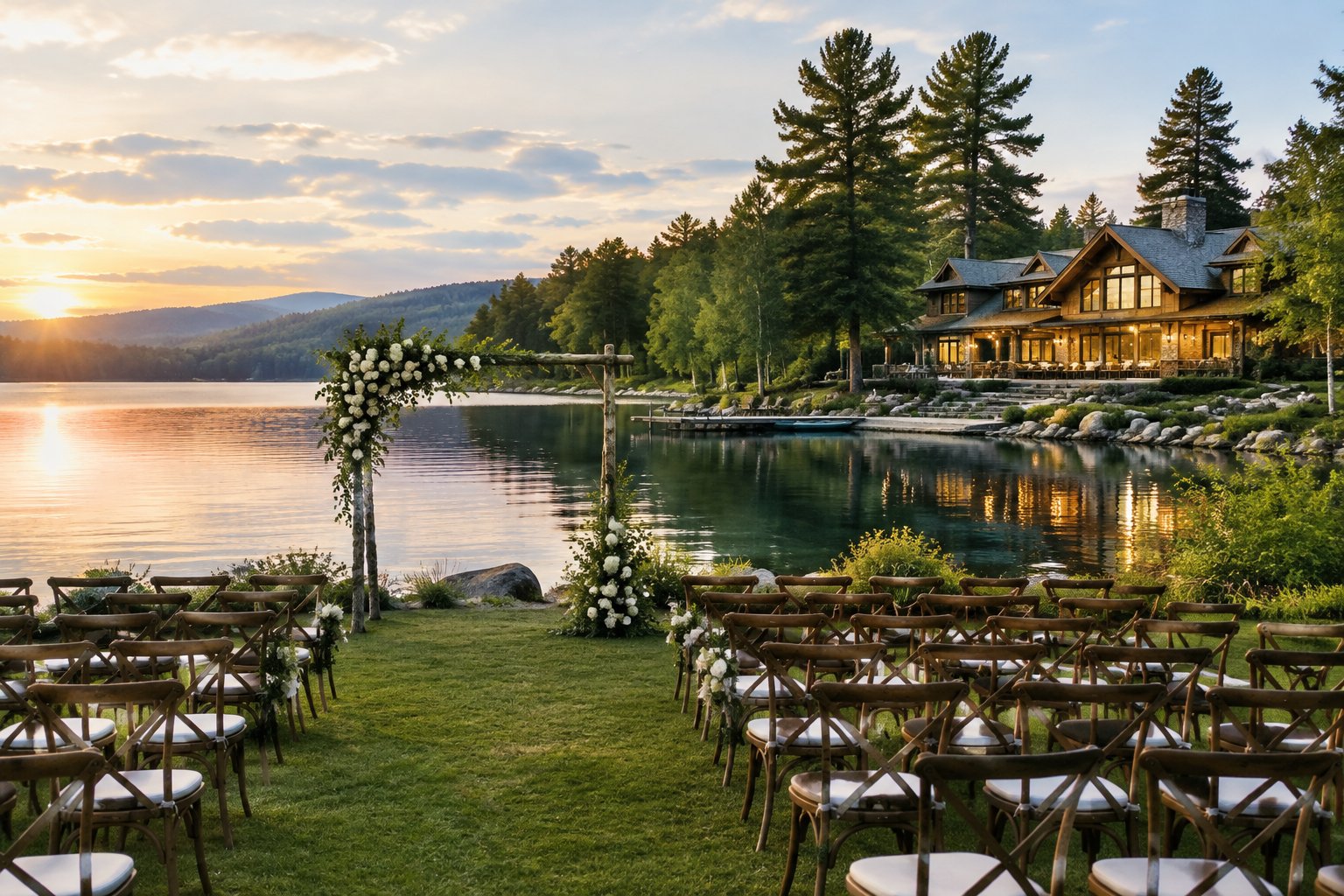
A resort or inn can make room planning straightforward because guest rooms and event spaces sit within one property. You can ask about room blocks, booking deadlines, meal service, and whether guests can reserve rooms at a group rate. A hotel-style setup can also give guests more privacy than shared cabins.
Confirm how many rooms the venue can hold for your group and how long it will keep them available. Ask whether a room block requires a minimum number of bookings or a deposit. Your wedding venue search should include lakeside wedding venues you can stay at if keeping guests near the celebration is a priority.
What Makes Camp Wedding Venues Appealing?
Camp wedding venues can bring cabins, outdoor gathering areas, and activities together in a relaxed setting. They suit couples who want guests to spend time together across the weekend and feel comfortable with a more casual stay.
Before you book, check the sleeping arrangements and shared facilities. Ask about cabin layouts, bathrooms, linens, quiet hours, and access for guests who need step-free routes. A lakeside barn venue may also have a rustic feel, with a reception barn and separate cabins or nearby lodging.
When Might a Private Estate or Villa Be a Better Fit?
A private estate or villa can give you a more secluded setting and a close-knit feel for the wedding party or family. The name Murrieta Mediterranean Villa may appear in searches for villa-style events, but you’ll need to confirm its location, event permissions, and lodging details directly before treating it as a lakeside option.
With any private property, verify that weddings are allowed and that the rental covers your planned guest count. Ask whether the property has event staff, parking, restrooms, and a rain plan. A home’s guest capacity and its approved event capacity are separate details.
How Can You Plan a Wedding Weekend Around the Venue?
A wedding weekend works best when your venue supports both the formal events and the quiet time between them. Set the main schedule first, then add optional activities that fit the property and your guests’ energy.
What Can a Multi-Day Itinerary Include?
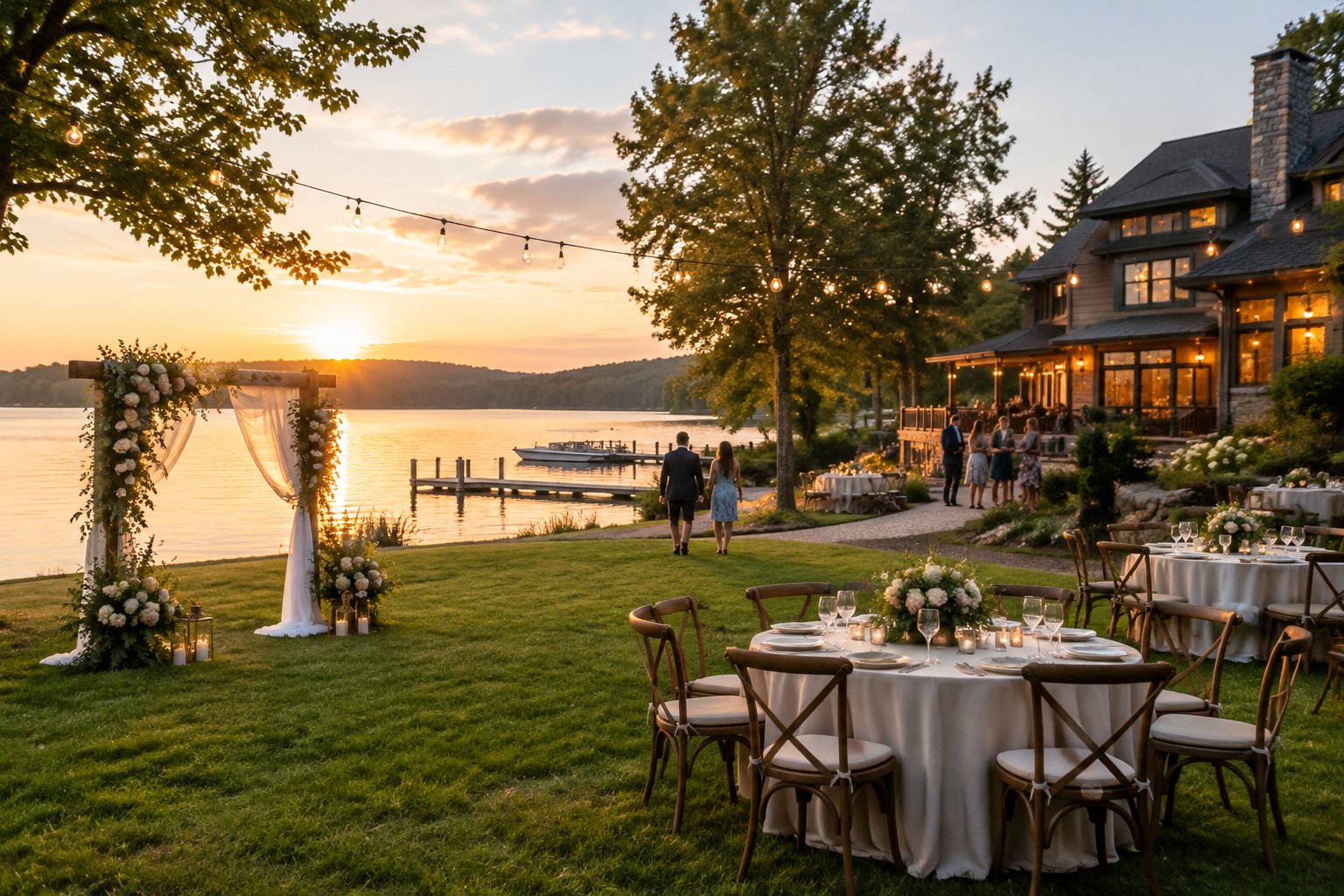
Your wedding weekend might start with a casual welcome gathering, continue with a rehearsal and dinner, and center on the ceremony and reception. You can leave the next morning open for coffee or a farewell meal. A wedding weekend itinerary helps you organize timing, locations, and which events are optional.
For multi-day wedding weekends, share arrival details and the schedule early so guests can plan travel and time off. If you’re hosting a destination wedding, include lodging instructions and local transportation details with the invitation or wedding website. Leave open blocks in the schedule for guests to rest or make their own plans.
How Can Guests Enjoy the Setting Between Events?
Use the property’s features to offer easy ways to relax, such as walking paths, a shared lounge, or a meal outdoors. Ask what guests can access and whether activities need advance reservations, extra fees, or safety waivers.
You can also share nearby restaurants and attractions for guests who want time away from the property. Make clear which activities are hosted and which guests arrange on their own. That gives everyone room to enjoy the setting at a comfortable pace.
What Costs and Booking Terms Should You Compare?
Compare the full cost of the stay and celebration, including the venue fee, lodging, rentals, food, and required services. A written quote helps you see which expenses are included and which ones will be added later.
What Is Included in the Weekend Rate?
Ask whether the rate covers event spaces, overnight rooms, tables, chairs, linens, setup, cleanup, and staff. Check the number of hours you can use the property and whether you can arrive early for setup or stay after the reception. A package described as all-inclusive can still have limits, so review its itemized terms.
Add catering, bar service, taxes, service charges, vendor fees, and rentals to your comparison. If you’re reviewing all-inclusive lakeside wedding packages, note what each package includes and how many guests or rooms it covers. Get any quoted add-ons in writing.
Are Room Blocks, Buyouts, or Minimum Stays Required?
Some properties set a minimum stay or require a full-property buyout for a wedding. Others reserve a room block and give guests a deadline to book. Ask who handles reservations, when the rooms are released, and whether you’re responsible for unbooked rooms.
Read the contract for deposit timing, cancellation terms, damage fees, and payment due dates. Confirm the check-in and check-out schedule, since those times affect setup and next-day plans. If your group is using nearby hotels, ask about block rates and shuttle options before you promise guests a specific price.
What Should You Confirm Before Choosing a Property?
Before you sign, confirm how guests will reach the event spaces and where they’ll stay, then review the property’s rules and access details. A site visit helps you check routes, room layouts, and the way the property functions during a busy event.
How Will Guests Get Between Lodging and Event Spaces?
Ask whether guests can walk between their rooms and the ceremony or reception, and whether the route is lit after dark. For a larger property, find out if shuttles or golf carts are available and who operates them. Share parking and arrival instructions with guests before the weekend.
Check how vendors will unload equipment and where overnight guests can park. If some guests are staying off-site, provide the distance and travel time to the venue, plus a clear transportation plan for the end of the reception.
What Are the Venue’s Seasonal, Accessibility, and Event Rules?
Ask which months suit outdoor events, what weather backup spaces are available, and how the property handles heat, rain, or cold. Confirm accessibility for ceremony seating, restrooms, guest rooms, and paths between event areas.
If a guest uses a mobility aid, request a site walkthrough of the full route. Review rules for amplified music, outdoor lighting, candles, alcohol, swimming, and fires.
Ask about vendor requirements, cleanup, and event end times. As you compare options, use a wedding location checklist and record the venue’s answers in writing before you pay a deposit.