
Lakeside Wedding Venues Without a Traditional Venue
You can hold a lakeside wedding without booking a traditional venue by reserving an approved public shoreline or getting permission to use private lakefront property. Your ceremony can be intimate and simple, with the lake providing the setting and a nearby space serving as your reception spot.
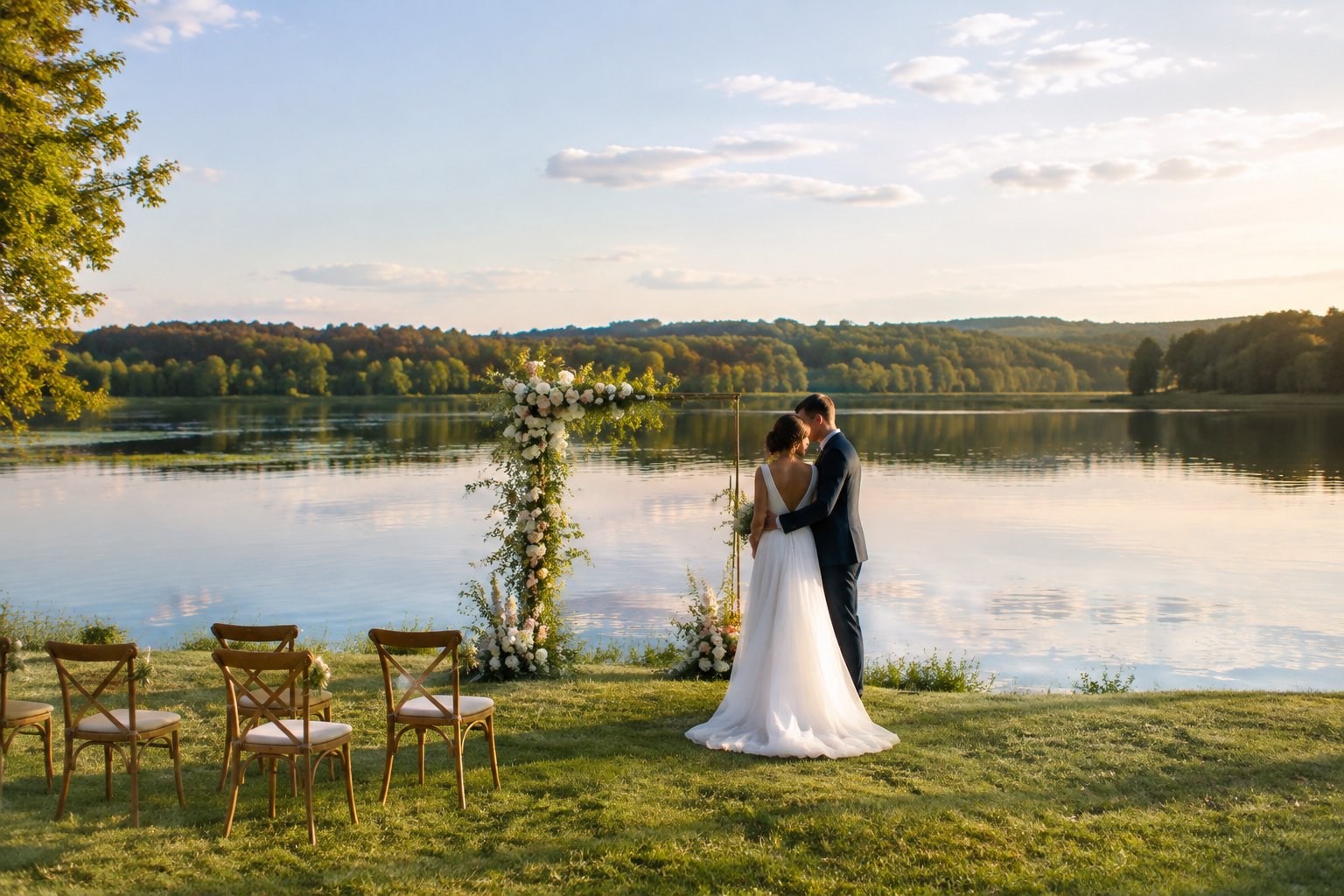
If you’re looking for lakeside wedding venues without venue rental fees, start by checking the rules and facilities at each site. Choose a shoreline that fits your guest count, then contact the park office or property owner to confirm access before you send invitations.
Can You Have a Lakeside Wedding Without a Dedicated Venue?
Yes, you can hold a lakefront wedding at a public or private shoreline when you have permission and meet the location’s rules. Your plans can range from a short lakeside ceremony to a small gathering with chairs and a nearby reception.
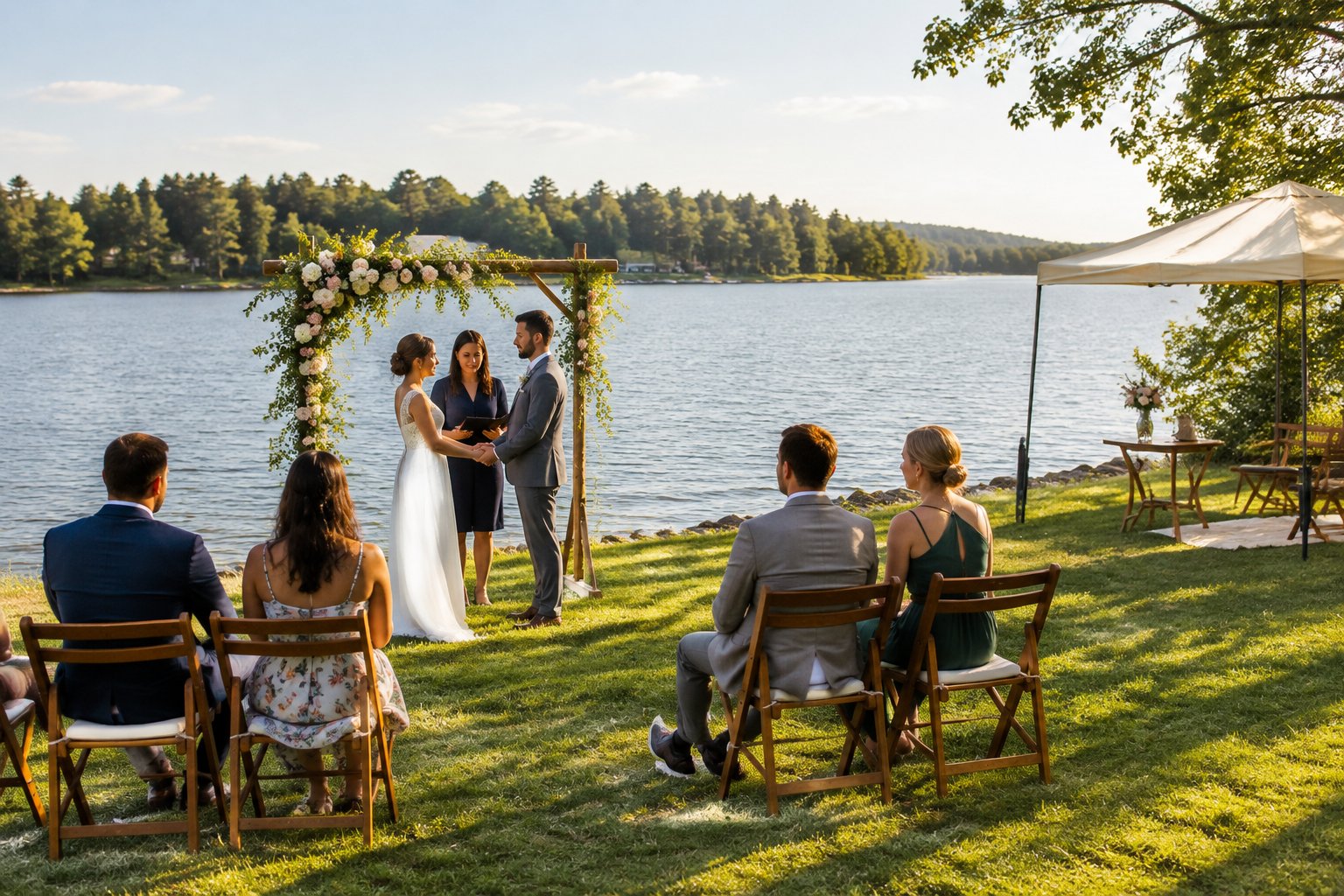
A public park, beach, or private property can give you a waterfront setting without the services of a traditional wedding venue. Before choosing a spot, find out what the site allows and what you’ll need to bring.
Public Parks, Beaches, and Shorelines
Public waterfront areas give you scenic options, though you’ll need to follow the rules set by the city, county, state, or park authority. Ask about event permits, guest limits, reserved areas, alcohol, amplified sound, decorations, and setup times. A public space may remain open to other visitors during your ceremony, so ask whether you can reserve an area or expect people nearby.
Check whether the site has restrooms, parking, paved paths, or a shelter. A beach or grassy shoreline may look inviting, while loose sand or uneven ground can make access difficult for some guests.
Private Lakes and Borrowed Property
A home, cabin, or family property beside a lake can give you more control over the ceremony area. Get clear permission from the owner and discuss the guest count, parking, noise, restrooms, cleanup, and any structures or rentals you plan to bring. If you’re considering a home or family lot, review the practical questions involved in holding a wedding on your property.
Confirm that the owner has the right to approve event use, especially if the shoreline is shared or governed by an association. Put the agreed details in writing so you and the owner have the same expectations.
What a Simple Waterfront Setup Requires
Your basic setup can include an officiant, seating, a clear ceremony area, and a plan for arrival and cleanup. Mark a safe boundary near the water, keep the aisle and paths clear, and secure any decorations that could blow away. A small lakeside ceremony can feel complete with a short welcome and a few personal touches.
For ideas that suit a natural setting, explore these wedding ceremony ideas.
How Do You Find the Right Waterfront Setting?
Choose a waterfront setting that works for your guests and event needs as well as the view. Visit the site, check how people will reach the shoreline, and confirm what the property allows before you commit.
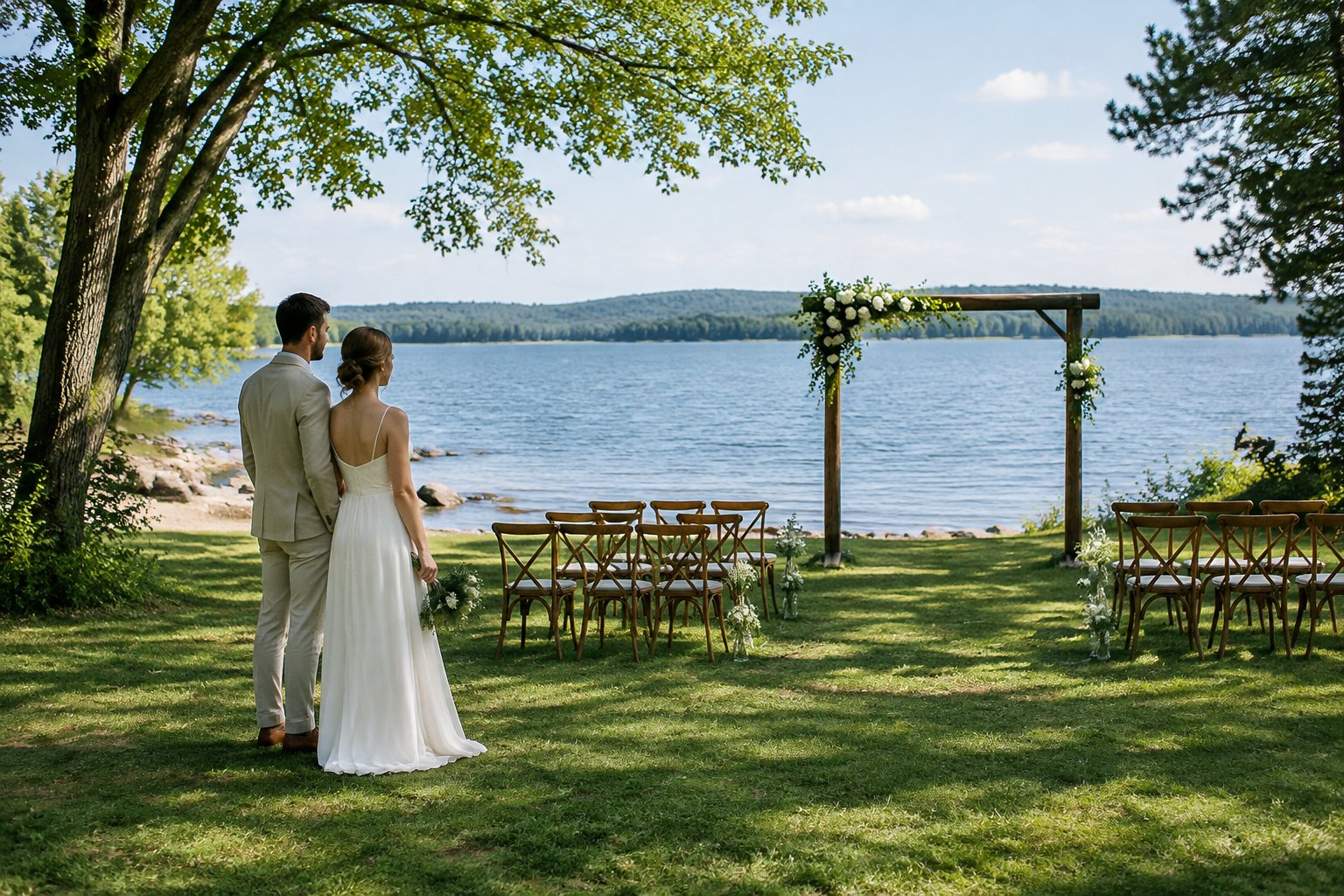
A location that looks peaceful during a quick visit can feel different on a busy weekend or at your ceremony time. Walk the route from parking to the ceremony spot and consider the needs of everyone you’re inviting.
Check Shoreline Access and Privacy
Look for a stable place for the couple, officiant, and guests to stand. Check for a clear path to the water’s edge and enough room for chairs without blocking public access. If you want privacy, ask who else can use the area during your event and whether you can reserve a defined section.
Pay attention to nearby boat launches, walking paths, picnic areas, and roads. These can affect noise and foot traffic. A short checklist can help you compare wedding locations based on access, rules, and available facilities.
Consider Guest Count and Accessibility
Match the site to your guest list. A small shoreline clearing can suit an intimate ceremony, while a larger group needs space for seating, clear paths, and a spot for vendors to unload. Keep the ceremony layout open enough for guests to enter and leave safely.
Ask about firm, step-free access and accessible parking. If the route includes sand, grass, or slopes, share those details with guests and plan seating near the easiest entrance. These small-wedding venue tips can help you weigh the space against your guest count.
Visit at Your Planned Ceremony Time
Visit the site at the time you expect to hold the ceremony. Check where the sun falls, how much shade is available, and whether the wind picks up along the shore. Listen for nearby traffic or public activity, and check the route in the light conditions your guests will experience.
Bring a rough layout with the number of chairs and the ceremony position marked. This helps you see whether guests will have a clear view and whether the officiant can be heard.
What Permits and Backup Plans Should You Arrange?
Confirm the site’s rules and secure any required approvals before making firm plans. You’ll also need a weather backup and practical arrangements for restrooms, parking, and power.
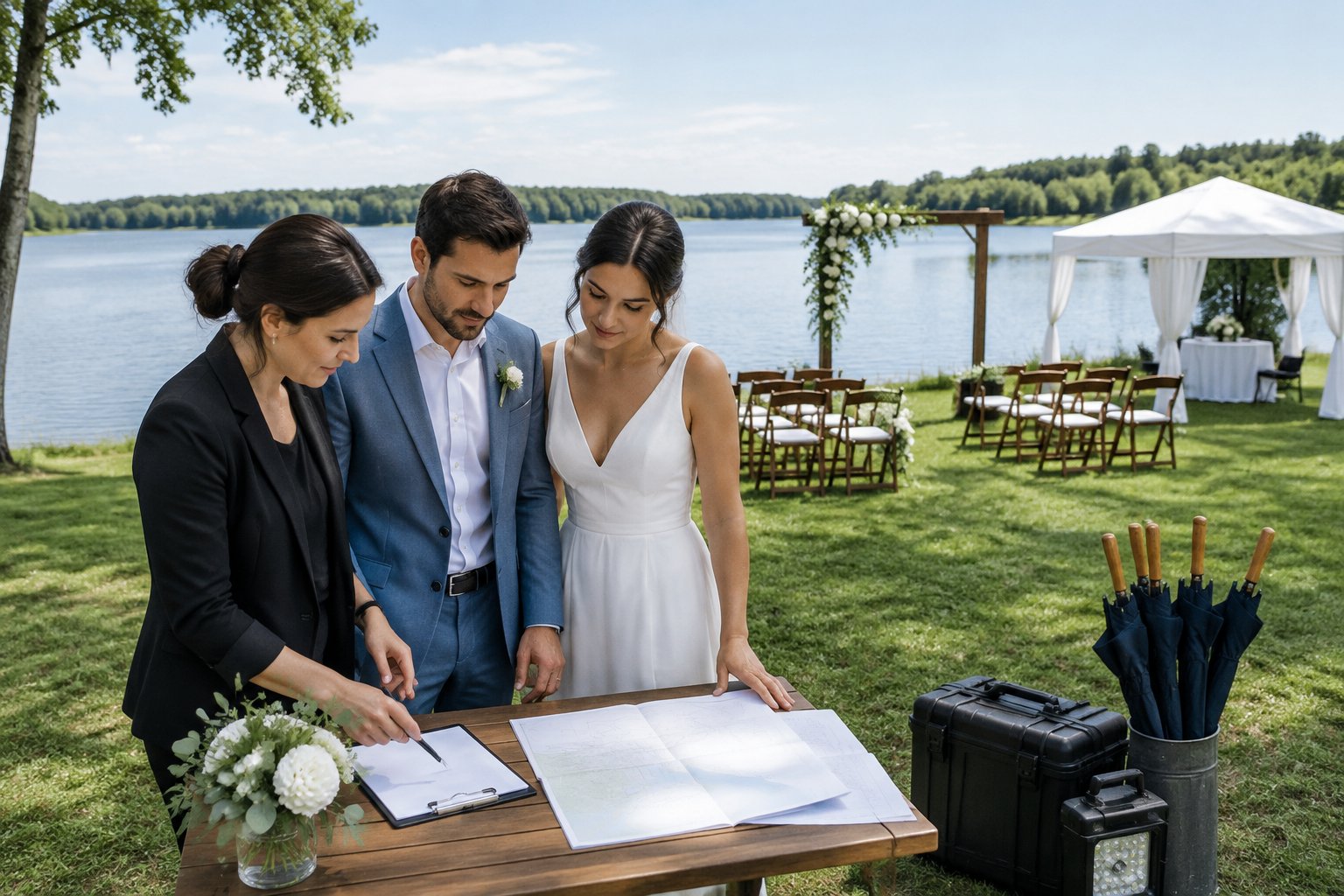
Rules differ by location, so contact the property owner or local parks office with your event details. Ask about permit deadlines, noise limits, setup and cleanup times, and whether another event can take place nearby.
Confirm Permits, Noise Rules, and Exclusive Use
Ask which permit applies to your ceremony and whether it covers chairs, tents, amplified music, catering, or alcohol. Find out how many guests you can invite and when vendors can arrive. If you need exclusive use of an area, confirm that in writing.
Keep copies of approvals and share the rules with anyone helping you plan. If the site is public, ask how staff handle overlapping reservations or regular visitors during your event.
Plan for Rain, Wind, and Changing Conditions
Choose a backup location before the forecast becomes urgent. A nearby covered shelter, rented tent, or indoor room gives you a clear option if rain or strong wind affects the shoreline. Set a decision time and choose one person to make the call with your vendors.
Secure lightweight décor and skip items that can blow away. Check local weather conditions as the date approaches, and let guests know how you’ll share any location change.
Check Restrooms, Parking, and Power
Confirm that restrooms will be open and close enough for guests to reach. Count available parking spaces and decide how guests with mobility needs will get to the ceremony area. If you plan to use a microphone, music, or lighting, ask whether the site has power and where outlets are located.
When the site has no power, discuss battery-powered equipment or a generator with your vendors. Make sure your setup plan respects the property’s rules and keeps cables away from guest paths.
How Can You Bring the Ceremony and Reception Together?
Plan the ceremony and reception as one guest experience, even if they happen in separate places. A nearby reception spot, coordinated setup, and clear vendor arrangements help the day move smoothly.
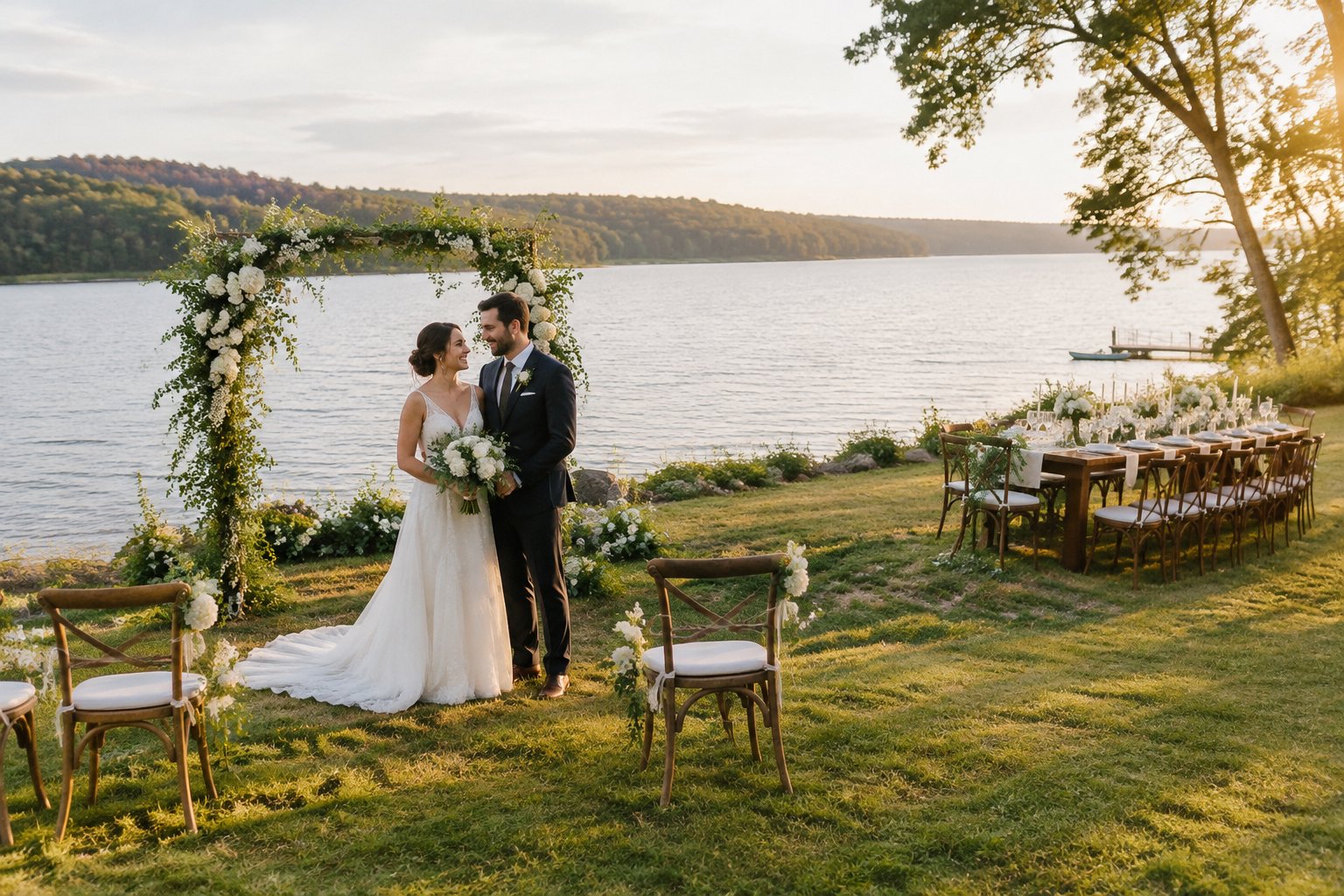
Choose the reception location early so you can explain travel, timing, and meal plans to your guests. Keep your design easy to transport and make a clear plan for setup and cleanup.
Choose a Nearby Reception Space
A restaurant, community hall, rented pavilion, or private home can work as your reception space. Consider the distance from the lake, travel time, seating, restrooms, and whether the space can handle your meal and music plans. If guests will move between locations, share directions and parking details in advance.
For a simple flow, allow time for travel and photos before dinner. If you want the ceremony and reception in the same place, ask whether the site can accommodate both setups and how long a changeover would take.
Keep Décor Simple and Secure
Let the lake and shoreline provide the backdrop, then add a few details that suit the setting. Use weighted signs, stable table decorations, and floral pieces that hold up outdoors. Keep walkways clear and avoid placing décor where it can fall into the water.
Choose items you can reuse at the reception, such as ceremony flowers or a welcome sign. Browse these lake wedding ideas for inspiration that fits a waterfront celebration.
Arrange Food, Rentals, and Cleanup
Ask your caterer how they’ll transport, serve, and clear food at your chosen site. Confirm access for delivery vehicles, the available setup area, and how food will be kept at safe temperatures. If you’re planning the meal yourself, choose a menu that suits the facilities and event length. These tips on feeding wedding guests can help you plan service.
Book rentals for chairs, tables, shade, and lighting, then confirm delivery and pickup times. Assign someone to check the ceremony area and reception space for trash and personal items before you leave.
How Do You Make the Day Comfortable for Guests?
Make comfort part of your plan from the invitation through the end of the reception. Clear travel notes, weather-ready supplies, and easy-to-use paths help guests feel prepared for an outdoor celebration.
Share Footwear and Travel Details in Advance
Tell guests whether they’ll walk on grass, sand, gravel, or a sloped path. Suggest shoes that suit the terrain and share parking instructions, walking distance, and the ceremony start time. If the location is hard to find, send a map pin and a contact for day-of questions.
Let guests know about any travel between the ceremony and reception. Include the plan on your wedding website or invitation so no one has to guess where to go next.
Provide Shade, Water, and Seating
Set out water before guests arrive, especially for a warm-weather ceremony. Provide shade with a canopy or umbrellas, and arrange seats for the full guest list. A few extra chairs give guests room to adjust as they arrive.
For sun or bugs, offer sunscreen and repellent near the seating area. In cooler weather, make blankets available and tell guests to bring a layer. Keep the ceremony short enough for the weather and the comfort of your guests.
Plan Transportation and Nearby Lodging
If parking is limited or the site is remote, arrange a shuttle or share ride options. Give guests a clear pickup point and schedule, including the return trip after the reception.
Check nearby lodging early if visitors are traveling from out of town, and list a few options with distance and transport details. If your gathering includes multiple events or travel between locations, a plan for where guests can stay can help you organize the lodging details.
Tell guests which options are closest to the lake and how they can get back safely.