
Musicians Wedding Band Cost: Rates and Booking Tips
A live wedding band in the U.S. costs about $3,000 to $8,000 for many receptions, with a national average near $4,500. Your quote will depend on the musicians you book, how long they play, and where your wedding takes place.
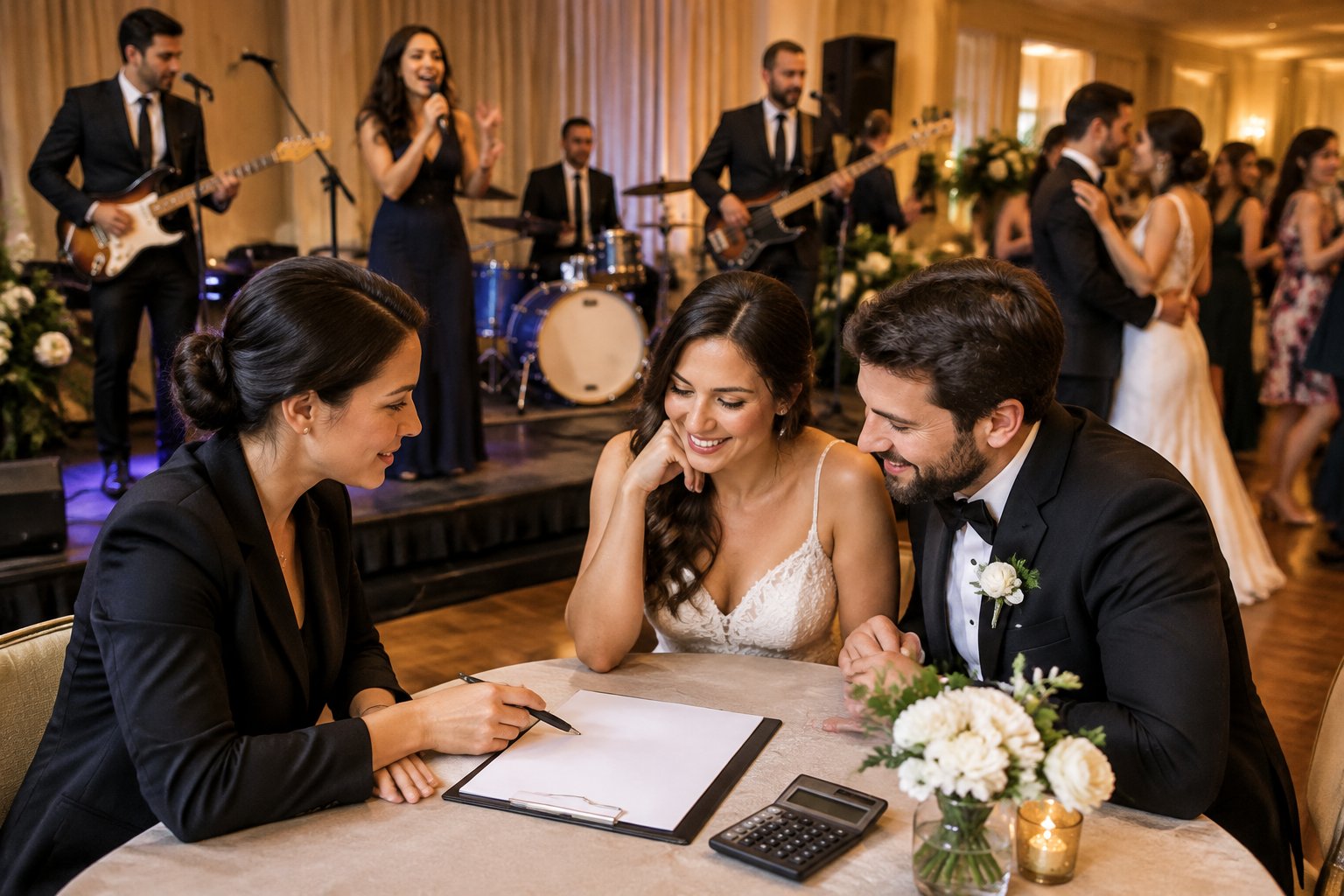
A smaller acoustic group can start around $1,500 to $2,500, while a large show band can cost $10,000 or more. Set a firm music budget, then ask bands for itemized quotes that spell out performance hours and extra charges.
How Much Does a Wedding Band Typically Cost?
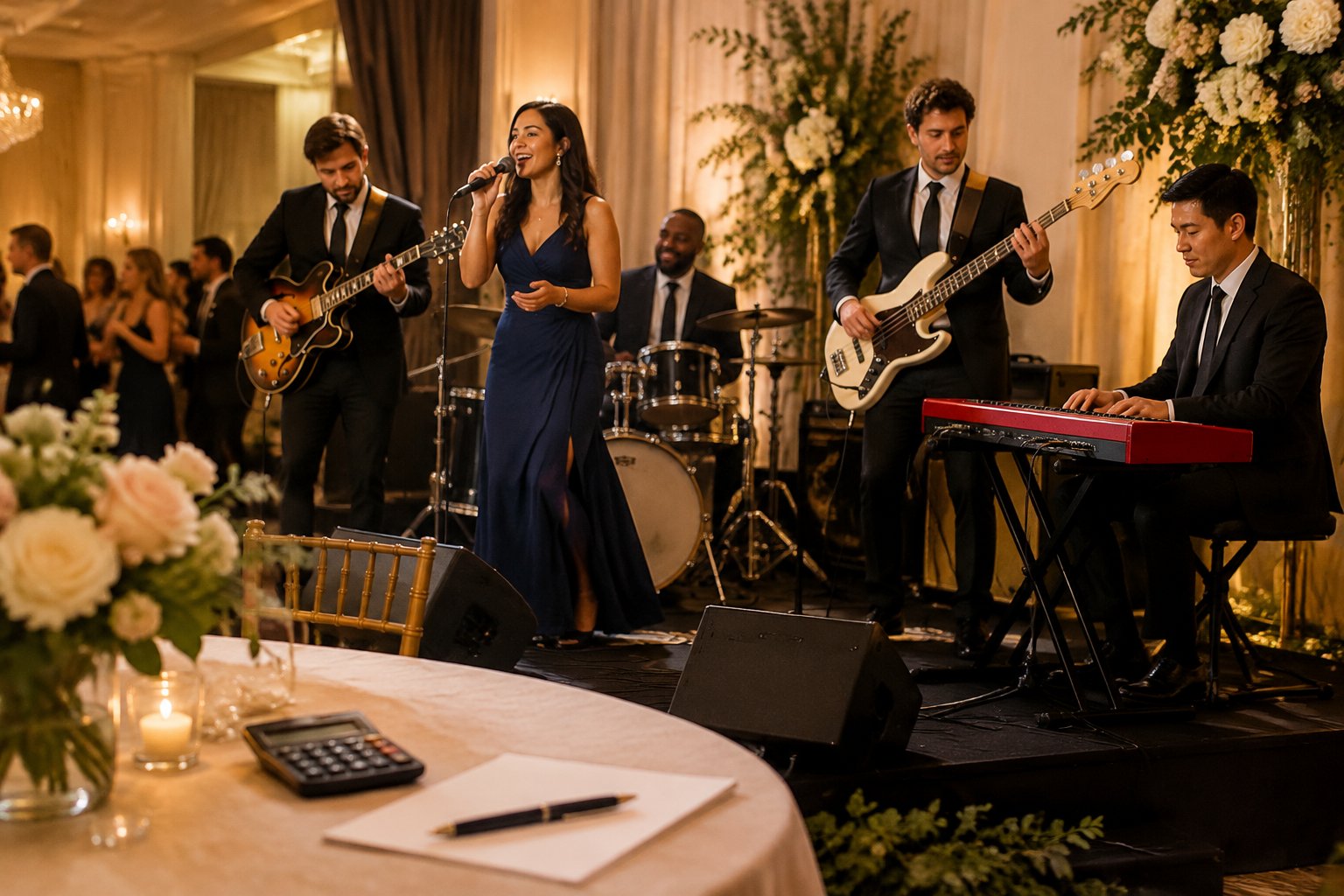
For a professional live band, plan on roughly $3,000 to $8,000 for a typical reception, with smaller groups below that range and large ensembles above it. Your final quote should show which services are included and how the band handles breaks, setup, and special requests.
What Are Typical Price Ranges?
Your lineup is a useful starting point for estimating the price. A solo musician or acoustic duo suits a quieter ceremony or cocktail hour, while a larger group brings a fuller sound to the dance floor.
| Band size | Common reception price |
|---|---|
| Acoustic duo | $1,500–$2,500 |
| Trio | $2,000–$3,500 |
| Four-piece band | $2,500–$5,000 |
| Five- or six-piece band | $4,000–$7,500 |
| Seven- to nine-piece band | $6,000–$12,000 |
| Full show band | $10,000–$20,000+ |
These are planning ranges, not guaranteed rates. Local demand, the band’s reputation, and the services in its package all affect the quote. For a fuller sense of the cost of hiring a wedding band for music, compare offers for the same lineup and performance time.
What Is Usually Included in the Quote?
A standard quote often covers the agreed performance hours, basic sound equipment, setup, and breakdown. The band may also provide music from a playlist during short breaks, though you should confirm this before booking.
Check whether the quoted time includes only reception dancing or also dinner and cocktail hour. Ask how many breaks the musicians take and whether background music plays during them. If you want ceremony music too, request a separate price or a package quote that lists each event segment.
What Factors Affect the Price?
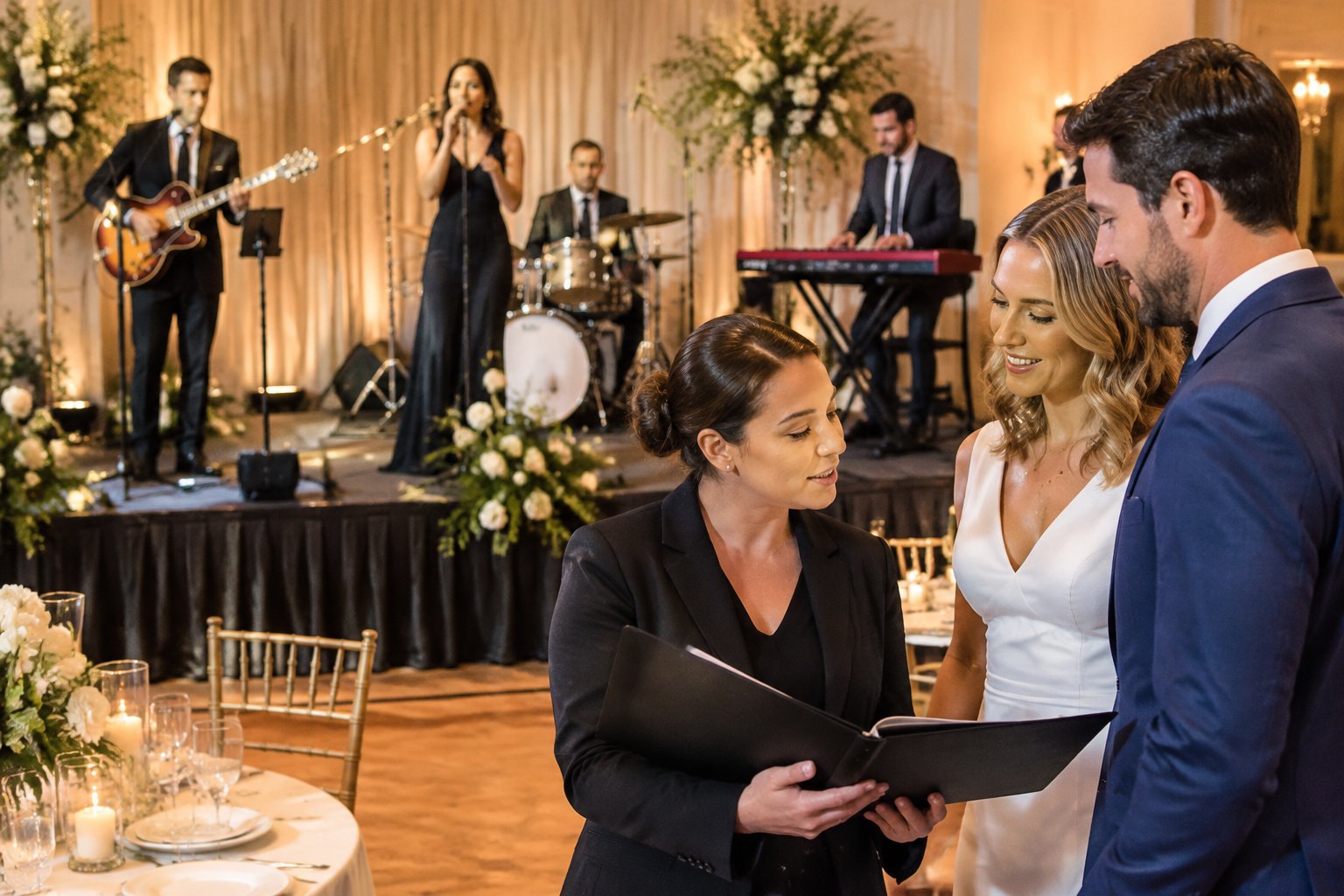
Your band’s size, experience, schedule, and location shape the price more than any single detail. A bigger lineup needs more performers and equipment, while a sought-after date or a long trip can raise the quote.
How Do Band Size and Experience Change the Rate?
Each additional musician adds to the band’s fee, along with the cost of transporting instruments and setting up a larger sound system. Horn players, extra vocalists, or a dedicated sound engineer can increase the total further.
Experience also affects pricing. A band with a strong wedding track record may charge more because it has event-ready arrangements, a broad repertoire, and practice coordinating with planners and venues. Review full performance videos and ask whether the lineup shown in the video will be the lineup at your wedding. To help match the group to your plans, consider what kind of music wedding bands play.
How Do Date, Location, and Performance Length Affect Cost?
Saturday dates during peak wedding season can command higher rates, while Fridays, Sundays, and winter dates may offer more affordable quotes. Prices also reflect local demand and travel distance. A band based in a major city may charge more than a group in a smaller market, and a long trip can add mileage or lodging.
Performance length affects the fee as well. A four-hour reception package may cost less per hour than booking separate musicians for several event segments, though the band may charge extra for added time. Ask for rates for the exact schedule you need, including ceremony, cocktail hour, and reception sets.
What Extra Fees Should You Budget For?
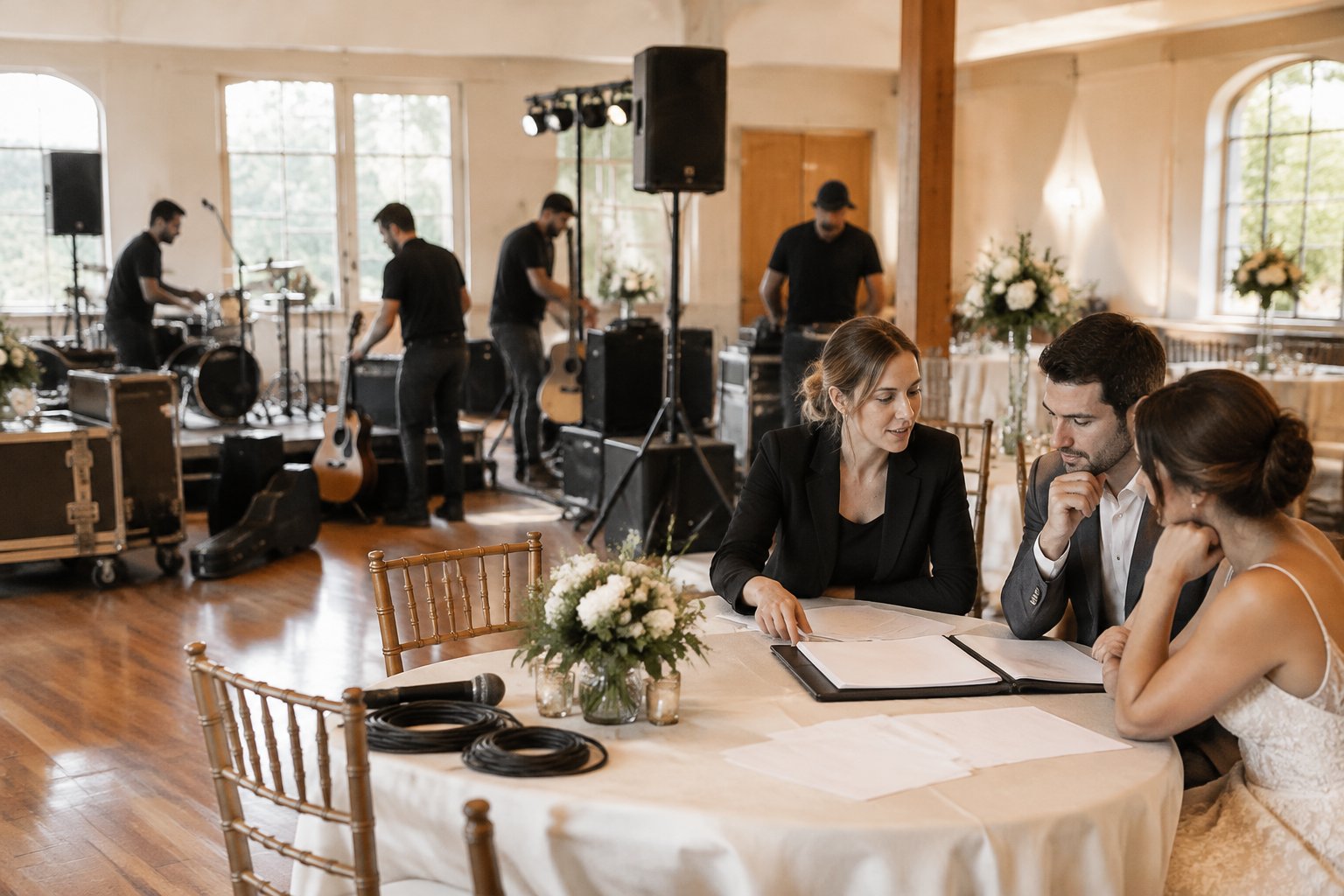
Your total may include expenses beyond the performance fee, especially when your venue is far away or your plans call for more production. Ask the band to list possible add-ons in writing before you sign.
Are Travel, Sound Equipment, and Overtime Charged Separately?
Travel within a set area may be included, while longer trips can bring mileage, hotel, or other travel charges. Confirm the band’s travel radius and whether the quote covers parking or overnight stays.
Sound equipment and lighting also vary by package. A band may include a basic PA system and microphones, while a large venue or outdoor setup could call for extra equipment or a sound engineer. Check the venue’s power, staging, and sound requirements before deciding what the band needs to bring. You can also ask about how loud your wedding band should be for the room and your guests.
Overtime fees apply when the performance runs past the contracted end time. Rates vary, so find out the hourly charge and how the band approves extra time on the night.
Can You Expect Costs for Special Requests?
A song request from the band’s current repertoire may be included, while learning a new song can involve an added fee. Ask how much notice the band needs and whether it charges by song.
You may also need to budget for vendor meals if your contract requires them, plus a gratuity if you choose to give one. Review the contract’s meal and tipping terms; if you plan to tip, this guide to whether you tip a wedding band can help you plan.
How Does a Wedding Band Compare With Other Music Options?
A live band costs more than a DJ in many cases, while a smaller ensemble can bring live music to key parts of your day at a lower price. Compare the atmosphere, music range, and schedule you want before choosing.
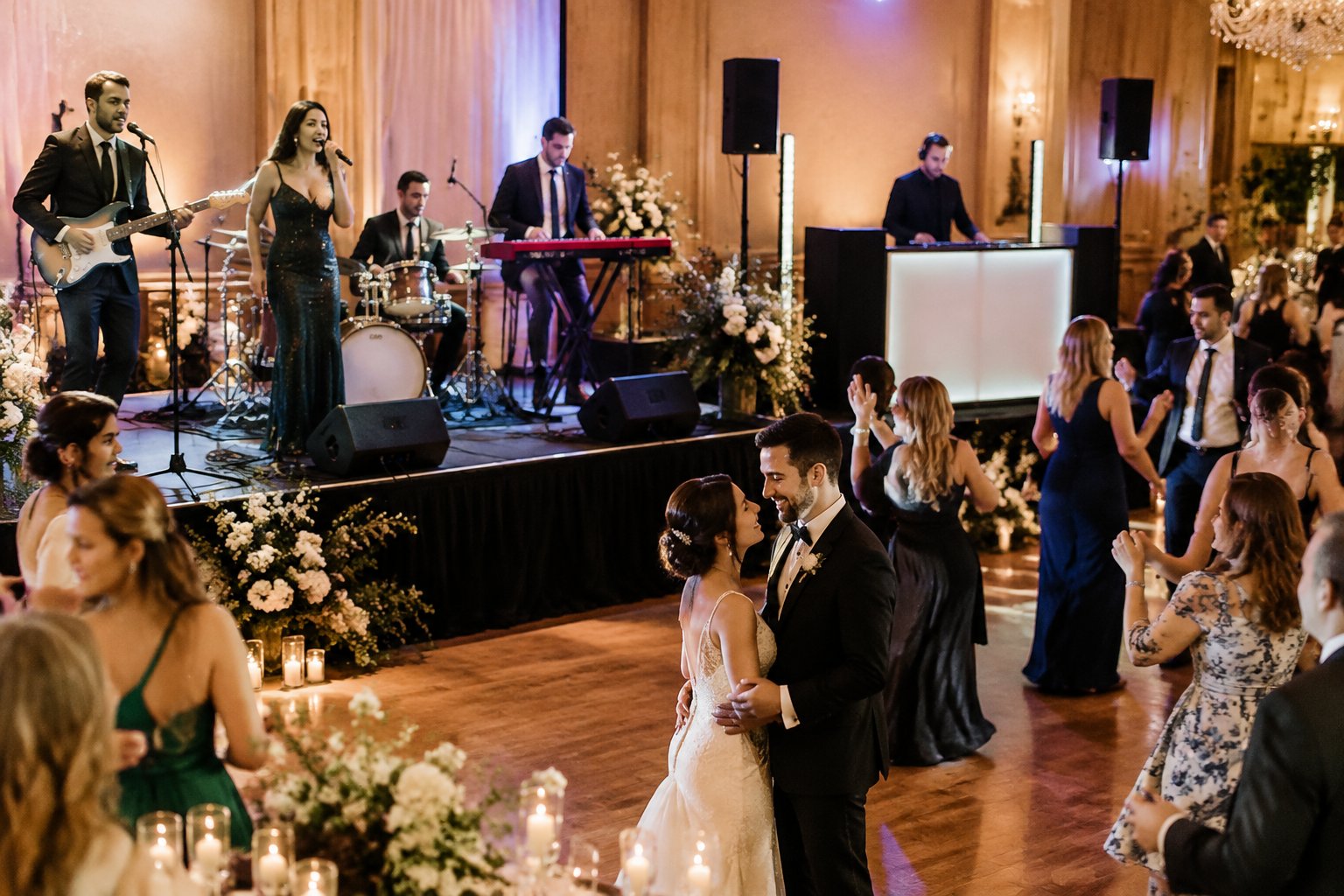
How Do DJs and Smaller Ensembles Compare in Price?
A DJ often costs less because you’re hiring one or two people instead of a full group of musicians. A smaller acoustic ensemble sits between a solo performer and a full band in both price and sound. These sample ranges can help you compare starting points:
| Option | Common price range | Best fit |
|---|---|---|
| Wedding DJ | $800–$2,700 | Broad song selection |
| Acoustic duo | $1,500–$2,500 | Ceremony or cocktail hour |
| Four-piece band | $2,500–$5,000 | Live reception music |
| Five- or six-piece band | $4,000–$7,500 | Full dance-floor sound |
Your exact quote will depend on the package, event length, and local market. If you’re weighing both formats, consider whether you need a band and a DJ at your wedding; some couples book both for different parts of the celebration.
When Is a Live Band Worth the Extra Cost?
A live band can be a good fit when you want musicians to interact with guests and bring a performance element to the reception. You also get the sound of live vocals and instruments, which can shape the feel of the dance floor.
A DJ offers a wider catalog of recorded versions and can move between songs without a band’s set breaks. If live performance is a priority for you, the higher cost may fit your plans; if your must-have songs are specific studio recordings, a DJ may suit your music needs better. Consider whether a wedding band is worth it for your plans alongside your budget and guest experience.
How Can You Book a Band Within Your Budget?
You can keep your band booking on budget by setting a clear spending limit, comparing quotes with the same scope, and choosing the lineup and hours that fit your reception. A written contract helps you see the full cost before you commit.
What Should You Check Before Signing a Contract?
Make sure the contract names the band or lineup, date, venue, performance schedule, and total fee. It should also explain the deposit, final payment date, cancellation terms, and what happens if a musician becomes unavailable.
Confirm the details that can change your bill: travel radius, overtime rate, sound and lighting, setup access, meal requirements, breaks, and custom song fees. Ask whether the band carries liability insurance if your venue requires it. Keep the venue’s sound limits and loading instructions on hand so the band can confirm its setup plan.
How Can You Save Without Sacrificing the Guest Experience?
Start by choosing the part of the day where live music will have the biggest impact. You could book a smaller group for the ceremony or cocktail hour, then reserve a full band for the main dancing set. A shorter performance window also reduces costs.
Ask about Friday or Sunday availability, off-season dates, and smaller lineup options. Compare packages with the same number of musicians and hours so you can see which quote offers better value. Set your maximum spend using a clear wedding band budget, then get the full fee and any potential extras in writing before you pay a deposit.