
Outdoor Venues Wedding Reception: How to Choose a Setting
For an outdoor venues wedding reception, choose a setting with an appealing open-air space, a practical weather backup, and enough room for your guest list. Gardens, private estates, coastal properties, and destination venues each create a different feel, so match the setting to your plans and the experience you want guests to have.
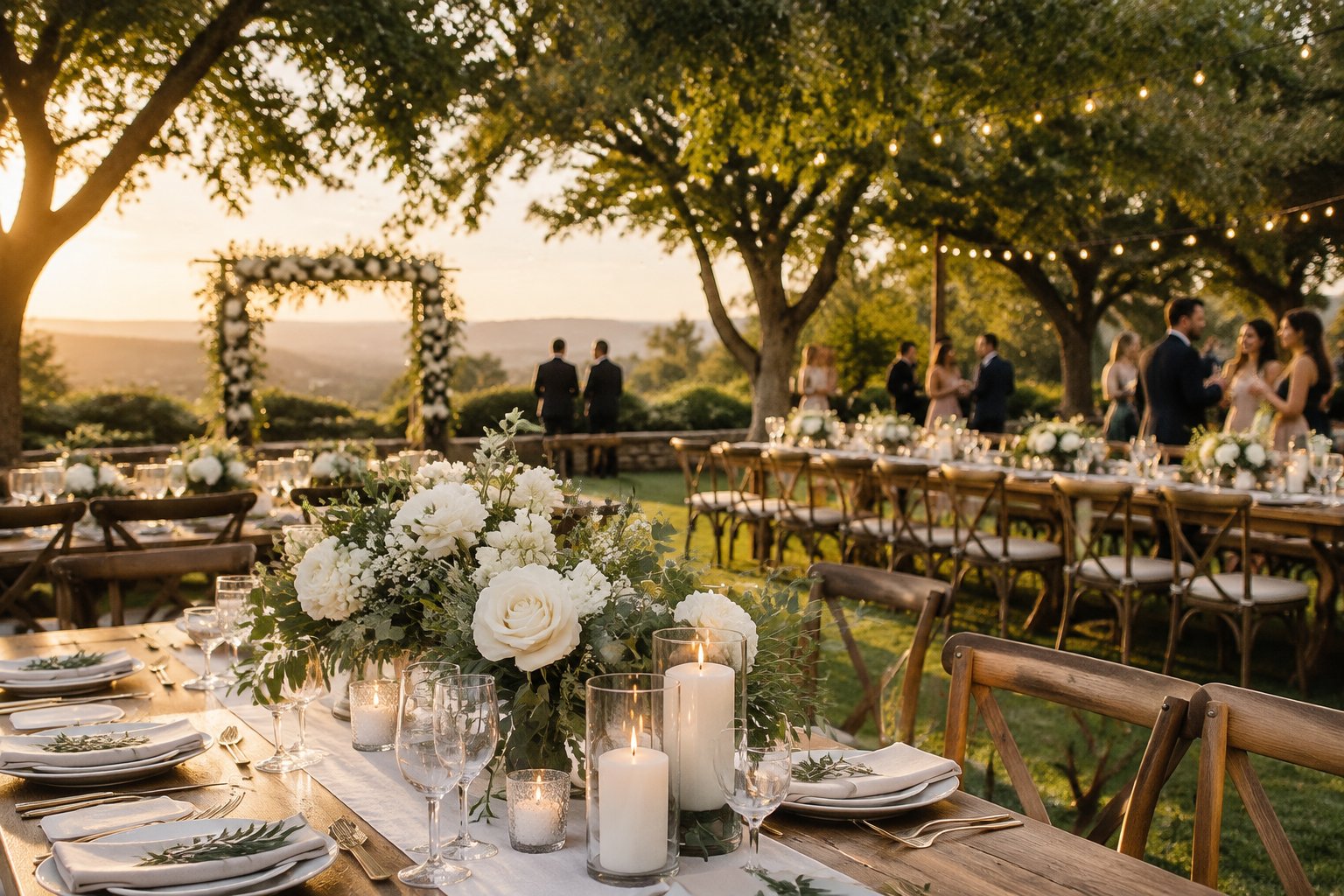
Start with your guest count, preferred season, and travel needs. Then use those priorities to choose a wedding location and schedule a site visit to check how the space works in person.
Which Venue Settings Suit an Outdoor Reception?
Your ideal setting should fit your wedding style and give guests room to enjoy the celebration comfortably. Gardens, estates, retreats, coastal properties, and destinations offer distinct scenery and different planning needs.
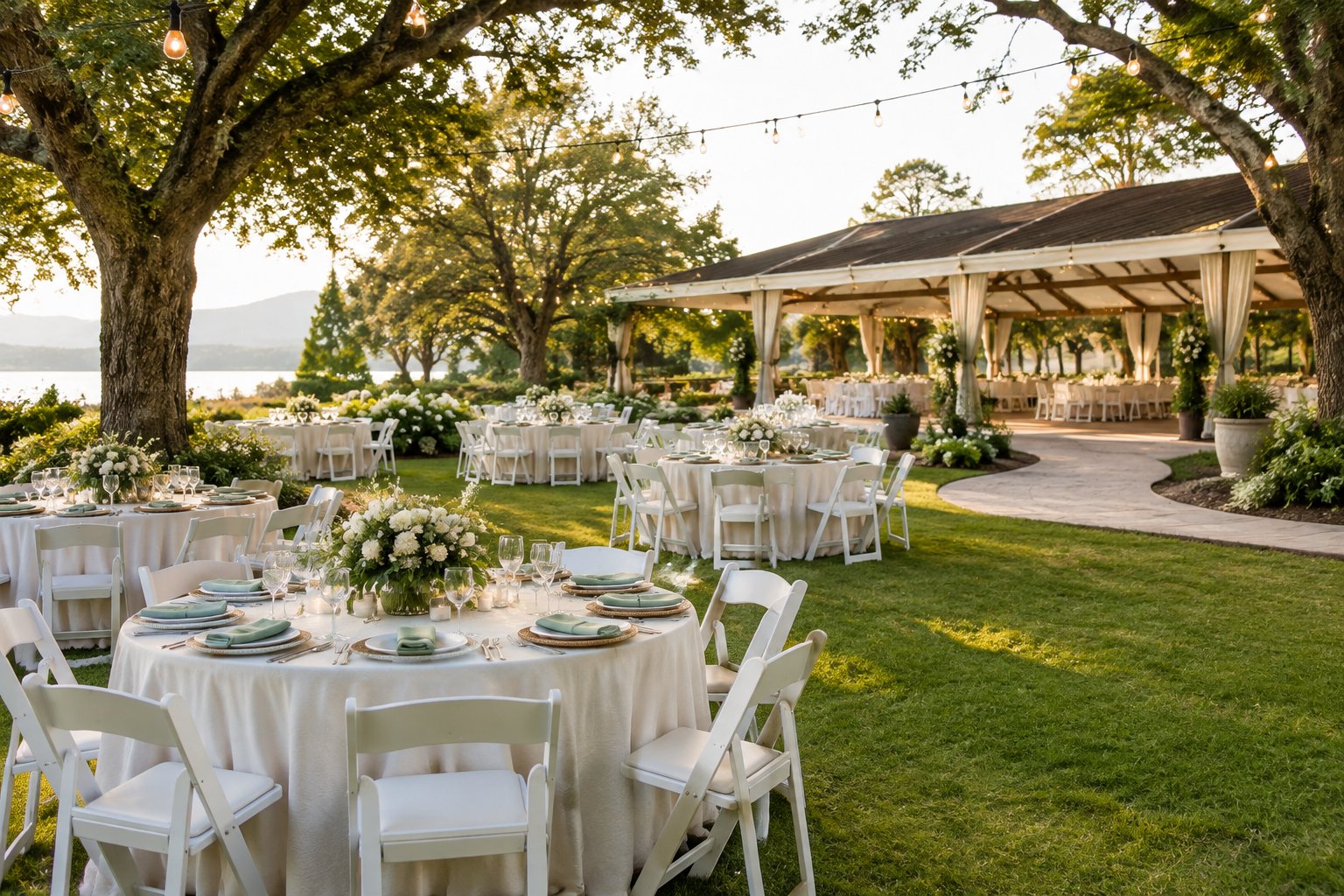
What Do Gardens, Estates, and Retreats Offer?
A garden wedding venue gives you natural color and greenery, while a private estate can pair landscaped grounds with historic details or elegant indoor rooms. A retreat may offer a quieter, more secluded setting with space for guests to gather beyond the reception.
Compare the layout as well as the look. Check whether the ceremony, cocktail hour, and dinner can use separate areas, and ask how guests will move between them. If you want to compare different styles of beautiful outdoor wedding venues, consider how much setup each property needs to suit your vision.
When Does a Coastal Setting Make Sense?
A coastal setting suits you if water views and an open-air atmosphere are central to your plans. Check the site’s access, wind exposure, and surface conditions, especially if guests will walk across sand or uneven ground in formal shoes.
Ask whether the reception area has shade and how the venue handles strong breezes. Secure lightweight décor, and confirm whether the property has rules for sound, lighting, or access to the shoreline.
Could a Destination Venue Fit Your Plans?
A destination venue can work well when you want the wedding to feel like a shared getaway. Before you book, consider how far guests will travel, where they can stay, and whether transportation is available between lodging and the venue.
Give guests clear travel details early, including nearby airports, local transit options, and the schedule for wedding events. If many guests are traveling, check that the venue’s setting and logistics fit their needs as well as yours.
How Do You Choose the Right Venue?
Choose a venue that can host your guest count comfortably and support the day’s practical needs. A careful site visit helps you check the layout, included services, and any costs that could affect your plans.
How Many Guests Can the Space Comfortably Hold?
Ask for the venue’s capacity for your planned reception layout, including tables, a dance floor, catering areas, and clear walkways. A posted maximum may describe a packed room, so request a sample floor plan for your estimated guest count.
Check the capacity of both your outdoor space and any backup room. If you expect older guests or people with mobility needs, look at path surfaces, distances between spaces, and access to restrooms.
What Should You Check During a Site Visit?
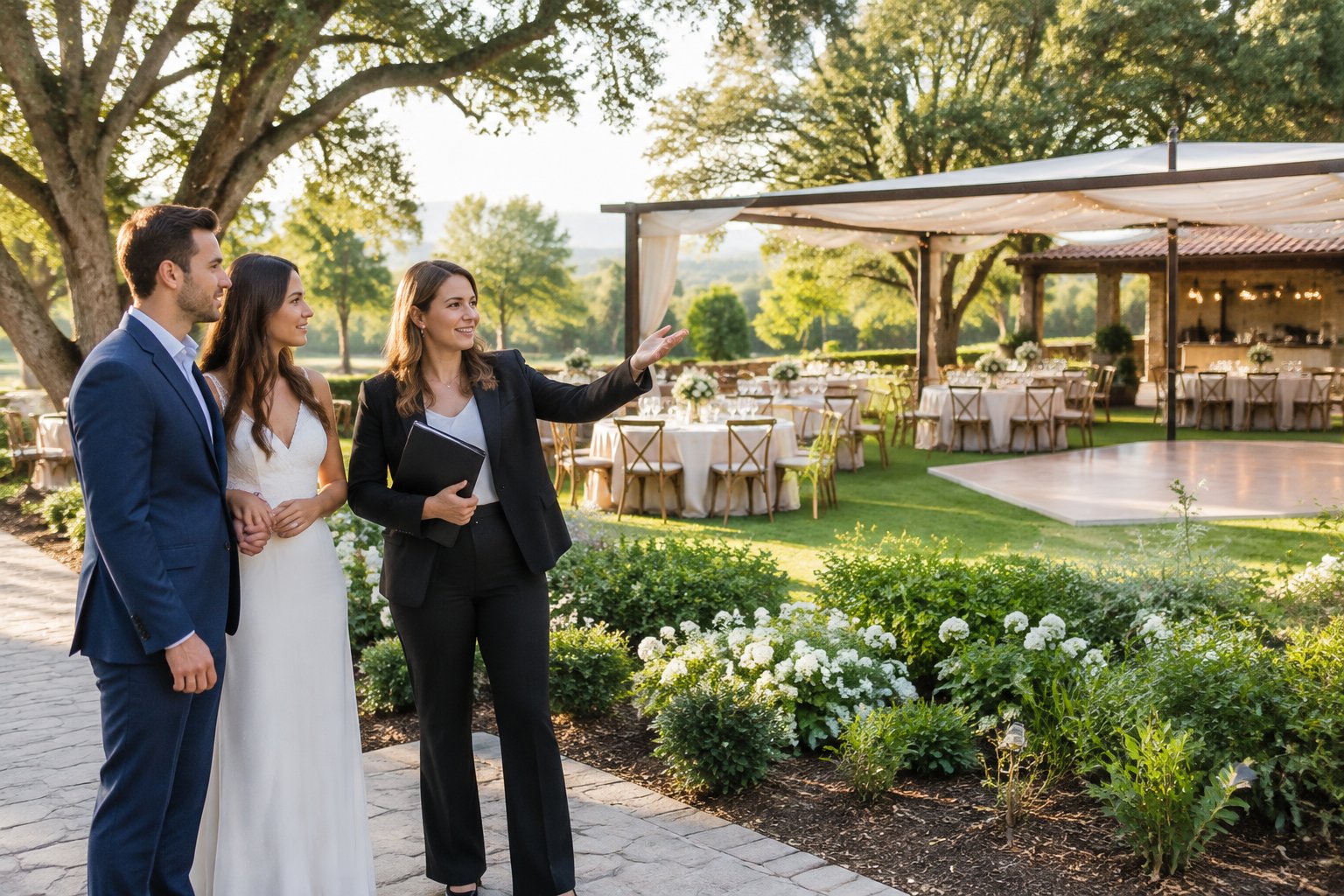
Walk through the property as a guest would, from arrival and parking to the reception and restrooms. Check the ground for slopes or soft spots, notice how much shade the site provides, and ask where the sun will fall during your planned event time.
Review how the spaces connect and whether your vendors have access to power, loading areas, and a place to prepare. Ask about sound limits, event hours, permits, and restrictions on tents or decorations. Keep a checklist of questions so you can compare each venue on the same points.
Which Venue Services Are Included?
Ask for a written list of what comes with your booking, such as tables, chairs, linens, setup, cleanup, catering, and coordination. Then confirm which vendors you can choose and which services the venue requires you to use.
Request a full estimate that includes taxes, service charges, rentals, and any fees for extended hours. If you are weighing indoor and outdoor spaces, compare the details of indoor-outdoor wedding reception venues to see how each option handles transitions between settings.
What Weather Plans Should You Make?
A dependable weather plan names the backup location, explains who makes the call, and accounts for the full reception setup. Confirm these details before you sign, including any added costs for a tent or room change.
Is There a Covered or Indoor Backup?
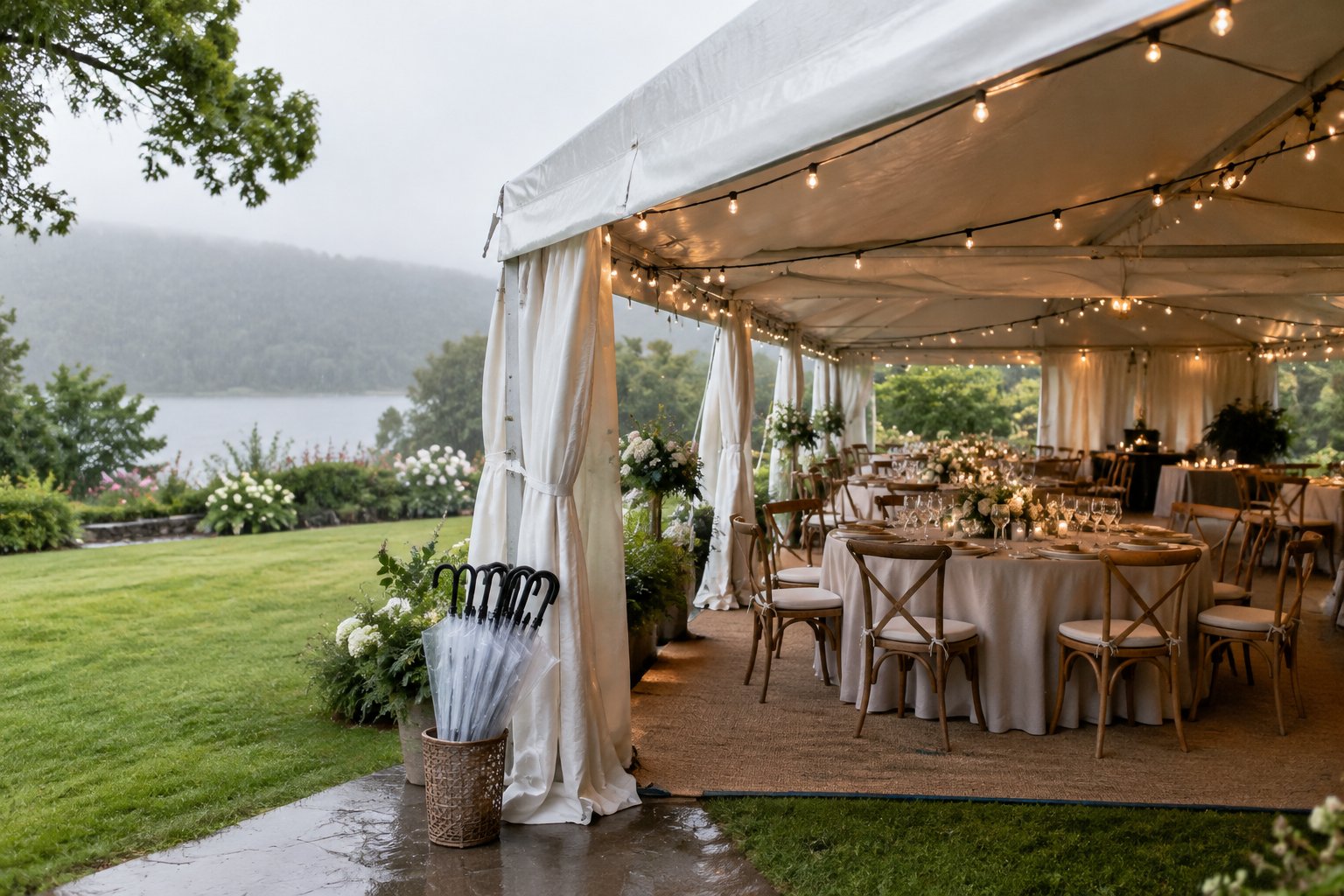
Ask to see the covered or indoor backup space in person, then check that it can fit your guest count and reception layout. Find out whether the space is reserved for you on your wedding date or shared with another event.
Clarify what happens to dinner, dancing, cocktail hour, and photography if weather moves your plans inside. A clear backup plan should also explain who moves chairs and décor, and how the venue will guide guests to the alternate space.
How Can You Keep Guests Comfortable Outdoors?
Choose the time of day and season with guest comfort in mind. Look for natural shade or covered areas, and ask about airflow, lighting after sunset, and access to water and restrooms.
Share practical clothing and footwear guidance with guests before the wedding. For warm weather, ask about fans or shaded seating; for cooler evenings, consider blankets or heaters if the venue allows them. Secure table décor and check whether the catering team has a plan for serving food safely outdoors.
What Should Your Rain Plan Include?
Your rain plan should set out the decision deadline, the person responsible for making the call, and the steps for moving the event. Confirm what happens during lightning, high winds, or severe weather, since a tent may not be safe in every condition.
Ask whether the venue charges extra for its backup space, staffing, or tent setup. A few rainy wedding ideas can help you keep the day feeling personal if showers change your original plans.
What Indoor and Overnight Options Matter?
Indoor and overnight options give you more ways to host guests and manage the day. Check whether the property has a ballroom, banquet hall, or lodging, and how those spaces fit your reception plans.
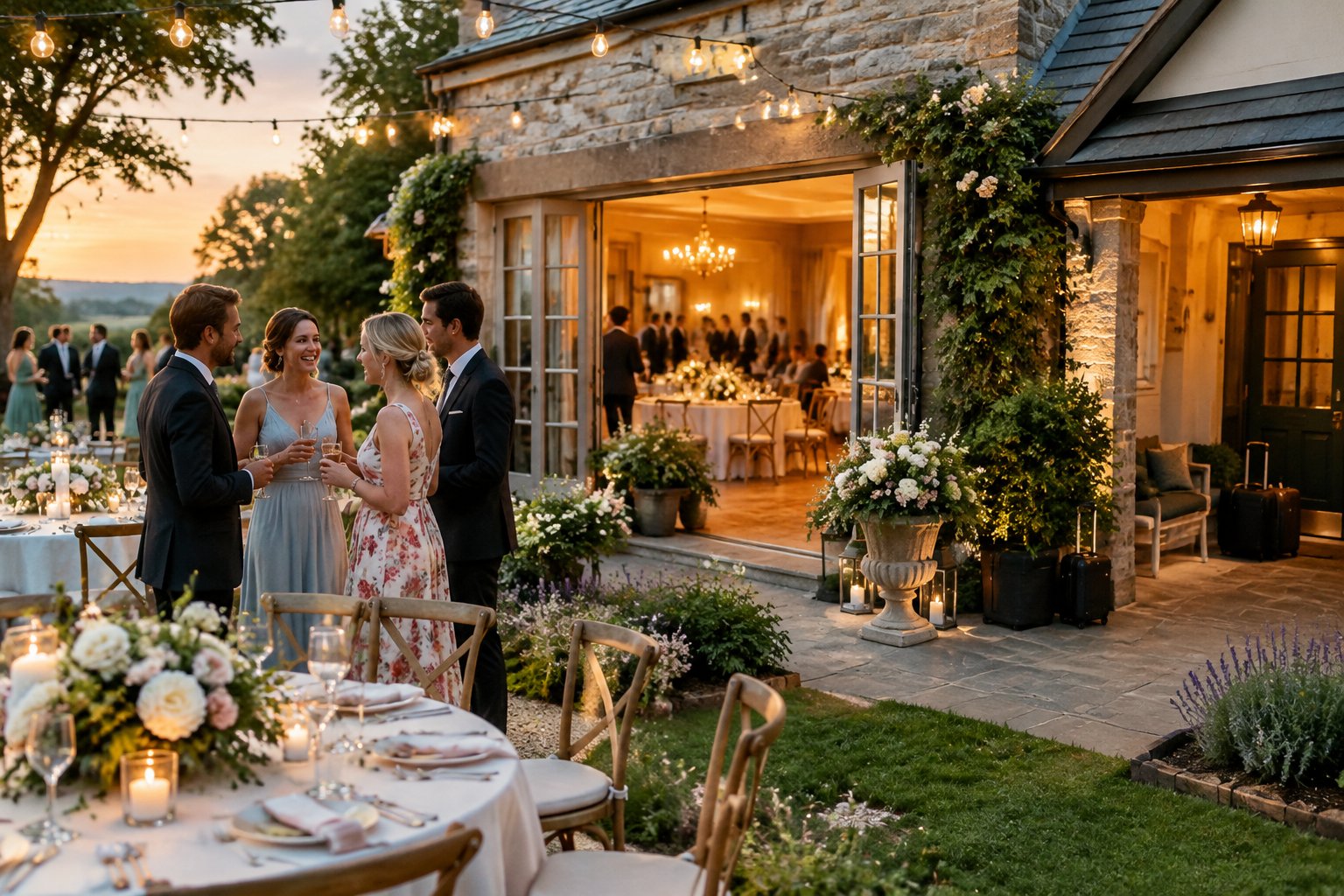
Can a Ballroom or Banquet Hall Host the Reception?
A ballroom or banquet hall can provide a dedicated reception space with protection from changing weather. Ask whether the room fits your guest count with your preferred table layout, dance floor, and entertainment setup.
Check the room’s lighting, sound rules, décor limits, and access for vendors. If you plan an outdoor ceremony and indoor reception, confirm the route between the two spaces and allow time for guests to move comfortably.
Does the Venue Offer Guest Lodging?
On-site lodging can make the event easier for guests who travel or prefer to stay close to the celebration. Ask how many rooms are available, when guests can check in, and whether there is a minimum stay or room-block requirement.
If the venue has a bed and breakfast or inn, find out how reservations work and whether rooms are open to the public during your wedding. When you compare hotel outdoor wedding venues, also check parking, shuttle access, and nearby lodging options.
How Can Indoor Spaces Complement an Outdoor Ceremony?
An indoor space can give your celebration a smooth next step after an outdoor ceremony. You might use a garden or lawn for vows and cocktails, then move indoors for dinner and dancing.
Ask how the venue handles the transition, including where guests gather while staff reset the space. Check whether the indoor room has enough seating and accessible routes for every guest you expect.
How Do You Plan the Rest of the Wedding Weekend?
A well-planned wedding weekend gives guests clear schedules, useful travel details, and time to enjoy the area. Check which events your venue can host and share key information before guests arrive.
Can the Venue Host Rehearsal Dinners?
Ask whether the venue can host rehearsal dinners, welcome gatherings, or a farewell brunch, and whether those events require separate bookings. Confirm the available rooms or outdoor areas, meal options, event hours, and any rules about outside vendors.
If the venue has several event spaces, choose locations that make each gathering feel distinct. Share the schedule with your guests so they know when to arrive and where to go.
What Should You Know About Travel and Nearby Lodging?
Give guests practical travel details well ahead of the wedding. Include directions, parking information, nearby lodging, transportation options, and a contact for questions on the day.
For a destination celebration, check the distance between the airport, hotels, and venue. A wedding weekend itinerary can help you organize event times and leave space for travel between locations.
Which Guest Activities Can Make a Weekend Feel Special?
Choose activities that connect guests with the setting and suit the amount of free time in your schedule. A casual group meal, a local walk, or an optional tasting can give guests a chance to spend time together outside the main event.
Keep activities easy to join and clearly label any that require reservations or extra payment. Share the plan in advance, including start times, meeting spots, and what guests should bring.