
Outdoor Wedding Venues Las Vegas: Best Picks for 2026
For outdoor wedding venues in Las Vegas, you can choose a garden, resort terrace, desert setting, or landmark venue, with options for intimate ceremonies and larger celebrations. Your best fit comes down to the guest experience you want, the season, and whether you need space for a reception.
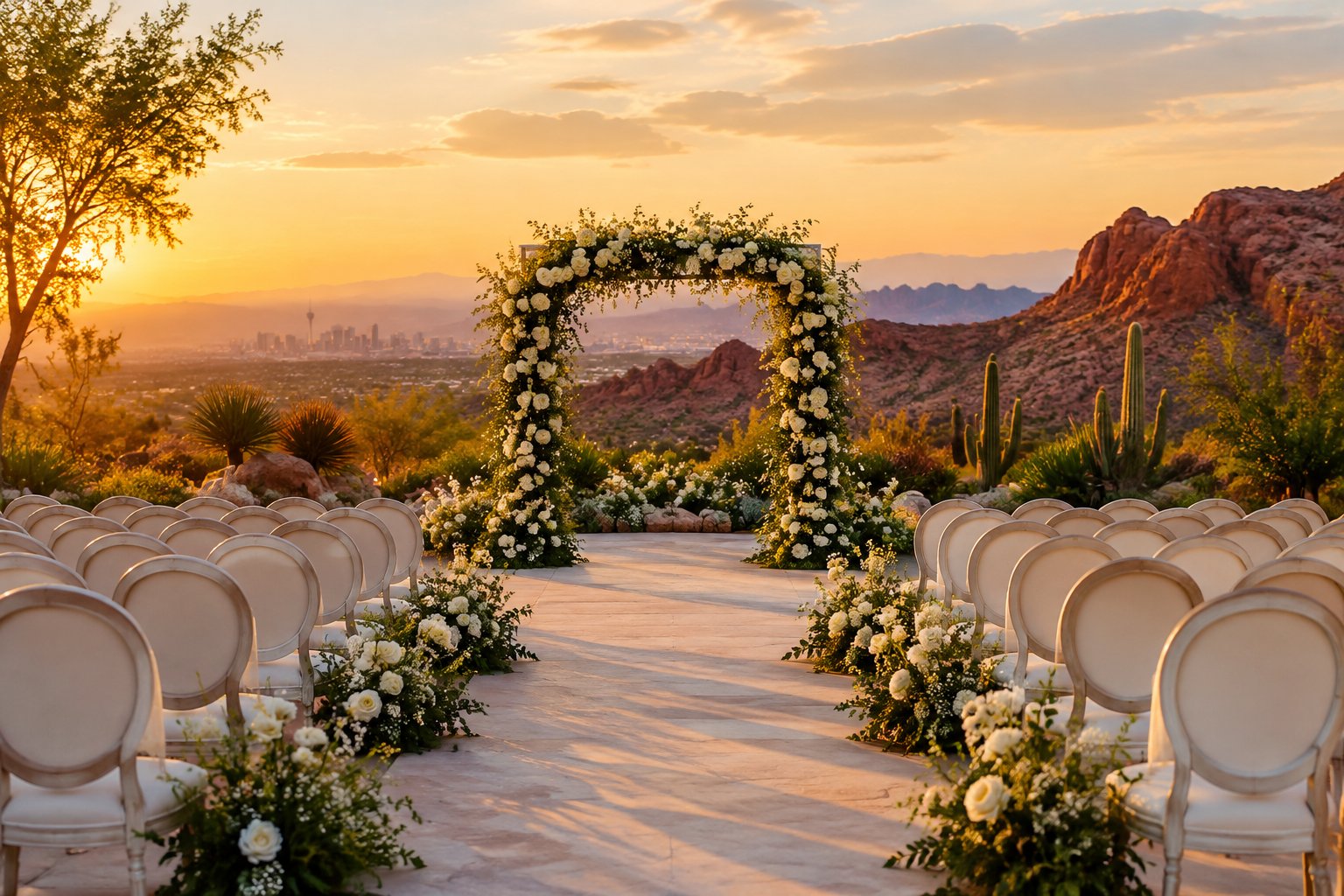
A garden gives you greenery and a private feel, while a desert backdrop brings bold scenery and open views. A resort terrace can place you close to hotels and Strip attractions, which helps when guests are traveling.
Start by choosing two settings that fit your vision, then ask each venue for a site tour and an itemized quote.
Guests coming from out of town? Compare hotels and rentals near Las Vegas for your dates.
Which Outdoor Settings Can You Choose?
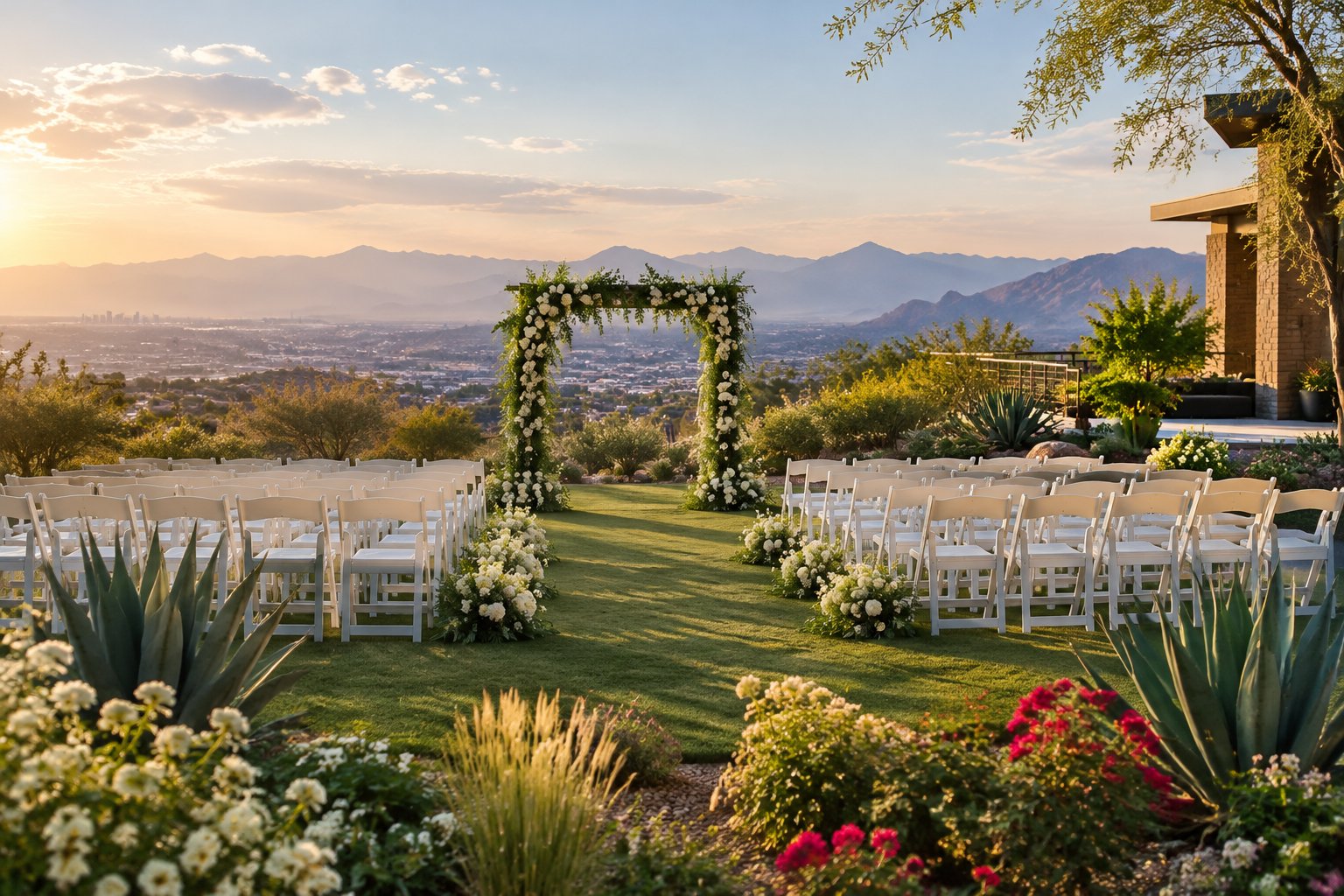
A Las Vegas outdoor wedding can take place in a landscaped garden, on a resort terrace, in the desert, or at a distinctive local landmark. Your setting shapes the ceremony atmosphere, travel time, and the kind of photos you can plan.
Garden Gazebos and Private Grounds
A garden gazebo gives you a defined ceremony spot surrounded by plants, lawns, or water features. Private grounds can also offer a quiet setting away from busy public areas. If you prefer a garden backdrop, explore garden wedding venues in Las Vegas and ask how much of the property your guests can use.
Some venues pair a garden ceremony with a reception room. For example, The Grove lists a Grand Garden space with a reception room overlooking its gardens and capacity for up to 200 guests. Its Garden Terrace option is designed for smaller groups of 50 or fewer.
Resort Terraces and Strip Views
A hotel terrace or resort courtyard keeps your event near guest rooms, dining, and other amenities. You can look for a private patio, rooftop space, or poolside setting, then confirm whether the venue offers both ceremony and reception areas. For a polished setting, ask about sound limits, guest access, and how the space is used during your event.
Desert Landscapes and Red Rock Backdrops
Desert venues give you wide-open scenery and striking rock formations. Red Rock Canyon and Valley of Fire offer dramatic natural surroundings, while a desert garden can combine native plants with rustic details. If you choose a public-land location, check permit rules and travel time before you set your ceremony schedule.
Mountains, Lakes, and Farther-Away Destinations
A lake or mountain setting adds a different landscape to your day and may require extra planning for transportation. Check the drive from your guests’ hotels, the available parking, and how the site handles weather changes. If water views are part of your plan, compare options for a lakeside wedding venue in Las Vegas.
Iconic Vegas Landmarks and Unusual Venues
For a ceremony with a strong local character, consider a landmark or an unusual venue such as a historic site or a neon-themed location. These spaces can create memorable photos, though access rules and event details vary. Ask who handles permissions and whether you can bring your own officiant, décor, and photographer.
How Do You Choose the Right Venue?
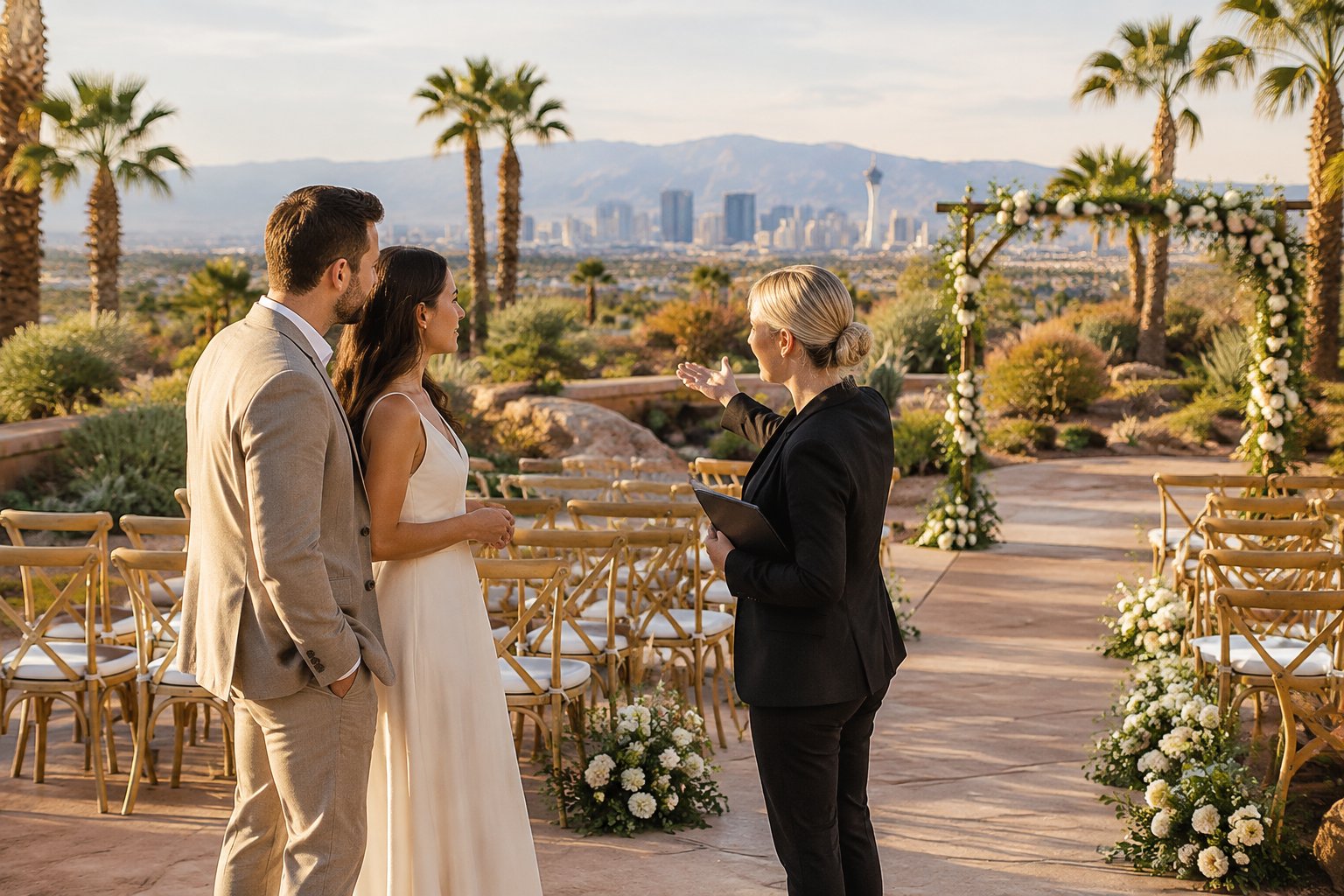
Choose a venue that fits your guest count, ceremony and reception plans, and comfort needs. As you compare locations, check the full guest route from arrival to the end of the event, including accessible paths and transport.
Guest Capacity and Accessibility
Start with your expected guest count, then confirm the venue’s seated capacity and standing capacity. Ask whether chairs, restrooms, and accessible routes are included in the event area. If some guests have limited mobility, check the distance from parking or drop-off to the ceremony site.
Your venue choice also affects the feel of the day, so weigh practical needs alongside scenery. A guide to choosing a wedding location can help you set priorities before you tour.
Ceremony-Only or Reception Space
Decide whether you want a ceremony-only booking or a location that can host dinner and dancing too. A ceremony-only site can suit a short event followed by a restaurant reservation. For a full reception, confirm indoor space, food service, setup time, and the venue’s end time.
Ask whether the ceremony and reception happen in the same area. If guests need to move between spaces, find out how long the transition takes and whether staff will guide them.
Privacy, Scenery, and Photo Opportunities
Ask how private the ceremony area feels during your time slot and whether other guests or visitors share the grounds. Check where your photographer can work, how long you have for portraits, and whether the venue has restrictions on equipment or décor. A site visit helps you judge shade, sightlines, and walking surfaces in person.
How Much Do Outdoor Wedding Venues Cost?
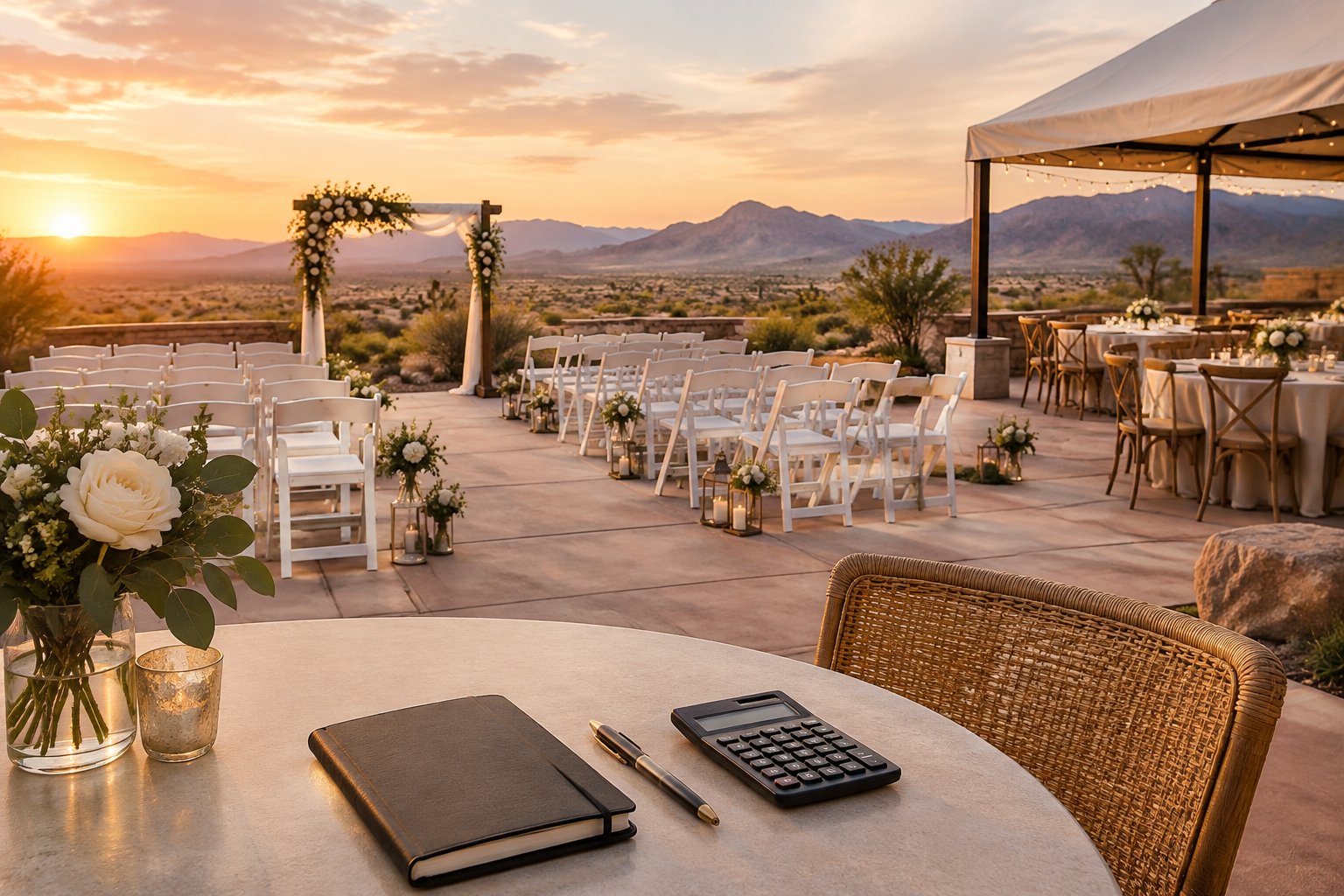
Your total cost depends on the venue, guest count, date, and services included in the package. Compare the full quote with your expected needs, and use a wedding venue cost guide to frame your budget questions.
What Packages May Include
A venue package may cover the ceremony space, chairs, setup, an officiant, flowers, photography, or transportation. Reception packages can add food, drinks, tables, linens, and staff. Each venue sets its own inclusions, so request a written list and mark which items you still need to arrange.
If you are managing a smaller budget, compare affordable outdoor wedding venues by total package cost. A lower starting price can leave key services outside the package, so compare like with like.
Fees to Confirm Before Booking
Ask for an itemized quote that includes taxes, service charges, deposits, and overtime rates. Confirm whether the venue charges separately for setup, cleanup, extra guests, a rehearsal, or a ceremony time change. Before you sign, check the cancellation terms and the payment schedule.
When Is the Best Time for an Outdoor Ceremony?
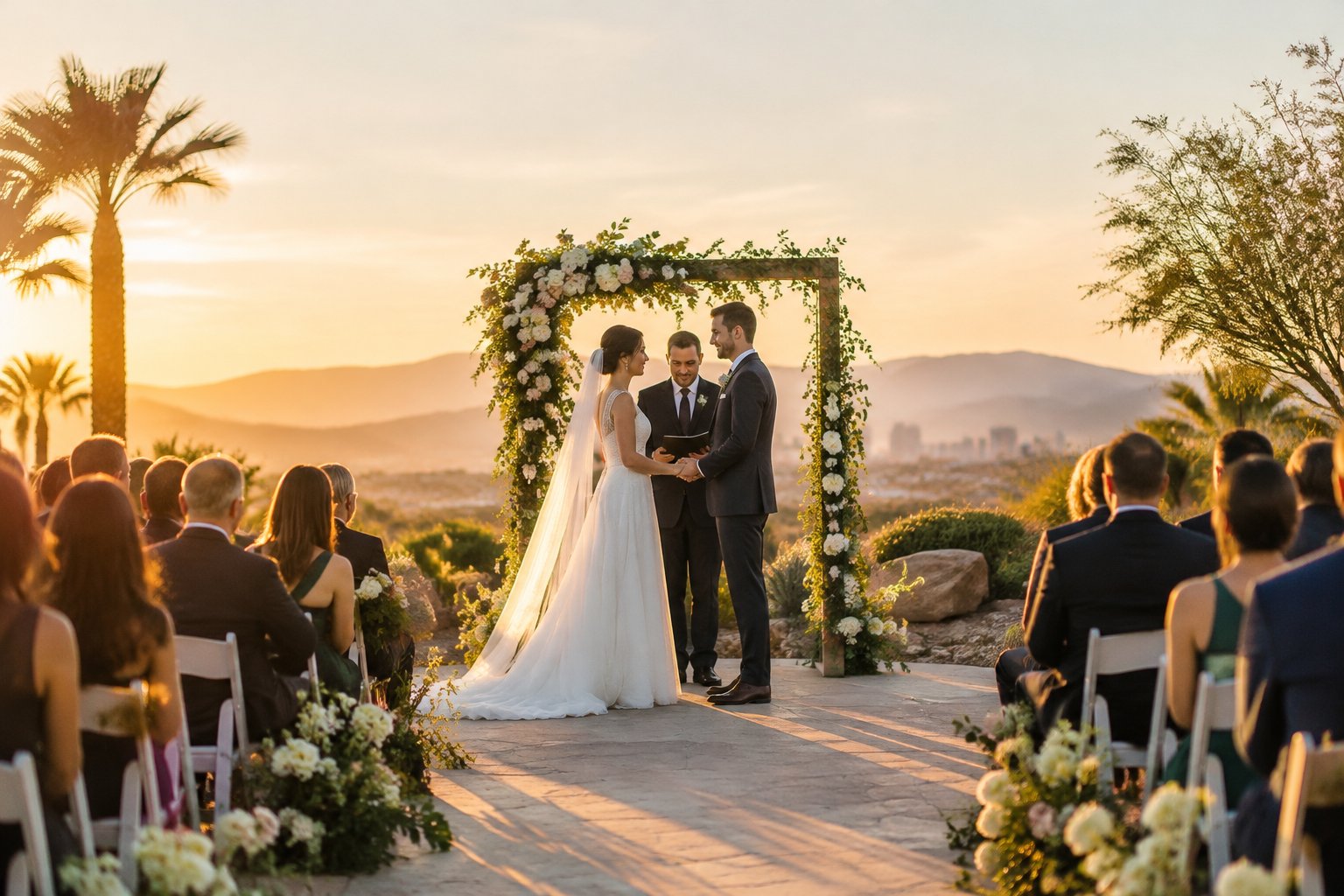
Spring and fall offer comfortable windows for many outdoor ceremonies in Las Vegas, while summer calls for careful heat planning. Your ceremony time also shapes guest comfort and lighting, so check the best time of day to get married as you set the schedule.
Seasonal Temperatures and Ceremony Timing
March through May and October through November are popular choices for outdoor events because daytime temperatures are often milder than in peak summer. Summer heat can be intense, especially in the afternoon. A later ceremony helps reduce sun exposure, though you should still plan water and shade for guests.
Winter days can feel pleasant, while evenings may turn chilly. Check the forecast close to your date and tell guests what clothing will suit the outdoor setting.
Shade, Wind, and Backup Plans
Ask how much shade the ceremony area has during your chosen time. For a summer date, consider covered seating, fans, chilled water, and a shorter ceremony. Wind can affect arches, signage, veils, and table décor, so ask which items the venue secures.
Get the backup plan in writing. Confirm whether you can move indoors, shift the ceremony time, or use a covered area if weather changes.
What Should You Arrange Before the Wedding?
Before your wedding day, confirm the venue’s rules, guest travel plan, vendor access, and on-site support. Put key details in writing and share the schedule with everyone responsible for the event.
Permits and Venue Rules
For public land or a park, check whether you need a permit and what the fee covers. Confirm limits on guest numbers, décor, music, vehicles, and ceremony length. Private venues also set rules for setup, open flames, outside vendors, and cleanup, so request their current event policies.
Transportation and Guest Lodging
Choose lodging that makes the venue easy to reach, especially when your ceremony is outside the central Strip area. Share the address and arrival instructions with guests, and arrange a shuttle or car service if parking is limited. For remote locations, build extra travel time into the schedule.
Vendors, Décor, and On-Site Coordination
Confirm vendor arrival times, setup access, and any insurance or licensing documents the venue requires. Ask whether your décor plan fits the site rules and who handles setup and breakdown.
If you are hiring a coordinator, agree on who will cue the ceremony, manage the timeline, and answer vendor questions. Planning in a clear wedding checklist order can help you keep those tasks organized.