
The Industrial Event Venue: Planning and Booking Guide
The industrial event venue gives you a flexible setting for corporate meetings, celebrations, weddings, and production shows, with indoor and outdoor areas to shape around your event. At The Industrial Event Space in Las Vegas, you can plan a gathering minutes from the Strip and Downtown, with free parking for your guests.
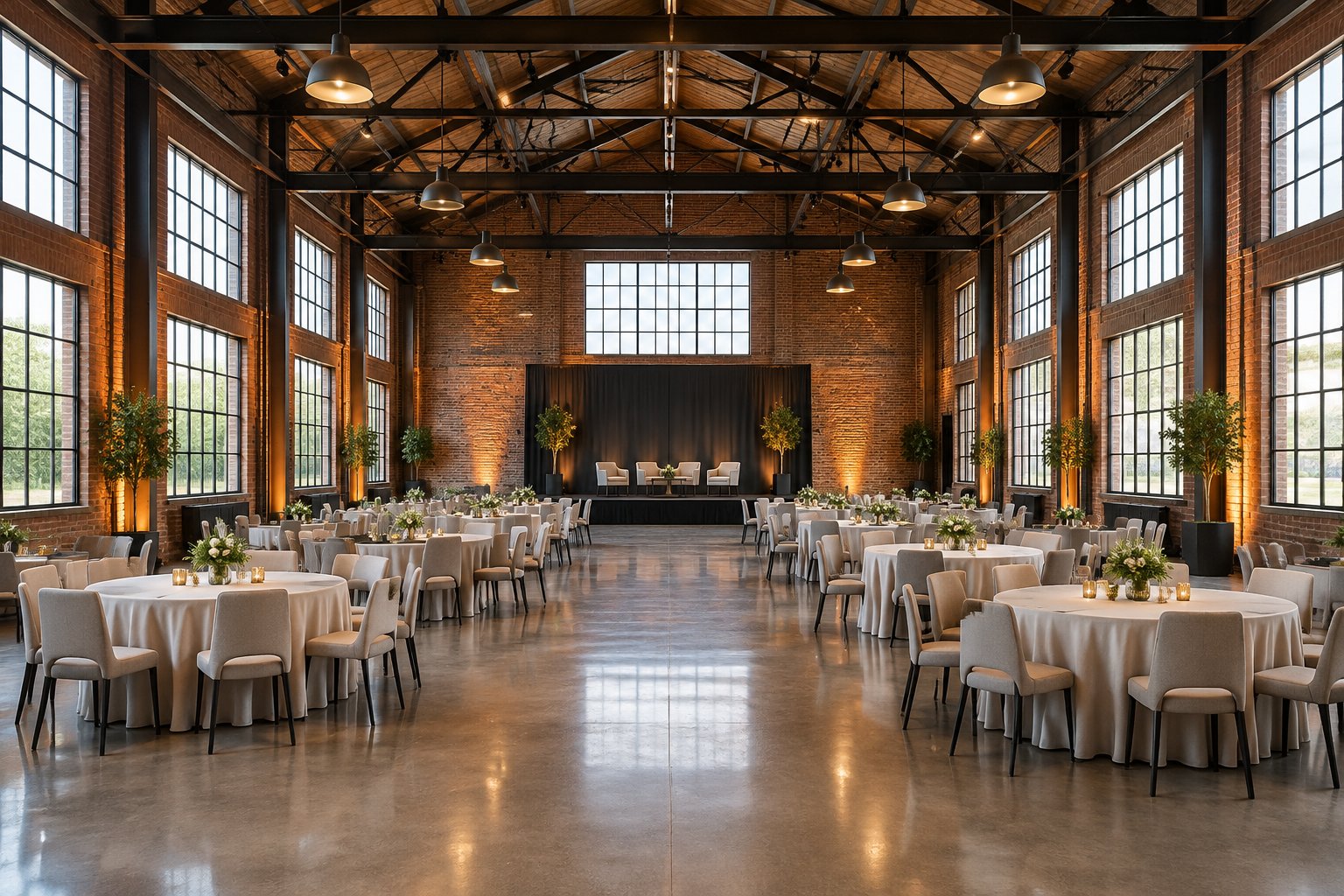
Before you book, ask for a written quote that spells out the rental period, included furnishings, staffing, and cleanup. If you are planning an event in Las Vegas, call The Industrial Event Space at 702-423-3946 to ask about your date and request current details.
What Events Can This Space Accommodate?
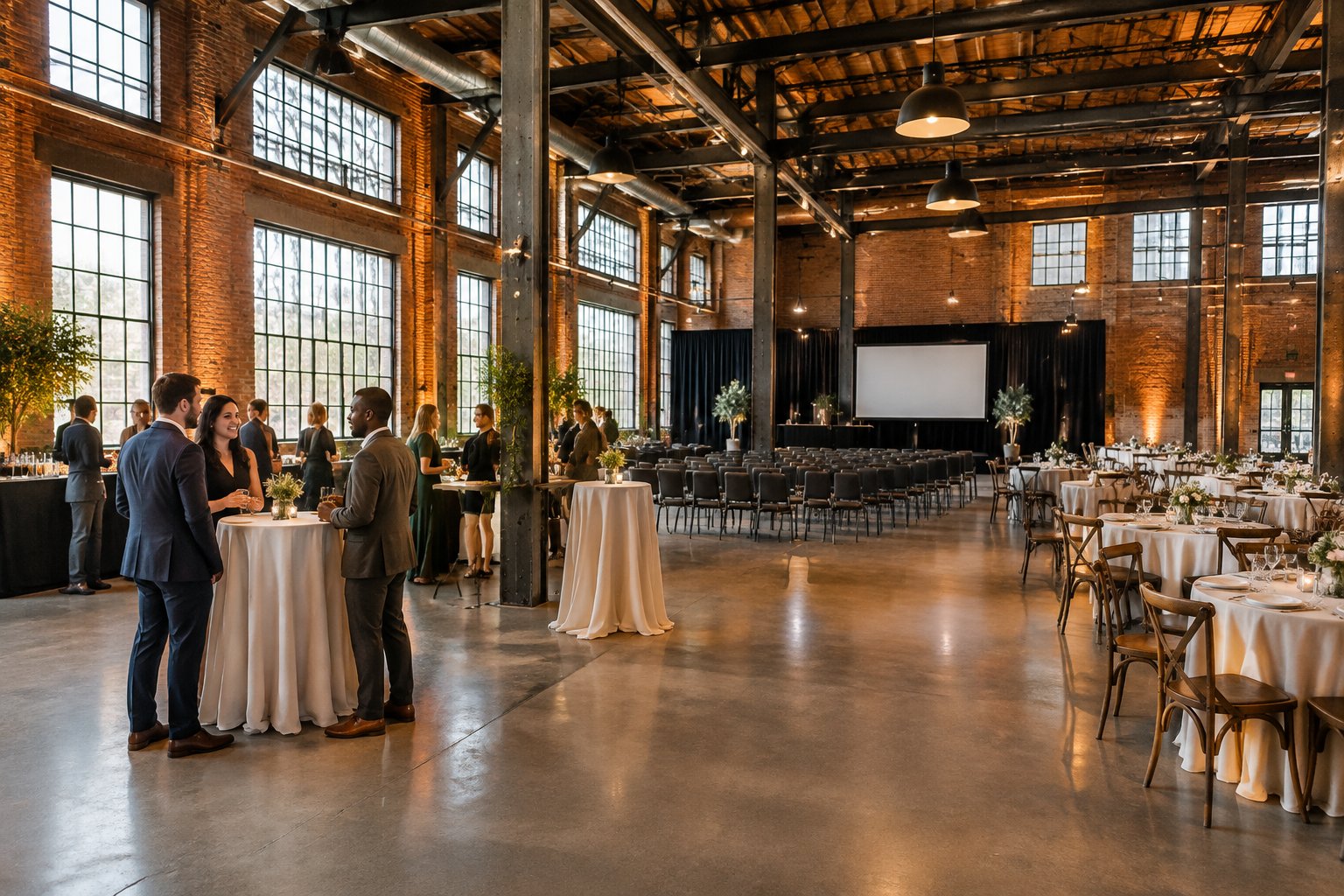
You can use this venue for business gatherings, private celebrations, weddings, and production shows. Your event format, guest count, and planned activities will shape the room layout and the services you need.
Corporate Meetings and Training
For a corporate meeting or training session, start with your agenda and the equipment it requires. A presentation may need a stage, microphones, sound, lighting, or a mounted projector. The venue lists production support and presentation amenities, so confirm which items fit your event and whether a technician will be on site.
Plan space for check-in, seating, and breaks. If your schedule includes breakout discussions, ask how the indoor and outdoor areas can support attendee flow.
Corporate Events and Celebrations
The venue can host corporate events as well as private parties, weddings, and production shows. You can plan a seated dinner, reception, or program with presentations, then confirm which event services and food and beverage options match your plans.
If you are comparing spaces for a wedding, review industrial wedding venues for ideas about how an industrial setting can suit your style. Ask the venue which rooms and outdoor areas are included in your rental.
Guest Capacity and Event Fit
Confirm the guest limit for your specific setup before you sign. A seated dinner, theater-style presentation, and cocktail reception use floor space differently, so share your guest count and event plan when requesting a capacity figure.
Send the venue a draft schedule and ask whether the proposed layout leaves clear paths to exits, restrooms, food service, and the stage. This helps you check whether the event venue supports the activities you have planned.
What Amenities and Furnishings Are Included?
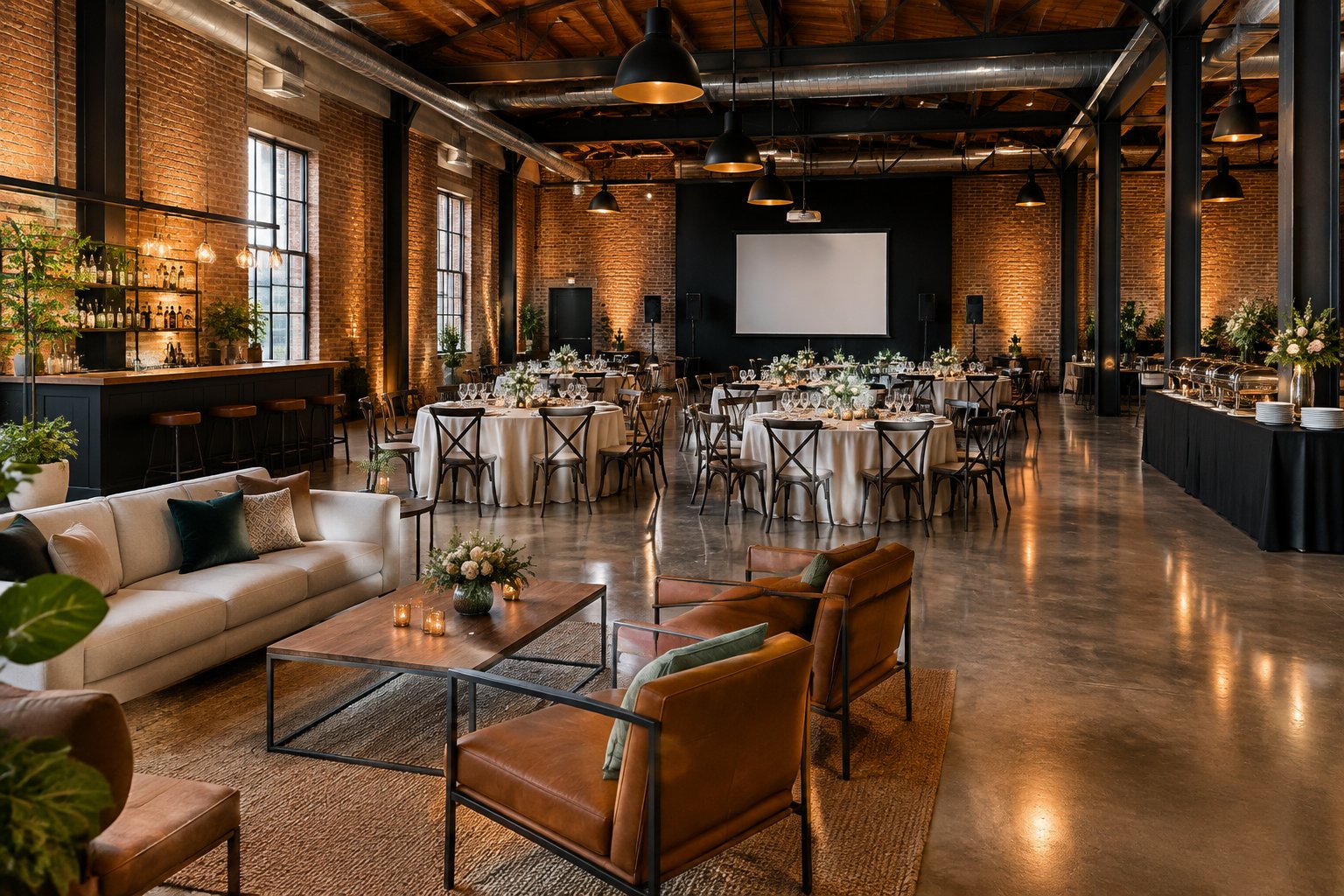
The venue lists furnishings and event equipment such as tables, chairs, linens, bars, cocktail tables, a stage, audio equipment, a dance floor, and mounted projectors. Confirm the specific items included in your rental and whether setup is covered.
Tables, Chairs, and Setup Support
Ask for an inventory that names the available round tables, rectangular tables, chairs, and linens, along with their quantities. Check whether the venue sets them in place or whether your team must handle setup. If you need a custom layout, send a floor plan and confirm who approves it.
For a wedding or banquet, use a wedding layout plan to map guest tables, the dance floor, and presentation areas. Make sure aisles and service routes remain clear.
Kitchen and Presentation Amenities
Ask whether a warming kitchen is available, what equipment it includes, and whether your caterer can use it. Confirm how food deliveries, refrigeration, serving equipment, and waste handling work before you choose a menu.
For presentations, check which audio equipment, microphones, lighting, stage features, and projectors are included. Ask whether your event needs a technician or additional production support, and get any related fees in writing.
How Much Does a Rental Cost, and What Fees Apply?

Your total rental cost comes from the written quote and contract, including the site fee, payment schedule, deposit, and any added services. Request an itemized estimate that matches your date, guest count, event hours, and chosen setup.
Rental Rates and Booking Payments
Ask whether your rate changes by date, season, event type, or rental length. The venue lists flexible corporate rates and all-inclusive wedding packages, so request a quote for your specific event and confirm what each package covers.
Check the payment due dates, cancellation terms, and any guest-count deadline before paying. If you are budgeting for a wedding, wedding venue costs can help you frame the venue fee alongside other event expenses.
Damage Deposits and Potential Extra Charges
Ask whether a refundable damage deposit applies, when it is due, and what conditions affect its return. Review the contract for possible charges related to overtime, extra staffing, equipment, outside vendors, or cleanup.
To avoid hidden fees, ask the venue to list every required charge before you sign. Confirm whether taxes, service charges, bar service, and setup or breakdown time appear in the quoted total.
What Should You Know About Insurance, Security, and Cleanup?

Read the contract for event insurance requirements, security responsibilities, and the cleanup standard for your booking. Ask the venue to put its answers in writing so you and your vendors can plan around the same rules.
Required Event Coverage
Ask whether you need event liability insurance, what coverage limits apply, and when to provide proof. Confirm whether the venue needs a certificate of insurance from you, your caterer, or other vendors. If you plan to serve alcohol, ask which liquor-related coverage and permits apply to your event.
Keep the policy details with your signed contract, and make sure the event date, hours, and venue address match the booking documents.
Included Security and Post-Event Cleanup
Ask whether your event requires licensed and bonded armed security, who hires the guards, and whether the cost is part of your quote. Confirm any entry, access, or staffing rules before sharing them with guests and vendors.
The venue lists cleanup among its wedding site-fee inclusions. Check whether post-event cleanup is included in your specific rental, then ask what you and your vendors must remove or restore. Put trash handling, equipment removal, and the venue handoff time on your event schedule.
How Can You Plan Catering and the Room Layout?
Your catering plan and floor layout should work together, with clear guest paths and enough room for food service, seating, and activities. Share your guest count, menu format, and schedule with the venue and caterer before confirming the setup.
Using the Warming Kitchen and Outside Caterers
Confirm whether the industrial event space has a warming kitchen and ask what your caterer can use there. Check rules for outside caterers, food deliveries, refrigeration, power needs, and cleanup. The venue lists multiple food and beverage options, so ask which services are available for your event.
If you are hiring a caterer, clarify who handles delivery, service, dishes, and waste. A guide to how wedding caterers work can help you prepare questions about roles and service timing.
Arranging Tables for Your Guest Count
Choose round tables for group dining or rectangular tables for long banquet rows, then confirm the sizes and quantities available. Leave room for chairs to move, servers to pass, and guests to reach the exits. If your event includes a stage or dance floor, check sightlines from every seating area.
Send the venue a draft floor plan with the guest count, serving stations, and presentation area marked. Ask the event team to confirm that the layout fits the room and the furniture included in your rental.
Scheduling Setup and Breakdown
Build setup and breakdown time into the rental window, then confirm when vendors can enter and when the space must be cleared. Assign responsibility for tables, catering equipment, decorations, and trash so each vendor knows what to remove.
Share the final schedule with the venue, caterer, and production team. If you want help planning your menu and service approach, use these wedding catering tips to organize food tasks and timing.