
Typical Wedding Band Cost: Ring Prices and Budget Factors
A typical wedding band costs about $300 to $1,500 per ring, while a pair often totals roughly $1,000 to $3,000. Your final wedding band cost depends most on the metal, band width, and any diamonds or custom details.
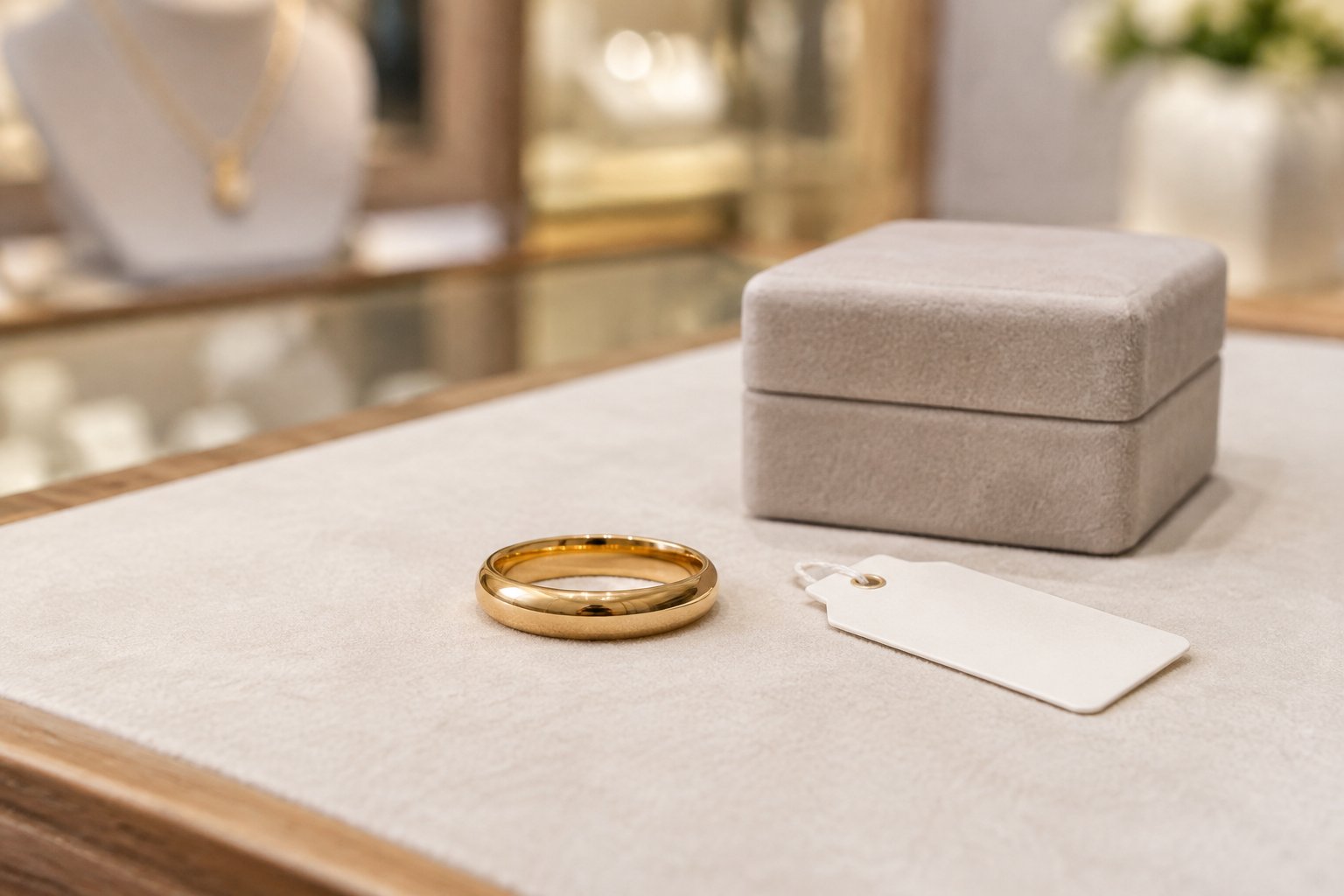
A simple band can fall below that range, while a platinum ring with diamonds can cost several thousand dollars. Use price ranges as a starting point, then set a limit that fits your finances and the way you plan to wear your rings.
As you shop, compare a few styles within that limit and choose the details you want to prioritize.
What Do Couples Typically Spend on One Ring or a Pair?
For a single wedding band, a useful starting range is about $300 to $1,500; for two rings, plan for roughly $1,000 to $3,000. Prices shift with materials and design, so a national average is a guide, not a spending rule.
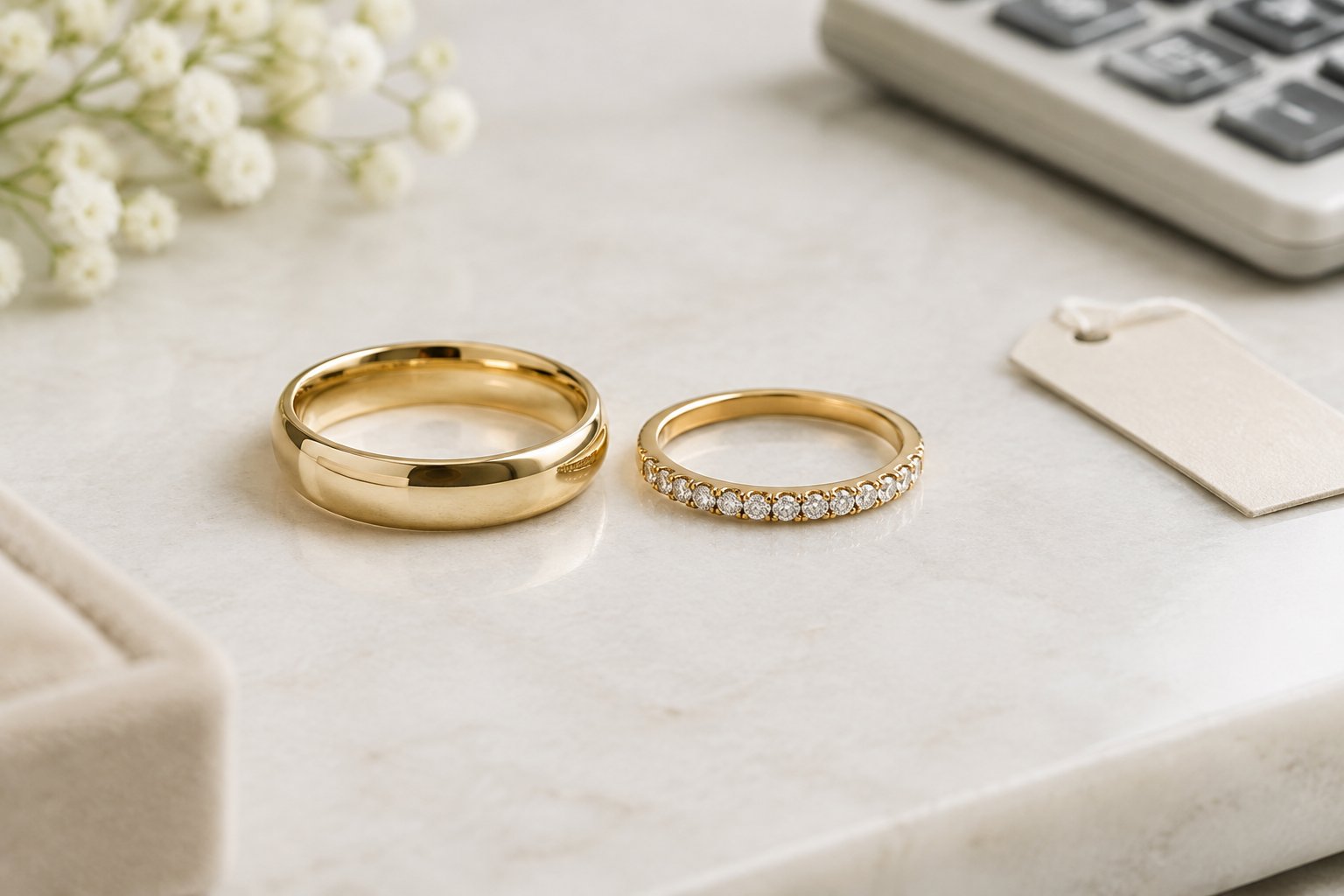
You may see different figures for the average wedding ring cost because some estimates count one ring and others count both partners’ rings. For a wider price breakdown, compare current styles with a guide to wedding band prices.
How Much Do Women’s and Men’s Bands Usually Cost?
A plain metal band for either partner can cost a few hundred dollars, with wider gold or platinum styles reaching into the low thousands. Some estimates put women’s bands around $700 to $1,800 and men’s bands around $400 to $1,300.
These ranges overlap, and the design explains more than gender: a diamond band may cost more than a plain men’s wedding band, while a narrow gold band may cost less than either estimate.
A men’s wedding band with a broad profile uses more metal than a slim ring in the same material. If you want to compare that category in more detail, explore men’s wedding band costs.
Why Do Average Cost Figures Vary?
The average cost of a wedding ring changes with the survey year, retailer, and ring styles included in the figure. Some estimates count simple bands, while others include diamond styles, platinum, or custom work.
Check whether a quoted average covers one ring or a pair before using it to plan your wedding ring cost.
How Do Metal and Design Choices Affect the Price?
Metal sets the base price, while width, workmanship, and custom details add to it. A 14k yellow gold band gives you a classic precious-metal option, and platinum costs more because it is denser and uses more metal by weight.
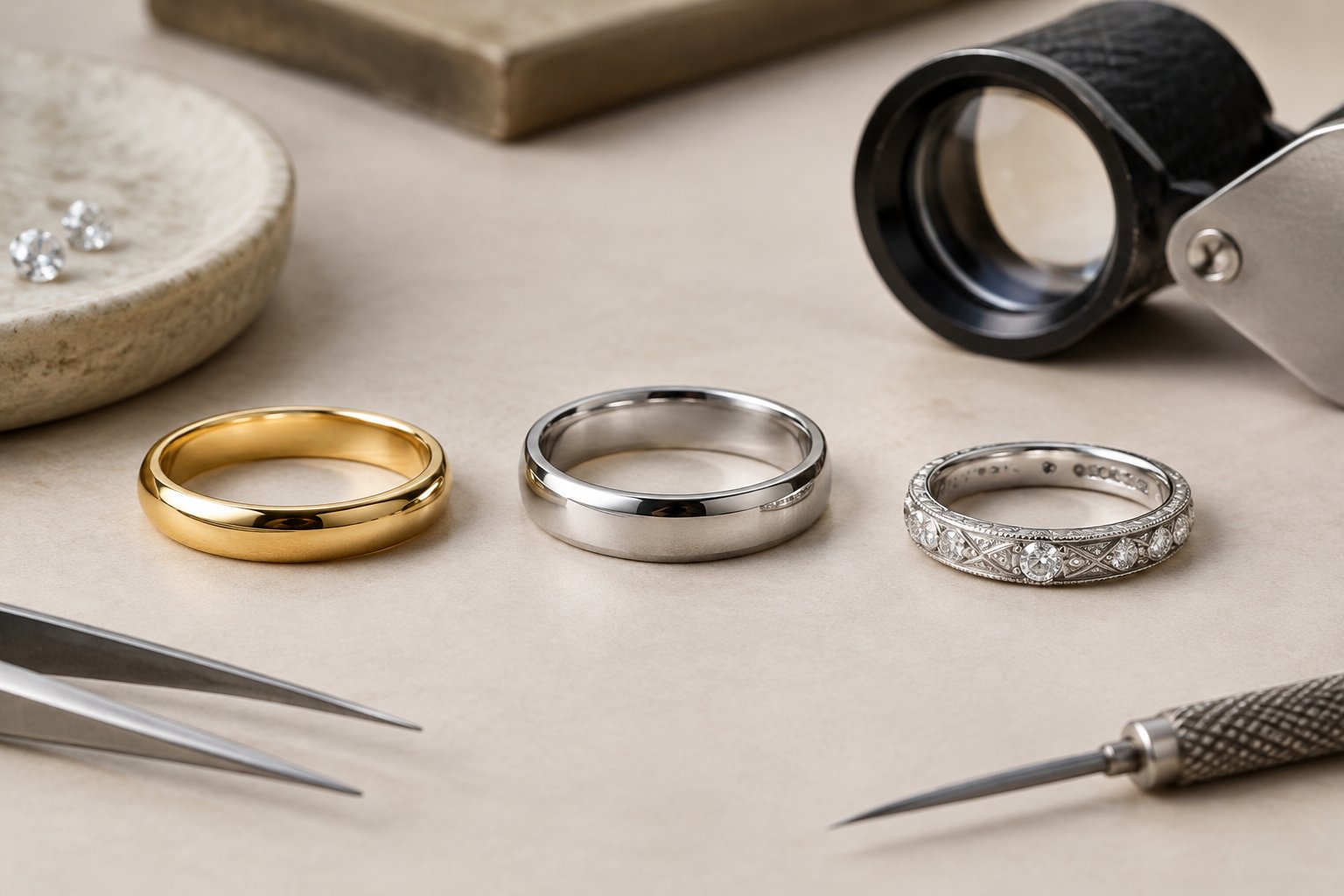
When you compare bands, check the metal, width, and finish together. A wider ring or a more involved design can raise the price even when two bands use the same metal.
How Does 14K Yellow Gold Compare With Platinum?
A 14k yellow gold band usually costs less than a similar platinum band. Gold is mixed with other metals to make it suitable for daily wear; platinum is denser, so a ring of the same size needs more metal by weight.
| Feature | 14k yellow gold | Platinum |
|---|---|---|
| Typical price | Lower | Higher |
| Color | Warm yellow | Naturally white |
| Ring weight | Lighter | Heavier |
| Resizing | Often possible | Often possible |
Your choice comes down to your preferred color, feel, and spending limit. If you want a warm tone and a more moderate price, 14k yellow gold is a practical place to start.
Platinum suits you if you prefer a naturally white metal and are comfortable with the higher cost.
What Do Width, Fit, and Custom Details Add?
A wider or thicker band needs more material, so it often costs more than a slim version of the same design. Custom sizing, engraving, unusual finishes, and a shape made to sit flush beside an engagement ring can add labor and cost.
Comfort also affects how a band feels through a full day of wear. Try different widths and profiles when possible, and ask how a custom design may affect resizing or future repairs.
A smooth interior, sometimes called a comfort fit, can change the feel without changing the ring’s appearance much.
How Much Do Diamond and Eternity Bands Cost?
Diamond wedding bands cost more than plain metal bands because the stones and setting work add to the price. The final amount depends on the number and quality of the diamonds, the metal, and whether the design is a half or full eternity band.
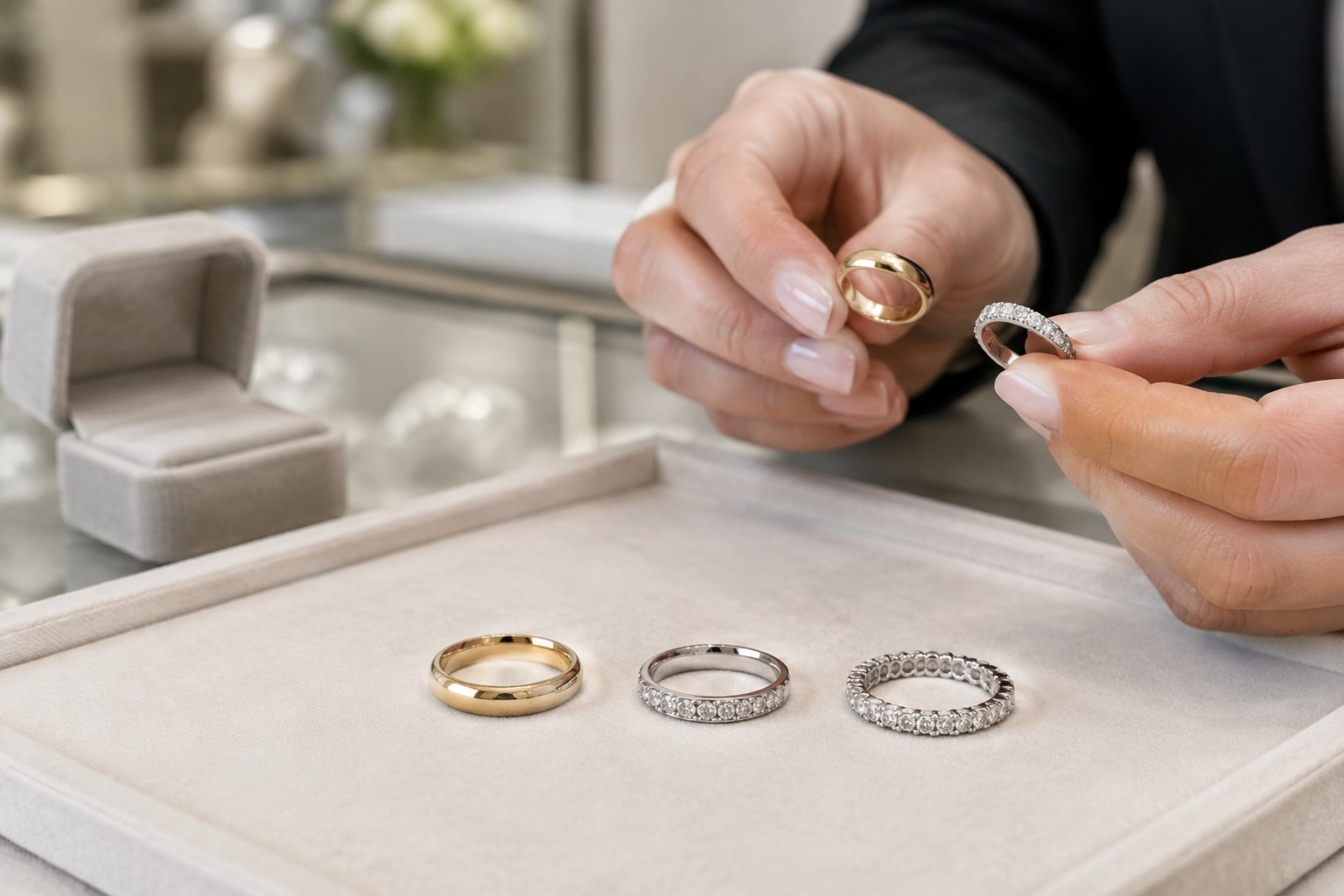
A few small stones can add a modest accent, while a continuous row of diamonds can raise the total substantially. Ask for the stone details and setting style in your written quote so you can compare similar diamond wedding bands.
How Do Lab-Grown and Natural Diamonds Compare?
Lab-grown diamonds have the same basic crystal structure and appearance as natural diamonds, and they usually cost less for a similar size and quality. Natural diamonds formed underground over time; lab-grown diamonds are made using controlled processes.
Your budget may go further with lab-grown diamonds, while natural diamonds offer a geological origin some buyers prefer. Compare cut, color, clarity, and total carat weight for each option.
Those details help explain price differences between two bands that look similar at first glance.
What Is the Difference Between Half- and Full-Eternity Styles?
A half-eternity band has stones across the visible top portion of the ring, while a full eternity ring has stones all the way around. Full eternity styles use more stones and often cost more; the continuous setting can also make resizing difficult.
A half-eternity band leaves plain metal along the palm side, which may feel smoother during daily tasks and gives a jeweler more room to adjust the size. If you want sparkle from every angle and your ring size is stable, a full style may suit you.
Ask about repair and resizing options before you order.
How Can You Set a Wedding Band Budget That Works?
Set a wedding band budget around an amount you can pay comfortably, then choose the features that fit inside it. A clear spending limit helps you compare rings without letting a single material or added detail push the purchase beyond your plans.

Decide whether your budget covers one ring or both, and leave room for sizing, engraving, or care if you want those services. If you’re planning several wedding expenses at once, set the ring amount alongside your realistic wedding budget.
Which Features Matter Most for Everyday Wear?
Prioritize a comfortable fit, a metal you like, and a design suited to your daily routine. If you work with your hands, a low-profile band with a smooth surface may be easier to wear than a ring with raised stones or edges that catch on fabric.
Think about whether the ring needs to sit close to your engagement ring. Bring that ring when you try bands so you can check how the two fit together.
A secure setting and a size that feels comfortable in different temperatures can help you wear the band with ease.
Where Can You Save Without Sacrificing Quality?
You can reduce the price by choosing a narrower band, a simpler finish, or fewer stones. Selecting 14k gold over platinum can also lower the cost while giving you a precious-metal ring for daily wear.
For diamond bands, consider lab-grown stones or a half-eternity design. You can also compare ready-made options with custom work, since custom shaping and extra labor may raise the quote.
Use wedding band tips to keep your priorities clear while you shop.
What If You Mean a Live Band for the Reception?
A live wedding band for your reception costs far more than a jewelry band, with many U.S. couples spending around $4,000 to $5,000. The quote depends on the group size, performance hours, location, and included sound or lighting.
How Much Does a Live Wedding Band Cost?
A live wedding band may cost a few thousand dollars for a smaller group, while larger or highly sought-after groups can charge much more. Travel, extra performance time, custom song requests, and equipment needs can add to the fee.
Ask each band for an itemized quote that lists performance hours, travel, setup, sound, and lighting. Comparing those details makes it easier to judge whether two offers cover the same service.
For more pricing context, review live wedding band costs.
What Can You Expect From an Acoustic Duo?
An acoustic duo gives you a smaller live-music setup, often with two performers and a lighter sound system than a full band. It can suit a ceremony, cocktail hour, or a smaller reception, with fees shaped by the location and length of the booking.
Ask for sample performances and a clear list of what the fee includes. Confirm whether the duo brings its own sound equipment and whether your venue has rules about amplified music.
How Do Wedding Bands Compare With Engagement Rings?
Wedding bands usually cost less than engagement rings because a plain band has no large center stone. Diamond accents, platinum, or custom design can narrow that price gap.
What Is the Average Engagement Ring Cost?
Recent U.S. estimates place the average engagement ring cost around $4,600 to $5,200, with figures changing by survey year and method. Your own price can fall well below or above that range based on the center stone, setting, and metal.
Why Do Wedding Bands Usually Cost Less?
A simple wedding band uses less material and labor than an engagement ring with a prominent center stone and detailed setting. The difference becomes smaller when you choose a diamond wedding band, a full eternity style, or a custom design.
If you’re weighing the two purchases together, consider the center stone and setting as the main cost drivers for an engagement ring. A plain wedding band offers a lower-cost option, while a detailed design can bring its price closer to that of a simpler engagement ring.
You can also read about why engagement rings cost more than wedding rings.