
Typical Wedding Catering Cost: What to Budget Per Guest
A typical wedding catering cost in the U.S. is about $80 per guest, though quotes range widely based on your location, menu, and level of service. At that average, food and catering for 100 guests would come to about $8,000 before you account for any charges not included in the quote.
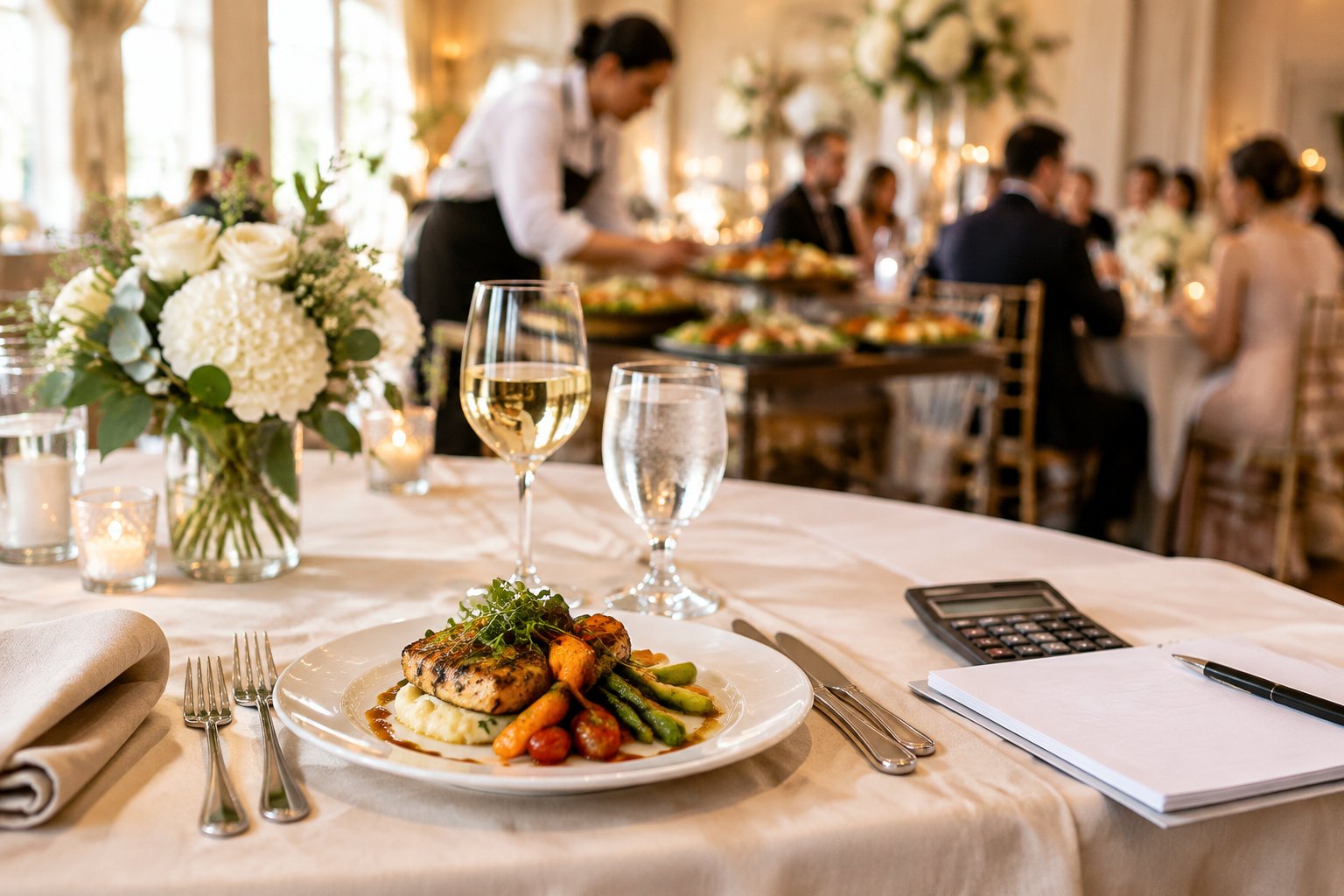
To get a number that fits your celebration, ask caterers for itemized quotes using the same guest count and service details. You can compare wedding catering costs more clearly when each quote spells out what the per-person price covers.
What Can a Per-Guest Quote Actually Buy?
A per-guest quote can cover food alone or a broader package with service, drinks, and rentals. Check what each caterer includes before you compare prices, since two quotes with the same per-person rate may cover different things.

For a wedding reception, the package details shape the final bill as much as the menu does. Ask for a written breakdown of the services tied to the quoted rate.
Food-Only, Staffed, and All-In Packages
A food-only quote covers the dishes and their preparation, with delivery or setup listed separately if those services are available. You’ll need to confirm who supplies serving equipment and who handles cleanup.
A staffed package may include servers, cooks, a service lead, or bartenders. The quote should state how many staff members will attend, what tasks they’ll handle, and how long they’ll stay. Extra hours or setup needs may add charges.
An all-in package could combine food, beverages, staff, and rentals such as plates and glassware. The phrase “all-in” can mean different things to different caterers, so ask whether taxes, gratuity, and service fees are included. Confirm details such as vendor meals and the cost of any menu tasting, too.
Why Local Quotes Can Vary So Widely
Your region, venue, and event logistics can all affect the quote. A recent national survey found average per-person catering costs ranging from $62 to $123 across regions, with the Midwest at the lower end and the Mid-Atlantic at the higher end.
A remote venue may require extra travel time, equipment, or staff. A city venue may have higher labor or rental costs. Your date and guest count also affect availability and minimum charges. When you compare quotes, make sure each caterer has the same event details, including the venue, estimated attendance, and service hours.
Which Choices Push the Price Up or Down?
Your service style, menu, and bar plan are the main choices that shape catering prices. A simpler service plan and focused menu can keep costs in check while still giving guests a satisfying meal.
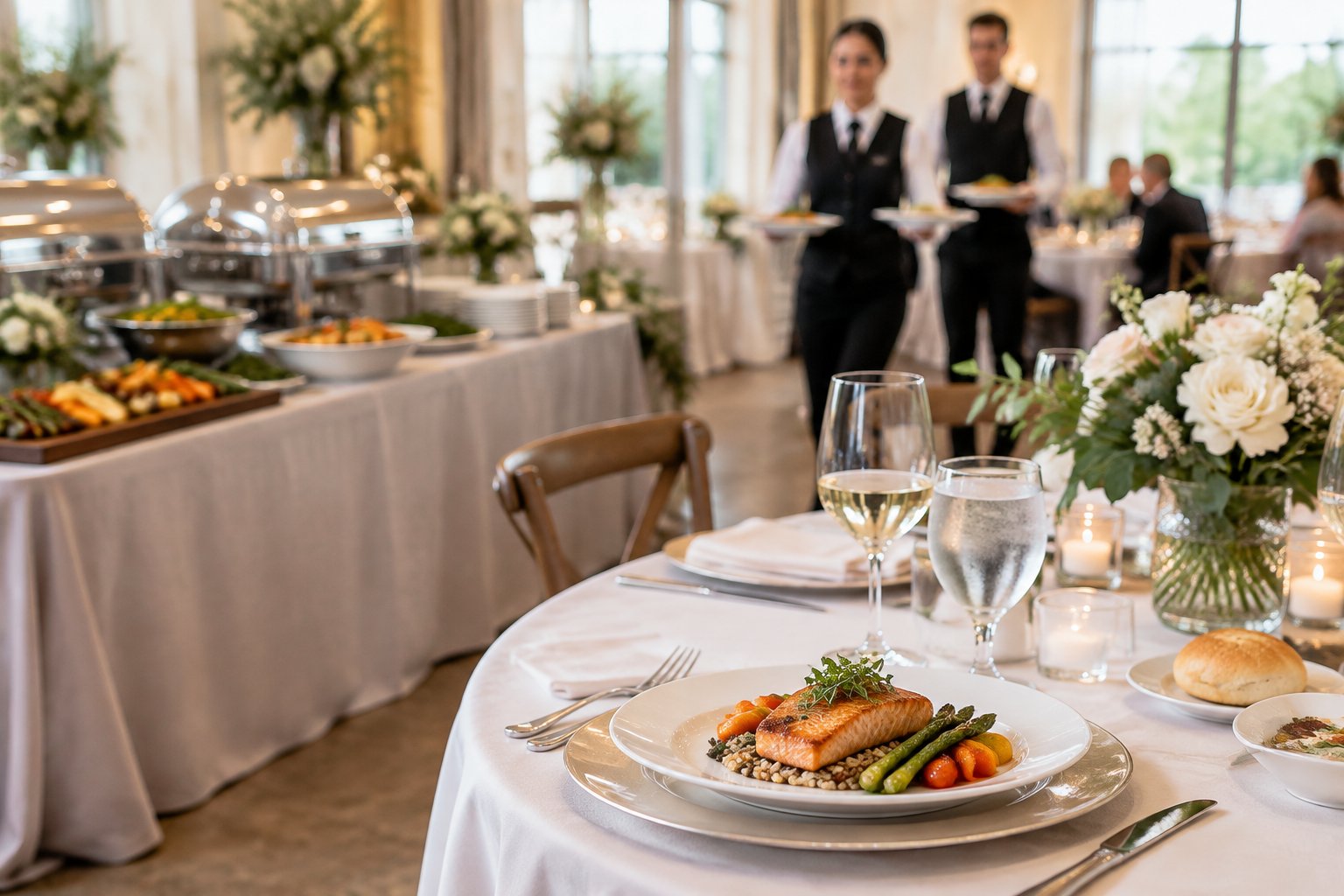
Start by deciding what kind of meal fits your reception and how much service you want. Then ask your caterer to price the specific dishes and drinks you have in mind.
Buffet, Stations, or a Plated Dinner
A buffet gives guests a choice of dishes and can need fewer servers than a plated meal. Your caterer will plan for enough food and a smooth serving line, so ask about staffing and the space your venue needs.
Food stations let guests move between different menus or made-to-order dishes. Each station adds setup needs, and live cooking can require extra staff and equipment.
A plated dinner brings each course to guests at their tables. It offers a more structured meal, with added work for preparing individual plates and serving them on schedule. Family-style service is another option, with shared platters brought to each table. Ask for the full cost of each style, including labor and rentals, before choosing.
Menu Choices, From Chicken to Crab Cakes
Ingredients, portion sizes, and preparation all influence food costs. A chicken entrée may cost less than a menu built around premium seafood, such as crab cakes. Seasonal ingredients and dishes your caterer already prepares for events can also help you stay within budget.
Ask for a few menu options at different price points. You can keep a favorite premium dish as one course or appetizer while choosing more budget-friendly sides. If guests will select their entrée in advance, ask how the caterer collects those choices and whether that affects the price.
Hors d’oeuvres and Bar Service
Hors d’oeuvres add to your per-person cost through both ingredients and preparation. Choose a set number of passed bites or a mix of passed and stationary options, then confirm how long service will last.
An open bar can add a significant cost, especially when it includes liquor, wine, beer, and mixers. A beer-and-wine bar, a signature drink, or a shorter bar service window can limit the selection and help manage spending. Ask whether your caterer charges a flat rate or bills by consumption, and clarify who supplies the alcohol.
If you’re looking for ways to keep food expenses in range, compare service styles and ask about budget-friendly wedding catering options that fit your venue and guest list.
What Should a Catering Quote Include?
A clear catering quote lists the food, service, rentals, and added fees that make up your final cost. Ask for those items in writing so you can compare the full price, not only the per-guest rate.
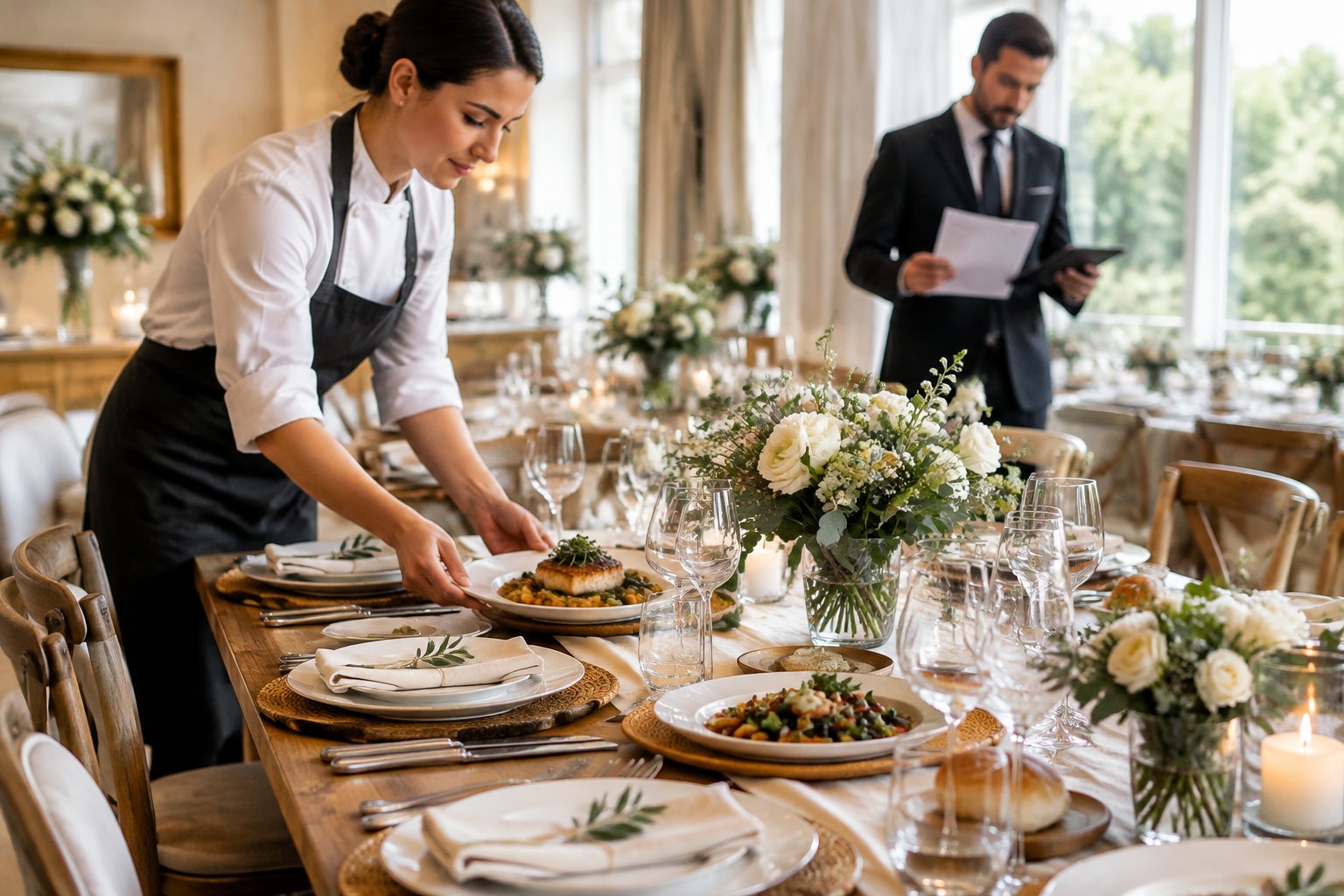
Your written estimate should explain who provides each service and when extra charges apply. Review the details alongside your venue’s rental and service requirements.
Staff, Rentals, Taxes, and Gratuity
Ask whether the quote includes servers, bartenders, kitchen staff, setup, and cleanup. Find out how many staff members are assigned and whether the price changes if service runs longer than planned.
Check whether plates, flatware, glassware, linens, and serving equipment are included. Your venue may supply some items, while others may need to be rented from the caterer or a separate company.
Request a breakdown of taxes, service charges, and gratuity. A service charge and a tip may be listed separately, so ask where each fee goes and whether you’re expected to add anything at the end. Travel costs, corkage, and kitchen-use fees are also worth checking when they apply. A detailed wedding catering contract helps you see which charges are set and which could change.
Dessert, Cake Cutting, and Late-Night Extras
Ask whether dessert is included in the package or priced separately. If you’re bringing in a wedding cake, confirm whether the caterer will cut and serve it and whether a cake-cutting fee applies.
Coffee service, a dessert table, and late-night snacks all add to the food budget. Price each item separately so you can decide which extras suit your reception schedule and spending plan. If you’re serving a wedding cake along with other sweets, make sure the quote reflects the portions you expect to serve.
How Can You Set a Realistic Food Budget?
Build your food budget from a realistic guest count and a per-person estimate that includes fees. A little room for changes can help you manage wedding costs if attendance or menu choices shift.

Food and drinks can take up a meaningful share of your wedding budget, especially when your package includes service and rentals. Set your spending limit before you choose menu upgrades or add-ons.
Estimate the Total From Your Guest Count
Multiply the per-person quote by your expected guest count to get a starting estimate. At the national average of $80 per person, 50 guests comes to about $4,000, 100 guests to $8,000, and 150 guests to $12,000. Treat these as estimates, then add any charges the quote leaves out.
Small events can still face a minimum spend, so ask how that affects your total. Include vendor meals in your planning if your photographer, DJ, or other vendors need dinner. A wedding budget plan can help you set a catering limit alongside your other costs.
Trim Costs Without Sacrificing the Meal
Focus your spending on the parts of the meal your guests will enjoy most. You could choose a buffet or family-style service, serve a seasonal menu, or limit the open bar to a smaller selection. Ask your caterer to suggest swaps that lower the price while keeping the meal filling and well balanced.
Keep the menu focused, and price each extra before adding it. If you’re working with a wedding planner, share your target catering amount early so the menu and service plan stay within your spending limit. You can also learn how to stick to a wedding budget as you make decisions across vendors.
What Should You Ask Before Booking?
Before you book, confirm the caterer’s minimums, deadlines, payment terms, and policies for guest needs. Clear answers in writing give you a stronger basis for comparing offers and planning the reception.
Confirm Minimums, Final Guest Counts, and Payment Terms
Ask whether the caterer has a minimum spend or minimum guest count. Find out when you must provide your final number and whether the payment changes if that count goes up or down after the deadline.
Review the deposit amount, due dates, cancellation terms, and rules for changing the menu or event details. Ask which costs are fixed and which may change with the final count. Your wedding planner can help track these deadlines alongside venue and vendor decisions.
Ask About Tastings, Dietary Needs, and Leftovers
Ask whether a tasting is included, how many people can attend, and whether the menu you sample matches the one you’ll serve. Confirm how the caterer handles allergies and dietary needs, including how special meals are labeled and delivered to guests.
Check whether children’s meals and vendor meals are available at a different rate. Ask what happens to leftover food after the reception, since food safety policies vary. When you choose a wedding caterer, make sure the answers match what you want documented in your agreement.