
What Percent of Your Wedding Budget Should Be Dress? A Guide for Savvy Brides
Planning your wedding can be exciting yet overwhelming, especially when it comes to budgeting. You’ll want your wedding dress to be perfect, but you need to know how much of your overall wedding budget should be allocated to it. Experts suggest that about 7% of your total wedding budget should be dedicated to your wedding dress. This percentage can help you find a balance between looking amazing and staying financially responsible.
Understanding wedding budget percentages is key to effective wedding planning. With the average cost of a wedding rising above $30,000, knowing how much to spend on your dress can save you from unexpected financial stress.
Choosing the right dress is important, but it’s also vital to consider all other expenses that come with your big day.
By keeping your dress budget in check, you can ensure that you have enough funds for other important elements, like the venue and catering. This thoughtful approach helps you create the wedding of your dreams without breaking the bank.
Determining Your Wedding Budget
Planning your wedding budget is a crucial step in the wedding planning process. Knowing how to break down your expenses will guide you in making wise financial decisions. Here’s how to get started.
Understanding Wedding Budget Breakdown
A wedding budget breakdown helps you see where your money will go. Typically, expenses are divided into categories like venue, catering, attire, and decorations. Here’s a common breakdown:
- Venue: 40%
- Catering: 20%
- Wedding Dress: 10-15%
- Photography: 10%
- Flowers and Decorations: 10%
- Miscellaneous: 5%
This breakdown is a starting point. Personal preferences will influence these percentages. Use a wedding budget checklist to keep track of each item and adjust as needed.
Setting Your Total Wedding Budget
Before you can allocate funds, you need to set a total budget. Consider your savings, family contributions, and what you can realistically afford.
Start by listing potential sources of funding:
- Personal savings
- Family contributions
- Wedding loans (if necessary)
Once you have a total amount, factor in a 10% emergency fund. This cushion is vital for unexpected expenses such as last-minute changes or extra guests. Knowing your total budget makes it easier to decide how much to spend on each category.
Allocating Budget for Your Dress
When planning your wedding dress budget, aim for 10-15% of your total budget. If your total budget is $30,000, this means you can spend between $3,000 and $4,500 on your dress.
Keep in mind additional costs like alterations and accessories. Consider shopping sales or sample sales to save money.
Using a wedding cost breakdown can also help you visualize your spending. Make sure your dress fits within your budget, so it doesn’t strain your overall wedding finances.
Shopping for the Perfect Wedding Dress
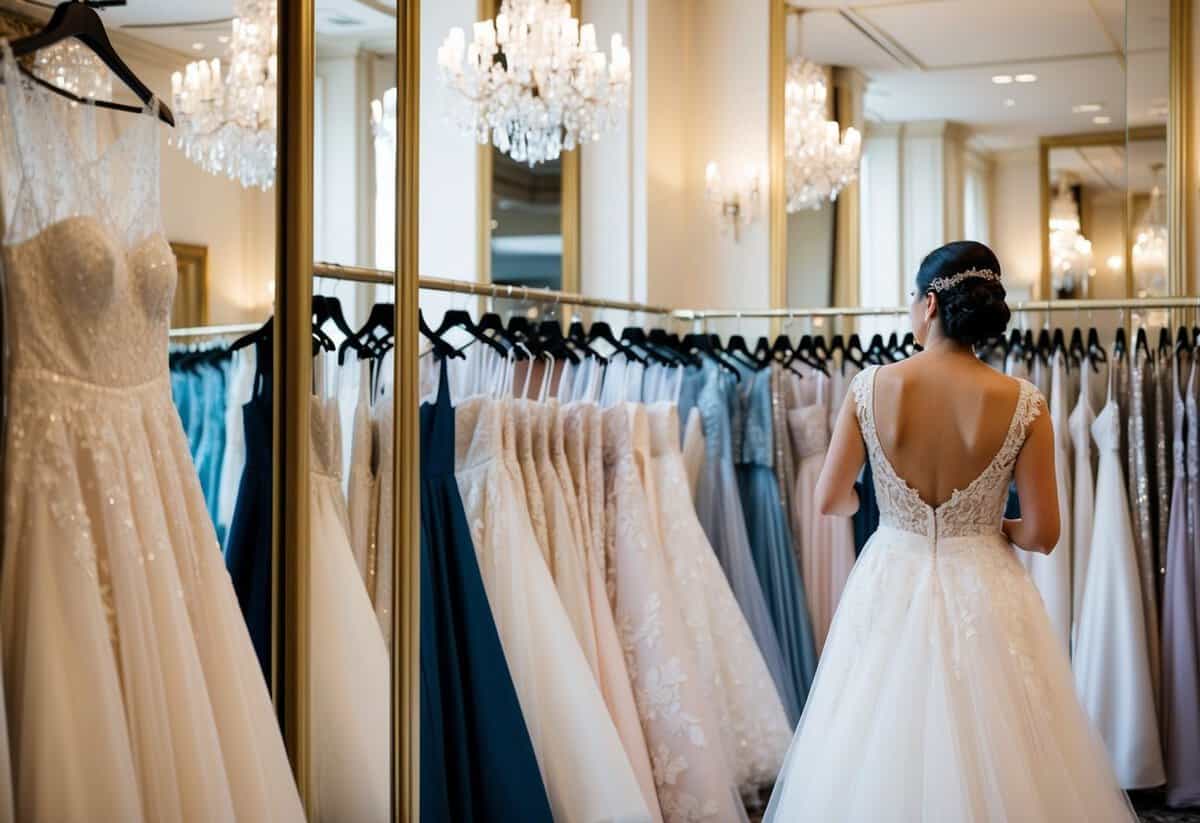
Finding the right wedding dress is an important part of your wedding planning. The right gown can enhance your wedding day look and fit your budget. Pay close attention to styles, shop smartly, and think about alterations.
Choosing Your Wedding Gown Style
The style of your wedding gown sets the tone for your big day. Consider various popular styles like A-line, ball gown, mermaid, and sheath. Each style flatters different body shapes.
Think about how comfortable you want to feel during the ceremony and reception.
When trying dresses on, bring a few trusted friends or family members. Their opinions can help you decide. Don’t forget to consider how the gown fits with your wedding theme and colors. If you’re planning a reception dress change, think about how it complements your main gown.
Navigating Bridal Shops
Visiting bridal shops can be exciting yet overwhelming. Start by setting a budget before you go shopping. Many experts recommend spending about 10% of your total wedding budget on your dress.
Make appointments at multiple shops to explore different styles. Ask about any ongoing sales or trunk shows. Most shops require appointments, so check their policies beforehand.
While shopping, don’t hesitate to ask for help from consultants; they can offer valuable advice.
Remember to consider hidden costs like alterations, accessories, and preservation. These can add to the overall expense, so keep them in mind.
Considering Wedding Dress Alterations
Most wedding dresses may need alterations for the perfect fit. Expect to pay around $200 to $600 for changes. This includes adjustments like hem length, taking in sides, and adding bustles.
Discuss your vision with a skilled tailor. They can help you achieve the look you want.
It’s smart to schedule alterations well in advance of your wedding day. Be open to multiple fitting sessions to ensure everything is just right.
Look into options for customizing your dress as well. Adding sleeves, changing necklines, or incorporating unique embellishments can make your gown truly personal.
Expenditure on Other Wedding Elements
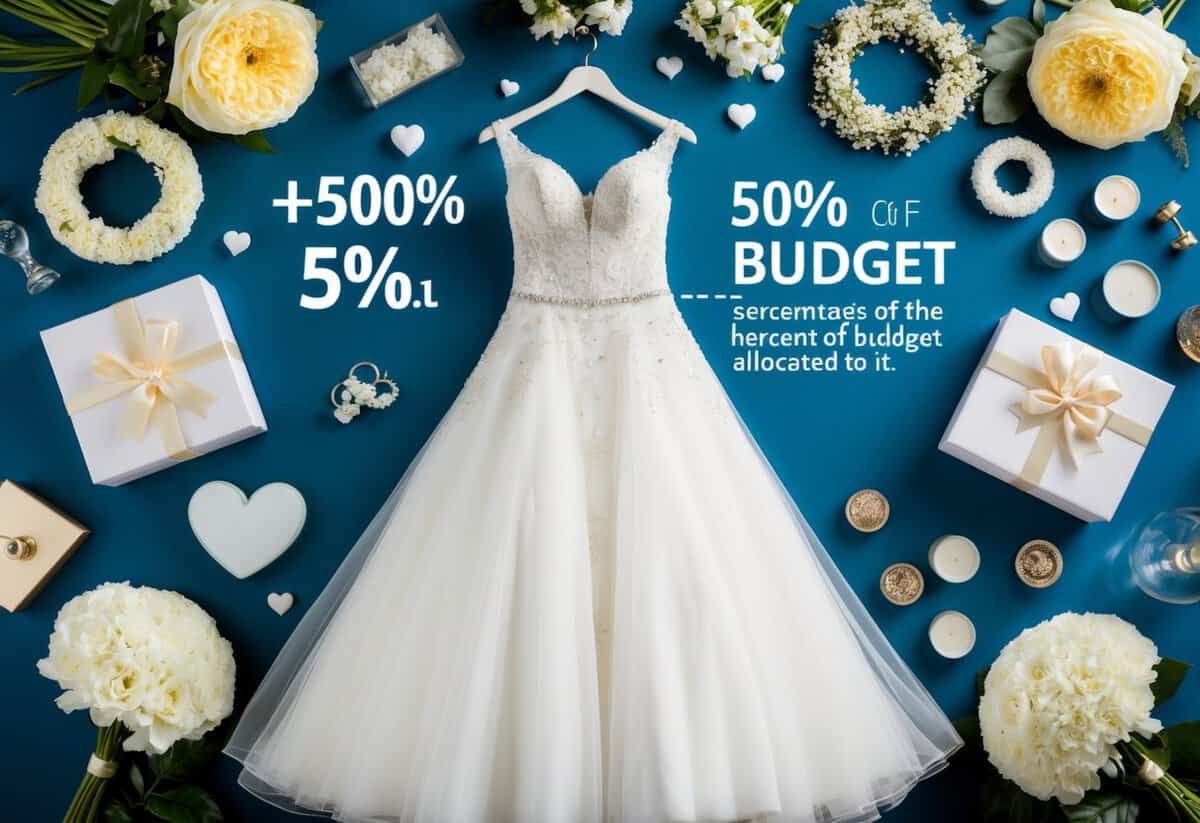
When planning your wedding budget, it’s essential to allocate funds wisely to various key elements beyond the dress. Understanding where your money goes will help you create a memorable day without overspending.
Venue and Catering Costs
Your venue and catering take up a significant chunk of your wedding budget. Typically, you should expect to spend around 35% of your total budget here.
Choose a venue that reflects your style and can accommodate your guest list comfortably.
Catering is just as crucial. Whether you opt for a sit-down dinner, buffet, or food stations, consider your guests’ preferences.
Don’t forget to include costs for staffing, rentals, and any necessary permits.
Photography and Videography
Investing in good photography and videography is vital. Aim to allocate about 10% of your budget for these services.
These professionals capture moments you’ll cherish forever, so picking the right ones is key.
When choosing photographers and videographers, review their portfolios and ask about packages. Discussing the timeline and key shots you want ensures you get what matters most.
Music, Entertainment, and Decor
Music and entertainment enhance the overall vibe of your wedding. Generally, you should spend about 10-15% of your budget in this area.
This includes hiring a wedding DJ, ceremony musicians, or even a live band. Their role helps set the atmosphere and keeps your guests engaged.
Additionally, allocating some funds for decor is important. Your decorations bring your wedding theme to life.
From centerpieces to lighting, think about how each element enhances the space. Be creative, but also stick to your budget to avoid overspending.
Finalizing the Details
As you move closer to your wedding day, it’s important to nail down key components like your invitations, rings, and attendance logistics. Each of these details helps ensure a smooth and enjoyable experience for you and your guests.
Sending Out Invitations
Your wedding invitations are the first glimpse your guests get of your special day. Make sure they reflect your wedding theme and style.
Start by creating a guest list. This will help determine how many invitations you need.
Next, choose the right paper and design. Consider sending save the dates well in advance, especially for destination weddings.
Include vital details: date, time, venue, and RSVP information. You can get creative with wording to match the tone of your celebration.
After gathering addresses, mail them out 6-8 weeks before the big day to give everyone enough time to respond.
Choosing Wedding Rings and Attire for the Party
Selecting the right wedding rings and attire for your wedding party is a big part of your planning.
Remember, the rings symbolize your union, so take your time picking designs that fit your style.
Consult with your partner and choose rings that reflect both of your personalities.
As for the wedding party’s attire, ensure they feel comfortable and confident.
Consider coordinating colors or themes to create a cohesive look. Also, think about the season and venue when picking fabrics and styles.
Encourage your wedding party to express their personal style while sticking to your vision.
Planning Guest Transportation and Accommodation
Guest transportation and accommodation are essential to ensure everyone can enjoy your wedding without stress.
Start by discussing options with your venue. Many venues offer shuttle services.
If your guest list includes those traveling from afar, consider booking blocks of rooms at nearby hotels.
Share this information in your invitations to help guests plan ahead. Make travel arrangements easy by providing directions or transport options like rideshares.
By handling these details efficiently, you can focus more on soaking in every moment of your wedding day.