
Beach Wedding Venues Quiz: Find Your Ideal Setting
If you want a memorable ceremony with natural scenery and a relaxed feel, a beach wedding venue quiz gives you a fast way to narrow your choices. A beach wedding venues quiz suits couples who need help matching their guest experience, shoreline setting, and formality preferences to a practical venue type. Your answers can point you toward a resort, private estate, public beach, or intimate villa while keeping permits, travel, and weather in view.
The right setting shapes your ceremony, reception, guest comfort, and budget. Take the quiz with your partner, compare your top result with your guest list, and contact venues that fit your priorities before you place a deposit.
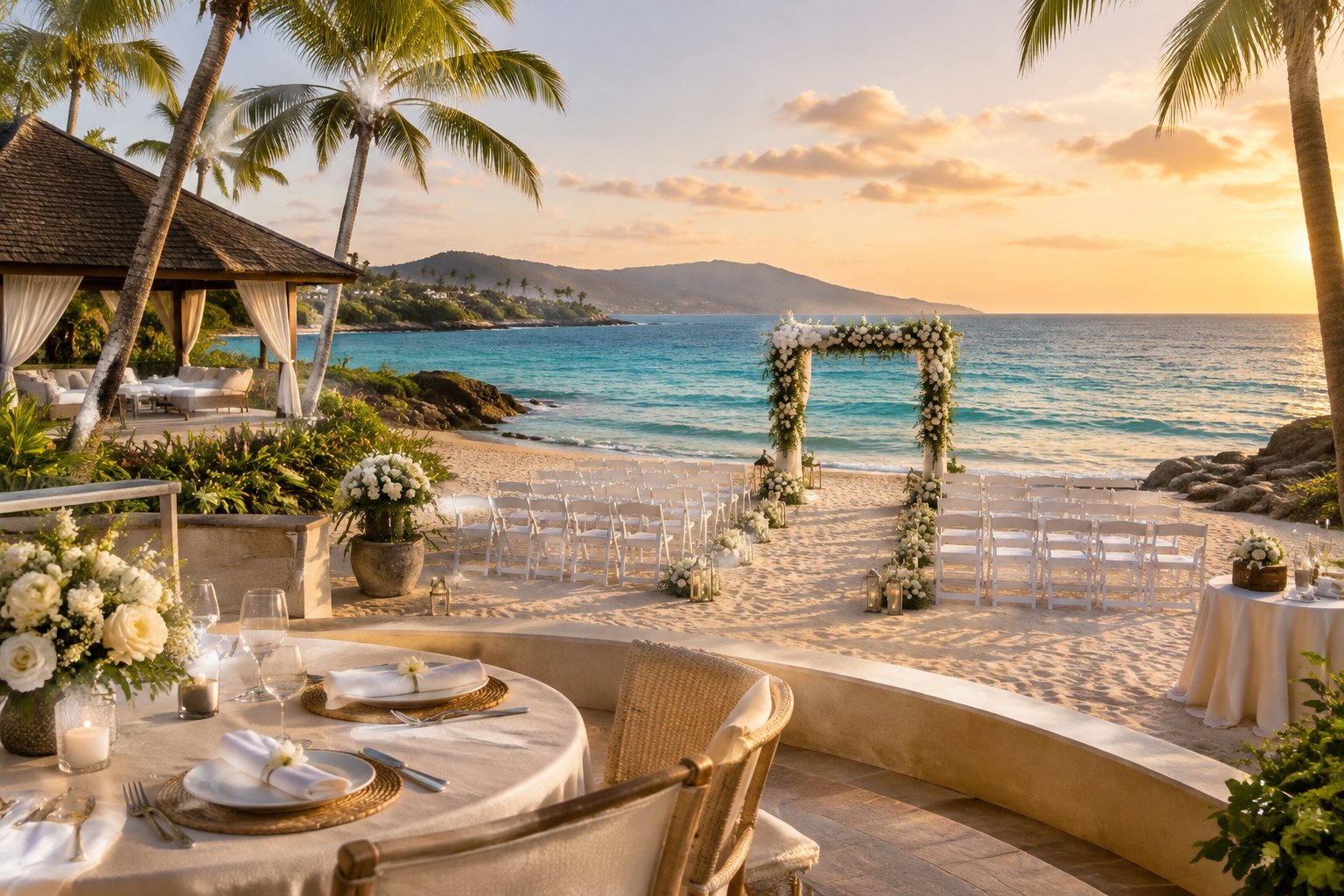
Take the Beach Venue Style Quiz
Your strongest venue match comes from three choices: the guest experience you want, the shoreline that fits your style, and the level of formality you prefer. Choose the answer that feels most important to both of you, then use the pattern to guide your search.
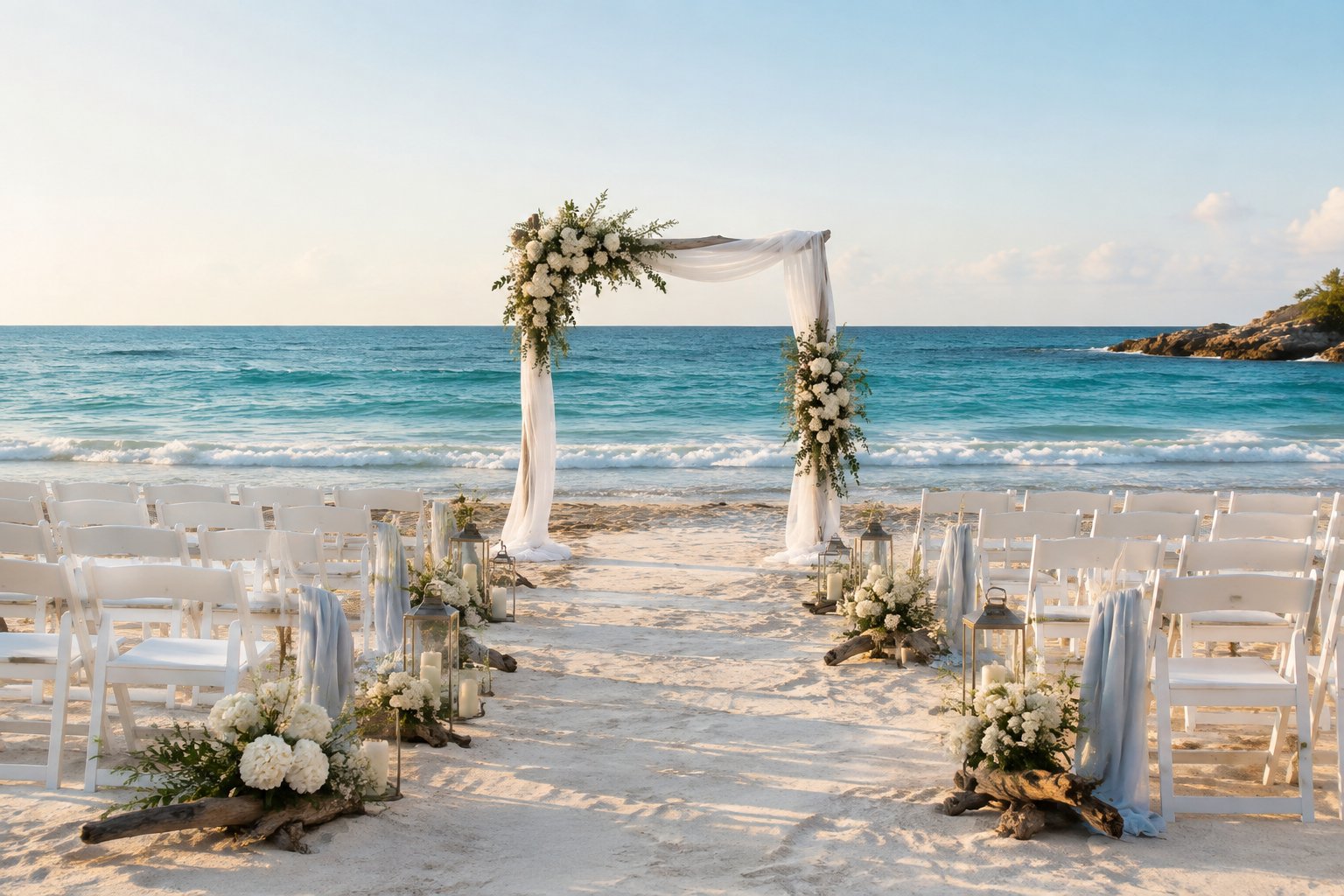
What Guest Experience Do You Want to Create?
Choose the experience that sounds closest to your wedding day:
- Easy and full-service: A resort or hotel beach provides lodging, catering, restrooms, coordination, and a weather plan in one location.
- Private and intimate: A coastal estate, villa, or secluded cove creates a quieter setting for a small guest list.
- Simple and flexible: A public beach or park works well for a ceremony with a smaller budget and a short guest list.
- Social and activity-filled: A destination resort gives guests dining, pools, excursions, and shared time before and after the ceremony.
Think about how much planning you want to handle. A full-service wedding venue reduces vendor coordination, while a public location gives you more control over each detail.
Which Shoreline Setting Fits Your Wedding Vision?
Match your style to the landscape:
- Wide sandy beach: Choose this for classic vows beside open water, sunset photos, and a casual coastal mood.
- Quiet cove: Select this for privacy, natural shelter, and an intimate ceremony.
- Clifftop or ocean-view estate: Pick this for dramatic views, elevated decor, and a polished reception.
- Tropical resort shoreline: Consider this for warm weather, guest amenities, and a destination wedding feel.
- Lakeside or bayfront property: Explore this when you want waterfront scenery with easier access to gardens, lawns, or indoor spaces.
Check the tide, sun direction, wind, parking, and walking distance before you fall in love with a location.
How Formal Should the Celebration Feel?
Your preferred dress code and reception style can quickly narrow your venue search.
- Casual: A public beach, park, or beachfront rental suits light decor, sandals, and a short ceremony.
- Polished: A boutique property, hotel lawn, or private club supports plated dining, tailored florals, and comfortable seating.
- Luxury: A resort or coastal estate offers coordinated service, upgraded menus, and private event areas.
- Traditional: An indoor-outdoor property gives you a formal ceremony space with ocean views and a structured reception.
Write down your top two answers from each question. Repeated themes reveal the venue features worth prioritizing.
Match Your Results to the Right Venue Type
Your quiz result should lead to a venue type that supports your guest count, service needs, privacy level, and budget. Compare package details carefully because two wedding venues with similar ocean views can offer very different access, staffing, and backup plans.
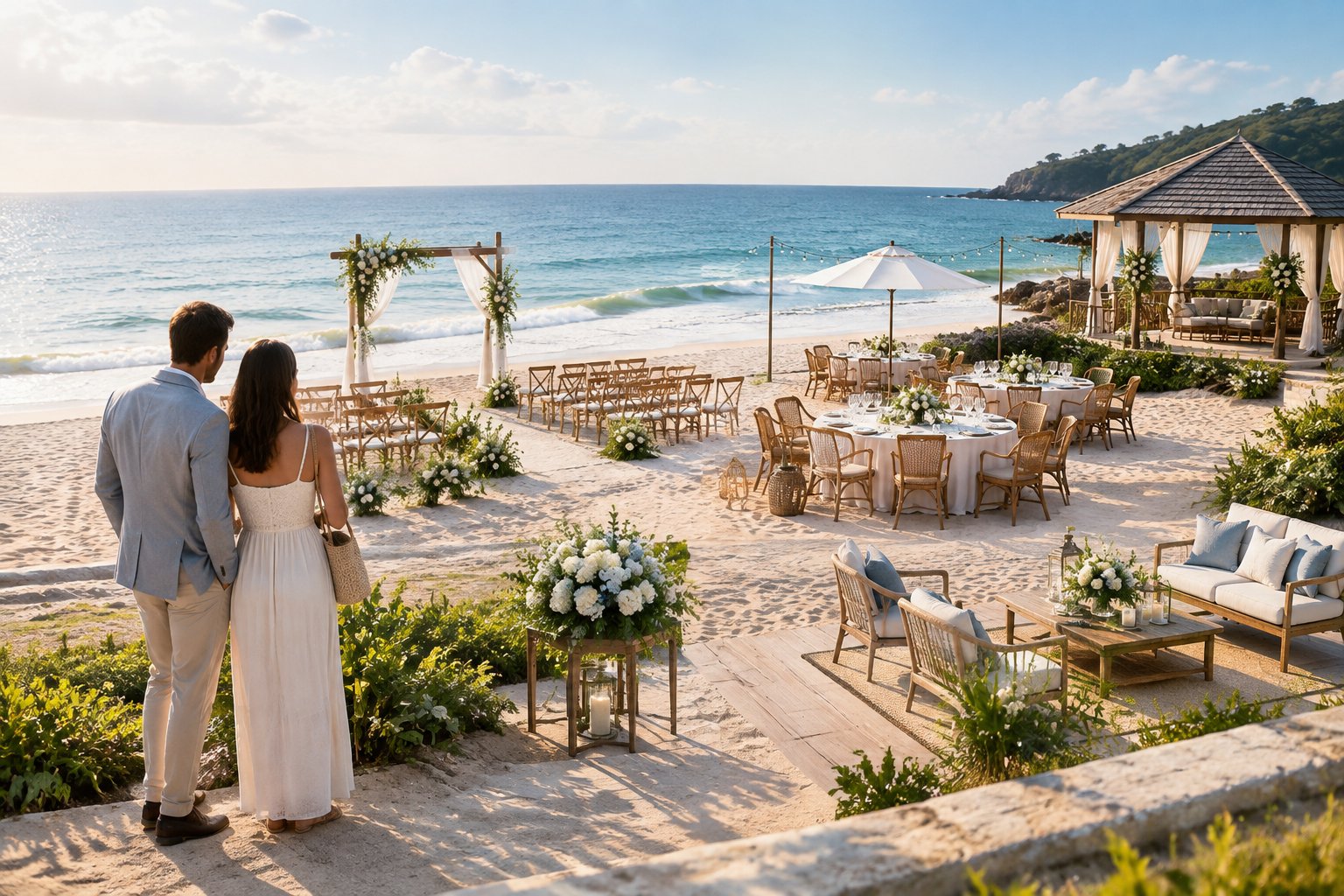
Private Resort and Hotel Beaches
A private resort or hotel beach fits couples who want a coordinated celebration with guest lodging nearby. Packages often combine ceremony setup, chairs, food, drinks, flowers, and an on-site coordinator.
Ask about:
- Ceremony and reception minimums
- Room-block requirements
- Outside vendor rules
- Beach access for hotel guests
- Indoor backup space
- Noise limits and event hours
This option works well for a medium or large destination wedding. It also makes arrival, meals, and transportation easier for guests who want a shared vacation.
Secluded Coves and Coastal Estates
A secluded cove or coastal estate suits couples who value privacy, scenery, and a smaller celebration. Estates may include a lawn, terrace, house, or reception room above the beach, giving you more control over the event flow.
Confirm the road access, parking, restroom capacity, power supply, vendor load-in route, and noise rules. Ask whether the property allows overnight stays and how many guests can remain on-site. A remote location needs a clear transportation plan and a firm weather backup.
Public Beaches and Park Permits
A public beach or coastal park gives you an affordable path to a simple ceremony. You handle more details, including the permit, seating, arch, sound, restrooms, cleanup, and vendor deliveries.
Review local rules before booking. Some parks limit guest numbers, amplified music, ceremony hours, decorations, alcohol, or reception setups. Permit fees can be modest, while rentals and staffing raise the final cost. This choice fits elopements, micro-weddings, and couples who enjoy hands-on planning.
For more budget ideas, explore affordable wedding venues near the beach.
Beachfront Villas and Boutique Properties
A beachfront villa or boutique property offers a personal setting for a small wedding. You may receive private outdoor areas, lodging, a kitchen, and space for a relaxed reception.
Confirm that the owner permits weddings and learn the guest limit, event fee, cleaning rules, insurance needs, and music restrictions. Review the cancellation policy and make sure vendors can access the property. Villas work best when your guest list is compact and you want a home-like gathering with ocean views.
How to Choose a Beach Venue That Fits Your Budget
A beach venue fits your budget when you compare the full event cost, including site fees, food, rentals, permits, weather protection, and guest travel. Request an itemized proposal so you can compare packages on equal terms.
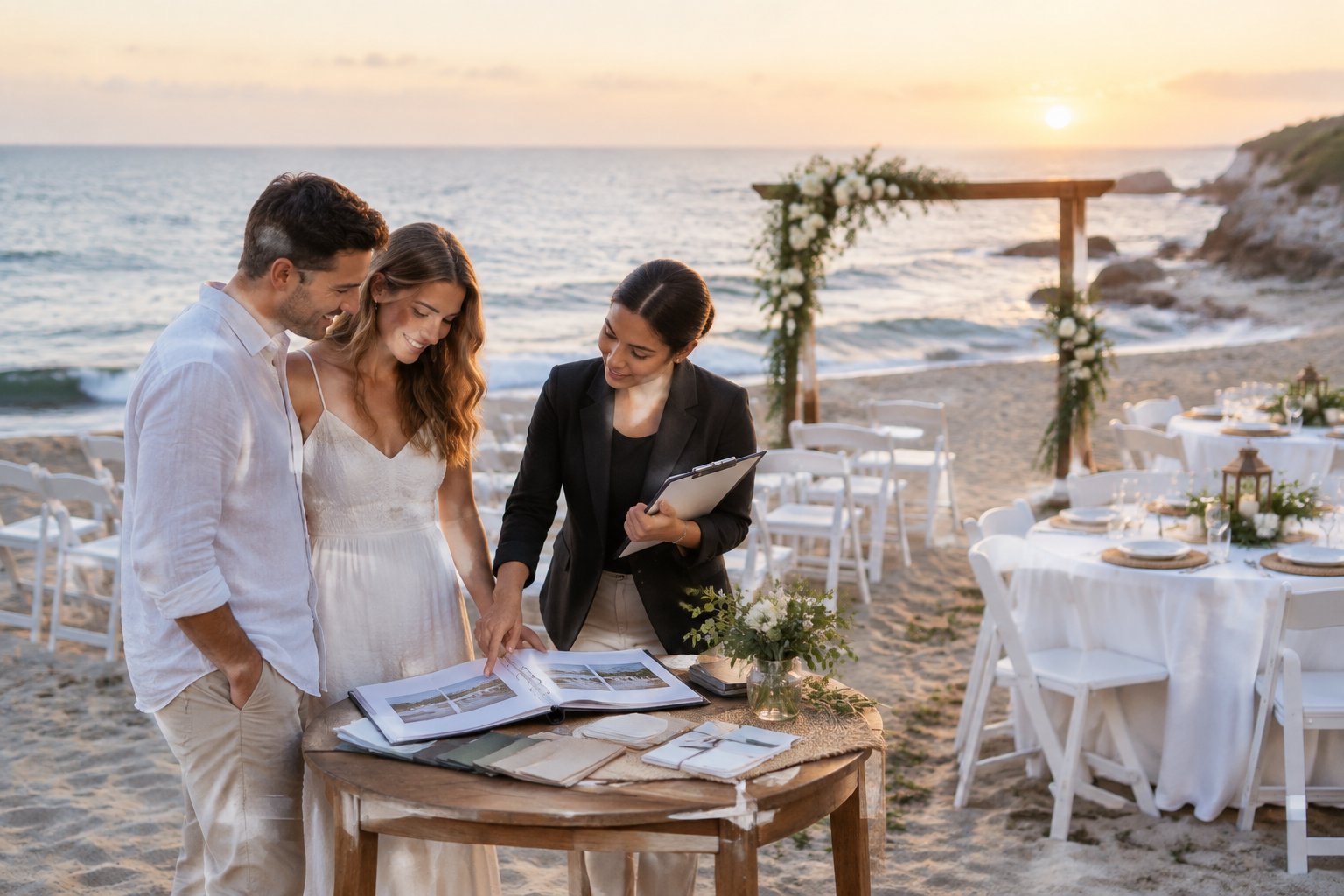
Compare Site Fees, Minimums, and Package Inclusions
Start with the base venue fee, then identify the costs tied to your guest count. A low site fee can come with catering minimums, service charges, resort room requirements, or required vendors.
Ask each venue to list:
- Ceremony and reception fees
- Food and beverage minimums
- Staffing and service charges
- Tables, chairs, linens, and sound equipment
- Coordination and setup
- Cake, flowers, and photography
- Taxes, gratuities, and outside-vendor fees
A public beach ceremony may cost less at the site level, while a resort package can include services that would cost more when booked separately. Compare the final totals, not the headline price.
For a practical spending plan, use these ideas for how to allocate a wedding budget.
Plan for Weather, Rentals, and Permit Costs
Beach weather affects both comfort and your event design. Budget for shade, fans, blankets, tenting, umbrellas, waterproof signage, and a second ceremony space when your venue requires them.
Include permit fees and possible insurance costs for public beaches and parks. Add delivery, setup, breakdown, cleanup, restroom access, power, and trash removal to your estimate. Ask who moves decor if wind or rain changes the plan and when that decision will be made.
A weekday or shoulder-season date can lower venue and vendor rates. Morning ceremonies followed by brunch also reduce heat exposure and evening lighting needs.
Find more ways to save with beach wedding ideas on a budget.
Estimate Travel Costs for Guests
Guest travel can shape the real cost of a destination wedding. Estimate flights, hotel nights, airport transfers, rental cars, meals outside the event, and activities before you choose a location.
Provide two or three lodging choices at different price levels. Ask the venue about room blocks, group rates, shuttle service, parking, and minimum stay rules. A nearby beach with simple transport can serve guests better than a distant resort with a lower package price.
Share expected costs early so guests can decide comfortably. Your venue choice should support the people you most want beside you.
Is a Destination Wedding Right for You?
A destination wedding fits you when travel, shared time, and a smaller guest list feel exciting and manageable. It requires advance planning for budgets, attendance, documents, time zones, and local rules.

Choosing Between Hawaii and the Maldives
Hawaii offers a U.S.-based destination with broad travel options, varied islands, and beaches paired with resorts, gardens, estates, and indoor venues. It suits couples who want tropical scenery with familiar domestic planning and a wide range of guest activities.
The Maldives offers private-island resorts, clear water, and a secluded luxury atmosphere. It suits a smaller guest group that can manage longer travel and higher lodging costs.
| Consideration | Hawaii | Maldives |
|---|---|---|
| Travel setup | Domestic for U.S. guests | International |
| Venue range | Beaches, estates, resorts | Private-island resorts |
| Guest activities | Broad island options | Resort-centered |
| Privacy | Varies by island and venue | High at private resorts |
| Planning focus | State and venue rules | Resort and local requirements |
Choose Hawaii when guest access and venue variety lead your priorities. Choose the Maldives when privacy, resort service, and an island setting define your vision.
Managing Guest Travel and Accommodation
Give guests a planning timeline with the destination, wedding date, airport, lodging options, payment deadlines, and transfer details. A wedding website, room block, or group travel contact keeps information in one place.
Ask your venue about accessible rooms, family lodging, meal plans, shuttle routes, and late arrivals. Build a welcome event that does not require every guest to arrive on the same day. Keep the ceremony schedule realistic for jet lag and travel delays.
If you are still weighing the format, read how to decide between a local or destination wedding.
Understanding Local Marriage Requirements
Legal marriage requirements vary by destination. Confirm whether you need a marriage license, identity documents, certified birth records, a divorce decree, witnesses, blood tests, residency time, or document translation.
Ask the local civil authority, consulate, venue coordinator, or qualified wedding professional for current rules. Religious or symbolic ceremonies can offer a simpler option when you complete the legal marriage at home, though your officiant and venue must confirm the process.
Start document checks before you send invitations. Some records require certification, apostilles, or extra processing time.
Explore Alternatives If the Beach Is Not the Best Match
Ocean views remain available through gardens, terraces, historic estates, and flexible indoor-outdoor properties. These settings give you more shade, firmer walking surfaces, privacy, and weather protection while keeping a coastal feel.
Coastal Gardens and Ocean-View Terraces
A coastal garden surrounds your ceremony with greenery, flowers, and ocean air. An ocean-view terrace offers a clear horizon, stable flooring, seating flexibility, and easier access for guests using wheelchairs or mobility aids.
These venues suit couples who want outdoor photos and a reception with reliable power, restrooms, and nearby indoor space. Ask how much of the view remains visible from guest seating and whether wind affects candles, linens, or floral designs.
Historic Castles and Estate Weddings
Castles and historic estates create a formal setting with architectural detail, gardens, courtyards, and grand reception rooms. Choose this path when your style leans toward classic portraits, structured dining, and dramatic interiors.
Review preservation rules before choosing decor or entertainment. Historic properties can limit candles, hanging installations, amplified sound, catering equipment, and guest access to certain rooms. An estate wedding also gives you a strong alternative when sand, heat, or public crowds conflict with your plans.
Browse more wedding venue ideas if you want to compare coastal and noncoastal styles.
Indoor-Outdoor Venues for Weather Flexibility
An indoor-outdoor venue gives you an outdoor ceremony option with a nearby covered reception or backup room. This design supports ocean views, guest comfort, and a faster response when rain or wind changes the schedule.
Ask whether the backup room is included, how quickly staff can reset it, and whether your decor transfers without extra labor. Check air conditioning, restrooms, sound limits, accessibility, and sunset visibility.
A venue visit during your planned ceremony hour helps you judge shade, glare, wind, and guest sightlines.