
Cheap Beach Wedding Venues: How to Find Real Value
A beach wedding gives you a memorable setting without requiring a traditional ballroom budget. Public beaches, city parks, small waterfront spaces, and off-season packages are the best places to start when you want affordable beach wedding venues, especially for a smaller guest list.
Your lowest quote may not be your lowest total. Permits, insurance, seating, catering rules, travel, taxes, and weather plans can change the final number quickly. Compare complete event costs at your guest count before you sign.
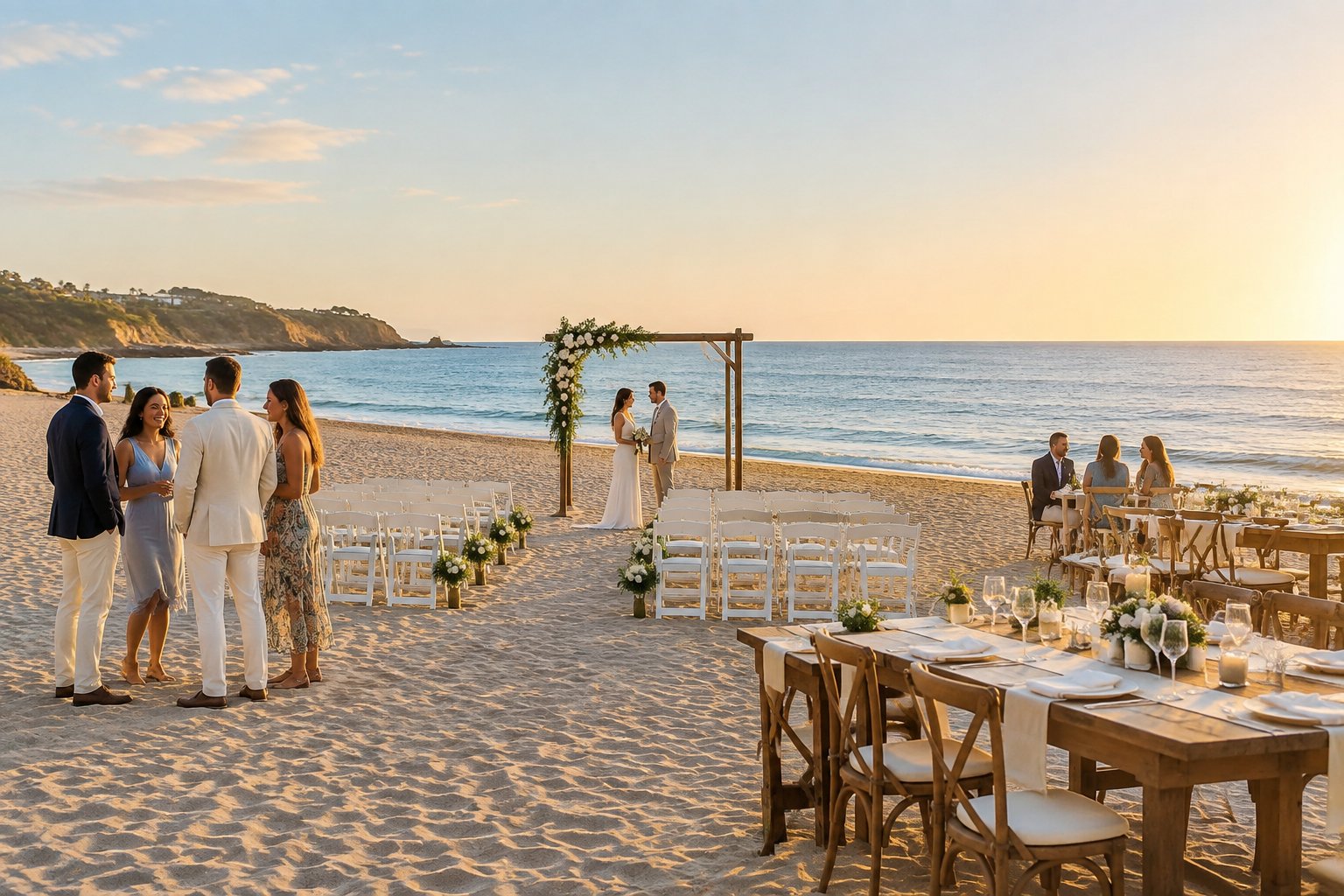
Start by searching affordable wedding venues near the beach and asking each location for an itemized quote. A short list of dates, guest counts, and venue questions will help you find real value with less stress.
Where Can You Find the Lowest-Cost Coastal Settings?
Public beaches and parks usually offer the lowest site fees, while waterfront restaurants and small inns can reduce rental and setup costs by including useful services. Your best choice depends on the guest count, reception plan, and local rules.
Public Beaches and City Parks
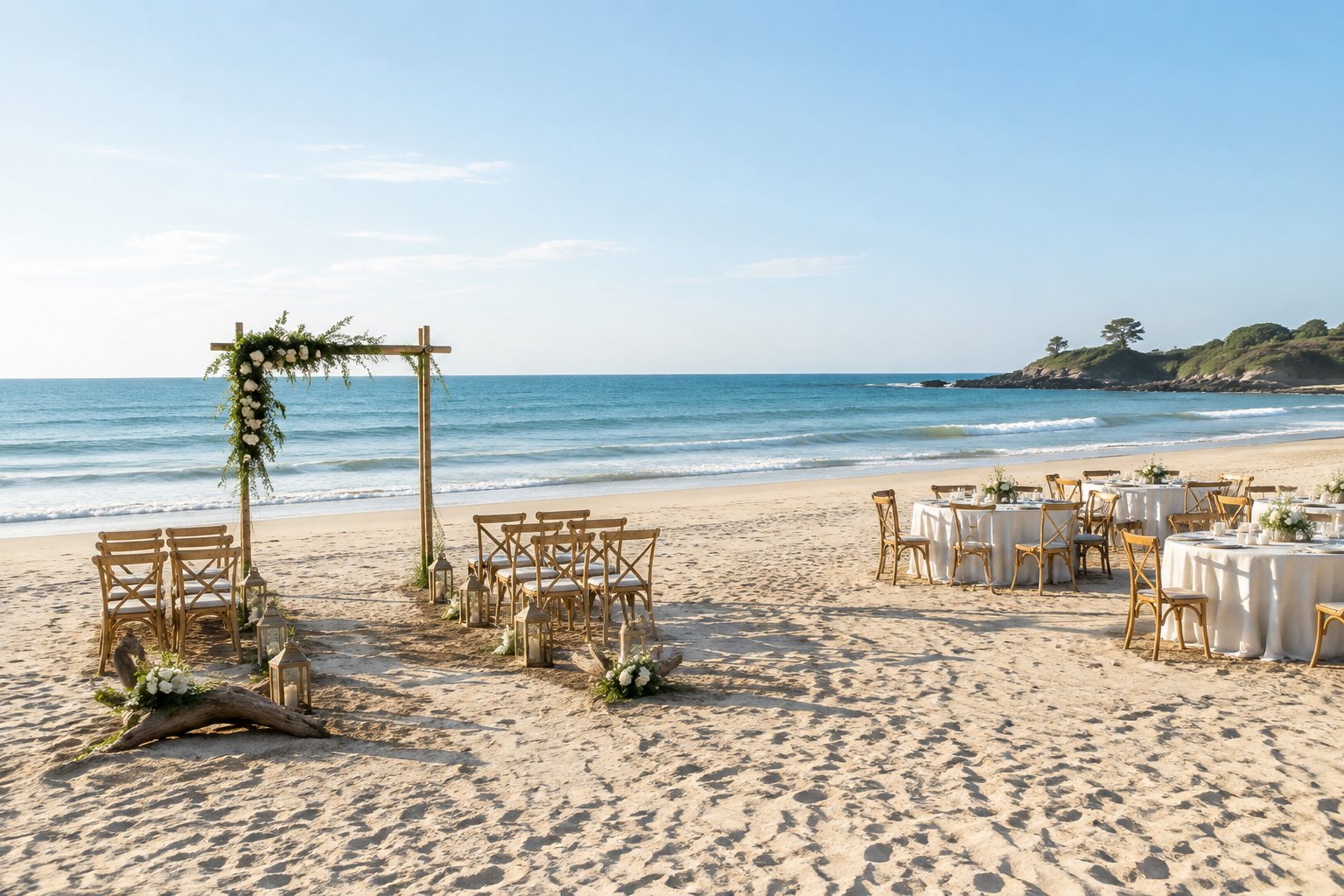
A public beach or city park gives you natural scenery with a modest reservation or permit fee. Contact the city, county, or parks department to confirm wedding rules, guest limits, parking, amplified music, alcohol, restrooms, and cleanup.
Ask whether the permit reserves a private area. Some permits allow your ceremony while the beach remains open to other visitors. A quieter access point, state park, or smaller coastal town may offer better value than a famous tourist beach.
Look for nearby picnic shelters, pavilions, or community rooms. These spaces give you a place for food and seating while keeping the ceremony close to the water.
Waterfront Restaurants, Clubs, and Community Spaces
A waterfront restaurant can work well when you want a ceremony near the shore and a meal in one location. The food and beverage minimum may replace a separate rental fee, while tables, chairs, restrooms, staff, and lighting are already part of the setting.
Yacht clubs, community halls, harbor buildings, and beach pavilions offer similar value. Ask whether the quoted price includes setup, cleanup, linens, furniture, and a rain plan. A lower rental fee loses its appeal when you must bring every table, chair, restroom, and service worker.
Vacation Rentals and Small Inns
A vacation rental or small inn suits a private celebration with close family and friends. You might hold the ceremony on the beach and host dinner on a permitted deck, patio, or lawn.
Confirm that the property allows weddings before paying a deposit. Check guest limits, event fees, noise rules, parking, insurance, and cleanup requirements. A property that sleeps 20 guests may allow overnight stays while limiting event attendance to a smaller number.
Small inns can bundle lodging with ceremony space and a meal. This setup also keeps guests near the event, which reduces transportation needs.
Off-Season Resort Packages
An off-season resort package can provide strong value when you want planning support, guest rooms, and a reception in one place. Ask about weekday dates, winter availability, shoulder-season rates, ceremony-only packages, and smaller guest minimums.
Review every inclusion. A package might include chairs and an officiant while charging separately for photography, food, bar service, taxes, service fees, and beach access. Compare the full package total with a public beach ceremony and local restaurant reception.
How Much Does a Beach Celebration Really Cost?
A beach celebration can range from a small ceremony with a short reception to a full destination event, so build your budget from every required cost. Site fees are only one part of the price.
Venue Rental, Permits, and Insurance
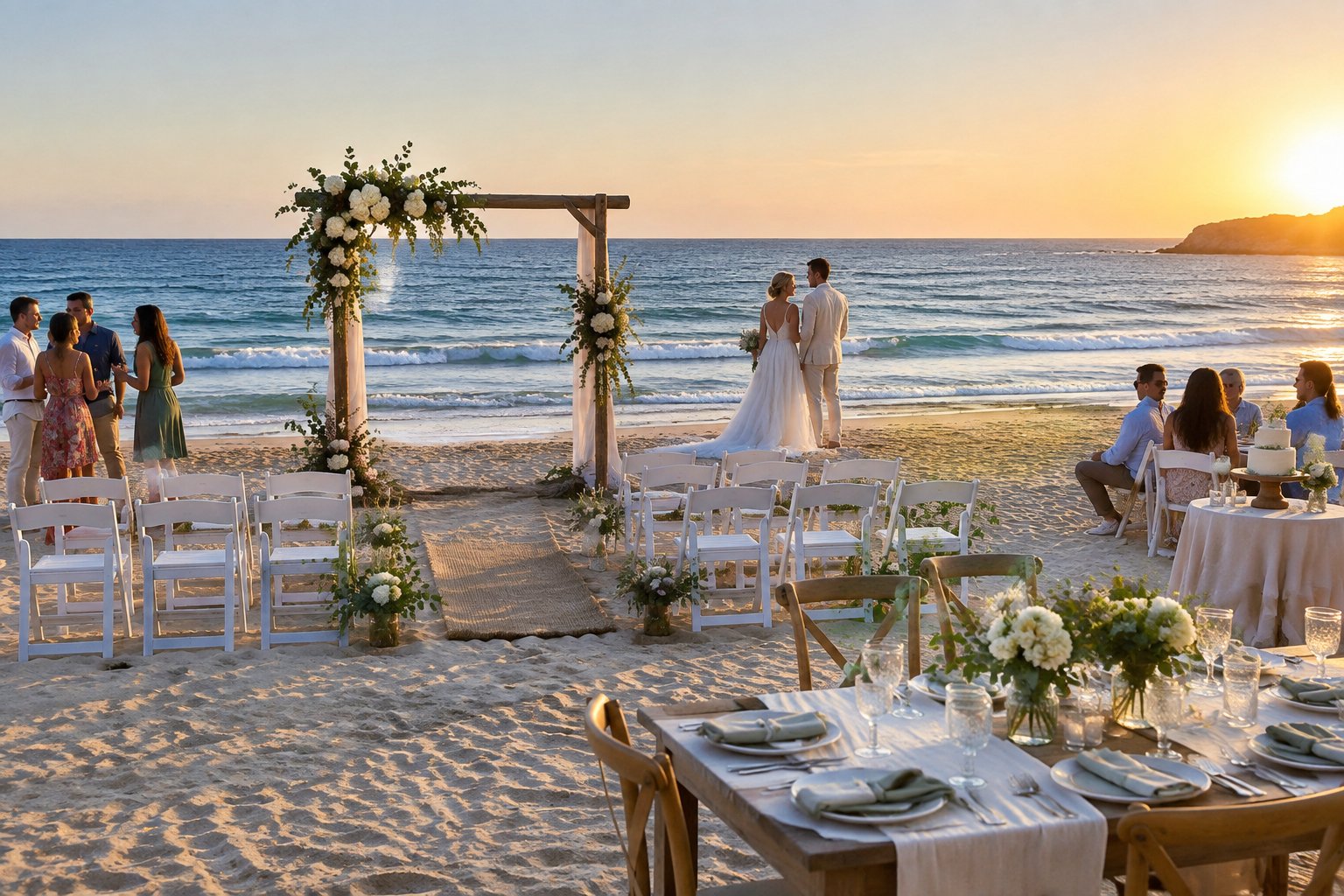
Your site cost may include a venue rental, beach permit, reservation fee, or minimum food and beverage spend. Public locations can charge by date, guest count, event size, or equipment use.
Ask who issues the permit and how far ahead you must apply. Confirm whether the permit covers the ceremony, reception, amplified sound, chairs, arches, alcohol, and professional vendors.
Some venues require event insurance or a certificate of insurance from vendors. Add application fees, insurance premiums, security deposits, and cleanup charges to your comparison sheet.
Food, Drinks, Rentals, and Required Vendors
Catering becomes one of the largest costs once guests join the ceremony. Request a per-person quote that includes appetizers, dinner, nonalcoholic drinks, staffing, rentals, delivery, and cleanup.
Ask whether you can use a local caterer, food truck, restaurant, or drop-off meal. Some venues require in-house catering or approved vendors. A flexible venue gives you more ways to match the menu to your budget.
List every rental separately:
- Chairs and ceremony seating
- Tables and dinner seating
- Linens, plates, glasses, and flatware
- Lighting, sound equipment, and power
- Restrooms, heaters, fans, or tents
- Delivery, setup, and breakdown
Photography, officiant services, music, floral design, and transportation also belong in the first estimate. Reusing ceremony flowers at the reception helps stretch the décor budget.
Taxes, Service Charges, and Travel Costs
Taxes and service charges can add a large amount to a venue or catering quote. Ask for a total estimate that includes gratuity, administrative fees, overtime, delivery, and cleanup.
Travel affects your budget in two ways. You pay to reach the destination, while guests face lodging, transportation, and meal costs. A local beach may produce more savings than a distant location with a lower venue fee.
If guests are traveling, compare nearby hotel rates, parking costs, shuttle needs, and room-block terms. Include your own lodging and vendor travel fees as well.
Choose a Venue That Fits Your Guest Count
The guest count should guide your venue search from the first day because it controls permits, seating, food, parking, restrooms, and the size of your backup plan. A smaller event opens more low-cost coastal options.
Elopements and Micro Weddings
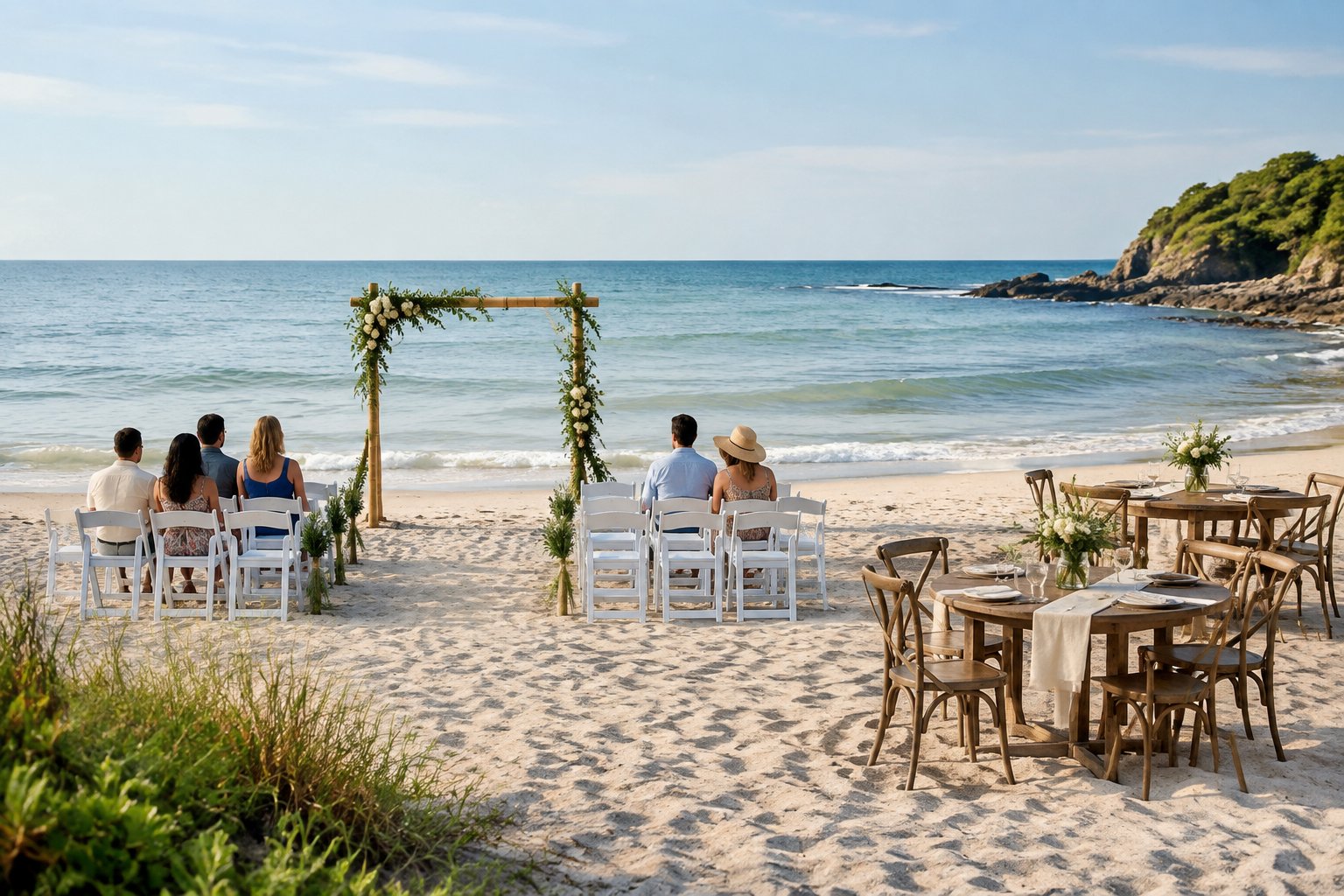
An elopement or micro wedding gives you the widest choice of affordable locations. A permit, officiant, photographer, bouquet, and short dinner may cover the core experience.
Search for small inns, park overlooks, beach picnic services, and ceremony-only packages. Keep the setup light so you can avoid large rental deliveries and extra labor.
Check the local definition of a wedding event. Even a ceremony with a few guests may require a permit, reservation, or insurance.
Small Gatherings of 25 to 75 Guests
A guest list of 25 to 75 people works well with a public beach ceremony and a restaurant, pavilion, community space, or small inn reception. You can create a comfortable experience without paying for a large resort ballroom.
Measure the seating area, dining layout, dance space, buffet line, restrooms, and paths between each part of the event. Ask how the venue handles beach access for guests who use wheelchairs, walkers, or other mobility aids.
Use the tips for choosing the perfect venue for a small wedding to compare capacity with the experience you want.
Larger Receptions Without Resort-Level Spending
A larger reception needs a location with reliable parking, restrooms, power, food service, weather protection, and enough setup time. A city park pavilion, waterfront community center, or restaurant buyout can provide these basics at a lower cost than a resort.
Consider holding the ceremony on the sand and moving dinner to a covered space nearby. This approach preserves the coastal setting while giving guests stable seating, restrooms, and protection from wind.
For a large guest list, compare affordable wedding venues for 150 guests and focus on total event cost per person.
Compare Ceremony-on-the-Sand and Waterfront Alternatives
A ceremony on the sand offers a low site cost, while a waterfront venue may save money through built-in seating, catering, restrooms, and weather protection. Compare the complete setup for both options.
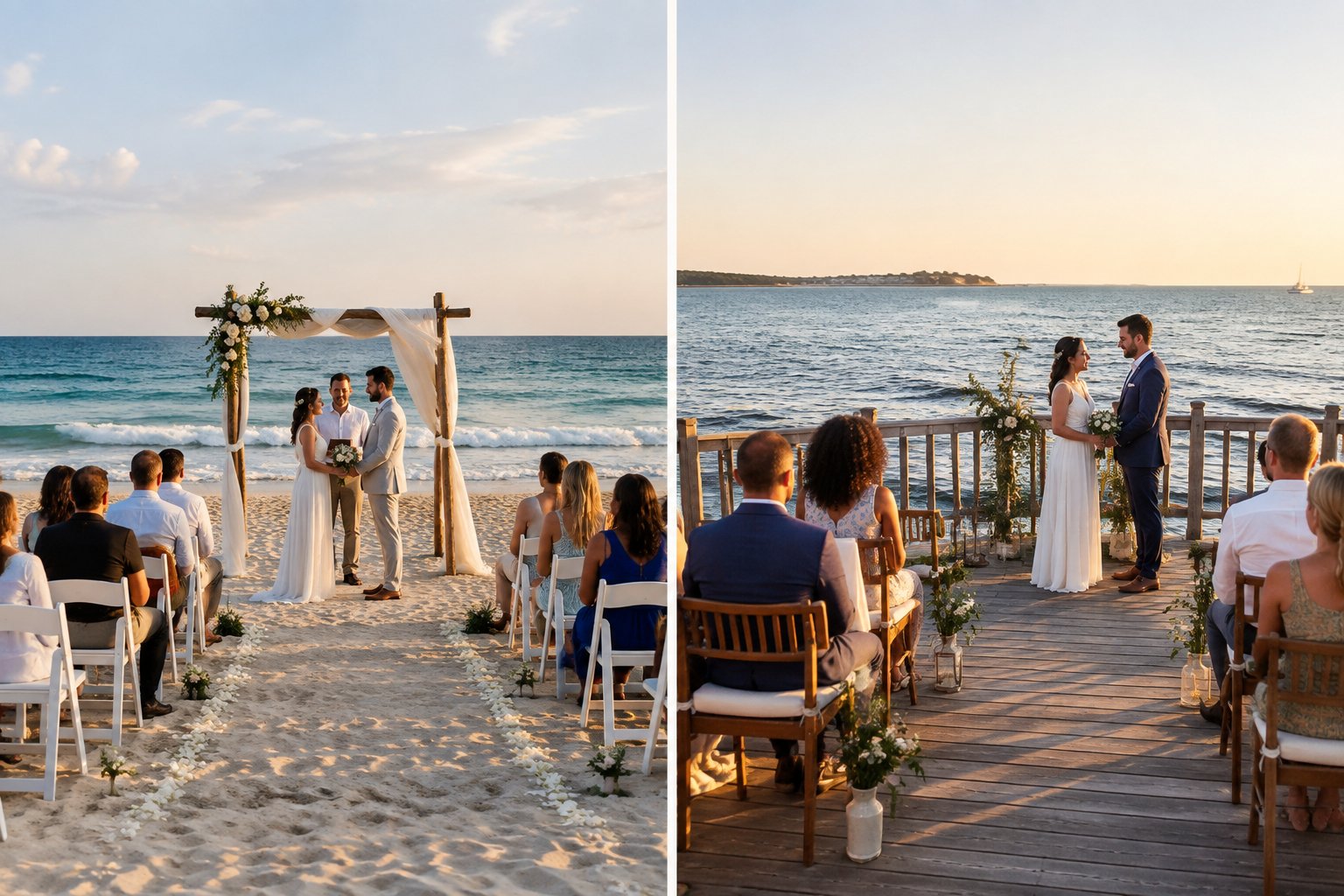
When a Public Beach Is the Better Deal
Choose a public beach when you have a small guest count, a short ceremony, flexible décor needs, and a nearby reception plan. The beach supplies the view, so you can keep the ceremony design light.
Confirm the rules before booking. Ask about permits, public access, tides, parking, music, alcohol, chairs, arches, pets, photography, and cleanup. Check the beach at your planned ceremony time to assess shade, wind, noise, and foot traffic.
A public beach works best when your vendors can set up quickly and guests have easy access to restrooms and transportation.
Ocean-View Venues With Built-In Amenities
An ocean-view restaurant, inn, club, or hotel gives you a controlled event area with services close at hand. Tables, chairs, kitchens, restrooms, lighting, staff, and indoor rooms can reduce the number of outside rentals.
Read the package details carefully. Ask about food and beverage minimums, service charges, vendor restrictions, ceremony fees, room rental, and event time limits.
Browse all inclusive wedding venues near the beach when you want one team to coordinate multiple parts of the day.
How a Reception Near the Shore Can Cut Costs
A reception near the shore can reduce transportation, delivery, and rental labor. Guests move between the ceremony and meal with less coordination, and your photographer can use the same coastal setting for portraits.
You can also hold a short beach ceremony followed by a casual meal at a nearby restaurant. A food truck, buffet, brunch, or family-style dinner can fit a relaxed coastal event.
Ask whether the reception site provides a covered area, backup room, restrooms, power, and a cleanup crew. These details protect your budget when the weather changes.
Cut Costs Without Sacrificing the Guest Experience
You save the most by changing the date, scale, and service format while protecting guest comfort, clear communication, food quality, and weather protection. Small design choices can support the coastal setting without making the event feel bare.
Pick a Weekday or Shoulder-Season Date
Weekday and shoulder-season dates can bring lower venue, lodging, and vendor rates. Ask about Sunday through Thursday pricing, winter dates, spring and fall availability, and minimum-spend changes.
Check local weather patterns before choosing a date. A lower rate has limited value if strong winds, storms, extreme heat, or cold make the beach uncomfortable.
Send travel details early when guests need to take time off work. A date that saves you money can create extra costs for family members who travel.
Simplify Décor, Seating, and Floral Plans
Let the water, sand, sky, and shoreline provide the main design. Use a small floral arrangement, a simple aisle, lightweight signage, and décor that can handle wind.
Rent only the furniture guests need. A ceremony arch, chairs for older guests, a signing table, and a few reception tables may be enough for a small event.
Choose hardy local flowers and reuse arrangements during the meal. Skip loose paper, fragile glass, and décor that could blow into the water. Review the location’s rules for stakes, candles, confetti, shells, and cleanup.
More ideas for a polished low-cost setup appear in beach wedding ideas on a budget.
Use Local Vendors and Flexible Catering
Local vendors know the access points, permit process, tides, weather patterns, and delivery limits. Their shorter travel distance can reduce mileage, lodging, and late-arrival risk.
Compare a restaurant meal, buffet, food truck, brunch, picnic boxes, and family-style service. Match the menu to the venue’s kitchen, power, refrigeration, staffing, and cleanup rules.
Ask each vendor for an itemized quote. Confirm arrival time, setup labor, service length, delivery, gratuity, tax, and breakdown charges.
Plan a Weather Backup Before Booking
A weather plan should exist before you pay a deposit. Choose a venue with a covered pavilion, indoor room, nearby restaurant, tent-ready area, or rescheduling policy.
Ask how much notice the venue needs to move indoors and who makes the decision. Confirm whether the backup space holds your full guest count and whether you pay extra for the change.
Give guests clear instructions about footwear, wind, sun, temperature, and the backup location. Comfort items such as water, shade, blankets, fans, and a shoe station can cost less than fixing a poor guest experience later.
Questions to Ask Before You Sign a Contract
Ask for a complete written cost, vendor policy, and weather plan before signing. The contract should match the event you discussed, including timing, setup, cleanup, access, and backup space.
What Is Included in the Quoted Price?
Ask whether the quote includes the site fee, permit, chairs, tables, linens, lighting, setup, breakdown, cleanup, staffing, taxes, service charges, gratuity, and overtime.
Request a sample invoice based on your guest count. Confirm the deposit, payment schedule, refund terms, cancellation policy, date-change rules, and damage deposit.
Ask when the venue can provide a final total. Keep every promise about inclusions in writing and attach approved estimates to the contract.
Which Vendors and Rentals Are Required?
Ask whether you can choose your caterer, bartender, florist, photographer, DJ, officiant, rental company, and planner. Confirm whether preferred vendors are optional or required.
Ask about outside-vendor fees, insurance certificates, alcohol rules, corkage, delivery windows, power access, and cleanup responsibilities. Check whether the venue supplies tables and chairs or requires you to rent them separately.
If you want a food truck or casual meal, receive written approval before booking the vendor.
What Happens if Weather Changes the Plan?
Ask what conditions trigger a move indoors, postponement, cancellation, or refund. Confirm who makes the call and how much notice you receive.
Review the backup room’s capacity, layout, décor limits, lighting, sound, accessibility, and cost. Ask whether vendors can move their equipment and whether the original timeline stays in place.
Put the weather procedure in the contract, including rescheduling dates and any added fees. A clear plan lets you choose an affordable coastal venue without leaving guests exposed to an avoidable weather problem.