
Cheap Wedding Venues by the Beach: How to Save
A beach wedding gives you a memorable setting while keeping décor costs low. For the lowest total, start with a public beach, state park, or small waterfront venue, then choose an off-season weekday and compare every permit, rental, food, and travel charge. This approach suits couples with smaller guest lists who want ocean views without a large resort bill.
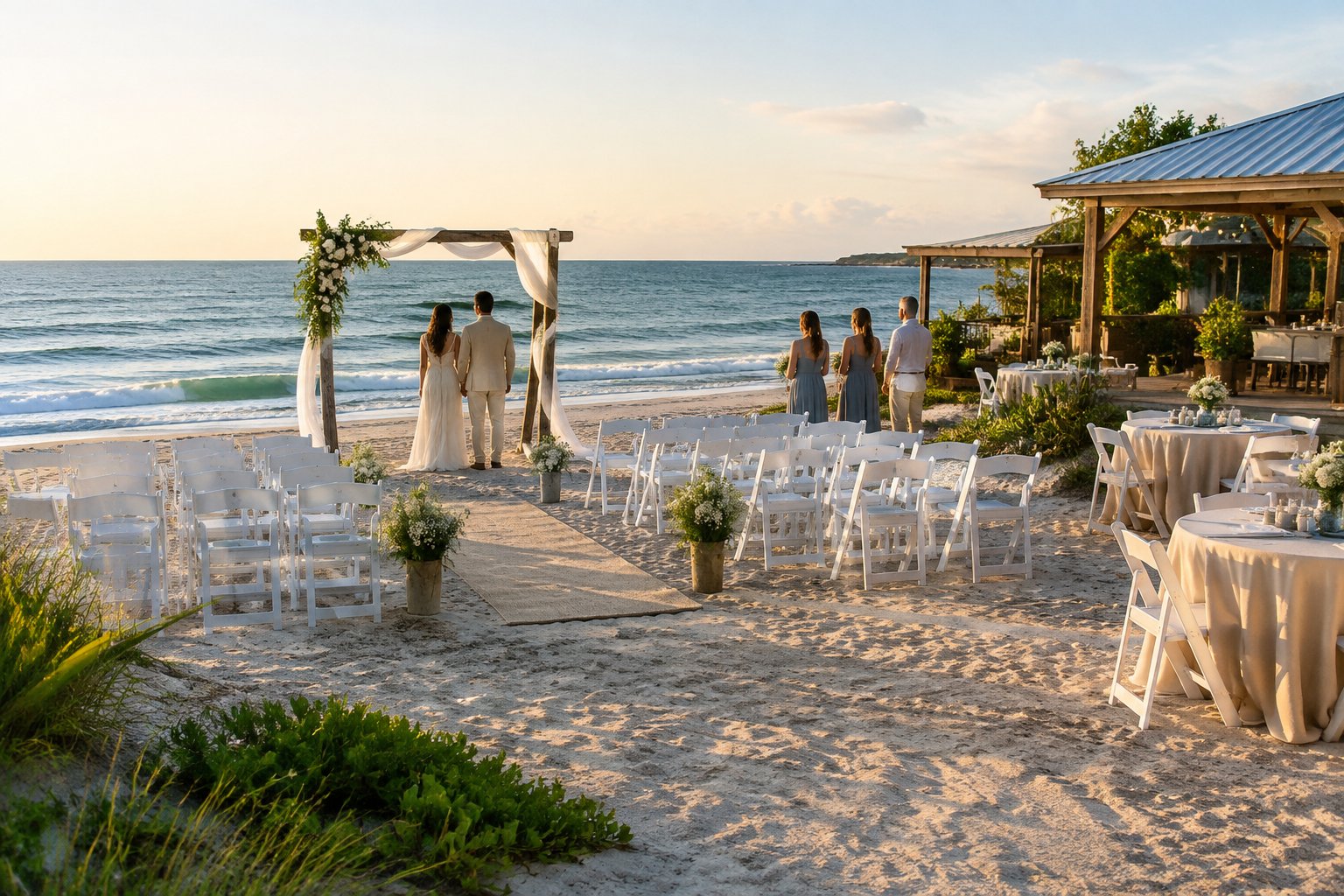
Your final price depends on more than the site fee. A low-cost location can add permit fees, insurance, chairs, restrooms, transportation, catering rules, and weather expenses. Ask for an itemized quote based on your guest count and chosen date before you reserve anything.
You can begin by comparing affordable wedding venues near the beach and requesting complete pricing from each one. A short guest list, flexible date, and simple reception plan can help you secure a beautiful coastal celebration within your wedding budget.
How to Find a Beach Setting That Fits Your Budget
Public beaches and parks offer the lowest starting costs, while private beaches, restaurants, and resorts can bundle useful services into one price. Compare the full event setup, including guest travel, before choosing among affordable beach wedding venues.
Compare Public Beaches, Private Beaches, and Resorts
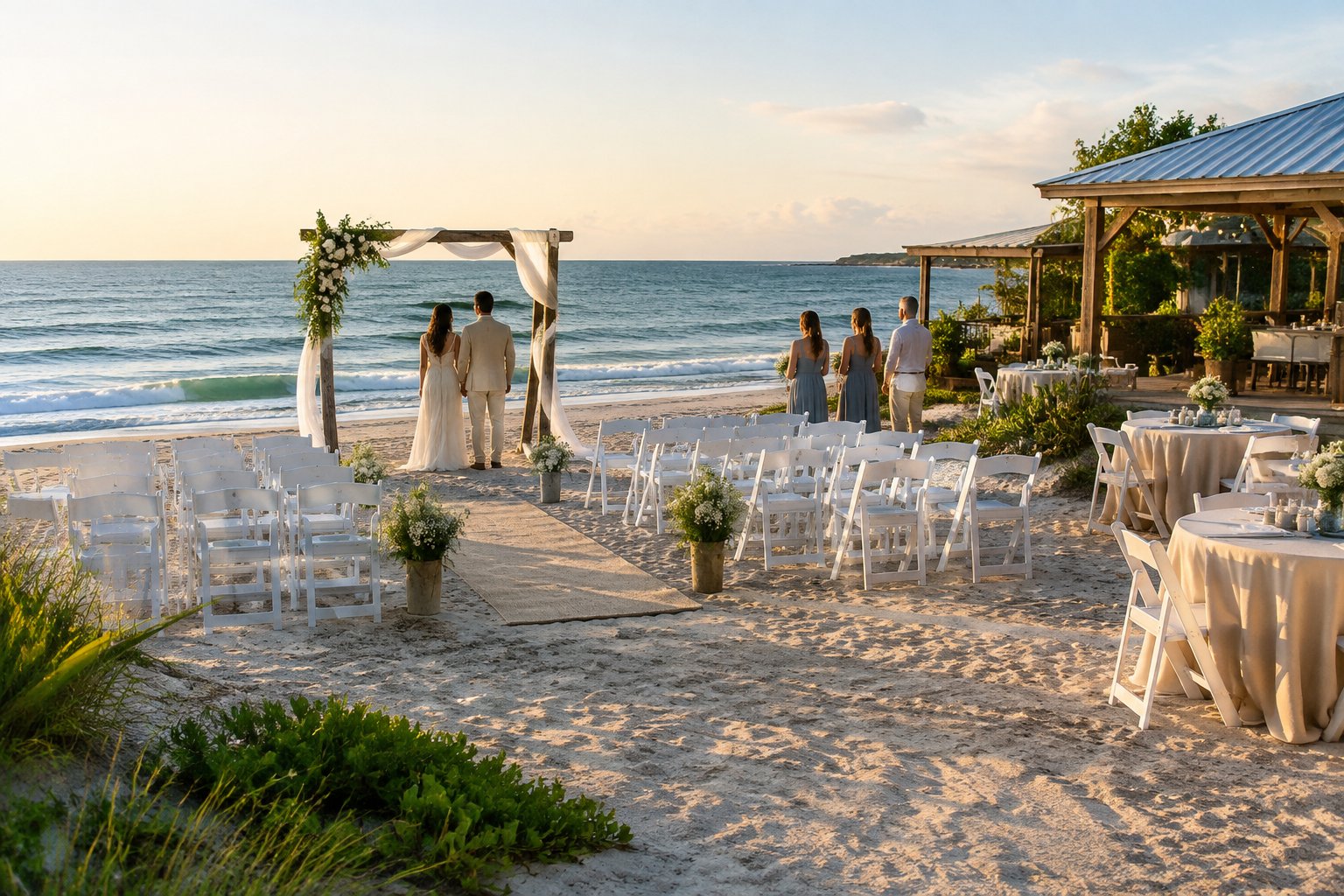
A public beach or city park may charge a reservation or permit fee and give you a beautiful wedding ceremony site. Ask the local parks department about guest limits, parking, restrooms, alcohol, music, seating, arches, pets, and cleanup.
Confirm whether your permit reserves an exclusive area or allows other visitors to use the beach. A private beach gives you more control over access, timing, and setup. Review event fees, insurance, noise rules, parking, and cleanup before paying a deposit.
A beach resort can simplify planning through ceremony and reception packages, guest rooms, staff, and indoor spaces. Compare the complete quote with a public beach ceremony followed by dinner at a nearby restaurant.
You can also consider a small inn, waterfront community hall, harbor building, or picnic pavilion. These sites often include tables, restrooms, lighting, or food service, which reduces outside rental costs. Browse affordable venues for weddings while keeping your guest count and reception needs in view.
Choose Off-Season and Weekday Dates
Ask about shoulder-season rates, winter dates, weekday bookings, and ceremony-only packages. Popular summer Saturdays bring higher venue, lodging, and vendor prices in many coastal towns.
A weekday date can also reduce hotel costs for guests who have flexible schedules. Before selecting a date, check typical wind, rain, heat, tide, and sunset conditions for that time of year. A lower rental rate loses value if you need extra tents, heaters, transportation, or indoor space.
Keep the Guest List and Travel Costs in Check
A smaller guest list opens more affordable beach wedding options, including public beaches, small inns, restaurants, and waterfront pavilions. Fewer guests also reduce food, seating, restroom, parking, and shuttle costs.
For a destination wedding, add guest lodging, flights, rental cars, parking, and meals to your comparison. A nearby beach with a higher permit fee can cost less than a distant location with cheaper site access. Choose a reception site close to the ceremony so guests and vendors make one short trip.
What Will You Actually Pay Beyond the Venue Fee?
Your venue rental costs are only one part of the final bill. Build your estimate with permits, insurance, food, drinks, rentals, taxes, service charges, staffing, transportation, and a weather plan.
Understand Permits, Insurance, and Venue Rental Costs
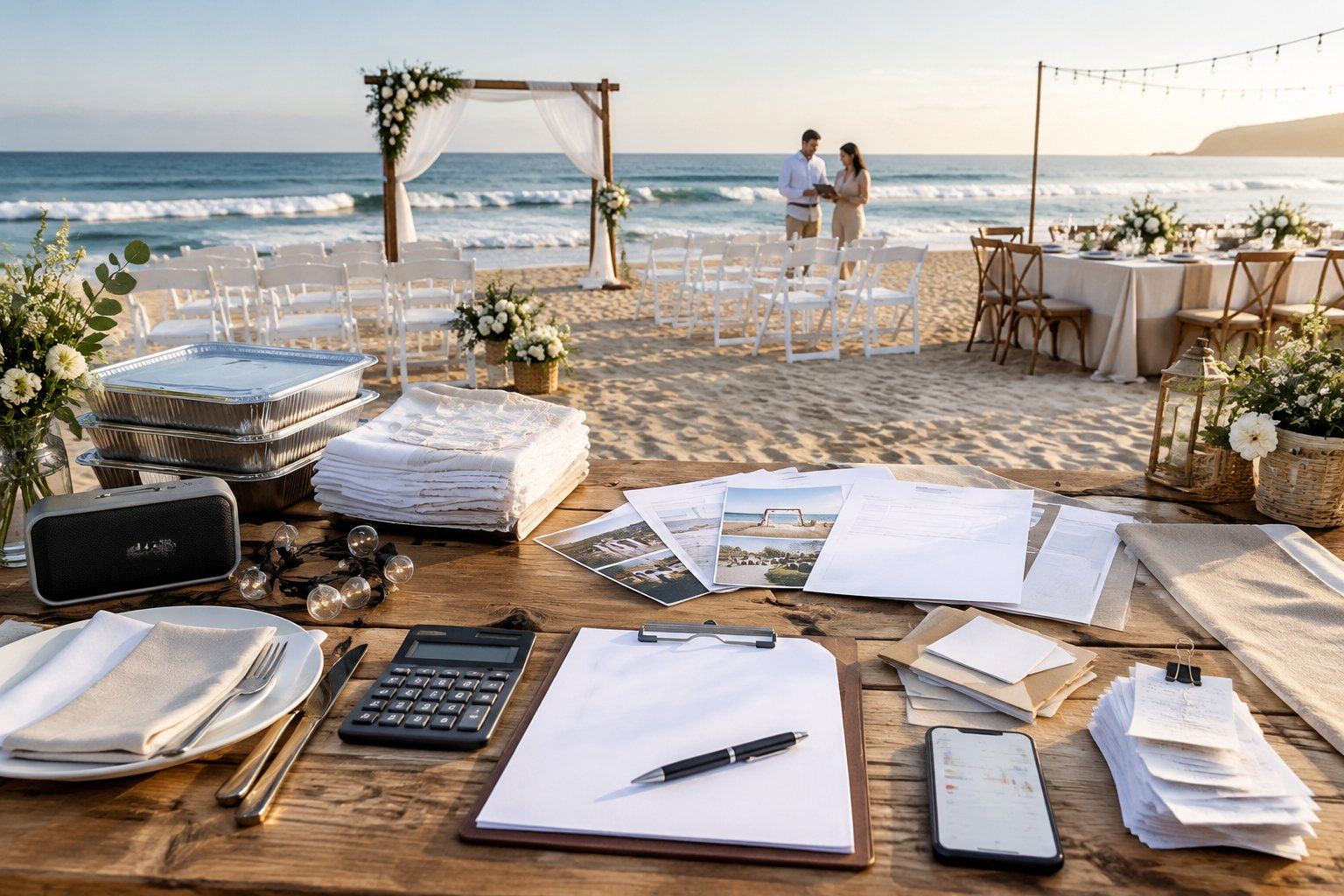
Ask who issues the beach permit and how far in advance you must apply. Confirm whether it covers the wedding ceremony, reception, amplified music, chairs, arches, alcohol, photography, and professional vendors.
Your quote might include a site fee, reservation charge, food and beverage minimum, security deposit, insurance requirement, or cleanup fee. Ask whether the venue requires a certificate of insurance from you or your vendors.
Request the price in writing for your exact date and guest count. A public beach with a low reservation fee can require separate rentals for seating, lighting, power, restrooms, delivery, setup, and breakdown.
Watch for Food Minimums, Service Charges, and Rentals
Food and beverage minimums can raise your total quickly. Ask for a per-person estimate that includes dinner, appetizers, nonalcoholic drinks, bar service, staffing, delivery, rentals, tax, and cleanup.
Check every rental line for:
- Ceremony chairs
- Dinner tables and seating
- Linens, plates, glasses, and flatware
- Lighting, sound equipment, and power
- Restrooms, tents, fans, or heaters
- Delivery, setup, and breakdown
Ask about overtime, administrative charges, gratuity, corkage, security, and vendor travel. Include photography, flowers, music, transportation, and an officiant in your first estimate.
Compare Packages With À La Carte Vendors
Wedding packages can save planning time when they include a venue, chairs, officiant, coordinator, basic décor, food, or photography. Ask for a complete list of inclusions and the price of each upgrade.
A free wedding package might include a basic ceremony setup while charging separately for the beach location, reception, food, bar, taxes, service fees, photography, or guest count increases. Compare the package with local vendors who let you choose a simpler menu or reuse ceremony flowers at dinner.
A wedding coordinator can manage setup, vendors, timing, and cleanup. A wedding planner may also help with venue research, contracts, guest travel, and design. Match the service to your event size and the amount of planning you want to handle.
Affordable Coastal Venue Ideas by Location
You can find budget-friendly beach wedding venues across different U.S. coastlines by looking beyond famous resort areas. Smaller towns, public spaces, waterfront restaurants, and hotels with built-in amenities create useful options at several price levels.

Florida Keys and South Beach Options
Key Largo and other Florida Keys communities offer beaches, parks, small inns, restaurants, and resorts suited to intimate celebrations. Compare permit rules, seasonal rates, parking, guest lodging, and hurricane-season weather before choosing a date.
South Beach places you close to the Atlantic Ocean, restaurants, hotels, and nightlife. The area can carry higher demand, so ask about weekday ceremony times, smaller packages, nearby public spaces, and reception minimums. A short ceremony at a permitted beach followed by dinner at a local restaurant can control the site and décor budget.
Atlantic Coast and Long Island Sound Celebrations
Atlantic Coast towns provide public beaches, community halls, waterfront restaurants, and small hotels. Look at less crowded beaches outside major tourist centers and ask about off-season permits, parking, restrooms, and sound limits.
Along Long Island Sound, you can find harbor spaces, parks, inns, and restaurants with calmer waterfront views. A reception in a covered pavilion or restaurant helps reduce the need for large rentals and gives guests a stable place to eat.
Pacific Northwest Beach Towns
Pacific City, Oregon, and nearby coastal communities offer wide beaches, small inns, restaurants, parks, and vacation properties. Check local rules for ceremonies, alcohol, fires, amplified music, vehicles, and cleanup.
Pacific Northwest weather can change quickly. Price a covered reception room, tent, heaters, or indoor backup before you book. A beach ceremony followed by dinner at a nearby inn can preserve the view while giving guests warmth, restrooms, seating, and food service.
Hotel and Resort Venues With Built-In Amenities
Hotels and resorts can reduce outside logistics by providing rooms, tables, chairs, kitchens, staff, restrooms, lighting, and a weather backup. Ask whether the ceremony site, reception room, coordinator, officiant, food, bar, and basic décor are included.
A Grand Hotel or similar waterfront property might offer a wedding package with a food and beverage minimum. Compare its full price with a public beach ceremony and restaurant reception. You can also review all inclusive wedding venues near the beach when you want one team to handle several parts of the day.
Save on the Ceremony and Reception Without Losing the View
Use the shoreline as your main décor, choose compact rentals, and serve a relaxed menu that fits the setting. A beach wedding feels polished when the layout stays comfortable and the practical details are handled.
Let the Sand, Sky, and Water Replace Expensive Décor
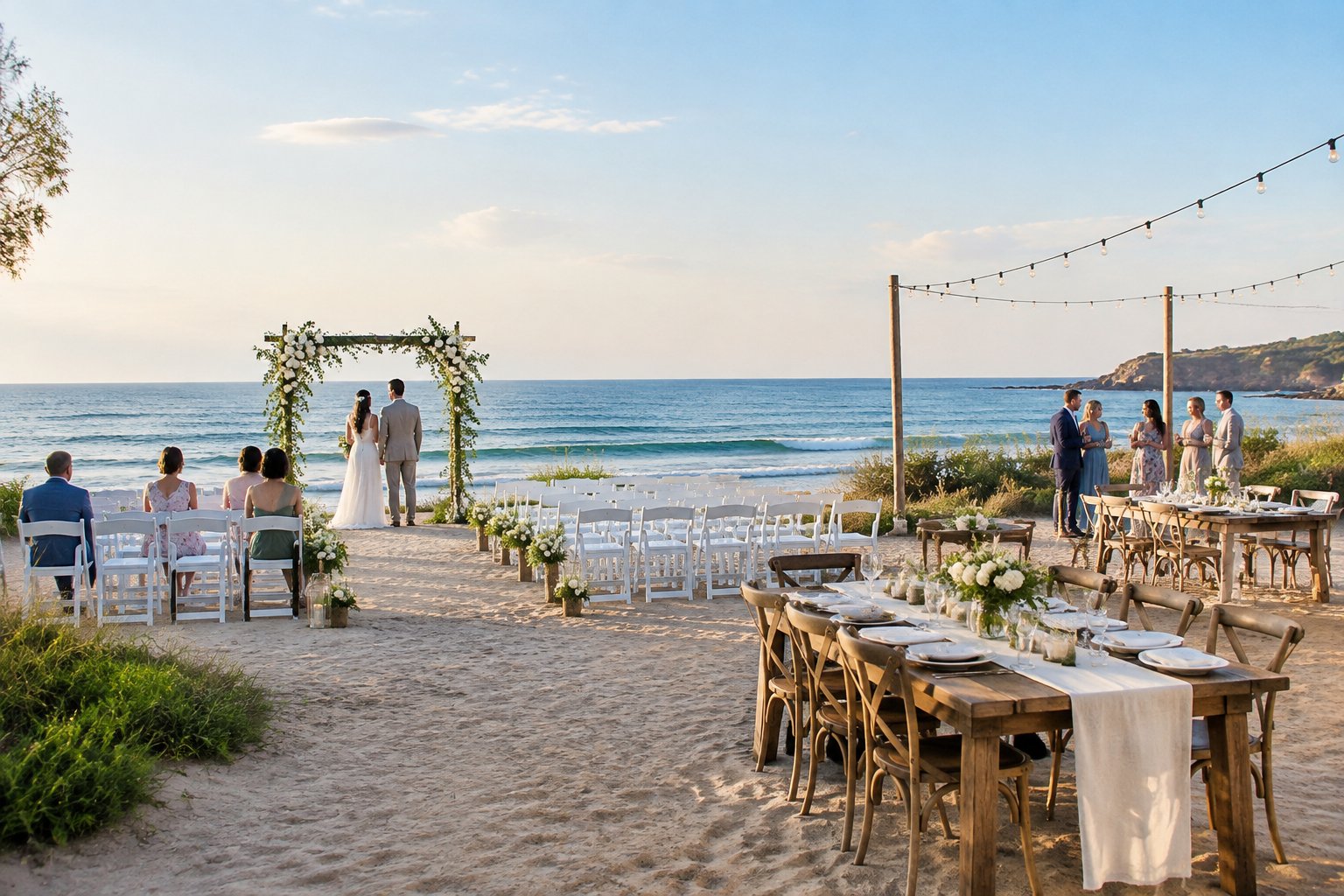
Place the ceremony where guests can see the water and keep the structure light. A simple arch, small floral arrangement, and natural aisle markers can frame the view without filling the beach with rentals.
Choose décor that handles wind and sand. Weighted vessels, low arrangements, and secured signage work better than tall pieces with loose fabric. Reuse the ceremony flowers at the reception and select local blooms that suit the season.
Use String Lights and Simple Coastal Details
String lights add warmth to a covered patio, pavilion, or restaurant reception. Ask the venue about power, attachment points, lighting restrictions, setup time, and removal fees before ordering them.
Use a small number of coastal details, such as woven runners, driftwood accents, shells, or blue glass. Keep candles protected and confirm fire rules with the venue or local authority. Simple place cards, shared centerpieces, and printed menus can complete the tables without a large décor order.
For more low-cost design ideas, explore beach wedding ideas on a budget.
Consider Food Trucks and Casual Reception Menus
Food trucks, buffet service, brunch, pizza, barbecue, and family-style meals can fit a relaxed outdoor wedding. Ask about permits, power, water, service time, guest flow, weather protection, staffing, and cleanup.
A casual menu still needs enough seating, shade, trash service, plates, utensils, napkins, and drinks. Confirm whether the venue allows outside caterers or requires an approved vendor. A nearby restaurant can also provide a simple meal with existing tables, restrooms, staff, and kitchen equipment.
Build a Smart Weather Backup Plan
Choose a reception site with a covered area, indoor room, tent location, or nearby restaurant. Put the backup plan in writing, including the decision time, added cost, setup period, and guest communication process.
Plan for wind, rain, heat, cold, tides, and strong sun. Provide clear directions to the backup area and allow time to move chairs, décor, food, and sound equipment. Ask who makes the weather call and who pays for extra labor or rentals.
Questions to Ask Before You Book
Ask for written answers about access, permits, inclusions, vendor rules, staffing, setup, cleanup, and weather changes before signing. These details show whether a low advertised price matches your actual wedding needs.
Is the Beach Access Exclusive and Permit-Approved?
Ask whether your private beach area is reserved for your group or remains open to the public. Confirm the permit holder, application deadline, guest limit, allowed equipment, music rules, alcohol policy, parking, restrooms, pets, photography, and cleanup requirements.
Ask about tides, beach access, mobility needs, and the distance between parking and the ceremony site. Request a copy of the permit terms and confirm that the venue will handle any required applications.
What Is Included in the Package Price?
Request an itemized list covering the ceremony site, reception space, chairs, tables, linens, lighting, sound, food, bar service, officiant, décor, coordinator, taxes, service charges, gratuity, insurance, and cleanup.
Ask whether the package has a food or beverage minimum, guest-count limits, overtime rates, vendor fees, delivery charges, and upgrade prices. Compare the complete package with an à la carte plan before choosing.
Who Handles Setup, Cleanup, and Weather Changes?
Confirm who places chairs, installs décor, receives deliveries, manages vendors, removes trash, and clears the site. Ask whether a wedding coordinator is included and whether that person will be present throughout the event.
Get the weather plan in writing, including the backup location, tent or room fee, decision deadline, relocation labor, and guest notification process. Ask your wedding planner or venue coordinator to add each agreed service to the contract before you pay a deposit.