
Do Groomsmen Act as Ushers? Clarifying Their Role in Weddings
If you’re planning a wedding, you may wonder about the roles of groomsmen and ushers. Groomsmen can act as ushers, but it’s not always necessary. Typically, groomsmen support the groom by standing at the altar, while ushers focus on helping guests find their seats during the ceremony.
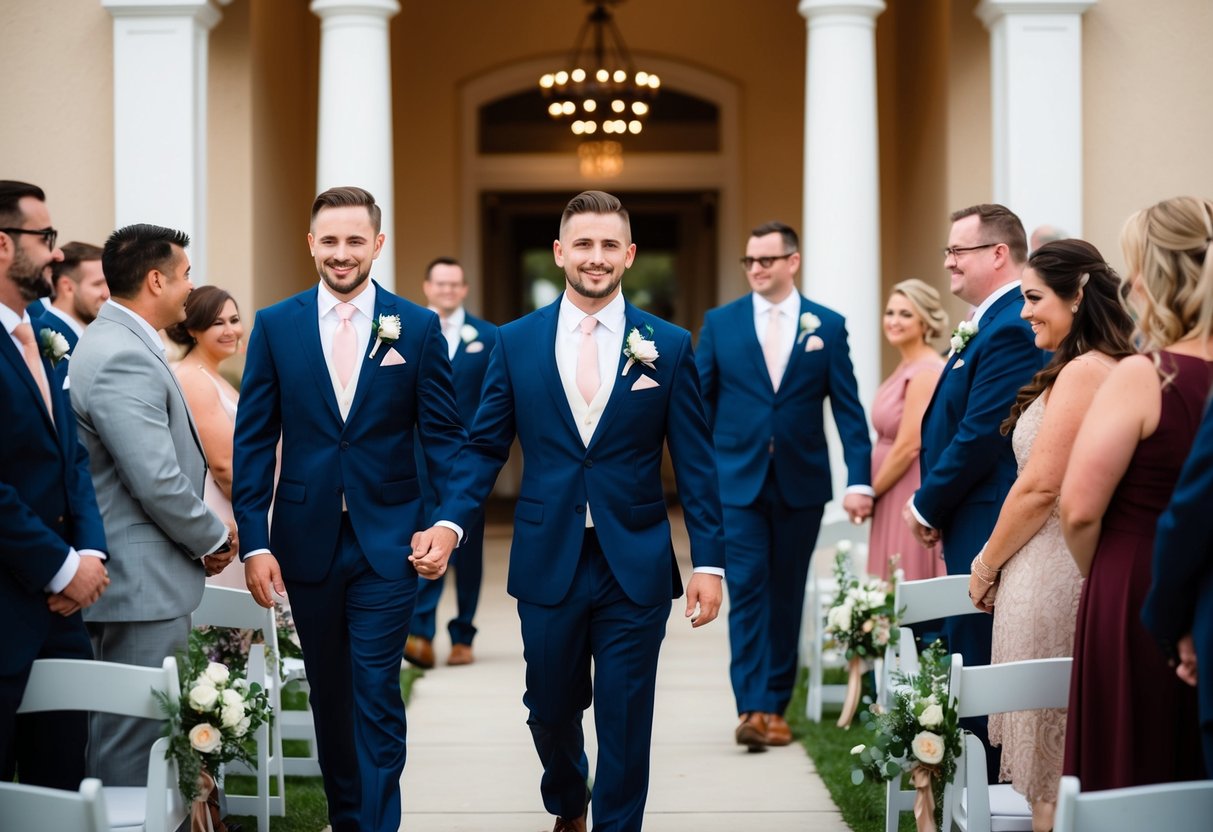
Understanding these roles can make your wedding planning smoother. You can decide if you want your groomsmen to take on usher duties or if you would prefer to have separate ushers. Either way, both groups play important roles in making your day special and enjoyable for you and your guests.
Roles and Responsibilities of Groomsmen and Ushers
Groomsmen and ushers each have important roles on the wedding day. Understanding their responsibilities can help ensure everything goes smoothly.
Groomsmen are typically very involved in the wedding. Your duties include:
- Standing by the groom during the ceremony.
- Helping with wedding planning activities like the bachelor party.
- Escorting bridesmaids down the aisle.
Ushers have a slightly different role. Their main responsibilities are:
- Greeting guests as they arrive.
- Distributing programs for the ceremony.
- Seating guests in the proper sections.
During the ceremony, ushers also assist in escorting guests to their seats. This helps keep the event organized and on schedule.
If you’re a groomsman, you will support the groom and the bride. You will stand next to the groom and be part of the pictures. Ushers, on the other hand, often enjoy their tasks from the back, making sure everything runs smoothly for guests.
While there can be some overlap, it’s essential to know that groomsmen take on more ceremonial roles, while ushers focus on welcoming and seating guests. This harmony between the two roles is key to a successful wedding day.
Pre-Wedding Events and Expectations
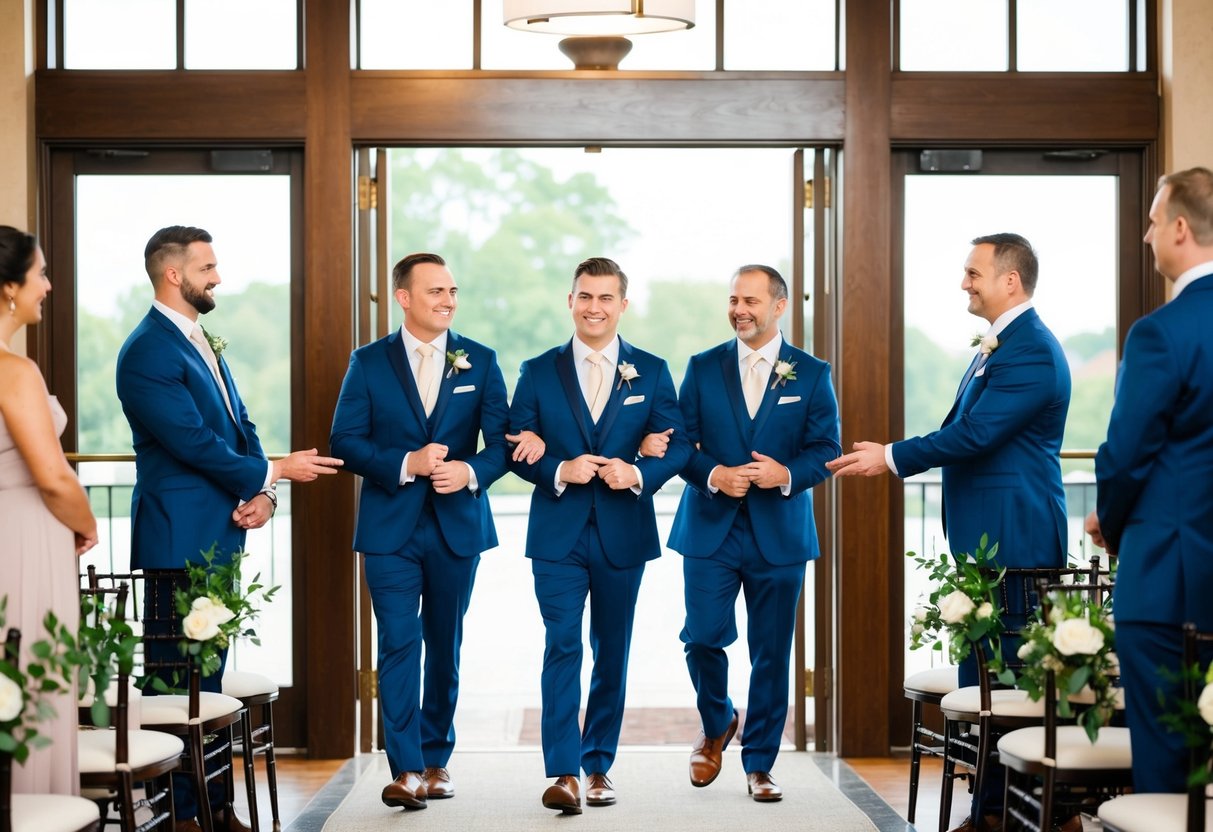
As a groomsman, your role in pre-wedding events is important. These gatherings help set the tone for the wedding and strengthen bonds within the bridal party. You will participate in various activities that not only show your support but also allow you to connect with the couple and other members of the wedding party.
The Bachelor Party and Rehearsal Dinner
One key event is the bachelor party, also known as the stag do. This is a time for the groom and his closest friends to celebrate before the big day. You’re expected to help plan the party, which can include activities like a weekend getaway, games, or simply a night out. It’s a chance for you to bond and show your support for the groom.
The rehearsal dinner is another vital event. This occurs the night before the wedding and involves the bridal party, family, and close friends. As a groomsman, your presence is important, as it helps everyone get to know each other before the big day. You might be asked to mingle and share stories, creating a warm atmosphere for everyone.
Pre-Wedding Festivities
Apart from the bachelor party and rehearsal, there are various pre-wedding festivities you might be involved in. These can include engagement parties, bridal showers, or other gatherings where you connect with the bride’s group, including bridesmaids.
Your willingness to engage in these activities reflects your commitment to the couple. Participating in these events strengthens relationships within the bridal party. Plus, it makes the wedding day more enjoyable for everyone! Don’t forget that your role as a groomsman goes beyond the wedding day, helping to create lasting memories during pre-wedding festivities.
Attire and Presentation on the Wedding Day
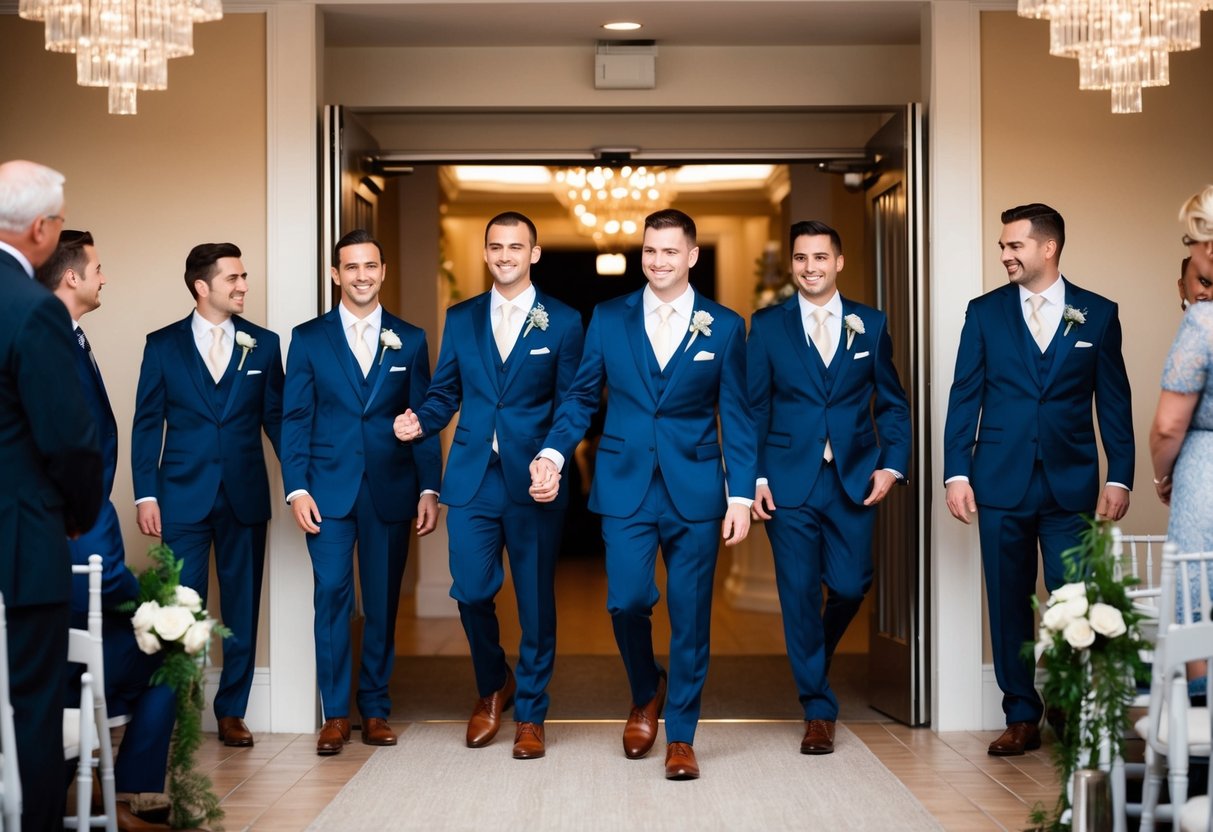
Your wedding day is a special occasion, and how the groomsmen and ushers dress plays an important role in the overall presentation. The right attire not only enhances the wedding theme but also helps distinguish the roles of the wedding party.
Dressing the Groomsmen and Ushers
Both groomsmen and ushers typically wear formal attire, often matching the groom. This usually includes suits or tuxedos, shirts, ties, and accessories that align with the wedding’s color scheme. You can choose classic black suits or opt for colors that fit your theme.
While groomsmen often wear identical outfits, ushers might have slight differences, like a different tie color or boutonniere. This helps to visually distinguish their roles. Ensuring everyone looks sharp is key.
Make sure to communicate with your groomsmen and ushers about their attire early. Provide details on where to buy or rent outfits and how to accessorize. This makes the day run smoothly and avoids any last-minute confusion.
The Significance of the Boutonniere
The boutonniere is a small but meaningful part of the groomsmen’s and ushers’ attire. This floral accessory typically matches the bridal bouquet in style and color, creating a cohesive look.
Traditionally, the groom wears a unique boutonniere, while groomsmen and ushers wear similar but distinctive ones. This adds a personal touch to each outfit. You can choose flowers that reflect your wedding theme or have special meaning.
Besides enhancing the look, the boutonniere can also symbolize the bond among your wedding party. It serves as a reminder of the special day and the friendships that surround you. Don’t forget to ensure they all know how to properly pin it on so it’s visible during the festivities!
Understanding the Logistics
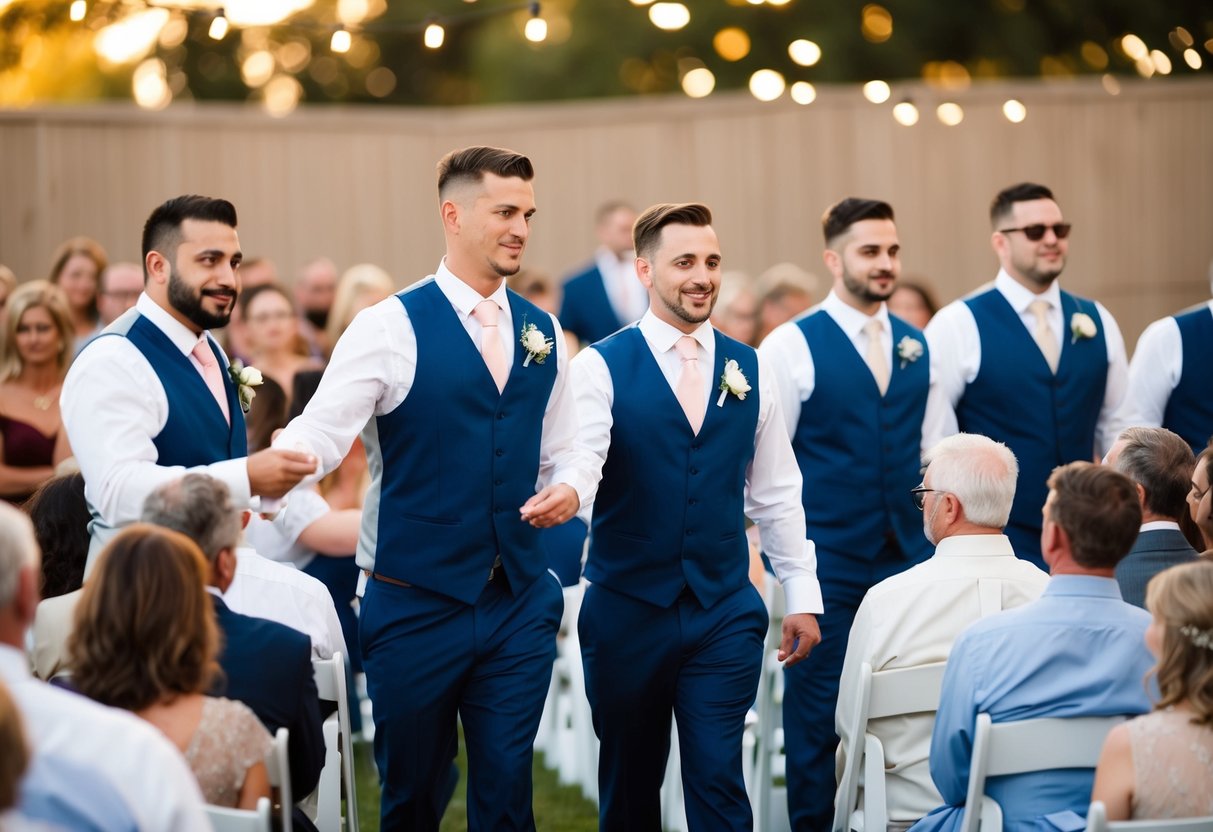
Planning your wedding involves a lot of details. Understanding the roles of the wedding party can make everything flow smoothly, from seating arrangements to responsibilities during the reception.
Seating Arrangements and Ceremony Flow
Ushers play a key role in organizing guest seating. They ensure everyone is directed to the right spot. It’s important to have enough ushers based on your guest list. Typically, one usher can manage 50 guests.
Consider using a chart to outline seating assignments. This helps avoid confusion. Ushers should also be briefed on the ceremony flow. They can assist guests when entering the venue and inform them of key moments, like when to stand or sit.
Coordinate with your groomsmen too. While they support you, they may still help usher guests as needed. A good balance of communication and teamwork goes a long way toward making your ceremony run smoothly.
Number and Roles During the Reception
During the reception, both ushers and groomsmen have defined roles.
Your groomsmen stand with you during the key moments. They help manage the flow and can assist with tasks like greeting guests at the door.
Meanwhile, ushers may take on more logistical roles. They can help guide guests to tables, especially if you have assigned seating. It’s best to have at least two ushers for managing this effectively, depending on the number of tables and guests.
Both groups can work together to ensure everything runs smoothly. By understanding the specific tasks of each role, you can create a comfortable experience for your guests. This teamwork is crucial for a memorable reception.