
Do You Kiss After Vows? Exploring the Tradition and Meaning Behind the Moment
When it comes to weddings, the moment you share that first kiss as a married couple is truly special. You typically kiss after exchanging vows, right after the officiant says, “You may now kiss the bride.” This moment represents not just a dramatic highlight of the day, but also a loving seal of your commitment to one another.
Understanding the tradition behind this act can add to its significance. Many couples look forward to this kiss as a joyful expression of their love, marking the official beginning of their married life.
As you plan your ceremony, consider how you want to personalize this moment. Whether you keep it simple or make it a grand gesture, it will be a memory you cherish forever.
The Ceremony Framework
Your wedding ceremony is made up of several key parts that create a memorable experience. Each section serves a purpose in celebrating your love and commitment.
Opening Remarks and Welcome
The ceremony usually begins with opening remarks from the officiant. This is a welcome to all guests and sets the tone for the event. The officiant may share a few words about love, marriage, and the importance of this day.
This moment helps guests feel included and ready to witness your union. It can be personalized with anecdotes or quotes that resonate with you as a couple. Keep it brief to maintain the focus on you.
Processional and Arrival of the Wedding Party
The processional is both a significant and special moment. It marks the formal arrival of the wedding party. Traditionally, family and the bridal party enter in a specific order, followed by you.
The music chosen for this part adds to the excitement and builds anticipation. Guests often rise as you make your entrance, emphasizing the importance of this moment. Whether you choose a traditional song or something personal, it should reflect the atmosphere you want to create.
Readings and Reflections
After the processional, you may include readings or reflections. These can be poems, religious texts, or personal stories that hold meaning for both of you.
Choosing readings can help convey the values and hopes you have for your marriage. This part of the ceremony can be a heartfelt moment where friends or family members share their thoughts, making it feel more intimate and special.
Exchange of Vows
The exchange of vows is one of the most crucial parts of your ceremony. Here, you articulate your promises to each other, declaring your love and commitment.
You may choose to write your own vows or use traditional ones. Personal vows often include specific promises that reflect your journey together. This is a deeply emotional moment, so take your time and speak from the heart.
Ring Exchange
Following the vows, the ring exchange symbolizes the commitment you are making. Rings represent love, fidelity, and the unbreakable bond between you.
As you exchange rings, you typically say a few words about what the rings represent to you. This ritual is brief but holds deep meaning. The act of placing the ring on each other’s finger signifies that you are now joined in marriage.
Unity Ceremony
A unity ceremony is an optional part of the wedding that symbolizes the joining of your lives. Different cultures have various traditions, such as lighting a unity candle, sand ceremonies, or handfasting.
Choosing a unity ceremony allows you to add a personal touch to your wedding. It also engages your guests in a visual representation of your commitment. This moment is a beautiful way to show your partnership and enhance the overall ceremony experience.
The Moment of Commitment
During your wedding ceremony, a special moment occurs that marks your commitment to each other. This is when you express your love, exchange vows, and seal your union with a kiss. Let’s look at the key parts of this significant occasion.
Declaration of Intent
Before the vows, you will make a declaration of intent. This is a clear statement of your commitment. The officiant will ask if you both take each other as partners in marriage. Your answer must be a confident “I do.” This moment confirms your intention to be together and to support one another through life.
Pronouncement of Marriage
After you recite your vows and exchange rings, your officiant will make the pronouncement of marriage. This is when you officially become husband and wife. The officiant might say, “By the power vested in me, I now pronounce you married.” This declaration signifies that you are legally wed and marks the transition into your new life as a married couple.
The First Kiss as a Married Couple
The moment you have been waiting for is the first kiss as a married couple. After the pronouncement, the officiant often says, “You may now kiss the bride.” This is a joyous occasion symbolizing your love and commitment. Kissing at a wedding is much more than a tradition; it shows the physical bond you share and celebrates the promises made during the ceremony.
Cultural and Religious Considerations
When planning your wedding, understanding the cultural and religious practices around the kiss after vows can enhance your ceremony’s meaning. Each tradition brings its own unique customs and significance to this special moment.
Jewish Wedding Traditions
In Jewish weddings, the kiss often comes after the couple is pronounced married under the chuppah, which symbolizes their new home together. Before this, you might participate in the bedeken, where the groom veils the bride as a sign of commitment.
Traditionally, after the first kiss, the couple shares the joyous shout of “Mazel Tov!” from guests. This highlights the community’s support and happiness for the pair. Additionally, during the Sheva Brachot, blessings are recited over wine, reinforcing the importance of the marriage covenant, known as the ketubah.
Christian Wedding Customs
In Christian traditions, the kiss follows the vows and rings, serving as a public affirmation of love. In Catholic weddings, the priest typically blesses the couple before they share their first kiss as a married couple.
This moment, often referred to as the “kiss of peace,” signifies the unity between the couple as well as divine blessing. The officiant’s words, such as “You may now kiss the bride,” mark the special moment when you become partners for life. The kiss is a culmination of the ceremony and is celebrated with joyful applause or cheers from the guests.
Interfaith and Nondenominational Practices
For interfaith and nondenominational weddings, the traditions can vary widely. Couples often blend elements from different backgrounds, creating a unique experience.
In these ceremonies, you might choose to include personal vows and meaningful rituals. The kiss can symbolize the joining of different faiths and cultures. It’s essential to discuss these elements with your partner and officiant to ensure the ceremony reflects both of your beliefs and values. Including personal touches makes the moment even more special, as it celebrates your unique bond.
Finalizing Your Union
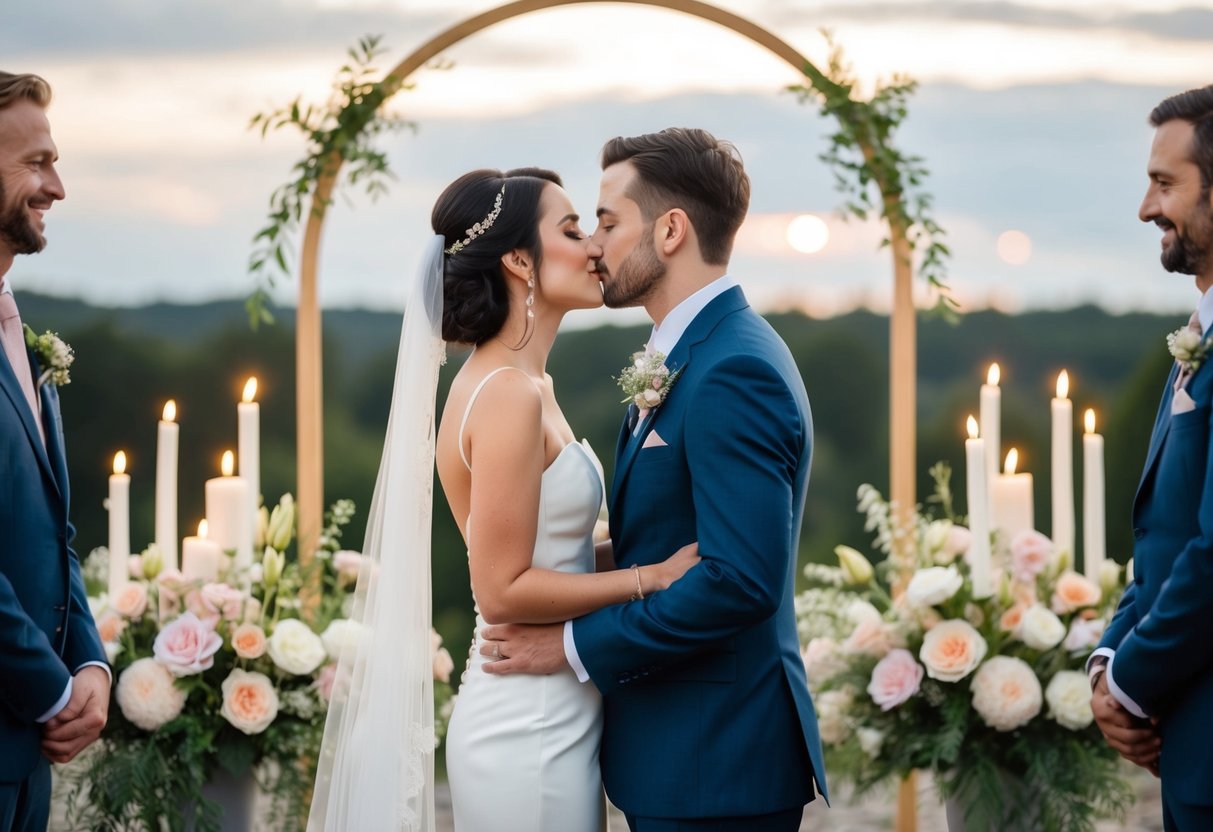
After sharing that special kiss, several key moments and formalities take place to finalize your union. This part of your wedding day includes the recessional and important details about your marriage license, as well as insightful closing remarks from your officiant.
The Recessional and Marriage License Details
Once you’ve exchanged vows and shared your kiss, it’s time for the recessional. This is when you and your partner walk down the aisle as a married couple. Your wedding planner usually organizes this moment, ensuring that friends and family are ready to celebrate.
It’s also important to address your marriage license. Typically, the officiant will sign the license, making your union official. This step is essential, so be sure to bring along any necessary documents before the ceremony. After the signing, you’ll receive a copy of the license for your records.
Closing Remarks and Guidance from the Wedding Officiant
As the ceremony wraps up, your wedding officiant may offer closing remarks. These comments often include heartfelt wishes for your future together. They may also share some advice on maintaining a joyful and loving relationship.
Your officiant might remind you of the support from family and friends. This acknowledgment strengthens the bonds between everybody present. Such words can create a lasting memory for you and your newlywed partner.
Keep these moments in mind as you begin your life together. Celebrate the love that brought you here, and cherish the support from those around you.