
How Long Should Wedding Photos Take? A Timeline Guide
Plan roughly two hours of portrait sessions across your wedding day, and book six to ten hours of photographer coverage for a traditional wedding. Your schedule, locations, and photo priorities determine where that time fits.
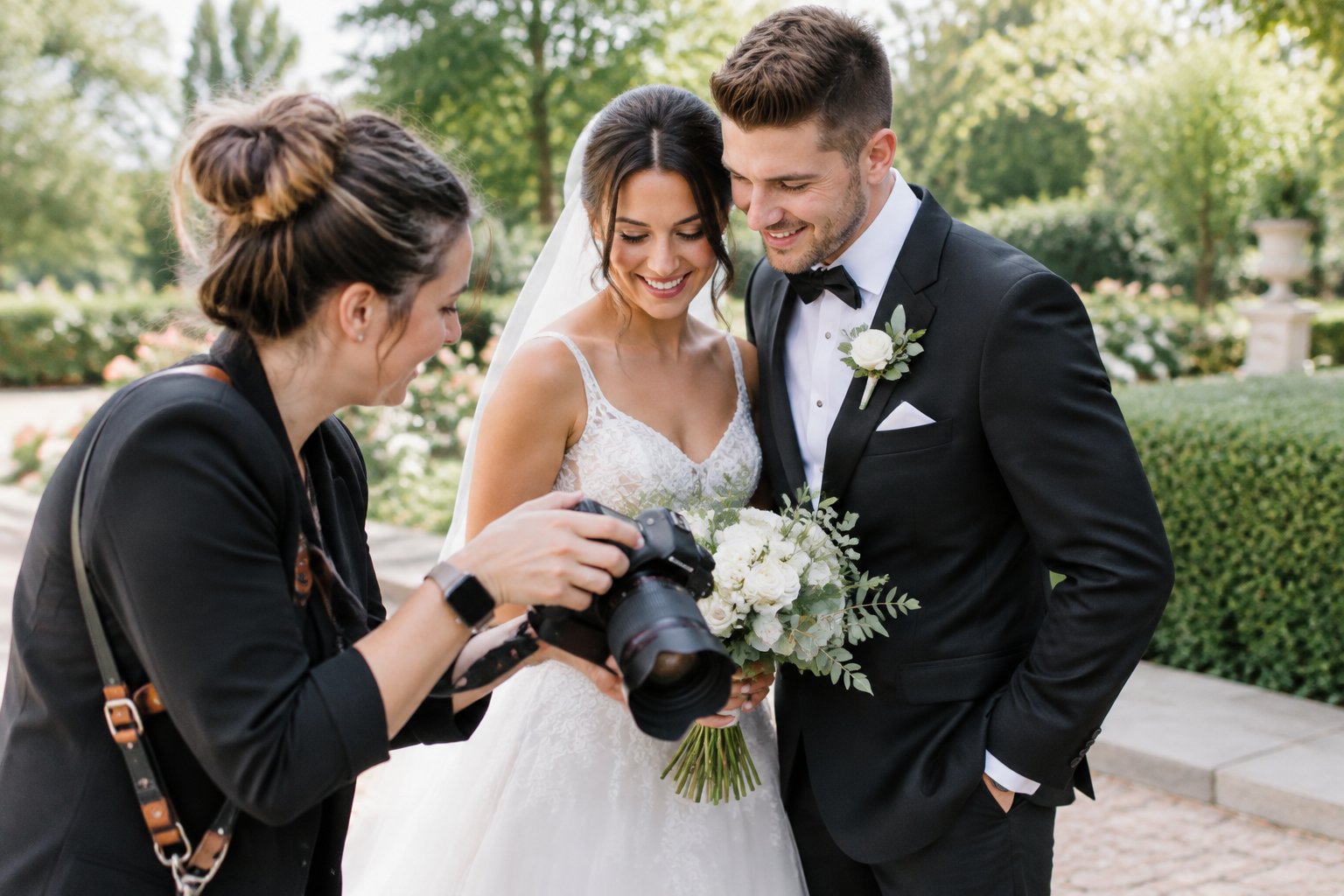
Portraits happen in shorter blocks, while coverage can include getting ready, the ceremony, reception events, and candid moments. Before you finalize your schedule, share your ceremony time and must-have photos with your photographer and ask them to help plan the coverage window.
How Much Photography Coverage Do Most Weddings Need?
Most traditional weddings need six to ten hours of coverage, while a smaller celebration with one location and fewer events may fit into a shorter package. The right booking gives your photographer time to capture the moments you value, from preparation through the reception.
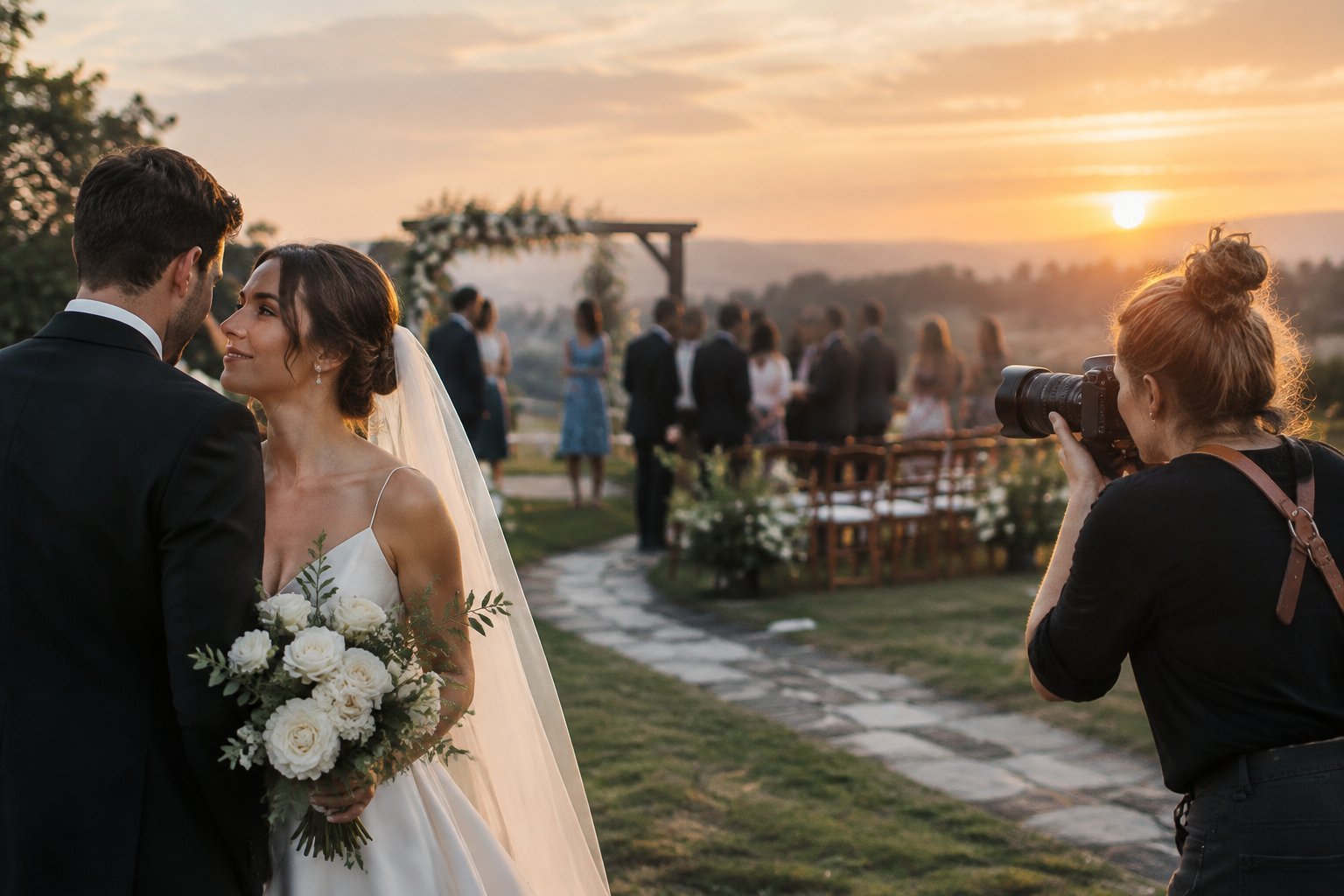
How Many Hours Should You Book With a Photographer?
Eight hours is a common choice for wedding day photography because it can cover getting ready, portraits, the ceremony, and key reception events. Six hours may suit a compact day with one venue and no extensive preparation coverage.
If your schedule includes multiple locations, a long gap, or several ceremonies, consider ten hours or more. You can compare your plans with this guide to whether eight hours is enough for a wedding.
Your priorities help set the start and end times. If you want getting-ready photos, coverage starts earlier. If you care most about the ceremony and dance floor, you might have your photographer arrive later.
Ask your photographer when their coverage ends and which moments fall outside the booked window. This is useful if you are deciding whether your photographer should stay for the whole wedding.
How Does Actual Shooting Time Differ From Coverage?
Coverage is the full span your photographer is booked, while shooting time refers to the parts of that span devoted to specific photos. A photographer may capture details, candid guest moments, and event action throughout coverage, with planned portrait sessions taking up only some of the hours.
For example, a photographer booked from noon to 8 p.m. has eight hours of coverage. Within that window, you might spend 30 minutes on family formals and 30 minutes on wedding party photos.
Travel, outfit changes, and waiting for people to gather also use time, even when you are not posing. Build the schedule around the full coverage window, not just the minutes you expect to spend in front of the camera.
How Long Does Each Part of the Day Take?
Plan separate blocks for preparation, the ceremony, group photos, and couple portraits; the time for each depends on your photo list and logistics. Use these estimates as a starting point, then ask your photographer to adjust them for your plans.
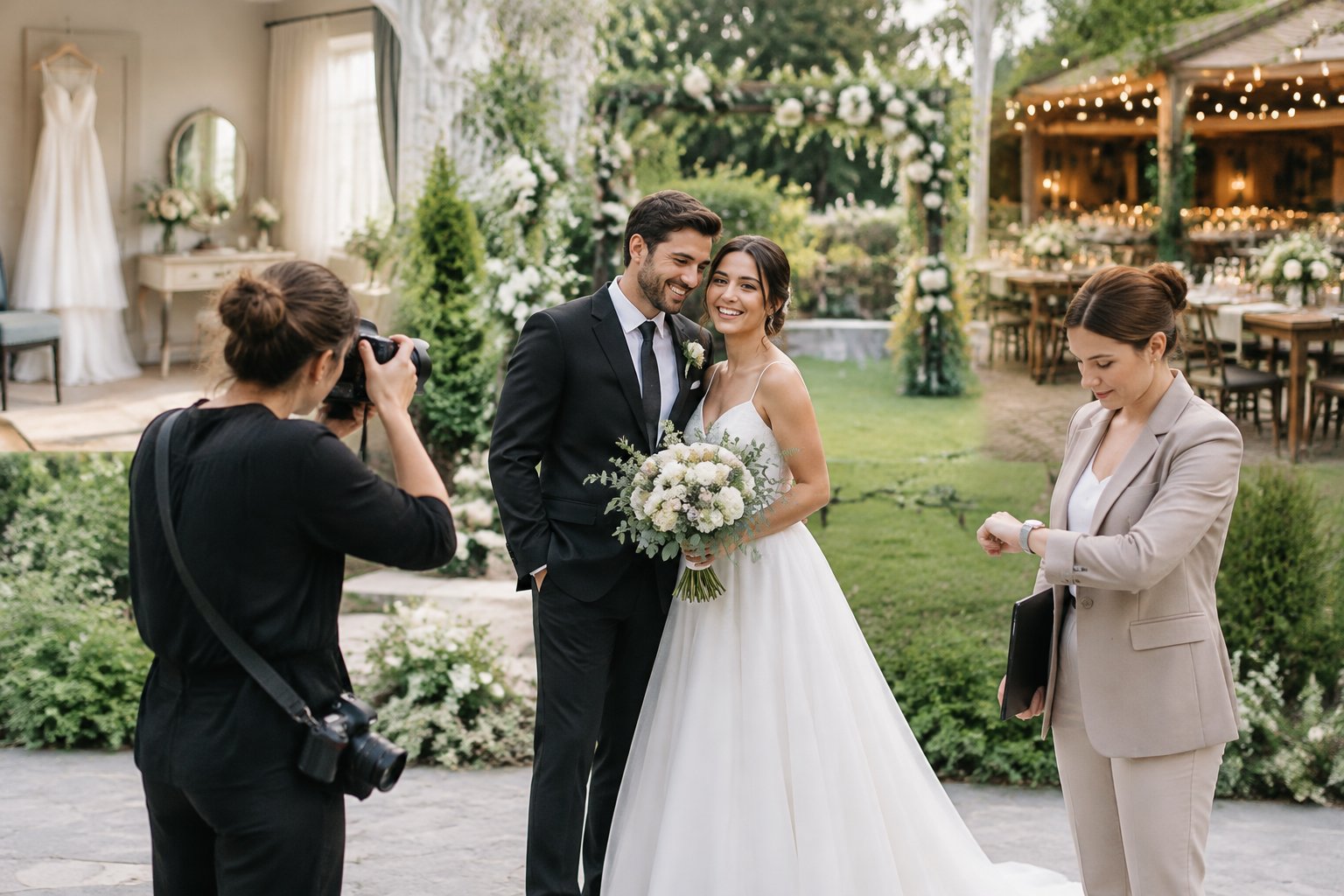
Getting Ready and Groom Portraits
Set aside about 60 to 90 minutes for the getting-ready photos you want, including final touches, details, and candid moments with your wedding party. Your photographer may photograph rings, attire, flowers, and invitations, then capture you getting dressed.
If you want images of both partners getting ready at the same time, ask whether a second photographer is available or plan separate coverage blocks. The time you need for hair and makeup is separate from the photographer’s coverage.
Your schedule should leave room for those services to finish before portraits begin. If you’re estimating your morning, use this guide to how long it takes a bride to get ready.
Groom portraits can take 10 to 20 minutes for a few individual photos and finishing details. Add time for groomsmen or group candids if you want those images too.
A clear shot list helps your photographer use the preparation block well, and a wedding day photo checklist can help you organize the moments and details you want captured.
Ceremony and Reception Photos
Allow about 20 to 45 minutes for ceremony photos, depending on the length of the service and any readings or traditions. Your photographer also needs time before the ceremony to photograph the space and arriving guests.
Afterward, reception photos span the events you want documented, such as your entrance, dinner, speeches, dances, and open dancing. Those moments are spread across the reception, so you do not need to pose throughout the whole block.
Tell your photographer which events are important to you and share the reception schedule. If you have planned a cake cutting or send-off, confirm its timing so the photographer is ready.
Wedding Party and Family Formals
Plan about 20 to 30 minutes for wedding party photos and another 20 to 30 minutes for family formals with a focused list. Larger groups, many combinations, or a long walk to the photo location can extend these blocks.
Write down each group you want, such as both partners with their parents or each partner with siblings. Share the list with your photographer in advance, and ask a family member who knows both sides to help gather people.
This keeps the formal family photos moving and gives everyone a clear place to be.
Couple Portraits and Golden Hour
Set aside about 30 to 45 minutes for couple portraits, with a short return session near sunset if you want golden hour portraits. You can split the main session into two blocks, which gives you a chance to enjoy the day between photos and get a different look in softer light.
A first look can provide time for portraits before the ceremony. If you prefer to see each other at the ceremony, plan your couple portraits after it and leave enough room for family and wedding party photos too.
Your photographer can help pick portrait spots close to the ceremony or reception site.
How Does a First Look Change the Photo Schedule?
A first look moves some portrait time before the ceremony, which can ease the post-ceremony schedule and give you more time with guests afterward. Your wedding photography timeline should reflect whether you want to see each other before the ceremony and which group photos you want completed early.
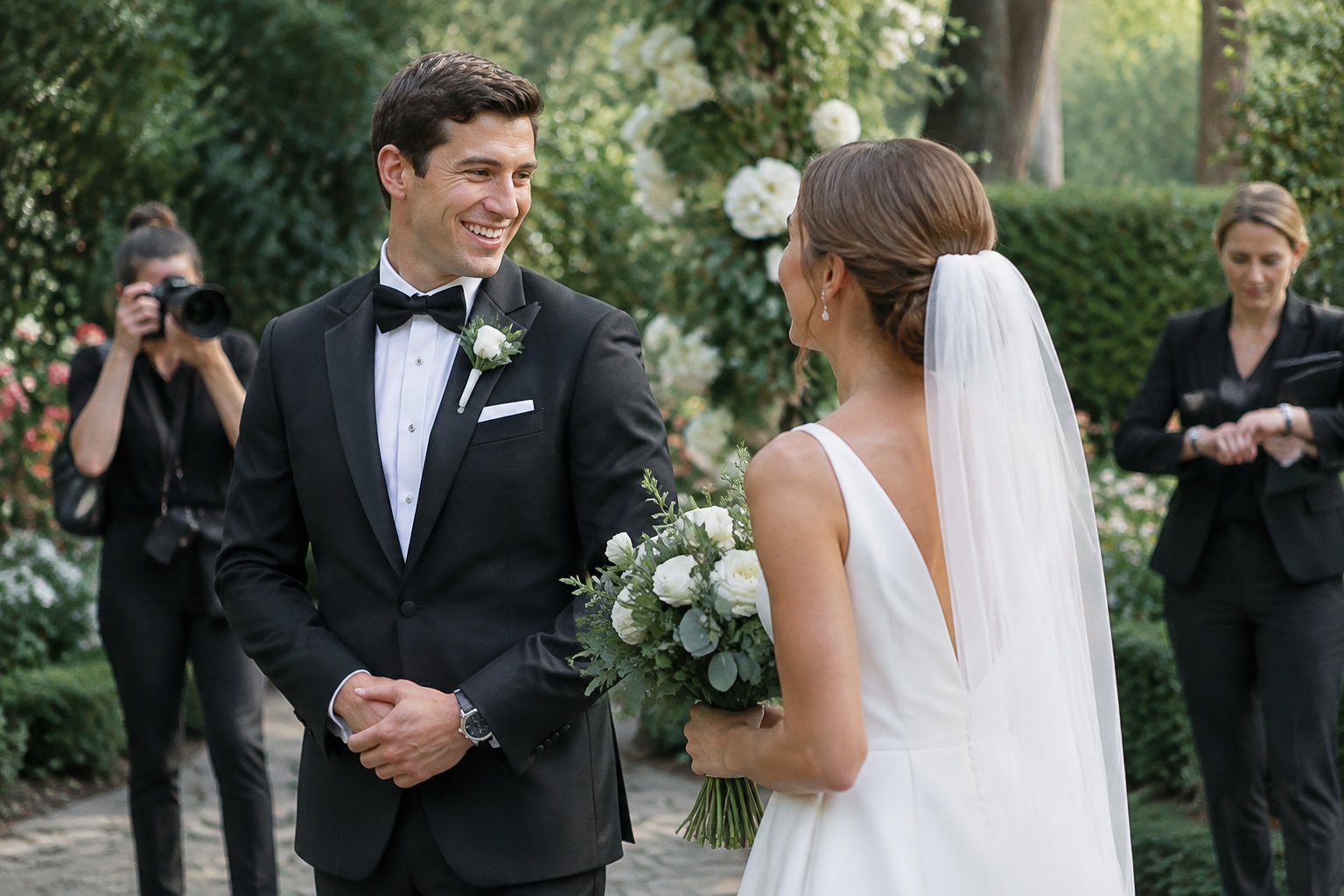
Sample Timeline With a First Look
For a 4 p.m. ceremony with eight hours of coverage, this sample wedding photo timeline starts at noon. Adjust each time for your venue, travel, ceremony length, and sunset.
- 12:00 p.m. Photographer arrives and captures details and finishing touches.
- 12:30 p.m. Getting-ready photos.
- 1:15 p.m. First look and couple portraits.
- 2:00 p.m. Wedding party photos.
- 2:30 p.m. Immediate family photos.
- 3:15 p.m. Couple takes a break while the photographer captures ceremony details and guest arrivals.
- 4:00 p.m. Ceremony.
- 4:30 p.m. Just-married moments and candid photos.
- 4:45 p.m. Cocktail-hour guest photos.
- 5:45 p.m. Guests move to dinner.
- 6:00 p.m. Dinner begins.
- 6:45 p.m. Toasts.
- 7:15 p.m. First dance and parent dances.
- 7:45 p.m. Open dancing, with coverage ending at 8:00 p.m.
A first look often takes 15 to 30 minutes, with more time needed for the portraits that follow. For help choosing when to schedule it, review when to do your first look before a wedding.
What Changes When You Wait Until the Ceremony?
If you wait until the ceremony to see each other, your wedding photography schedule shifts most couple portraits and joint group photos to after the ceremony. You can still take individual portraits and separate wedding party photos before the ceremony, then gather everyone for family formals and couple portraits afterward.
That post-ceremony block can use much of cocktail hour. Decide which photos you want most, and tell your photographer how much time you want to spend with guests.
If you’re weighing the choice, consider whether you and your partner want to see each other before the ceremony.
What Can Make Photo Sessions Take Longer?
Large group lists, travel, and schedule delays add the most time to wedding photos. Your wedding photography time stays easier to manage when your photographer knows the people, locations, and timing in advance.
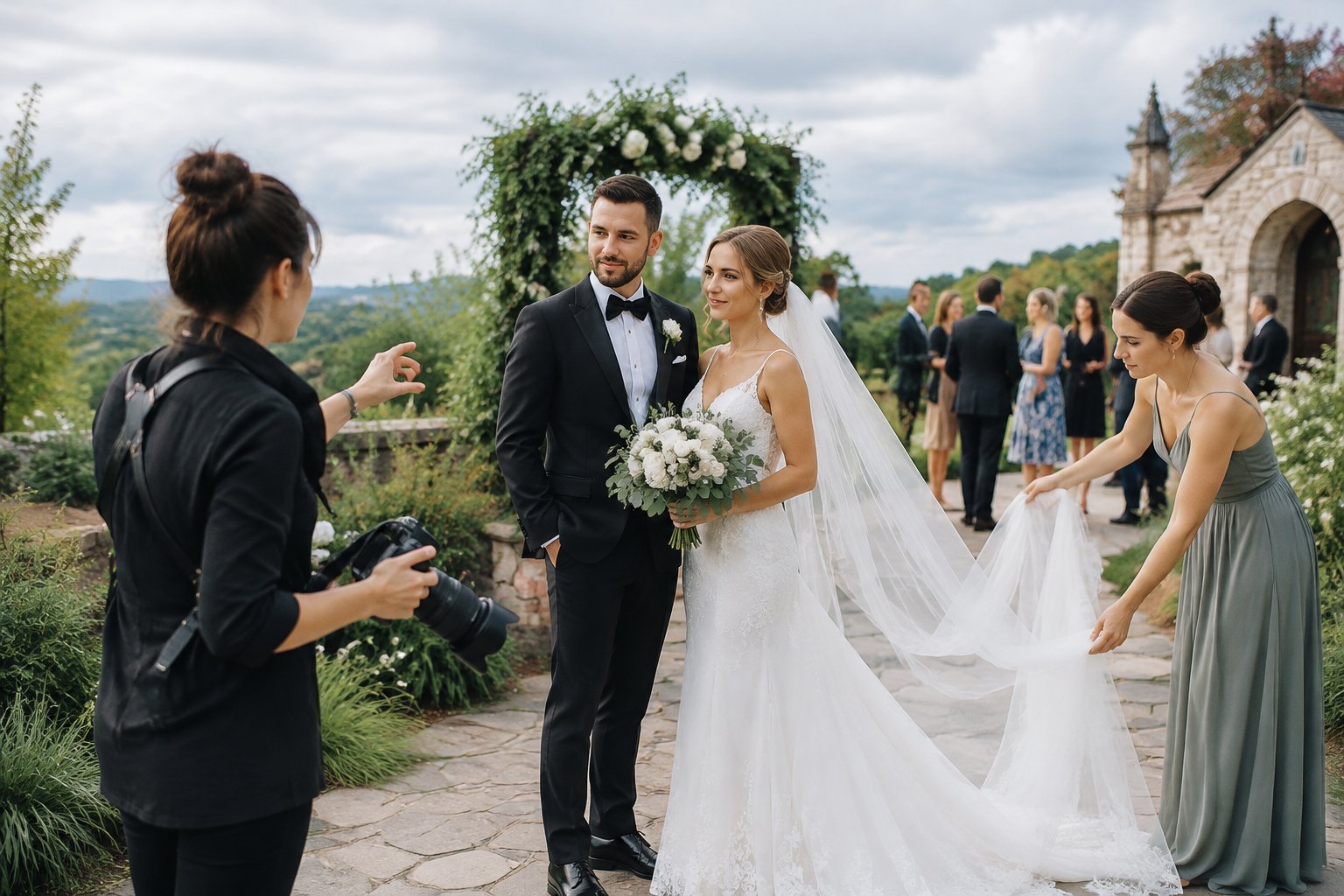
Family Groupings and Wedding Party Size
Each family combination takes a few minutes to arrange and photograph, and the time adds up as your list grows. A list of 15 groupings can fit into about 30 minutes when everyone is present and ready.
More combinations, a large wedding party, or guests who need to be found can stretch the session. Send the group list to your photographer before the wedding and let each person know when and where to meet.
Choose a helper who can call names and gather relatives while your photographer keeps shooting. If you have a large family, prioritize immediate family first and add extended-family groups if time allows.
Travel Between Locations and Schedule Delays
Travel between getting-ready spaces, the ceremony, and portrait locations can lengthen your photo schedule. Include the drive, parking, loading, and walking time in your plan.
A short trip on a map still takes time when a wedding party needs to gather and move together. Build in extra minutes for clothing adjustments, late arrivals, or weather changes.
If your ceremony and reception are in different places, ask your photographer and planner to review the route and the timing. A realistic schedule gives you room to handle small delays without cutting a planned portrait block short.
How Can You Keep the Photography Timeline on Track?
You can keep your photo schedule moving by adding buffers, choosing a helper for family photos, and planning around the day’s light. Share the final wedding photography schedule with your photographer, planner, and anyone expected to be in formal pictures.
Build in Buffers and Assign a Family Photo Helper
Add a 5- to 15-minute buffer around transitions and travel, with extra room for larger groups or off-site portraits. Name one family photo helper from each side if needed.
That person can gather people, answer questions, and tell the photographer when a group is ready. Keep your formal photo list focused and put the most important groupings first.
Tell everyone involved where to meet and when to arrive. Your wedding timeline planning choices should account for photo time alongside the ceremony and reception schedule.
Schedule Sunset Portraits Around the Day’s Light
Check the sunset time for your wedding date and location before you set the portrait schedule. Plan to step away for 10 to 15 minutes near the best light, allowing extra time to leave the reception space and return.
Clouds, tree cover, and nearby buildings can change how much light reaches your portrait spot. Ask your photographer to recommend a time and nearby location.
If your day is tightly scheduled, place the sunset session between reception events or during a brief break in dancing.
Use a Timeline Generator as a Starting Point
A wedding timeline generator can help you draft an order of events, but your final schedule needs real travel times, portrait priorities, and the coverage hours you booked. Check each suggested block against your ceremony time and sunset, then review the draft with your photographer and planner.
Treat the first version as a planning tool. Confirm who needs to be present for each photo block, where it will happen, and how you’ll move between locations. A practical wedding day schedule gives your vendors and family members clear start times to follow.