
How Many Guests Should You Have at a Wedding? A Guide
For many U.S. couples, 75 to 150 guests is a useful starting range, with your budget, venue, and preferred atmosphere setting the final count. You can host a much smaller or larger wedding if that better suits the celebration you want.

Your guest count shapes the feel of the day and the cost of hosting it. Start by choosing a number you can afford and a group of people you want to celebrate with, then make a first-pass list to see how the plan fits.
Take a moment to write down your priorities before you add names.
How Should You Set a Realistic Guest-Count Target?
Set a realistic wedding guest count by choosing the experience you want, then checking whether your budget and venue support it. A micro wedding offers a close-knit gathering, while a large wedding creates room for a wider circle of family and friends.

Your ideal atmosphere gives you a starting point, and a rough size category helps turn that feeling into a number. Use these ranges as planning guides, since labels such as small wedding and medium wedding have no single official definition.
Start With the Experience You Want
Picture what you want your guests to experience. A smaller gathering can give you more time to talk with each person, while a larger celebration can bring together relatives, friends, and work or community connections.
Think about how much time you want to spend with guests, how formal the event will feel, and whether you want a lively dance floor or a relaxed dinner. Then decide how many people fit that plan and your budget.
If you’re weighing a smaller celebration, these ideas for creating a small wedding guest list can help you set priorities.
Compare Micro, Small, Medium, and Large Weddings
These broad ranges can help you name the kind of event you’re planning:
- Micro wedding: Up to about 20 guests, often focused on a very close circle.
- Small wedding: About 20 to 50 guests, with room for close family and friends.
- Medium wedding: About 50 to 100 guests, a fit for a broader group of loved ones.
- Large wedding: More than 100 guests, with space for an extended circle.
A 100-person event might feel large in a small restaurant and intimate in a spacious ballroom. Treat the categories as a way to start planning, then check your list against the people and setting you have in mind.
How Does Your Guest List Compare With the Average?
A recent U.S. benchmark puts the average wedding guest count at about 116 people, though your own number can fall well above or below it. Use the average wedding size as context, not as a target you need to match.

For another point of comparison, browse these average wedding guest-list figures.
What Is the Average Wedding Guest Count?
A useful recent U.S. reference is about 116 guests. That figure gives you a general sense of scale: a guest list near 50 is much smaller, while a list over 150 is considerably larger.
Averages describe groups of weddings, so they don’t show what will feel right for you. Your relatives may live nearby, your friends may be spread across the country, or your preferred venue may have a limited capacity. Use the number to inform your expectations as you build your own list.
Why Average Wedding Sizes Vary
Wedding sizes vary with your location, family traditions, budget, and plans for the day. A local celebration is easier for nearby guests to attend, while a destination wedding asks people to arrange travel and lodging.
The venue also shapes the number of people you can host comfortably. A dinner at a private home has different space limits from a hotel ballroom, even when both events have the same style. Your final list reflects the people you want there and the practical limits of your celebration.
What Will Your Guest List Cost—and Can Your Venue Fit It?
Your guest count affects both your wedding budget and the type of wedding venue you can book. Set a spending limit and check a venue’s seated capacity before you settle on a final list.
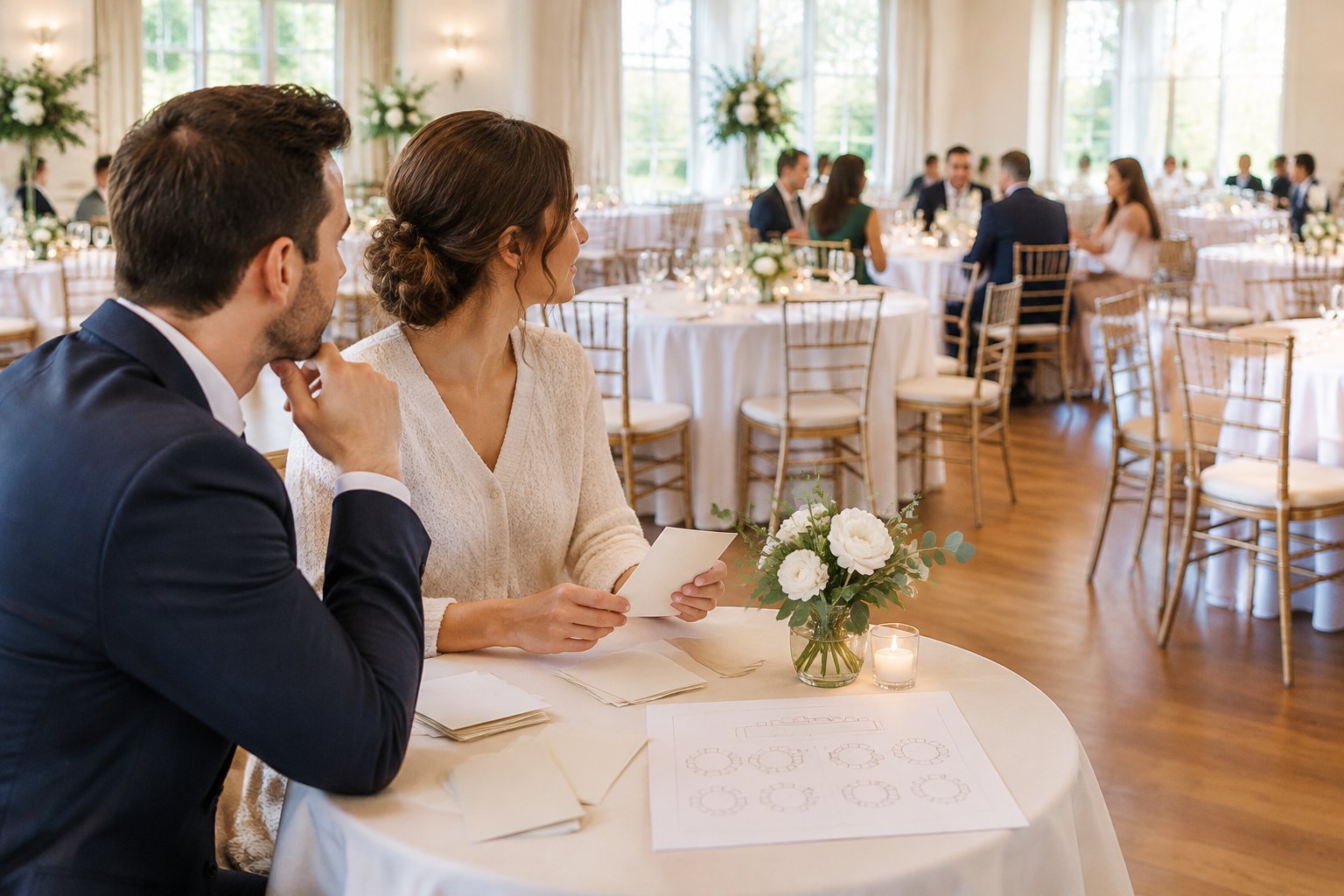
Each additional person adds costs tied to food, drinks, seating, and other guest services. As you plan, compare the full event cost with the venue’s capacity and ask how the room will work for your reception layout.
How Each Additional Guest Affects Your Budget
Every added guest can raise variable costs, including catering, beverages, place settings, rentals, and favors. Some venues and caterers also set minimums or price changes at different guest-count levels, so request a full estimate for your expected range.
To keep your wedding budget clear, separate costs that change with headcount from fixed costs such as photography or the ceremony fee. Then calculate the cost of adding a table or a group of guests, including service charges and taxes.
A guest-count calculation can help you connect your list to the budget before you send invitations.
If family members are contributing money, agree on how that contribution affects invitations. You might set a guest allowance for each side or decide together which names belong on the list. Put the rules in writing so you can use them consistently.
Check Capacity Before Choosing a Venue
Check the venue’s capacity for your planned setup, not only its maximum occupancy. A room may hold more people for a standing event than it can seat for dinner with a dance floor, buffet, or wide aisles.
Ask the venue for its seated capacity and the layouts that fit your event. Include your vendors in headcount questions when the venue’s rules require meals or seats for them. Confirm whether the ceremony and reception use the same space, since separate rooms can have different limits.
Who Belongs on Your Wedding Guest List?
Your wedding guest list should start with the people you want to share the day with, then follow clear rules for family and plus-ones. A tiered list helps you protect your priorities if the first draft exceeds your target.

Choose your highest-priority guests first, then make decisions about extended family and plus-one etiquette with the same standards for both sides. If you need help deciding who to invite to your wedding, begin with your closest relationships and work outward.
Prioritize Guests in Tiers
Create three tiers so you know which names to keep if you need to reduce the list:
- Core guests: People you feel must be there, such as immediate family and your closest friends.
- Next-priority guests: Relatives and friends you’re close to, along with people who play an important role in your life.
- Additional guests: Work contacts, distant relatives, or acquaintances you would enjoy seeing if space and budget allow.
Add the first tier and check its size against your target. Build outward from there, keeping each person’s relationship to you in mind. If a guest list feels unbalanced between families, talk through the reasons for each invitation and apply the same priorities to both sides.
Set Fair Rules for Plus-Ones and Family
Decide on clear rules before you address invitations. You might offer plus-ones to guests who are married, engaged, or in a long-term partnership, then apply that rule consistently. You can also choose a broader plus-one policy if your budget and space allow it.
Set family rules together, including whether children are invited and how you’ll handle relatives you rarely see. If someone else is paying for part of the wedding, agree on a guest limit for their list before adding names. These family invitation guidelines can help you plan those conversations.
How Many Invitations Should You Send to Reach Your Target?
To reach your attendance target, estimate how many invited guests will accept, then count invitations by household. Your wedding invitations, save-the-dates, and RSVP deadline all need to match your guest list and event timeline.
Estimate Attendance and Use a Guest Calculator
Start with a realistic attendance estimate based on your guests’ travel needs and your event date. For example, if you want 100 people to attend and expect 80% of invitees to accept, divide 100 by 0.8. That gives you an estimate of 125 invited guests.
This is a planning estimate, not a promise. Track RSVPs as they arrive and use your confirmed count for final catering and seating numbers. A wedding guest calculator can help you test different attendance assumptions.
Count invitation suites by mailing address, not by individual guest. A couple or family at one address receives one invitation, while adult guests living separately receive their own. If you want to reach a particular number of attendees, include plus-ones and children in the guest total before calculating invitation quantities.
Account for Destination Weddings and Invitation Timing
For a destination wedding, give guests more time to plan travel and lodging. Some invitees will face higher costs or scheduling limits, so use a lower attendance estimate when you make your first forecast. These destination wedding guest-list considerations can help you plan for that smaller travel-ready group.
Send save-the-dates well ahead of the wedding, with extra notice for guests traveling long distances. Mail formal invitations early enough for guests to respond and for you to meet the venue’s headcount deadline. Set an RSVP date that gives you time to follow up with guests who haven’t replied, then confirm the final count with your venue and caterer.