
How Many Roses Do I Need for My Wedding? A Guide to Floral Arrangements
Planning your wedding flowers can feel overwhelming, especially when it comes to choosing the right amount of roses for such a special day.
For a bridal bouquet, you typically need about 5 to 7 stems of roses. Meanwhile, larger arrangements may require 25 to 30 stems or even more, depending on your wedding theme.
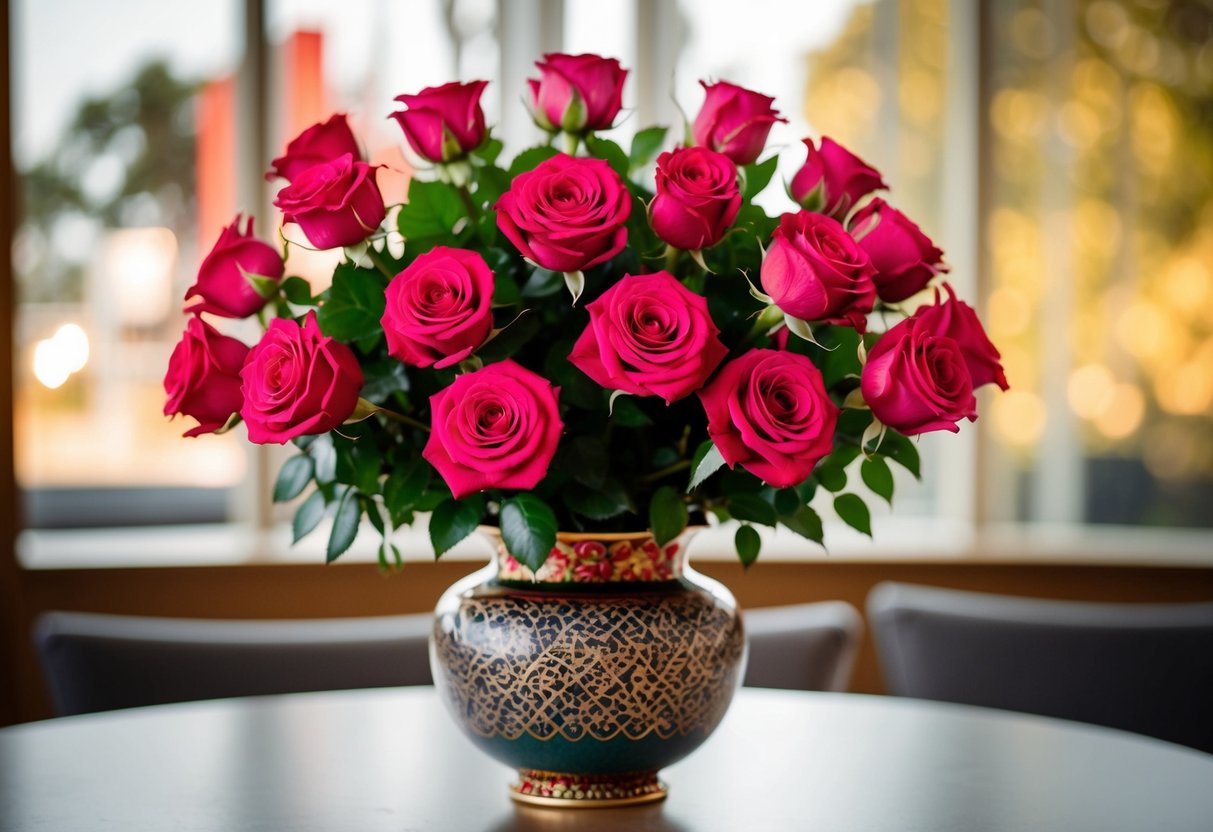
Knowing how many roses to order can help you stay within budget and ensure your arrangements look beautiful. You’ll want to consider the style and size of your bouquets, centerpieces, and other floral decorations.
With the right planning, you can create a stunning floral display that perfectly enhances your wedding celebration.
Roses are a classic choice for weddings, adding elegance and romance to any event. As you move through the planning process, remember that the right amount can make all the difference in bringing your vision to life.
Determining Your Floral Budget
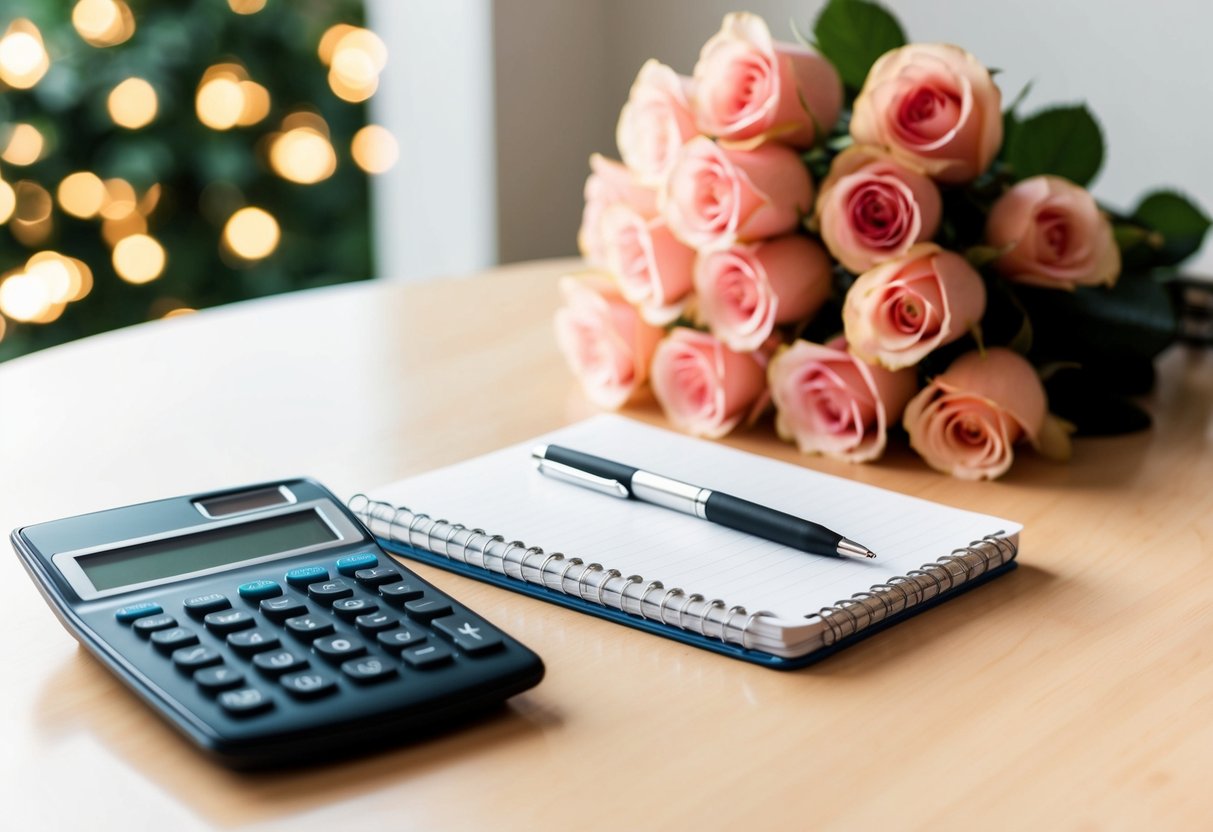
Setting your floral budget is an important step in planning your wedding. This will help you figure out how many roses and other flowers you can include without overspending.
Knowing the costs and how to calculate what you need can make the process smoother.
Understanding Costs
When planning your floral budget, start by researching the average prices of wedding flowers. Roses can vary in cost based on type, season, and availability.
On average, you might spend around $2 to $10 per stem for roses, depending on these factors.
Consider other expenses, like floral arrangements and delivery fees. If you want a bridal bouquet, centerpieces, and more, each arrangement will add to your total.
Keeping a detailed list of your desired arrangements can help you maintain focus on your budget.
Calculating Needed Quantities
To decide how many roses you will need, use a flower quantity chart or a stem calculator. These tools help you estimate how many stems you’ll need for each arrangement.
For example, a small bridal bouquet often requires about 15 to 20 roses. Meanwhile, centerpieces may need around 10 to 15 focal flowers.
It’s also wise to order extra stems to cover any unexpected needs, like damaged flowers or last-minute additions.
By planning carefully, you can choose the right number of roses to fit within your wedding budget and achieve your desired look.
Choosing the Right Roses for Your Wedding
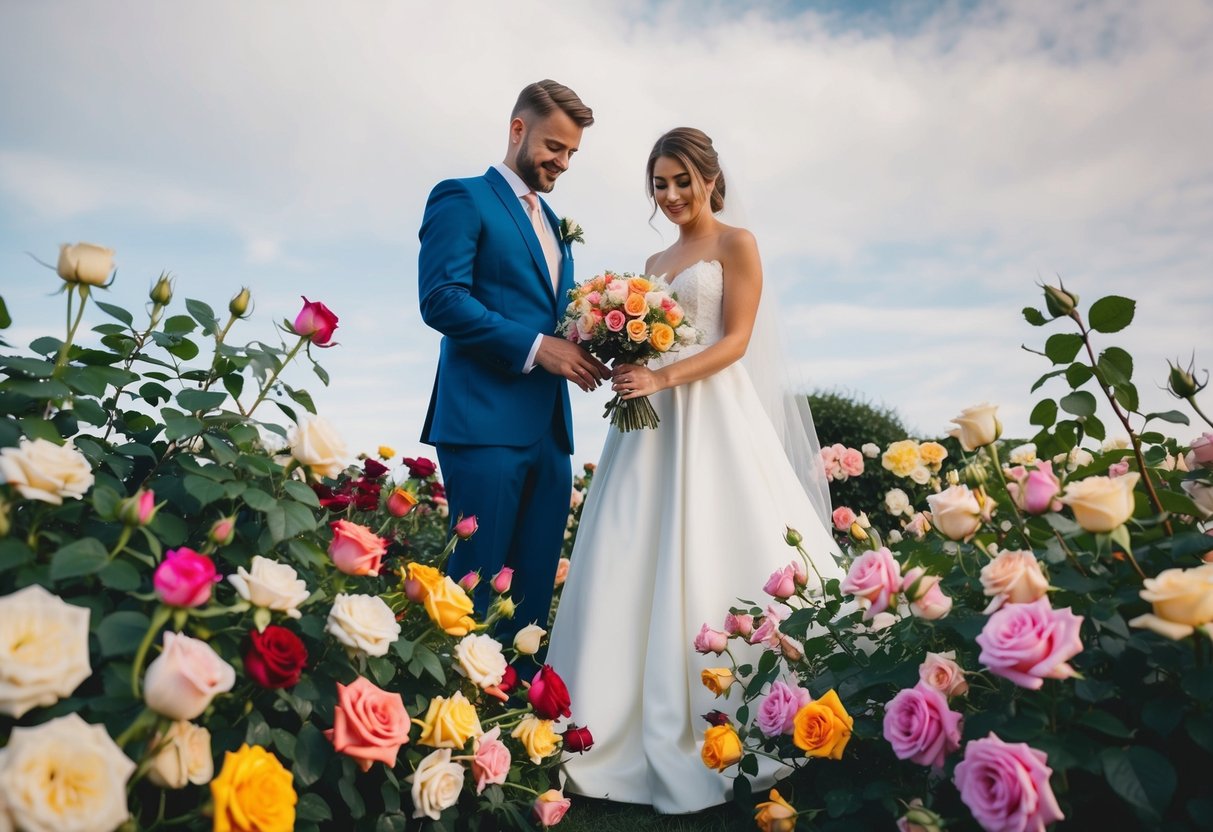
Selecting the perfect roses is crucial for your wedding. It involves choosing the right varieties and considering your color palette to match your theme.
Selecting Rose Varieties
When picking roses for your wedding, consider the different types available. Garden roses are popular for their fullness and fragrance. They make stunning centerpieces and bridal bouquets.
Spray roses, meanwhile, are smaller but charming. They are great for adding volume to arrangements.
If you want elegance, opt for classic white roses. They symbolize purity and can fit any wedding theme. For a romantic feel, go for pink garden roses, which bring softness to your bouquet.
Think about the size as well. A large bouquet with 30-36 roses is perfect for a grand look, while smaller bouquets with 6-12 roses are lovely for bridesmaids.
Color Palette Considerations
Your color palette will guide your choices.
If your wedding theme includes soft pastels, consider using light pinks and creams. These can complement other décor elements well.
For bold themes, opt for vibrant roses in reds or purples. A mixed bouquet can create stunning contrast and excitement.
Remember to factor in the bridal and bridesmaid bouquets when planning colors.
When you match your roses to your wedding colors, it ties the whole look together beautifully. A well-chosen rose bouquet enhances your special day, ensuring it looks just as you’ve imagined.
Floral Arrangements and Design
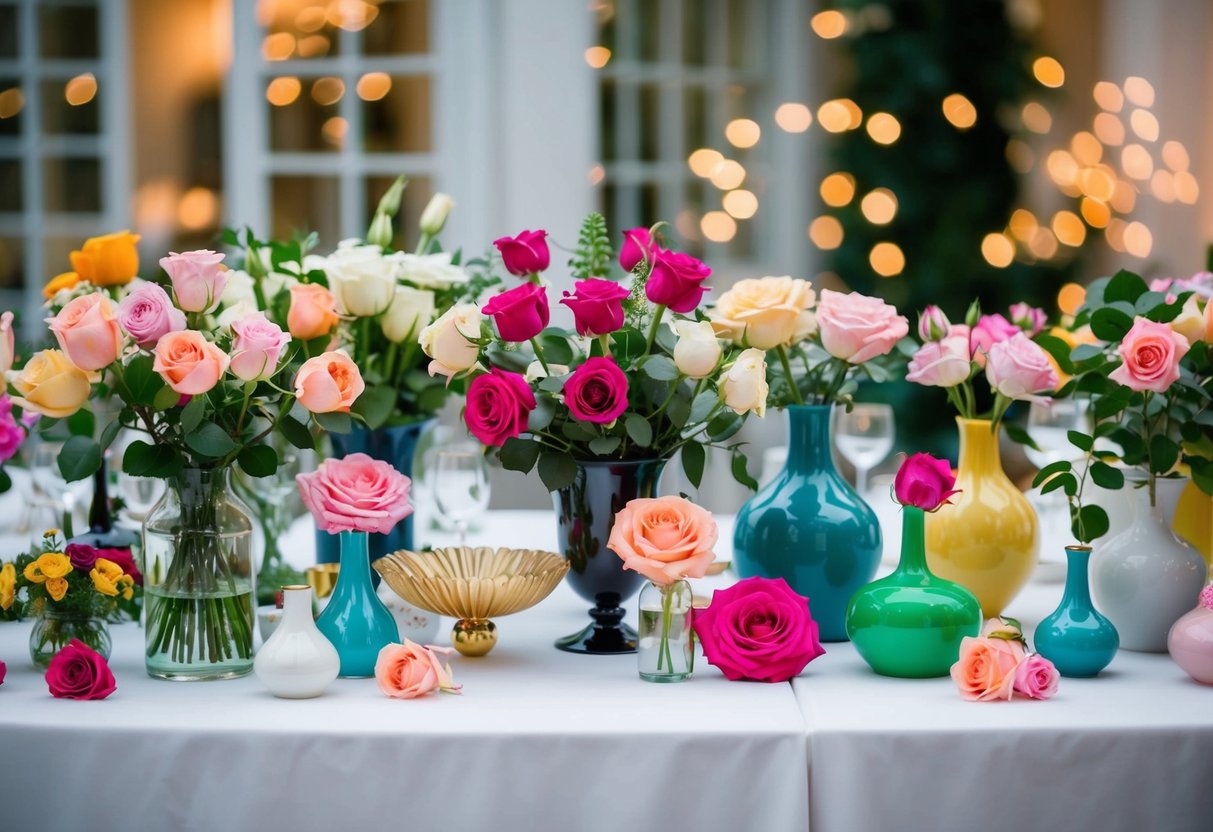
Creating beautiful floral arrangements is key to your wedding’s ambiance. From bouquets to centerpieces, thoughtful designs can enhance the overall look. Here are important elements to consider.
Creating Stylish Bouquets
Your bridal bouquet should reflect your style and the theme of your wedding.
Typical options for a bridal bouquet include 30-36 roses for a large, lush look or 12-24 roses for a smaller arrangement.
For bridesmaid bouquets, aim for a medium arrangement with about 18-20 stems. This size strikes a balance, making them elegant without overwhelming their outfits.
Use a mix of roses and greenery to add texture.
Consider bindings such as ribbons or twine that match your wedding colors. Personal touches like charms or family heirlooms can also enhance each bouquet’s uniqueness.
Centerpieces and Venue Decorations
Centerpieces are essential for your tables and can set the mood for your reception.
For a small arrangement, use about 10-15 blooms, mixed with greenery for a charming effect. Meanwhile, a medium arrangement will require 35 stems to create a fuller look.
Choose containers like elegant vases or rustic jars based on your theme. Consider varying heights to add visual interest.
For a cohesive look, incorporate similar flowers used in your bouquets.
Floral decorations along aisles or at the altar create a stunning focal point. With the right floral design, your special day will truly shine.
Working with Floral Professionals
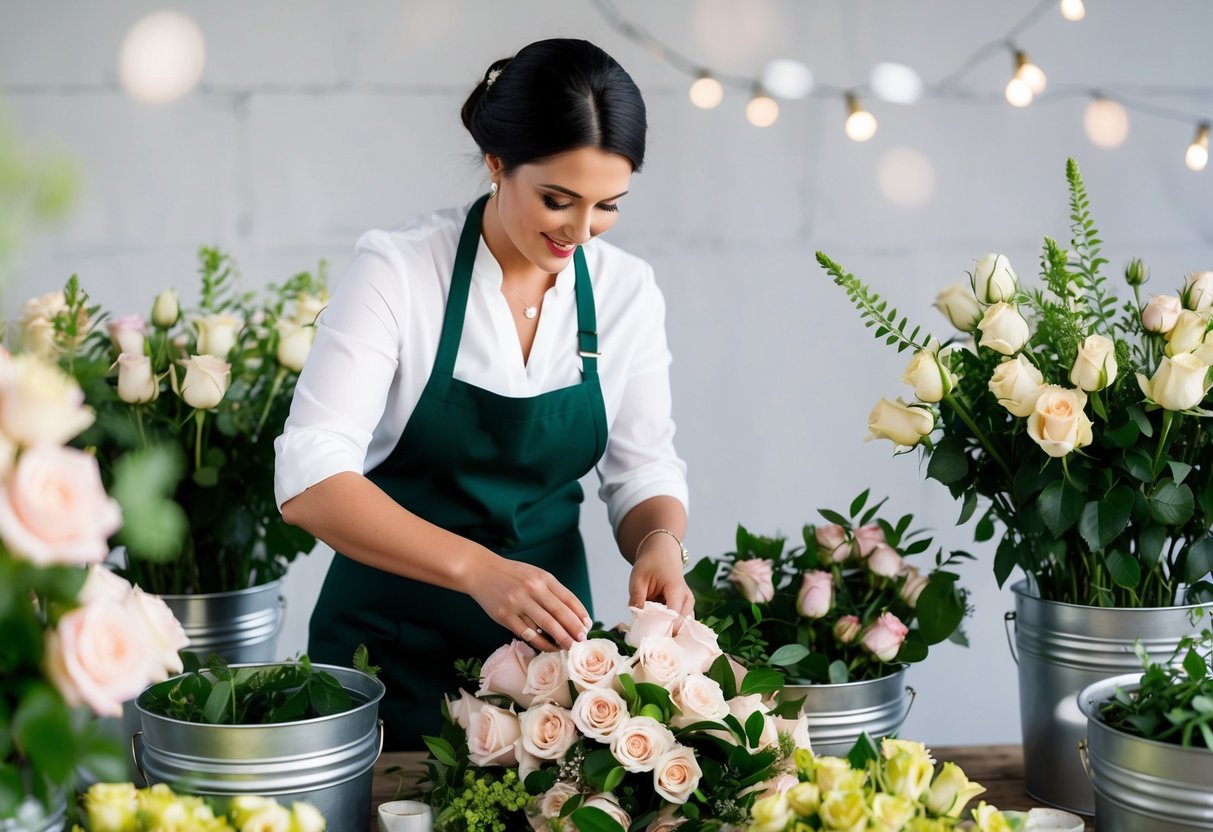
When planning your wedding flowers, collaborating with floral experts can make a big difference. Whether you choose a professional designer or go the DIY route, knowing how to work with them will help you achieve your dream wedding setup.
Choosing a Floral Designer
Selecting the right floral designer is crucial for bringing your vision to life.
Start by researching local florists and reviewing their portfolios. Look for styles that resonate with you.
Set up consultations to discuss your ideas, color palette, and budget. A good designer will listen to your needs and may offer helpful suggestions.
Ask about their experience with wedding flowers, including arrangements for bouquets, boutonnieres, and corsages.
Make sure to communicate clearly about your expectations and preferences.
Don’t forget to ask about their flower sourcing and any seasonal options. This can affect availability and pricing.
Finally, ensure they can accommodate your timeline for delivery and setup on your special day.
DIY Flower Arrangement Tips
If you’re considering DIY arrangements, planning is key to success. Start by determining what floral decorations you want.
Create a list that includes bouquets, centerpieces, and other arrangements. Select flowers that are in season to make your options more affordable and fresh.
When you have your blooms, gather necessary supplies like vases, floral tape, and wire. If you’re new to flower arranging, watch online tutorials for guidance on techniques.
Don’t hesitate to practice before the big day. Creating a few sample arrangements can help you feel more confident.
Also, consider enlisting friends or family to assist you. This not only makes the process easier but also adds to the fun.