
How Much Does a Hotel Wedding Venue Cost? 2026 Guide
Hotel wedding venues in the United States can cost about $150 to $350 per guest for a package with food, drinks, and basic décor. The final bill is shaped by your date, location, guest count, and package details.

For 100 guests, that range works out to roughly $15,000 to $35,000 before taxes, service charges, and extras. Ask hotels for an itemized quote based on your guest count and preferred date, then compare the full estimated bill. If you’re also weighing other venue types, compare what most wedding venues cost to get a broader budget benchmark.
Hotel Wedding Pricing at a Glance

Hotel wedding pricing often combines a per-person package with a venue fee or food-and-beverage minimum. Your quote can include core reception services, while taxes, service charges, and upgrades raise the amount you pay.
What Do Hotel Venue Fees and Packages Typically Cost?
A full-service hotel wedding package can run roughly $150 to $350 per guest when it includes food, drinks, and basic décor. A simpler space rental may cost less upfront, while a premium ballroom package with upgraded food and bar service can push the per-person price toward the high end.
At 75 guests, the package portion alone would be about $11,250 to $26,250. At 150 guests, it would be about $22,500 to $52,500. Those estimates exclude fees that may apply to the package and do not account for venue minimums.
Hotels may quote a flat rental fee, a per-person package, or a minimum spend for food and beverages. Check which model your quote uses, and confirm whether the package price counts toward the minimum. For a small guest list, a minimum spend can set a higher floor than a per-person estimate suggests.
How Does the National Average Compare?
The Knot Real Weddings Study puts the 2026 national average wedding venue cost at $12,900. Use that figure as a broad reference point, since a national average can combine venue arrangements with very different levels of service.
A hotel package may include catering, bar service, tables, chairs, linens, and event staff. A venue-only quote may cover the room while leaving food and rentals outside the price. To compare wedding venue costs fairly, line up what each quote includes and what you still need to pay for.
How Does Guest Count Change the Quote?

Your guest count affects both per-person charges and the hotel’s minimum spend, so it can change the quote substantially. Build a realistic estimate from your likely attendance, then check how the hotel prices smaller and larger groups; a guest-count estimate can help you set a useful starting number.
What Might a Small Wedding Cost at a Hotel?
For 40 guests, a package priced at $150 to $350 per person comes to about $6,000 to $14,000 before added charges. The final quote can be higher if the hotel sets a minimum food-and-beverage spend or charges a separate room rental fee.
Ask whether the hotel offers a smaller event room or a package designed for intimate receptions. A ballroom priced for a larger gathering may feel spacious for a small wedding, and the minimum can make the cost per guest climb. If you’re planning a close-knit celebration, ideas for a budget-friendly small wedding can help you focus spending on the parts you value most.
How Do Costs Scale for Larger Guest Lists?
A larger guest count increases food, drinks, service, and some rental costs. At $150 to $350 per person, 150 guests would mean approximately $22,500 to $52,500 for the package portion, before taxes, service charges, and add-ons.
The total does not always rise in a straight line. A larger group might qualify for a different room or package, while a minimum spend may already cover much of the cost for a smaller group. Ask the hotel to quote your expected count and a second scenario with fewer guests so you can see the price difference.
What Does a Hotel Wedding Package Include?
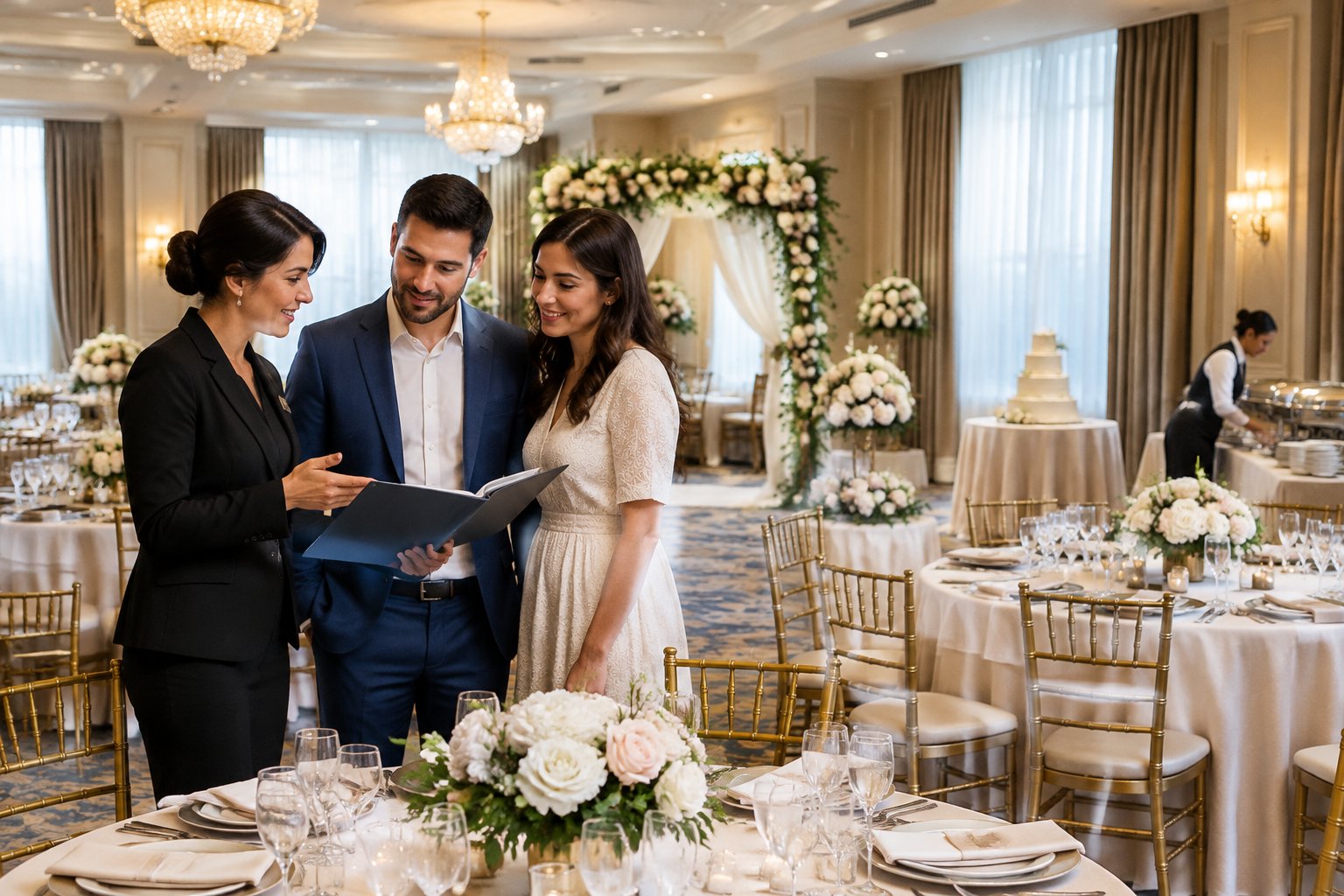
A hotel wedding package often bundles event space with core reception services, such as catering, tables, linens, and staff. Package names do not guarantee the same inclusions, so review each line before you compare prices.
Which Services Are Usually Bundled?
Your package may include a reception room for a set number of hours, dinner service, tables and chairs, basic linens, and a venue coordinator. Some packages add a cocktail hour, bar service, a champagne toast, a wedding cake, or a suite for the couple.
Read the details for quantities and limits. Check how many hours of bar service are included, which menu choices qualify, and whether your ceremony space is part of the deal. A venue coordinator handles the hotel’s event operations; confirm whether separate wedding-day planning is included.
The phrase all-inclusive wedding venue can cover very different offers. If on-site rooms are part of your plan, check the features of all-inclusive wedding venues with lodging alongside the event package.
When Is an All-Inclusive Venue Worth It?
An all-inclusive venue can suit you when you value simpler planning and want the hotel to provide several major services under one contract. Bundled catering, rentals, and staff can reduce the number of vendors you coordinate and make it easier to estimate the event’s core costs.
Compare the package with separate prices for the same services. If the package includes items you would choose anyway, its combined price may offer good value. If you would replace several included options with upgrades, ask for the cost of those changes before booking. You can also compare different all-inclusive wedding venues by checking the included services, rules, and final estimated bill.
Which Factors Push Hotel Venue Prices Up?
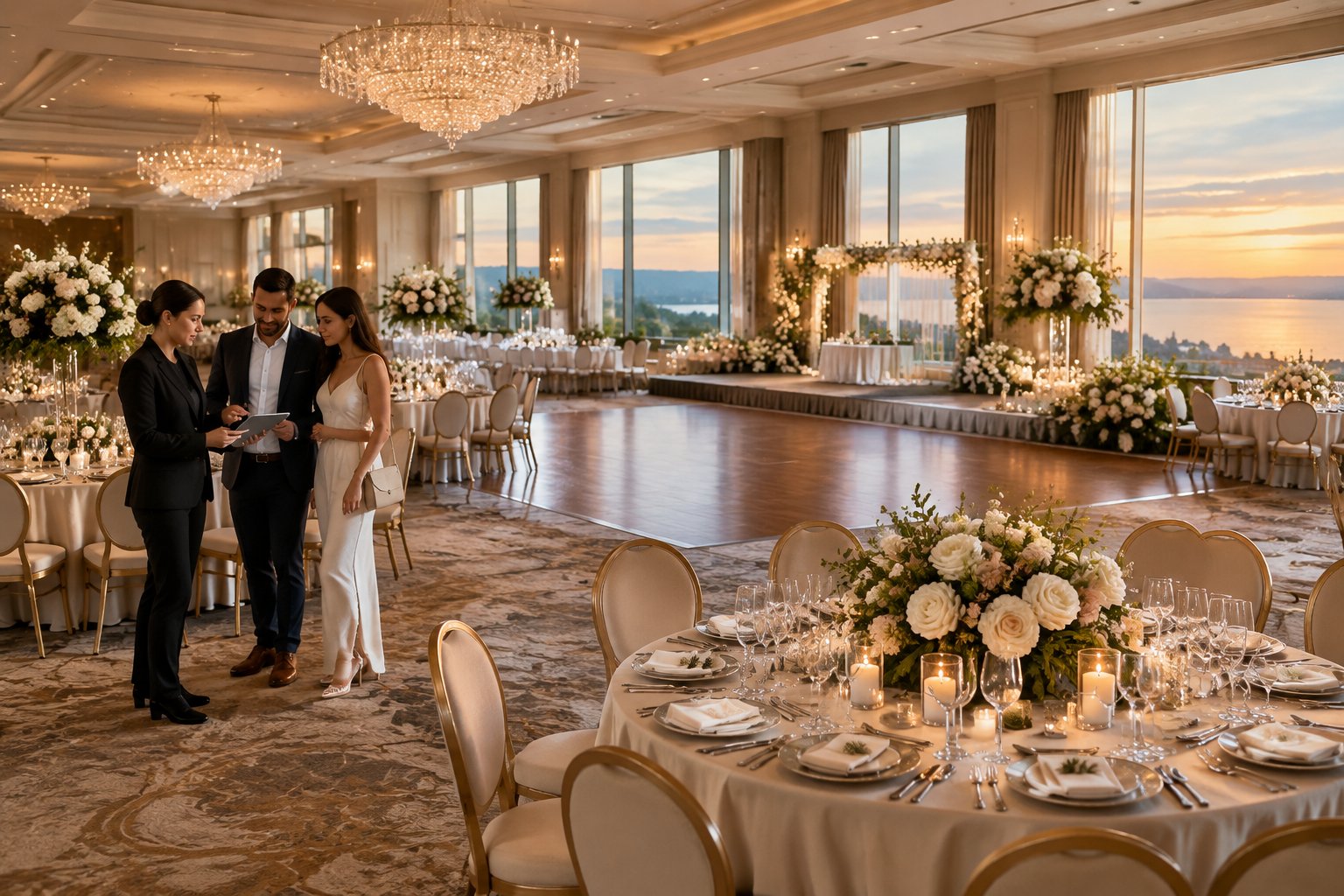
High-demand dates, popular locations, and destination wedding logistics can raise hotel venue prices. Your date and location also affect room availability, package minimums, and the travel costs your guests face.
How Do Location and Peak Season Affect Rates?
Hotels in major cities, resort areas, and sought-after neighborhoods may charge more because demand and operating costs are higher. Peak wedding season, popular Saturdays, and holiday weekends can also come with higher rates or larger minimums.
If your date is flexible, ask about a weekday, Friday, Sunday, or off-season celebration. Request quotes for more than one date so you can compare the same package under different pricing conditions. An off-peak date can also give you more room to discuss upgrades or a lower minimum.
What Changes for Destination Weddings?
Destination weddings add travel and lodging decisions to your venue budget. Your hotel quote may cover the event itself, while guests handle their own flights and room reservations. Ask how room blocks work, when the booking cutoff falls, and whether you have financial responsibility for rooms guests leave unbooked.
Check what the hotel’s package includes for ceremony space, reception service, and event coordination. Then calculate how many guests are likely to travel; estimating attendance for a destination wedding can help you discuss a realistic room block with the hotel.
What Extra Charges Should You Budget For?
Hidden wedding venue costs can add thousands of dollars to a quote when required fees and upgrades are left out of your first estimate. Include taxes, service charges, and event-specific extras in your wedding budget before you pay a deposit.
Which Fees Commonly Appear Beyond the Package?
Your final bill may include a service charge, gratuity, and sales tax. A service charge is not always the same as a tip, so ask whether staff gratuity is included and how each amount is calculated.
Other possible charges include overtime, early access for setup, upgraded linens, special lighting, cake cutting, vendor meals, parking, and room-block penalties. Ask whether the hotel requires event insurance or charges for outside vendors. If guests are staying at the hotel, clarify who pays for their rooms; hotel room payment expectations for wedding guests can help you communicate the arrangement.
What Should You Check in the Contract?
Your contract should list the package inclusions, required minimums, payment schedule, and every mandatory fee. Check the room access and event end times, the overtime rate, and the deadline for confirming your final guest count.
Read the cancellation and postponement terms, vendor rules, and room-block conditions. Ask the hotel to put any promised discount or upgrade in writing. Before signing, request a sample final estimate for your guest count that includes service charges and taxes.
How Can You Keep Hotel Venue Spending in Check?
You can control hotel venue spending by choosing a flexible date, setting clear package priorities, and comparing itemized quotes at the same guest count. A written estimate makes it easier to see which wedding venue pricing fits your budget.
Which Dates and Package Details Can You Negotiate?
Ask about Friday, Sunday, weekday, and off-season rates if your schedule allows. You can also ask whether the hotel can reduce a food-and-beverage minimum or include an upgrade, such as a suite or extra cocktail-hour item, at the quoted price. Room-block bookings may create room for added perks, so ask what the hotel offers.
Before you negotiate, decide which package details matter to you. You might prioritize menu choices, bar hours, or an included ceremony room. Tips for negotiating a wedding venue discount can help you prepare a clear request based on your date and expected spend.
How Can You Compare Hotel Quotes Fairly?
Give each hotel the same event details: date, guest count, meal format, bar plan, ceremony needs, and event hours. Then ask each venue for an itemized estimate showing rental fees, package costs, minimums, taxes, service charges, and any required extras.
Compare the estimated total and what it includes, then note the costs you would still need to cover. A lower package price may come with a higher minimum or fewer included services. Keep a contingency amount in your wedding budget for changes to guest count, timing, or selected upgrades.