
How Much Does Catering Cost for a Wedding? 2026 Guide
When you ask how much does catering cost for a wedding, start with a per-person benchmark to set your first budget.
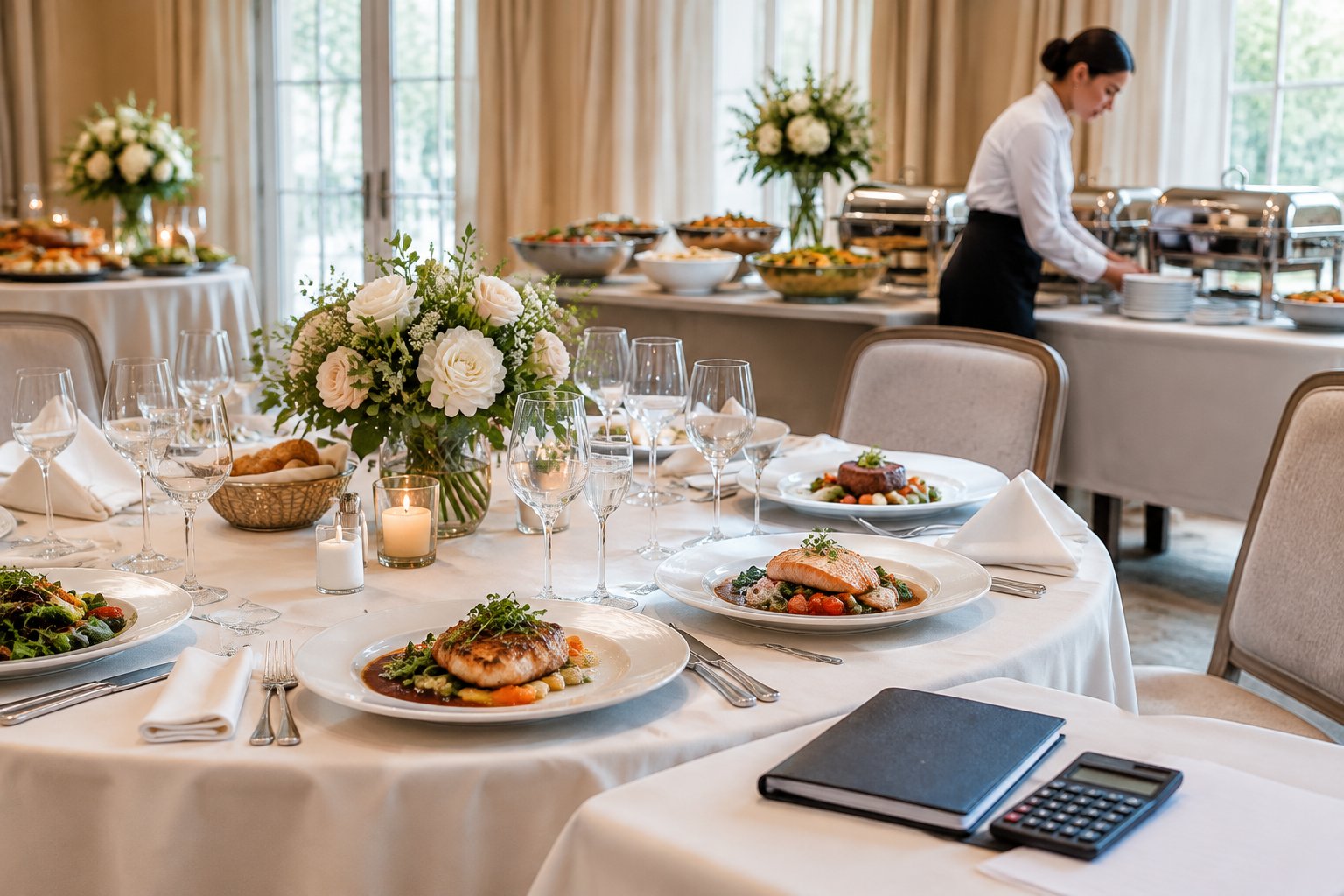
In 2026, a useful U.S. benchmark is about $80 per guest, or roughly $8,000 for 100 guests and $16,000 for 200, before package-specific extras. Your final price depends on what the quote includes, from food and staffing to drinks and rentals.
Start with your guest count, then ask caterers for itemized estimates based on your venue and preferred meal style. A written quote will help you set a budget with fewer surprises.
What Is the Average Wedding Catering Cost?

The average wedding catering cost is about $80 per person in the U.S., though your quote can land above or below that figure. Guest count gives you a quick estimate, while the menu, service, drinks, and rentals help explain the final wedding catering cost.
How Much Does Catering Cost per Person?
A planning range of about $50 to $150 per guest gives you room to compare different menus and levels of service. The $80 national average is a useful midpoint, but confirm whether a quoted wedding catering cost per person covers food alone or includes staff, beverages, rentals, and fees. You can also review how much a wedding meal should cost per person as you set your target.
For a meal with several courses, the ingredients and service plan both shape the price. A three-course meal catering estimate can help you think through how extra courses fit your budget.
What Could Catering Cost for 100 or 200 Guests?
At the $80-per-person benchmark, catering for 100 guests comes to about $8,000, while catering for 200 guests comes to about $16,000. These figures are simple estimates, not guaranteed package totals. Your quote could include more or fewer services, and local prices vary by region.
| Guest count | Estimate at $80 per person |
|---|---|
| 100 | $8,000 |
| 200 | $16,000 |
For 100 guests, compare the full package price alongside the per-person rate. Reviewing lower-cost catering approaches for 100 people can help you spot options that suit your budget.
Which Catering Style Fits Your Budget?
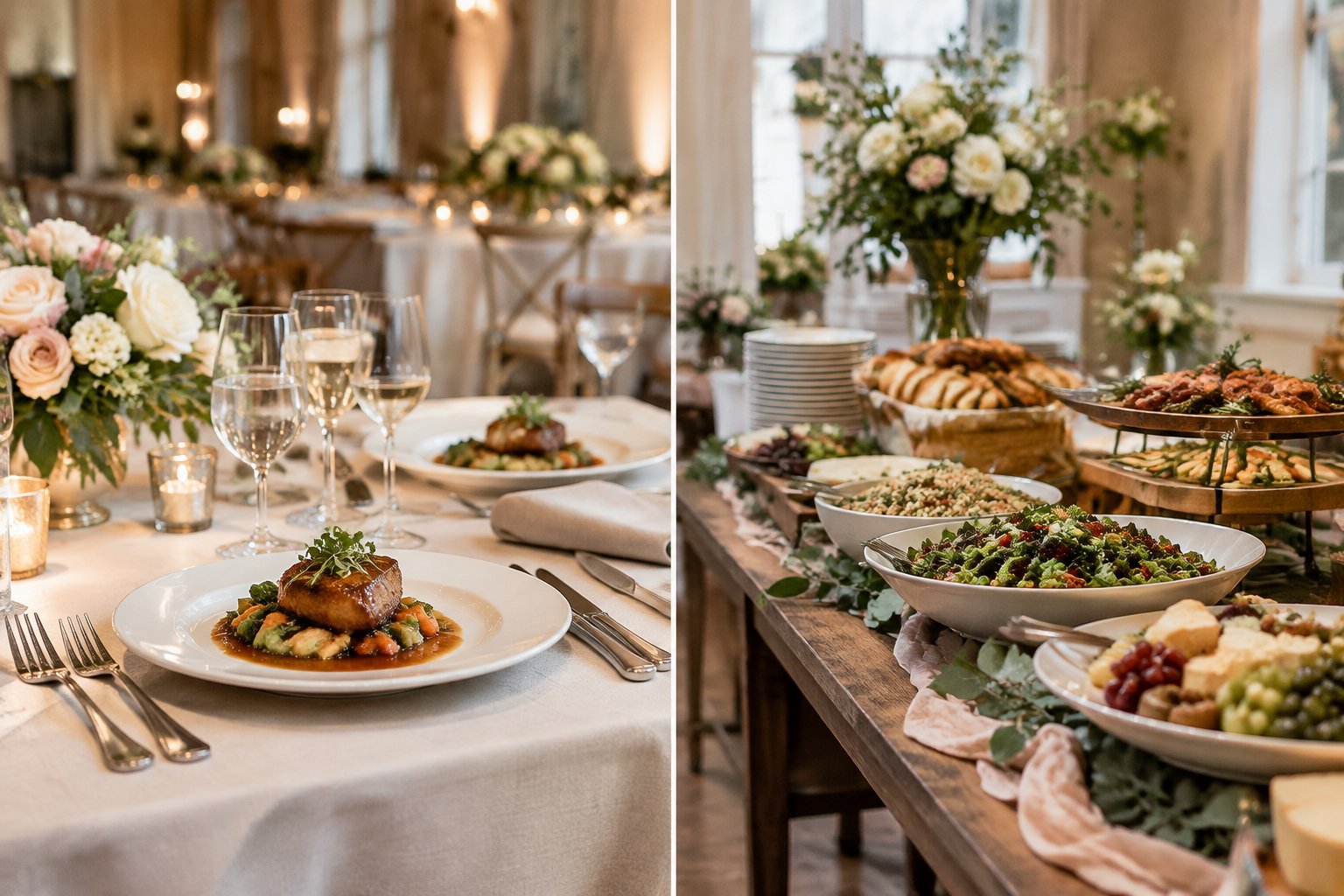
Your service style affects labor, food quantities, and how guests move through the meal. Plated dinners, buffet catering, food stations, and drop-off catering each create a different pace and dining experience.
How Do Buffet and Plated Meals Compare?
A buffet may reduce table-service needs, while plated service gives your meal a set pace and portions prepared for each guest. Your final price depends on the menu and staffing plan, so compare the complete quote instead of assuming one style always costs less.
| Feature | Buffet | Plated |
|---|---|---|
| Guest service | Guests serve themselves | Servers bring meals |
| Meal pace | Flexible | Set by service |
| Staffing needs | Buffet and dining-room support | Table service for each course |
| Food planning | Allow for guest-selected portions | Plan portions by RSVP choice |
Buffets give guests a choice of dishes and portions, while plated meals make it easier to coordinate dinner with speeches or other events. If you’re deciding whether a wedding buffet suits your plans, consider the room layout and the kind of evening you want.
When Do Food Stations or Drop-Off Catering Make Sense?
Food stations suit receptions where you want guests to mingle and choose from several menu options. Each station adds setup and food planning, and a staffed station may need its own attendant.
Drop-off catering delivers prepared food for you to serve, which can suit a casual event with a venue that allows outside food and a plan for setup and cleanup. Ask your caterer how the service style affects staffing, food quantities, and venue logistics.
You can also learn how wedding caterers work to prepare for the planning and service details.
What Wedding Food Trends Can Shape Your Menu?
Interactive stations, locally inspired dishes, and late-night snacks are wedding food trends that can add personality to your menu. Each addition affects the budget through ingredients, staffing, or setup. Choose a featured item that feels special, then keep the rest of your wedding menu focused.
What Goes Into a Wedding Catering Cost Breakdown?
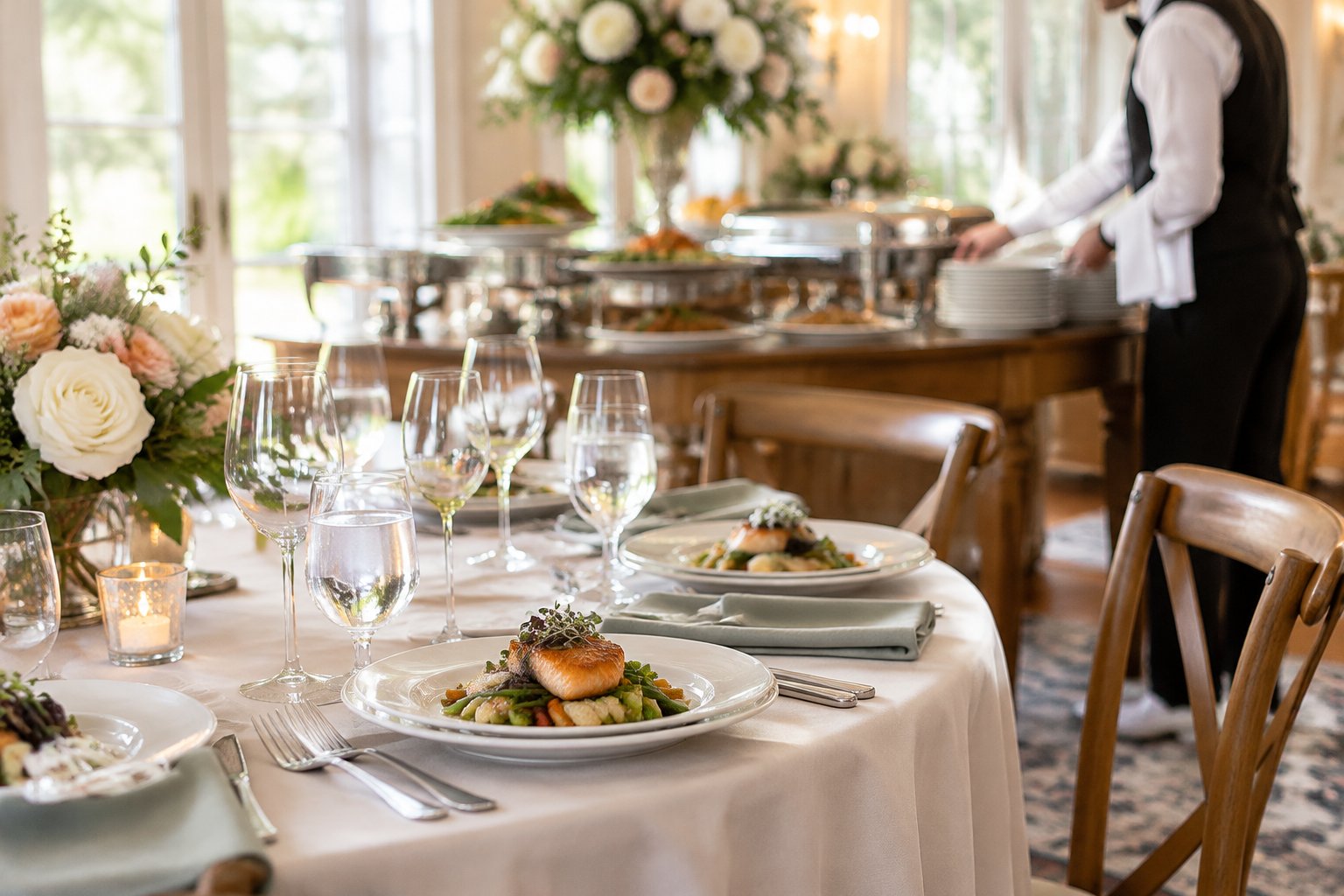
A wedding catering cost breakdown can include food, labor, rentals, beverages, and event fees. Your written proposal should show which items are included in the package and which appear as separate charges.
Which Food, Labor, and Rental Costs Are Included?
Food covers the ingredients and meal preparation, while labor may include kitchen staff, servers, bartenders, setup, and cleanup. Rentals may include plates, glassware, flatware, linens, or serving equipment if your venue does not provide them.
Check whether the quote also covers vendor meals, cake cutting, or a tasting. Ask for each item to be listed so you can see how the price is built and compare packages accurately.
What Extra Fees Can Increase the Final Bill?
Service charges, taxes, delivery, travel, overtime, and venue kitchen fees can raise your final bill. A service charge does not always include a gratuity, so ask how it is used and whether staff tips are expected separately.
Request the estimated total after all fees and taxes. If the event runs past the planned service time, ask what overtime costs per hour and how the caterer tracks that time.
What Factors Change Your Final Catering Price?

Your wedding catering prices reflect the size and needs of your event, from the guest count to the venue’s setup. Menu choices and service details also affect how much food, equipment, and staff your caterer must plan for.
How Do Guest Count, Menu Choices, and Service Affect Cost?
A higher guest count raises the total because you need more servings, though the per-person rate may change with the size of the order. Premium ingredients such as steak and seafood can raise food costs, while a menu built around seasonal produce or simpler proteins can fit a tighter budget.
Your service style shapes staffing and food planning. Plated meals require servers to bring dishes to each table, while buffets need a plan for replenishing food and keeping the line moving. Share your expected guest count early, then update it as RSVPs arrive.
How Do Location, Date, and Venue Requirements Matter?
Your venue can affect catering costs through kitchen access, equipment needs, travel distance, and rules for outside vendors. A remote site may require extra transport, while a venue without a working kitchen may need additional equipment.
Your date can also shape availability and pricing. Ask caterers how your day, season, and service hours affect the estimate, and confirm any venue fees before you sign a contract.
How Can You Compare Quotes and Save?
A fair comparison starts with itemized wedding catering quotes for the same guest count, menu, service style, and event hours. Once you understand what each wedding catering quote includes, you can compare the total price and make focused changes to control costs.
What Should You Ask a Wedding Caterer?
Ask your wedding caterer what the price includes, how staff and rentals are counted, and which charges are added later. Confirm that the team can meet your dietary needs and ask how it handles setup, cleanup, and changes to your guest count.
A few useful questions include:
- Which food, drinks, staff, and rentals are included?
- Are service charges, gratuity, and taxes listed separately?
- What is the final guest-count deadline?
- What happens if the event runs past the contracted hours?
- How are allergies and special meals handled?
You can also ask about menu flexibility, tastings, and vendor meals before choosing a package.
How Can You Compare Wedding Catering Quotes Fairly?
Compare wedding catering quotes line by line, using the same guest count and service plan for each caterer. Check the final estimated total, not only the per-person price, and note differences in staffing, drinks, rentals, delivery, service charges, and taxes.
A quote with a lower starting rate may cover fewer services. Ask each caterer to explain unclear items and update the estimate when you change your menu or guest count.
Which Choices Can Lower Costs Without Diminishing the Meal?
Keep the menu focused, choose seasonal ingredients, and prioritize the dishes you care about most. You could offer a smaller set of entrée choices or limit the bar to beer, wine, and a signature drink.
Confirm your guest count on time to help your caterer plan quantities. If you’re looking for more ways to trim the food budget, consider these ways to keep wedding food costs down.
Make one change at a time, then ask your caterer to revise the quote so you can see the savings.