
Industrial Wedding Venues: All-Inclusive Packages Explained
An all-inclusive package at an industrial wedding venue brings the space together with selected rentals and services under one agreement. You get a more coordinated starting point for planning, while the venue’s exposed brick, high ceilings, or factory windows provide character before you add décor.
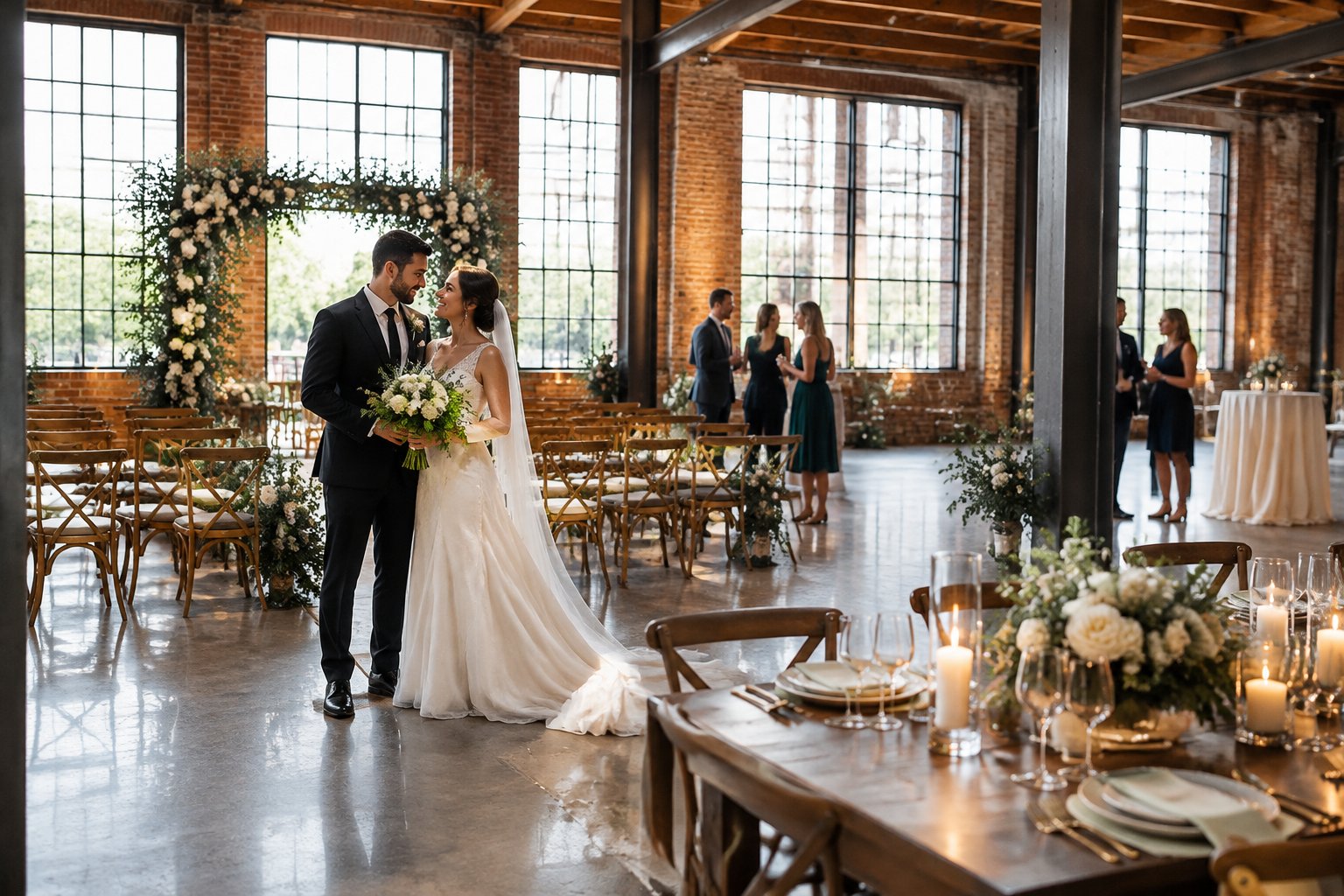
Your package details shape your budget, setup, and choices on the wedding day, so ask for an itemized quote and a clear list of exclusions. As you narrow down how to pick a wedding location, schedule a tour and bring your guest count, preferred date, and budget.
What Do All-Inclusive Packages Usually Cover?
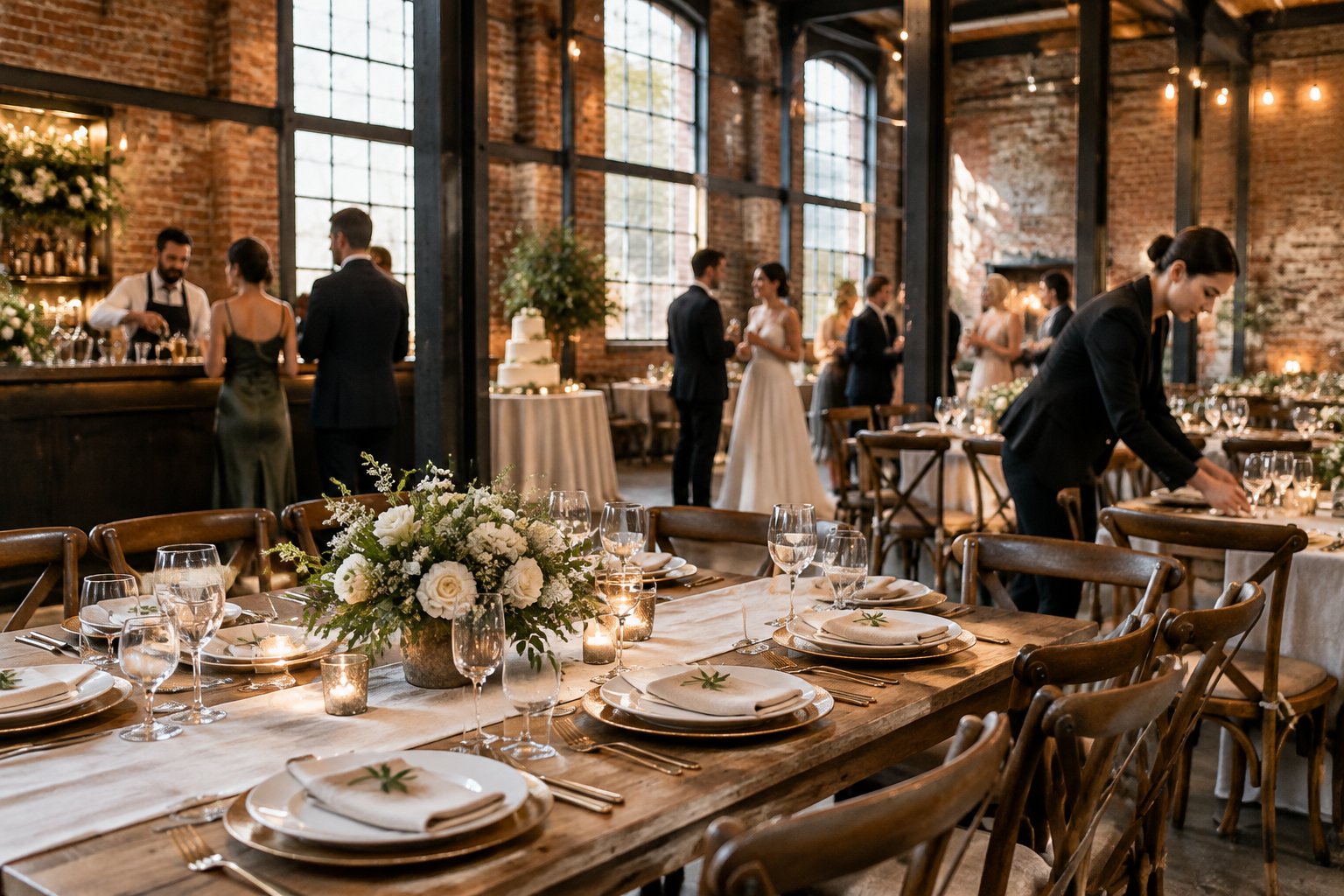
An all-inclusive package combines the venue with a set of services and rentals, but each venue defines its own bundle. You might see the ceremony and reception spaces, tables and chairs, food, bar service, staffing, or a venue coordinator included. Check the written package list before comparing all-inclusive wedding venues, since the same label can describe different offerings.
Which Services and Rentals Are Commonly Included?
Your package may include access to the ceremony and reception spaces for a set number of hours. It may also cover tables, chairs, linens, place settings, and basic setup. Catering and bar service often come as per-person options, with menus and drink tiers that affect the total.
Staffing can include servers, bartenders, and a venue coordinator. Ask what each person handles. A coordinator who oversees venue logistics may not provide the same planning help as a full-service wedding planner.
Request quantities and service times in writing. Confirm the guest count covered by your table settings, how long your bar is staffed, and whether setup and teardown fit inside your rental window.
What Should Couples Confirm Is Not Included?
Check the package for costs that sit outside the quoted price. Photography, flowers, entertainment, custom décor, and upgraded lighting may require separate vendors or add-on fees. For an industrial space, ask whether sound equipment, a dance floor, and any specialty furniture are part of the bundle.
Also review food and beverage details, including menu upgrades, cake service, vendor meals, and corkage fees. Confirm whether the quote includes service charges, gratuity, and taxes. A written list of inclusions and exclusions gives you a clearer estimate of what you will pay.
Which Industrial Venue Features Shape the Wedding?
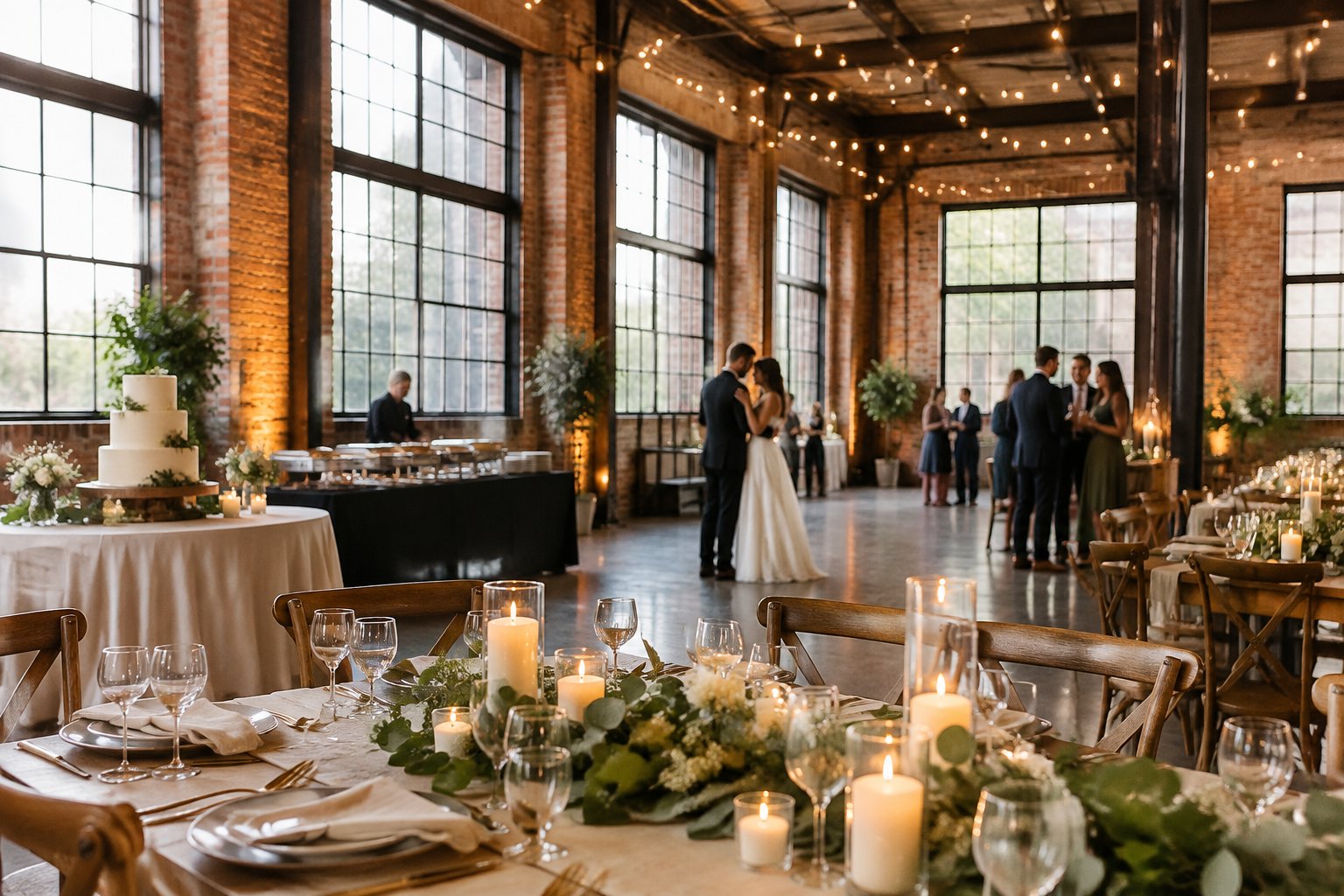
The building’s architecture sets the mood, while lighting, greenery, and room features help you shape the celebration. Exposed brick and metal details create texture; windows and gardens bring a softer feel. Your décor can echo the venue’s look or add contrast, as these industrial wedding table decoration ideas show.
How Do Exposed Brick and Industrial Details Set the Mood?
Exposed brick, steel beams, concrete floors, and tall ceilings give an industrial wedding a distinctive backdrop. These details add visual texture, so you can build your palette around the building’s existing colors and materials. Warm lighting, flowers, and soft fabrics can make the space feel more intimate.
Ask which architectural features will be visible in your ceremony and reception layouts. You should also check where outlets, support columns, and fixed fixtures sit before planning your décor or dance floor.
Can Natural Light and Gardens Soften the Look?
Large windows bring natural light into the room and give you a bright setting for daytime celebrations. Ask when sunlight reaches the ceremony area, and whether window coverings are available if glare affects guest seating or photographs.
Some wedding venues pair an industrial interior with manicured gardens or a courtyard. That gives you an outdoor option for your ceremony, portraits, or cocktail hour. Confirm how guests move between the indoor and outdoor spaces, and whether the garden is included in your rental.
What Do a Built-In Bar and Chandeliers Add?
A built-in bar gives guests a clear place to order drinks and can reduce the need for extra bar rentals. Ask whether bartenders, glassware, and bar service are included, and how the venue handles lines during busy periods.
Crystal chandeliers add a polished accent to brick, steel, and concrete. Check whether the fixtures are permanent, whether dimming is available, and whether their light works with your décor plan. If you want a different look, ask about approved lighting changes before booking a rental company.
How Much Do Packages Cost, and Are They Worth It?
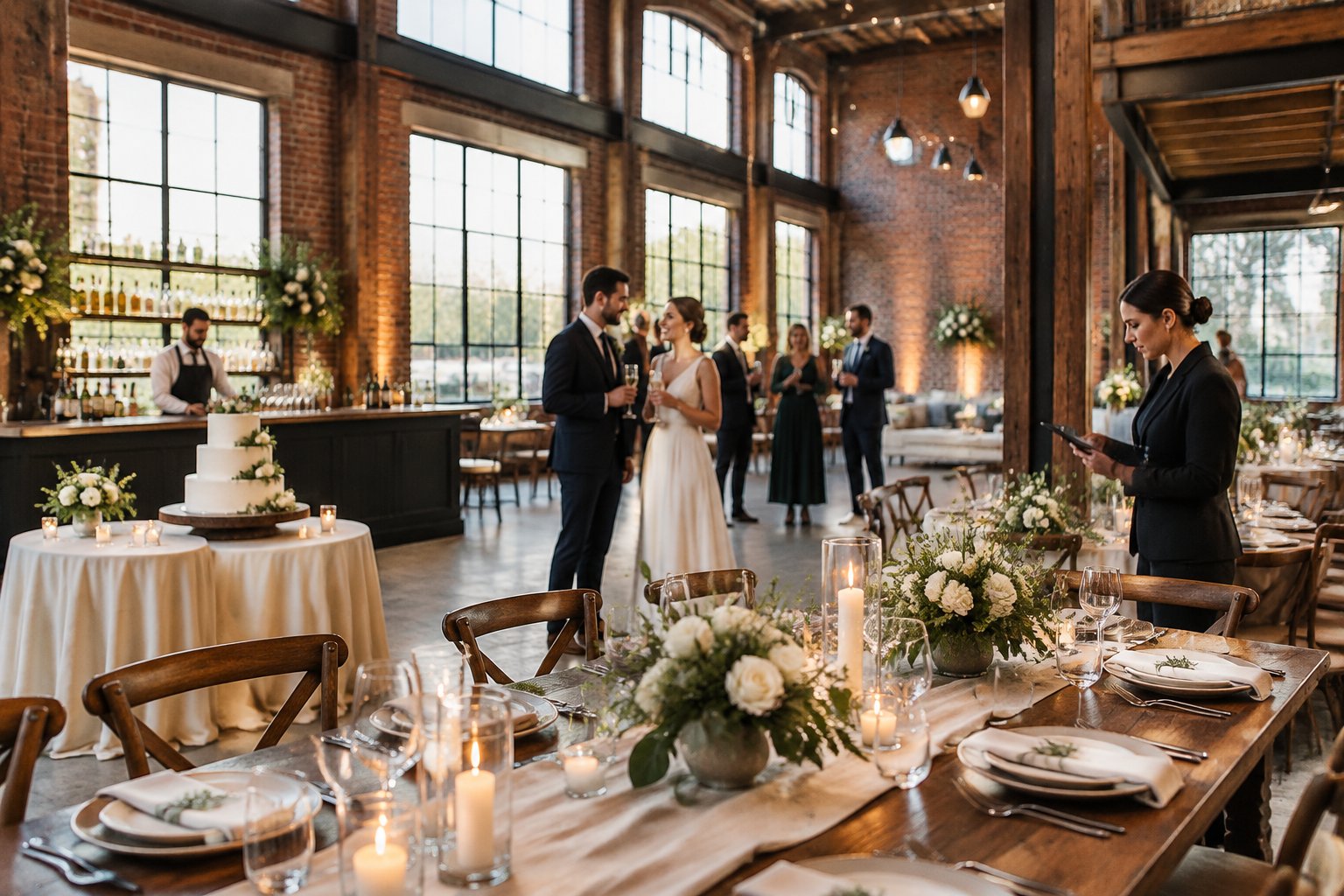
A package is worth considering when its included services match what you would otherwise pay for separately. Your total depends on guest count, date, service level, and add-ons. Compare itemized estimates with the same guest count and service assumptions, and use wedding venue cost information as a starting point for your budget.
How Should You Compare a Package With a Venue-Only Rental?
Compare the total cost of building your wedding from a venue-only rental with the package price. Include every service and rental you would need to add, such as catering, tables, linens, staffing, and bar equipment. A lower rental fee may leave you with more separate bills to manage.
| Cost or detail | All-inclusive package | Venue-only rental |
|---|---|---|
| Space | Included for set hours | Rental fee |
| Food and bar | May be bundled or priced per guest | Usually arranged separately |
| Rentals | Listed items may be included | You price and book them |
| Vendor coordination | Venue support may be included | You coordinate vendors |
| Custom choices | Package options and upgrades | More choices, subject to venue rules |
For a fair comparison, ask both venues for a written estimate at your planned headcount. If you’re keeping costs in view, compare affordable all-inclusive wedding venues by the full bill and the services you receive, not by the starting price alone.
Which Fees and Services Can Change the Final Price?
Your final cost can change with guest count, date, food and drink choices, and the length of your rental. Ask about minimum guest counts or food and beverage minimums that apply to your date. Also check the price for overtime, extra setup hours, and any required security or cleaning.
Find out whether the service charge covers staff gratuity, and whether taxes apply to the package or added fees. If you want an outside caterer or other vendor, confirm any outside-vendor charge and the venue’s insurance rules. An estimate with every known fee gives you a more useful budget number.
How Can You Tell if a Venue Fits Your Wedding?

A venue fits when its capacity, layout, access, and backup plans work for your guest list and schedule. Walk through the route your guests will take, from arrival to the last dance. A checklist for choosing a wedding location can help you compare practical details alongside the style.
What Guest Capacity and Layout Should You Check?
Ask for capacity numbers for each setup you are considering. A room that fits a seated dinner may hold a different number of guests for a ceremony or cocktail reception. Check that your guest count leaves room for a dance floor, service stations, and comfortable paths between tables.
Review where guests with mobility needs can sit and whether restrooms are easy to reach. A clear wedding seating plan helps you see how tables, aisles, and the dance floor will work together.
How Do Ceremony, Cocktail, and Reception Spaces Connect?
Ask whether your ceremony, cocktail hour, and reception can use separate spaces or need to share one room. If staff must reset the room between events, confirm how long the change takes and where guests will wait during that time.
Walk the route between spaces and note stairs, narrow doorways, and outdoor paths. If you plan to use a garden, check how guests will move back inside and whether the route works for anyone using a mobility aid.
What Accessibility and Weather Plans Matter?
Ask about step-free entrances, accessible restrooms, parking, and paths between indoor and outdoor areas. If older guests or guests with mobility needs are attending, check that they can reach the ceremony, dining area, and restrooms without difficulty.
For an outdoor ceremony or cocktail hour, ask what happens in rain, wind, or extreme heat. Confirm whether the indoor backup space is included, how quickly staff can switch the setup, and whether heating or cooling covers the rooms you plan to use.
What Should You Ask Before Booking?
Before you sign, get clear answers about the staff’s responsibilities, your customization choices, and every contract cost. Ask the venue to put key details in writing, including package quantities, timelines, restrictions, and fees.
Who Handles Coordination, Setup, and Teardown?
Ask who your main contact will be before the wedding and who will be on-site during the event. Confirm whether the coordinator helps with the timeline, vendor arrivals, room setup, or ceremony cues. Ask how many planning meetings are included and how to reach the coordinator with questions.
Get setup and teardown times in writing. Check whether venue staff handle furniture placement and cleanup, or whether you need to hire a crew. Ask when outside vendors can load in and when they must clear the space.
Can You Customize Vendors, Menus, and Décor?
Ask whether you can choose your own caterer, florist, DJ, and rental company. If the venue uses a preferred or required vendor list, find out what choices you have and whether outside-vendor fees apply.
Review sample menus, serving styles, and options for allergies or dietary needs. For décor, ask which items you can bring, what the venue provides, and whether rules apply to candles, wall hangings, or lighting. Get approval for custom plans before you pay a vendor.
What Should You Review in the Contract?
Read the contract for the date, rental hours, guest limit, payment schedule, cancellation terms, and rescheduling rules. Confirm that each included service appears with its quantity and timing, including staffing and rentals.
Look for service charges, taxes, gratuity, overtime rates, vendor rules, and cleanup responsibilities. Ask for a sample final invoice at your planned guest count, with the known fees added. Review any open-house or tour notes against the contract before you sign, since the written terms set the package you are booking.