
Industrial Wedding Venues That Allow Outside Catering
Industrial wedding venues that allow outside catering give you the freedom to choose your food vendor, with the exact rules set by each venue’s contract. Confirm who can cater, what kitchen access costs, and whether your bar team needs venue approval before you book.
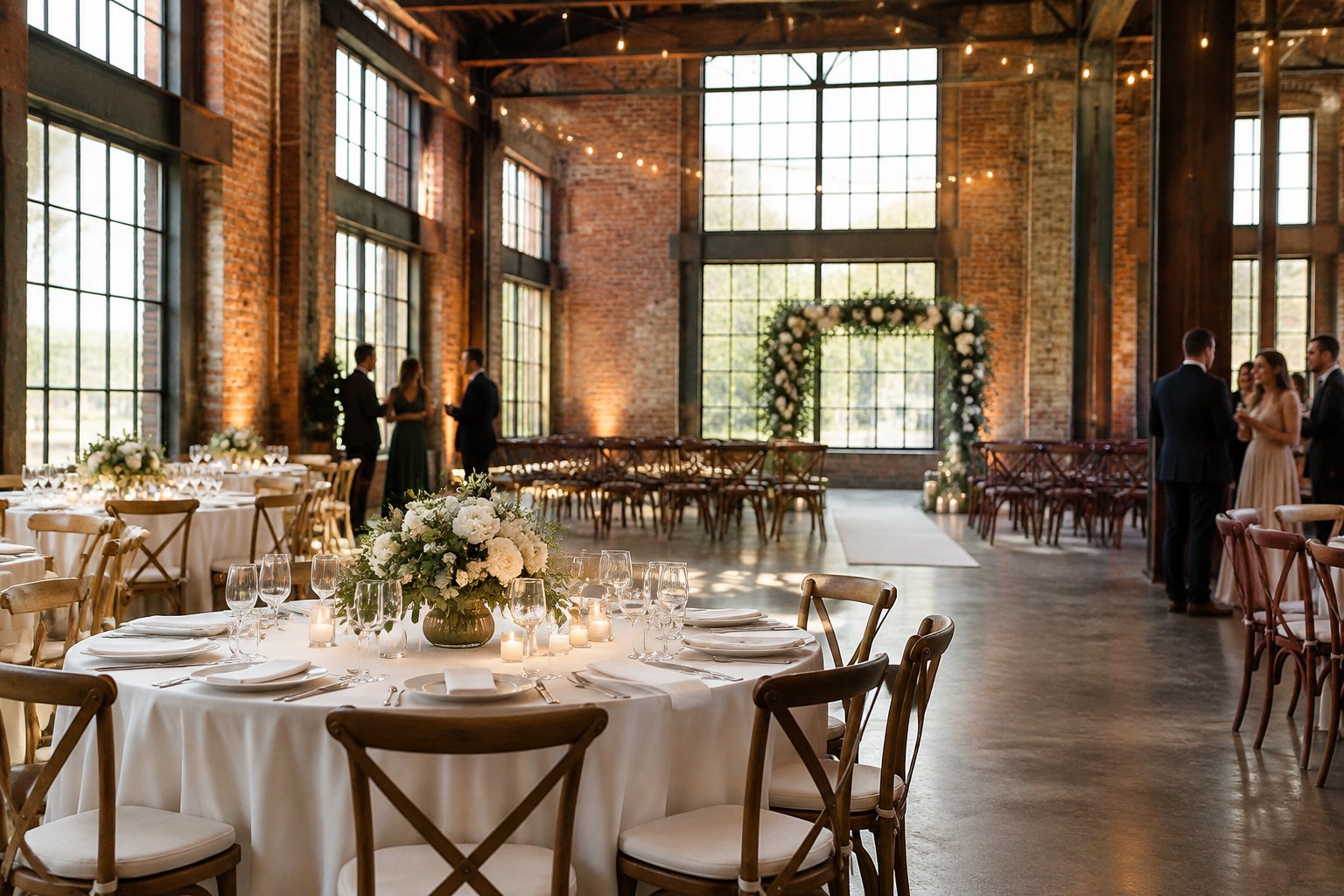
You can use that flexibility to plan a menu that fits your tastes, budget, or cultural traditions. As you compare spaces, look for written policies that spell out vendor requirements and every added fee.
What Does Outside-Catering Permission Actually Include?
Outside-catering permission lets you hire a food provider, with the venue contract defining the limits. Check the caterer approval process, kitchen access, cleanup duties, and alcohol rules before you count on a particular plan.
Can You Bring Any Caterer, or Must You Choose From an Approved List?
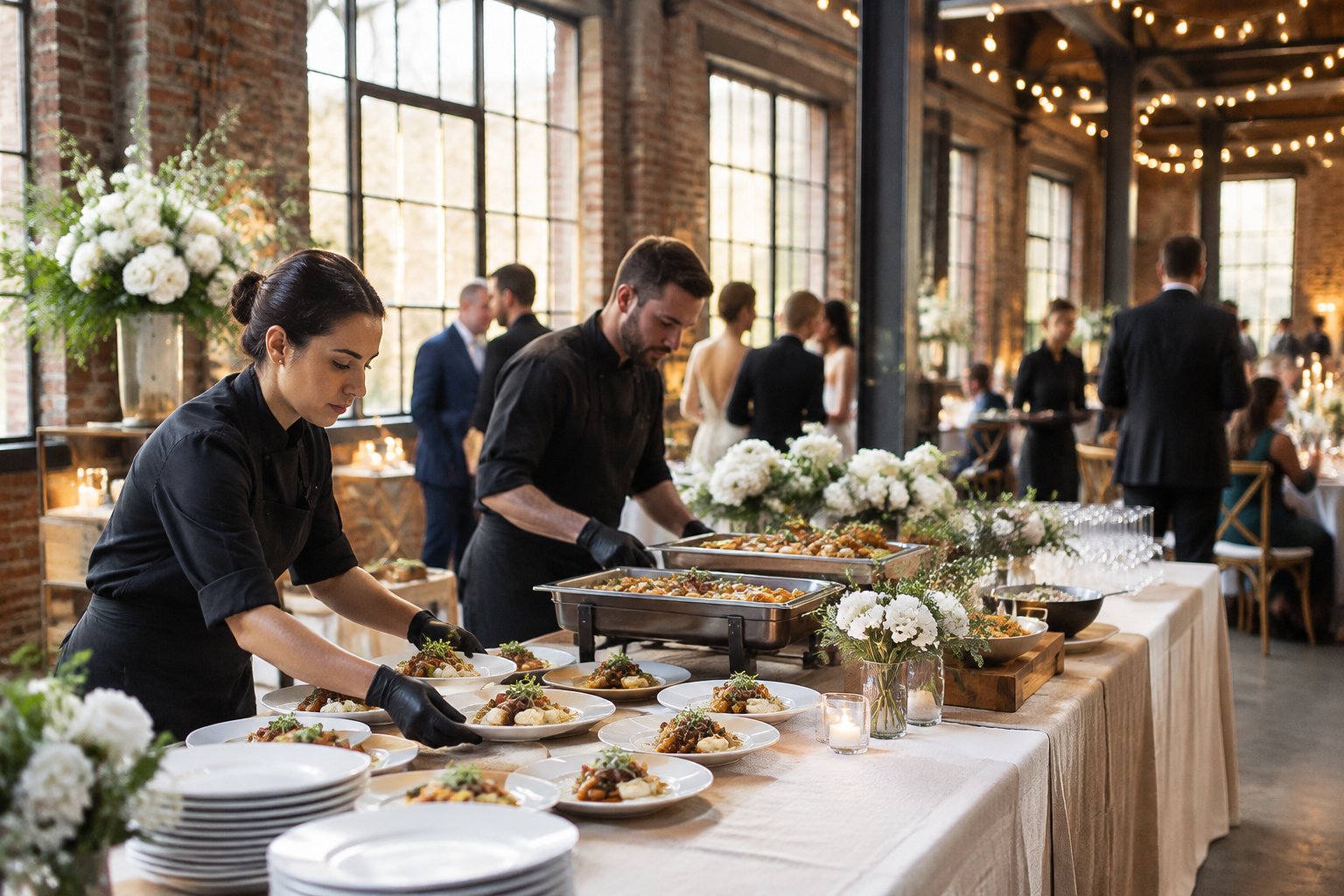
“Outside catering” can mean a wide range of options. An industrial wedding venue might accept any licensed caterer, require a caterer from its approved list, or ask you to submit a vendor for approval.
Some contracts also require proof of insurance, food-service permits, or a signed vendor agreement. Ask the venue to confirm its policy in writing before you pay a deposit.
If you have a favorite restaurant or a caterer who serves a specific cuisine, share its name and sample menu early. Use a clear checklist for choosing a wedding caterer, including service style, staffing, and experience with your guest count.
Are Kitchen Access, Setup, Cleanup, and Staffing Included?
Kitchen access and service responsibilities vary by venue. Some spaces have a prep kitchen with sinks and refrigeration; others provide a limited staging area, leaving your caterer to bring warming equipment and serving supplies.
Ask whether the rental includes kitchen use, loading access, tables for food service, trash removal, and a cleanup window. Clarify who handles setup and breakdown, and whether the venue requires its own staff on site.
Your caterer should know the load-in schedule, available power, and any limits on equipment. A rundown of how wedding caterers work can help you identify the staffing and service details to settle before signing.
What Rules Apply to Alcohol and Bar Service?
Alcohol rules may require a licensed bartender, a venue-approved bar vendor, or a specific type of insurance. Ask whether you can supply the alcohol, how unopened bottles are handled, and whether the venue charges a corkage or bar fee.
Confirm last call, service hours, and any restrictions on self-service.
How to Find an Industrial Venue That Fits Your Catering Plans
The right industrial venue has the space and facilities your caterer needs, along with contract terms that match your menu plan. Converted warehouses and former factories can offer open layouts, but their kitchen setup and vendor rules vary widely.
Which Contract Questions Should You Ask Before Booking?
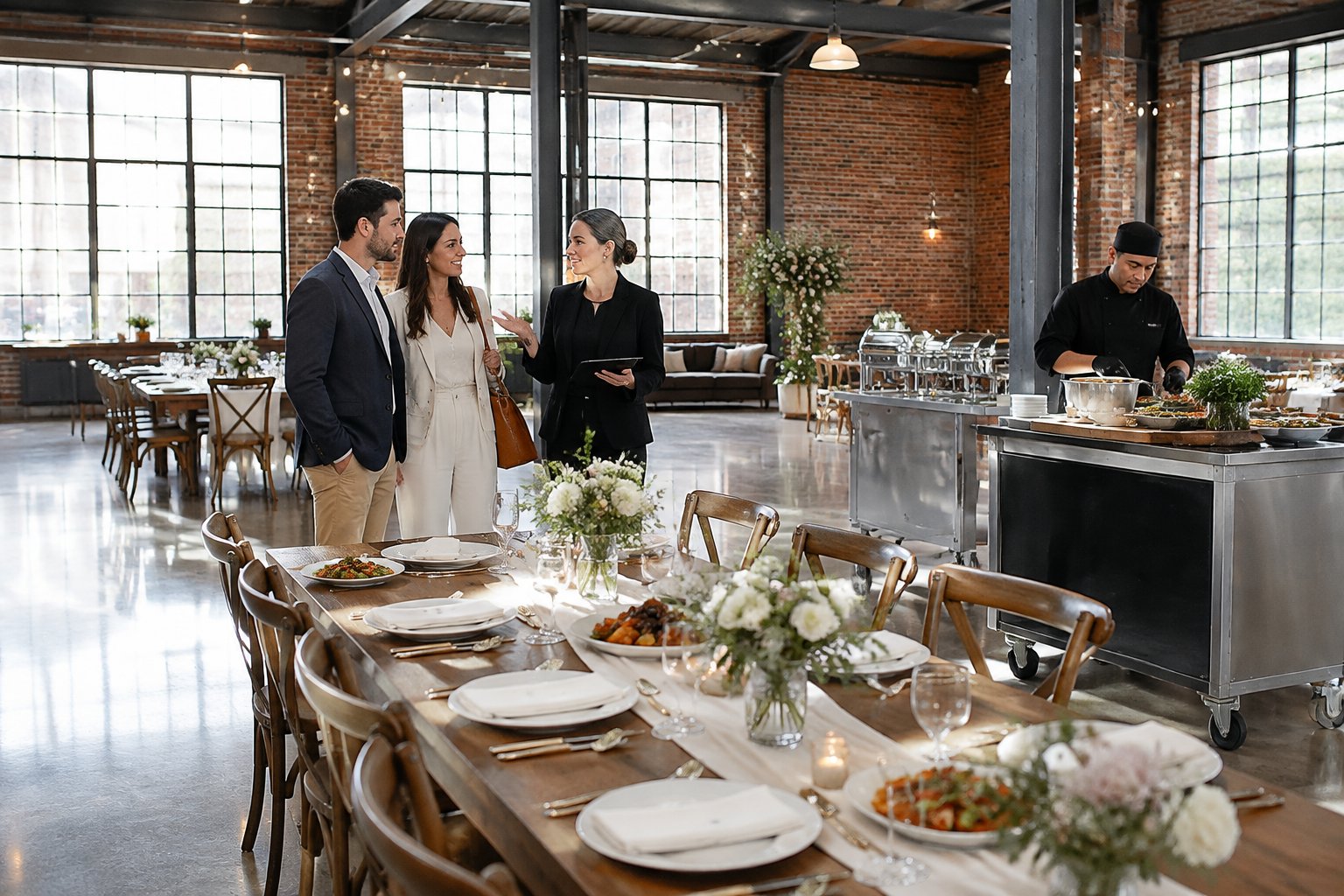
Ask the venue to spell out its catering policy, approved-vendor rules, fees, and deadlines in the contract. Confirm the hours your caterer can access the space, including time for setup and cleanup.
If your menu needs refrigeration, open-flame cooking, or special equipment, get approval for those details in writing. Also check the guest-count limit for your planned layout.
A room’s posted capacity may include standing events, so ask how many guests fit with seated dining, a dance floor, and a buffet. For broader location decisions, use these steps for choosing a wedding location to weigh travel, access, and guest needs.
How Can You Compare Catering Fees and Vendor Restrictions?
Compare the full price of the food service, including the caterer’s quote and the venue’s required charges. An outside vendor may offer more menu control, while a preferred list can simplify coordination; each arrangement has terms worth pricing out.
Request an itemized estimate for kitchen rental, vendor access, trash removal, security, and required staff. Ask your caterer to identify possible charges for rentals, delivery, and extra service hours.
You can use a wedding catering budget percentage as a planning reference, then adjust it to fit your venue’s actual quote.
What Should You Check During a Site Tour?
Walk the route your caterer and guests will use, from the loading area to the kitchen and reception floor. Check the size of doorways, elevator access, power outlets, refrigeration, handwashing sinks, and the distance between prep space and dining tables.
Ask where food stations can go without narrowing guest walkways. Look at the room during the time of day your reception will take place, and note the temperature controls and sound levels.
If possible, bring your caterer or planner so they can assess the layout and identify equipment needs on site.
Which Industrial Venues Should You Add to Your Shortlist?
Treat The Foundry, The Warehouse, The Loft, Moniker Warehouse, Sodo Park, The Century, and Mt. Washington Mill Dye House as leads to investigate, then confirm each venue’s current catering terms directly. Venue names and industrial style alone do not establish outside-catering permission.
What to Verify at The Foundry and The Century
The Foundry name applies to multiple event spaces, so confirm the exact location you are considering and request its current catering rules. Ask about caterer approval, kitchen access, and any required food-and-beverage minimum.
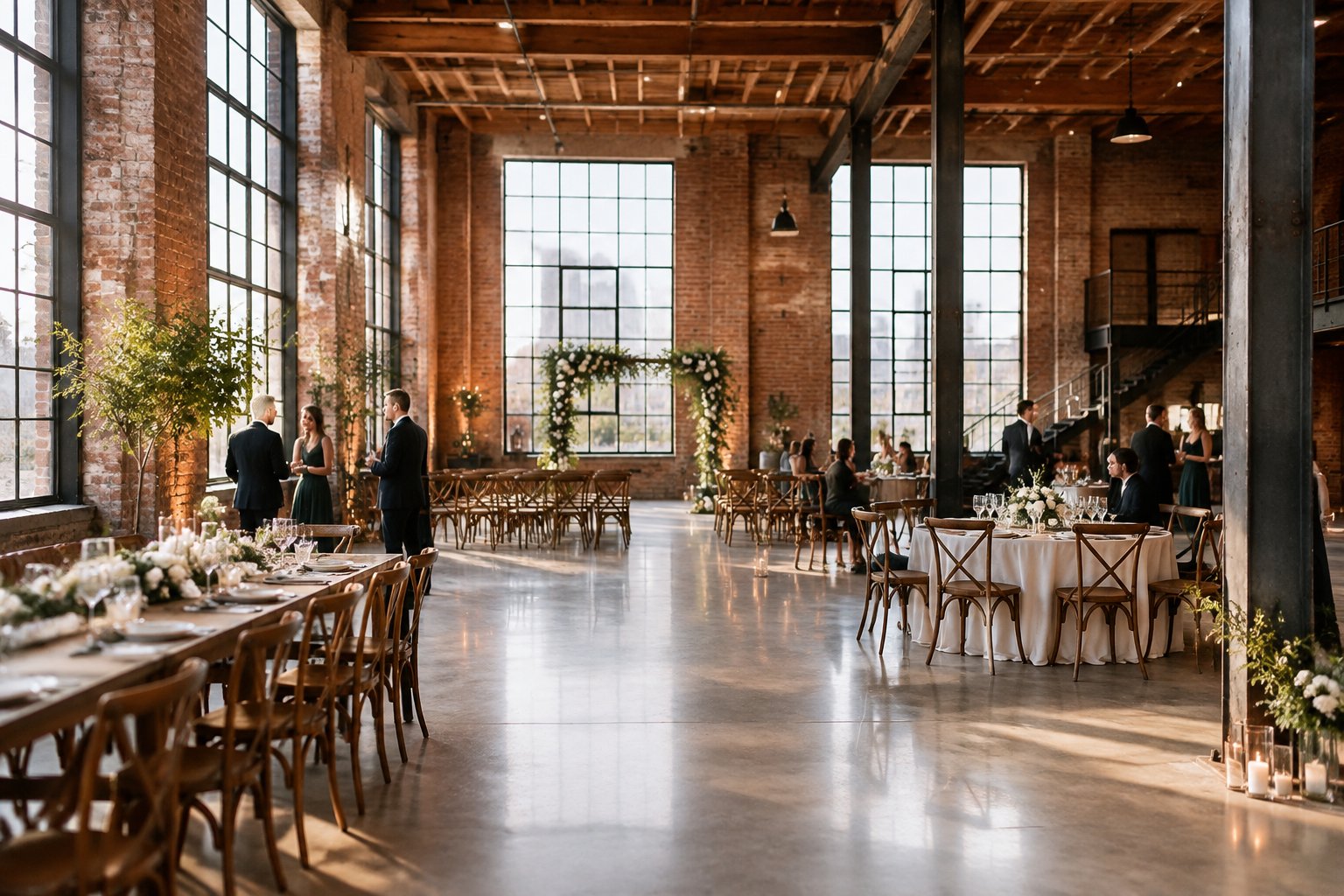
The Century in Columbus describes its space as an industrial and modern event venue, with more than 4,000 square feet and capacity for up to 240 seated guests. Use those published details to decide whether its size suits your plans, then ask its team directly about outside caterers, kitchen facilities, and fees.
How to Research Moniker Warehouse and Sodo Park
For Moniker Warehouse and Sodo Park, start by checking the venue’s current event information and contract. Ask whether your chosen caterer can work there, what facilities are available, and whether a preferred-vendor list affects your options.
Request a sample event estimate that separates the rental price from food service, bar staffing, and vendor fees. If the venue offers several spaces or packages, confirm which one your quote covers and what furnishings come with it.
What to Ask About The Warehouse, The Loft, and Mt. Washington Mill Dye House
These names can refer to different properties, so verify the city and exact venue before comparing policies. Ask each venue the same questions about outside vendors, cooking restrictions, kitchen access, cleanup, and alcohol service.
Save the written replies with your quotes. A shared checklist makes it easier to compare spaces with similar guest counts and service plans.
How Much Can Outside Catering Change Your Budget?
Outside catering can give you more control over menu pricing, yet your savings depend on all venue, vendor, and service charges together. Compare complete estimates for the same guest count and meal style before choosing a setup.
Which Venue, Kitchen, and Service Fees Can Add Up?
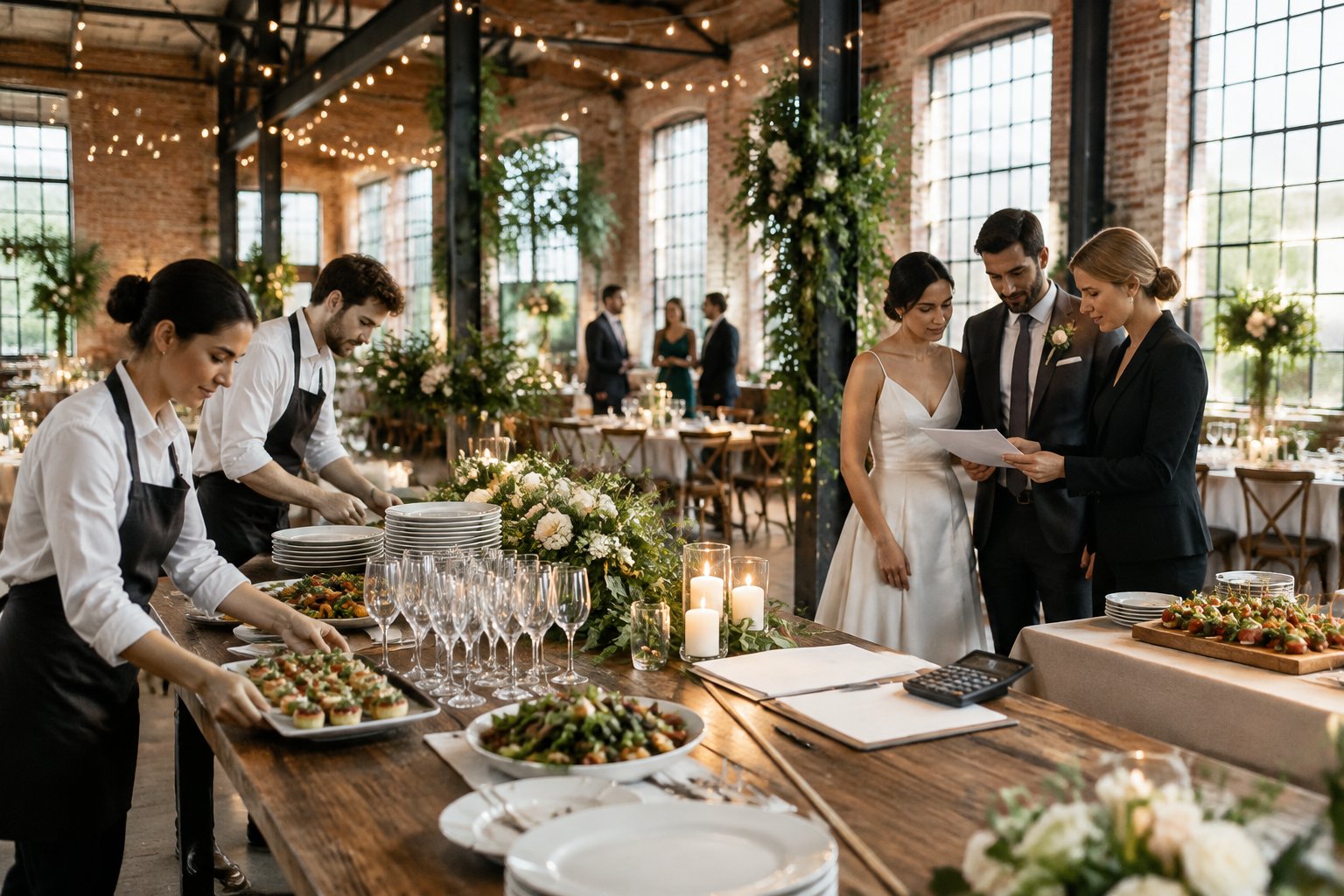
Build your estimate around the charges attached to the space and caterer. Your venue quote may include a rental fee, while kitchen access, cleaning, security, or overtime may appear as separate line items.
Your caterer may also charge for delivery, rentals, staffing, and service time. Ask for a total that includes tax, gratuity, bar service, and equipment rentals.
Compare that figure with your overall reception budget, using a guide to the cost of catering a three-course meal as a starting point for menu planning.
How Do You Compare In-House Catering With Outside Vendors?
Compare both options using the same guest count, menu format, and service expectations. In-house catering may bundle food, staff, and equipment into one quote.
An outside caterer can give you more menu choice, with venue fees and rentals listed separately. Ask each provider for an itemized proposal and check what happens if your guest count changes.
If you plan a buffet, plated dinner, or family-style meal, make sure both quotes include comparable portions and service. A clear menu plan also helps you keep wedding food costs manageable.
How Do You Make an Industrial Space Work for Your Reception?
Let the room’s existing architecture guide your layout, then add details that support comfort and easy movement. Exposed brick, steel beams, and large windows give you strong design features to build around.
How Do Brick, Steel, and Windows Shape the Room?
Exposed brick adds texture and warmth, while steel beams draw the eye upward and emphasize high ceilings. Large windows bring in natural light during the day and offer a clear view of the room’s structure.
Check how those features affect your ceremony backdrop, dining area, and photos. Balance hard surfaces with softer details such as fabric, greenery, and warm-toned flowers.
You can coordinate industrial wedding table decorations with the venue’s colors and materials without covering its defining features.
What Layout and Lighting Choices Suit the Space?
Set the room around your guest count and reception flow. Place dining tables where guests can hear toasts, leave clear paths to the bar and restrooms, and reserve enough open floor space for dancing. A well-planned wedding reception setup can help you map those zones before your rental order is final.
Use warm lighting to soften brick and metal after sunset. Ask what lighting equipment the venue provides, where fixtures can be hung, and which areas need added light. Confirm the final floor plan with your venue and caterer so food stations, tables, and service paths fit the room.