
Industrial Wedding Venues You Can Stay at: A Planning Guide
Industrial wedding venues you can stay at pair a converted warehouse, factory, or loft with overnight rooms on the same property. That setup gives you an atmospheric setting for your celebration and a convenient place for guests to sleep nearby.
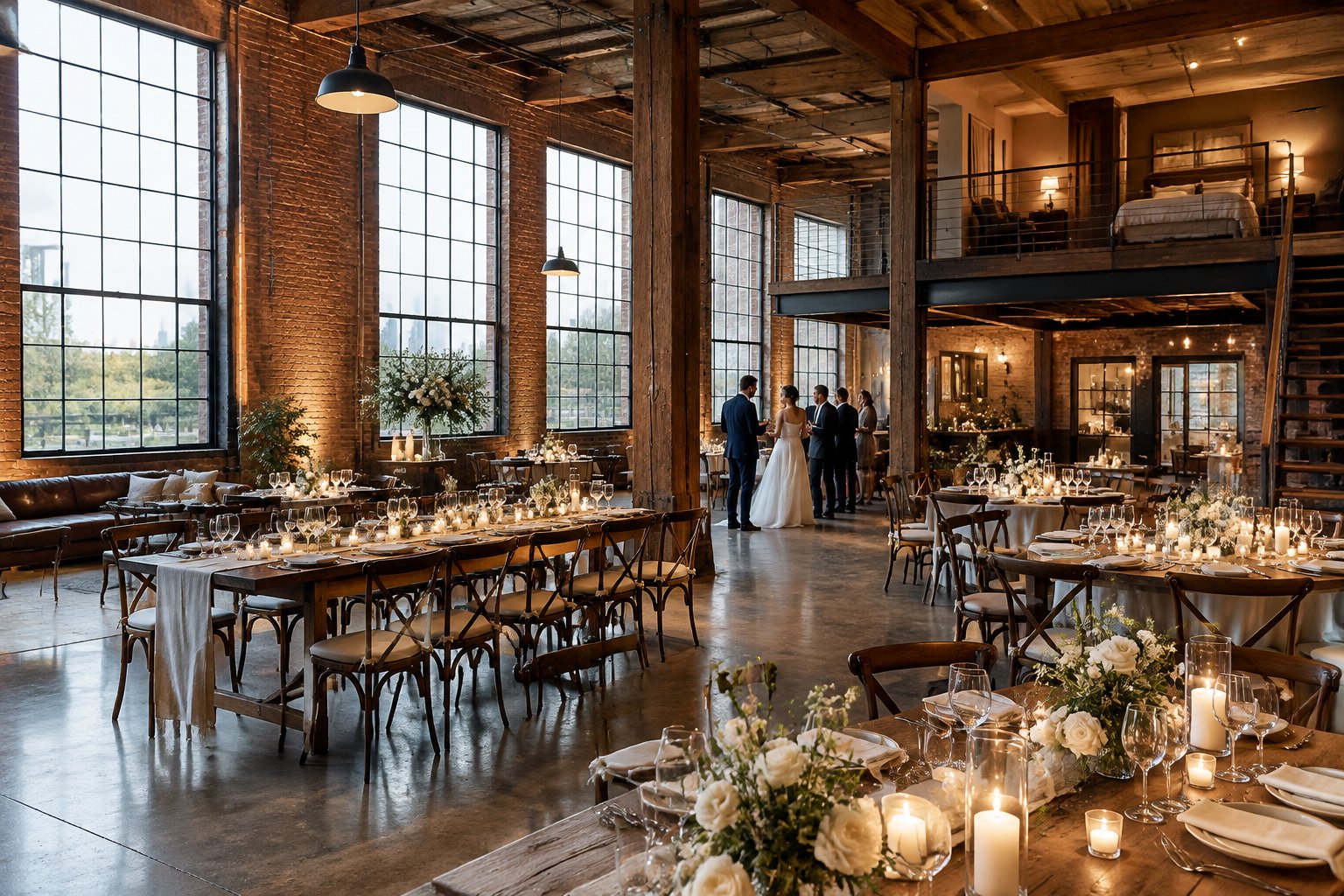
Start your search with two numbers: your expected guest count and how many people need beds on-site. If you already know who needs a room, use that headcount to begin comparing affordable wedding venues you can stay at.
What Counts as an Industrial Venue With Guest Stays?
An industrial wedding venue with guest stays combines an event space in a former or converted industrial building with overnight lodging on the property. The rooms might sit inside the same building, in a connected wing, or in nearby buildings on the grounds.
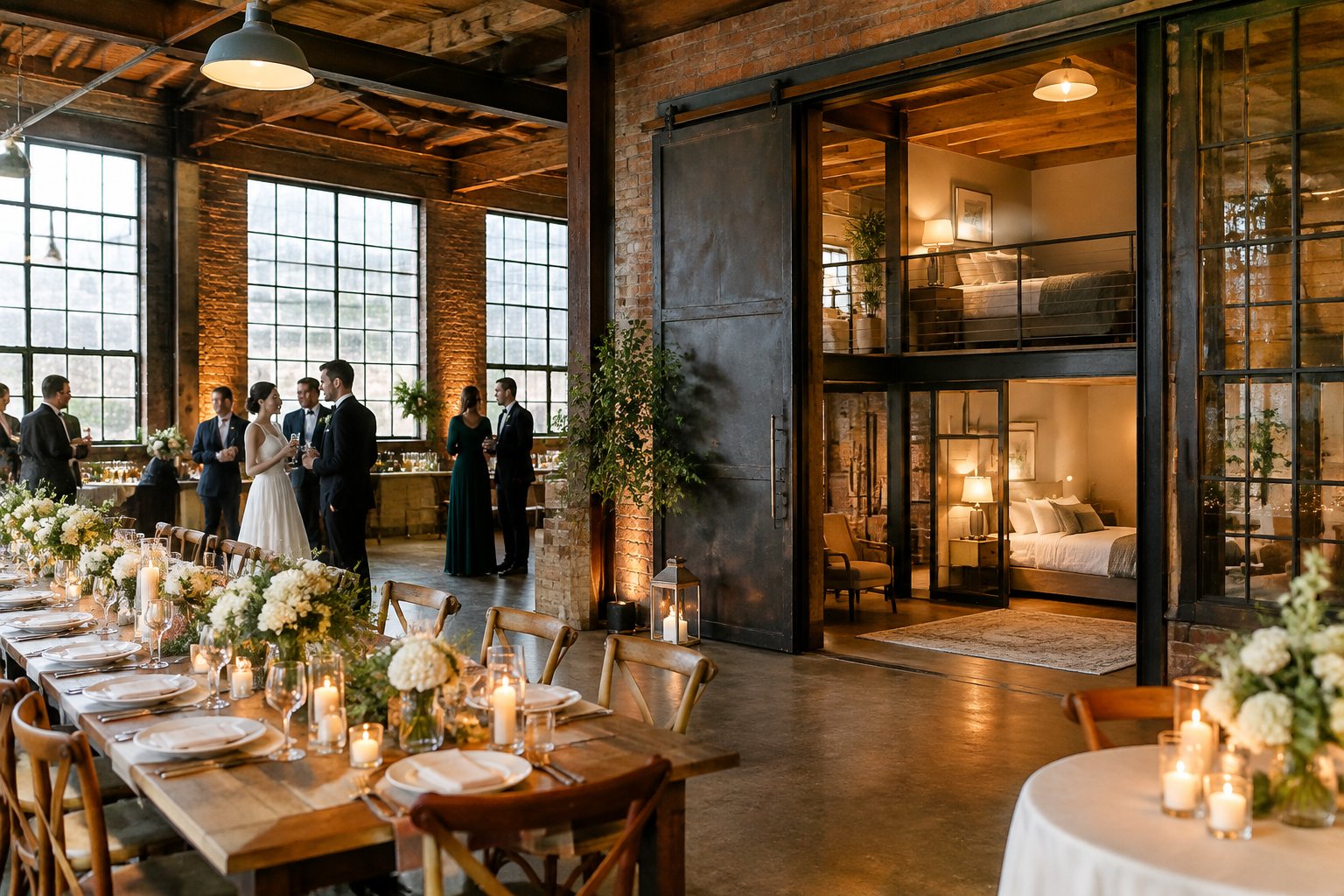
Before you book, check how the venue’s industrial details fit your style and confirm exactly where guests will sleep. Listings can use “on-site lodging” to describe anything from a getting-ready suite to a full property buyout with bedrooms.
Which Industrial Features Define the Look?
Industrial venues draw their character from visible building details, including brick walls, tall ceilings, steel supports, and large factory-style windows. Converted warehouses and former factories can also have wide, open floor plans that give you room to shape the ceremony and reception layout.
Look at how the space feels in person, since photos may not show the ceiling height, natural light, or layout clearly. Then decide how much decoration you want to add.
A few carefully chosen details, such as soft lighting or simple floral arrangements, can complement the architecture. If you’re planning your tablescape, industrial wedding table decorations can help you connect your reception style to the building.
How Can You Tell if Lodging Is On-Site?
Ask the venue to spell out what “on-site lodging” includes. A suite for getting ready offers a place to prepare, while guest lodging means that people can sleep at the property overnight.
Request the number of private bedrooms, beds, and bathrooms, along with the maximum overnight capacity. Find out whether that number includes sofa beds or shared rooms, and ask which guests can reserve each room.
If the lodging sits in a separate building, check the walking distance and whether the route is accessible after dark.
What Should You Verify About The Foundry, The Loft, and Mt. Washington Mill Dye House?
Confirm the exact property, address, and lodging details for any venue you’re considering. Names such as The Foundry and The Loft may be used by different properties, so a name alone doesn’t tell you which building or amenities a listing refers to.
When you research The Foundry, The Loft, or Mt. Washington Mill Dye House, ask the venue directly whether it offers overnight guest rooms, how many people can stay, and whether lodging is part of the event contract. Request a current floor plan, room list, and written capacity details before you compare the properties.
How Do On-Site Stays Shape the Wedding Weekend?
On-site stays make it easier to keep your wedding events, guest lodging, and travel plans connected in one place. You’ll want to check how many guests can sleep there and what the rental covers across each day.
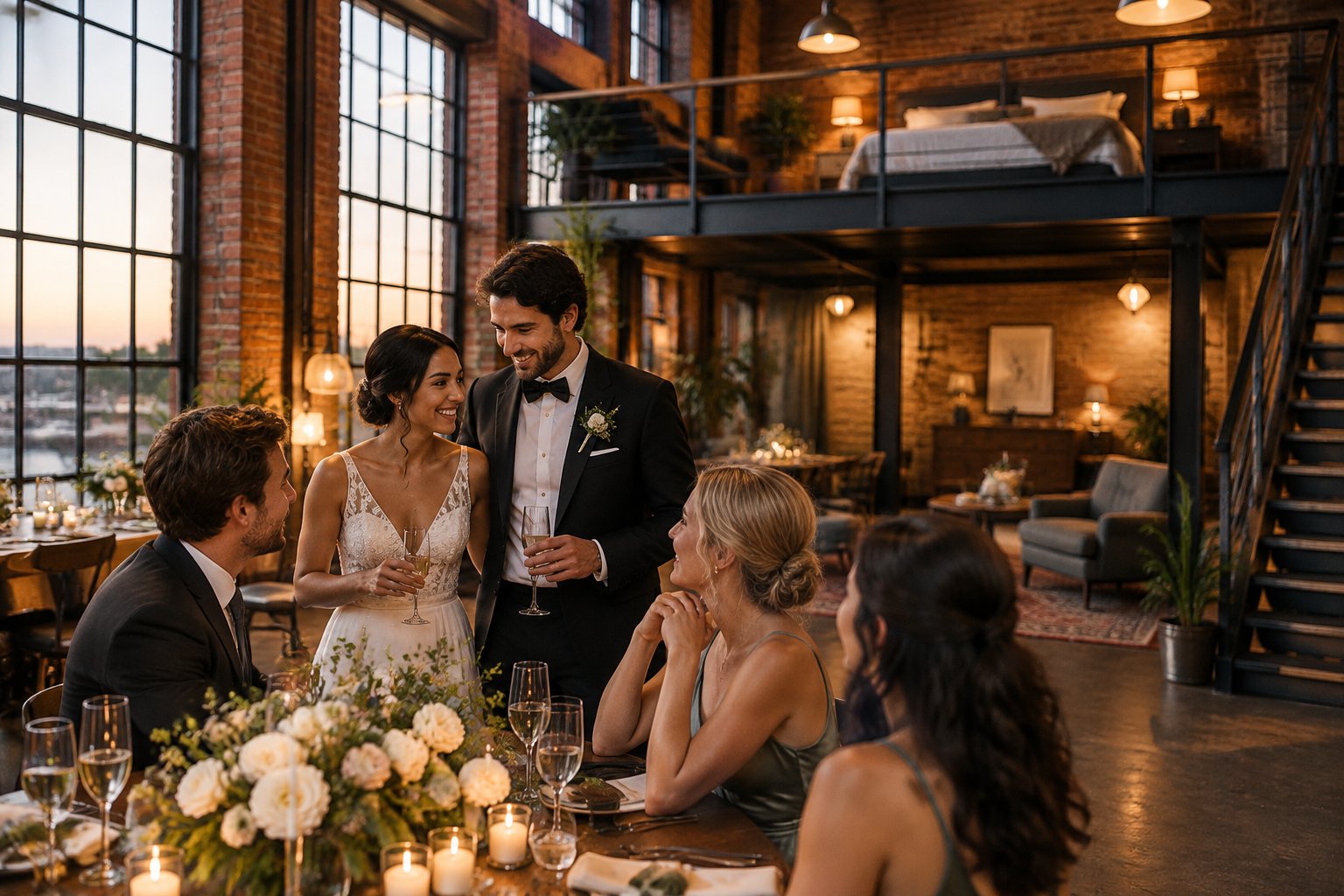
Keeping guests nearby can simplify transportation and give you more time together across the weekend. For a smooth plan, clarify who books the rooms, which events the venue allows, and when you can access the property.
What Are the Benefits of Keeping Guests Together?
When your guests stay at the wedding property, fewer people need to travel between a hotel and the event. That can make arrival, late-night rides, and next-day plans easier to coordinate.
You also get more chances to catch up with friends and family outside the reception. A welcome gathering or casual breakfast lets you spend time with guests who have traveled to attend.
If you’re weighing service bundles alongside overnight stays, compare all-inclusive wedding venues with lodging to see which services each package includes.
How Do Venue Buyouts and Multi-Day Packages Work?
A buyout gives you exclusive use of a property for a set period. The contract should list which event spaces, bedrooms, and shared areas are included, along with your arrival and departure times.
Multi-day packages may cover a welcome event, the wedding day, and a farewell gathering. Check whether those events need separate reservations or fees, and whether the property sets quiet hours or limits outdoor music.
If you’re building a weekend schedule, consider how long guests stay at a destination wedding as you plan room nights and activities.
Can WedStay Help You Find a Property With Lodging?
WedStay lists wedding properties that offer overnight stays, including options for whole-property buyouts. You can use it to explore lodging-focused properties, then confirm directly whether a listing has the industrial architecture and event spaces you want.
Read the listing closely for included rooms, minimum stay, guest limits, and added charges. Ask the property to confirm those details in writing before you reserve.
Which Venue Features Matter Most?
The strongest industrial venues combine architectural character with practical features that support your event. Check the surfaces, light, comfort, and guest amenities during a tour.
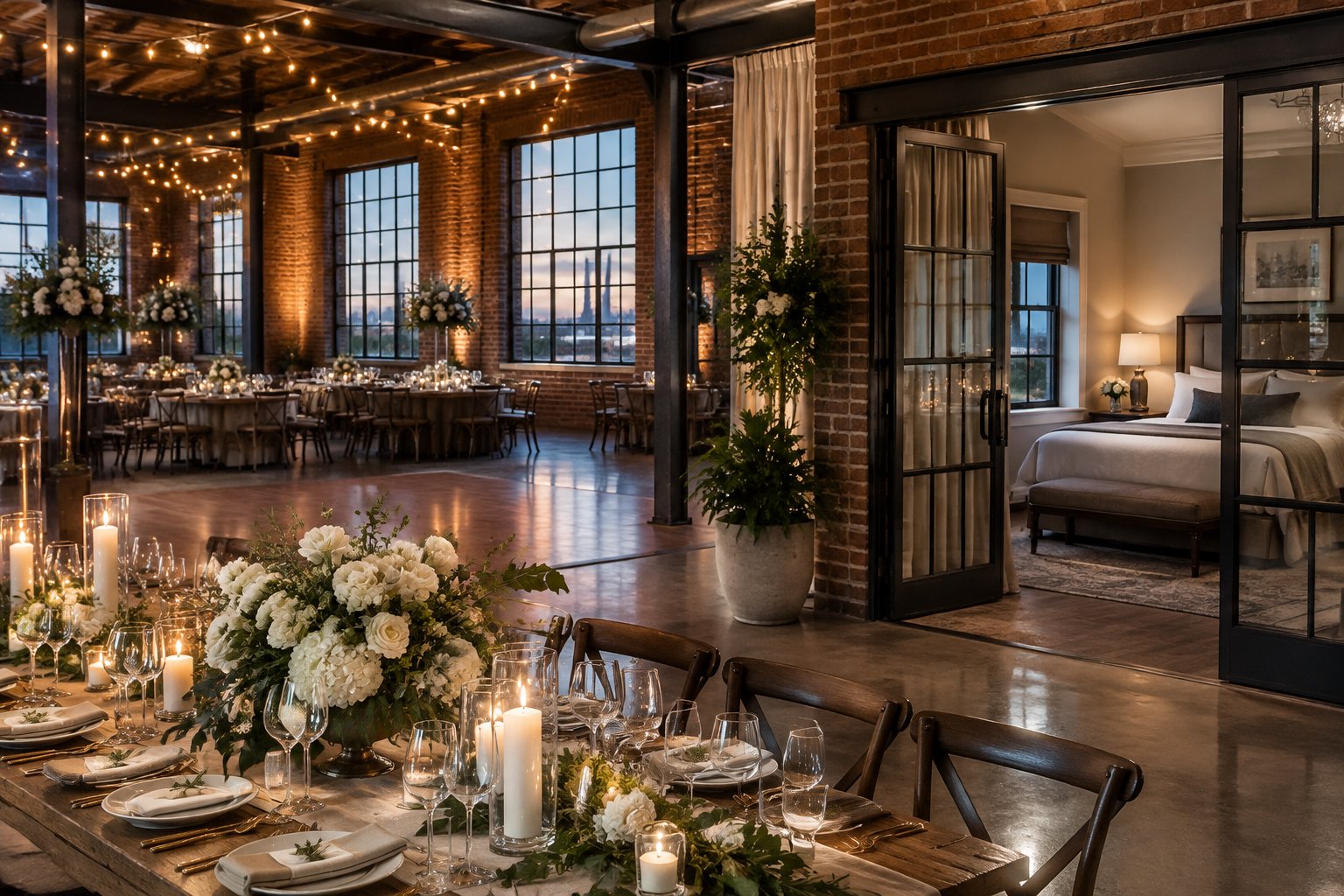
A venue’s visual style helps set the mood, while its layout and services shape how the day runs. Make notes about both so you can compare spaces after your visit.
How Do Exposed Brick, Steel Beams, and Concrete Floors Set the Mood?
Exposed brick adds color and texture, while steel beams draw attention to the height and structure of the room. Concrete floors can give a space a clean, modern feel and provide a sturdy surface for dining and dancing.
These materials also influence your décor choices. Warm lighting and softer fabrics can balance the room’s harder surfaces, while simple centerpieces let its architecture stand out.
Choose décor that suits the existing space and your budget.
Why Do Large Windows Matter for Light and Photos?
Large windows bring in natural light and give your ceremony or reception a brighter feel during the day. Their placement also affects where you might set up the ceremony, head table, and guest seating.
Ask when direct sunlight enters the room and whether window coverings are available. If you’re touring at a different time of day from your event, request photos or a walkthrough at the planned event time.
That can help you decide whether you’ll need added lighting for dinner or dancing.
What Practical Amenities Should You Check?
Check the essentials that affect your guests and vendors: climate control, restrooms, accessible entrances, parking, and a clear vendor load-in route. Ask about sound limits and whether the room’s acoustics suit a DJ, live band, or both.
Find out what tables, chairs, lighting, and catering equipment come with the rental. A venue with a beautiful brick interior may still require you to arrange extra furniture or sound equipment.
Keep your notes alongside your wedding venue ideas so you can compare style and function together.
How Much Should You Budget for the Venue and Stay?
Build your budget from an itemized venue quote that includes the event rental, lodging, required services, and any extra fees. The total depends on the date, guest count, room supply, and what the venue includes.

A low room-rental price may leave key services for you to arrange, while a larger package may include more of the setup. Ask each venue for a written estimate using the same guest count and event schedule.
Which Costs Are Included in the Venue Rental?
A venue rental may cover access to the event space, tables, chairs, setup time, or a getting-ready room. Catering, bar service, staff, linens, lighting, cleaning, and event coordination may be priced separately.
Ask for a line-by-line quote that lists taxes, service charges, deposits, overtime, and any required vendors. This makes it easier to compare what most wedding venues cost with the actual services in each proposal.
Also check how the venue handles cancellation and changes to your date or guest count.
How Do Guest Capacity and Overnight Rooms Affect the Price?
Guest count affects catering, rentals, and staffing, while the number of bedrooms shapes how many guests can stay overnight. A venue may host more people for the reception than it can accommodate in its rooms, so compare event capacity and sleeping capacity as separate figures.
Ask whether each guest pays for their room or whether lodging is part of a property buyout. WedStay’s October 2026 index puts the median U.S. base price for a whole-estate buyout at $8,000 per minimum stay.
That figure covers the minimum stay for those listed estates, not industrial venues as a category, and additional charges can apply.
What Extra Costs Can Come With a Multi-Day Celebration?
Extra nights, cleaning, added guests, security, and overtime can raise the price of a multi-day celebration. You may also need to budget for welcome-event food, brunch, shuttles, or rentals that stay in place throughout the weekend.
Ask whether the venue charges by the night, by the event, or through a full-property buyout. Add each required charge to your estimate before deciding whether the package fits your wedding budget.
How Should You Compare and Book Your Shortlist?
Compare each venue against the same guest count, lodging needs, schedule, and budget before you sign. A consistent checklist helps you weigh the industrial style alongside the details that affect your guests and vendors.
Write down your must-haves before touring, then save the venue’s answers and quote in one place. A clear comparison helps you spot gaps in lodging, service, or access before they turn into planning problems.
What Questions Should You Ask Before Touring?
Ask for the event capacity, overnight capacity, floor plan, rental inclusions, and an itemized estimate. Confirm the available dates, minimum stay, deposit schedule, cancellation terms, and rules for outside vendors.
You can also ask for a sample wedding-day timeline and details about noise limits, cleanup, and weather plans. If you’re still narrowing down locations, use a wedding location checklist to weigh travel, guest access, and event needs.
How Can You Coordinate Vendors, Lodging, and Guest Transport?
Give vendors the event schedule, venue access times, loading instructions, and contact details for the venue manager. Confirm where caterers can prep, where rental teams can unload, and when setup must be complete.
For guests, share room assignments, check-in times, parking details, and directions to any lodging buildings. If the venue can’t house everyone, arrange a nearby hotel option and plan transport for guests who need it.
When Should You Start Wedding Planning?
Start your venue search once you have a likely date range and a working guest count. That gives you enough information to ask about availability, room capacity, and package pricing.
If you’re considering a specific date or need many rooms, contact venues early and ask how long they can hold a date while you review the contract. Once you’ve chosen a property, book lodging and key vendors in line with the venue’s deadlines.