
Is 2 Months Enough Time to Plan a Wedding? A Practical Guide
Planning a wedding in two months is possible if you keep the celebration focused, move quickly on key bookings, and stay flexible about your choices. Yes, two months is enough time to plan a wedding, especially if you choose an intimate event and accept that some venues and vendors may already be booked.
A short-notice wedding gives you less time to compare options, so begin with the decisions that affect your date, guest count, and budget.

Start by setting aside time today to make the first decisions and contact venues. If your plans need a longer runway, you can also compare what a two-month wedding timeline involves.
What an Eight-Week Plan Can Realistically Deliver
An eight-week plan can deliver a personal, well-organized wedding when you keep the guest list manageable and choose options with open dates. You’ll have the best chance of securing your priorities if you’re ready to book as soon as you find a suitable fit.

What Can You Arrange in Two Months?
You can arrange the core parts of a wedding in eight weeks: a ceremony, a venue, food, guest communication, and a few meaningful personal details. A restaurant, private dining room, community space, or home gathering can make an intimate wedding easier to organize than a large event with many separate services.
Your choices will depend on availability. A Friday or Sunday date, an off-peak month, or a daytime celebration can open up more options.
A venue that provides food, tables, chairs, and basic setup can also reduce the number of bookings you need to manage.
Which Trade-Offs Should You Expect?
You’ll need to put flexibility ahead of having every preferred detail. Popular venues and vendors may already be booked, custom outfits may take longer than your schedule allows, and printed invitations may have limited turnaround time.
Choose your top priorities together. If photography is essential, contact photographers as soon as your date is confirmed.
If a particular location matters most, build the event around its available date. A shorter guest list also helps you move faster and gives you more choices for spaces and food service.
Which Decisions Should You Make First?
Set your wedding date, budget, and working guest count first, then use them to guide every booking. Those decisions shape your venue options, vendor needs, and the details you can afford.

A clear order helps you avoid spending time on plans that don’t fit your budget or date. Write down your top priorities and use a simple wedding priority list to guide quick decisions.
How Do You Set the Date, Budget, and Guest Count?
Choose a date range before committing to one specific day. Ask venues about available dates across that range, then confirm the date that fits your schedule and budget.
A weekday or less popular weekend date may give you more choice. Set a total spending limit and include a small reserve for unexpected costs, such as delivery fees, extra rentals, or rush orders.
Make a working guest list before you request venue quotes. The number of guests affects room size, food costs, seating, and invitations.
Decide which details are essential to you as a couple. Put the largest share of your time and budget toward those priorities, then keep other choices simple.
A step-by-step wedding checklist can help you order tasks by deadline.
When Should You Get Your Marriage License?
Check your local marriage license rules as soon as you choose a ceremony location. Requirements vary by state and county, including application steps, fees, waiting periods, identification, and how long the license remains valid.
Use the official county clerk or local government website for the place where you’ll marry. If you need an appointment, book it early and confirm whether both partners must attend.
Put the license appointment and any required documents on your calendar, then assign someone to keep the license safe on the wedding day.
How Can a Wedding Planning Checklist Keep You on Track?
A wedding planning checklist keeps deadlines, payments, and contacts in one place. Use a shared document or notebook, and give each task an owner and due date.
Start with tasks that depend on other decisions: confirm the date, book the venue, and contact essential vendors. Then track guest replies, attire, legal paperwork, and final payments.
For a quick setup, use advice on starting a wedding checklist and adapt the tasks to your eight-week schedule.
How Do You Find Available Venues and Vendors?
Contact venues first, then book vendors around the confirmed date and location. With only eight weeks, a short, direct message that includes your date range, guest count, and budget helps businesses tell you quickly whether they’re a fit.

Keep a simple record of who you contacted, what each quote includes, and when you need to decide. For venue searches, compare affordable wedding venue options with your guest count and the services included.
What Venue Options Work on Short Notice?
Restaurants, private dining rooms, small event spaces, parks, community halls, and homes can work well for a short-notice wedding. Ask about open dates, guest capacity, food rules, setup time, accessibility, and cleanup before you pay a deposit.
A venue with in-house catering or basic furniture may simplify planning by reducing separate orders. Read the contract carefully and confirm the full cost, cancellation terms, payment schedule, and any outside-vendor rules.
If you’re flexible about the day, ask whether weekday or daytime dates are available.
Which Vendors Should You Book First?
Book the venue first, then contact the vendors tied most closely to your priorities. Photography, catering, and ceremony services are good early calls because your plans depend on their availability.
Add music, flowers, rentals, or transportation according to your event needs. Ask each vendor for a written quote, service details, arrival time, and payment terms.
Confirm what is included before comparing prices. If a preferred vendor is unavailable, ask the venue for recommendations or consider a simpler option, such as a playlist and speaker in place of a DJ.
You can also review ways to find wedding music that fit your venue and celebration.
Would a Wedding Planner or Coordinator Help?
A wedding planner can take on decisions and vendor coordination, while a wedding coordinator can help organize the final details and wedding-day schedule. If you’re hiring help, contact planners early and explain your date, budget, guest count, and priorities.
Ask what the service covers and who will communicate with your vendors. If a professional isn’t within your budget, ask a trusted friend or family member to manage a few clear tasks.
Keep the couple out of day-of troubleshooting by sharing vendor contacts and the schedule with that person in advance.
How Do You Get Guests and Attire Ready?
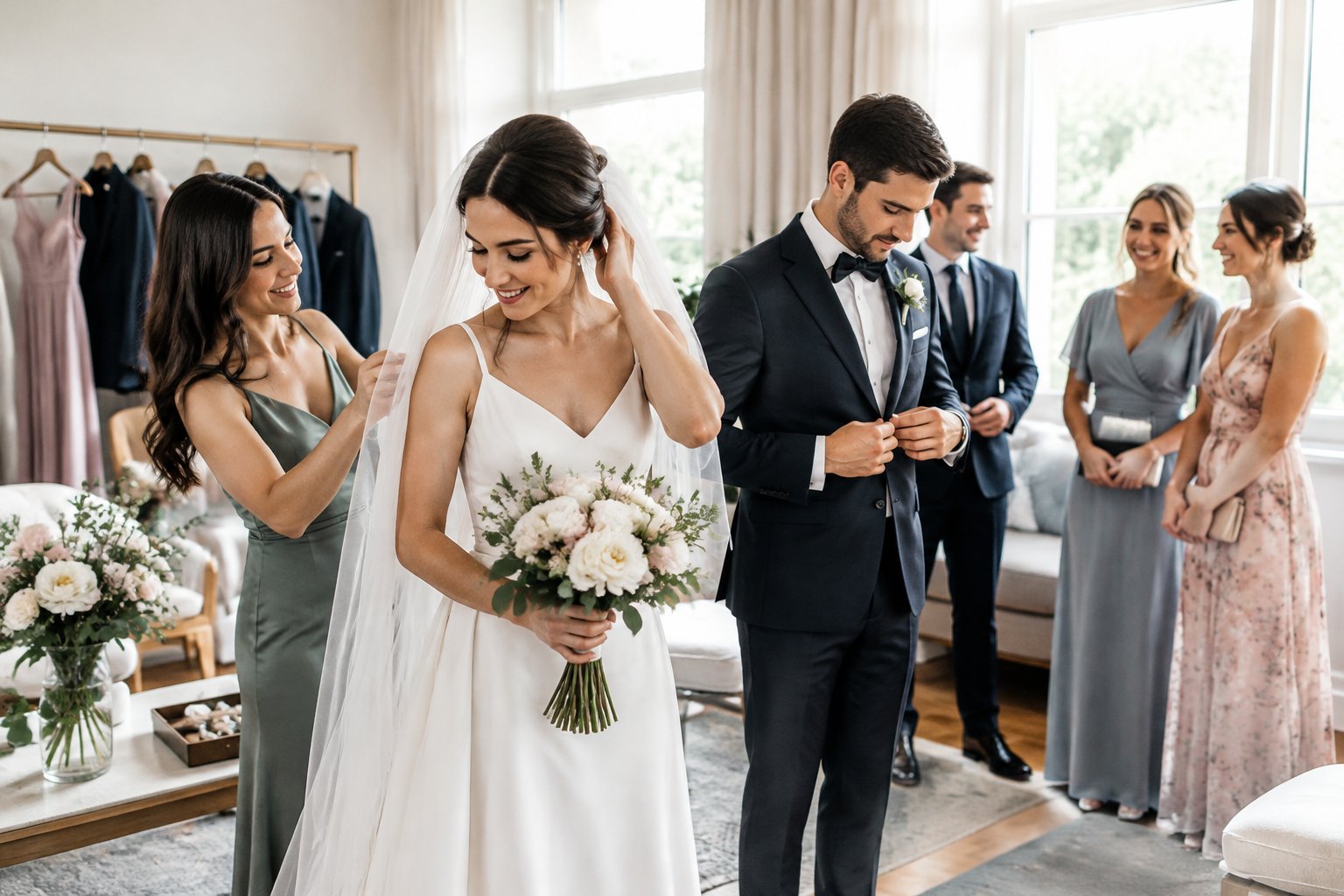
Send guests the essential information right away, then choose attire that can be found and fitted within your timeline. Early communication gives people a chance to plan, while ready-to-wear clothing keeps tailoring deadlines manageable.
How Should You Send Wedding Invitations Quickly?
Send invitations as soon as the date, location, and start time are confirmed. Digital invitations can reach guests quickly and make it easier to collect replies.
Include the address, dress guidance, RSVP deadline, and any travel or parking details guests need. Call or message close family and friends after sending the invitation so they can save the date.
Keep a guest list with contact details and responses, and follow up with anyone who hasn’t replied by your deadline. Give your venue or caterer the final headcount by the date listed in your contract.
What Should You Ask of the Bridal Party?
Keep requests specific and considerate. Share the date, schedule, attire plan, and any costs each person would need to cover before asking for a commitment.
With a short timeline, choose outfits people can buy or already own, and set a clear deadline for ordering or fitting. Assign manageable tasks, such as gathering family addresses or helping with welcome bags.
Make sure each person knows where to be and when to arrive.
Where Can You Find a Wedding Dress on a Short Timeline?
Look for a wedding dress that’s available off the rack, at a sample sale, or from a retailer that lists delivery dates clearly. Call before visiting to ask about current stock and alteration timelines.
Bring the shoes and undergarments you plan to wear to your fitting. Ask the tailor whether the needed changes can be finished before the wedding, and schedule a final try-on with time to spare.
A ready-to-wear dress, jumpsuit, suit, or other special outfit can all suit the day.
Which Celebration Details Can You Simplify?
Choose a reception format that feels warm and easy to manage, then keep dessert and favors straightforward. You can create a memorable celebration through personal touches without adding a long list of custom orders.
How Can You Plan a Meaningful Wedding Reception?
Build the reception around the parts you care about most, such as a shared meal, short toasts, dancing, or time with guests. A restaurant dinner, brunch, cocktail reception, or backyard gathering can give the day a clear shape with fewer logistics.
Set a simple schedule and share it with your venue and key helpers. Make room for the ceremony, photos, food, and any special moments you’ve chosen.
If seating needs thought, use these guest seating tips to plan a comfortable arrangement.
What Are Easy Alternatives to a Traditional Wedding Cake?
Choose a dessert that’s easy to order and serve, such as cupcakes, cookies, a small cutting cake with sheet cake, or a dessert from a local bakery. Ask about delivery, serving needs, and any allergy information before placing the order.
You can also skip a formal cake cutting and serve dessert as part of the meal. Confirm the venue’s rules for outside food and make sure someone knows when and where the dessert should arrive.
Are Wedding Favors Necessary?
Wedding favors are optional. If you want to give guests a small thank-you, choose something easy to buy or prepare, such as a treat, a handwritten note, or a local item.
Keep favors within your budget and avoid custom orders with uncertain delivery dates. You can also donate to a cause that matters to you or put the money toward food, music, or another part of the celebration your guests will enjoy.
What Should Your Eight-Week Checklist Include?
Your eight-week checklist should lock in the date and venue first, then track guest communication, vendors, legal steps, and final confirmations. Give every task a deadline and a person responsible for completing it.
What Should You Handle in the First Two Weeks?
Use the first two weeks to confirm the date and venue, set your spending limit, and decide on a working guest count. Contact essential vendors immediately and check your local marriage license rules.
Send invitations once the event details are set. Choose your attire and book any needed alterations.
Record contracts, deposits, vendor contacts, and due dates in one shared place so you can find details quickly.
What Needs to Be Done Four Weeks Before the Wedding?
By four weeks out, follow up on RSVPs and share your current headcount with the venue or caterer. Confirm the menu, ceremony plan, vendor arrival times, and any rental needs.
Check attire fittings and make sure everyone knows what to wear and when to arrive. Draft a wedding-day schedule with time for setup, the ceremony, photos, food, and travel between locations.
If you have a wedding coordinator or a trusted helper, ask them to review the logistics and flag missing details.
What Should You Confirm in the Final Week?
Use the final week to confirm details that are already planned: arrival times, addresses, final guest count, payments, and who is handling important items. Check that the marriage license and rings are ready, then share the final schedule and contact list with your vendors and helpers.
Pack attire, accessories, and any ceremony items in one place. Ask someone you trust to handle calls and questions on the wedding day so you can follow the schedule and arrive prepared. For a focused final-week reminder, use this one-week wedding checklist.