
Is the Bride Always on the Left? Understanding Wedding Tradition and Seating Arrangements
When it comes to wedding ceremonies, you might wonder, does the bride traditionally stand on the left side of the altar? This practice goes back to the Middle Ages and has its roots in chivalry. In the past, the groom needed to protect the bride with his sword hand. Standing on the left allowed him to stay ready for any danger that might arise.
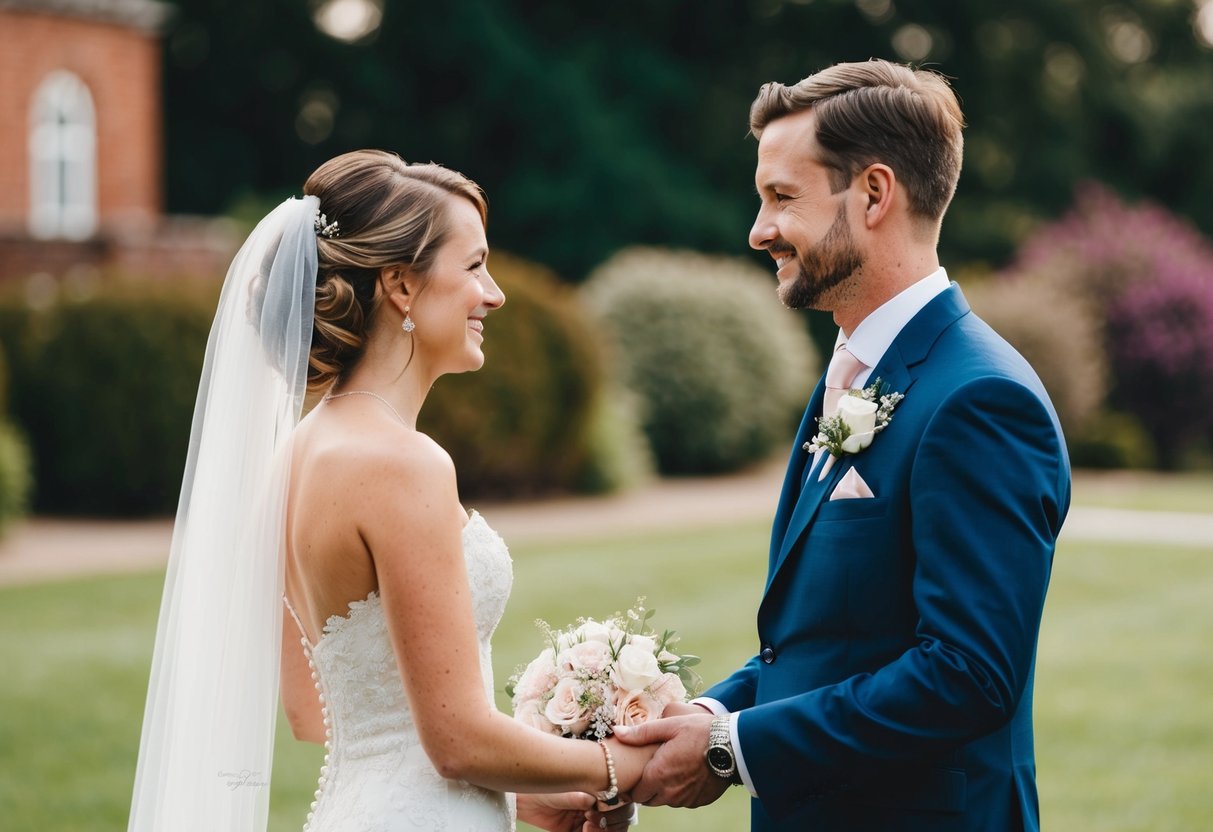
As you dive into wedding traditions, you’ll find that while many couples follow this custom, it isn’t a strict rule. Different cultures have different practices. For example, in Jewish weddings, the bride stands on the right side to symbolize equality with the groom. This shows how diverse and rich wedding ceremonies can be.
Understanding these traditions can help you appreciate the significance of where the bride stands and why it matters. Whether you’re planning your own wedding or just curious about the customs, exploring this topic can reveal fascinating insights about love and commitment throughout history.
Historical Context of Wedding Ceremonies
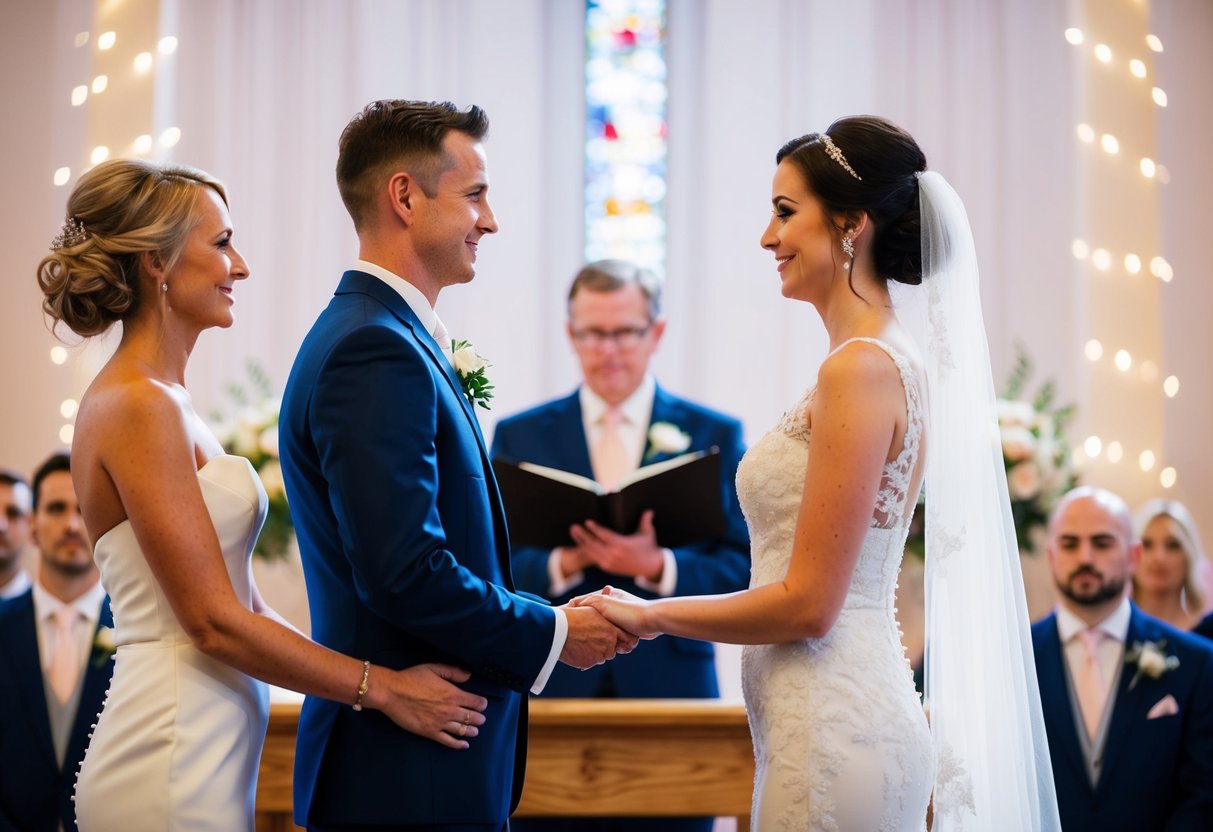
The traditions surrounding wedding ceremonies have deep roots in history. Two key elements are the origins of customs in the Middle Ages and the concepts of marriage by capture and chivalry. These elements shaped how weddings are celebrated today, especially regarding the bride’s position during the ceremony.
Origins in the Middle Ages
During the Middle Ages, many wedding traditions began to take shape. One notable custom is that the bride typically stands on the left side. This arrangement allowed the groom to keep his right hand free, which was important for defending his bride from any potential threats.
The practice highlights the groom’s role as the protector. The groom’s right side was often the favored side for sword fighting, firmly linking this tradition to safety and honor. This historical concept reinforces the protective nature of marriage.
Marriage by Capture and Chivalry
The idea of marriage by capture also influenced wedding positions and customs. In ancient times, it was common for a man to take a woman by force. This practice required the groom to be ready to defend his bride from her family, who might try to stop the union.
Chivalry emerged as a code of conduct among knights and nobility, emphasizing honor and protection. This concept encouraged grooms to stand in a position of safeguard. Thus, the tradition of the bride standing on the left is a symbol of chivalric values, illustrating commitment and the notion of the groom’s duty to protect his bride.
Cultural Variations in Ceremonial Practices
Weddings around the world reflect the diverse customs and traditions of different cultures. How the bride and groom are positioned during the ceremony can vary greatly, influencing the overall meaning of the wedding.
Jewish Wedding Traditions
In a Jewish wedding, the bride traditionally stands under the chuppah, or wedding canopy, with the groom by her side. This structure symbolizes the home the couple will build together. Interestingly, the bride often stands to the right of the groom, which contrasts with the common Western practice of the bride standing on the left.
During the ceremony, the couple is positioned facing each other, emphasizing their connection. The Kiddushin (betrothal) is a key moment where the groom places a ring on the bride’s finger, signifying their commitment. This beautiful ritual highlights the importance of partnership in Jewish culture.
Christian and Catholic Perspectives
In Christian and Catholic ceremonies, the traditional placement is for the bride to be on the left side of the altar and the groom on the right. This practice originates from historical beliefs that the groom needed his sword arm free to protect his bride from harm.
During the ceremony, the couple typically faces the officiant, who guides them through their vows. The act of joining hands and exchanging rings is significant, representing their union. Variations exist among denominations, but the left-side placement remains common in many traditional Christian weddings.
Hindu Wedding Customs
In Hindu weddings, the couple often participates in a vibrant ceremony filled with rituals. The bride stands on the left of the groom during key moments, such as the Saptapadi, where they take seven steps together. Each step symbolizes a commitment to various aspects of their life together.
The saat phere (seven circles) around a sacred fire is another essential ritual, emphasizing their bond. Each round is filled with prayers and promises, demonstrating the depth of their love. In Hindu culture, the positioning reflects equality and balance in the relationship.
Ceremony Logistics and Symbolism
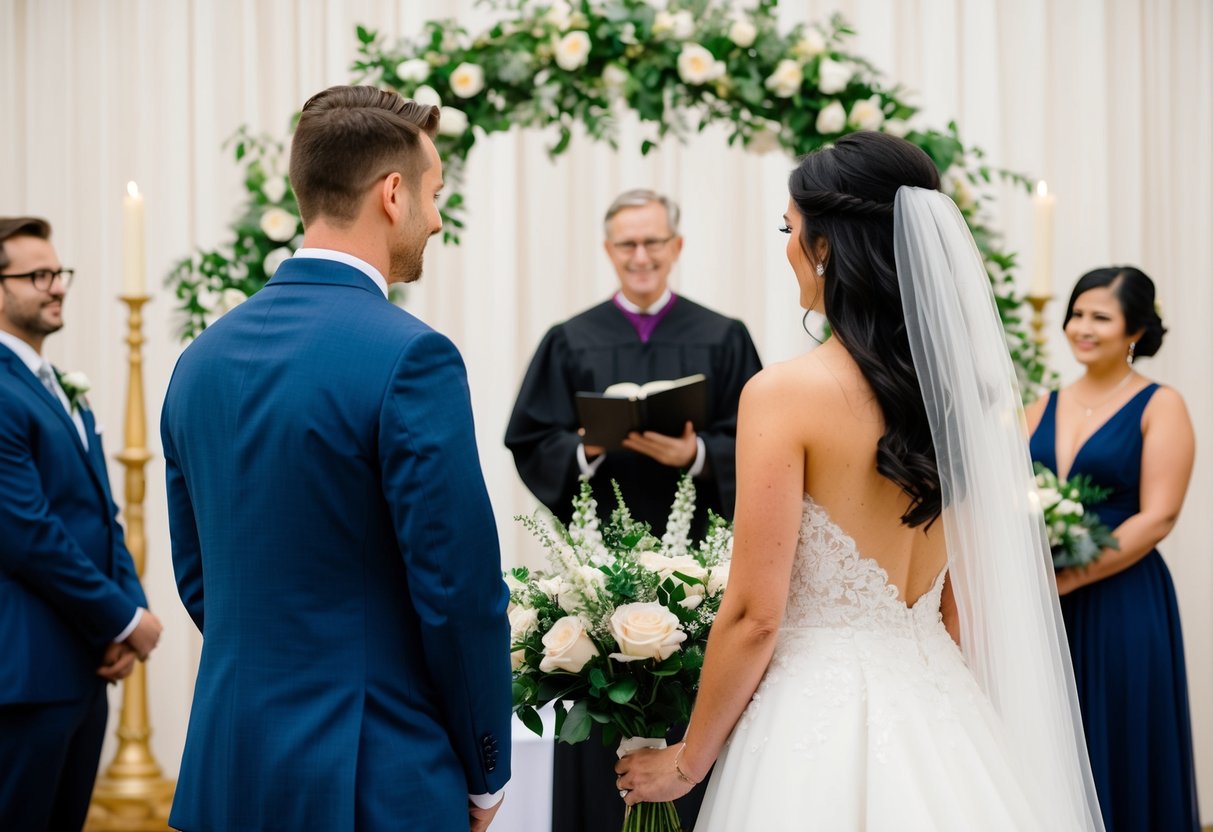
When planning a wedding, understanding the logistics and the symbolism behind various elements is key. Each detail, from altar placement to seating arrangements, plays a role in conveying meaning during the ceremony.
The Significance of the Altar Placement
The altar is often the focal point of the ceremony. Typically, the bride stands on the left and the groom on the right. This positioning holds significance as it symbolizes the unity of the couple.
By placing the bride on the left, you create an arrangement that emphasizes the groom’s protective role. This setup allows for easy access to the groom’s sword arm in older traditions, though today it’s more about emotional connection.
Understanding Seating Arrangements
The seating arrangement is more than just where guests sit. It represents respect for both families and their union. Often, the wedding officiant stands at the altar to guide the ceremony, reinforcing this unity.
Consider arranging seats so the bride’s family sits on one side and the groom’s family on the other. This layout not only honors each side but also symbolizes the joining of two families.
Importance of Processional and Recessional Rites
The processional marks the start of your wedding journey. As you walk down the aisle, each step signifies your transition into a new life together. Traditionally, you may walk with your father on the right side, moving towards the left at the altar.
After the ceremony, the recessional is equally important. It represents your first moments as a married couple. This signifies joy and celebration, as you walk back down the aisle together, united. Each of these rites adds to the depth of your special day, enhancing the emotional connection of the ceremony.
Modern Interpretations and Adaptations
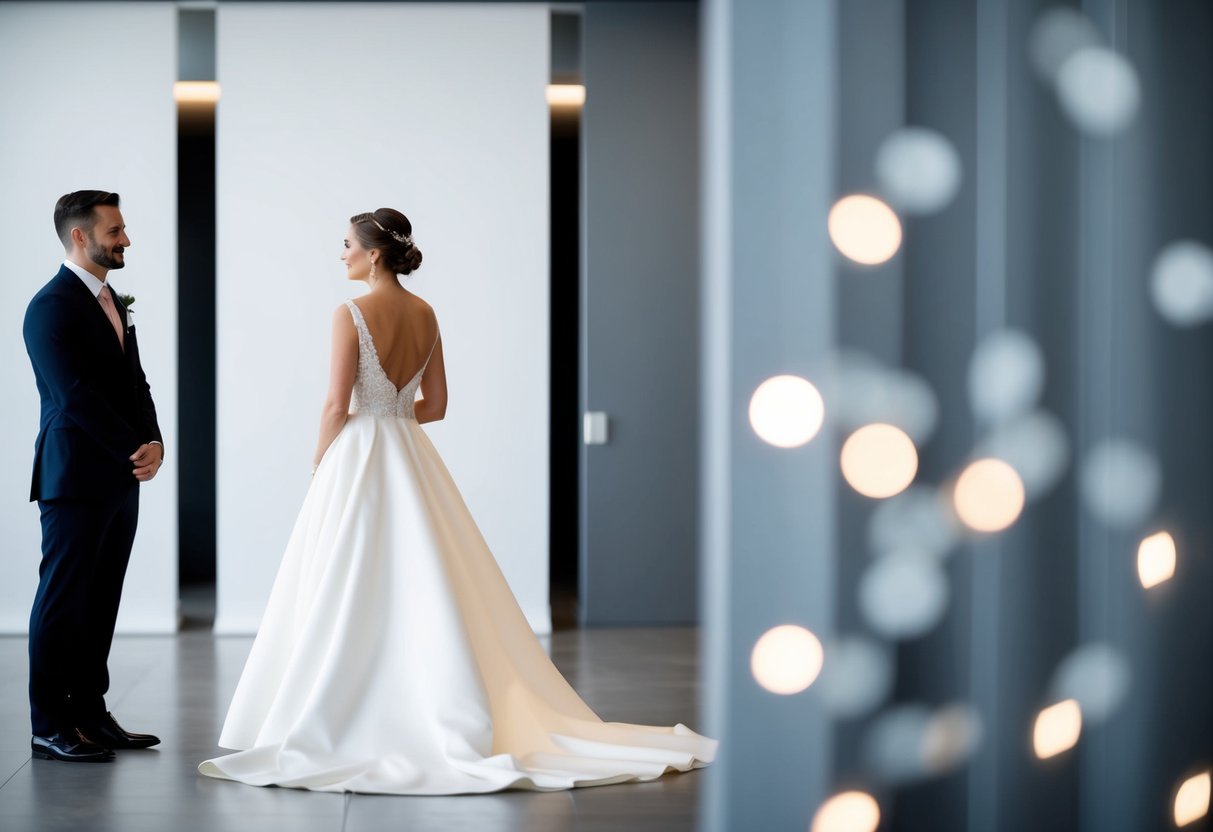
As wedding customs evolve, many couples make choices that reflect their values and relationships. Modern interpretations often move away from strict traditions, allowing for personal touches and unique meanings in wedding ceremonies.
Contemporary Weddings and Positional Changes
In contemporary weddings, the placement of the bride and groom can vary widely. Many couples choose to switch traditional roles. You might find the bride standing on the right or the groom on the left, depending on personal preference.
This change reflects a desire for equality and partnership. Some couples opt for a sweetheart table where they can sit together instead of the traditional head table arrangement. Outdoor weddings also play a role in this flexibility. The relaxed setting allows for a range of seating positions and arrangements that might not fit traditional norms.
Inclusion of Same-Sex Couples
The increase in same-sex marriages has significantly influenced how modern couples approach wedding ceremonies. In these scenarios, either partner may not have a predefined side. This choice emphasizes equality and celebration of love without the constraints of tradition.
So, during the ceremony, both partners may stand side by side, regardless of traditional placements. Each couple creates their own meaning and order, making the day special. Discussions around commitment to protect and support each other are more emphasized than specific positions.
This new perspective enriches the overall wedding experience and reflects the evolving social landscape.