
On Average, How Many Friends Are Invited to a Wedding? By Size
If you’re asking, “On average, how many friends are invited to a wedding?” A practical U.S. planning estimate is 20 to 40 friends total for a wedding near the national average size, or roughly 10 to 20 friends from each partner. Treat that as a starting range, since family size, guest-list rules, and your social circles all affect the count.

The Knot Real Weddings Study puts the average U.S. wedding guest count at 117 people for couples married in 2025. That figure includes family and other guests, so it does not tell you exactly how many friends to invite. Use it as context while you build a wedding guest list that fits your wedding planning priorities.
The Typical Friend Share of a Wedding Guest List

For a wedding near the U.S. average wedding guest count, 20 to 40 friends total is a useful planning range, though your list may fall above or below it. The Knot Real Weddings Study reports the average total attendance, not a standard friend-to-family ratio, so your own mix will depend on your relationships and family size.
A friend count helps you set a rough target, while a full guest count includes plus-ones, children, relatives, and other invitees. For a broader view of the average number of guests invited to a wedding, keep invited guests separate from the number who attend.
How Many Friends Might Each Partner Invite?
If you’re aiming for 20 to 40 friends total, you and your partner might each invite around 10 to 20. A 30-friend target, for example, could mean 15 friends from each side.
Use that split as a conversation starter, not a strict quota. If one of you has a much larger friend group, an even count may not reflect your lives. You can also decide whether your count includes friends’ partners, since plus-ones add to attendance.
How Does the Friend Count Compare With Total Attendance?
Friends are one part of your wedding guest count, alongside relatives, family friends, coworkers, and invited partners. At a wedding with 117 guests, inviting 20 to 40 friends would give you a clear friend group while leaving room for those other categories.
Your invitation total and attendance total will differ when guests decline. For more context on how many friends couples invite, remember that reported friend counts are planning examples, not a fixed national standard.
How Does Wedding Size Change the Friend Count?
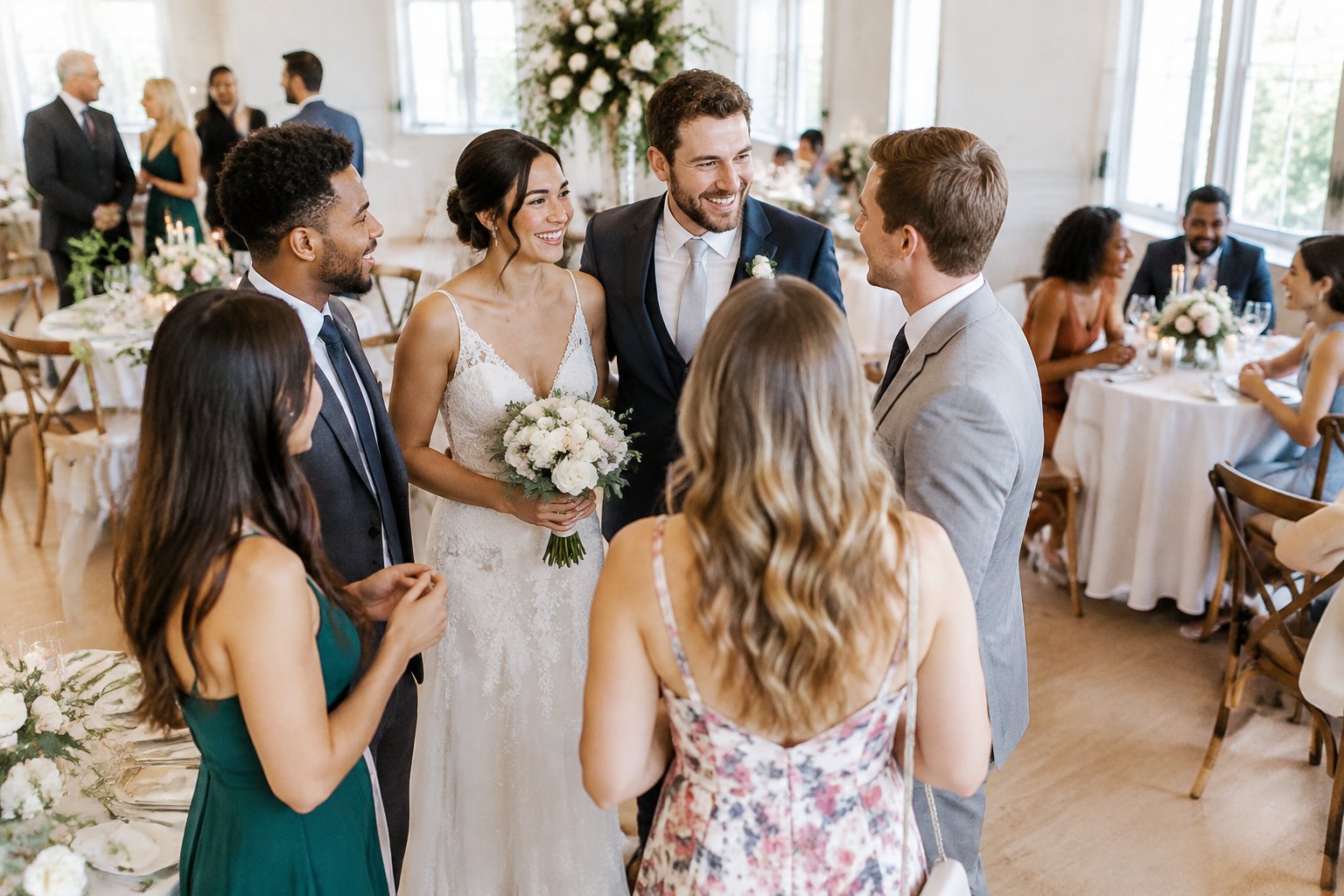
Your wedding size sets the room you have for friends, and smaller celebrations call for a shorter, more selective list. The ranges below are planning examples, since terms like intimate wedding and large wedding can mean different things to different couples.
Intimate and Small Weddings
At an intimate wedding with fewer than 50 guests, you might invite 5 to 15 friends, alongside the relatives and other guests you most want there. A small wedding of about 50 to 80 guests might leave room for 10 to 25 friends, depending on how many family members you include.
Start with the friends you feel closest to and count each guest’s invited partner where applicable. If your list is especially tight, these small-wedding guest-list choices can help you decide which relationships to prioritize.
Medium Weddings
For a medium wedding of roughly 80 to 150 guests, a planning target of 20 to 40 friends can work well. You have more room to include close friends from different stages of life, while keeping space for family and other guests.
If your family list is short, you may invite more friends. A large extended family or many family friends can shift the balance toward fewer friends.
Large Weddings
At a large wedding with more than 150 guests, you might invite 40 or more friends, including friends from work, school, hobbies, or different social groups. Your final count depends on how much of the guest list you reserve for relatives and family connections.
A bigger wedding gives you room to widen the circle, while your budget and venue still set the limit. Count plus-ones as guests when you estimate how many people will be in the room.
What Influences How Many Friends You Invite?

Your wedding budget, venue capacity, and family expectations shape how much space remains for friends. Agreeing on these limits early helps you set a guest count before you invite people.
Balancing the Guest List With Your Budget
Each added guest affects costs for food and drinks, seating, and other reception needs. Set a maximum guest count that fits your wedding budget, then decide how much of that number you want to use for friends.
If your budget is tight, compare the cost of adding a guest with the value of having that person there. You can create an A-list of your closest friends and a second group to consider if your budget allows.
Making Room for Venue Capacity
Your venue’s capacity gives you a firm upper limit, and your plan should leave enough room for all invited guests and their eligible plus-ones. Check whether the venue’s stated maximum refers to seated guests, standing guests, or a specific room setup.
Once you know the usable capacity, reserve places for family and other must-invites before you fill the remaining spots with friends. This helps you avoid a list that exceeds the space you booked.
Accounting for Family Expectations and Social Circles
Family expectations can affect the number of friends you invite, especially if relatives or parents have a large guest list of their own. Talk about any family requests before you finalize your friend count.
You and your partner may also have different social circles. Agree on shared rules for old friends, newer friends, and coworkers so each person can make choices using the same standards.
Who Should Make Your Friend List?

Your friend list should start with the people you and your partner want beside you on your wedding day. A clear set of priorities makes it easier to answer who to invite to your wedding when space or budget is limited.
Prioritize the Friends You Feel Closest To
Begin with friends you stay in touch with and feel excited to celebrate with. Consider whether you share an active connection and whether you want that person to be part of the day.
Then add friends from wider circles if you have room. If you need a decision rule, ask whether you would make time to see the person outside the wedding, or whether you feel pressure to invite them because of an old connection.
Set Consistent Rules for Coworkers and Wider Circles
Choose a clear rule for coworkers, former classmates, neighbors, and other wider circles. You might invite only colleagues you socialize with outside work, or include a whole group when your guest count allows.
Apply the same rule to both sides of the guest list. If you invite one person from a close-knit group, consider whether others in that same circle would reasonably expect an invitation.
How Can You Set a Realistic Invitation Count?
Your invitation count should fit your confirmed guest target and account for the people attached to each invitation. Start with a shared number, then track invitees and responses carefully so your final count stays within your venue limit.
Agree on a Target Before Sending Wedding Invitations
Set a total guest target with your partner before you address wedding invitations. Divide that number into categories for friends, family, and other guests, then list individual names under each category.
Decide how you’ll handle plus-ones and children before invitations go out. Consistent rules make it easier to estimate how many wedding invites to send and reduce last-minute changes.
Plan for RSVPs Without Overbooking Your Venue
Expect that some invitees will decline, but do not invite beyond your venue’s capacity based on a guessed attendance rate. Track every response and count each guest, including plus-ones and children, in your RSVP total.
If you keep a reserve list, wait for declines before sending additional invitations. For a closer attendance estimate, consider the factors that affect how many guests come and use your guests’ travel needs and circumstances to guide your planning.