
Outdoor and Indoor Wedding Venues: How to Choose
Outdoor and indoor wedding venues give you a way to pair open-air scenery with a comfortable space for dining and dancing. A venue with both settings lets you plan an outdoor ceremony and move inside for the reception, with a second space ready if the weather shifts.
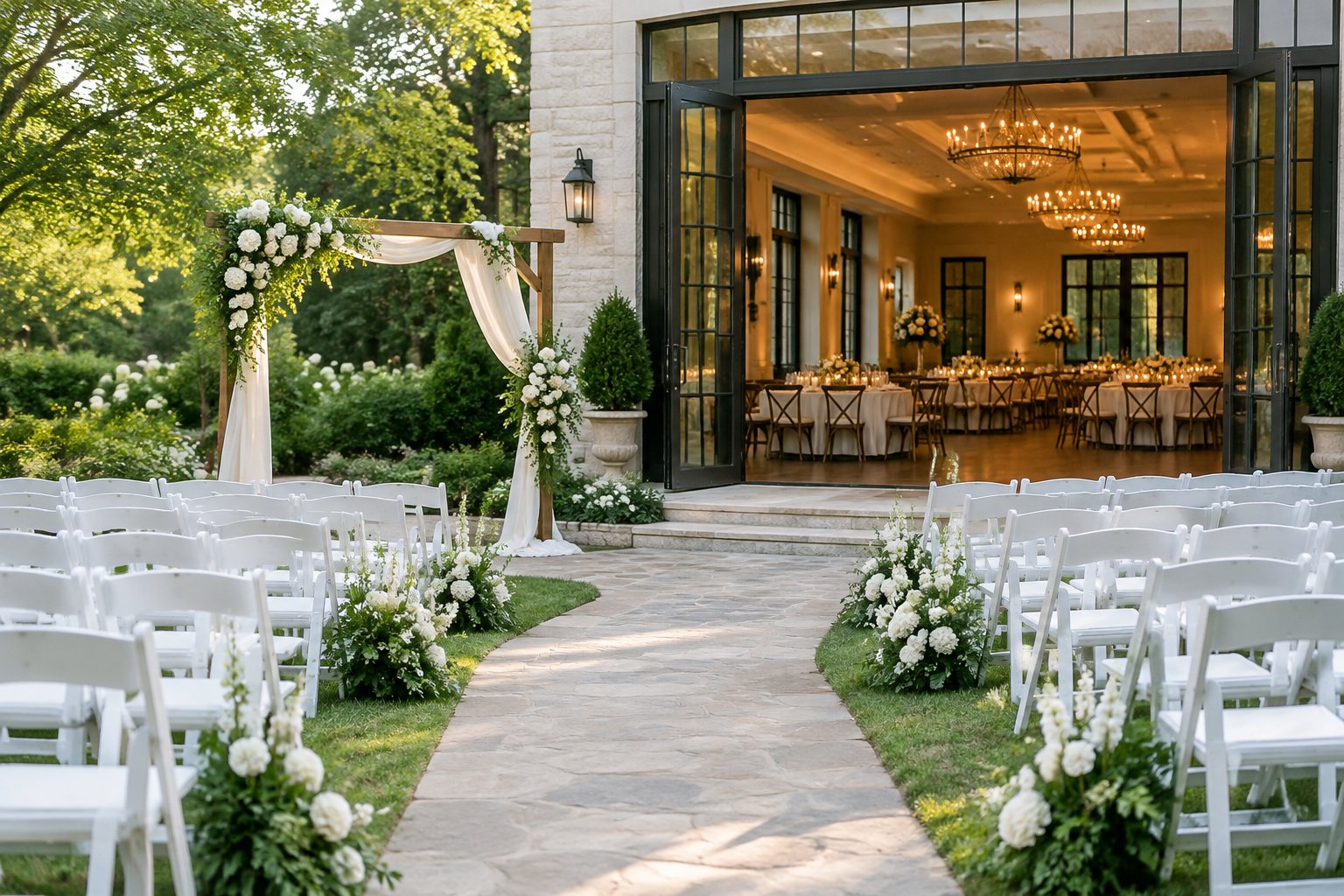
As you compare wedding venues, think about how you want the day to feel and how guests will move through it. Start a shortlist of places with spaces that fit your guest count, style, and backup needs, then arrange a tour to see how the indoor and outdoor areas connect.
How Do You Balance Open-Air Beauty With Indoor Comfort?
A balanced venue gives you room to enjoy the setting outdoors and a practical indoor space for key parts of the day. Look at the scenery, weather plan, and transition between areas before deciding which space suits each event.
What Do Outdoor Spaces Do Best?
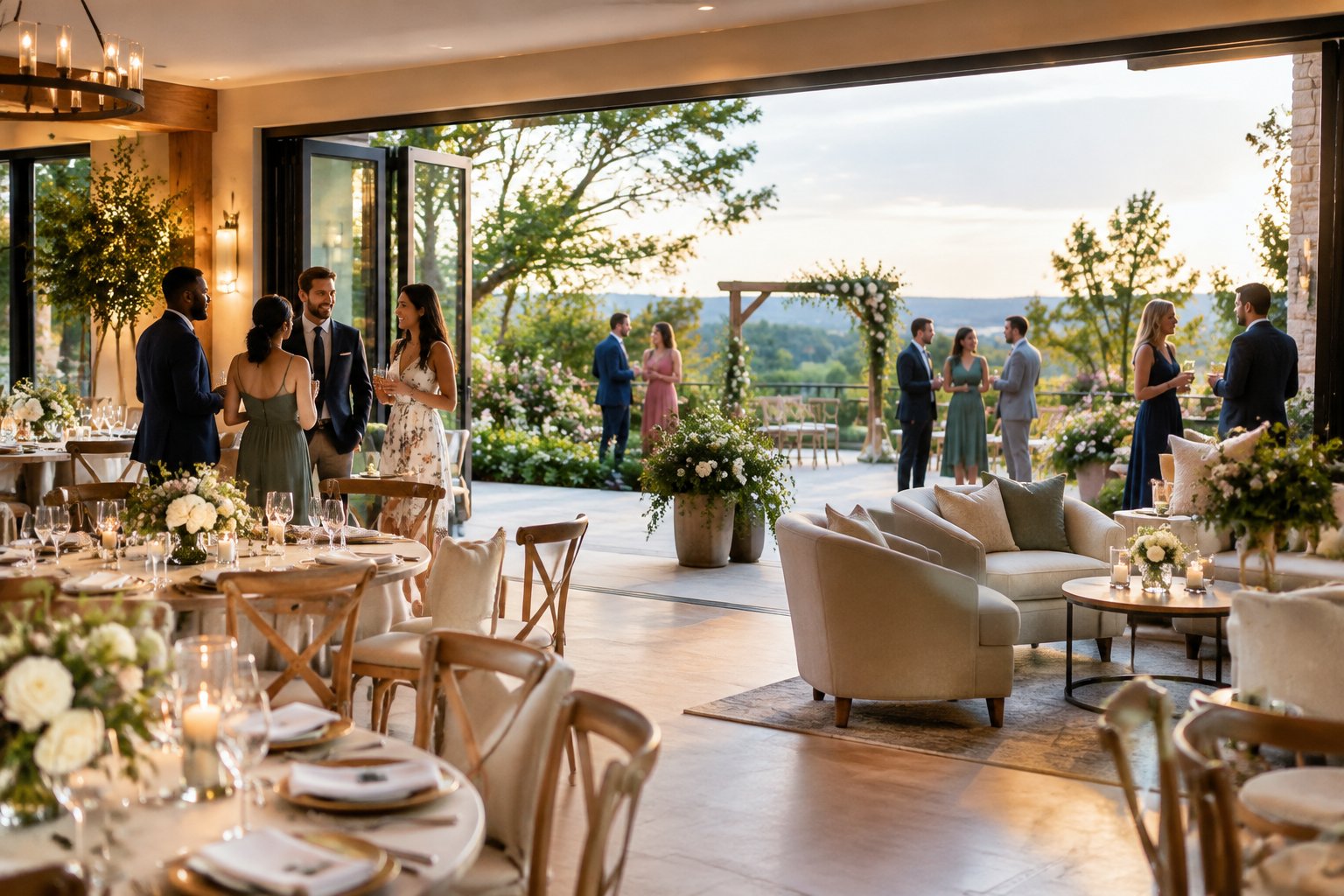
An outdoor wedding venue gives your ceremony a natural backdrop, fresh air, and changing daylight. Gardens, courtyards, terraces, and lawns each create a distinct feel, so consider what you want guests to see as you exchange vows. A garden can add color and greenery; a terrace can offer open views and room to mingle.
Natural surroundings also shape your decor. Let the landscape set the palette, then add details that stand out without competing with the setting. If you are weighing scenery and venue style, browse these beautiful outdoor wedding venues for ideas.
When Does an Indoor Setting Make Planning Easier?
An indoor space gives you more control over temperature, lighting, sound, and seating. That can simplify a formal dinner, speeches, or dancing, especially when guests need a level path between the ceremony and reception.
You can also plan around the room’s built-in features, such as windows, chandeliers, or a stage. Ask how the space is set up for your guest count and whether the venue provides tables, chairs, sound equipment, or staff.
What Can a Flexible Venue Give You?
A flexible venue gives you options for changing weather and different parts of the celebration. You might hold the ceremony outside, serve drinks on a patio, and host dinner inside.
This setup can help guests enjoy the grounds while keeping the main event close to restrooms, food service, and climate control. As you compare indoor and outdoor venue options, check whether both spaces are included in your rental and how late guests can use the outdoor area.
Which Venue Styles Combine Both Experiences?
Gardens, estates, hotels, and resorts can pair outdoor scenery with indoor gathering spaces, each with a different atmosphere. Choose a style that fits your plans for the ceremony, reception, guest stay, and travel between spaces.
How Do Gardens and Estates Create a Natural Backdrop?
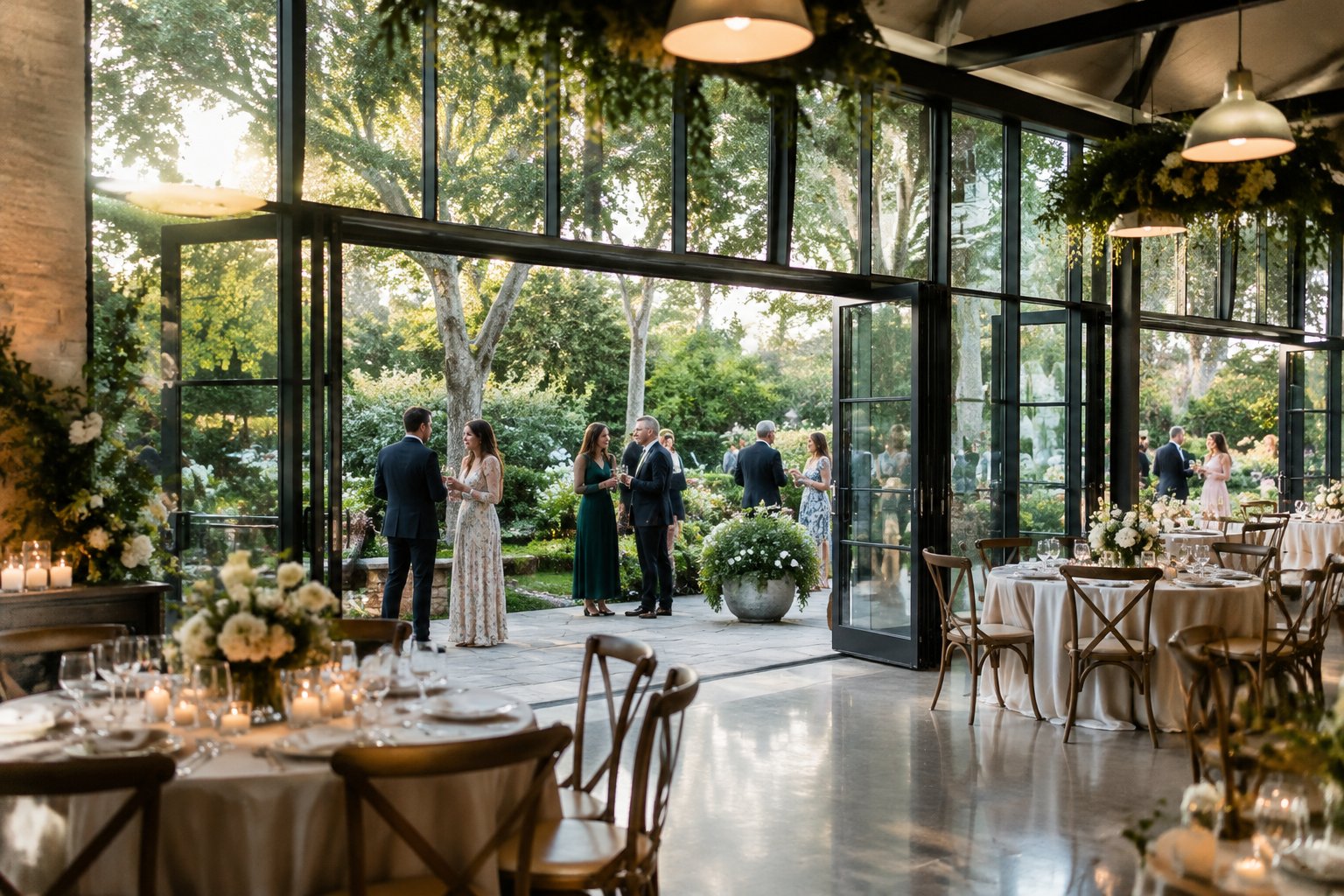
Gardens and estates bring landscaping, paths, and architectural details into the celebration. You can use the grounds for vows or a cocktail hour, then move indoors for dinner and dancing. When you tour, check the distance between the ceremony area and the indoor room, along with the route guests will take.
Ask which outdoor areas are available for your date and whether the venue has a suitable indoor backup. If you want a ceremony and reception in one location, confirm that the event spaces remain accessible during setup and transitions.
What Do Hotels and Resorts Offer for a Seamless Celebration?
Hotels and resorts can bring event spaces, guest rooms, food service, and gathering areas together on one property. This can reduce travel between parts of the day and give out-of-town guests a convenient place to stay.
Review the layout and event terms closely. Ask about the distance between rooms and event spaces, vendor rules, room blocks, and any food or beverage minimums. If a hotel setting appeals to you, explore hotel outdoor wedding venues as you compare options.
How Do Fairmont San Francisco, The Biltmore Estate, and L’Auberge Del Mar Differ?
These well-known properties show how different venue styles shape the wedding experience. Fairmont San Francisco represents a city hotel setting, The Biltmore Estate brings an expansive estate character, and L’Auberge Del Mar offers a coastal resort atmosphere. Their names provide useful style cues as you build your search; confirm each property’s current event spaces, availability, and policies directly.
| Venue | Style | Setting to consider |
|---|---|---|
| Fairmont San Francisco | City hotel | Urban architecture and hotel event spaces |
| The Biltmore Estate | Historic estate | Formal grounds and estate interiors |
| L’Auberge Del Mar | Coastal resort | Resort setting near the coast |
As you compare luxury wedding venues, focus on the spaces and services included for your date. A venue’s style alone does not tell you how its ceremony, reception, and guest areas will work for your plans.
How Should Ceremony and Reception Spaces Work Together?
Your ceremony and reception spaces should connect through an easy route and a clear timeline. When guests know where to go and have time to move between areas, the celebration feels more relaxed.
Should Guests Move Between Indoor and Outdoor Areas?
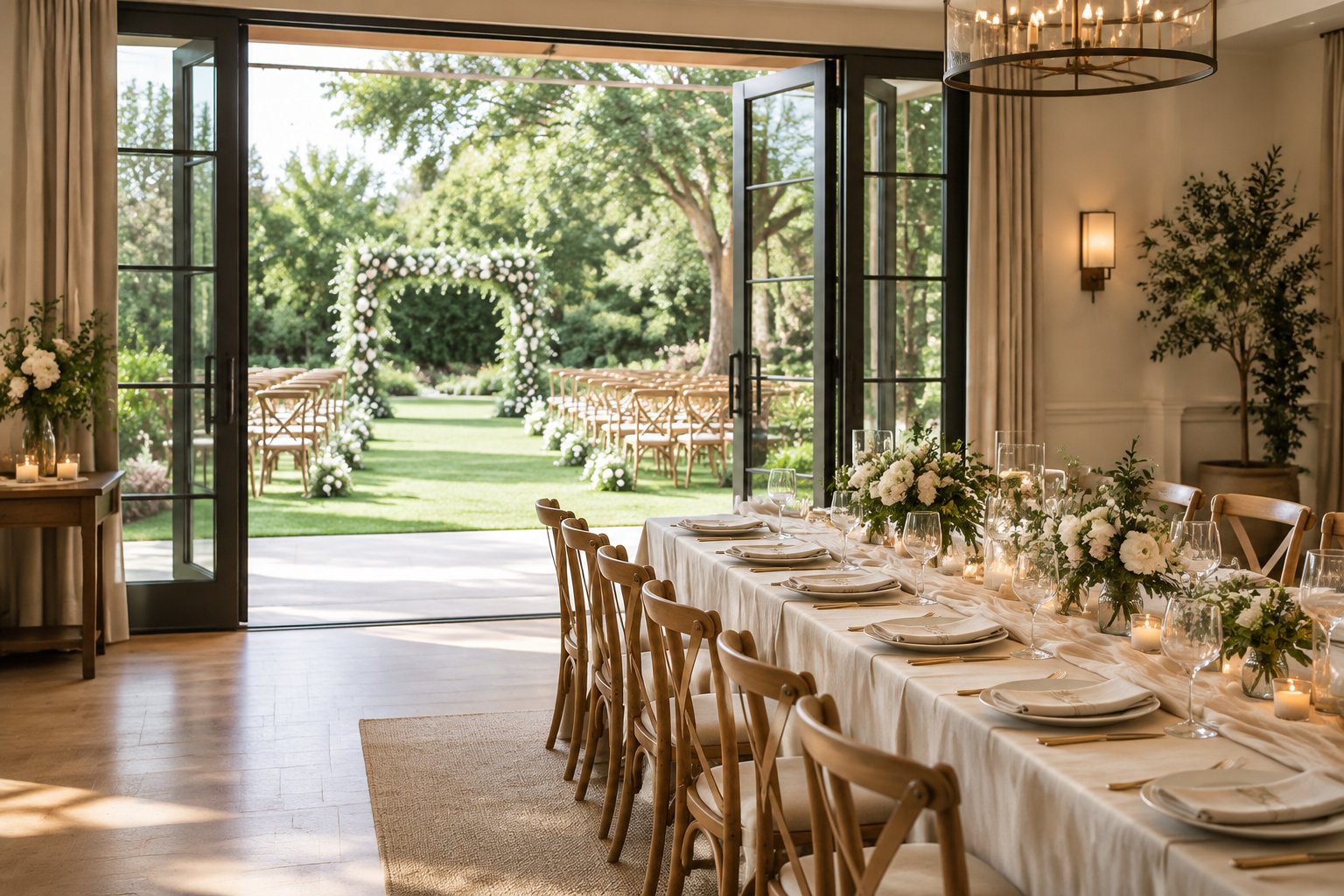
Yes, when the route is short, clear, and comfortable for your guests. A garden ceremony followed by an indoor dinner can give each part of the day its own mood while keeping the celebration on one property.
Walk the route during your venue tour. Check for stairs, uneven ground, narrow doors, and places where guests might lose their way. For a clear picture of how the events differ, review the difference between a wedding reception and a ceremony.
How Can the Layout Keep the Celebration Flowing?
Give each part of the day a clear zone: ceremony seating, a place for drinks, dinner tables, and a dance floor. Keep key guest services, such as restrooms and water, easy to reach from the spaces in use.
Ask who manages the transition and how much time the change requires. If the same room must be reset, your timeline needs to account for staff moving chairs and tables. These wedding reception setup ideas can help you think through table placement, pathways, and dance-floor space.
What Should You Confirm Before Booking?
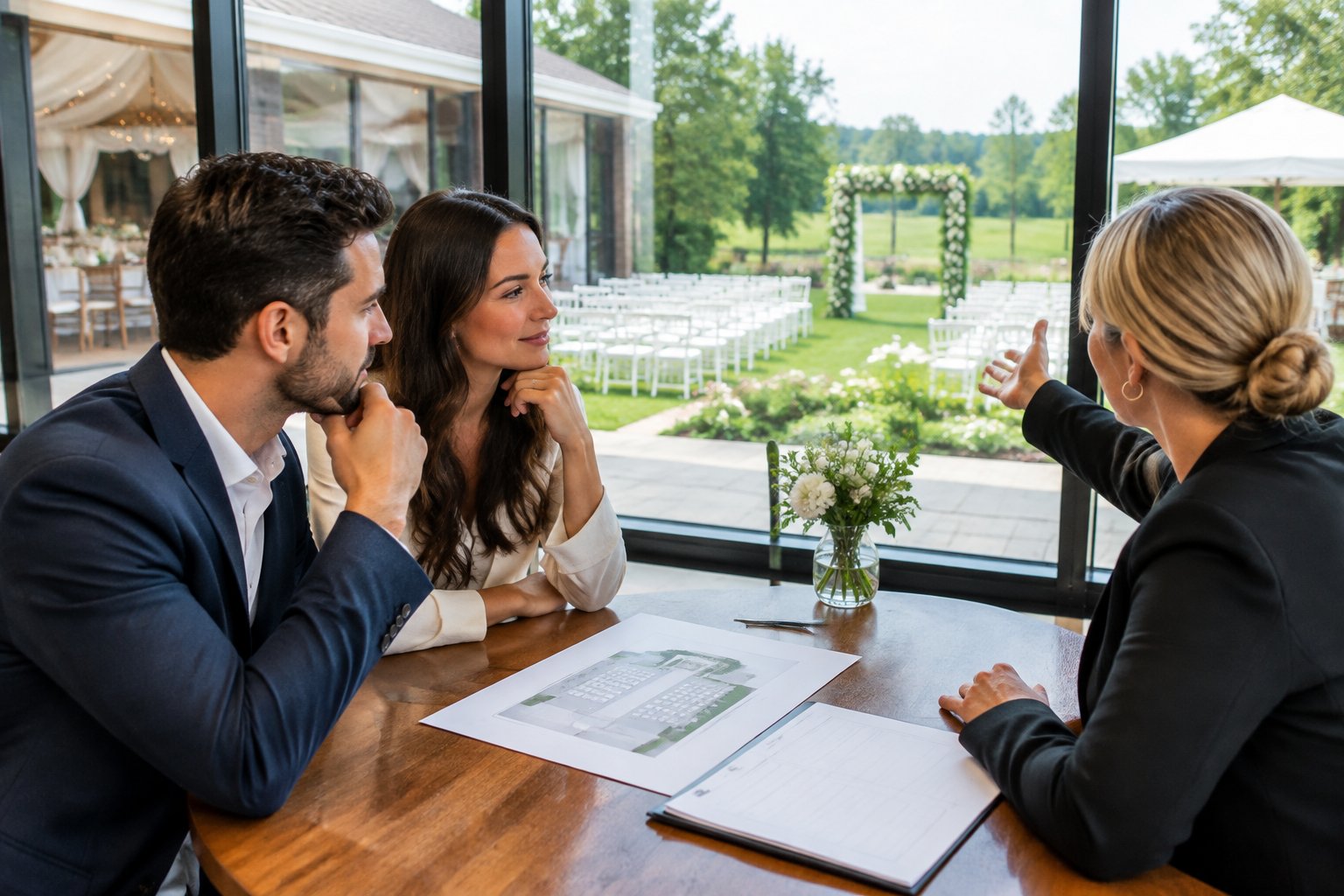
Confirm the weather backup, usable capacity, and full cost in writing before you sign a wedding venue contract. A beautiful tour is only useful if the spaces and terms fit your actual plans.
What Is the Weather Backup Plan?
Ask where the ceremony and reception will move if rain, high heat, or strong wind affects the outdoor plan. Confirm that the backup room is available on your date, fits your full guest list, and has the layout you want.
Find out who makes the call to move indoors and when that decision must happen. Ask whether the venue supplies tents, fans, or heaters, and whether those options cost extra. A backup plan works best when you know the process before the wedding day.
Do Both Spaces Fit Your Guest Count?
Check the capacity of each area for your planned layout, not just the venue’s maximum number. A room that fits guests for a ceremony may feel crowded with dining tables, a bar, and a dance floor.
Bring your estimated guest count to the tour and ask how accessible routes connect the spaces. Confirm that guests who use mobility aids can reach the ceremony, reception, restrooms, and outdoor areas.
Which Costs, Inclusions, and Restrictions Should You Ask About?
Request an itemized quote that lists the rental fee, service charges, required rentals, and any food or beverage minimums. Ask what the venue provides, such as tables, chairs, linens, lighting, or coordination, and whether you can choose your own vendors.
Review rules for music, candles, decor, setup times, and outdoor access. Check the payment schedule and cancellation terms, then compare the written details across your finalists.
How Can You Keep Guests Comfortable Throughout the Day?
Guests stay more comfortable when you plan for weather, shade, seating, and clear access between spaces. Give them ways to adjust to changing conditions and make sure food and services work in both settings.
What Should You Plan for Sun, Rain, Wind, or Cold?
Match your comfort plan to the season and time of day. For a sunny ceremony, provide shade, water, and a shorter wait before guests can sit indoors. For cooler evenings, offer blankets or heaters if the venue allows them.
Ask about a tent or indoor backup for rain, and check whether wind could affect decor, sound, or place settings. Share attire guidance on your wedding website so guests know whether to bring layers or choose shoes suited to grass and paths. These outdoor wedding tips can help you prepare for an open-air event.
How Can Food, Lighting, and Accessibility Work Across Spaces?
Plan food service around the route between indoor and outdoor areas. Ask your caterer how they will keep food at safe serving temperatures and whether the outdoor space has the power and access they need.
Set out water where guests gather, and confirm that staff can serve guests who need assistance. Check lighting on paths, steps, and seating areas after sunset.
Make sure accessible routes stay open throughout the wedding reception, including the way to restrooms and parking. A clear layout and helpful signs let guests move between spaces with ease.