
Outdoor Wedding Venues That Are Cheap and Free: Smart Ideas
A public park or beach can give you a scenic ceremony site for little or no rental cost, while a backyard keeps the location close and private. Your best options for outdoor wedding venues that are cheap and free are public spaces for a small ceremony or a backyard you have permission to use.
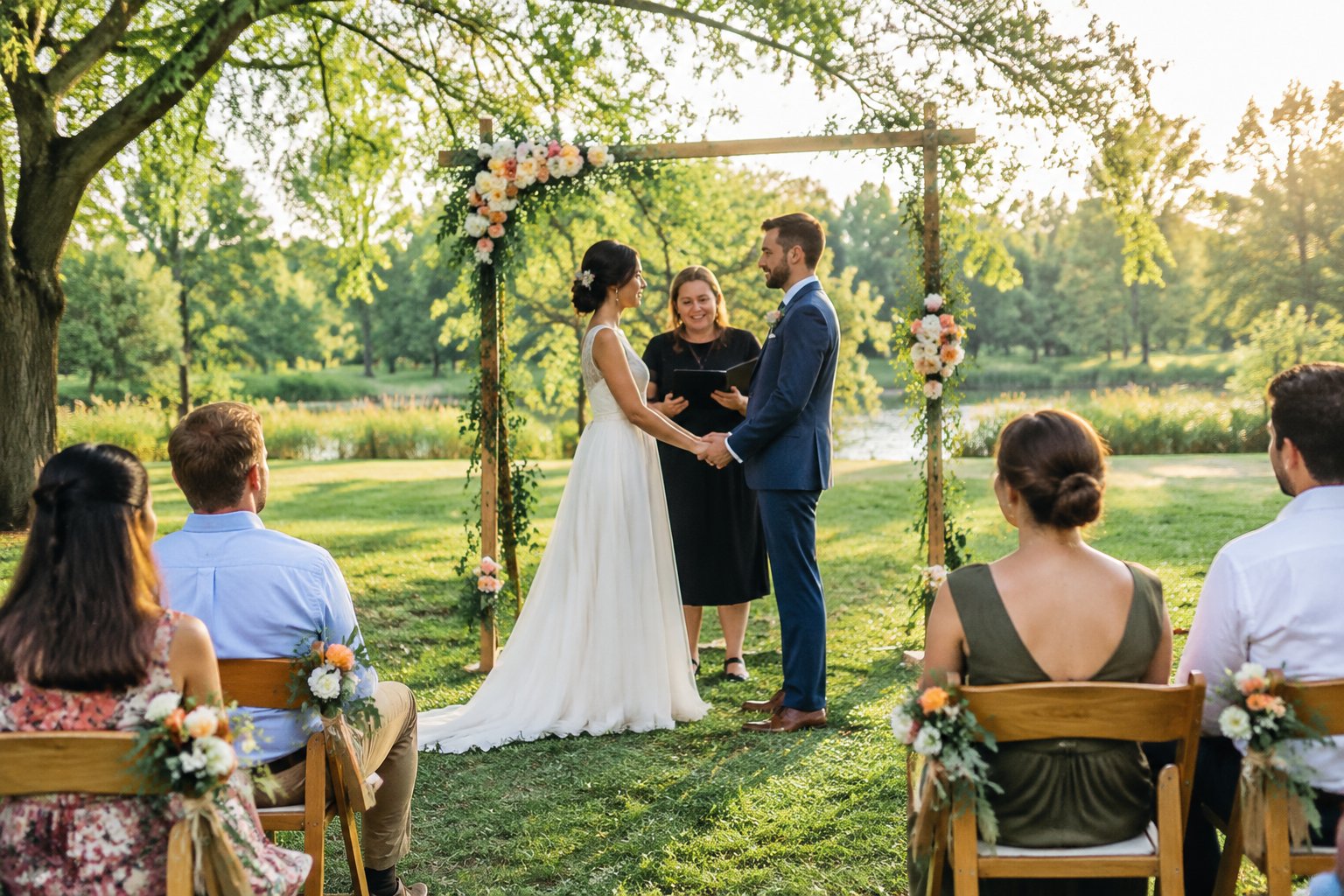
A free site can still bring costs for permits, chairs, travel, or a weather backup. Start with a nearby place that fits your guest count, then contact the person or office that manages it before you choose a date.
Where Can You Hold a Free Outdoor Ceremony?
You can hold a low-cost ceremony in a public park, at a public beach, or on private property with the owner’s permission. Each setting has its own rules for guest numbers, decorations, and reservations, so check those details before inviting guests.
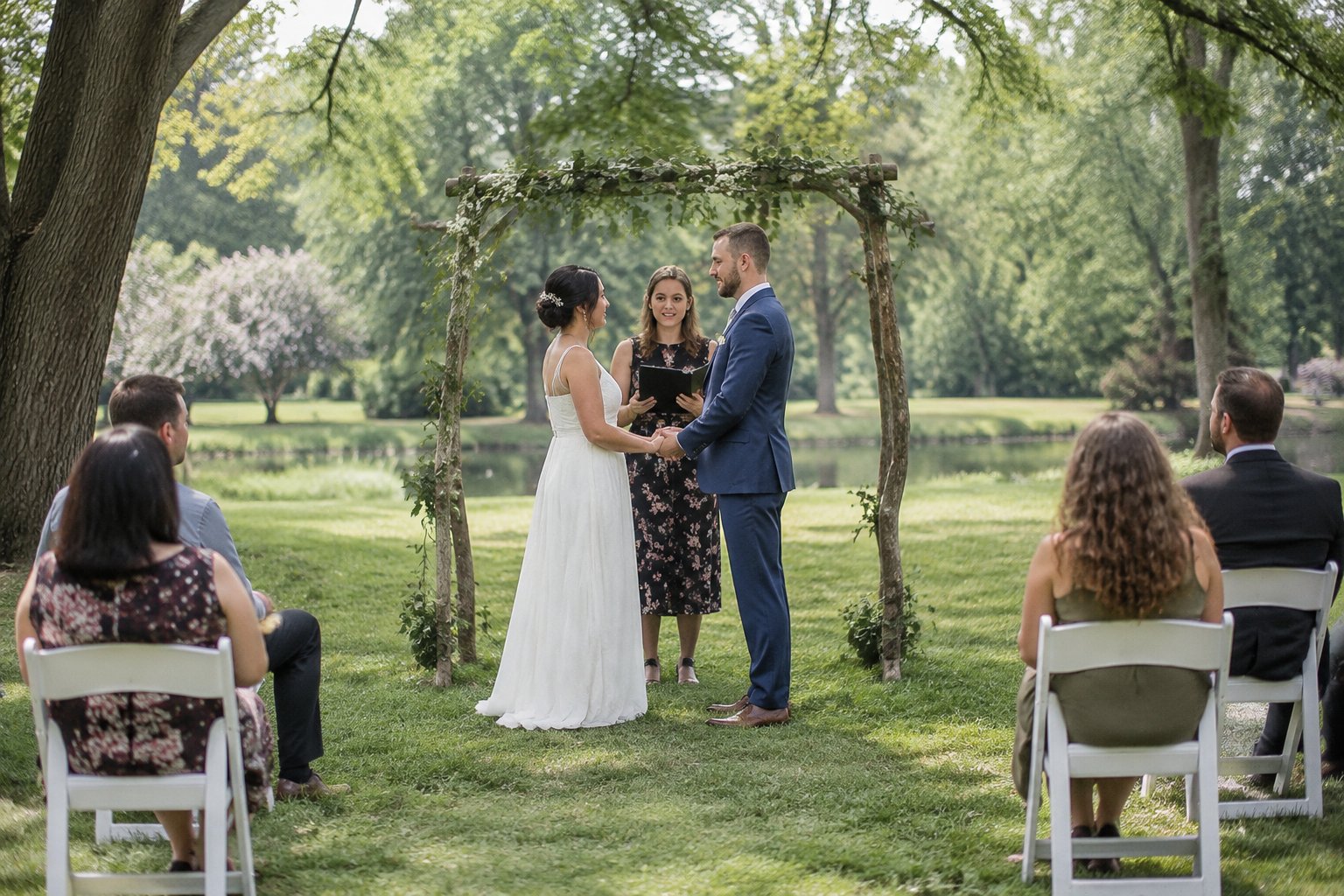
Public Parks and Natural Areas
City parks, state parks, and other public natural areas offer open-air backdrops with little decoration required. Some locations allow a brief, small ceremony without a site rental, while reserved spaces or larger gatherings can require a permit or fee.
Rules differ by park, so contact the park office before you plan around a specific spot. You can also compare more free outdoor wedding venues as you shortlist locations.
Look for a site with a clear path for guests, nearby restrooms, and enough room for your group without blocking public walkways. Ask about restrictions on arches, chairs, amplified sound, flowers, and photography equipment.
Public Beaches
A beach wedding can keep the setting simple and the décor light. Check whether the beach is managed by a city, county, state, or park agency, since each may set different rules for ceremonies and reservations.
Your guest count, ceremony setup, and chosen time can affect what approval you need. Sand, sun, and wind shape the guest experience, so share access details in advance.
Point out the nearest parking area and choose footwear that works on sand. For a small setup, cheap outdoor wedding venues can help you consider similar open-air locations.
Backyards and Private Homes
A backyard wedding can cut venue rental costs and make it easy to access a kitchen and indoor bathrooms. Ask the property owner for clear permission, then check local rules for noise, parking, fire safety, and event size.
A small guest list helps you fit the ceremony into the space without adding a tent or extra seating. Before settling on a home, check whether guests can reach the ceremony area safely and whether the yard has a level spot for chairs.
If you’re weighing a family home or your own yard, read about getting married in your garden for free as part of your planning.
What Costs Can Turn a Free Venue Into a Paid One?
A location with no rental charge can still add costs through permits, equipment, cleanup, and backup plans. Ask for a full list of requirements before you commit, then compare that total with a low-cost venue that includes some of the basics.
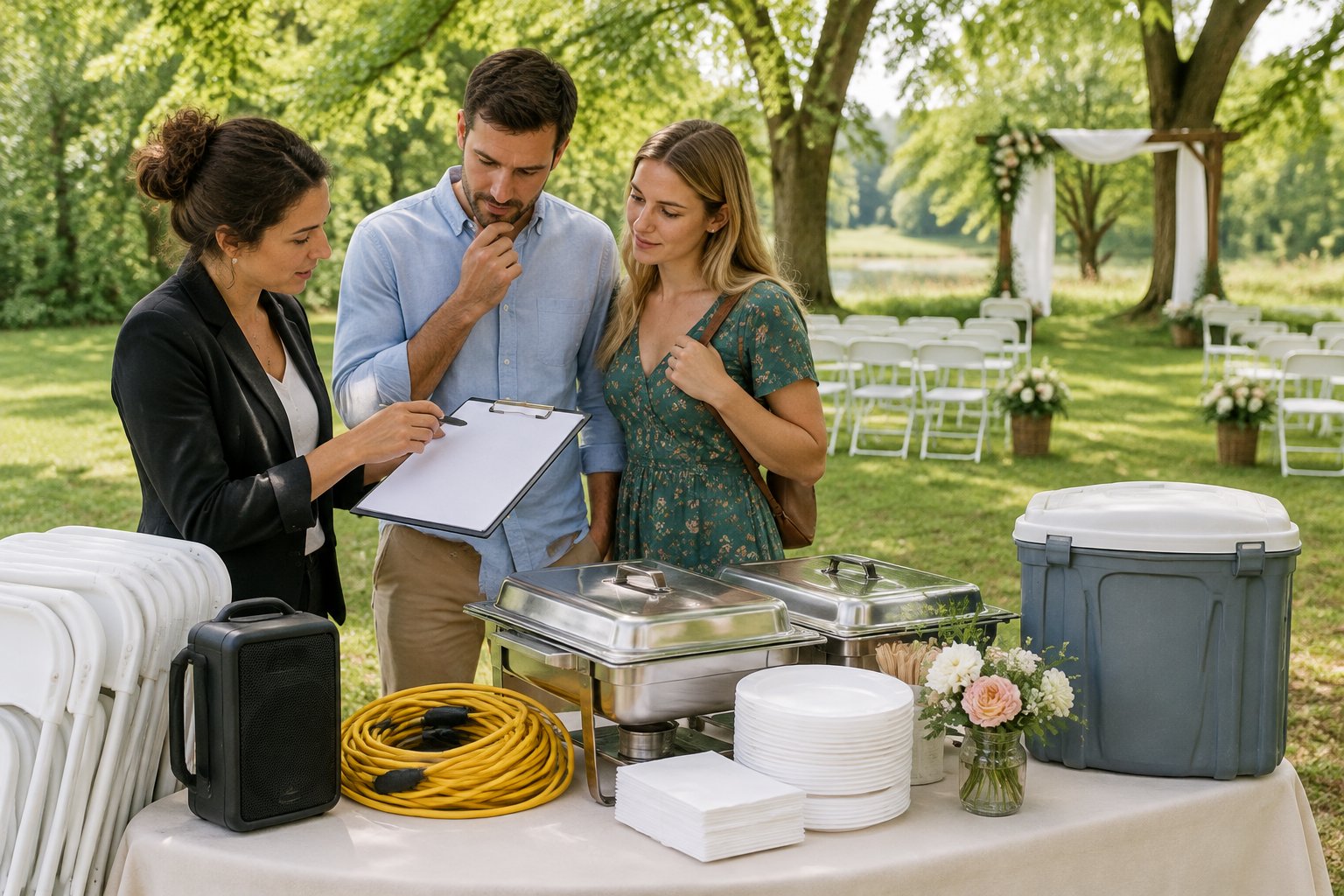
Permits, Reservations, and Site Fees
A public location may require a permit for a wedding ceremony, a reserved time slot, or a particular setup. Ask whether fees change with the number of guests, the length of the event, or items such as chairs and a sound system.
Also check whether the permit covers only the ceremony or includes time for setup and cleanup. Get the application deadline and payment terms in writing.
If the site is popular, ask how reservations work and whether another event could use nearby space at the same time.
Equipment, Guest Count, and Cleanup
Chairs, tables, a sound system, shade, and portable restrooms can raise the price of a bare outdoor site. Make a list of what you already have, what guests need, and what you must rent.
A smaller guest count can reduce seating needs and make a simple setup practical. Confirm who handles trash, decorations, and any rented items after the ceremony.
If your plan is a short ceremony with minimal setup, simple outdoor wedding ideas can help you keep the event comfortable without a long rental list.
Travel and Weather Backup Plans
A low-fee location far from parking or public transit can add travel costs for you and your guests. Check the route, parking rules, and walking distance before you book.
For older guests or anyone with mobility needs, ask the site about accessible paths and drop-off areas. Choose a weather plan before sending invitations.
A nearby community room, home, or covered pavilion gives you a clear place to move the ceremony if rain or heat makes the original site uncomfortable. Include any backup rental fee in your total budget.
Which Affordable Venues Are Worth Considering?
Affordable wedding venues include community spaces, restaurants, and gardens that charge a manageable fee while offering useful facilities. Compare the full price, included items, and event rules so you know what you’ll still need to arrange.
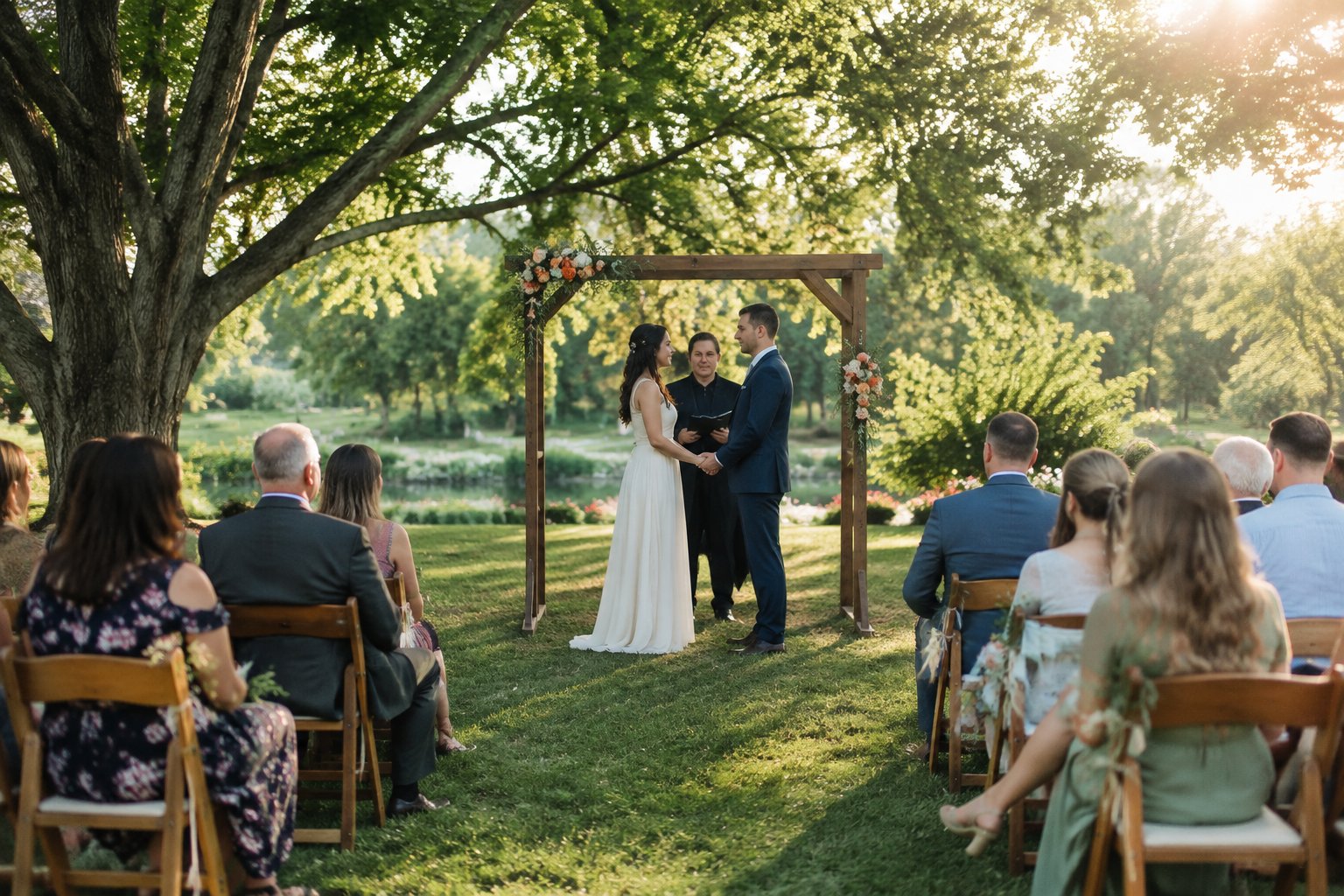
Community Centers and Public Facilities
Community centers, recreation buildings, and public facilities can offer a lower-cost place for a ceremony or reception. Some have lawns or patios, while others pair an outdoor space with an indoor room you can use for meals or a weather backup.
Ask about rental hours, cleaning duties, kitchen access, and whether you can bring your own food. A library, school, or campus may also have a room or outdoor area available for events.
Contact the facility to ask about eligibility, event policies, and any reduced rates for local residents or alumni. Compare affordable outdoor wedding venues with community options if you want to keep the ceremony outside.
Restaurants, Gardens, and Other Low-Cost Spaces
A restaurant with a patio or garden can save you from renting some event basics, since seating and food service are already part of the venue. Ask whether there is a minimum food or beverage spend, a private-room fee, or a limit on how long you can use the space.
A small guest list can make a private dining area a practical choice. Public gardens and botanical spaces offer a polished setting, though event rules and fees vary by location.
Ask about ceremony-only bookings, weekday rates, guest limits, and restrictions on outside décor. For more garden-focused options, browse cheap garden wedding venues and compare each venue’s fee with what it includes.
Is a Courthouse Wedding the Cheapest Option?
A courthouse wedding can be one of the lowest-cost ways to complete the legal ceremony, especially when you keep the guest list and celebration small. Your total depends on local fees and whether you add a separate meal, party, or outdoor gathering.
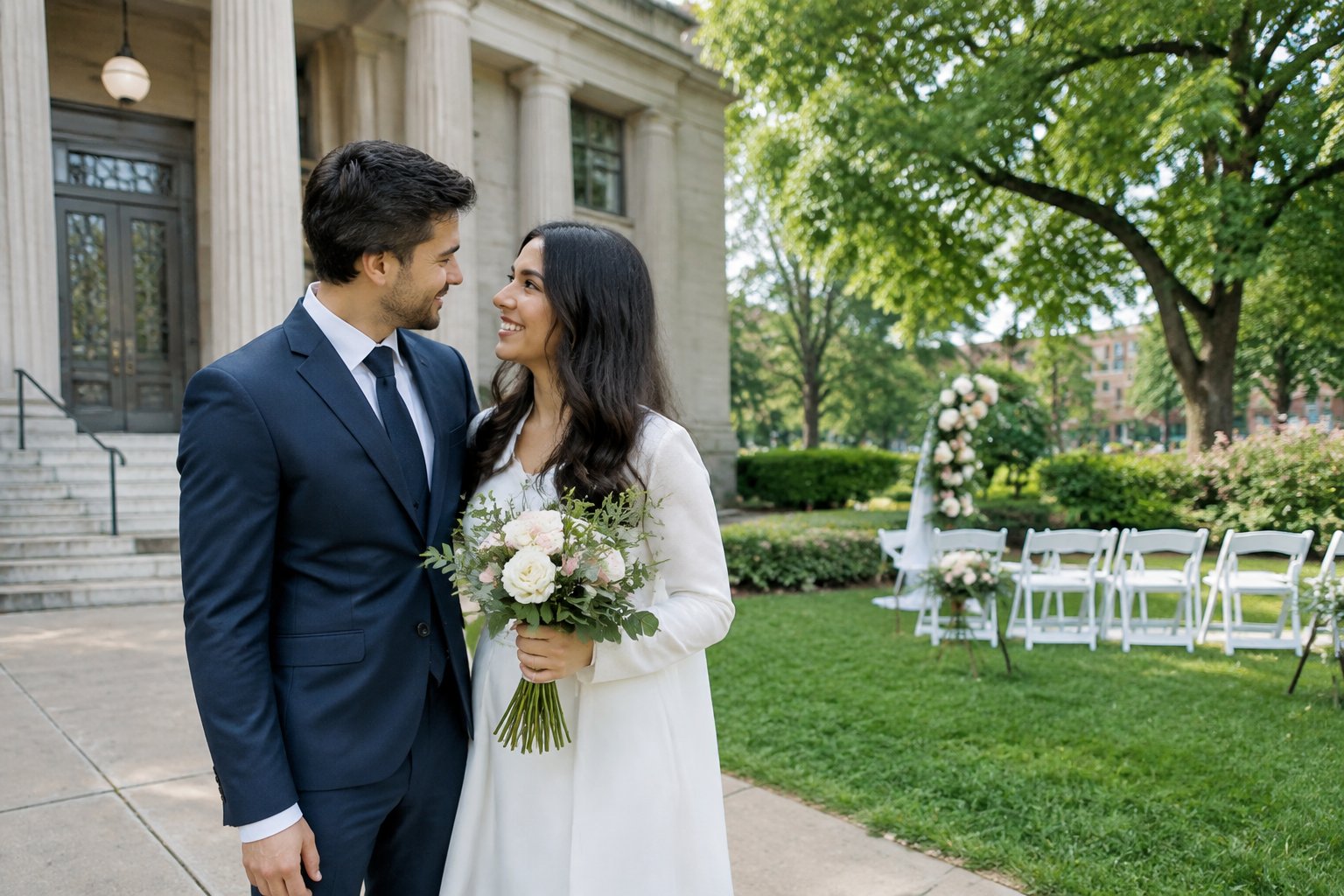
What to Know About Courthouse Weddings
Some courthouses or city offices perform civil ceremonies, while others direct couples to another authorized officiant. Check the local process, appointment availability, guest rules, and ceremony fee before you make plans.
A courthouse wedding can also be followed by photos or a small gathering at a nearby park, if that site allows it. If you prefer an outdoor ceremony, you can keep the legal appointment separate from a gathering with family and friends.
Compare the likely costs with other options in this guide to the cheapest place to get married.
How to Budget for a Marriage License and Officiant
Your marriage license is a required legal cost, and the fee, application steps, and waiting period depend on your state or county. Check the county clerk’s instructions for application documents, payment methods, and how long the license remains valid.
Make sure your ceremony date fits within that period. Budget for an officiant too.
Local rules define who can perform a legal marriage, so confirm the requirements before asking a friend or family member to lead the ceremony. Ask whether the courthouse ceremony fee includes an officiant or whether that service has a separate charge.
How Do You Confirm a Location Is Allowed?
You confirm a wedding location is allowed by checking directly with the office or owner responsible for the site. Get clear answers about the ceremony, guest count, setup, and cleanup before you pay a deposit or send invitations.
Contact the Local Parks or Facilities Office
For a park, beach, or public garden, contact the local parks or facilities office that manages the property. Give them your proposed date, event length, guest count, and setup details.
Ask whether the site is open for ceremonies and which permit or reservation process applies. For private property, get the owner’s permission and ask about limits on parking, noise, and access to indoor spaces.
If the property belongs to a neighborhood association or shared community, confirm whether its rules allow a wedding event.
Check Ceremony, Guest, and Reception Rules
Ask whether the location allows chairs, decorations, food, amplified sound, alcohol, and photography. A site that allows a brief ceremony may have different rules for a reception or larger group.
Confirm where guests can gather and whether any areas must stay open to the public. Review access details too.
Check restroom availability, parking, pathways, and any restrictions that could affect guests with mobility needs. Share the practical details with guests so they know where to go and what to expect.
Get Permits and Reservations in Writing
Keep a written copy of the permit, reservation, or permission from the property owner. Confirm the approved date and time, the exact location, guest limit, allowed equipment, and cleanup rules. Save the contact information for the person who can answer questions about your booking.
Before you treat a space as free, ask whether there are separate application, reservation, or cleanup charges. Then include every confirmed fee in your budget and keep the approval with your wedding planning records.