
Outdoor Wedding Venues Victoria: How to Choose
The best outdoor wedding venues in Victoria pair a setting you love with comfortable guest spaces, a clear weather plan, and costs you can confirm before booking. As you compare properties, look beyond the ceremony view: check how guests move through the day, where they’ll go if the weather shifts, and what the quoted price includes.
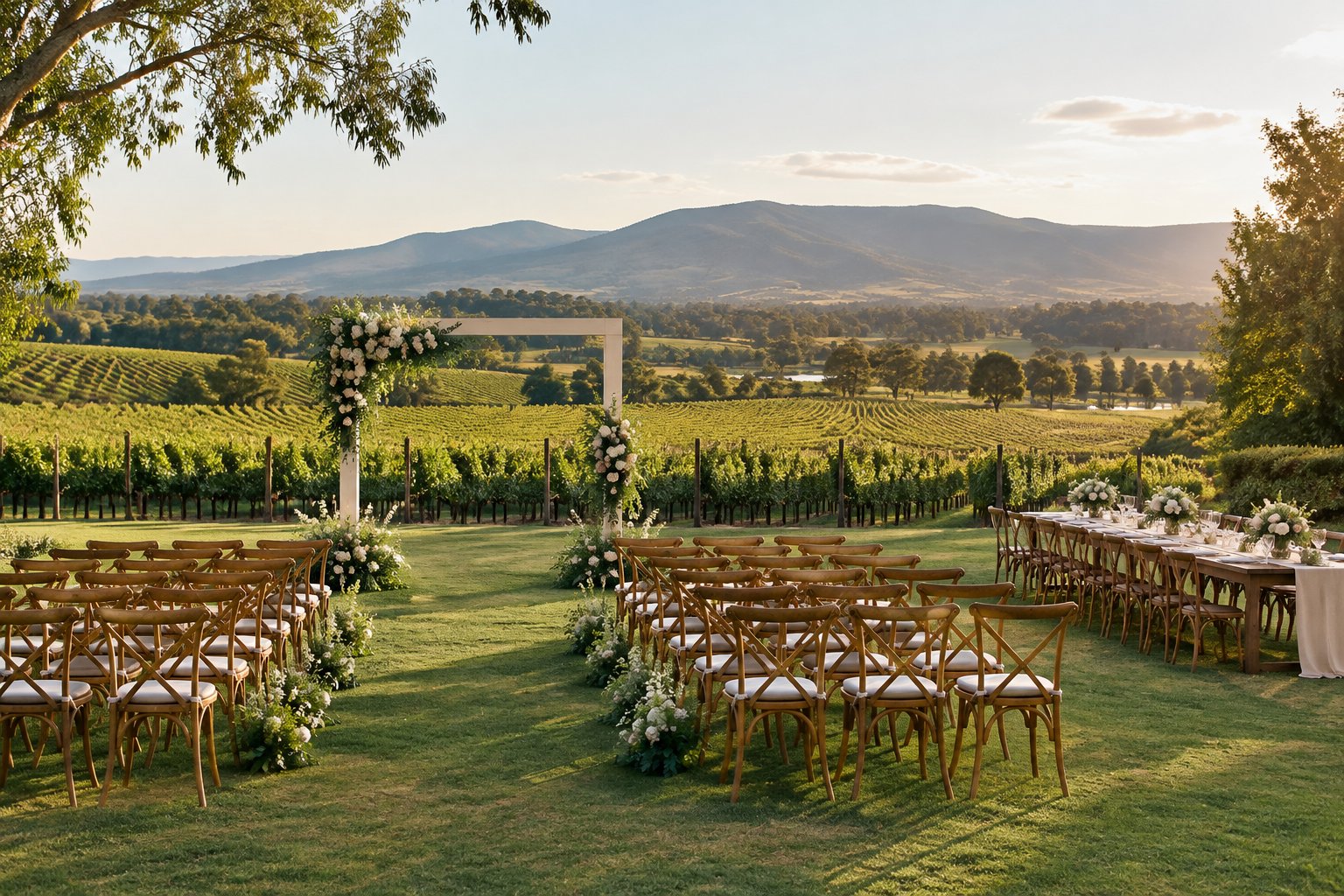
Start by choosing a setting that fits your wedding style and guest list. Then shortlist a few properties and arrange site visits so you can see how each one works in person.
Guests coming from out of town? Compare hotels and rentals near Victoria for your dates.
Which Outdoor Setting Suits Your Wedding?
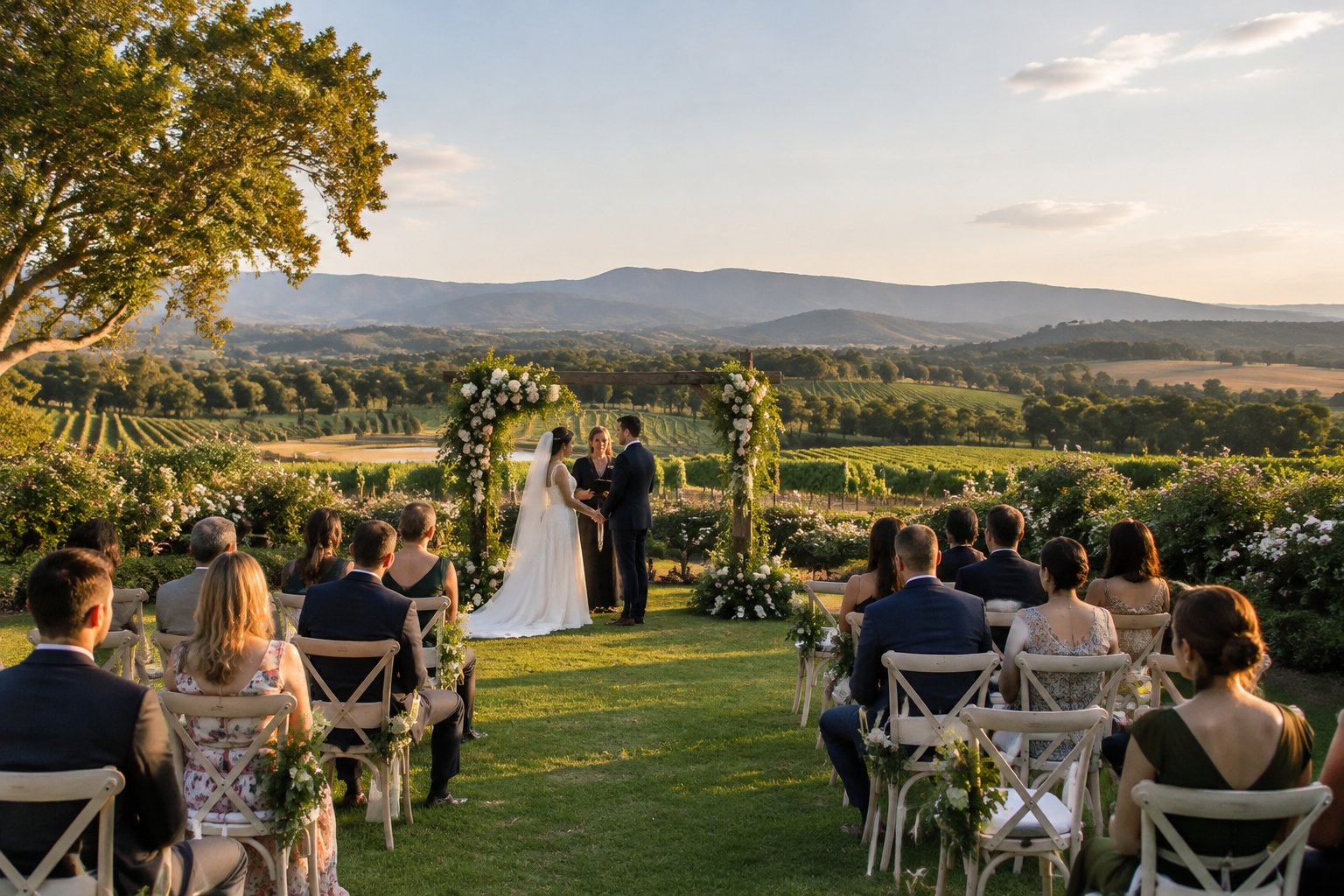
Your ideal setting should feel right for your ceremony and support the kind of celebration you want afterward. Compare the atmosphere, practical layout, and nearby guest facilities before you focus on décor.
Vineyards and Country Estates
Vineyards and country estates suit couples who want open views, a relaxed feel, and room to host different parts of the day. Check whether the ceremony lawn, dining area, and photo spots are close enough for guests to move between them with ease. Ask about the surface underfoot, too: gravel paths and uneven lawns can affect guests wearing dress shoes or using mobility aids.
A countryside property may sit outside town, so check drive times and transportation options for guests. Ask how late music can run, and whether the venue has limits on outdoor lighting or amplified sound. If you’re drawn to a garden setting, compare the property’s features with these garden wedding venues in Victoria.
Gardens and Historic Grounds
Established gardens and historic grounds bring built-in character to your ceremony. Look for shaded seating, accessible paths, and enough open space for guests to gather without crowding flower beds or historic features. Confirm which areas you can use and whether other events or public visitors might share the property.
If the venue has a strong architectural style, consider whether it fits your colors and décor plans. A setting that already feels complete can help you keep styling costs in check. For a more personal ceremony layout, explore outdoor wedding ceremony ideas.
Coastal and Waterfront Locations
A waterfront setting offers open views and a fresh, airy feel. Before you book, ask about wind exposure, shade, noise from nearby public areas, and access to restrooms. Check whether the ceremony area has firm ground and whether guests can reach it without walking across sand or a steep path.
Coastal light and breezes can shape your timeline and décor choices. Confirm any restrictions on candles, flowers, tents, or amplified sound, and ask where guests can gather if conditions change. If you’re considering a beach ceremony, compare the logistics with other beach wedding venues in Victoria.
How Do You Compare Venues?
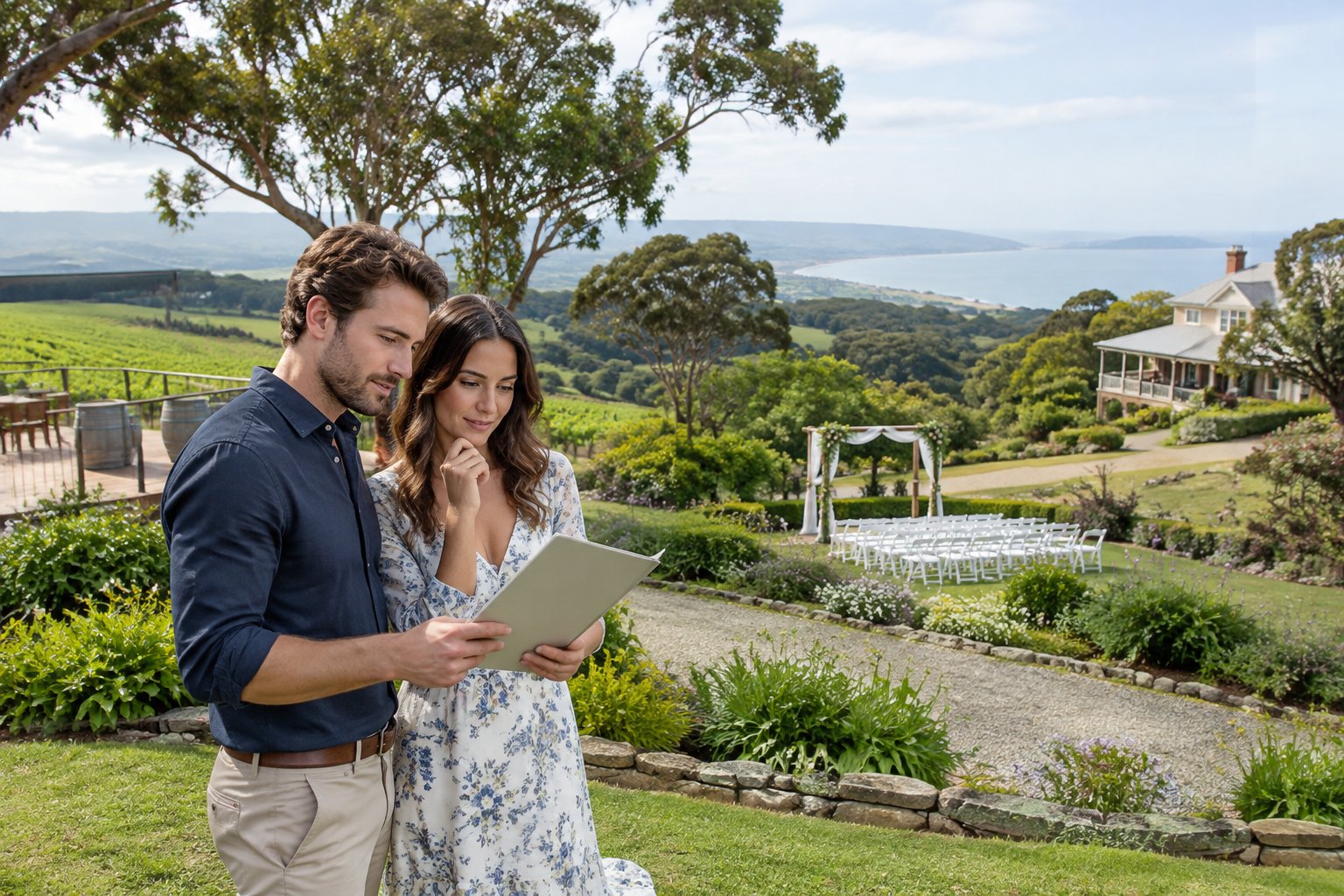
Compare each wedding venue against the same practical checklist so you can weigh the full experience, not just the first impression. Guest capacity, access, and what you learn during a site visit help you judge wedding venues in Victoria on equal terms.
Guest Capacity and Layout
Ask for the seated capacity for both the ceremony and reception. A venue’s maximum event capacity may not match the number of guests it can seat comfortably for dinner. Request a sample floor plan for your estimated guest count and check space for dining tables, a dance floor, a bar, and a clear route between areas.
Walk the property as if you were a guest. Note the distance from parking to the ceremony, the route to restrooms, and whether the event venue has a comfortable place to wait between parts of the day. A layout with clear paths and enough room to sit helps guests enjoy the celebration without feeling crowded. You can also plan your seating around the setting with these outdoor wedding seating ideas.
Access, Parking, and Guest Facilities
Confirm how many parking spaces are available and whether guests can arrive by shuttle or rideshare. If the venue is outside a town center, give guests clear directions and estimate travel time from nearby lodging. Ask about accessible parking and paths, restroom access, and facilities for families with young children.
Check the route between the ceremony and reception spaces, especially if guests will walk across grass, gravel, or a slope. If your wedding includes alcohol, ask what transportation options the venue recommends for guests returning to their lodging.
Site Visits, Availability, and Reviews
Visit the property at the time of day you’re considering for your ceremony. Look at the sun’s position, shade, traffic or nearby activity, and the condition of paths and lawns. Ask what spaces are included in your rental and whether the venue will host another event on the same day.
Before you reserve a date, request the contract, a full fee list, and details about the cancellation and payment terms. Read recent reviews for recurring comments about communication, setup, and guest comfort. A checklist for how to pick a wedding location can help you keep your priorities consistent while touring.
What Should You Know About Weather and Backup Plans?
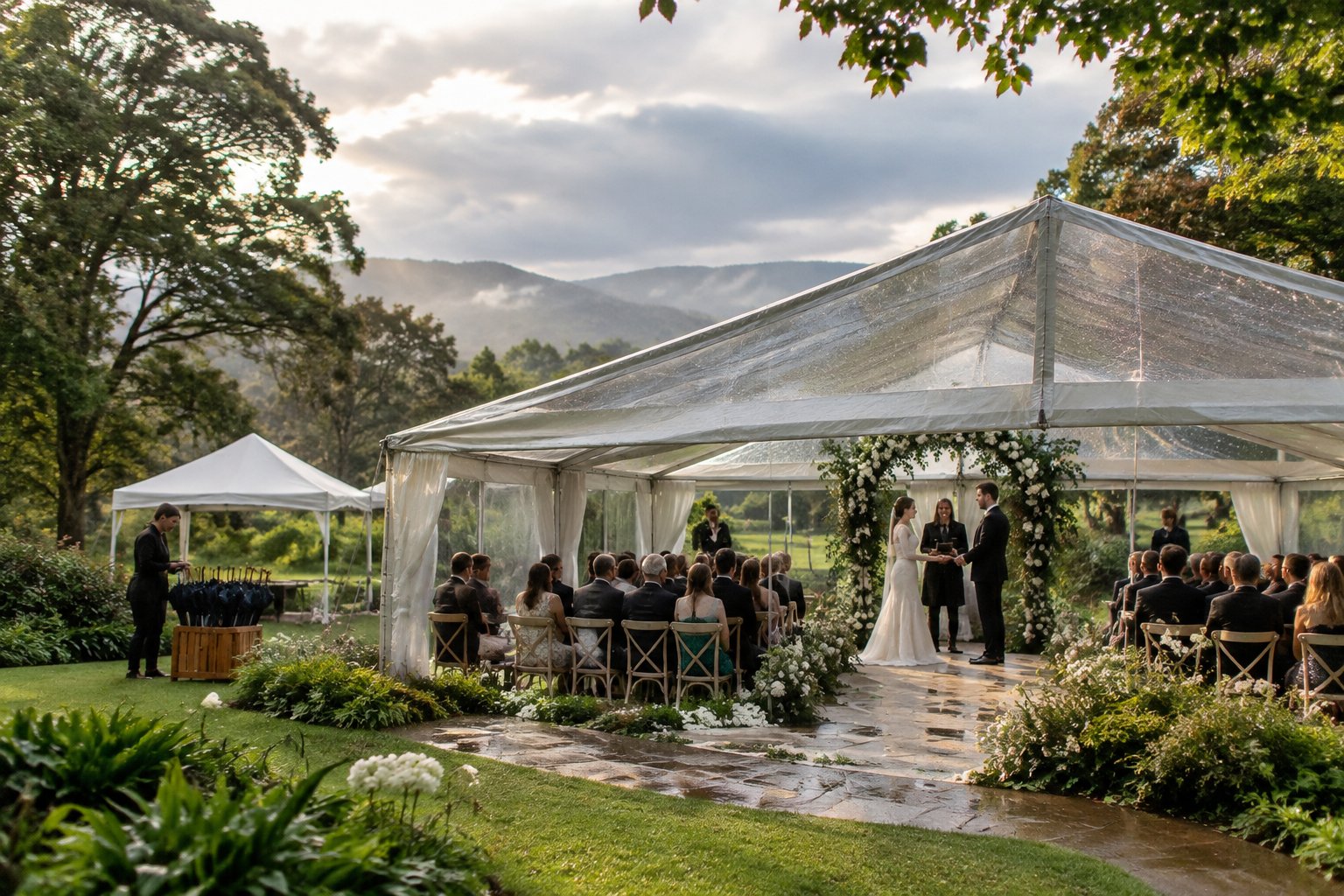
Plan for weather as part of your venue choice, with a backup space that can handle the same guest count and schedule. Ask how the venue manages sun, rain, wind, and temperature changes for the date and location you’re considering.
Seasonal Conditions and Comfortable Guest Spaces
Check typical local conditions for your wedding month, including temperature, rainfall, wind, and sunset time. Then consider how long guests will be outside and whether the site has shade, airflow, water access, or a heated area. A midday ceremony in direct sun calls for a different plan than an evening event with a cool breeze.
Ask about the ground after rain and whether paths stay usable. If the venue is exposed to wind, find out how it secures signs, flowers, and sound equipment. These outdoor wedding tips can help you build comfort into your day’s plans.
Indoor Alternatives and Contingency Plans
Ask the venue to show you its indoor backup space, not just describe it. Check that the room fits your guests, has enough seating, and suits the ceremony or reception setup you have planned. If the backup is a tent, ask whether flooring, sidewalls, lighting, and setup are included in the price.
Clarify who makes the weather call, when you need to decide, and how quickly staff can move the event. Get the plan in writing, including any added fees and the process for telling guests about a location change.
How Do Ceremony, Reception, and Catering Fit Together?
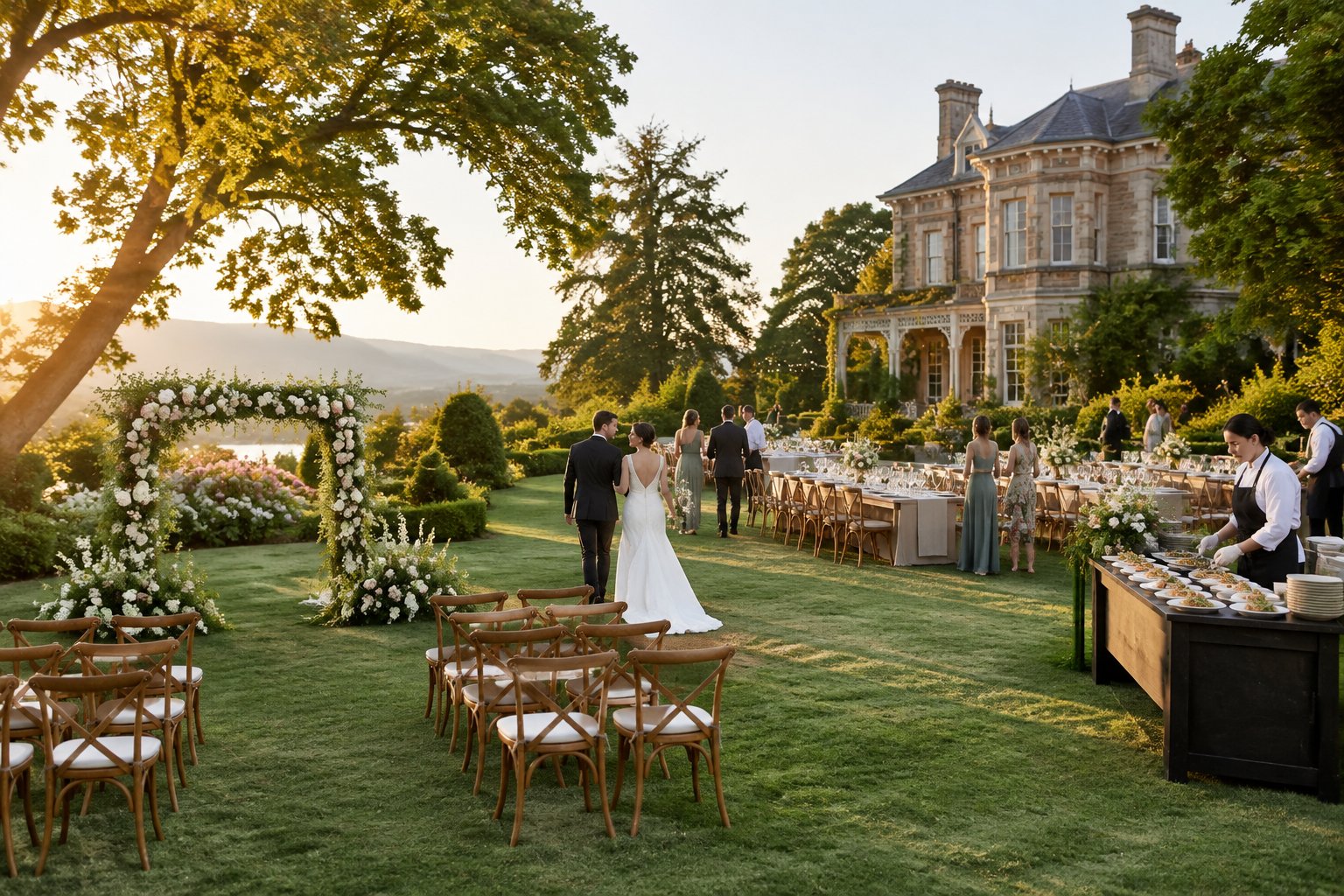
A smooth wedding day depends on a clear route from the ceremony to cocktails and dinner, with catering and setup timed around each transition. Check how the spaces connect and who coordinates the changeover.
Coordinating Ceremony and Reception Spaces
Ask whether the ceremony, cocktail hour, and reception take place in separate areas or share one space. Separate areas can give each part of the day its own feel, while a shared space needs a clear plan for moving chairs and setting tables. Confirm who handles the changeover and where guests will go while staff reset the room.
Think through the timeline from a guest’s point of view. Include time to walk between spaces, use the restroom, and find a seat. When ceremony and reception happen at one property, guests avoid a second trip and you can keep the day’s schedule in one place.
In-House Catering and Outside Vendors
Ask what catering the venue provides and whether you can hire an outside caterer. If the venue offers in-house service, request sample menus, dietary options, and details on staffing, serving style, and cleanup. If you bring in a vendor, check kitchen access, delivery times, insurance rules, and any outside-caterer fee.
Confirm where food will be prepared and served, especially for an outdoor reception. Shade, refrigeration, and a covered service area help protect food and keep staff comfortable. Learn how wedding caterers work so you can ask focused questions about the venue’s service plan.
Power, Lighting, and Hire Equipment
Check the available power supply before you book a band, DJ, or lighting vendor. Ask where outlets are located and whether the venue allows generators. For an evening celebration, confirm what lighting is installed and which areas need rented lights.
Request an itemized list of included furniture and equipment, such as tables, chairs, and a sound system. Ask who arranges deliveries and when vendors can set up or pack down. If you’re weighing properties with indoor and outdoor areas, compare their features with these indoor-outdoor wedding venues.
How Much Should You Budget for an Outdoor Venue?
Set your venue budget using the full event cost, including the rental, package inclusions, and any extra services you’ll need. Ask for an itemized quote so you can compare the total cost across properties.
Venue Hire and Package Inclusions
Venue hire may cover the space alone or include services such as tables, chairs, staff, catering, or coordination. Ask which rooms and outdoor areas are included, how many hours you can use them, and whether setup and cleanup fall within that time. Check for required deposits, taxes, service charges, and payment deadlines.
Compare package quotes by listing what each one includes. A lower rental price may leave you responsible for more rentals and labor, while a package with a higher upfront cost may include key services. For more context as you set a spending limit, review what most wedding venues cost.
Extra Costs for Rentals, Staffing, and Setup
Add likely extras to your estimate before choosing a venue. Common costs include tenting, flooring, portable restrooms, lighting, sound equipment, furniture, and additional setup or cleanup hours.
Ask whether the venue requires specific vendors and whether those vendors charge travel or delivery fees. Request a written estimate based on your guest count and planned layout.
Include the weather backup in that estimate, even if you hope to hold everything outdoors. A complete quote lets you compare venues using the same guest count, schedule, and service needs.