
Reasonably Priced Wedding Venues: Options and Cost Tips
You can find reasonably priced wedding venues by matching the space to your guest count, comparing full quotes, and considering community or outdoor locations.
Your venue budget should cover the complete event setup, including required rentals, food, service charges, and cleanup. Comparing affordable wedding venues by their estimated final cost helps you see which spaces offer the best fit for your plans.
Start by setting a guest-count range and a firm spending limit. Then ask nearby venues for itemized estimates so you can compare options with the same event details.
How Much Should You Budget for a Venue?

Set your venue budget using your total wedding budget, guest count, and the full cost of hosting at each location. The Knot’s 2025 Real Weddings Study reports an average venue cost of $12,900, a national reference point that can differ from local quotes and what each package includes.
Your personal limit should leave room for the rest of the celebration. If you need help deciding how much to set aside, consider what share of your wedding budget should go to the venue.
What Affects the Rental Price?
A venue’s price reflects more than the room or site rental. The date, length of the event, guest capacity, included services, and food-and-beverage rules can all change your estimate.
Ask whether the quote includes tables, chairs, linens, setup, cleanup, and staff. A higher starting price may cover items you would otherwise need to rent separately.
Check for a food-and-beverage minimum, too. That required spend can have a bigger effect on your total than the rental fee. Compare the same event details at every venue: your date or date range, guest count, event hours, and ceremony and reception needs.
Request an itemized estimate that includes taxes and required fees.
How Do Location and Guest Count Change the Cost?
A larger guest list can increase both the rental price and the costs tied to food, staffing, and equipment. A smaller gathering gives you more options, including spaces designed for intimate events.
Location affects availability and demand. A venue in a busy city or popular destination may charge more than a similar space outside the area’s busiest market. If your date is flexible, ask about pricing in nearby towns and at less popular times of year.
Which Venue Types Can Keep Costs Down?
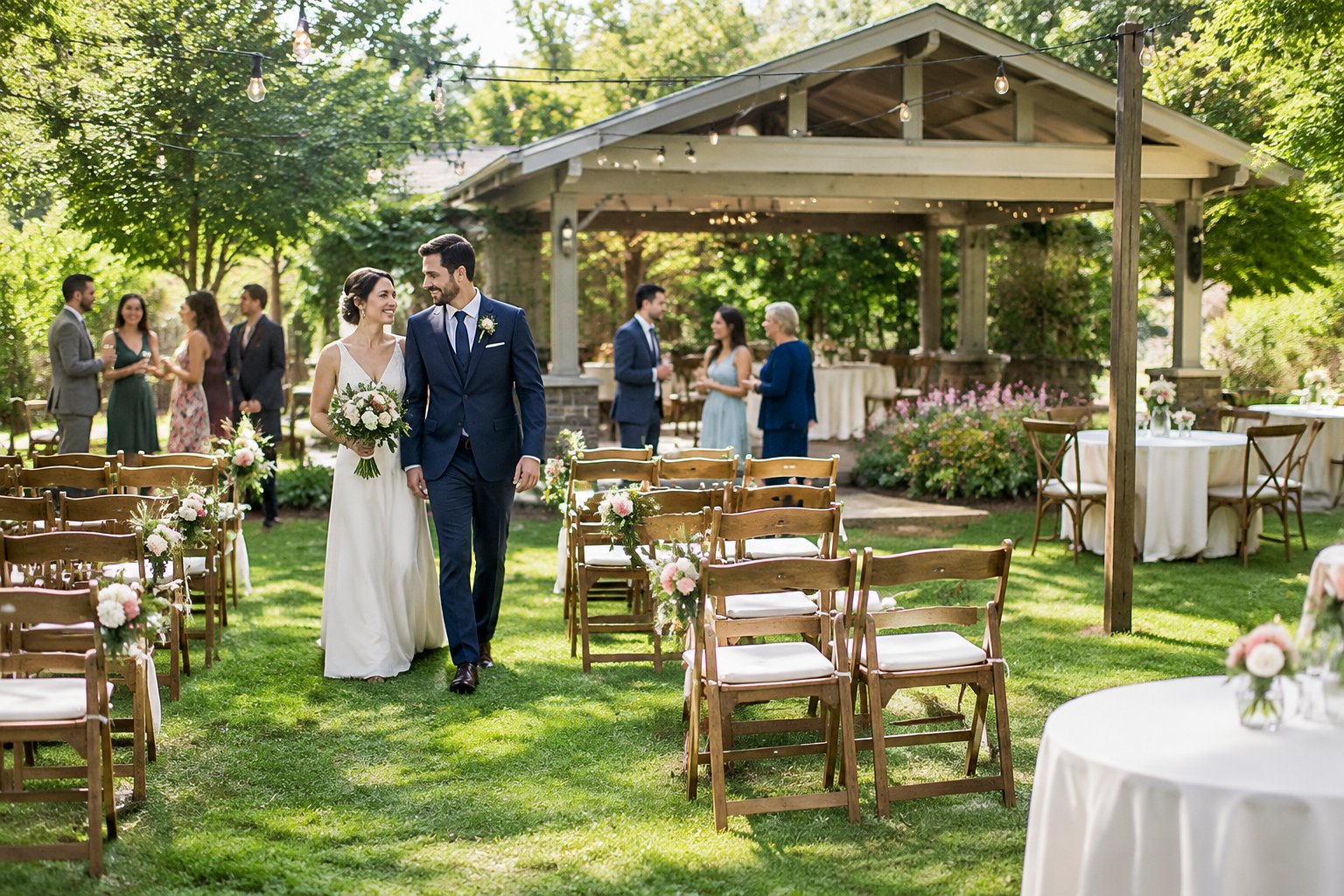
Community spaces, restaurants, backyards, and public outdoor sites can offer budget-friendly wedding venues with room for different styles of celebration. The best fit depends on what you need to rent, what you can bring in, and how much work you want to manage.
Some affordable outdoor wedding venues provide scenery as part of the setting, while indoor spaces offer more protection from weather. Compare the full setup costs before choosing.
Backyard Weddings
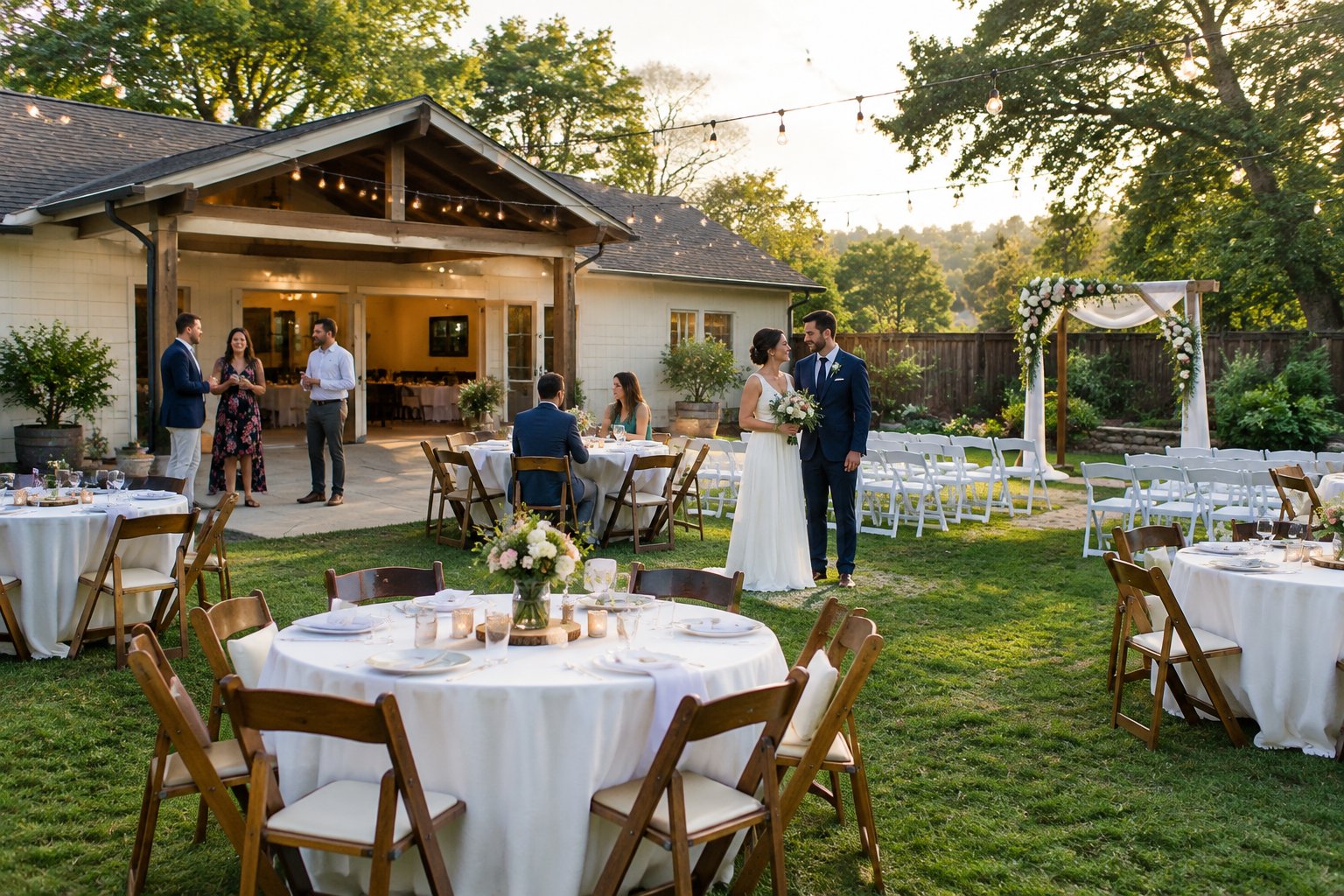
A backyard wedding can reduce or remove the site rental fee, and a familiar home or garden can make the day feel personal. Before you commit, check the space for guest seating, restrooms, parking, and safe access.
You may need to rent a tent, tables, chairs, lighting, or a portable restroom. Ask the property owner about noise rules and cleanup expectations. A backyard can be a low-cost location when the site already suits your guest count and needs few rentals.
Beach Ceremonies and Public Parks
A beach wedding or park celebration can make use of the natural surroundings for an inviting ceremony setting. Contact the local parks department or site manager to ask about permits, reservation rules, guest limits, alcohol policies, and restrictions on décor.
Build a weather backup into your plan, such as a nearby indoor room or tent option. You can also explore inexpensive wedding venue ideas that use public spaces or other settings with existing character.
National Park Weddings
A national park wedding can give you a scenic setting with a small guest list. Check with the park well before booking because ceremonies may require a special-use permit, and rules vary by location.
Ask about approved ceremony areas, parking, guest capacity, and any limits on sound or decorations. Keep the event plan simple and follow site rules for waste, food, and access. You’ll also want a rain plan and a clear route for guests who need accessible facilities.
Vacation Rentals
Vacation rentals can work for a small gathering when the owner allows events and the property has enough space for your plans. Read the listing carefully, then get written approval from the host before you pay a deposit.
A home’s overnight capacity may be lower than its event capacity, and some hosts prohibit gatherings. Include cleaning charges, deposits, and any event fees in your estimate. Check parking and nearby lodging so guests have a practical way to arrive and leave.
Community Halls, Restaurants, and Campuses
Community halls can provide an affordable room for a reception, with tables or a kitchen available at some locations. Ask which equipment is included and whether you handle setup and cleanup.
Restaurants can simplify food service because the venue may already have staff, seating, and kitchen facilities. Ask about private-room fees, menu minimums, and the rules for bringing in a cake or outside vendors. Colleges and universities may offer event rooms or campus spaces; contact the event office to ask about availability and any alumni rates.
How Do You Find and Vet Local Options?

You can narrow your search by setting a location, guest-count range, and maximum full-event cost before you contact venues. Reviews, written quotes, and a site visit help you check whether a promising space fits your needs and budget.
Search by Location, Guest Count, and Price
Start with a practical travel radius, then include nearby towns if the first results exceed your limit. Filter wedding venues by capacity and price when search tools offer those options.
You can also search for community rooms, parks, restaurants, and other spaces that do not market themselves as wedding specialists. Use the same guest count and event details for each inquiry. If you’re comparing nearby listings, search for low-cost wedding venues and keep a note of the date, quoted price, and included services for each one.
Read Reviews and Request Itemized Quotes
Reviews can help you spot recurring details about communication, access, service, and how the venue handled the event day. Look for comments that match your needs, such as guest comfort or the clarity of the final bill.
Request an itemized estimate from each venue. Ask for the rental fee, food-and-beverage minimums, required rentals, staffing, service charges, taxes, and any overtime or cleaning fees. A quote based on the same event plan makes it easier to compare the true cost.
Tour the Space and Check What Is Included
A tour lets you check the layout, restrooms, parking, accessibility, and distance between ceremony and reception areas. Ask where guests will gather and where vendors can load in. If the event is outdoors, confirm the backup location and how a weather change affects your plans.
Review the included items in writing. Confirm setup and teardown hours, furniture, lighting, sound equipment, and who handles cleanup. Get any promised extras added to your contract before you sign.
What Extra Costs Should You Compare?

Your wedding venue cost includes required services and logistics beyond the posted rental rate. Check the quote for rentals, catering rules, permits, insurance, cleanup, transportation, and guest lodging before you choose.
Rentals, Catering, and Service Fees
Find out whether the venue provides tables, chairs, linens, dishes, and a dance floor. If these items are missing, request rental estimates and delivery fees. A space with a modest site fee can require a larger equipment budget.
Review the catering policy and food-and-beverage minimum. Ask whether you can choose your own caterer, what bar options are available, and whether cake service carries a fee.
Check how service charges, taxes, and gratuities appear on the estimate. To plan the food portion carefully, compare those details with guidance on negotiating catering prices.
Permits, Insurance, and Cleanup
Public spaces and some private properties require permits or proof of event insurance. Ask which permits you need, who applies for them, and when each fee is due. Confirm whether alcohol, open flames, amplified sound, or certain decorations require extra approval.
Check who is responsible for waste removal, cleaning, and damage. Ask about security requirements and any deposit that could be withheld after the event. Put the cleanup deadline and the venue’s condition rules in writing.
Transportation and Guest Lodging
A venue far from hotels or public transit can add shuttle, parking, or rideshare costs for you and your guests. Check parking capacity and whether guests pay to use it. If many people will travel, compare nearby lodging options and the distance to the venue.
Include these details when you weigh local options. A lower rental rate can lose its value if guests need costly transportation or have few places to stay.
How Can You Lower the Final Venue Bill?
Choose an Off-Peak Date or Weekday
Friday, Sunday, and weekday dates can cost less than a popular Saturday, while an off-season date may open up more options. Ask each venue to quote the same event for several dates, including a shorter event window if that suits your plans.
Tell the venue your budget and ask about available dates or package changes. If the rental price is firm, ask whether the venue can include an extra setup hour or waive a specific fee. Add any agreement to your contract; these ways to request a wedding venue discount can help you compare the value of each offer.
Use Existing Décor and Included Amenities
Choose a space that already has the features you want, such as attractive lighting, outdoor greenery, or built-in seating. Use the venue’s tables and chairs if they fit your style, and ask whether linens, sound equipment, or setup support come with the rental.
Keep decorations focused on a few key areas, such as the ceremony spot or guest tables. Confirm the venue’s rules for candles, hanging décor, and flowers before you buy supplies.
Keep the Guest List and Setup Simple
A smaller guest list can let you book a more compact room and reduce food, seating, and rental needs. Choose one main event space when possible, since room changes can add labor or equipment costs.
Use a clear floor plan and limit special setups that require extra furniture or staff. Before signing, compare the final estimates and select the option that fits your guest count, budget cap, and venue rules.