
Shaped Wedding Band: How to Find the Right Fit
A shaped wedding band is a good fit when you want your band to follow your engagement ring’s outline and sit close beside it. Its curve, notch, or V-shaped point can help the two wedding rings form a coordinated set, especially when a straight band leaves a visible gap.
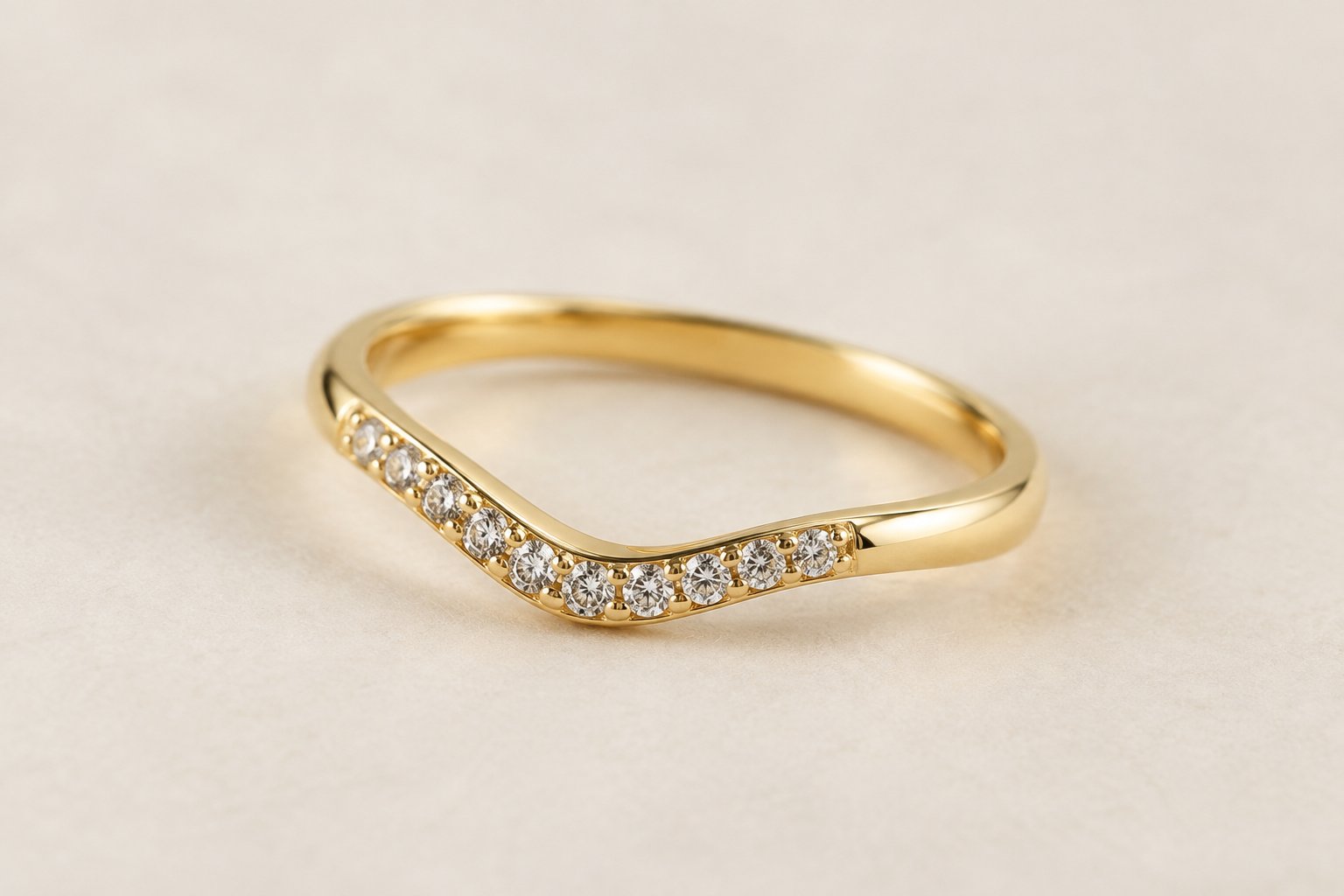
Start with the engagement ring you already own. Its setting, center stone, and metal give you practical clues as you compare styles and use these wedding ring shopping tips. If you can, bring the ring to a jeweler so you can check how a band sits beside it before choosing.
What Is a Shaped Wedding Band and How Does It Fit?
A shaped wedding band has a curve, notch, or point that lets it nest beside an engagement ring. The right contour follows the setting closely enough to create the look you want while feeling comfortable on your finger.
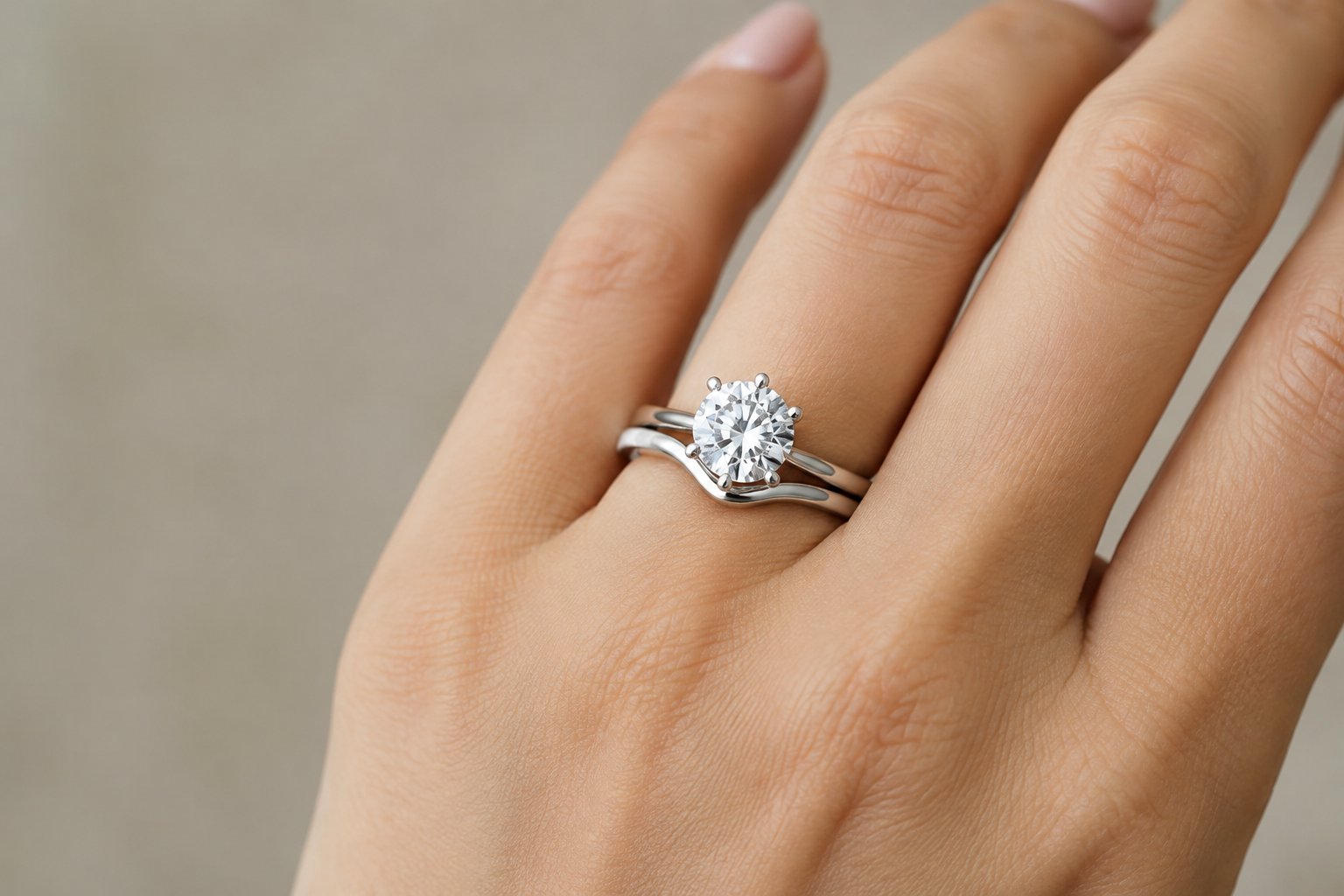
A shaped style can range from a gentle wave to a close-fitting custom outline. When you compare shaped wedding bands, consider how the pair will look stacked and how the band will feel when worn alone. For more practical details to guide your choice, explore these wedding band tips.
Why Choose a Contoured Band?
Choose a contoured band when you want a closer fit beside a setting that interrupts the engagement ring’s lower edge. A low-set stone, halo, or side stones can take up space where a straight band would sit, so a curve can follow the ring’s outline.
You can also choose shaped wedding rings for their distinctive look. A gentle contour adds a soft line to your stack, while a more defined shape draws attention to the center stone.
Consider how you want the band to look on its own, too. A moderate curve or wishbone can make a pleasing standalone ring; a close-fitting outline may look most complete beside its engagement ring.
When Does a Straight Band Leave a Gap?
A straight band leaves a gap when the engagement ring’s setting or center stone extends into the space where the band would rest. A high-set solitaire may give a straight band room to slide beneath it, while a low setting or wide halo can create a visible space.
A small gap is a style preference, not a fit failure. You might enjoy the separation as part of your ring stack. If you prefer the bands to sit closer, take your engagement ring to a jeweler and ask to try a shaped option against its actual profile.
Which Shape Works With Your Engagement Ring?
The shape that works best follows the setting’s outline and supports the look you want for your ring stack. A gentle curve can frame a simple setting, while a V or notch creates space around a distinctive center stone.
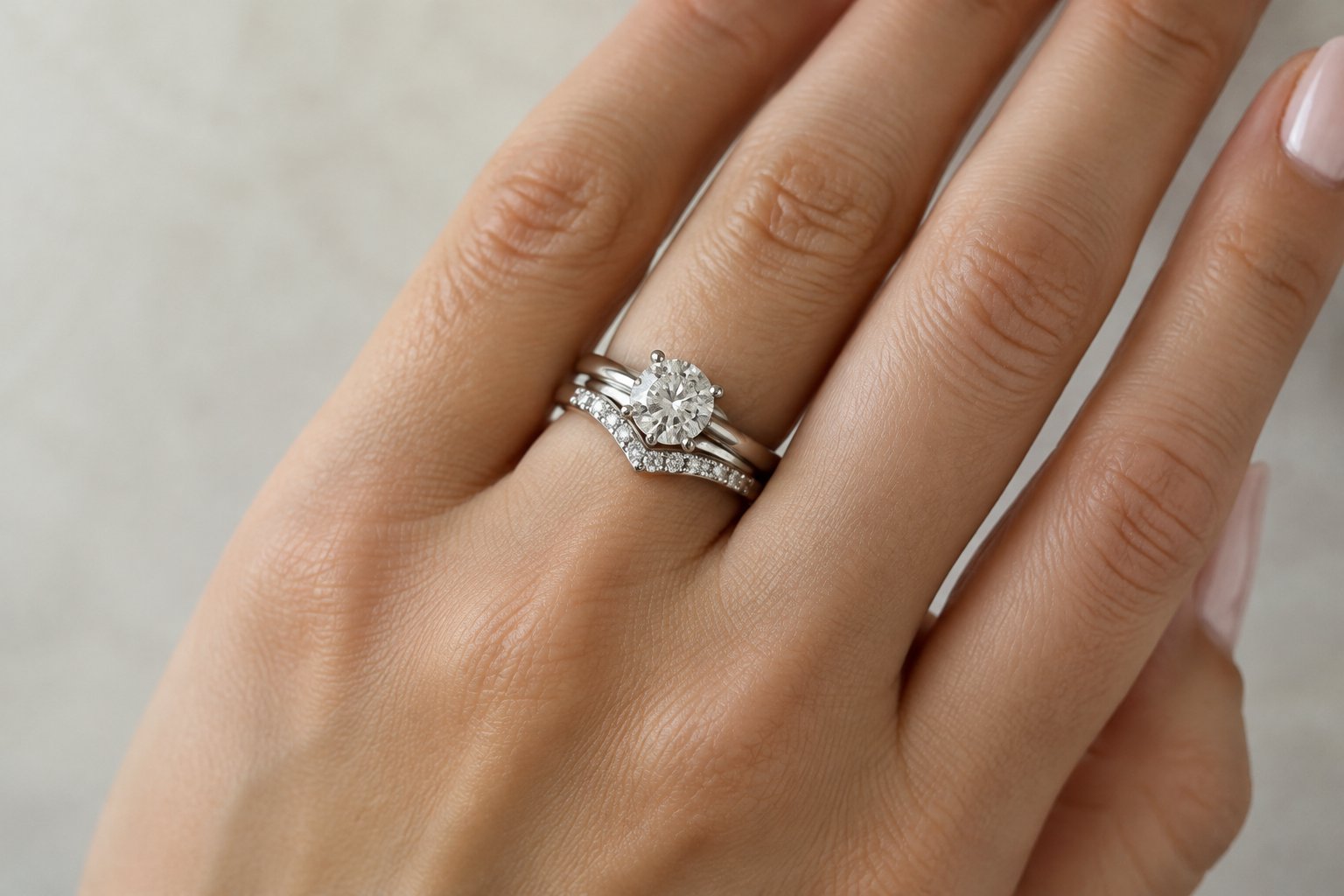
As you compare wedding bands, look at the point where the rings meet and how the two outlines look from above. Browsing wedding band ring ideas can help you identify shapes to try with your own ring.
Curved, Wishbone, and V-Shaped Designs
A curved band follows part of the engagement ring’s outline, creating a close, flowing pair. Choose a subtle curve if you want the band to blend gently with your ring.
A wishbone design dips into a V at the center. It can frame a raised center stone and gives your stack a clear point. A sharper V-shaped band can echo the outline of a marquise, pear, or heart-shaped diamond. Try the ring on to see where the point sits against your stone and finger.
Notched and Cutout Styles for Detailed Settings
A notch or cutout makes room for a setting that reaches into the band’s path. This shape can work well with a low-profile stone or a ring with a halo that extends beyond the main band.
Check the fit from the side as well as from above. The band should sit neatly beside the setting, with enough clearance to avoid pressing against prongs or the center stone. If the cutout is deep or highly specific, ask how the design will look when worn by itself.
Matching the Band to Your Ring’s Profile
Match the band’s profile to the way your engagement ring sits on your finger. Compare the height, width, and curve at the point where the rings meet. A slim band can look delicate beside a fine shank, while a wider design can balance a ring with a broader setting.
The center stone’s shape also guides your choice. A V-shaped band can frame a pointed or elongated stone, while a smooth curve can complement a rounded silhouette. Try a few profiles beside your ring to judge the spacing and balance in person.
How Do You Choose Metal and Diamond Details?
Choose metal and diamond details that suit your daily wear and complement the engagement ring’s materials. A matching metal color creates a unified look, while a considered contrast can make the two rings feel intentionally paired.
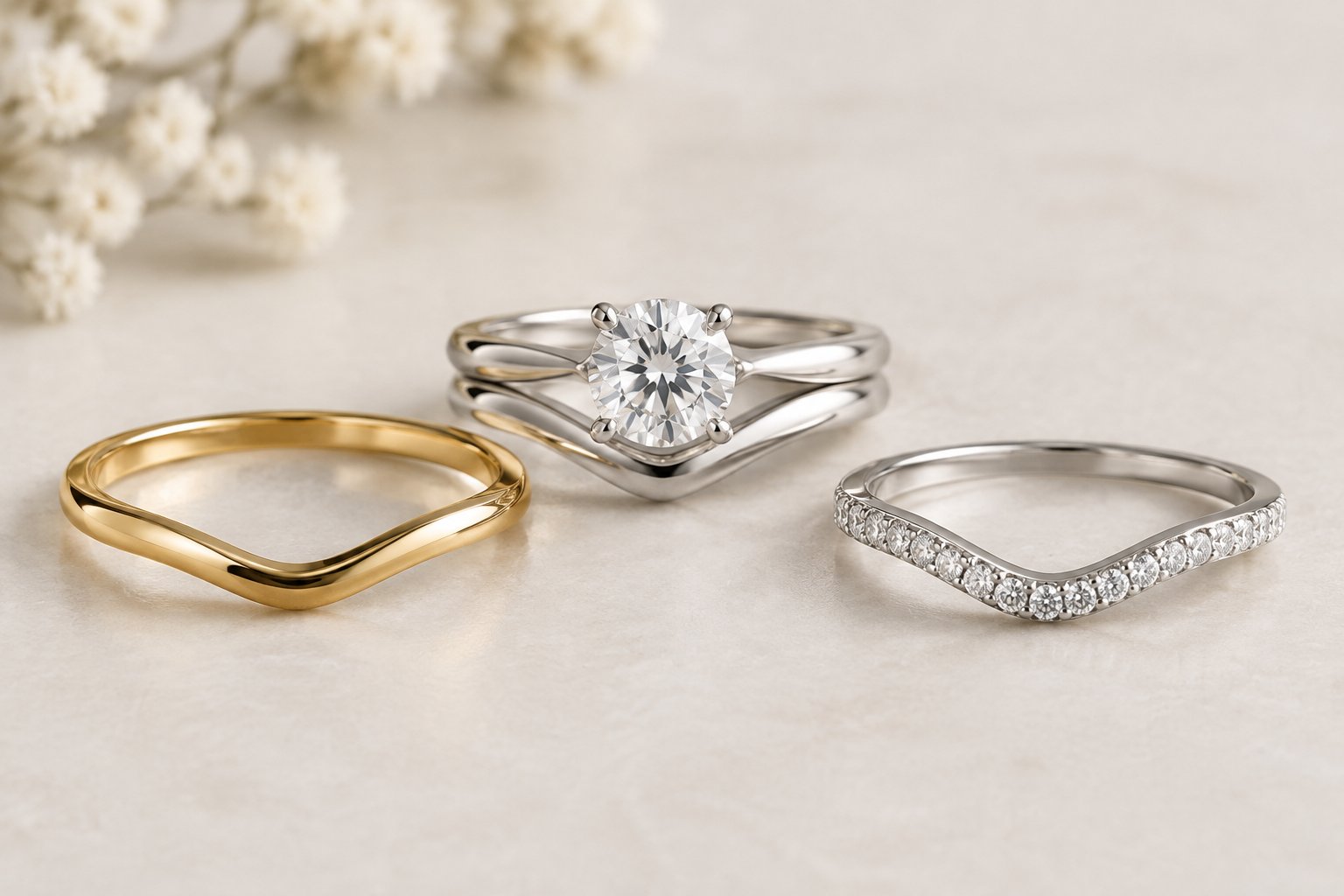
Think about finish and maintenance along with color. If you’re weighing gold colors, these points about yellow or white gold for a wedding ring can help you compare the options.
Gold, Platinum, and Other Metal Options
Gold offers several color choices, including yellow, white, and rose. Platinum gives you a naturally white metal with a substantial feel. For a coordinated set, compare the shaped wedding band with your engagement ring’s metal and karat.
Rings worn side by side touch as you move your hand. Metals and alloys can wear at different rates, so ask a jeweler whether the two rings are a suitable match for long-term wear. If you like mixed metals, try them together and consider how their finishes look side by side.
Plain, Pavé, and Eternity Band Styles
A plain metal band keeps the focus on the engagement ring and gives you a smooth surface for daily wear. Pavé adds a row of small diamonds across the visible top. An eternity style carries stones around the full band, creating sparkle from every angle.
Think about your routine and care preferences. Diamond-set bands need periodic checks to make sure their stones remain secure. A band with diamonds all the way around also gives you less flexibility for resizing, so confirm the fit before you order.
Matching Diamond Shape and Setting
Match diamond details to your engagement ring when you want the set to feel coordinated. Similar stone shapes or settings can create a repeated pattern, while a different cut can add contrast.
Look closely at how the stones sit in the band. Pavé creates a fine line of sparkle; larger stones make a more noticeable pattern. Ask how the diamond settings affect the band’s contour and how the finished ring will sit against your engagement ring.
How Can You Get a Comfortable, Precise Fit?
You get the most precise fit by trying the band beside your engagement ring and checking how it feels on your finger. A jeweler can assess the contact points, ring size, and shape together.
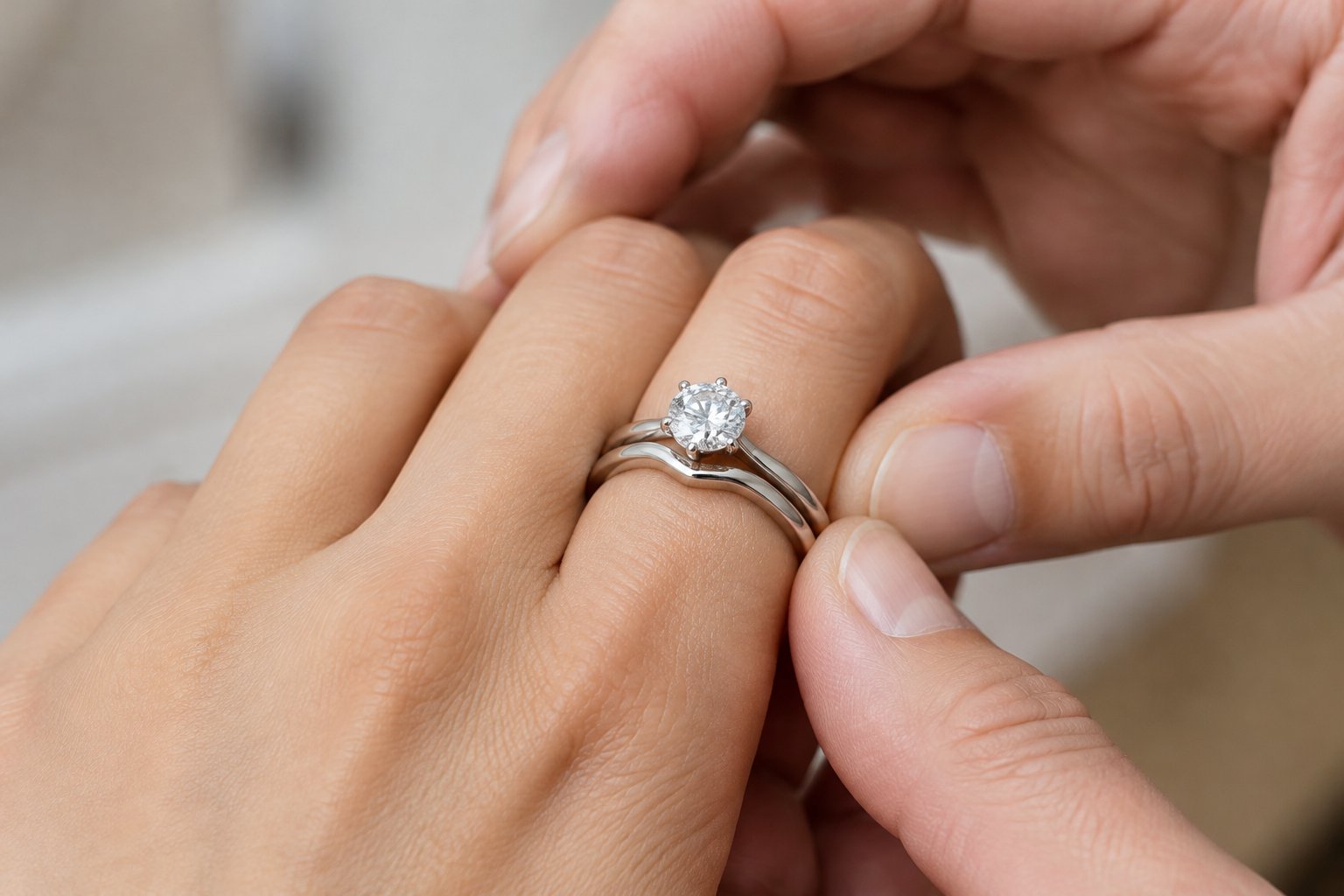
Pay attention to how the ring moves as you bend your fingers and make a fist. Your shaped wedding rings should feel secure and smooth during ordinary movement, with no sharp pressure against the neighboring setting.
Try the Band Beside Your Engagement Ring
Bring your engagement ring to your appointment so you can try the band against the real setting. A photo can help you discuss the style, but it cannot show the exact spacing or contact between the two rings.
Check the pair from above and from the side. Look for contact with the prongs, a gap you like, and a balanced line across your finger. Wear the pair for a few minutes in the store to notice any pinching or rubbing.
When to Consider a Bespoke Design
Consider a bespoke design when a ready-made band does not follow your engagement ring’s outline or leaves spacing you do not want. A jeweler can shape the new band to fit the ring you own, using its profile as a guide.
Ask how the custom process works, what changes are possible, and whether the finished band can be resized. A shaped design takes careful fitting, so request a drawing or model before production. If you want to plan for the added work, review the cost to have a wedding band made.
Using Samples and Checking Ring Size
Try sample bands in the width and profile you’re considering. A slight change in width or curve can affect how the ring feels and how closely it sits beside your engagement ring.
Have your finger sized by a jeweler, then check that the band passes over your knuckle with gentle resistance and rests comfortably at the base of your finger. Fingers can change with temperature and time of day, so ask the jeweler how to confirm the size before placing a custom order.
What Do Shaped Bands Cost, and Which Collections Can You Explore?
The cost of a shaped band depends on its metal, diamond details, and how much custom work the design needs. Compare each ring’s materials and fit, then check the collection’s sizing and care information before you decide.
How Metal, Diamonds, and Craftsmanship Affect Price
Metal choice affects the material cost, while added diamonds increase the amount of precious material and setting work. A plain band with a simple curve has fewer details than a pavé design or a custom contour made to follow a specific engagement ring.
For a custom piece, ask whether the quoted price includes design work, sizing, and any changes after you approve the model. Compare the full details of each option, and use this guide to the cost of wedding bands as a starting point for setting your budget.
Comparing Designer and Retailer Collections
Compare collections by the shape, metal, stones, fit, and care details shown for each ring. Austen & Blake, the Ernest Jones Diamond Collection, Vera Wang Love, the Ernest Jones Wedding Collection, and Le Vian give you named collections to explore.
If you’re drawn to colored diamond details, include Le Vian Chocolate Diamond designs in your search. As you browse, record the listed price and materials, then check whether a band is shaped, how it fits beside your engagement ring, and what sizing options the seller provides.
Ask a jeweler to confirm the fit with your ring before you place an order.