
The Waterfront Wedding Venue: Spaces, Events, and Planning
A waterfront wedding venue gives you a scenic place for your vows and a flexible setting for the celebration that follows. You can use the shoreline as a natural backdrop, then plan the reception around the view, the guest list, and the kind of day you want.
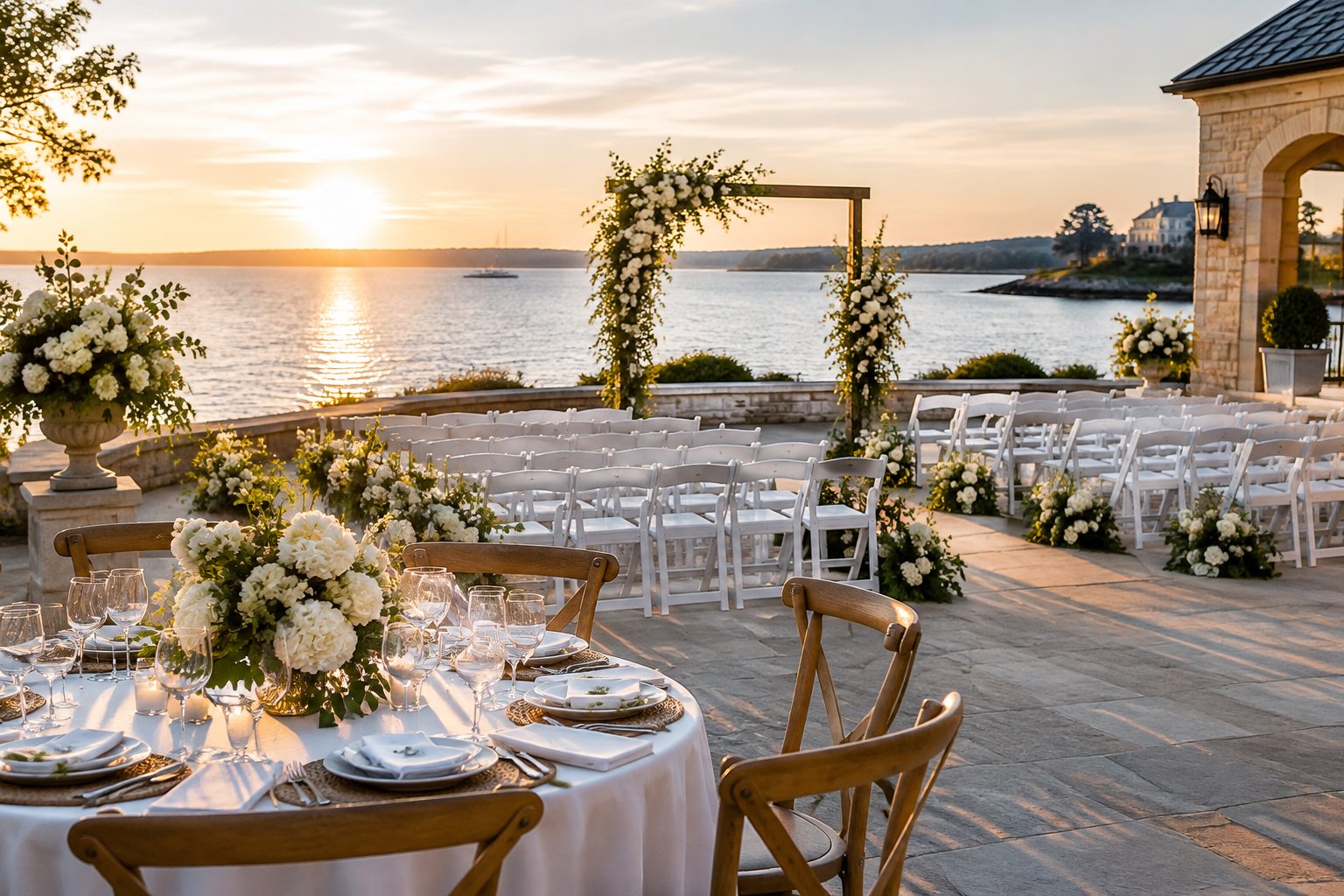
Your choice of location shapes more than your photos. Ask how guests will move between spaces, what happens if weather changes, and which services come with the booking. If a property feels like a match, contact its team to ask questions or schedule a tour before you commit.
Where Do Waterfront Wedding Settings Stand Out?
A waterfront setting stands out through open views, natural light, and a clear connection to the surrounding landscape. You can choose a shoreline, bay, lake, or river backdrop, then shape the event around the scenery and the practical needs of your guests.
What Makes a Waterside Backdrop Memorable?
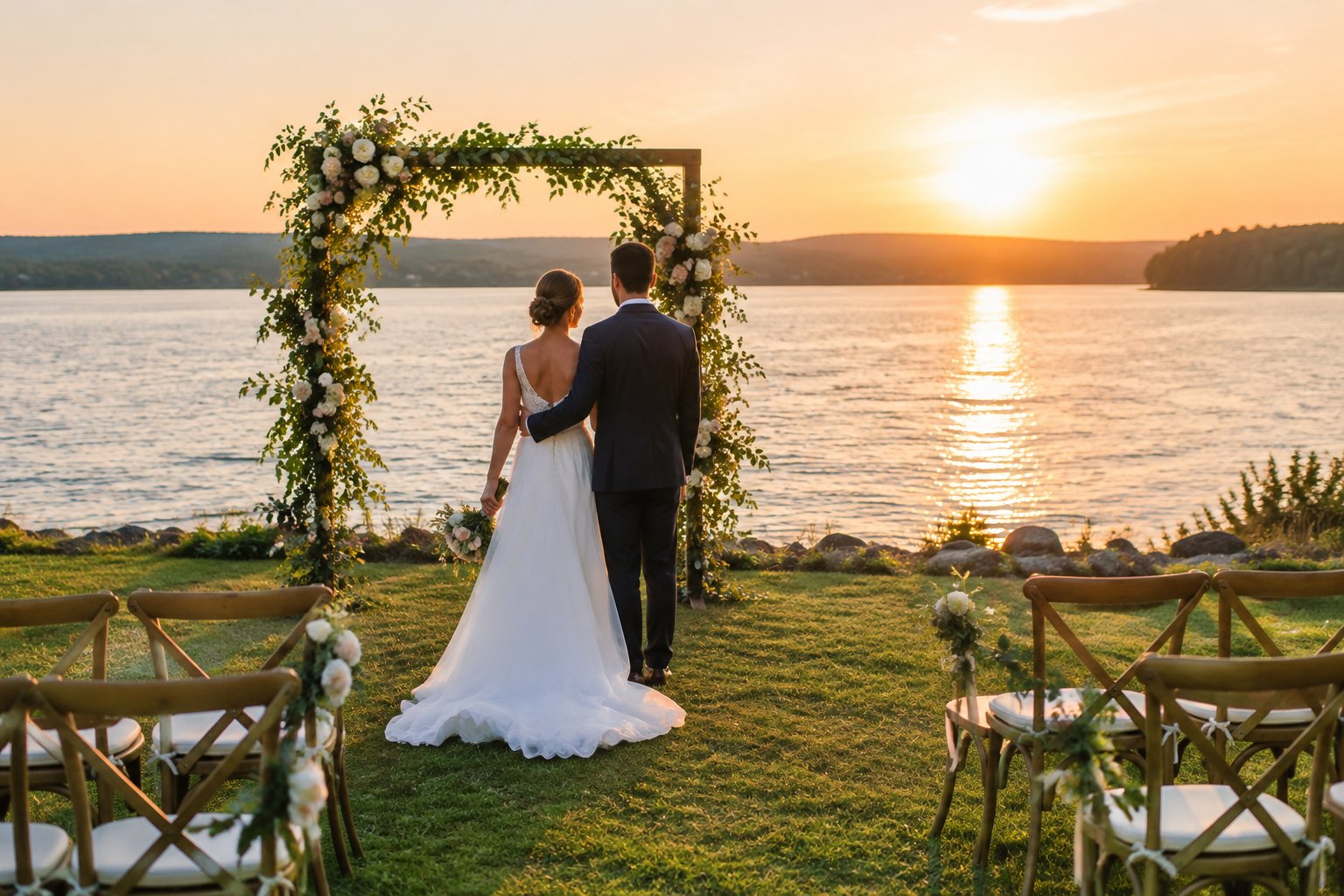
Waterfront weddings bring the setting into the guest experience. The changing light across the water gives your ceremony and reception a sense of place, while an outdoor area offers fresh air and room to gather.
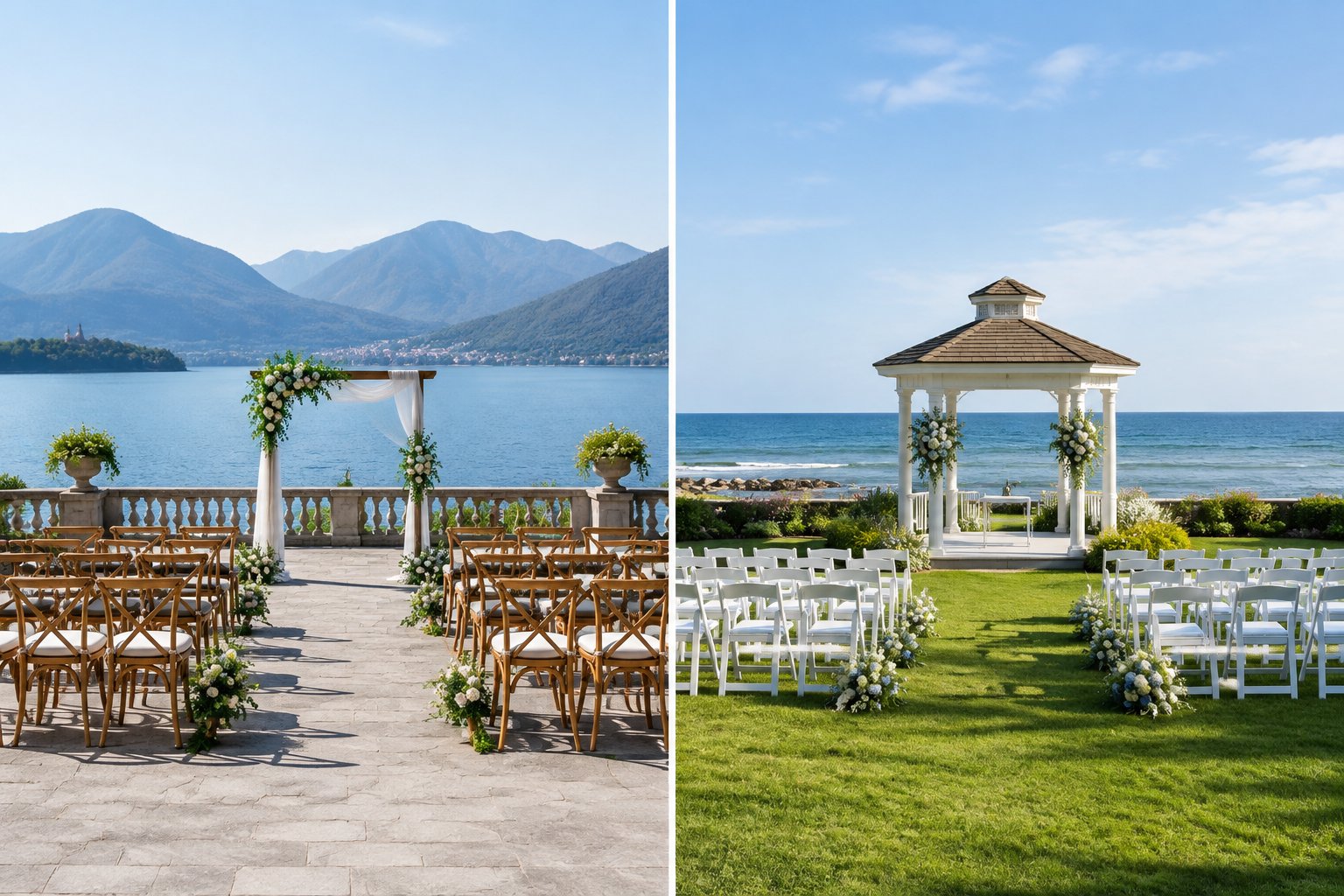
Waterfront views also create a natural focal point, so your décor can work with the landscape instead of competing with it. Ask where the water is visible from each event space. A ceremony lawn may face the shoreline, while a dining room may offer views through large windows.
If you want a quieter, nature-focused setting, explore lakeside wedding venues and compare the feel of a lake with a bay or oceanfront location.
How Do Long Island Locations Compare With Other Waterfront Regions?
Long Island gives you a range of coastal settings, from open ocean beaches to sheltered bays. A Long Island waterfront wedding near the Great South Bay can offer a different feel from an oceanfront celebration, where waves and a wider horizon become part of the scene.
Your preferred setting will shape guest travel, ceremony timing, and the experience between events. For Long Island waterfront weddings, check how close the ceremony area sits to the water and whether guests can reach it comfortably.
If you are comparing the region with Maryland, review Chesapeake Bay waterfront wedding venues for another bay-side setting. At The Waterfront, ask the venue team which spaces keep the water in view throughout your event.
How Can the Spaces Shape the Wedding Day?
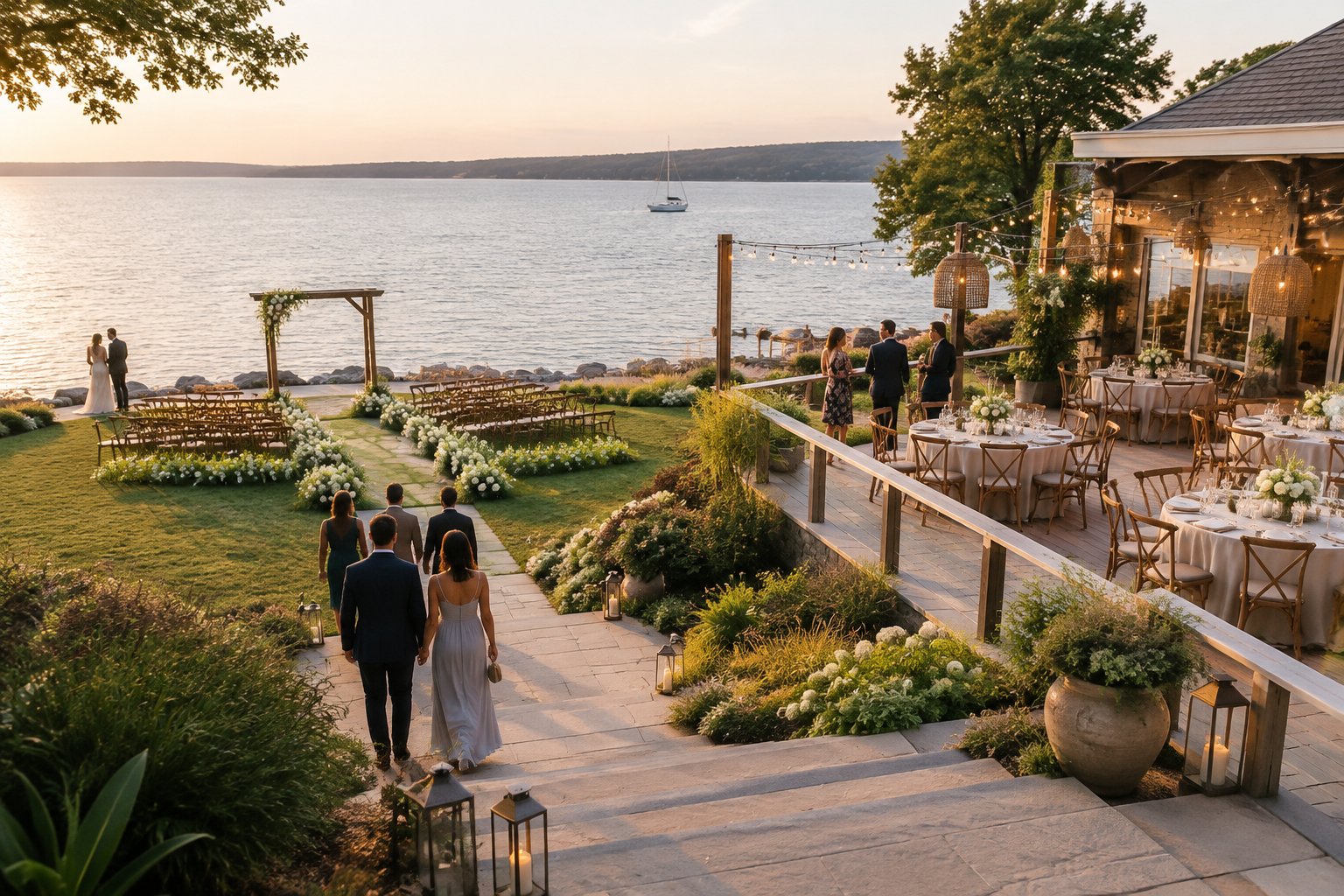
A well-planned venue layout helps your ceremony, cocktail hour, and reception feel connected. You can assess each ceremony space, indoor room, and outdoor area by asking how guests will move through the day and where key moments will take place.
Which Ceremony Space Fits the Guest List?
Choose a ceremony space that gives every guest a clear view and enough room to sit comfortably. Ask about the seated capacity, aisle width, access for guests with mobility needs, and the distance from parking or the reception room.
A site such as Narrows Marina may prompt you to ask how its ceremony area connects with the dock or shoreline. For a small gathering, an intimate lawn or terrace may suit your plans. A larger guest list needs clear seating rows and enough room for the couple, wedding party, and officiant.
Confirm the exact setup during your tour.
How Can Indoor and Outdoor Areas Flow Together?
Indoor and outdoor areas work well together when your guests can move between them easily. Check whether the ceremony, cocktail hour, and dinner can happen in separate spaces without long walks or confusing transitions.
Ask where guests will go during setup, and whether there is an indoor backup space ready if weather shifts. A wedding layout can help you map guest movement before you book. If you prefer an indoor ceremony, compare indoor wedding ceremony venues and ask how the room keeps the water in view.
What Seating and Reception Layouts Are Available?
Your reception layout affects conversation, service, and room for dancing. Ask whether the venue can arrange round tables, rectangular tables, or a mix, and confirm how each option changes the dance floor and aisle space.
Request a floor plan based on your expected guest count, not just a sample arrangement. Check where the DJ or band will set up, how servers will move between tables, and whether guests can reach the bar without crossing the dance floor. Those details help you decide if the waterfront wedding venue can support your reception style.
Which Celebrations Can These Venues Host?
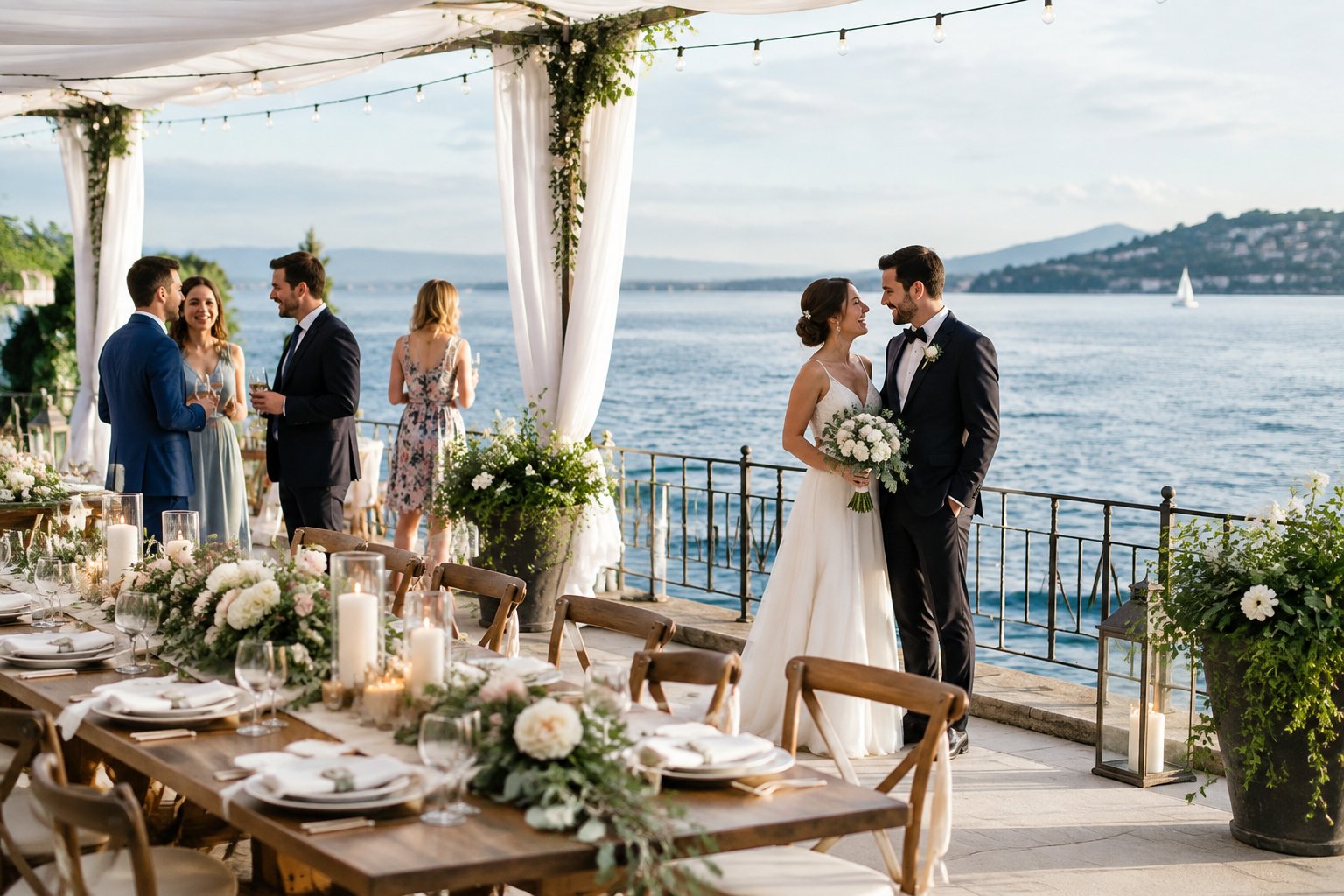
Waterfront event spaces can suit wedding-related gatherings, private celebrations, and business events when the room, schedule, and services fit your needs. Ask what changes between event packages, including available spaces, setup time, and food service.
Can the Space Accommodate Rehearsal Dinners and Showers?
A venue can host rehearsal dinners and showers when it offers a suitable room and a manageable guest setup. Ask whether you can reserve a private dining area, use the main event room, or hold the gathering outdoors.
Confirm the event hours, food options, and any minimum guest count before choosing a date. A rehearsal dinner gives your family and wedding party time together before the ceremony. For showers, consider seating, gift space, and how guests will arrive.
Ask whether the venue can support both events on separate dates.
What Options Are Available for Corporate Events and Fundraisers?
Corporate events and fundraisers need clear presentation space and a guest-friendly layout. Ask about audio-visual equipment, internet access, catering, registration space, and room arrangements for presentations or auctions.
A waterfront setting can also give your guests an inviting place to gather during breaks. Confirm the schedule for setup and cleanup, along with any rules for outside vendors or event materials. For a fundraiser, check whether the space supports a seated program, mingling, or both.
Are Private Celebrations and Anniversaries a Good Fit?
Private celebrations and anniversaries fit well when you can select a room size and service plan that suit the occasion. Ask whether the venue hosts smaller gatherings, what table arrangements are available, and whether you can personalize décor or music.
For a milestone event, check whether the water-facing area is available for a toast or group gathering.
What Should You Compare Before Booking?
Compare wedding venues using the same practical details: date availability, guest capacity, access, included services, and the spaces your booking covers. A consistent checklist makes it easier to weigh a scenic setting against the work and cost of hosting there.
How Do Capacity, Season, and Venue Access Affect Your Plans?
Capacity, season, and access shape how comfortably your plans will work. Ask for seated and cocktail-style guest limits, then confirm how the number changes when you add a dance floor or stage.
Check the venue’s available dates and whether rates differ by season or day of the week. Your visit should also cover parking, accessible routes, vendor arrival times, and guest entry. For an outdoor event, ask what indoor space is available if the weather changes.
If you are considering beach locations, compare access details at beach wedding venues with the logistics of a sheltered bay or lakefront site.
What Should You Ask About Catering and Included Rentals?
Ask for an itemized list of what your booking includes. Confirm whether catering, service staff, tables, chairs, linens, dinnerware, glassware, and cleanup are part of the package or billed separately.
Ask about vendor rules, food and beverage minimums, payment dates, and fees that may be added to the quoted price. For rentals, check whether the venue sets up and removes the items or expects your vendors to handle those tasks. Get the answers in writing so you can compare the full cost of each option.
How Can You Compare Wedding Venues in Different Locations?
Compare each venue against the same priorities, then note the trade-offs that affect your plans. The Piermont, Land’s End, Riviera Waterfront Mansion, and The Waterview are names you may encounter while researching different locations.
Ask each venue for current capacity, package details, date availability, and a sample floor plan. Use your guest count and event style to guide the comparison.
A large wedding venue near the beach may suit a bigger guest list, while a smaller property may fit an intimate celebration. Before you sign, review the rental period, cancellation terms, backup plan, and every cost listed in the contract.