
Large Wedding Venues Near the Beach: 2026 Planning Guide
For large wedding venues near the beach, look for a property with a confirmed guest capacity, practical event spaces, and clear access to the shoreline. A beach wedding can pair an outdoor ceremony with an indoor or covered reception, giving you room for a big guest list and options when weather changes.
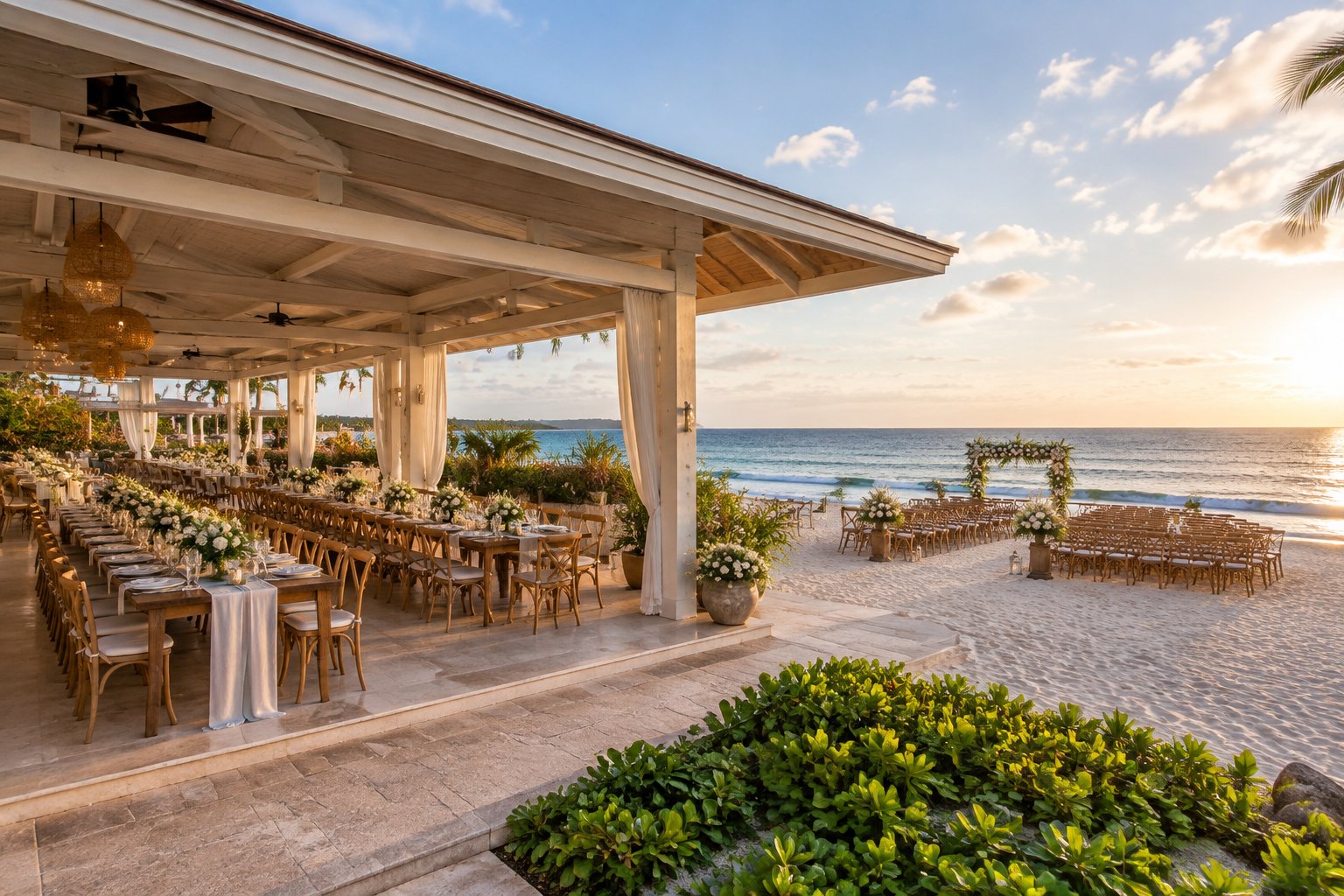
Beach weddings bring the ocean into your celebration, while also adding details like sand, wind, and shoreline rules to your planning. As you compare venues, ask for written capacity limits and a floor plan for every event space. Start by requesting those details from the places on your shortlist.
How Do You Know a Beach Venue Can Handle a Large Wedding?
A beach venue is a good fit for a large wedding when its ceremony, cocktail hour, and reception spaces work for your guest count and event plan. Confirm the numbers in writing, then check how guests will move between spaces and reach the beach.
Check Seated Capacity for Both Ceremony and Reception
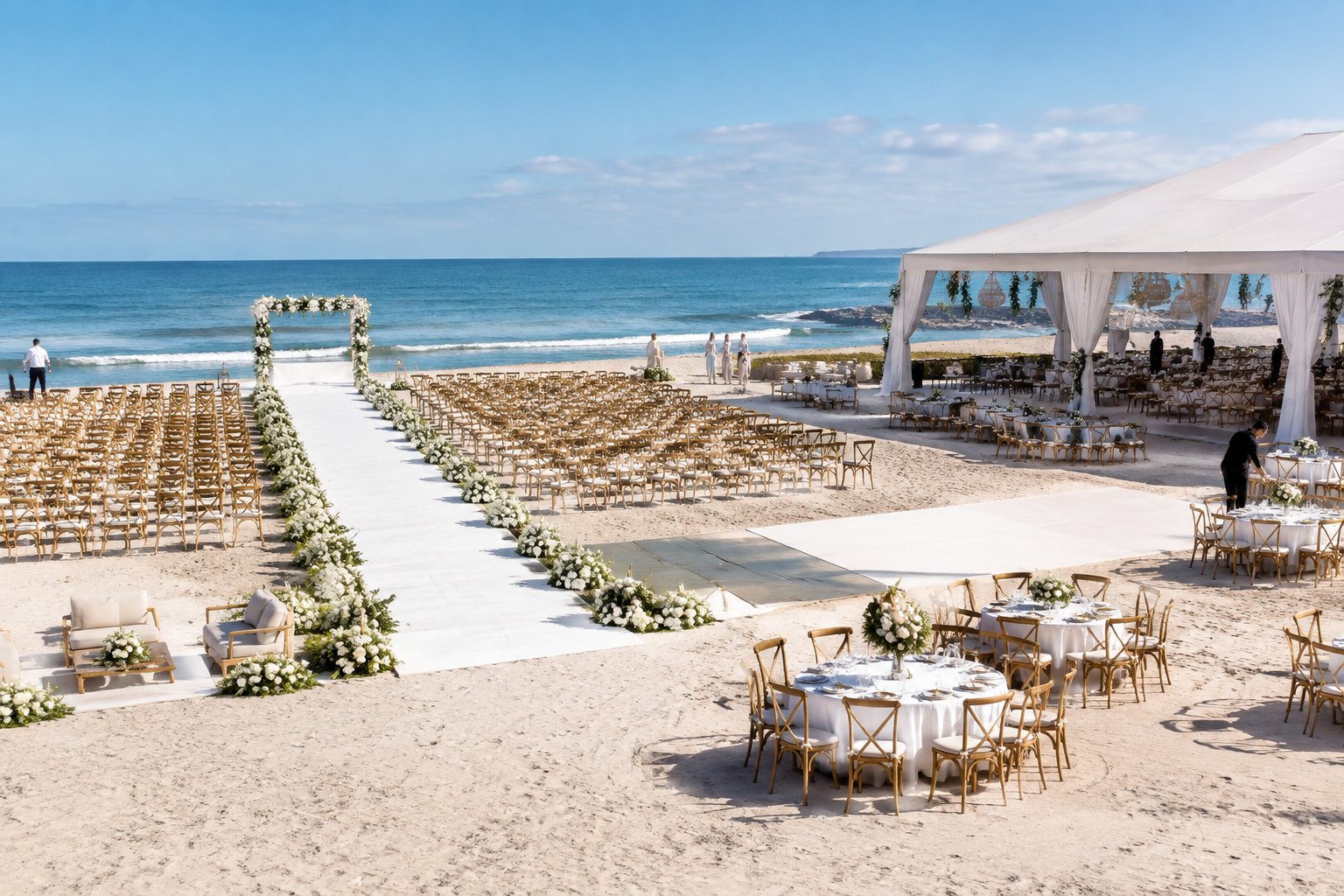
Ask for the maximum seated capacity in each space, including the ceremony area and reception room. A venue may fit your guest list for a standing cocktail hour while offering fewer seats for dinner.
Share your estimated headcount and reception format, then ask whether the quoted number includes your wedding party, vendors, and any children.
If you’re still deciding what counts as a large celebration, review what is considered a big wedding. Use your expected guest count as the starting point for every capacity question.
Ask About Floor Plans, Guest Flow, and Accessibility
Request a sample floor plan that shows tables, dance space, bars, entrances, and service paths. The layout should let guests move between the ceremony, reception, restrooms, and outdoor areas without crowding. Ask about firm paths, ramps, and other access options for guests with mobility needs.
For the reception, consider how the layout supports dining, dancing, and mingling. Your wedding reception setup ideas can help you identify the elements to discuss with the venue team.
Confirm the Maximum Guest Count for Each Event Space
Get a separate guest limit for every space you plan to use. Ask whether the limit changes with a band, dance floor, buffet, or added decor, and whether the beach has a separate permit or attendance cap.
If your headcount approaches 200 or more, check how the venue manages seating and service at that scale. You can also use this guide to think through a 200-person wedding.
Which Venue Styles Work Best for a Big Celebration?
Resorts, private event properties, restaurants, and boardwalk venues each offer a different way to host a large celebration near the water. Choose a style that suits your guest experience, then confirm its capacity and beach access with the venue.
Resorts With Lodging and Multiple Event Spaces
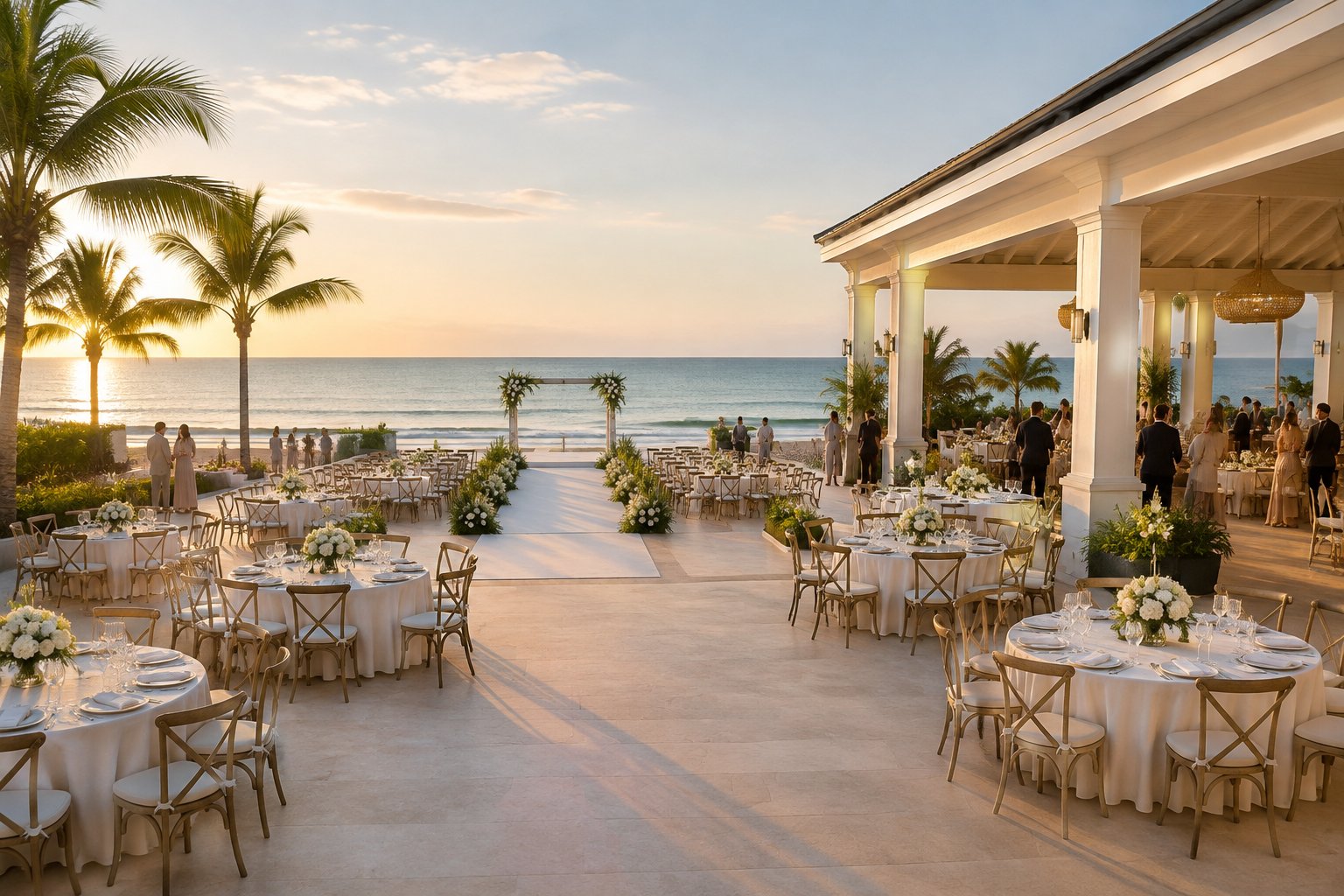
A resort can make a large celebration easier to coordinate when you want guest rooms, event spaces, and services in one location. Ask how many guests each space can hold and whether you can use separate areas for the ceremony, cocktail hour, and dinner.
Confirm which services are included in the package and which come at an added cost. For example, you can research properties such as Hotel del Coronado and Margaritaville Beach Resort Hollywood Beach as resort-style options.
Compare their event layouts, guest accommodations, and ceremony locations directly with each venue. If bundled services appeal to you, explore all-inclusive wedding venues near the beach.
Private Estates and Restaurants With Coastal Views
Private estates and restaurants can give your celebration a more personal feel, with a set dining space and a coastal setting. The Maya, Loulu Palm Weddings, and Navy Beach are examples to explore as you build a shortlist.
Ask each property how it handles a large dinner, guest arrival, and any ceremony setup. Check whether the event space is reserved for your group and whether the venue can host both the ceremony and reception.
Browse wedding venue ideas to compare the atmosphere and format you want before you book tours.
Boardwalk Settings and Other Distinctive Shoreline Spaces
A boardwalk venue can bring a lively shoreline setting to your celebration. Jenkinson’s Boardwalk is one example to research.
Ask about event hours, private-use areas, noise rules, and how your guests will get from the ceremony to the reception. Distinctive locations can have unique rules for decor, sound, and vendor access.
Keep your beach wedding ideas practical by checking what the property allows before choosing a setup.
How Do You Confirm the Ceremony Is Actually on the Beach?
Ask the venue to identify the exact ceremony location and surface in your contract. Terms such as “oceanfront” and “beachfront” describe a setting, while a toes-in-the-sand ceremony requires access to an approved area of sand.
Compare Private Beach Access With Public Beach Permits
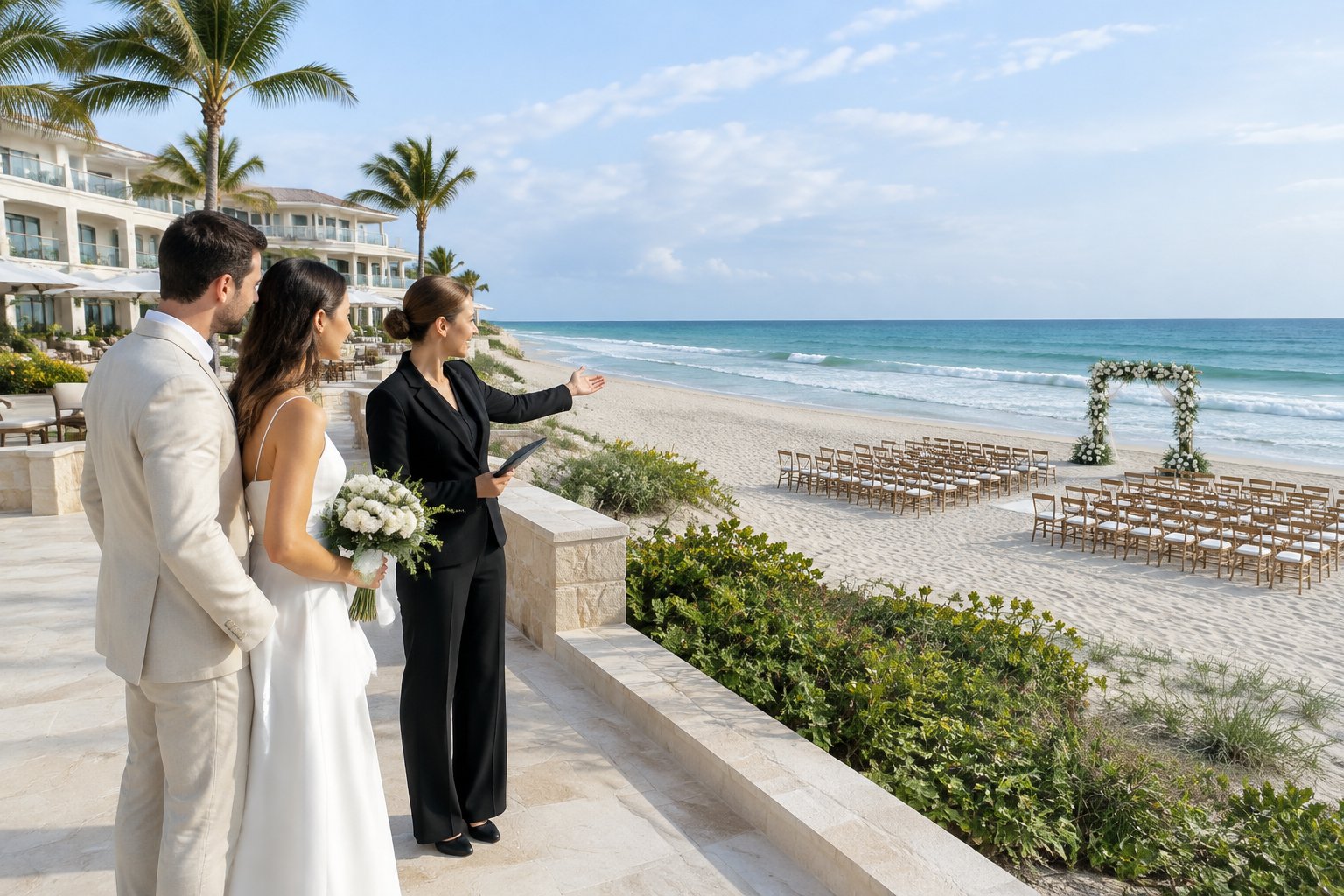
Ask whether your ceremony will use a private beach, a public shoreline, or a managed beach area. For public sand, check with the local authority about permits, guest limits, setup windows, sound rules, and any restrictions on chairs or structures.
The permit may cover vendors and wedding party members as well as guests. Clarify who submits the application and who pays any fees. If you’re weighing the cost, read about whether you have to pay to get married on a beach.
Separate a Toes-in-the-Sand Ceremony From Waterfront Views
A beachfront wedding venue may offer a ceremony lawn, terrace, or deck with an ocean view. Ask for the ceremony area’s name and surface, then request a site plan or photos of the setup.
If walking on sand is important to you, have the venue confirm that detail in writing. Some properties near the water are not beach venues. Gaylord National Resort & Convention Center, for example, is a useful reminder to check the actual ceremony setting and location details instead of relying on a waterfront label.
Ask Who Controls the Shoreline and Handles Setup
Confirm who manages the ceremony area, places chairs, and coordinates vendor access. Ask whether the venue team or a local authority controls the sand, and who handles setup changes if tides, weather, or public access affect the space.
Check the allowed setup and cleanup times so your vendors can plan their work.
How Do Guest Travel, Lodging, and Weather Affect the Plan?
Your guest experience depends on how easily people can reach the venue, where they can stay, and what happens if outdoor conditions change. A clear travel plan and a confirmed backup space help you set expectations early.
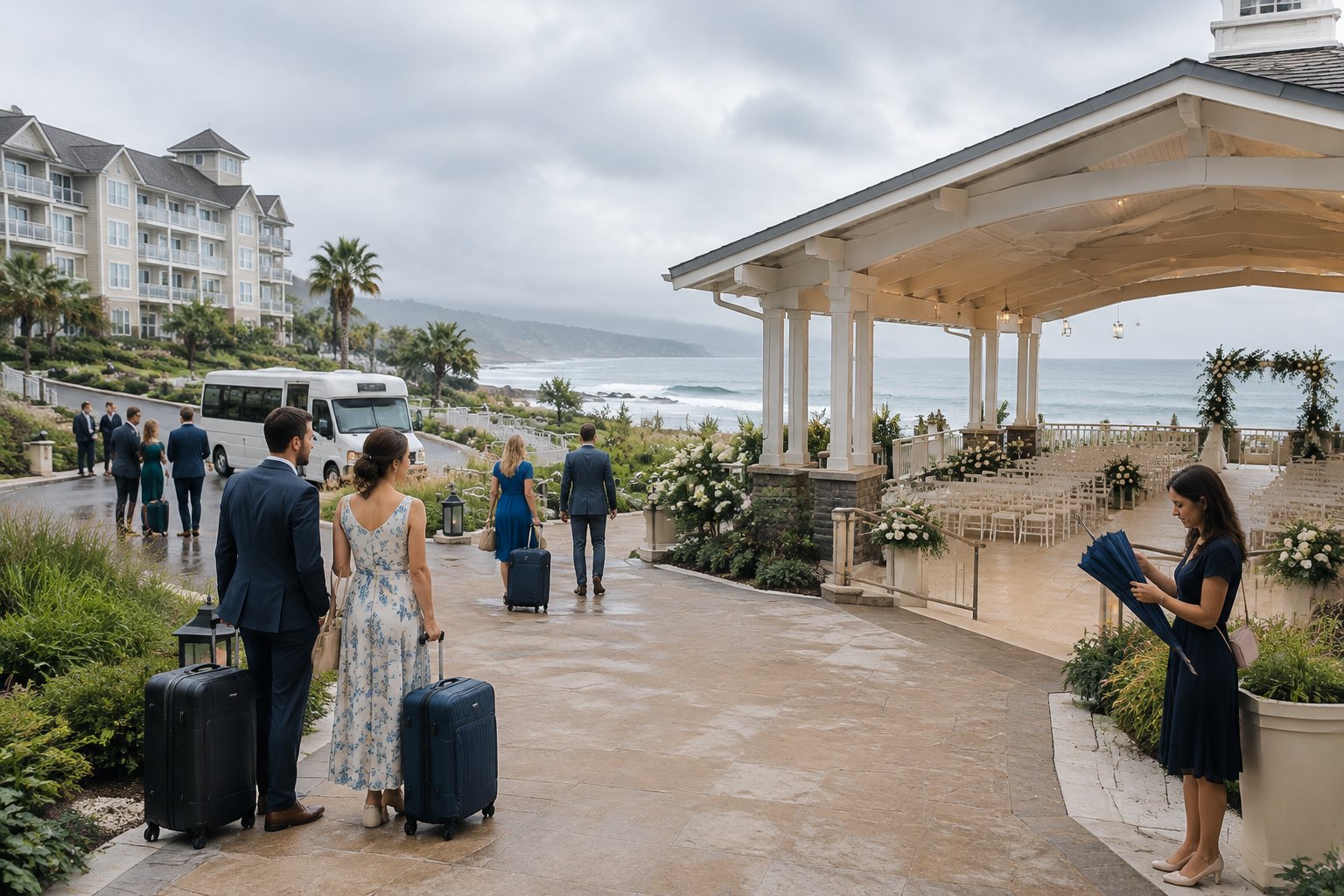
Choose On-Site Lodging or Nearby Guest Accommodations
On-site lodging can simplify travel between the ceremony and guest rooms, especially when your celebration includes more than one event. If the venue has limited rooms, list nearby hotels at different price points and share travel times.
Ask about group rates, booking deadlines, parking, and shuttle options. For a destination beach wedding, include lodging and transport details with your invitations or wedding website. A destination wedding guest plan can help you organize activities and information for guests staying in the area.
Make Travel Easier for a Destination Celebration
Choose a location your guests can reach with reasonable travel time, then share airport details, ground transport choices, and the event schedule. Give guests early notice so they can plan time off and arrange their stay.
If your guest list includes older relatives or families with young children, consider how far they’ll need to travel between lodging and the venue. Your destination wedding preparation can include a guest information page with local transport, accommodation options, and the weekend schedule.
Plan for Wind, Rain, Heat, and a Backup Space
Choose a backup location before you sign the contract. Ask whether the indoor or covered space can fit your full guest count with the same meal and seating plan. Confirm who makes the weather call and when, and check whether moving indoors carries a fee.
Wind and heat also affect guest comfort and event setup. Ask about shade, water access, sound equipment, and walkways across sand. Check the venue’s plan for protecting decor and keeping paths accessible if rain arrives.
Which Costs and Contract Details Matter Most?
Compare the full event cost, including package details, venue fees, rentals, and weather provisions. A written breakdown helps you see which services fit your budget and where extra charges could apply.
Compare Package Inclusions, Catering, and Bar Costs
Ask for an itemized quote that lists the ceremony space, reception space, food, bar service, staffing, and setup. Check whether the catering price changes with your guest count or menu choices.
Ask about minimum spends, service charges, taxes, and rules for outside vendors. Food and drinks can take a large share of your budget, so compare packages using the same guest count and menu needs. This overview of what costs most at a wedding can help you decide which quote details to review closely.
Budget for Rentals, Permits, and Service Fees
Request a list of included rentals, then price any extra chairs, tables, lighting, dance flooring, sound equipment, or tents. For a beach ceremony, ask whether the venue provides equipment for sand and who handles delivery and removal.
Include permit fees and any required insurance in your budget. Ask for all service fees in writing and confirm when each payment is due. A detailed quote lets you compare venues on the same terms before you pay a deposit.
Review Weather Policies and Cancellation Terms
Read the contract for the backup-space plan, rain decision deadline, and any costs tied to a location change. Check the cancellation and postponement terms, including payment deadlines and refund rules.
Keep a copy of every written promise about capacity, beach access, and weather arrangements with your contract.