
Itinerary for Wedding Reception: A Practical Timeline
A wedding reception itinerary gives you a timed order for guest arrival, your grand entrance, dinner, special moments, dancing, and the send-off. With the key events placed around meal service and your venue’s end time, you can enjoy the celebration without having to manage every transition yourself.
Start with the fixed points, such as the reception start and music cutoff, then fill in the moments you care about most. Draft your schedule with your planner or venue coordinator, and share the final version with the people who will help keep the day moving.
What Should a Wedding Reception Itinerary Include?
Your wedding reception itinerary should list the main events in order, with a start time, an estimated length, and the person responsible for each cue. Include guest arrival, the order of the wedding reception, meal service, formal moments, and your planned finish. Give your DJ or band and venue team the details they need to guide guests through the evening.
Guest Arrival and Cocktail Hour
Set a clear arrival window and give guests something to do while you take photos or the room is prepared. Cocktail hour often lasts about an hour, with drinks and appetizers available as guests mingle. If guests need to move between ceremony and reception spaces, include time for that trip.
Note where guests should go, when the bar opens, and who will tell them when it is time to find their seats. If you have a seating chart, place it where guests can spot it as they enter the reception room.
The Grand Entrance and Welcome
Plan your grand entrance after guests have had time to settle into the reception space. Decide whether your wedding party will be announced, who will introduce you, and which song will play. A quick cue with your DJ or emcee helps the entrance feel smooth and keeps guests ready to welcome you.
You can move straight from the entrance into your first dance, or schedule a short welcome toast first. If you want an emcee to introduce you, agree on names and pronunciation ahead of time, and plan how you’ll introduce the reception.
Dinner, Speeches, and Special Moments
Allow enough time for your chosen meal service, then place speeches where they fit comfortably. A plated meal, buffet, and family-style service each create a different pace. Your caterer can estimate service time based on your guest count and menu.
Ask speakers to keep their remarks brief and confirm the order with your emcee. You can schedule toasts between courses or after dinner, and add special dances, a cake cutting, or cultural traditions where they feel natural.
Dancing and the Reception Send-Off
Reserve a generous block of time for dancing, then add your last dance and send-off near the end of the reception. If you plan a formal exit, tell your photographer and venue team when guests should gather and where the send-off will happen. Include cleanup or vendor load-out details in the team schedule if your venue requires them.
How Do You Build a Reception Schedule?
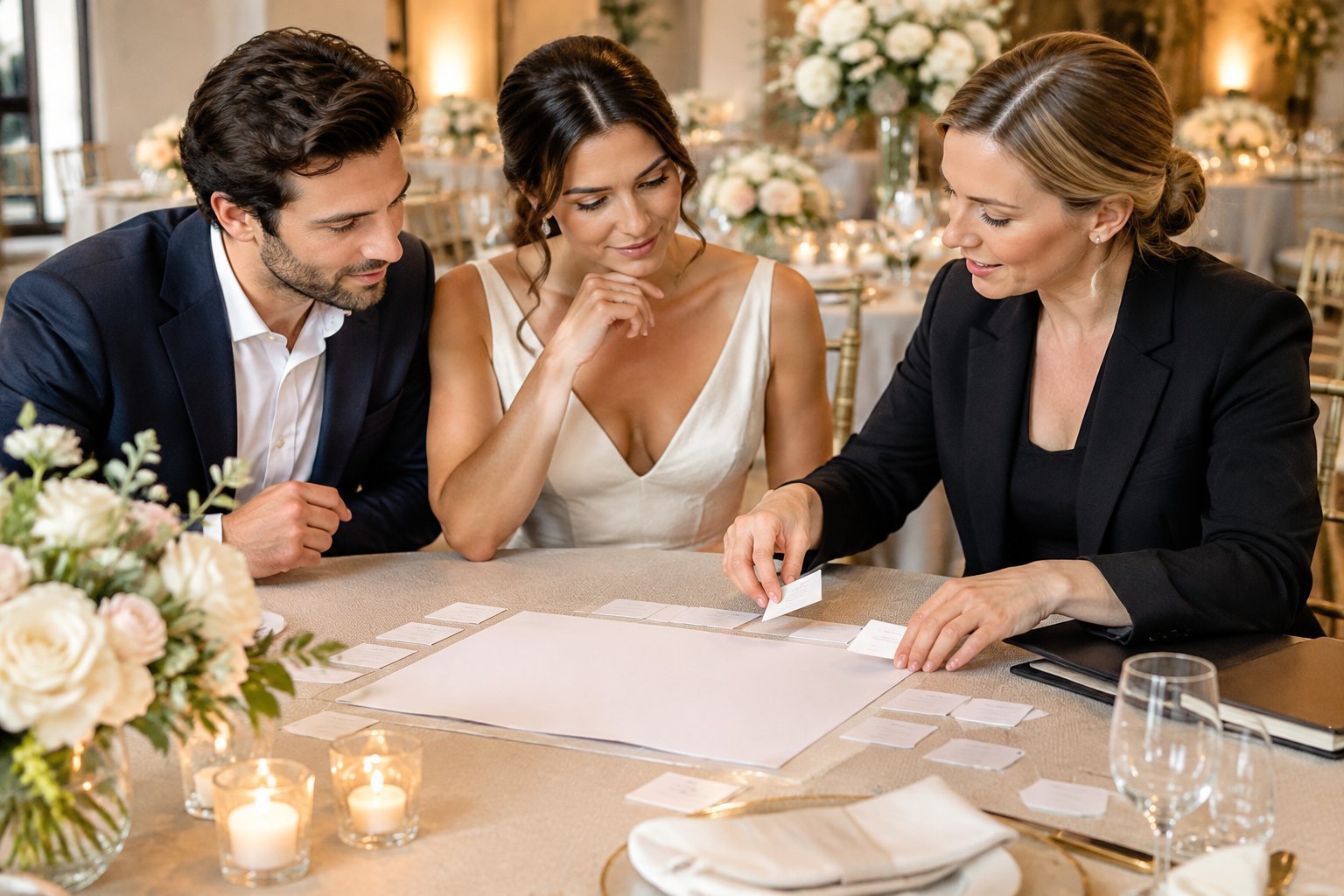
Build your wedding schedule around fixed start and end times, then fit meal service and the moments you value between them. Work with your venue, caterer, and entertainment team as you set durations, since their setup and service plans affect the flow. A clear wedding schedule also helps you see how the reception fits into the rest of your day.
Set the Ceremony and Reception Start Times
Confirm your ceremony time, travel time, and reception access before assigning times to individual events. If the ceremony and reception are at different locations, include the trip and time for guests to arrive. For a reception at the same venue, ask when the room will be ready for guests.
Check your contract for the latest end time, music cutoff, and any required departure time. If your ceremony begins in the afternoon, use a 3 p.m. wedding day itinerary as a planning reference, then adjust it to match your venue and celebration.
Estimate Durations and Add Transition Buffers
Give each event enough time for people to move, listen, eat, or take part. The grand entrance may be brief, while dinner service can take much longer, especially with a large guest list or a buffet. Ask your caterer for a meal estimate and your DJ or band for timing on introductions and special dances.
Add a few minutes between major events for transitions, announcements, and small delays. Those buffers help you keep the next key moment on track if guests take extra time to find seats or a toast runs long.
Plan Around Vendors and Venue Logistics
Share the draft with the people who will cue events or serve guests. Your venue coordinator can confirm room access and closing requirements, while your caterer can flag service constraints. Your DJ or band needs the event order, song cues, and names for announcements.
Include practical details such as where speakers should wait, who will bring you to the dance floor, and when the photographer needs to be present. A seating plan also helps your team direct guests efficiently, so settle the wedding reception seating plan before printing guest materials.
What Does a Sample Reception Timeline Look Like?
A sample timeline gives you a workable sequence, which you can adjust to your reception’s start time, meal style, and traditions. This example places the grand entrance at 6 p.m. after a one-hour cocktail hour, with the reception ending at 10 p.m. Use it as a starting point and confirm the meal timing with your caterer.
Cocktail Hour and Guest Seating
| Time | Event |
|---|---|
| 5:00 p.m. | Cocktail hour begins; guests enjoy drinks and appetizers |
| 5:45 p.m. | Guests are invited to the reception room |
| 5:50 p.m. | Guests find their seats; the emcee gives a brief welcome |
Entrance, First Dance, and Dinner
| Time | Event |
|---|---|
| 6:00 p.m. | Wedding party and couple make the grand entrance |
| 6:10 p.m. | Couple shares the first dance |
| 6:20 p.m. | Welcome toast and dinner service begins |
Toasts, Cake Cutting, and Dancing
| Time | Event |
|---|---|
| 7:30 p.m. | Speeches take place between meal courses or after dinner |
| 8:00 p.m. | Parent dances and open dancing begin |
| 9:00 p.m. | Cake cutting and dessert |
| 9:10 p.m. | Dancing resumes |
| 9:50 p.m. | Last dance |
| 10:00 p.m. | Reception ends and guests depart |
If your meal service takes longer, move the cake cutting or shorten another activity while protecting the end time. For a four-hour wedding reception timeline, adjust the blocks to fit your venue’s hours.
How Should You Time Dinner, Speeches, and Dancing?
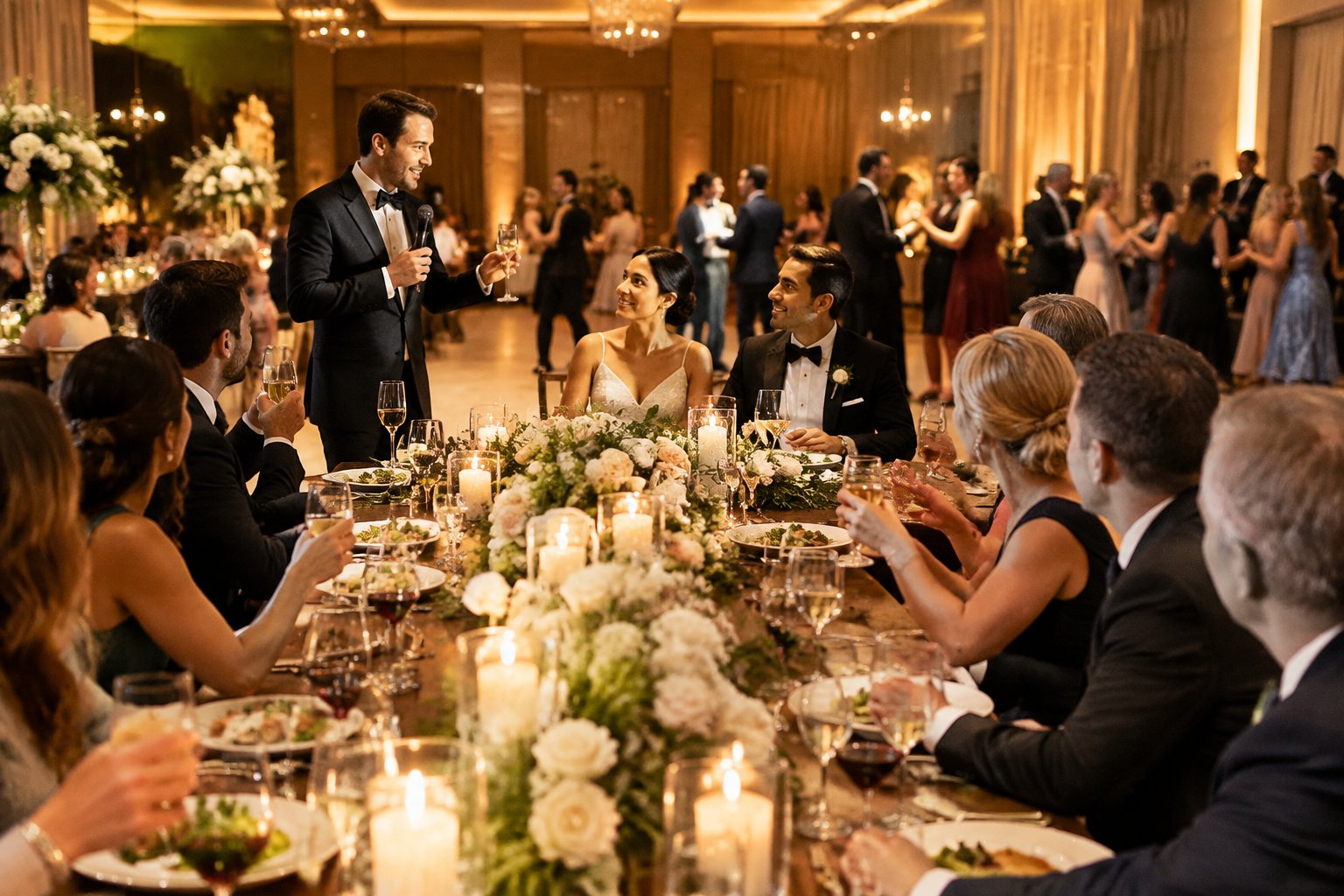
Time dinner early enough that guests can eat comfortably, group speeches and special dances, and leave a solid block for open dancing. The right order keeps guests informed and helps your team coordinate service with announcements. Confirm your meal plan with the caterer and give your DJ or band the same event sequence.
Coordinate Meal Service With Toasts
Set dinner timing with the caterer, using the guest count and service style to estimate how long the meal will take. A seated meal and buffet move at different speeds, so ask when guests can expect each course. Your wedding dinner timing should also account for the grand entrance and any welcome remarks.
Place toasts between courses or after dinner, and share the speaking order with your emcee. Give speakers a time limit in advance, and leave a small cushion in case a toast runs longer than planned.
Choose When to Open the Dance Floor
You can open the dance floor after the first dance, after dinner, or following parent dances. Choose the placement that suits your event’s flow, and tell your DJ or band what cue signals the start. A wedding playlist with planned songs for key moments helps the transition feel clear.
Protect a long stretch for dancing by clustering formal events together. If you schedule several traditions, group them before the main dance set or during a natural pause in the music.
Allow Time for Traditions and Unplanned Delays
Add the traditions you want, such as a cake cutting, bouquet toss, or cultural dance, and give each a time slot. Keep a little room around these moments for guests to gather and for your team to reset the space. If the evening runs behind, your coordinator can adjust flexible events while keeping dinner and the venue’s end time in view.
How Can You Customize and Share the Itinerary?
Customize your wedding itinerary around your venue, your priorities, and the details each person needs to do their job. Keep a detailed working schedule for your team and a short version for guests. A wedding itinerary template can help you organize the times before you fill in the event-specific details.
Adapt the Plan to Your Venue and Priorities
Start with the room layout, guest count, and venue rules. If guests need to move between spaces, schedule time for that transition. If your priority is a long dance set, keep speeches and other formal moments concise and close together.
Add the personal touches that make the celebration yours, such as a family blessing or a private moment with your partner. Confirm each addition with the people responsible for the cue, music, or setup.
Create Separate Versions for Vendors and Guests
Give vendors a detailed schedule with exact times, locations, contacts, song cues, and responsibilities. Include setup and service notes for your venue team, caterer, photographer, and DJ or band. Share it with speakers and wedding party members too, so they know when to be ready.
Guests need fewer details. Share key times such as cocktail hour, dinner, and the end of the reception on your wedding website or a printed card. Keep private logistics and vendor instructions in the team version.
Use a Template and Keep a Flexible Day-Of Plan
Fill in a wedding itinerary template with your fixed times first, then add each event and the person responsible for it. Send the draft to your vendors for review, and circulate the final schedule before the wedding day.
Keep one printed copy with your coordinator and make sure the key vendors have the same version. Treat the schedule as a guide your team can adjust when a transition takes longer than expected.
Mark the events that must stay on time, such as dinner service and the venue cutoff, and leave flexible moments available for small changes.