
Modern Industrial Wedding Venues: 2026 Picks and Ideas
Modern industrial wedding venues pair the character of converted buildings with clean, flexible spaces that let you shape the celebration around your style. Exposed brick, steel beams, tall windows, and open floor plans give you a memorable backdrop for a ceremony and reception.
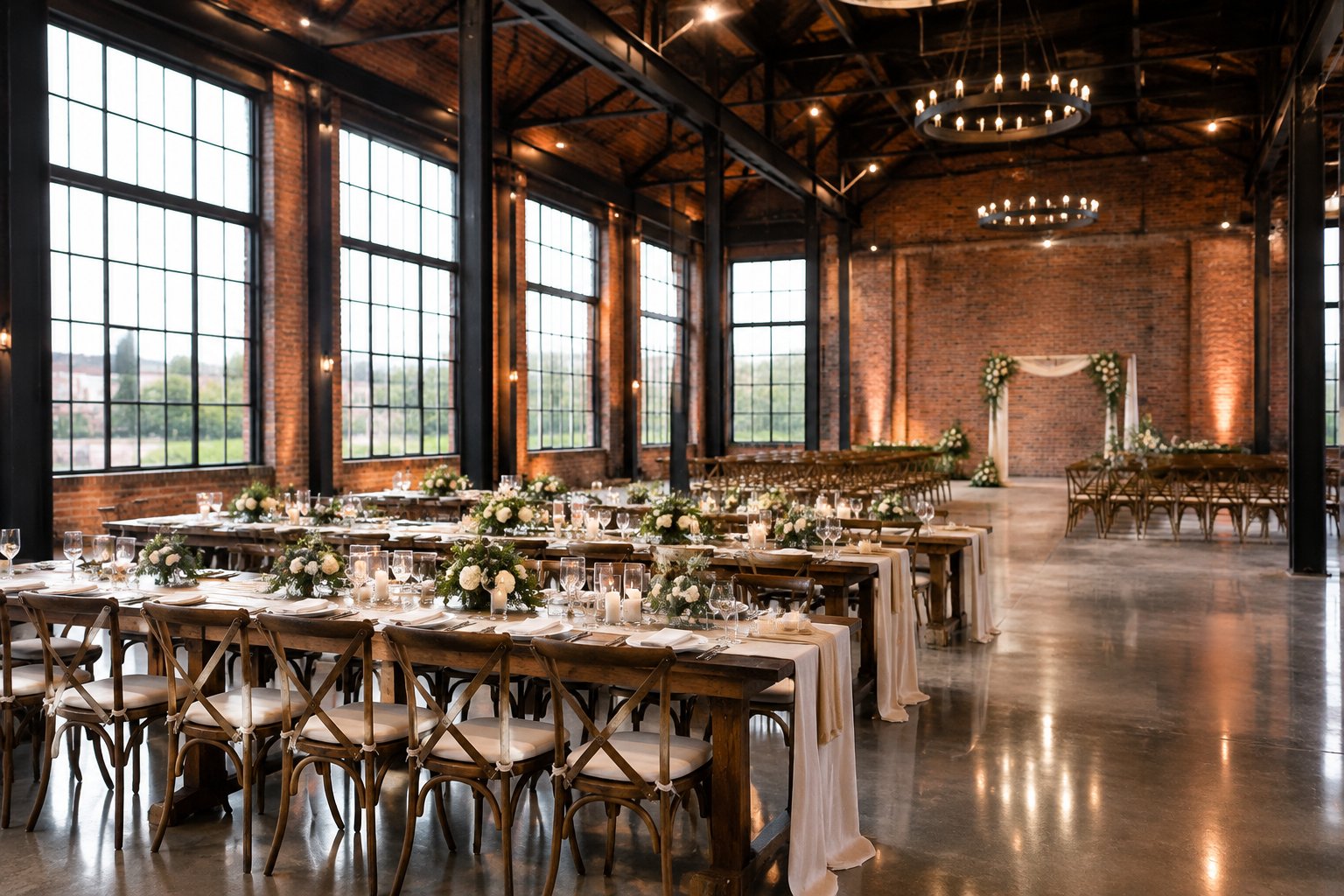
You can find industrial wedding venues in former factories, warehouses, mills, and modern lofts across the United States. Start your shortlist by saving spaces that fit your guest count and location, then visit your favorites to see how their layout feels in person.
What Gives a Venue an Industrial-Chic Look?
An industrial-chic venue puts the building’s architectural character at the center of your wedding design. Exposed brick, steel details, natural light, and open space create a strong setting that you can personalize with decor.
Architectural Details That Set the Mood
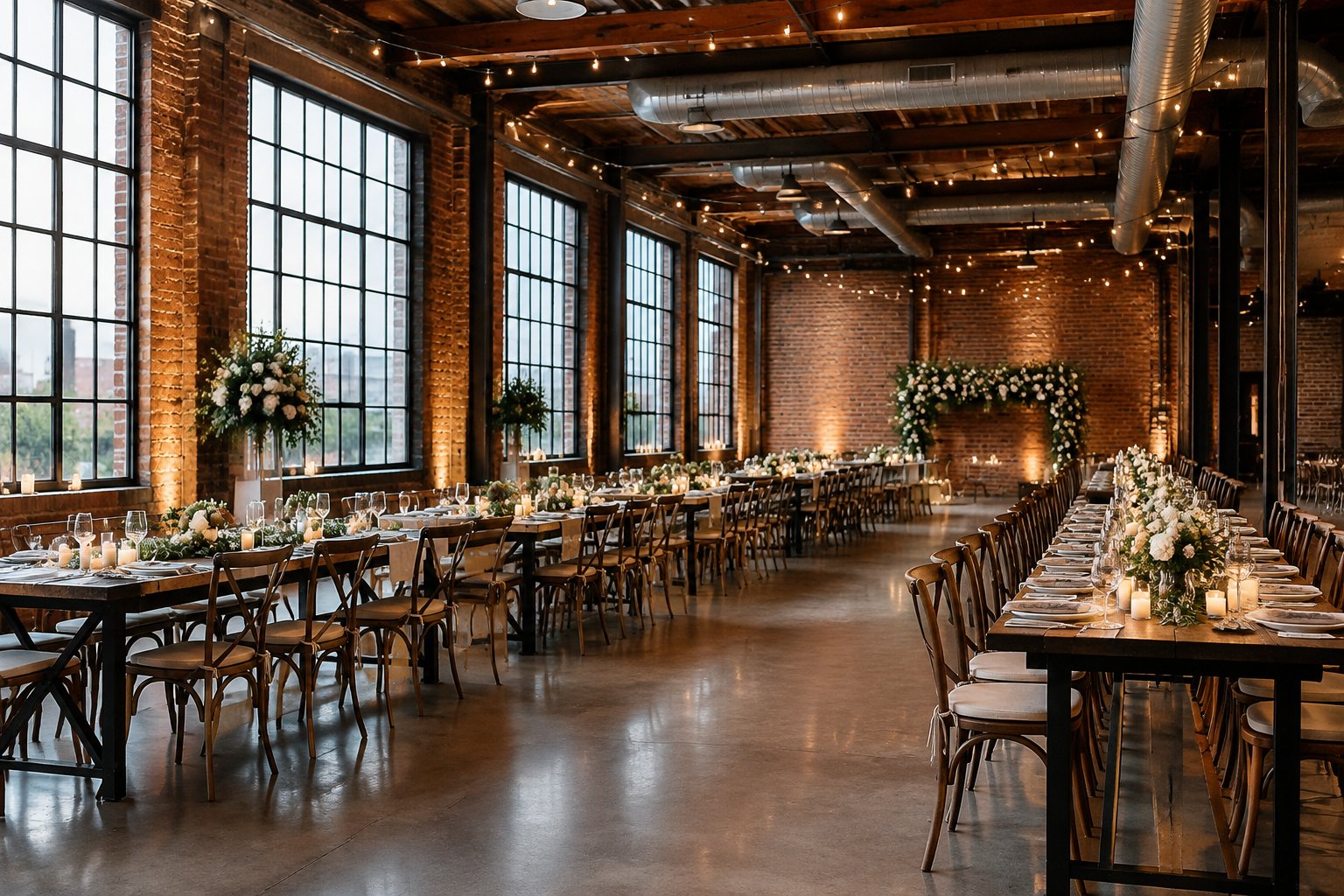
An industrial wedding venue often has visible features that tell you about the building’s past. You might see exposed brick, concrete floors, steel beams, or original pipes. High ceilings and large windows add height and brightness, while metal fixtures bring out the industrial chic style.
Repurposed industrial buildings often have details that already give the room character. That built-in texture can help you keep your decor focused. If you’re comparing styles, an industrial chic wedding venue balances raw architectural features with polished design touches.
How Open, Flexible Spaces Work for Weddings
Open floor plans give you room to arrange a ceremony, dinner, and dancing in one space. You can set up the ceremony near a window, shift chairs for the reception, and use lighting or furniture to create clear zones.
Before you book, ask how much freedom you have to move tables and chairs. Check where power outlets sit, and confirm any rules for hanging lights or decor from the ceiling. Those details help you plan a layout that works with the building’s features.
How Do You Choose the Right Space?
Choose a venue that fits your guest count, travel plans, and event needs as well as your preferred look. A clear floor plan and a full list of included services help you compare wedding venues on practical terms.
Match the Layout to Your Guest Count
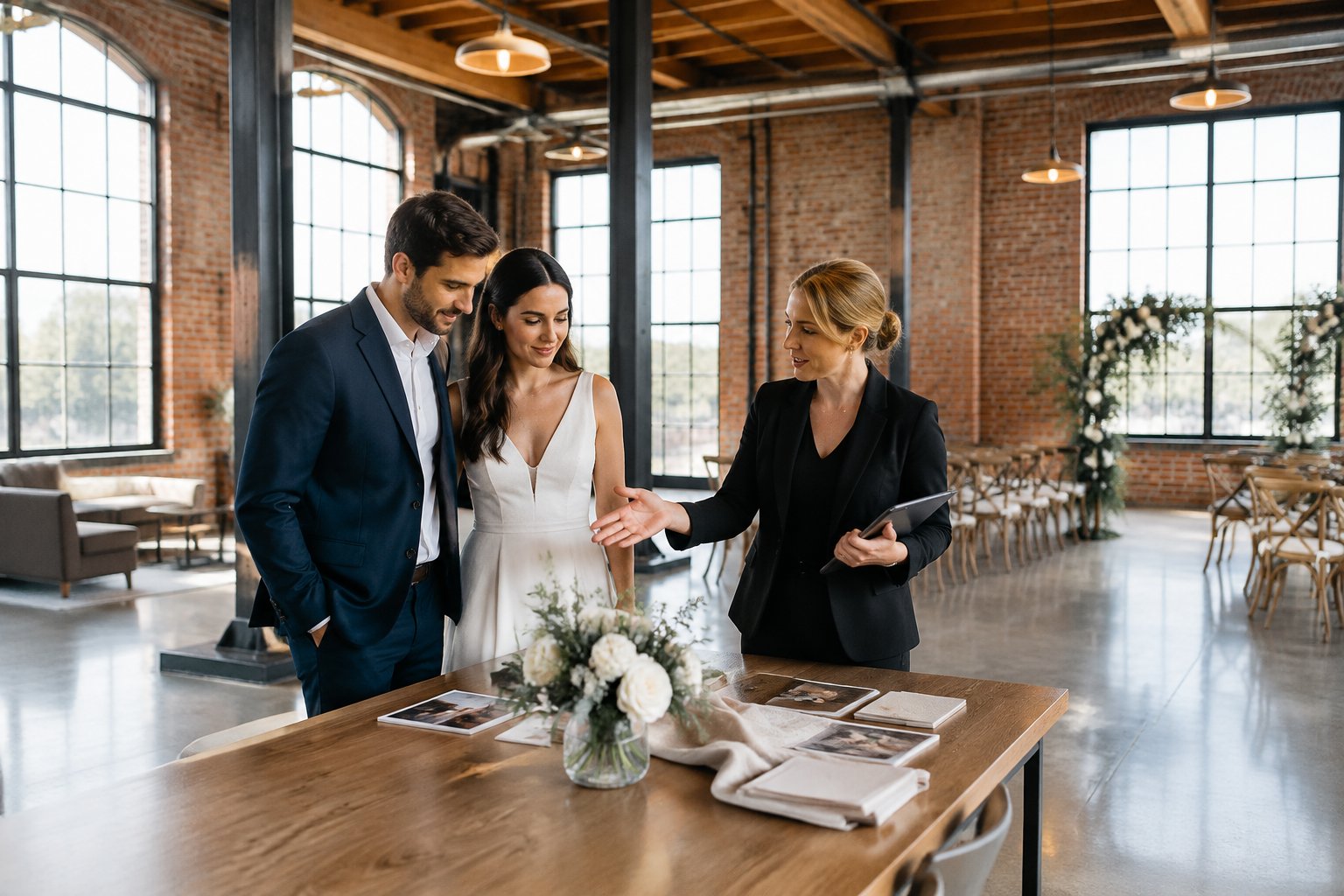
Ask for capacity details for both seated dinner and ceremony layouts. A room’s maximum capacity may leave little space for a dance floor, bar, or lounge area, so ask how the venue handles your expected guest count.
Think through the full guest experience. Check how guests will move from the ceremony to cocktail hour and dinner, and ask whether the venue has separate rooms or areas for each part of the day. When you pick a wedding location, consider travel time, parking, and nearby places to stay.
Compare Location, Amenities, and Vendor Policies
Compare the venue’s location and included amenities before you focus on decor. Ask about restrooms, getting-ready rooms, tables, chairs, catering access, and sound equipment. Then check whether you can choose your own caterer, florist, and DJ or need to work from a preferred list.
A venue in a city center may make hotels and rideshares easier for guests, while a warehouse district may offer more room for parking. If you’re considering industrial-looking wedding venues, compare each space’s address and transportation options alongside its design.
Which U.S. Venues Show Off the Style?
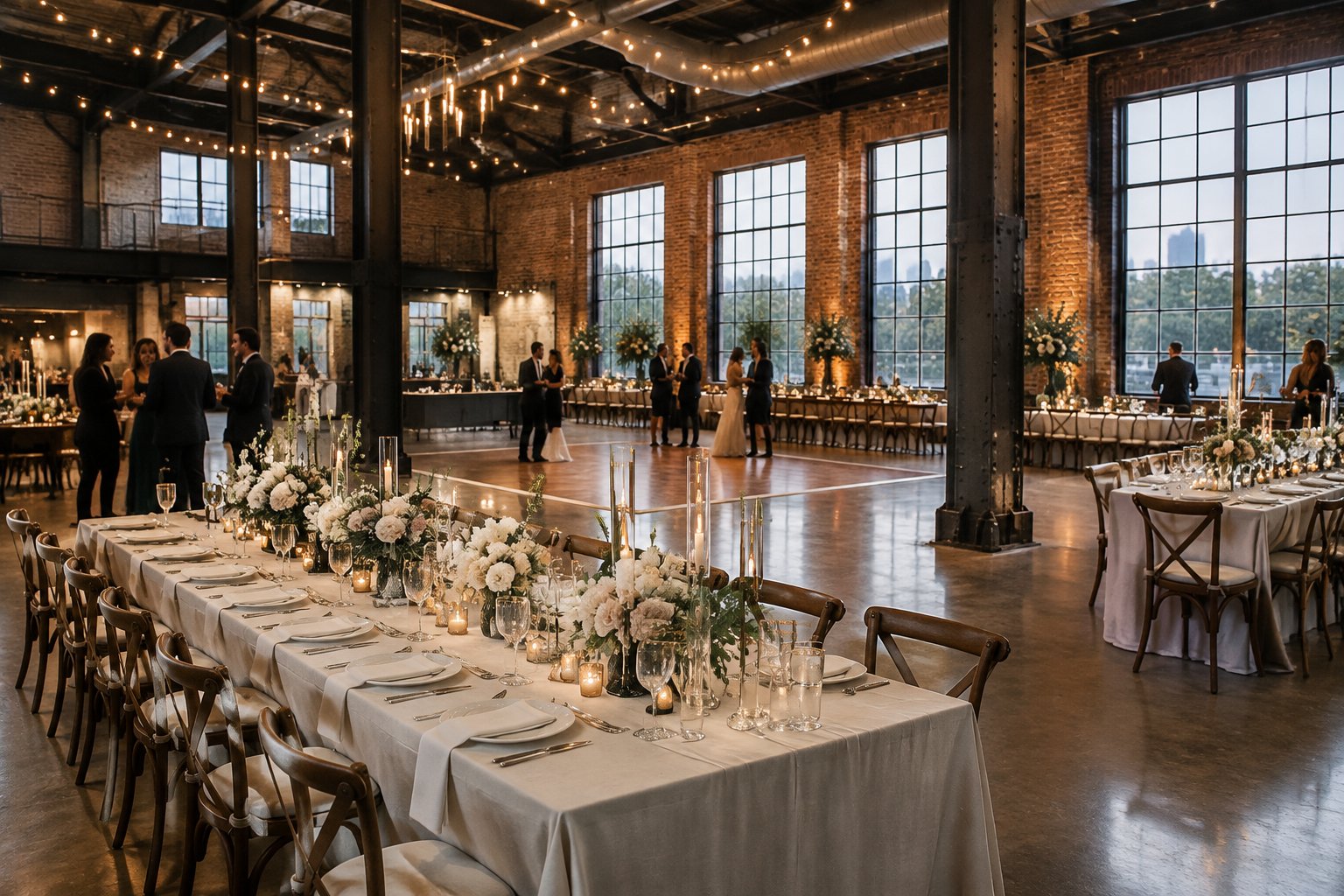
You’ll find strong industrial-style options in major cities, from restored factories to updated hotels and warehouse event spaces. Use the names below as starting points, then confirm each venue’s current offerings, address, capacity, and rental details.
New York City and Brooklyn Standouts
For nyc industrial wedding venues, put The Foundry and Wythe Hotel on your research list. Brooklyn, New York, also has loft and warehouse spaces with brickwork, tall windows, and open layouts. Compare the setting and guest flow at each property, since the same industrial look can feel refined, intimate, or dramatic.
The names The Loft, The Warehouse, and The Century also appear in industrial venue searches. Confirm the exact property and location for each name before adding it to your shortlist. If you’re drawn to elevated city settings, browse luxury wedding venues in the U.S. as another way to find polished spaces with architectural character.
Midwest and Pacific Northwest Spaces
In Minneapolis, Minnesota, the historic Mt. Washington Mill Dye House offers a mill-inspired setting to consider. In Seattle, Washington, Sodo Park gives you another warehouse-style option. Both names are useful starting points when you’re comparing industrial character with guest capacity and venue services.
As you review these options, ask how the space changes between ceremony and reception layouts. Look for photos or floor plans that show events with a guest count close to yours.
California and Other Distinctive Picks
San Diego, California, is home to Moniker Warehouse, a name to explore if you want a warehouse backdrop. Other distinctive options include Prospect House and Cannon Green. Basilica Hudson offers a former-factory setting in Hudson, New York.
Compare these venues by location, travel access, and the features you want to keep visible in your design. A shortlist that includes different regions can also help you compare the feel of a city warehouse with a mill, hotel, or other converted space.
How Can You Style an Industrial Space?
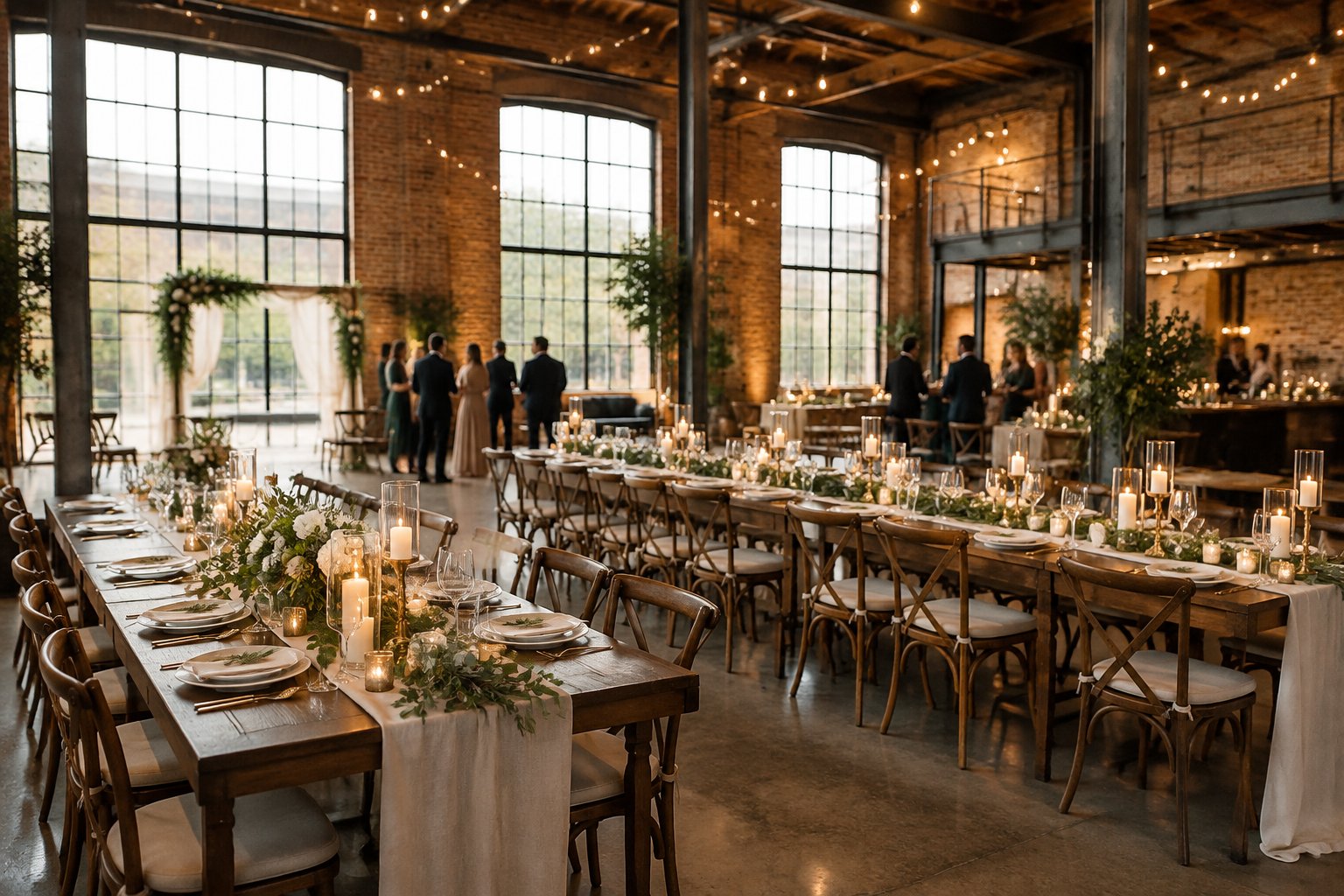
You can style an industrial space by letting its architecture show while adding soft details and warm light. A minimalist wedding approach can keep the room feeling open, while thoughtful textures give guests a more welcoming setting.
Keep the Raw Architecture in Focus
Let exposed brick, beams, and concrete form the base of your design. Choose a few decor elements that stand out against those surfaces, such as sculptural flowers, simple table settings, or a clear acrylic seating chart.
A loft wedding can feel sleek with a restrained color palette and clean lines. If you’re still shaping your look, how to figure out your wedding style can help you connect your decor choices to the venue’s character.
Add Warmth With Lighting, Florals, and Texture
Warm lighting helps soften a large room as daylight fades. Ask the venue what fixtures it provides and whether you can add candles, string lights, or uplighting. A lighting plan should cover the ceremony, dinner tables, and dance floor.
Use flowers and greenery to bring color and softness to brick and metal. Layer in linen, wood, or velvet for more texture, and choose a few statement arrangements instead of filling every surface. If your venue has high ceilings, ask your florist about the rules for hanging installations before you plan one.
What Should You Confirm Before Booking?
Before signing, confirm the full cost, what the rental includes, and how the space will work for your guests. Clear answers in the contract help you plan your budget and avoid surprises on the wedding day.
Understand Pricing and What the Rental Includes
Ask for an itemized estimate that lists the rental fee, staffing, setup, cleanup, and any service charges. Confirm how many hours you receive and what overtime costs. Check whether tables, chairs, linens, lighting, and sound equipment are included or priced separately.
Ask about deposits, payment dates, cancellation terms, and required insurance. When you compare industrial wedding venues on a budget, include outside rentals and vendor fees in your total so you can compare each venue fairly.
Check Acoustics, Accessibility, and Weather Plans
Hard surfaces and high ceilings can create echoes, so ask how the venue handles sound for vows, speeches, and music. If possible, visit during an event or ask for a sound check in the room.
Confirm access to ramps or elevators, accessible restrooms, and nearby parking. For any outdoor ceremony or cocktail area, ask for the indoor backup plan and when the venue makes a weather call.
Also check heating and cooling, especially if your date falls during a hot or cold season. Record the answers in your notes and make sure key promises appear in the contract.