
Open Area Wedding Venues: Find Your Perfect Setting
Open area wedding venues give you a naturally scenic setting and the freedom to shape your ceremony and reception around the landscape. Gardens, farms, beaches, and other outdoor spaces each bring a different feel, along with practical needs such as weather cover, guest access, and power.
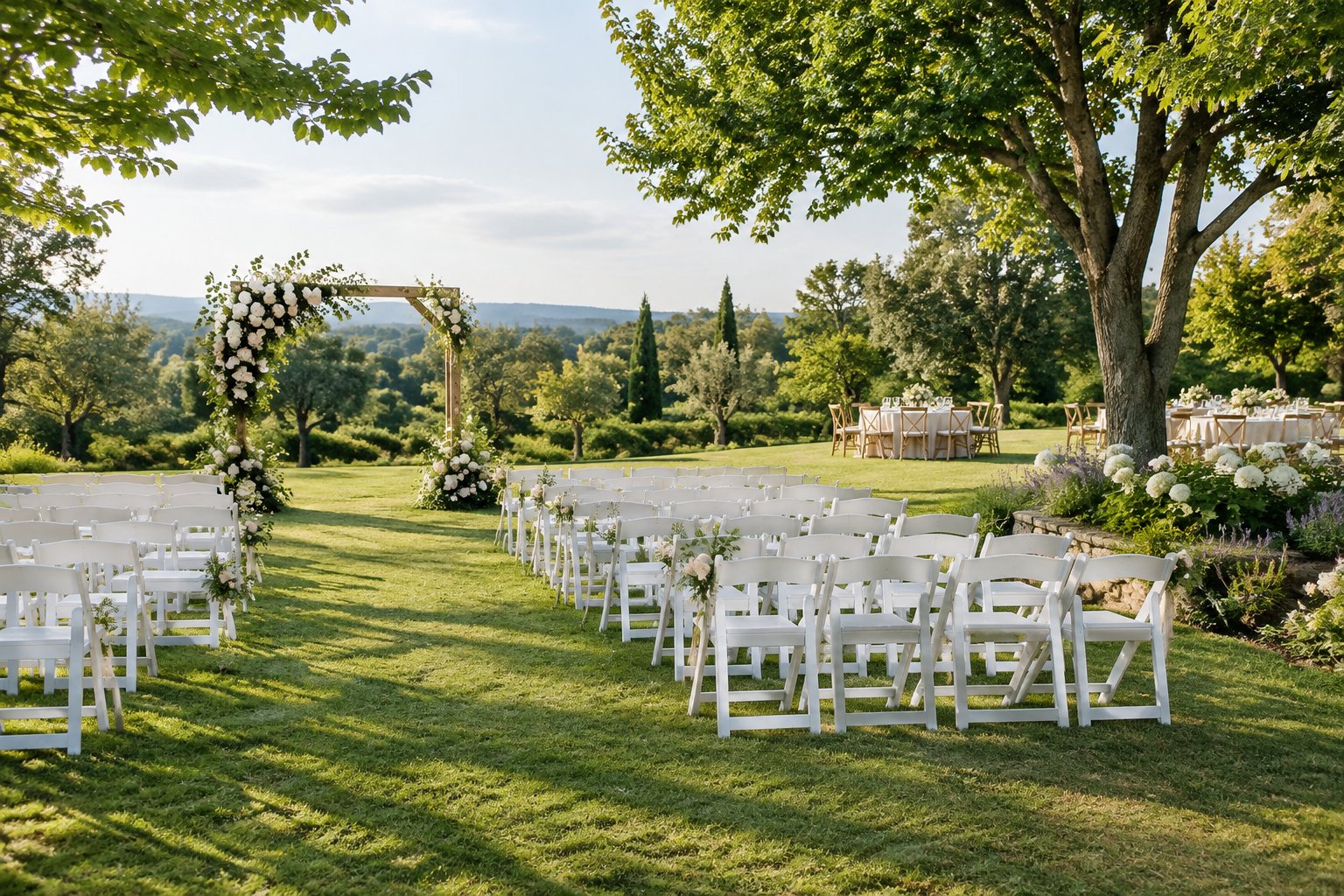
Start by picturing the atmosphere you want and setting a guest-count range. Then build a shortlist of spaces that fit your style and arrange visits to see how each location works in person.
Which Outdoor Setting Fits Your Wedding?
Your preferred scenery and celebration style can point you toward an outdoor wedding venue that feels right for your day. Consider how each setting will support your ceremony, reception, guest experience, and plans for weather.
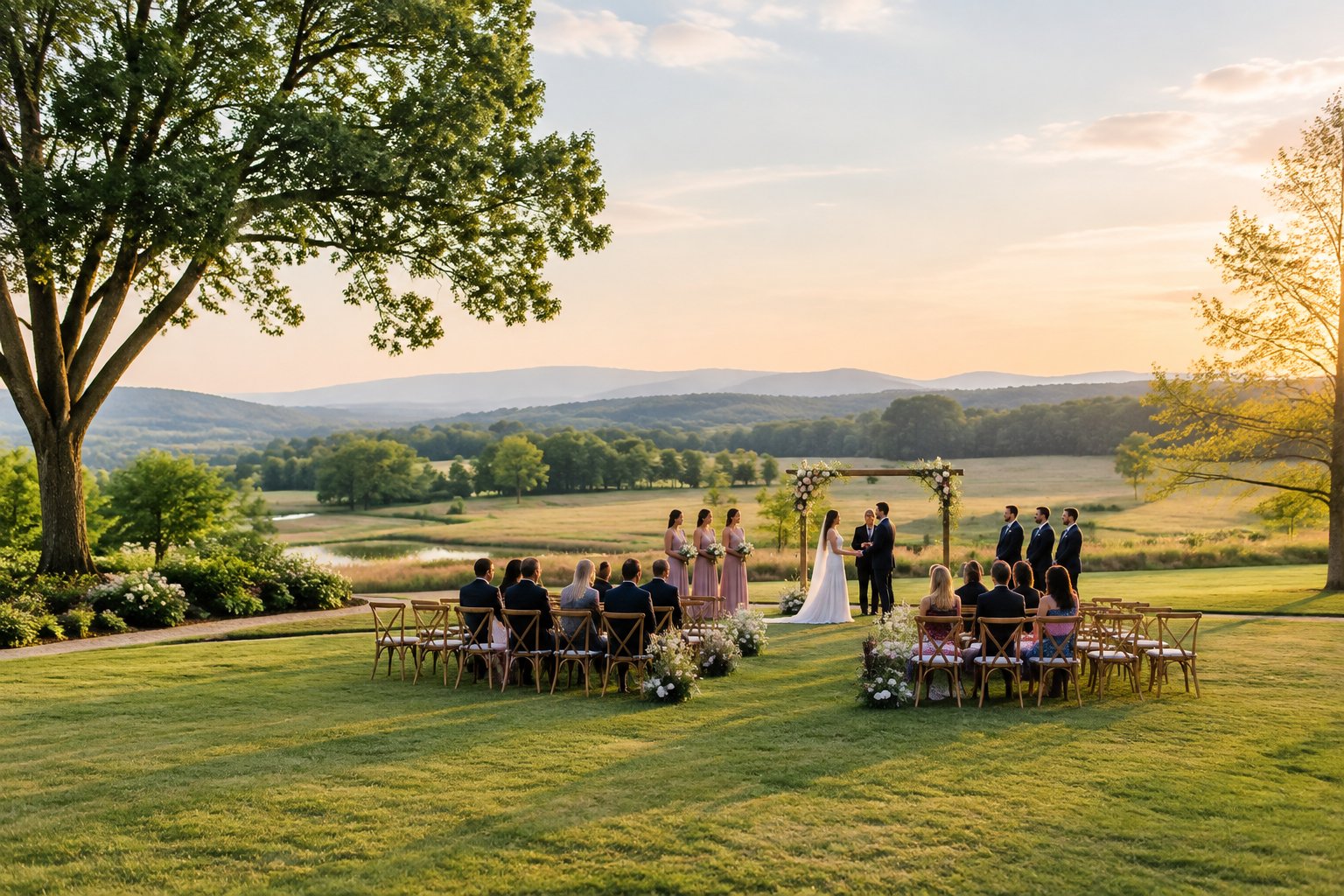
Gardens, Farms, and Vineyards
A garden gives you established flowers, greenery, and winding paths as part of the setting. If you want a floral backdrop with room for an outdoor ceremony, explore garden wedding venues and check how the grounds look during your wedding season.
Farms and vineyards bring open views and a countryside feel. Ask how far guests will walk between spaces, whether the ground is level, and which areas are available for your event.
A working farm may have active equipment or livestock nearby, while a vineyard may set limits on where guests can go.
Waterfront Locations and Beach Weddings
Waterfront locations offer views of a lake, river, or ocean, with the water shaping the mood and layout. For beach weddings, confirm whether you need permits and whether the ceremony area is easy to reach for guests with mobility needs.
Check the tide schedule, wind exposure, and distance from parking to the ceremony site. Sand can make walking and seating harder, so share dress and footwear suggestions with guests.
A nearby indoor space or covered area gives you another option if conditions shift.
Backyards, Rooftops, and Other Unusual Spaces
A backyard can feel personal and familiar, while a rooftop brings city views and a more urban style. Museums, restaurants with patios, and parks also offer outdoor areas with character. Browse wedding venue ideas to help shape your shortlist.
Each nontraditional space has its own rules. Confirm event permits, noise limits, setup hours, and access for caterers and rental crews. For a home celebration, plan where guests will park and where portable restrooms or a catering station will go.
How Do You Find and Compare Local Options?
You can find wedding venues near you by searching with your city or region, then comparing each option against your guest count, budget, and must-haves. A clear list of priorities helps you sort through listings and make useful tour notes.

Search Wedding Venues Near Me
Search for phrases such as “outdoor wedding venues near me” or “garden wedding venue in [your city].” Review venue websites, maps, and recent event photos to check location, setting, and travel time. A local outdoor wedding venue can make guest travel and vendor deliveries easier to coordinate.
Keep a comparison sheet with the date, capacity, rental fee, included services, and backup plan for each place. Save questions as you browse, then bring them to a tour. If you have a firm date, ask about availability before spending time on a detailed visit.
Browse Peerspace and Other Venue Platforms
Peerspace and other venue platforms let you browse spaces by location, event type, and capacity. Use platform listings to spot possibilities such as private gardens, patios, rooftops, and estates. Read the full listing and confirm wedding use directly with the venue owner.
Check what the rental includes, the hours covered, and any rules for vendors, music, decorations, or alcohol. Listing photos help you form an initial impression; a site visit lets you assess the layout, light, access, and surroundings for yourself.
How Much Does an Outdoor Venue Cost?
An outdoor wedding venue’s price depends on its location, date, rental period, guest capacity, and included services. Compare the full event cost, including rentals and staffing, before deciding which options fit your budget.
Understand Rental Rates and Included Services
Ask whether the venue charges a flat rental fee, an hourly rate, or a package price. Find out how many hours the fee covers and whether you can use the site for both the ceremony and reception. Check whether tables, chairs, setup, cleanup, and an on-site coordinator are included.
Compare costs across the same guest count and event length. If you are weighing your venue budget, what most wedding venues cost offers useful context for planning. Ask about the deposit, payment schedule, taxes, service charges, and cancellation terms before signing.
Spot Extra Costs Before You Book
Outdoor spaces may need added rentals or services to support your plans. Ask whether you will need a tent, portable restrooms, generators, lighting, heaters, fans, or a shuttle. Check whether the site charges extra for setup time, overtime, security, or cleanup.
Ask about vendor rules, too. A required caterer, bar service, or rental company can affect your total. If you are seeking affordable outdoor wedding venues, compare the full estimate for each space, not just the advertised rental rate. Request a written quote that lists each fee.
What Should You Check Before Booking?
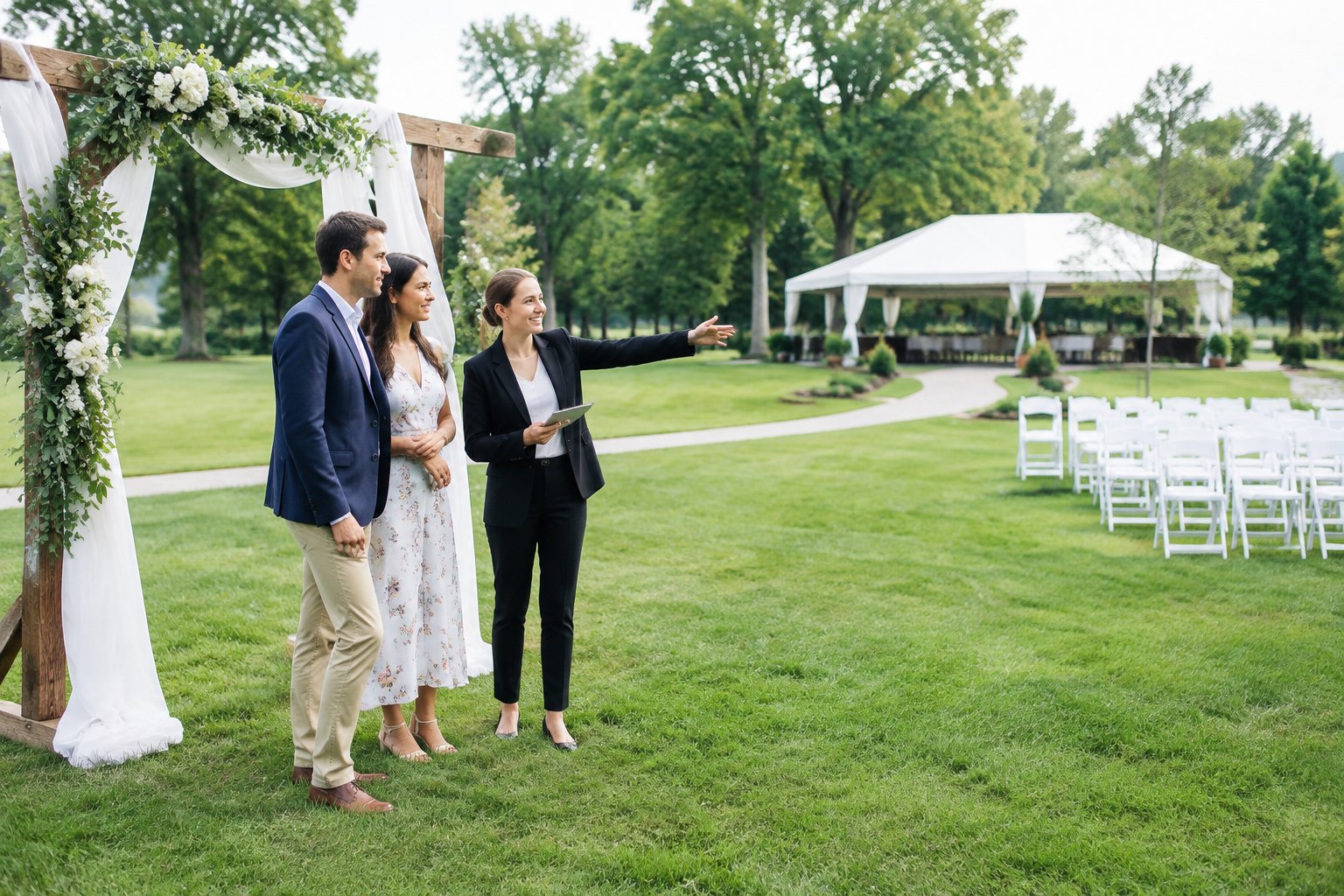
Before you book, confirm that the site can comfortably host your guests and support the event setup you have in mind. A walk-through helps you spot access, facility, and equipment needs that a listing may not show.
Capacity, Access, Parking, and Restrooms
Ask for the maximum guest count for the exact layout you plan to use. A ceremony with rows of chairs needs a different footprint from a reception with dining tables and a dance floor. Walk the route from parking to the ceremony area and check for slopes, stairs, loose gravel, or narrow paths.
Confirm the number and location of restrooms, including accessible facilities. Ask where vendors can unload and park, and whether guests need a shuttle. If the venue has indoor and outdoor areas, compare how each layout works by reviewing indoor-outdoor wedding venues.
Furniture, Catering, Power, and Sound
Get a written list of the furniture and equipment included in the rental. Ask about chair and table setup, linens, kitchen access, food service rules, and cleanup. If your caterer needs refrigeration or prep space, confirm those details with both the caterer and venue.
Check the locations and capacity of power outlets, then share the details with your DJ, band, caterer, and lighting team. Ask whether the venue has microphones or a sound system and what limits apply to music volume or end times. A sound check on site helps you plan for clear vows and announcements across the event space.
How Can You Plan a Comfortable Ceremony and Reception?
You can make an outdoor celebration comfortable by preparing for weather, setting up clear event zones, and planning the transition from ceremony to reception. A detailed site plan gives your guests useful direction and helps vendors coordinate their work.
Prepare for Weather and Have a Backup Plan
Ask the venue what happens if rain, strong wind, or heat affects your outdoor plans. Confirm whether a tent, covered patio, or indoor room is available, how quickly the space can be switched, and who makes the call. Put the plan and any extra rental costs in writing.
Match comfort plans to the season and local forecast. Shade, water stations, fans, or heaters can help guests settle in. Tell guests the ceremony is outdoors so they can choose suitable shoes and clothing. More outdoor wedding tips can help you prepare details for the site and season.
Plan Lighting, Décor, and Guest Comfort
Outdoor lighting helps guests move safely and gives your event space a warm feel after sunset. Use string lights above dining or dancing areas, and add lanterns or path lights where guests will walk. Explore outdoor wedding lighting ideas as you plan where lighting will go and how it will be powered.
Define the ceremony, cocktail hour, dinner, and dance areas with furniture, rugs, or signs. Place key activities close enough together for easy movement. Provide comfortable seating and a clear route between each zone, especially if the ground is uneven.
Coordinate the Ceremony and Wedding Reception
A smooth changeover starts with a shared timeline for your venue coordinator and vendors. Confirm when guests move from the ceremony area, who resets chairs, and where cocktail hour takes place.
Give your photographer and sound team the schedule so they can prepare for each transition. For the wedding reception, check that the dining and dance layouts fit your guest count and leave room for service paths.
Ask who handles announcements, music, and the final cleanup. If the ceremony and reception use one site, mark the order of setup and give vendors access times in writing.