
Outdoor Wedding Venues Langley: How to Choose the Right Setting
Your search for outdoor wedding venues langley should start with a setting that fits your guest count, celebration plans, and weather backup. In Langley, Washington, you can explore garden estates, farms, and private properties for a ceremony with a natural backdrop.
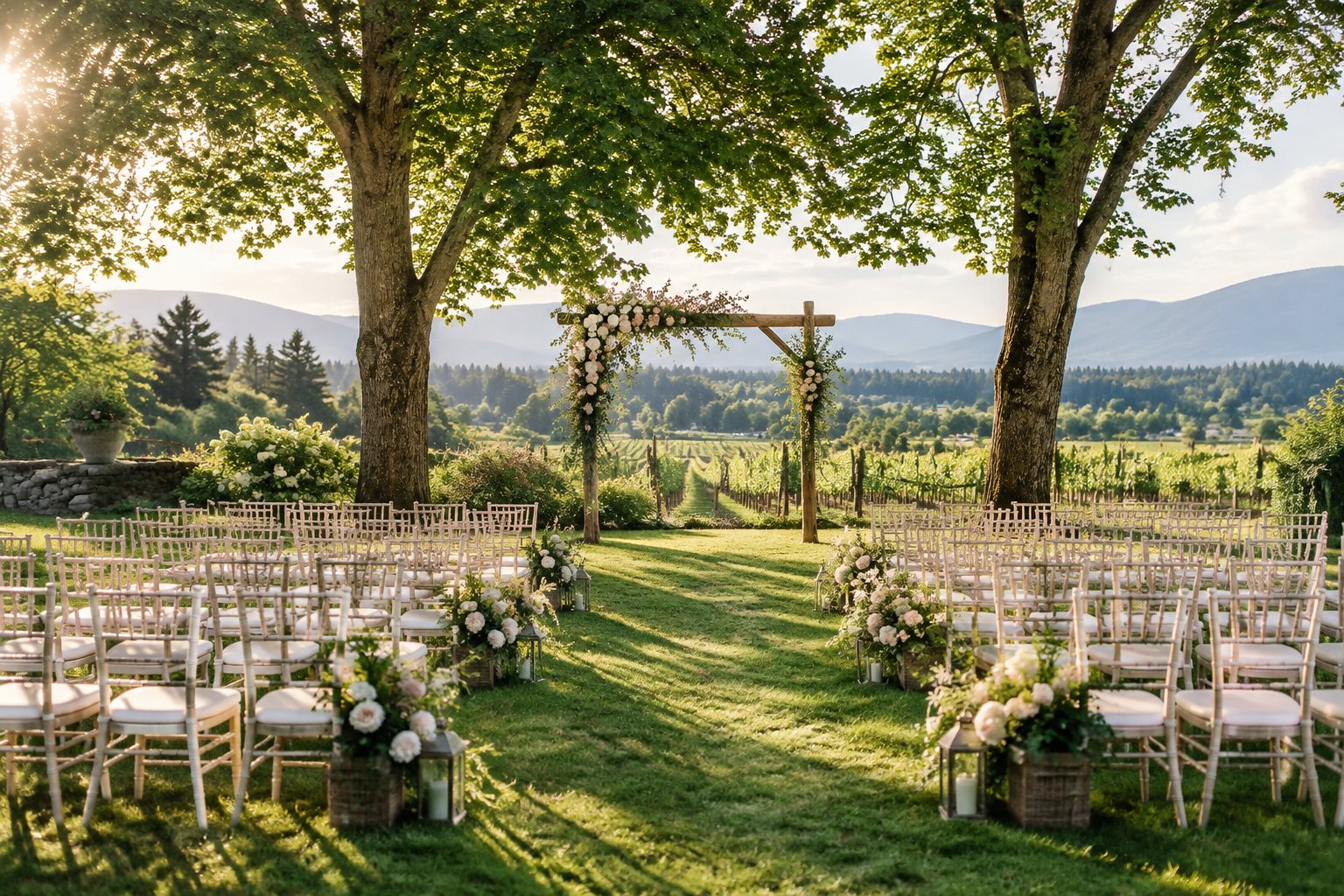
As you compare local outdoor wedding venues, look past the ceremony lawn. Consider how guests will move between the ceremony, meal, and dancing, and whether the site feels comfortable for your preferred season. Start by saving a few venues that match your style, then arrange site visits to see how each one works in person.
What Outdoor Venue Styles Can You Find in Langley?
Langley’s outdoor wedding settings range from open farm grounds to landscaped gardens and private properties. Your choice shapes the feel of the day, the amount of décor you need, and the services you’ll arrange.
What Makes a Farm or Vineyard Wedding Special?
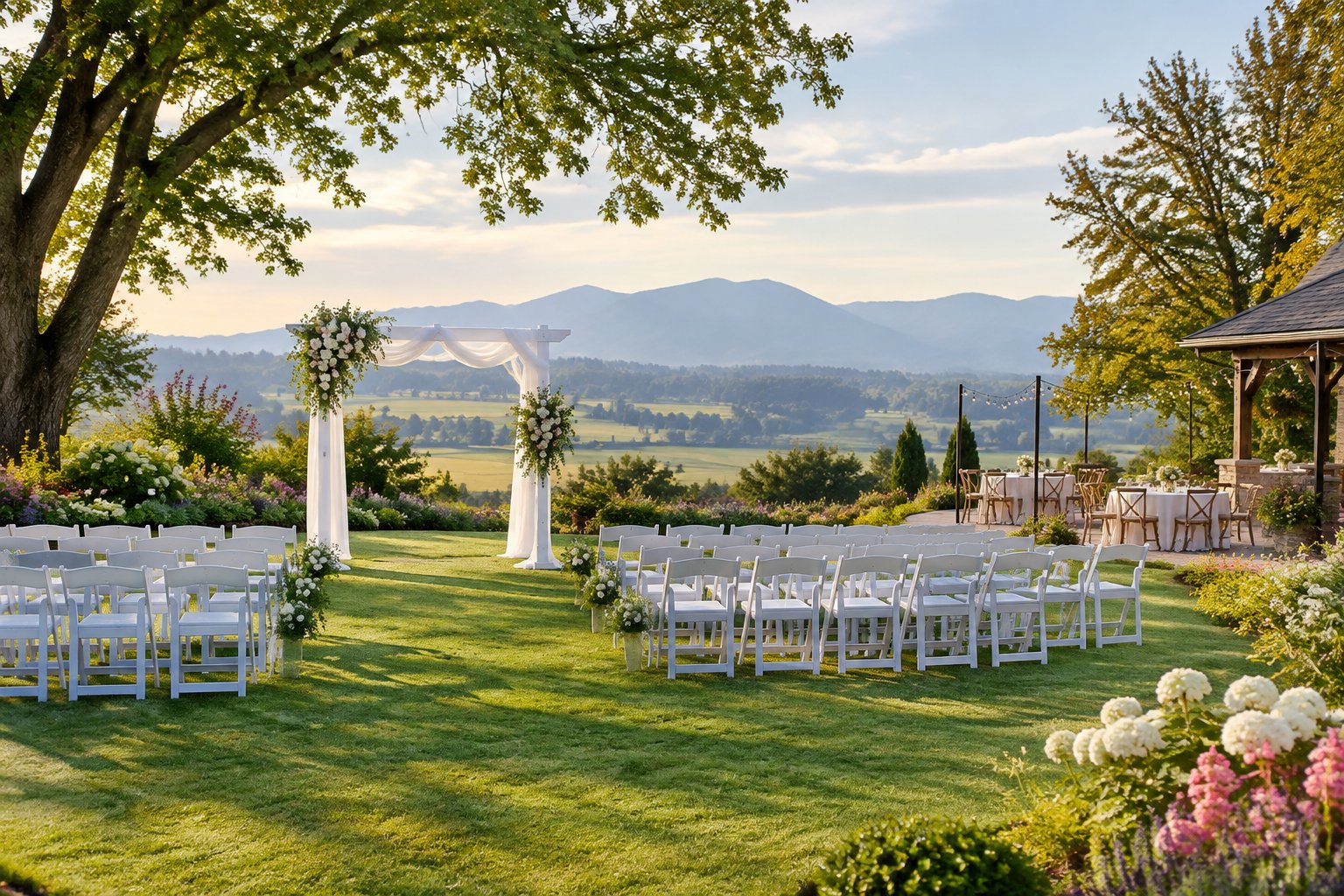
A farm or vineyard gives your celebration a relaxed, rural feel, with open fields, mature trees, or rows of vines as natural scenery. You can keep décor simple with a ceremony arch and flowers, then use string lights or a tent to define the reception space.
Ask how the property handles guest access and event setup. Some farms provide tables, chairs, and setup support; others leave you to arrange rentals, catering, and restrooms. If you like a countryside look, compare the natural setting with the practical work involved in preparing the site. Browse beautiful outdoor wedding settings to help you identify the landscape and atmosphere you prefer.
Are Gardens and Estate Properties a Good Fit?
Gardens and estates suit you if you want a polished outdoor ceremony among planted beds, lawns, and established trees. They can provide built-in color and structure, which helps create a finished look with fewer added decorations.
Check how much of the garden is available to your event and whether the ceremony, dinner, and dancing fit in the same area. Paths and level surfaces also affect guest comfort, especially for people wearing formal shoes or using mobility aids. If you’re drawn to this style, compare garden-style wedding venues for ideas on layout and setting.
Can You Host a Wedding at a Private or Rustic Venue?
A private property or rustic venue can give you more room to personalize the day, especially if you want a casual celebration with your own vendors. That flexibility can also mean more planning: confirm who handles setup, cleanup, lighting, power, and restroom access before you commit.
Look closely at the space’s existing features, such as a barn, pond, or tree-lined lawn. Those details can guide your décor choices and help you settle on a wedding style that feels consistent from the ceremony through the reception.
How Do You Choose the Right Setting?
The right setting has enough usable space for your guest list and supports the schedule you have in mind. During a site visit, focus on the layout and the guest experience, not just the view.
How Many Guests Can the Space Comfortably Accommodate?
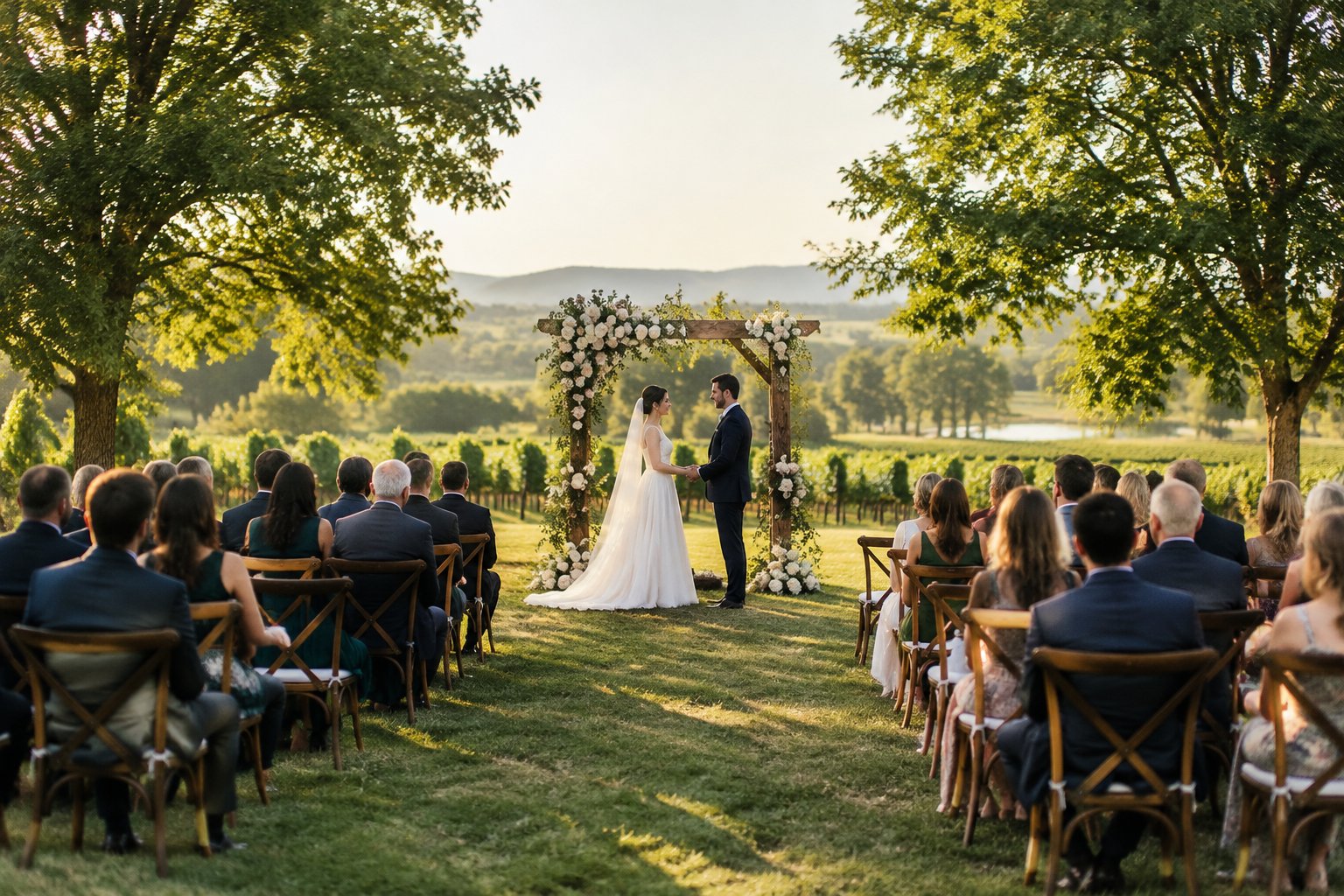
Ask for the venue’s capacity for each layout you plan to use. A lawn that fits a ceremony may have less room for dinner tables, a dance floor, a bar, and vendor work areas.
Bring your estimated guest count and ask the venue to show you where each part of the event could go. Include space for an aisle, accessible seating, a catering station, and room for guests to move around. Confirm whether the capacity changes when you add a tent or move the reception indoors.
Does the Venue Match Your Ceremony and Reception Plans?
Choose a venue that can support your full event schedule, from guest arrival to the last dance. If your ceremony and reception happen in separate areas, ask how guests will get between them and how long the transition takes.
Check whether the venue provides a covered reception space, indoor room, or tent option. A venue with indoor and outdoor spaces can make it easier to adjust the plan if weather changes. Compare indoor-outdoor wedding venues if you want flexibility for both parts of the celebration.
What Should You Look for During a Site Visit?
Walk the route your guests will follow, starting at parking and ending at the ceremony and reception spaces. Notice the slope and surface of paths, the distance to restrooms, available shade, and where vendors can unload equipment.
Ask to see the site in the layout you expect to use. Confirm where the sun will fall during your ceremony time, where speakers can go, and whether nearby activity could affect the event. Bring your planner or a trusted helper so you can take notes and compare details after the visit.
What Should You Budget for an Outdoor Wedding?
An outdoor venue’s rental fee is only one part of your cost, so ask for an itemized estimate before comparing sites. Your total will reflect included services, rentals, vendor rules, and the setup your plan requires.
Which Costs Are Included in the Venue Fee?
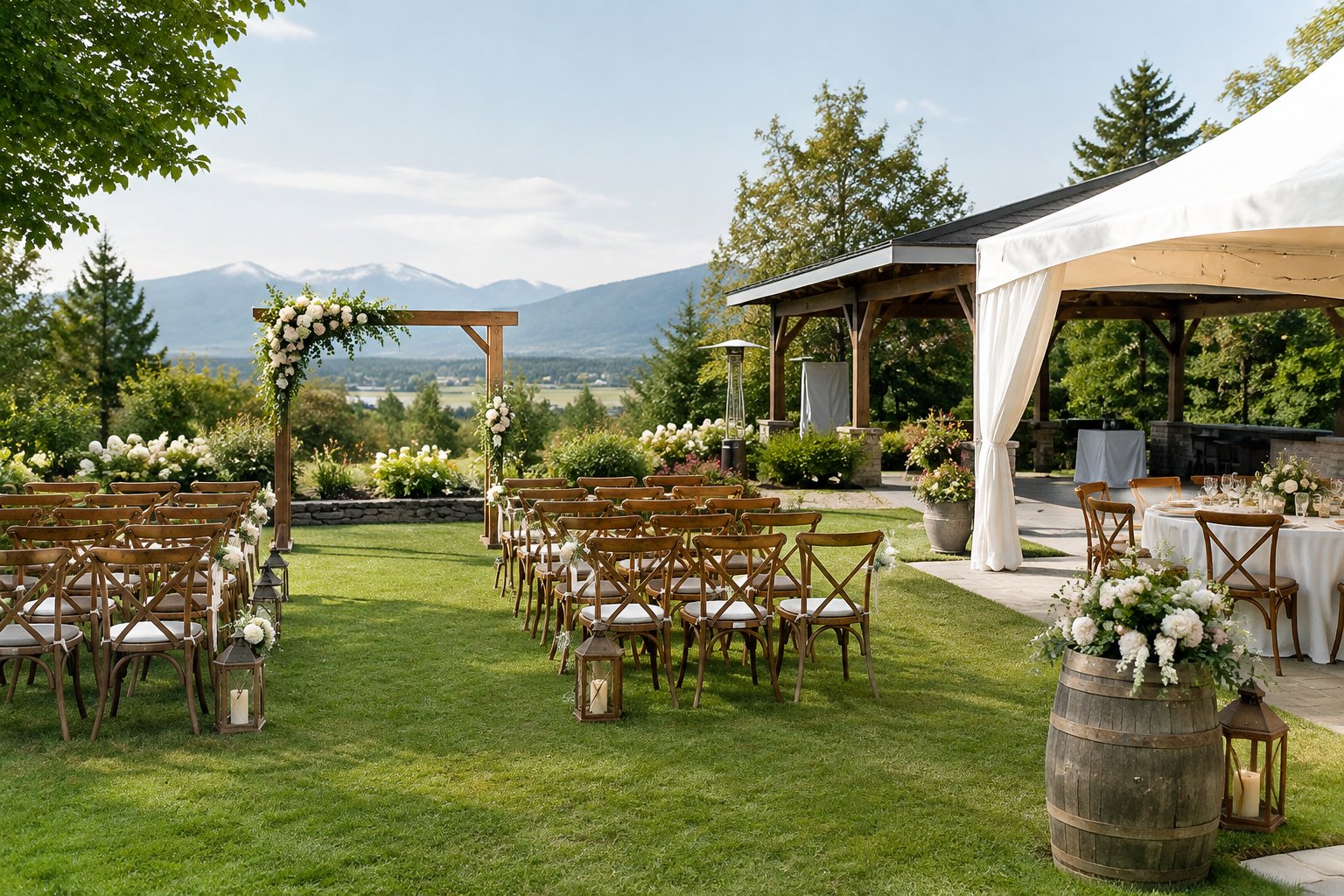
Ask whether the quoted price covers the ceremony and reception areas, event access hours, staff support, and cleanup. Check if tables, chairs, basic lighting, or a coordinator are included, and whether the venue charges a separate fee for setup or teardown.
Request the full payment schedule and ask about deposits, taxes, service fees, insurance, and cancellation terms. A clear estimate helps you see how the site fits into your wedding venue budget.
What Rentals or Services Might Cost Extra?
Outdoor sites may require rentals or services to make the property event-ready. Your estimate could include a tent with sidewalls, flooring, portable restrooms, generators, lighting, heaters, or a sound system.
Ask whether you must use approved vendors and whether outside caterers need access to a kitchen or preparation area. Confirm who delivers, sets up, and removes each rental. Those details help you avoid surprise labor or delivery fees as the wedding date approaches.
How Can You Prepare for Langley Weather and Logistics?
A smooth outdoor wedding needs a clear weather plan and practical arrangements for getting guests around the site. In Langley, Washington, check conditions for your specific date and confirm how the venue manages weather changes.
What Is the Backup Plan for Rain or Heat?
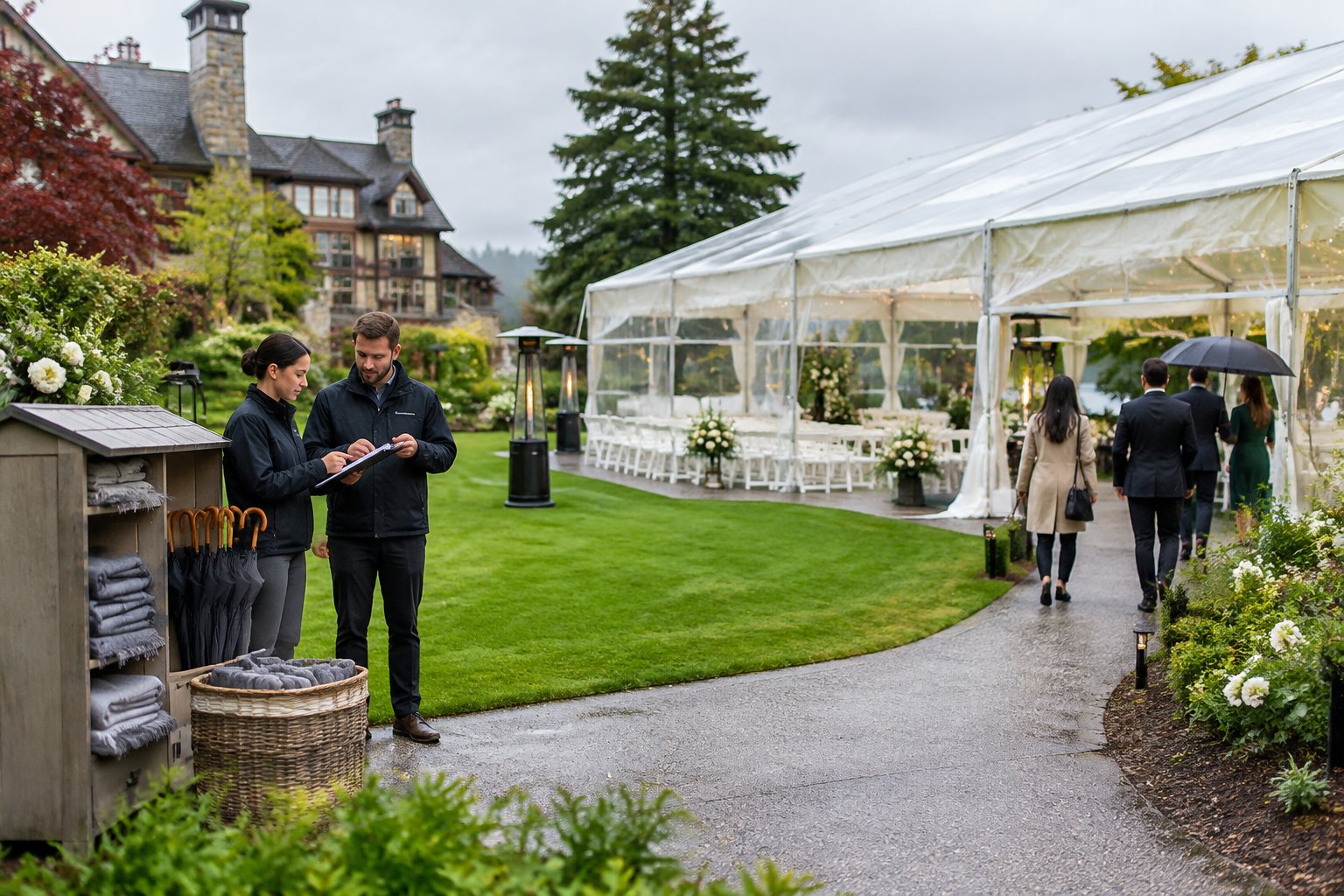
Ask what happens if rain, wind, or high temperatures affect your event. Get specific details about a covered ceremony location, an indoor room, or a tent with sidewalls, and find out who makes the weather decision and by what time.
For warm weather, check whether the venue has shade, water access, and a cooling plan for guests. For rain, ask about flooring, umbrellas, and dry routes between spaces. Include the backup option in your budget and share the plan with your vendors. A venue with both covered and open areas gives you more ways to adjust the setup, as you’ll see when comparing indoor-outdoor wedding options.
Are Parking, Restrooms, and Accessibility Covered?
Confirm the number of parking spaces, whether parking is on-site, and how guests will reach the event areas. If your plans include ferry travel to Whidbey Island, give guests clear arrival details and encourage them to check ferry schedules before the wedding.
Ask how many restrooms are available and whether you need to rent more for your guest count. Walk the route with accessibility in mind, including slopes, gravel, steps, and the distance between parking and seating. Ask what accommodations the venue can provide for guests who need a smoother route.
What Local Rules or Noise Limits Should You Confirm?
Ask the venue which rules apply to music, amplified sound, event hours, open flames, and temporary structures such as tents. Confirm who is responsible for permits or approvals, and ask whether any limits affect your ceremony time or reception schedule.
If you plan to use fireworks, candles, or a large sound system, get written approval before booking vendors. Keep a copy of the venue’s requirements so your planner and vendors can follow the same rules.
When Should You Book and What Questions Should You Ask?
Reserve your preferred date as soon as you’ve chosen a venue that fits your plans and budget. Before signing, make sure the contract spells out the services, site access, payment terms, and backup arrangements.
How Far Ahead Should You Reserve a Date?
For a popular summer or weekend date, start your search 12 to 18 months ahead so you have time to compare venues and secure your preferred choice. If you’re considering a weekday or a cooler season, ask about available dates and booking windows. If you’re planning far ahead, review what to consider when you book a wedding two years in advance.
Ask whether the venue holds dates before receiving a deposit, how long a quote remains valid, and whether it has a waitlist for booked dates. Once you select a location, confirm the date and payment deadline in writing.
What Details Belong in the Venue Contract?
Your contract should state the event date, rental hours, spaces you can use, guest capacity, and every service included in the fee. Check the payment schedule, deposit terms, cancellation policy, insurance requirements, and any extra charges.
Make sure the agreement also covers vendor rules, setup and cleanup responsibilities, music limits, and the weather backup plan. Ask for written details about what happens if the venue cannot provide the agreed space or services.
Keep the signed contract and any approved changes together so you can share them with your planner and vendors.