
Price of Gold Wedding Bands: 2026 Cost Guide
A plain gold band in the United States commonly costs about $300 to $1,100 in 2026, with the price shaped by karat, weight, design, and retailer. 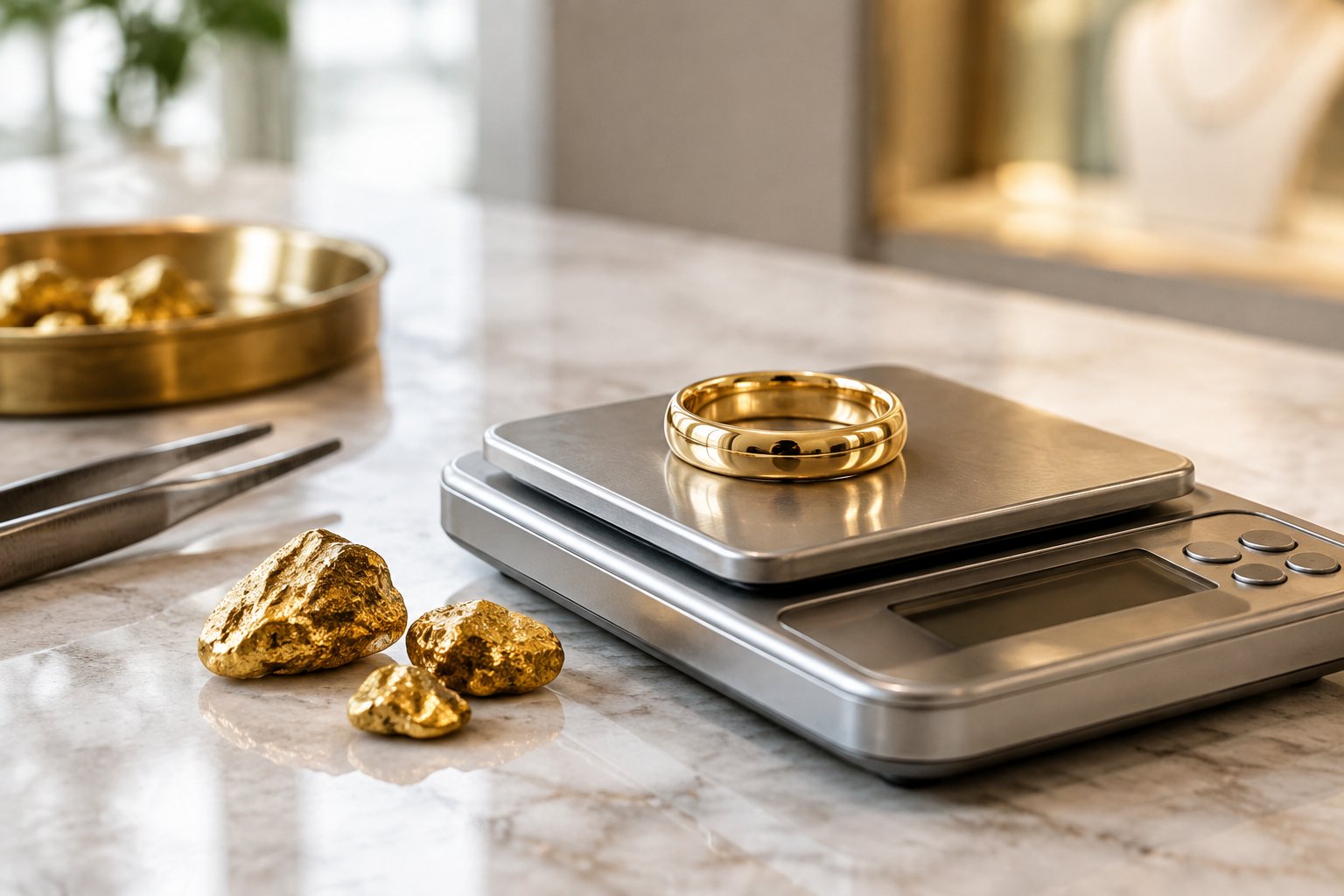
For a straightforward estimate of the gold wedding band cost, budget around $300 to $1,100 per plain ring, then allow more for a wider band, higher gold purity, or diamonds. A pair of simple bands can come to roughly $600 to $2,000 before taxes and add-ons.
Start your search by setting a budget for each ring and deciding which features you value most. That gives you a clear way to compare similar options as you shop.
How Much Do Gold Wedding Bands Cost in 2026?
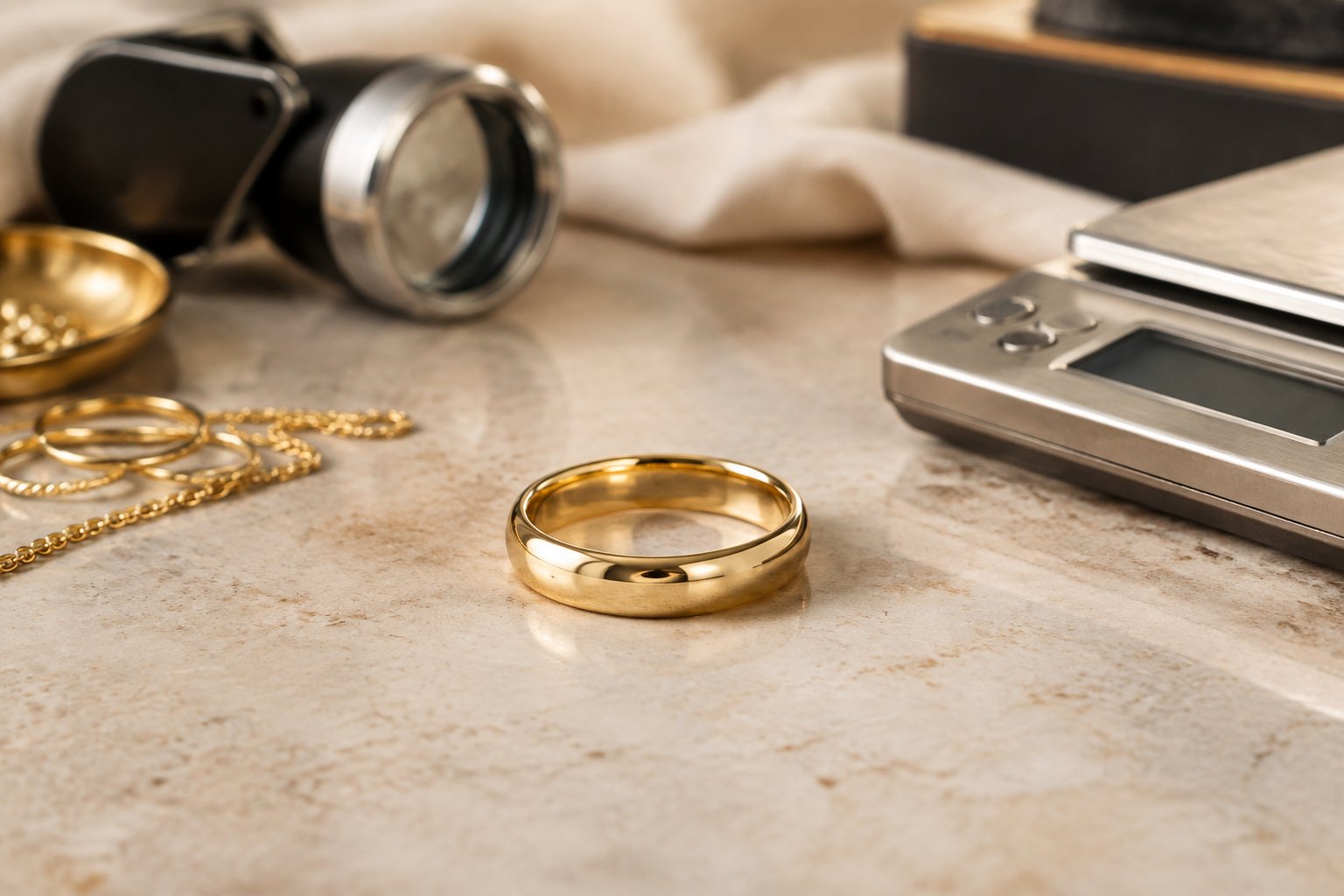
A plain gold wedding band can cost a few hundred dollars, while diamond styles and custom designs can reach several thousand. Your total depends on whether you’re buying one ring or two, as well as the metal and details you choose.
Typical Prices for Plain Gold Bands
For a planning estimate, plain gold wedding bands often fall between $300 and $1,100 each. Lower-priced options tend to use less gold or a lower karat, while heavier and higher-karat bands push the price up. For more detail on a simple style, compare estimates for how much a plain gold wedding band costs.
| Band style | Approximate price per ring |
|---|---|
| Basic plain gold band | $300–$700 |
| Wider or heavier plain band | $500–$1,100+ |
| Diamond-accented gold band | $1,000–$3,000+ |
These ranges are starting points, not fixed quotes. Gold prices, ring size, brand, and current retailer offers can shift the final price.
What Couples Might Pay for a Pair
If you’re buying two plain gold rings, a combined budget of about $600 to $2,000 gives you room to compare different widths and karats. The rings don’t need to match in every detail: you can choose different widths or finishes while keeping the same gold color.
When you set a shared budget, decide whether it covers both rings alone or includes extras such as engraving and resizing. A guide to the cost of wedding bands can help you keep the pair’s total in view.
How Diamond Bands Change the Budget
A diamond wedding band costs more because you’re paying for stones and the skilled work needed to set them. A few small accents add less to the bill than a row of diamonds around half the band or an eternity design with stones set all the way around.
Your diamond wedding band price also depends on the number, size, and quality of the diamonds. Compare the stone details and setting style alongside the gold specifications when you review diamond wedding bands.
What Determines a Gold Band’s Price?
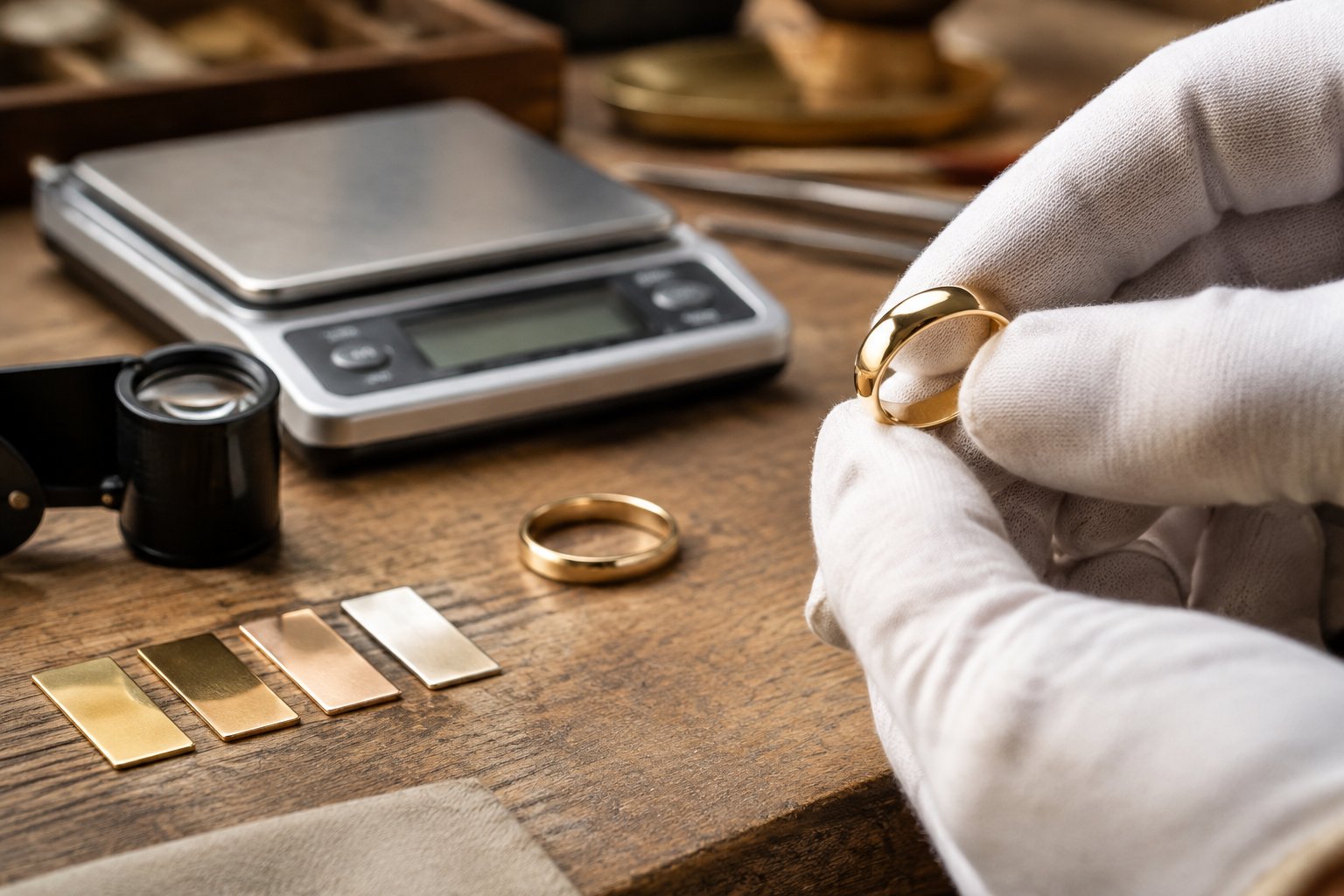
A band’s final price reflects its gold purity, the amount of metal used, and the work required to finish it. Checking those details helps you see why two rings with a similar look can carry different prices.
How Gold Purity Affects Cost
Gold purity describes how much of the metal in a ring is gold. A 14K band contains about 58% gold, while an 18K band contains 75%. For rings with a similar design and weight, the higher-purity option usually costs more.
Your choice also affects color and wear. Many shoppers choose 14K for its balance of gold content and everyday strength, while 18K offers a richer gold content. If you’re comparing 14K designs, review the cost of a 14K gold wedding band alongside the ring’s listed weight and dimensions.
Why Width, Thickness, and Weight Matter
A wider or thicker band uses more metal, so it generally costs more than a slim ring in the same karat. Ring size also affects the amount of gold required. If a retailer lists the weight, use it to compare bands with similar purity and construction.
Comfort-fit bands have a rounded interior that can change the amount of metal used. Check the ring’s width and profile as well as its weight to understand what you’re paying for.
How Finishes, Engraving, and Craftsmanship Add Cost
A polished band has a simple, smooth surface. Brushed finishes, milgrain edges, hand engraving, and custom details call for extra work and can raise the price. Handcrafted designs also reflect time spent shaping, finishing, and checking the ring.
Before you order, confirm whether the listed price includes personalization. Some retailers price engraving or custom work separately, so ask for the full quote before approving the design.
How Do Gold Band Prices Compare by Style?
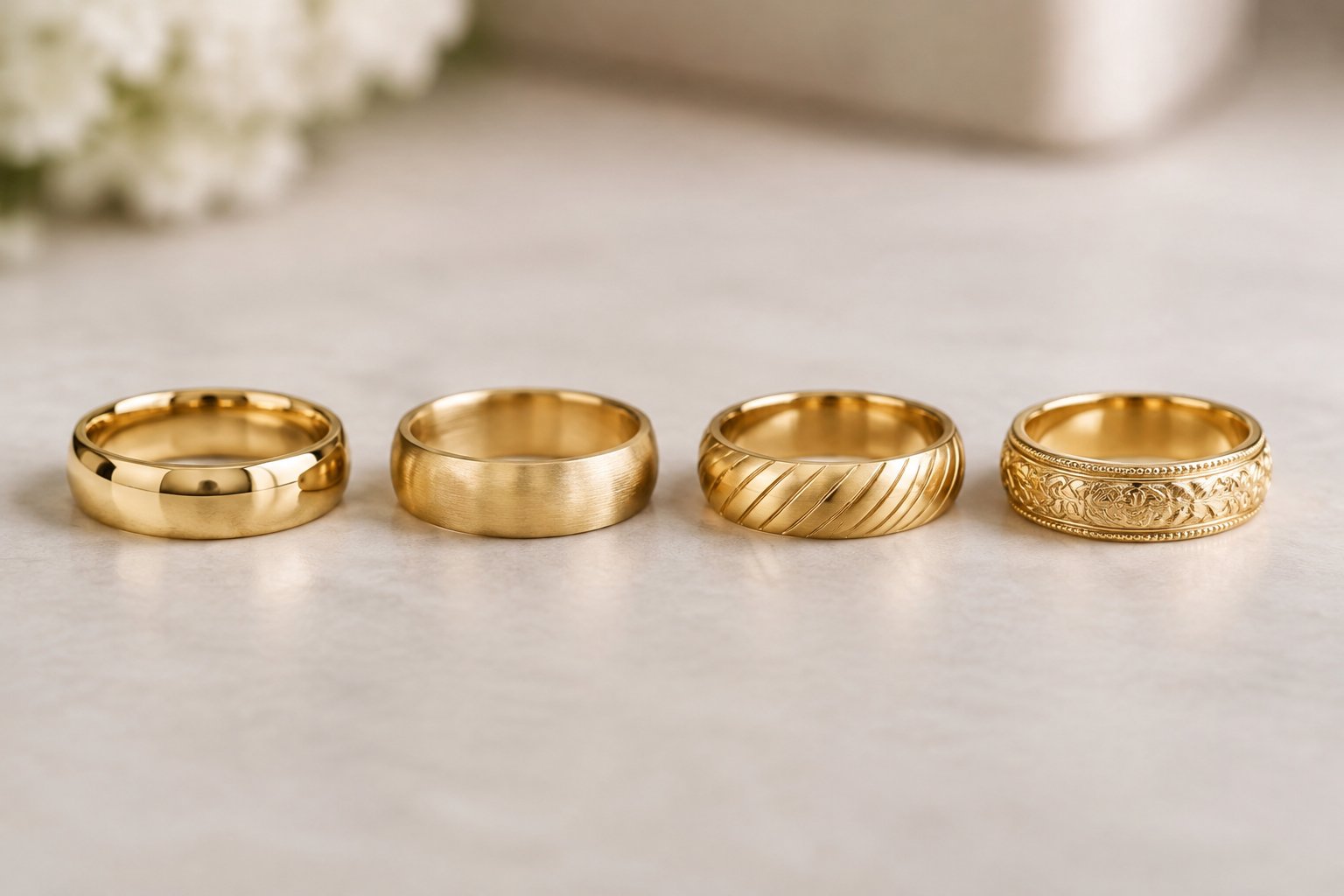
For the same karat and weight, a plain band usually costs less than a design with extra finishing or diamonds. Color alone has a smaller effect on price than metal weight, construction, and added details.
Plain Yellow, White, and Rose Gold
Yellow, white, and rose gold each get their color from the metals mixed with gold. You can compare them by karat and dimensions first, then choose the color you prefer.
White gold may have a rhodium plating that gives it a bright white surface. That coating wears with use and may need to be renewed over time. Yellow and rose gold don’t need rhodium plating to maintain their color, so include future upkeep in your comparison.
Textured and Two-Tone Designs
A textured band may cost more than a polished one because its surface takes extra finishing work. Two-tone designs combine different metals or gold colors, adding steps to the making process. Look closely at whether the design uses solid gold throughout or includes a separate accent material.
You can keep costs in check by choosing a simple profile and limiting custom details. Compare rings with the same width and karat so you can see what the texture or mixed-metal design adds.
Diamond-Set and Eternity Bands
Diamond wedding bands span a wide price range. A few small stones set across the top of the ring use fewer diamonds than a half-eternity style, while a full eternity band has stones around the entire circle.
The number of diamonds, their quality, and the setting work all affect the price. If you want sparkle at a lower cost, compare bands with fewer stones or ask about lab-grown diamonds.
How Can You Compare Retailer Prices Fairly?
You’ll get a fairer comparison when you line up rings with the same quantity, karat, width, size, and design details. A lower listed price may describe a lighter ring or a single band, so read the specifications before comparing totals.
Check Whether the Listing Is for One Band or a Pair
Some listings show the price for one ring; others feature a set or matching pair. Check the product title and price details before you add the amount to your budget. If you’re buying two separate rings, add both prices and any listed service charges.
Also check whether the pictured ring includes diamonds or a finish that changes the listed price. Product photos can show options that cost extra.
Compare Similar Karat, Width, and Ring Size
Compare 14K with 14K and 18K with 18K. Then check width, thickness, ring size, and weight where those details are available. For a closer look at the price of a gold wedding band, match the specifications as closely as you can before judging one listing against another.
Review the return and resizing terms, too. A ring with a slightly higher price may include services that you value, while another listing may charge for them separately.
Review Prices at James Allen and Brilliant Earth
When you compare James Allen and Brilliant Earth, search for the same type of ring at each retailer: same karat, color, width, size, and diamond details. Prices and available designs can change, so use the current product listings for your decision.
Save the specifications and full price for each ring you consider. That makes it easier to spot differences in materials, design, shipping, or included services.
What Extra Costs Should You Plan For?
Your final spend can exceed the ring’s listed price once taxes, shipping, resizing, engraving, or future care are included. Check each charge before you place an order so you can compare the full cost.
Taxes, Shipping, and Custom Sizing
Sales tax depends on where the ring is shipped or purchased. Shipping charges also vary by seller, and custom sizing can affect the price or delivery time. Review the checkout total and ask about any sizing charge before confirming the order.
For a made-to-order ring, check the estimated production and delivery time. Build in extra time if you need engraving or a size adjustment before your wedding.
Resizing, Engraving, and White Gold Replating
Resizing and engraving may be included, offered for an added fee, or subject to limits set by the retailer. Confirm the details before purchase, especially if the band has diamonds or a complex design that can make resizing more involved.
White gold’s rhodium plating can wear over time and need renewal to restore its bright finish. Ask a jeweler about the service cost and timing so you can plan for upkeep.
Retail Price Versus Gold Melt Value
The retail price covers more than the gold in the ring. It also reflects design, labor, finishing, stones, and the retailer’s operating costs. Gold melt value estimates the metal’s raw value if it were melted down, based on its weight, purity, and current gold prices.
A ring’s resale or melt value can fall well below its purchase price. Keep your receipt and product details, and treat the retail price as the cost of a finished piece of jewelry, not a promise of future resale value.